A Rare Pink Mushroom Is Spreading Across Georgia Backyards — Experts Explain What It Means
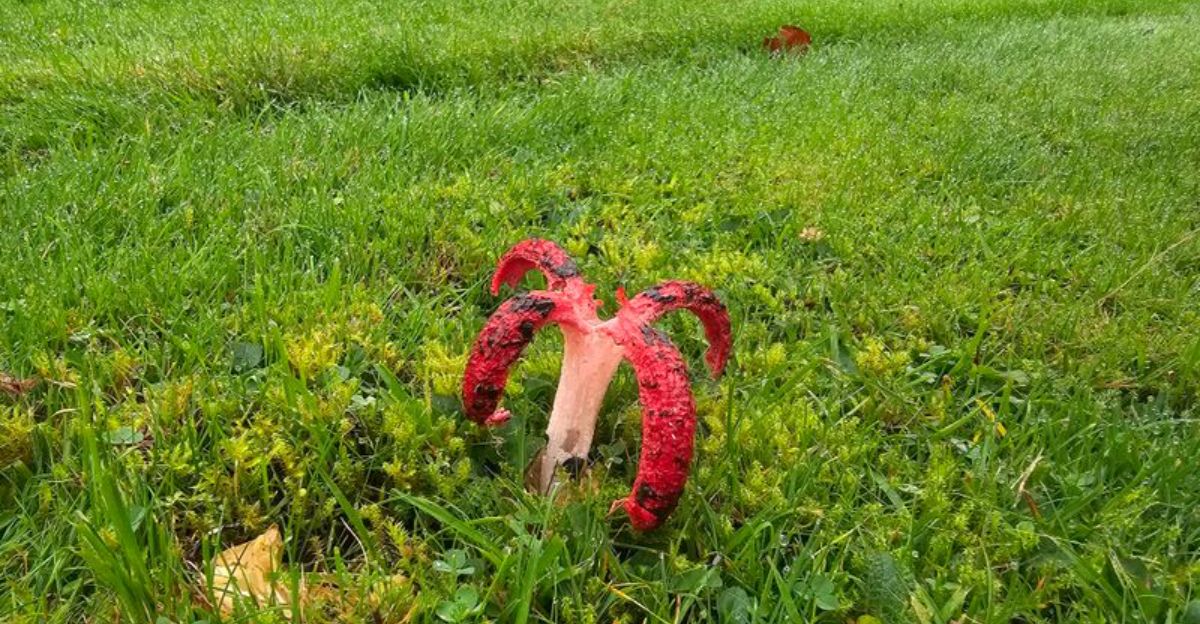
Something strange is popping up in Georgia yards, and homeowners are both fascinated and confused.
A peculiar pink mushroom with tentacle-like arms has been spotted across the state, catching attention for its unusual appearance and rapid spread.
Scientists call it Clathrus archeri, but you might know it better as the octopus stinkhorn or devil’s fingers.
Understanding what this fungus means for your backyard and local ecosystem can help you respond appropriately if it appears on your property.
Clathrus Archeri Looks Like Something From Another Planet
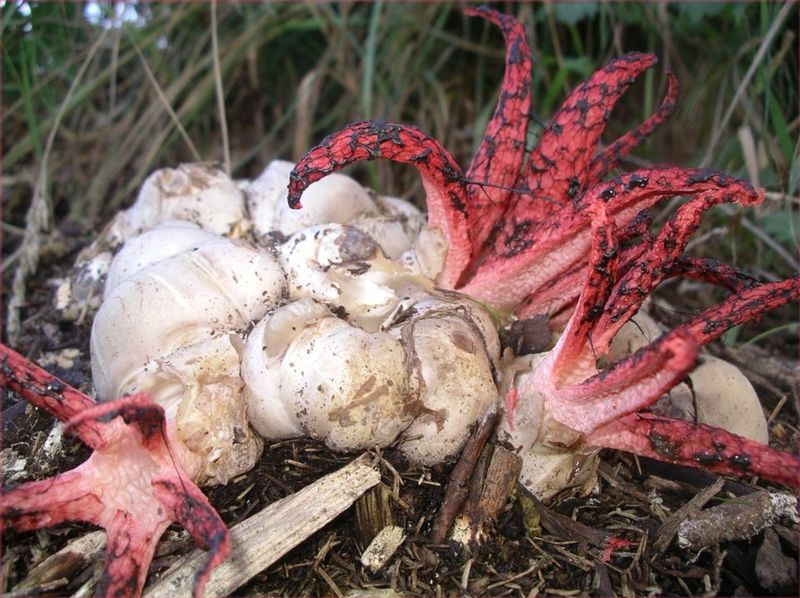
Clathrus archeri earns its nickname “devil’s fingers” thanks to its bizarre appearance that resembles something straight out of science fiction.
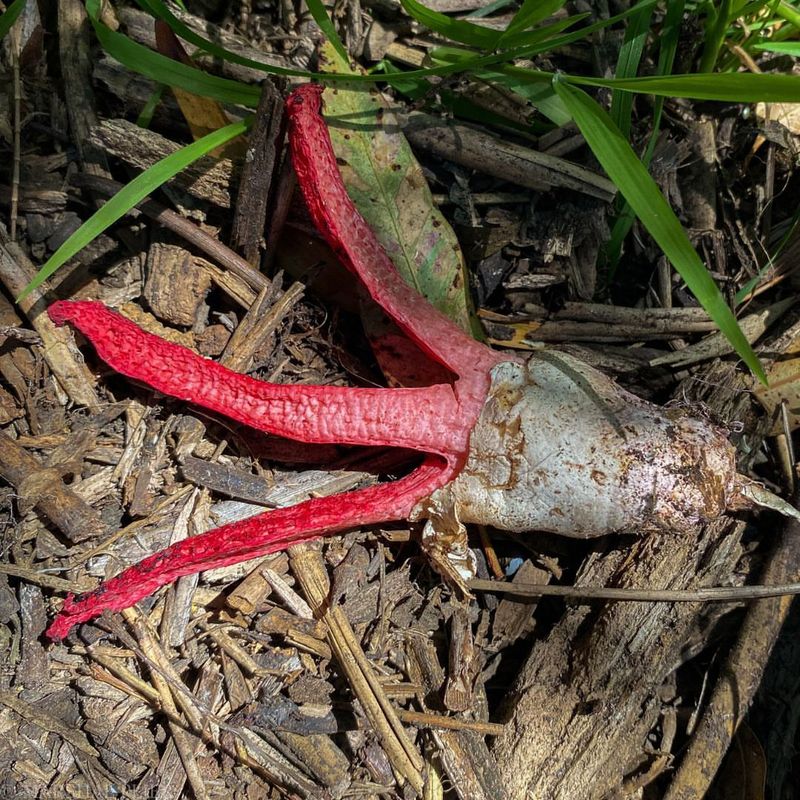
The fungus starts as a white or pale egg buried in soil or mulch, which can sit unnoticed for days or weeks.
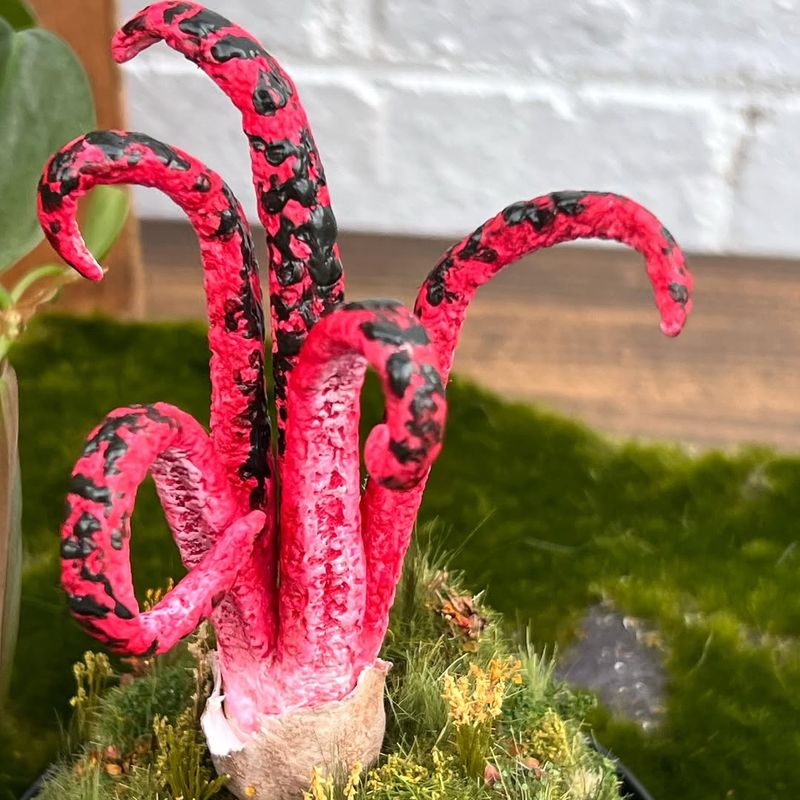
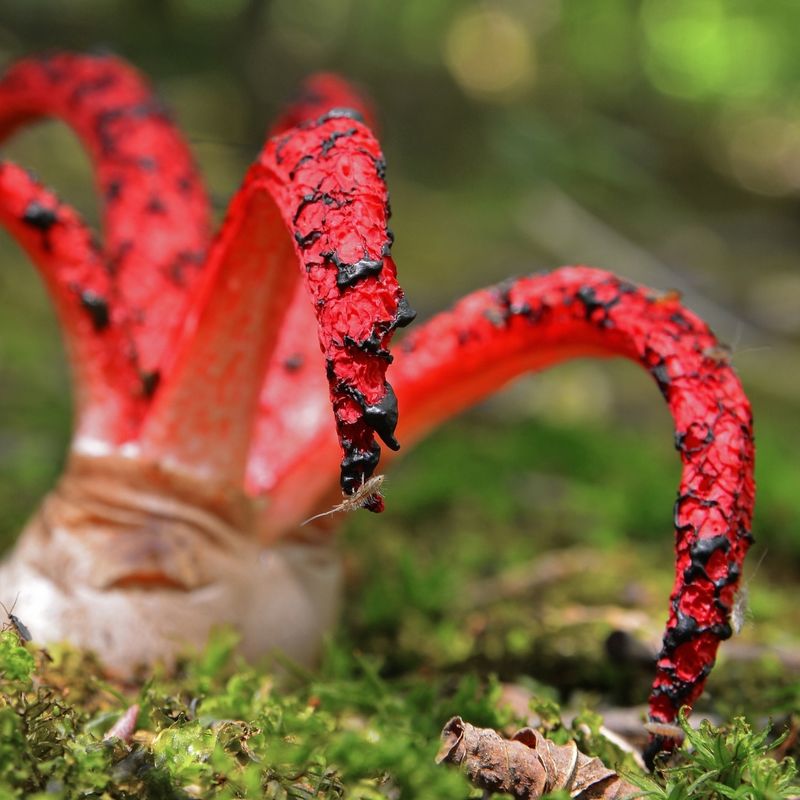
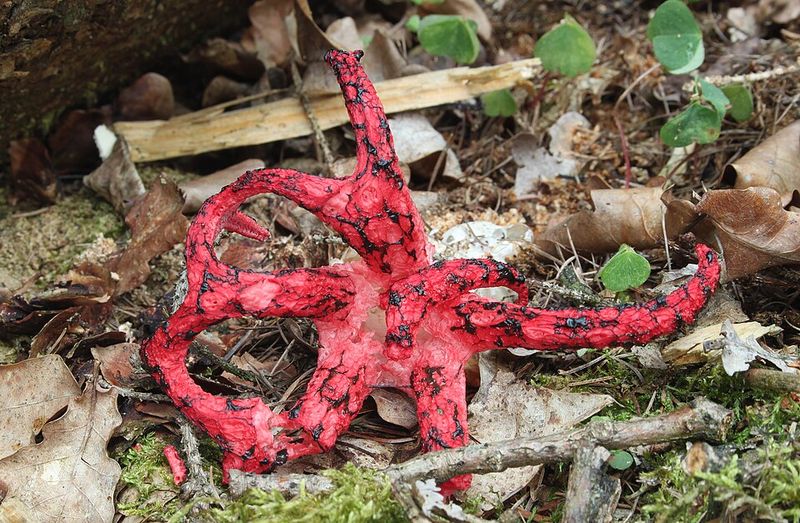
When conditions are right, the egg splits open dramatically to reveal four to eight bright pink or red tentacle-like arms that stretch upward and outward.
Each arm can reach several inches long and features a dark, slimy coating on the inner surface.
The tentacles curve and twist in ways that make the mushroom look almost alive and moving.
Georgia residents have described finding these fungi in their yards and doing double-takes, thinking they spotted an alien creature or unusual sea animal.
The vibrant coloring stands out sharply against green grass and brown mulch.
Photography enthusiasts across the state have been documenting these striking specimens, sharing images that often go viral on social media.
The visual impact alone makes Clathrus archeri one of the most memorable mushrooms you might encounter in your backyard.
This Fungus Originally Came From Australia And New Zealand

Clathrus archeri isn’t native to North America, which explains why many Georgia homeowners have never seen it before now.
The mushroom originated in Australia and New Zealand, where it grows naturally in forests and grasslands.
Scientists believe it first arrived in Europe during the early 1900s, possibly through imported plants or soil.
From Europe, the fungus gradually made its way to North America over the past several decades.
It has been spreading steadily across the eastern United States, finding suitable habitats in states with warm, humid climates.
Georgia’s weather conditions create an ideal environment for this foreign species to thrive and reproduce.
The state’s combination of moisture, organic matter in soil, and moderate temperatures matches the fungus’s preferred growing conditions.
Experts classify Clathrus archeri as an introduced species rather than an invasive one, though it continues to expand its range.
The mushroom’s journey from the Southern Hemisphere to Georgia backyards represents a fascinating example of how organisms can travel globally through human activity and international trade.
The Smell Is Absolutely Terrible And Serves A Purpose
Prepare yourself before getting too close to Clathrus archeri, because this mushroom produces one of nature’s most unpleasant odors.
The dark, slimy substance coating the inner surfaces of the tentacles releases a powerful stench that people compare to rotting meat or garbage.
Your Georgia Garden Changes Every Week. Your Plan Should Too.
Gardening in Georgia changes quickly throughout the season. Every Friday you’ll receive a simple weekly plan showing exactly what to plant, prune, fertilize, harvest, and protect so you never miss the right timing.
Some Georgia residents report smelling the fungus before actually seeing it in their yards.
The disgusting smell isn’t accidental but serves an important biological function for the mushroom’s reproduction.
Flies and other insects are attracted to the odor, mistaking it for decaying animal matter where they would normally lay eggs.
When insects land on the slimy coating, they pick up sticky spores that cling to their bodies.
As the insects fly away and land elsewhere, they spread these spores to new locations, helping the fungus colonize additional areas.
The stench typically lasts only a day or two before fading as the spore mass gets consumed or washes away.
While the smell is unpleasant for humans, it represents an clever evolutionary strategy that has helped Clathrus archeri spread successfully across continents.
Georgia’s Climate Creates Perfect Growing Conditions

Several factors explain why Clathrus archeri has been appearing more frequently in Georgia yards recently.
The state’s warm temperatures and high humidity levels create an environment that closely resembles the mushroom’s native habitat.
Georgia’s long growing season allows the fungus to produce multiple generations each year, accelerating its spread.
Heavy rainfall and irrigation provide the moisture that mushrooms need to emerge from their underground egg stage.
Many Georgia homeowners have noticed these fungi appearing after particularly wet periods or following summer thunderstorms.
The widespread use of mulch in landscaping provides abundant organic material that the fungus feeds on as it grows.
Wood chips, leaf litter, and composted materials all serve as nutrient sources for Clathrus archeri.
Suburban and urban areas across the state offer numerous suitable microhabitats in flower beds, around trees, and in shaded garden areas.
Climate change may also be playing a role, as warming temperatures allow the fungus to survive winters more easily than before.
These combined factors explain why Georgia has become a hotspot for this unusual mushroom species in recent years.
It’s Not Poisonous But You Shouldn’t Eat It
Many Georgia residents worry about whether Clathrus archeri poses a danger to their families or pets.
Scientific research indicates that this mushroom is not considered toxic or poisonous to humans or animals.
No documented cases exist of serious illness resulting from touching or accidentally consuming small amounts of the fungus.
However, experts strongly advise against eating Clathrus archeri for several important reasons.
The terrible smell alone makes it highly unappetizing, and the slimy coating contains bacteria from the insects that visit it.
Some people may experience mild stomach upset or allergic reactions if they handle the mushroom and then touch their face or mouth.
Children and pets might be tempted to touch or taste the colorful tentacles out of curiosity.
The fungus hasn’t been studied extensively for potential long-term health effects, so consuming it involves unnecessary risk.
Additionally, correctly identifying mushrooms requires expertise, and eating any wild fungus without absolute certainty about its identity can be dangerous.
If you find Clathrus archeri in your Georgia yard, simply admire it from a distance and wash your hands thoroughly if you handle it.
The Fungus Actually Benefits Your Soil And Garden

Rather than viewing Clathrus archeri as a pest, Georgia gardeners might want to consider its positive contributions to their landscape.
Like most fungi, this mushroom plays an essential role in breaking down dead organic material and recycling nutrients back into the soil.
The underground network of fungal threads, called mycelium, works constantly to decompose wood chips, leaves, and other plant matter.
This decomposition process releases nitrogen, phosphorus, and other nutrients that your garden plants can absorb and use for growth.
The presence of diverse fungi generally indicates healthy, biologically active soil with good organic content.
The mycelium also helps improve soil structure by creating tiny channels that allow water and air to penetrate more easily.
Some research suggests that certain fungi can help plants resist diseases and environmental stress, though specific benefits of Clathrus archeri remain under study.
Georgia gardeners who practice organic methods often encourage fungal diversity as part of building healthy soil ecosystems.
The brief appearance of these colorful mushrooms represents visible evidence of the invisible work happening beneath the surface of your yard throughout the year.
You Can Remove Them But They’ll Probably Come Back
Some Georgia homeowners prefer to remove Clathrus archeri from their property for aesthetic reasons or because of the smell.
Getting rid of the visible mushrooms is simple enough—just wear gloves and pull them up or cut them at ground level.
Place the removed fungi in a sealed plastic bag before throwing them in the trash to prevent spores from spreading.
However, removing the mushroom itself doesn’t eliminate the extensive underground mycelium network that produced it.
This network can extend several feet in all directions through your mulch and soil.
New mushrooms will likely emerge from the same area whenever conditions are right, which can be frustrating for homeowners seeking permanent solutions.
The mycelium can survive in the soil for years, remaining dormant during dry periods and sprouting mushrooms when moisture returns.
Completely eliminating the fungus would require removing all the mulch and treating the soil, which isn’t practical or beneficial for most gardens.
Many Georgia residents eventually decide to simply remove the mushrooms as they appear and tolerate their temporary presence.
Understanding that mushrooms are just the reproductive structures of a much larger organism helps explain why they keep returning.
Scientists Track Its Spread To Understand Ecological Changes

The appearance of Clathrus archeri in Georgia has caught the attention of mycologists and ecologists studying how organisms move and adapt to new environments.
Researchers ask residents to report sightings and submit photographs to help map the mushroom’s current distribution across the state.
These citizen science efforts provide valuable data about how quickly the fungus is spreading and which habitats it prefers.
Tracking introduced species like this helps scientists understand broader patterns of ecological change in the region.
Climate shifts, international trade, and human land use all influence which organisms can successfully establish themselves in new areas.
Georgia’s experience with Clathrus archeri offers insights that may apply to other introduced species and future ecological challenges.
Some researchers wonder whether the fungus might affect native mushroom species through competition for resources or habitat.
Others study how insects and other wildlife interact with this new organism in the ecosystem.
The data collected in Georgia contributes to a larger scientific understanding of how ecosystems respond to change over time.
Your backyard observation of this unusual mushroom might actually help advance scientific knowledge about ecological dynamics and species movement patterns.
Its Presence Indicates Moisture And Organic Matter Abundance
Finding Clathrus archeri growing in your Georgia yard actually tells you something important about your soil conditions.
Mushrooms only emerge when their underground mycelium has access to adequate moisture and organic material to support reproduction.
The appearance of these fungi signals that your mulch beds or soil contain sufficient nutrients and water.
Areas with poor drainage or heavy irrigation tend to develop more mushroom growth than drier locations.
If you notice frequent mushroom emergence in certain spots, you might be overwatering or have natural wet areas that could affect plant selection.
The fungus thrives particularly well in wood chip mulch that’s beginning to decompose, which is why landscaped areas often host more mushrooms than natural spaces.
Shaded locations under trees or near buildings provide the cool, moist conditions that favor fungal growth.
Georgia’s summer humidity creates these conditions naturally across much of the state, explaining the widespread mushroom appearances.
Rather than indicating a problem, the presence of Clathrus archeri usually confirms that your soil ecosystem is functioning actively.
You can reduce mushroom frequency by improving drainage, reducing mulch depth, or watering less frequently if desired.
Educational Opportunities Make It Perfect For Curious Kids

Despite its strange appearance and unpleasant smell, Clathrus archeri offers wonderful teaching moments for Georgia families with curious children.
The dramatic transformation from white egg to colorful tentacles happens quickly enough that kids can observe actual changes over hours or days.
This provides a rare chance to witness fungal reproduction in real time rather than just reading about it in books.
The mushroom’s unusual appearance naturally sparks questions about biology, ecology, and how organisms survive and spread.
Parents and teachers can use it to explain concepts like spore dispersal, decomposition, and the role of fungi in ecosystems.
Photographing the mushroom at different stages creates a science project that documents its life cycle from emergence to decay.
The connection between the terrible smell and insect attraction demonstrates evolutionary adaptation in an unforgettable way.
Children who learn to appreciate even strange or unappealing organisms develop better understanding of ecological complexity and biodiversity.
The mushroom also provides opportunities to discuss how species travel around the world and adapt to new environments.
Just remember to supervise children around the fungus and ensure they wash hands thoroughly after any contact or observation activities.