Arizona’s Best Perennial Flowers That Thrive In The Heat
Arizona gardens come alive in ways that surprise anyone who believes the desert resists color.
The key to a thriving landscape lies in choosing plants built for sunshine that refuses to fade.
Certain perennials handle the heat with remarkable strength, standing firm as temperatures soar.
Their colors stay bold, their leaves remain sturdy, and their blooms seem to glow even brighter beneath the vast Arizona sky.
These tough, reliable plants bring steady bursts of color through the hottest months, transforming dry spaces into vibrant displays.
They work hard with little demand, offering an effortless charm that reflects the spirit of the desert itself.
With the right selection, any outdoor space can flourish in the heat, proving that even the warmest climates can host gardens full of beauty, resilience, and year-round appeal.
1. Desert Marigold
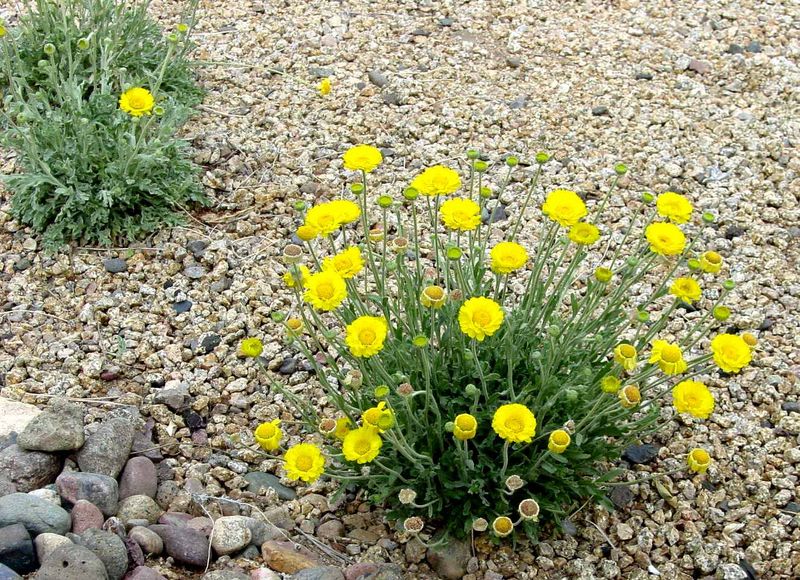
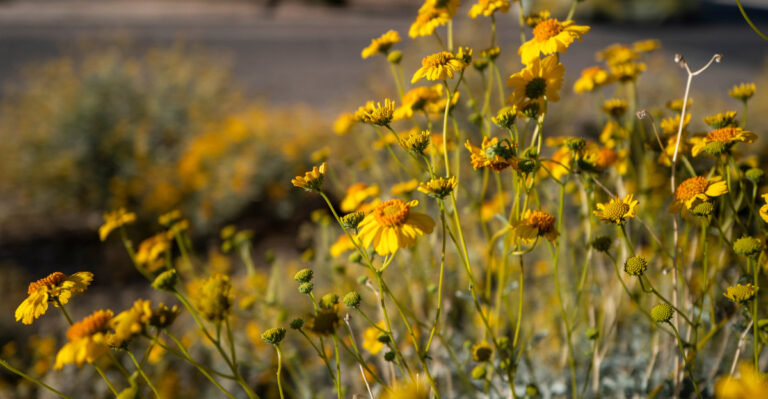
Bright golden petals seem to capture Arizona sunshine itself when Desert Marigold bursts into bloom across the landscape.
This cheerful native wildflower produces masses of daisy-like flowers that can appear almost year-round in warmer regions, with peak blooming from March through May and again in fall.
Each flower sits atop slender stems that sway gracefully in desert breezes, creating movement and energy in garden beds.
Gardeners throughout Arizona appreciate how little care this perennial demands once established in the ground.
Desert Marigold tolerates poor soil, requires minimal watering, and actually performs better without fertilizer that can cause excessive leaf growth at the expense of flowers.
The plant naturally reseeds itself, creating cheerful colonies that fill empty spaces with golden color.
Standing about 12 to 18 inches tall, this compact perennial works beautifully in rock gardens, along pathways, or mixed with other desert-adapted plants.
The silvery-green foliage provides attractive texture even when flowers take a brief rest during the hottest summer weeks.
Butterflies and native bees visit the blooms regularly, adding extra life and movement to your Arizona garden while supporting local pollinators that need nectar sources in harsh conditions.
2. Red Yucca
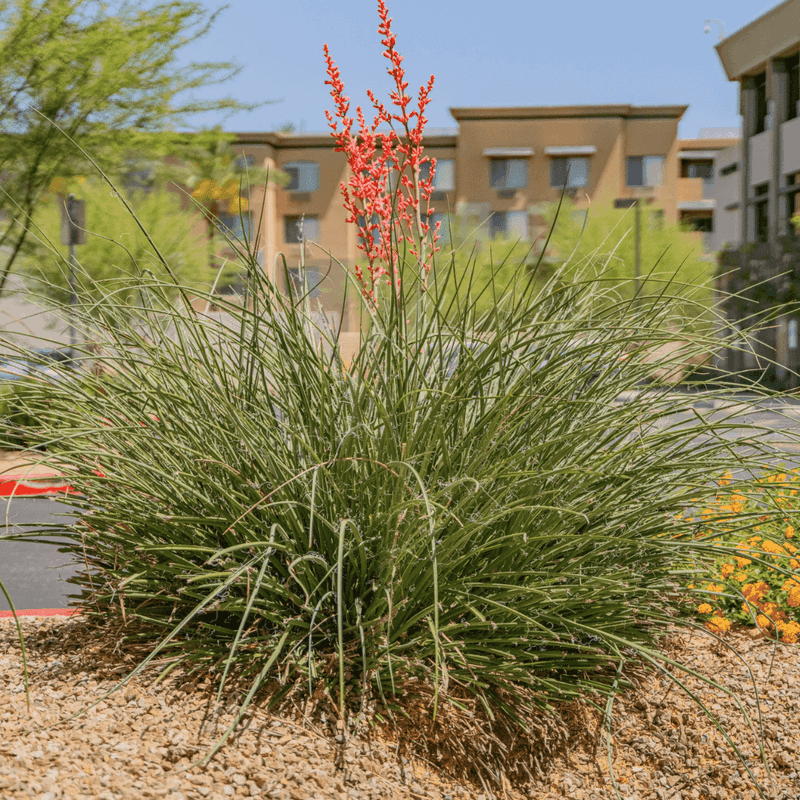
Spectacular coral-pink flower spikes rise three to five feet above sword-shaped leaves, creating dramatic vertical interest that catches every eye.
Red Yucca isn’t actually a true yucca but belongs to the Hesperaloe family, though its common name has stuck because of the similar foliage appearance.
The tubular flowers bloom from spring through fall in Arizona, providing months of continuous color when many other plants struggle.
Hummingbirds absolutely adore Red Yucca, treating those tubular blooms like their personal refueling stations throughout the warm months.
Watching these tiny jeweled birds dart between flower stalks adds incredible entertainment value beyond the plant’s already impressive beauty.
The evergreen foliage stays attractive year-round, maintaining structure and color even during winter months when deciduous plants lose their leaves.
This tough perennial handles full Arizona sun without complaint and actually prefers well-drained, rocky soil that would challenge less adapted plants.
Once established, Red Yucca needs watering only every couple of weeks during the hottest periods, making it perfect for water-conscious landscapes.
The clumping growth habit eventually creates substantial specimens that make bold statements in xeriscapes, along driveways, or as focal points in desert-style gardens throughout the state.
Your Arizona Garden Changes Every Week. Your Plan Should Too.
Gardening in Arizona changes quickly throughout the season. Every Friday you’ll receive a simple weekly plan showing exactly what to plant, prune, fertilize, harvest, and protect so you never miss the right timing.
3. Penstemon
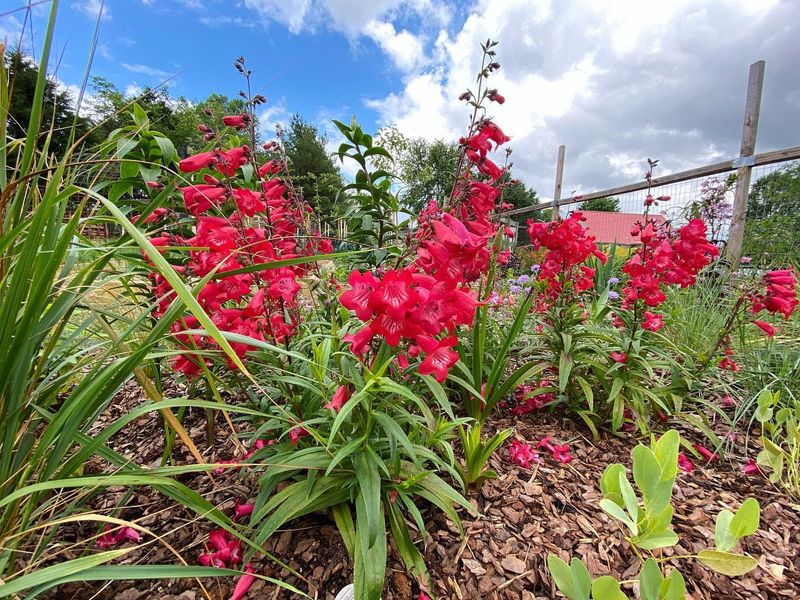
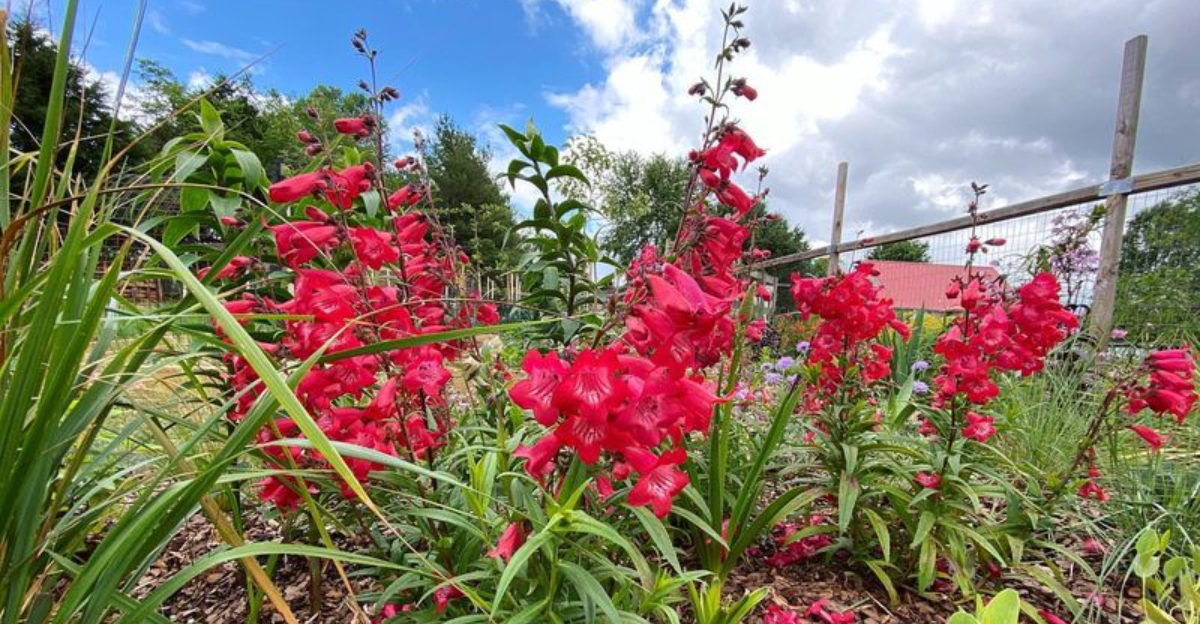
Tubular flowers in stunning shades of red, pink, purple, and white cluster along tall stems that seem custom-designed for hummingbird beaks.
Penstemon species offer Arizona gardeners incredible variety, with native types perfectly adapted to local conditions and heat levels that would overwhelm less suitable plants.
These perennials typically bloom heaviest in spring but often continue producing flowers sporadically through summer and fall.
Different Penstemon varieties grow from low groundcovers to three-foot-tall specimens, giving gardeners flexibility in design choices for various garden situations.
The foliage ranges from bright green to grayish tones depending on species, with some varieties maintaining attractive leaves year-round while others go semi-dormant during extreme heat.
Most types prefer full sun and excellent drainage, thriving in the rocky, alkaline soils common throughout Arizona landscapes.
Firecracker Penstemon and Parry’s Penstemon rank among the most popular choices for Arizona gardens because they handle heat exceptionally well while producing abundant flowers.
Once established, these tough perennials need only occasional deep watering, making them excellent choices for sustainable landscapes.
Cutting back spent flower stalks often encourages additional blooming, extending the colorful display.
Native bees, butterflies, and hummingbirds visit Penstemon flowers constantly, creating a lively garden atmosphere while supporting essential pollinator populations.
4. Blackfoot Daisy
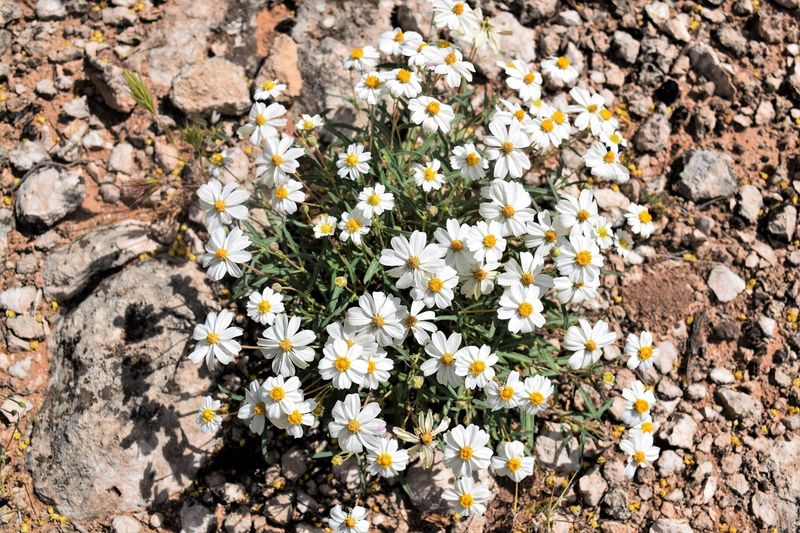
Cheerful white petals surrounding golden centers create clouds of dainty flowers that brighten Arizona landscapes from spring through fall.
Blackfoot Daisy forms low, spreading mounds that typically stay under 12 inches tall, making this perennial perfect for edging pathways, filling rock garden spaces, or cascading over retaining walls.
The nearly continuous blooming cycle means your garden enjoys color for most of the year.
This charming native wildflower actually increases flower production when temperatures rise, performing its best during Arizona’s hottest months when many other plants take a break.
The compact growth habit and evergreen foliage provide year-round structure and texture, even during brief periods when fewer flowers appear.
Blackfoot Daisy tolerates reflected heat from walls and pavement exceptionally well, thriving in challenging spots where other perennials might struggle.
Gardeners appreciate how quickly this perennial establishes and begins blooming, often producing flowers within weeks of planting.
Once settled in, Blackfoot Daisy needs watering only every week or two during the hottest weather, and even less during cooler months.
The plant naturally reseeds in favorable conditions, gradually creating larger drifts of white blooms that enhance desert gardens throughout Arizona.
Butterflies and small native bees visit the flowers regularly, adding movement and ecological value to your landscape.
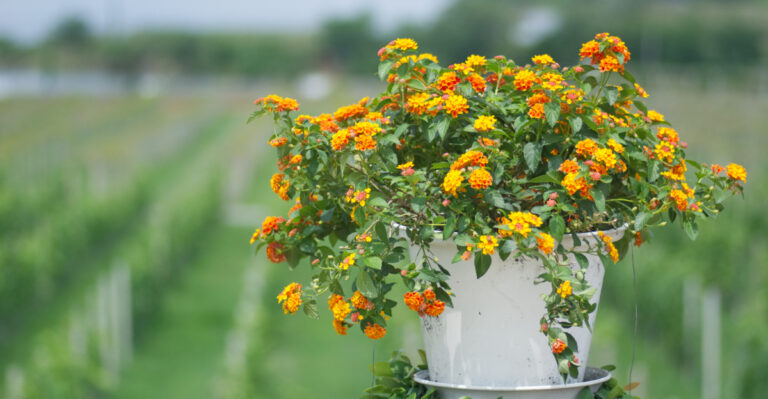
5. Lantana
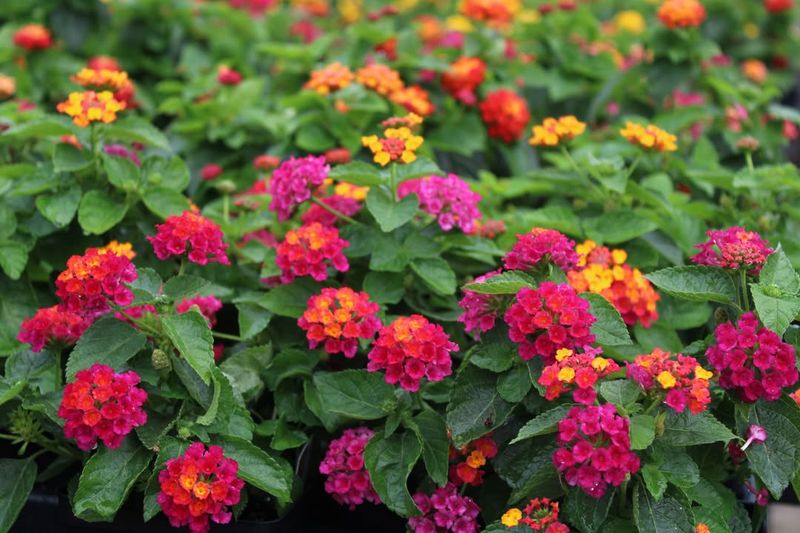
Clusters of tiny flowers in rainbow combinations create eye-catching displays that seem to glow in Arizona’s intense sunlight.
Lantana produces rounded flower heads that often feature multiple colors within the same cluster, with shades shifting from yellow to orange to red as individual blooms mature.
This color-changing characteristic adds extra visual interest, making each flower cluster look like a tiny bouquet.
Heat doesn’t slow Lantana down one bit, this tough perennial actually blooms most prolifically during Arizona’s hottest months when temperatures soar above 100 degrees.
The plant attracts butterflies like a magnet, with monarchs, swallowtails, and painted ladies visiting constantly throughout the growing season.
Trailing varieties work beautifully in containers or hanging baskets, while upright types create colorful hedges or mass plantings.
Different Lantana varieties offer height options from low groundcovers to three-foot-tall shrubby forms, providing flexibility for various landscape needs.
The aromatic foliage releases a distinctive scent when brushed or touched, adding another sensory dimension to your garden.
Once established in Arizona landscapes, Lantana needs only occasional deep watering and performs best with minimal fertilizer.
Deadheading spent flower clusters encourages continuous blooming, though even without this maintenance, the plant produces flowers reliably throughout warm weather.
Some varieties can spread enthusiastically, so choose sterile cultivars if you prefer more controlled growth.
6. Mexican Bird Of Paradise
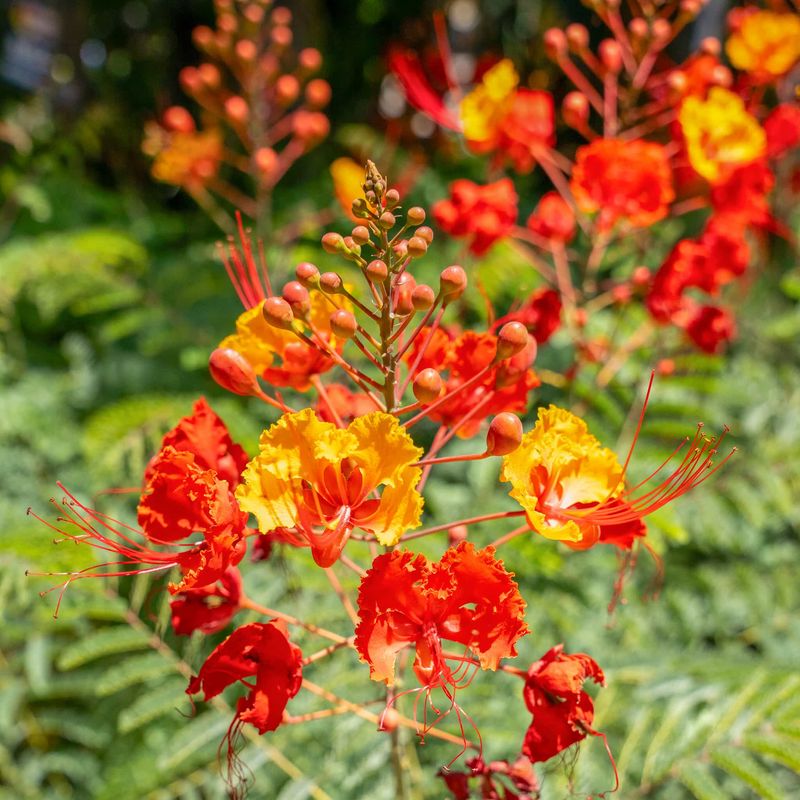
Flamboyant orange and red flowers with showy stamens create tropical-looking displays that seem almost too exotic for desert gardens.
Mexican Bird of Paradise produces clusters of blooms from late spring through fall, with peak flowering during Arizona’s hottest summer months when the plant seems energized by heat.
The feathery, fern-like foliage adds graceful texture throughout the growing season, creating an attractive backdrop for those spectacular flowers.
This heat-loving perennial can grow quite large in Arizona landscapes, often reaching six to eight feet tall and equally wide when given space to develop.
The substantial size makes Mexican Bird of Paradise excellent for creating privacy screens, filling large landscape areas, or serving as dramatic focal points.
Hummingbirds visit the flowers constantly, darting between blooms and providing endless entertainment for anyone watching from nearby windows or patios.
Gardeners throughout Arizona appreciate how quickly this perennial establishes and begins blooming, often producing flowers within the first growing season.
The plant tolerates reflected heat from walls and hardscapes beautifully, thriving in spots that bake other plants.
During winter, Mexican Bird of Paradise may experience frost damage in colder Arizona regions, but it typically regrows vigorously from the roots when warm weather returns.
Minimal watering and occasional pruning keep this showy perennial looking its best year after year.
7. Autumn Sage
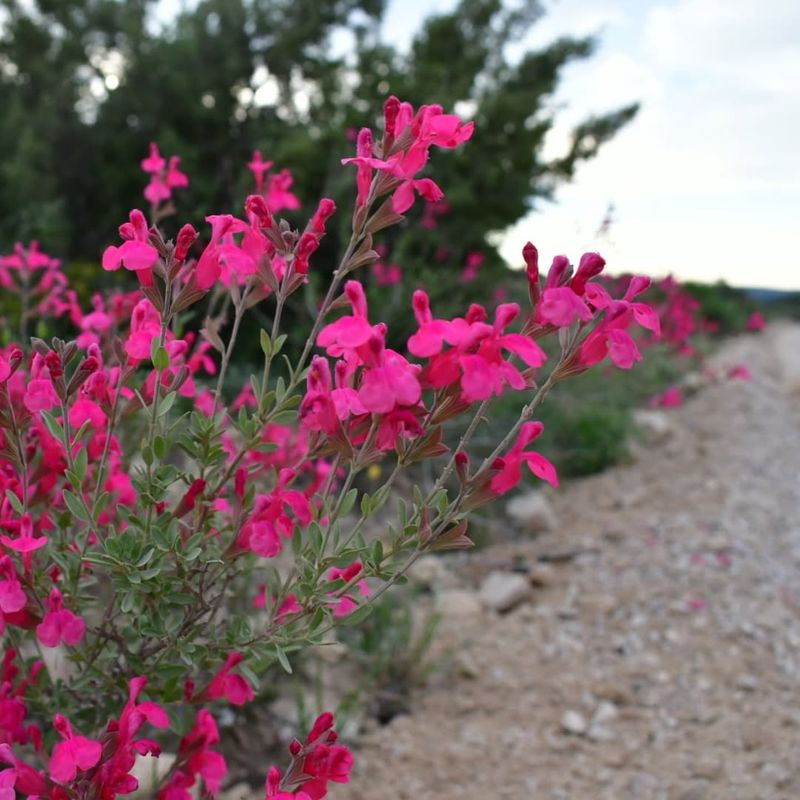
Tubular flowers in vibrant shades of red, pink, purple, orange, or white appear in such abundance that they nearly hide the foliage beneath.
Autumn Sage blooms from spring through fall in Arizona, with flowering intensity actually increasing as temperatures rise during summer months.
This reliable perennial belongs to the Salvia family, sharing the characteristic aromatic foliage that releases pleasant scents when touched or brushed.
Hummingbirds recognize Autumn Sage as a premium nectar source, visiting gardens where this perennial grows multiple times throughout each day.
The bushy growth habit creates mounded plants typically reaching two to three feet in height and width, perfect for filling middle-layer spaces in landscape beds.
Different color varieties allow gardeners to create coordinated designs or mix multiple shades for rainbow effects.
Arizona’s intense sun and heat don’t faze Autumn Sage one bit, the plant actually performs better in full sun locations than in shade.
Once established, this tough perennial needs deep watering only once or twice weekly during the hottest weather, making it excellent for water-wise landscapes.
Light pruning after heavy bloom cycles encourages fresh growth and additional flowers.
The aromatic foliage naturally deters deer and rabbits, solving browsing problems that plague many other flowering perennials.
Butterflies join hummingbirds in visiting the flowers, creating a lively garden atmosphere throughout Arizona’s long growing season.
8. Desert Zinnia
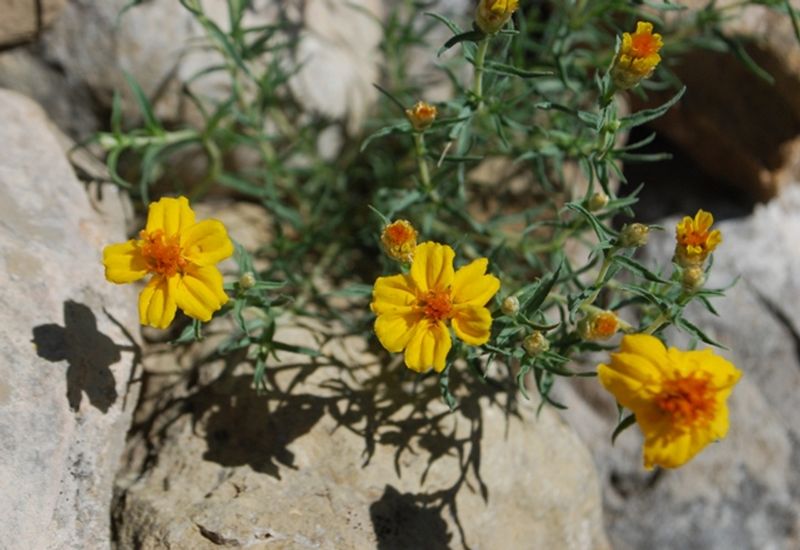
Papery golden petals seem to capture and hold Arizona sunlight, creating bright spots of color that persist even after flowers dry on the plant.
Desert Zinnia produces cheerful blooms from spring through fall, with the most prolific flowering occurring during hot summer months when many other perennials rest.
The compact, rounded growth habit creates tidy plants that typically stay under 12 inches tall, perfect for front-of-border placements or rock garden additions.
This Arizona native wildflower has adapted perfectly to desert conditions over thousands of years, developing exceptional heat tolerance and drought resistance.
The thin, needle-like leaves minimize water loss while creating an attractive fine-textured appearance year-round.
Desert Zinnia actually prefers the lean, rocky soils common throughout Arizona landscapes, performing better without rich soil amendments or fertilizers that benefit other garden plants.
Butterflies and native bees visit Desert Zinnia flowers regularly, appreciating the accessible nectar sources during hot weather when they need energy most.
Once established, this perennial needs watering only every two to three weeks during the hottest periods, making it exceptionally water-efficient.
The plant often reseeds naturally in favorable conditions, creating expanding colonies of golden color without any gardener effort.
Desert Zinnia works beautifully in xeriscapes, naturalized areas, or mixed with other native Arizona perennials for authentic desert garden displays that celebrate regional character.
9. Angelita Daisy
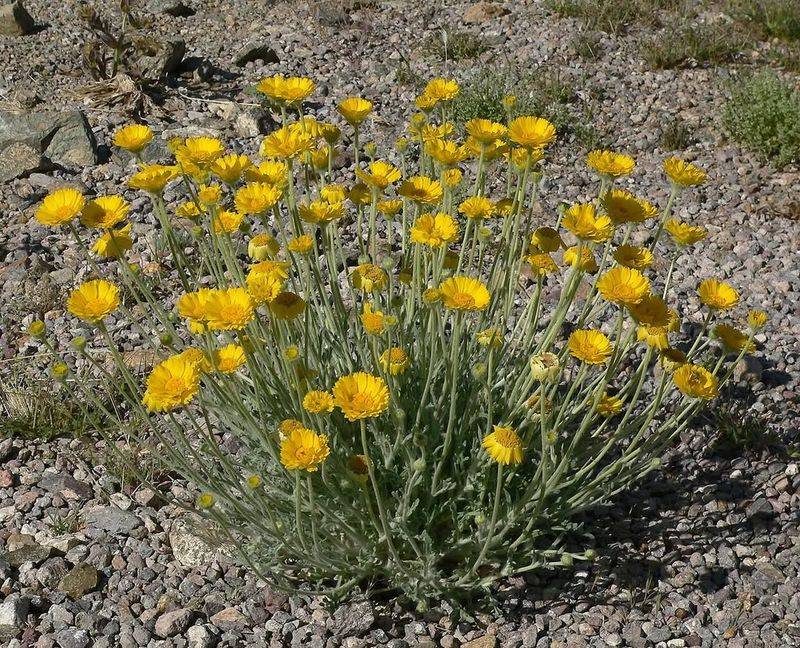
Golden yellow flowers cover compact mounds so completely during peak bloom that you can barely see the foliage underneath.
Angelita Daisy creates nearly perfect dome-shaped plants that typically reach about 12 to 18 inches tall and wide, making this perennial excellent for creating uniform edging or repeating design elements throughout Arizona landscapes.
The blooming cycle runs heaviest in spring and fall, with sporadic flowers appearing during summer months.
Fine-textured, aromatic foliage stays evergreen throughout the year in most Arizona regions, maintaining attractive structure even when fewer flowers appear.
The silvery-green leaves create beautiful color contrast with the bright golden blooms, enhancing the visual impact when plants flower heavily.
Angelita Daisy tolerates reflected heat from pavement and walls exceptionally well, thriving in challenging locations that stress less adapted perennials.
This tough plant establishes quickly in Arizona gardens and begins blooming reliably within its first growing season.
Once settled in, Angelita Daisy needs deep watering only every week or two during hot weather, and even less during cooler months.
The compact growth habit means minimal pruning requirements, though light shearing after heavy bloom cycles encourages fresh growth and additional flowers.
Butterflies visit the blooms regularly, while the aromatic foliage naturally discourages browsing by rabbits and deer.
The cheerful golden color brightens desert landscapes throughout Arizona, bringing sunshine-like warmth to garden beds year after year.