A Weird Black Slime Mold Is Taking Over Pennsylvania Lawns — What Gardeners Need To Know
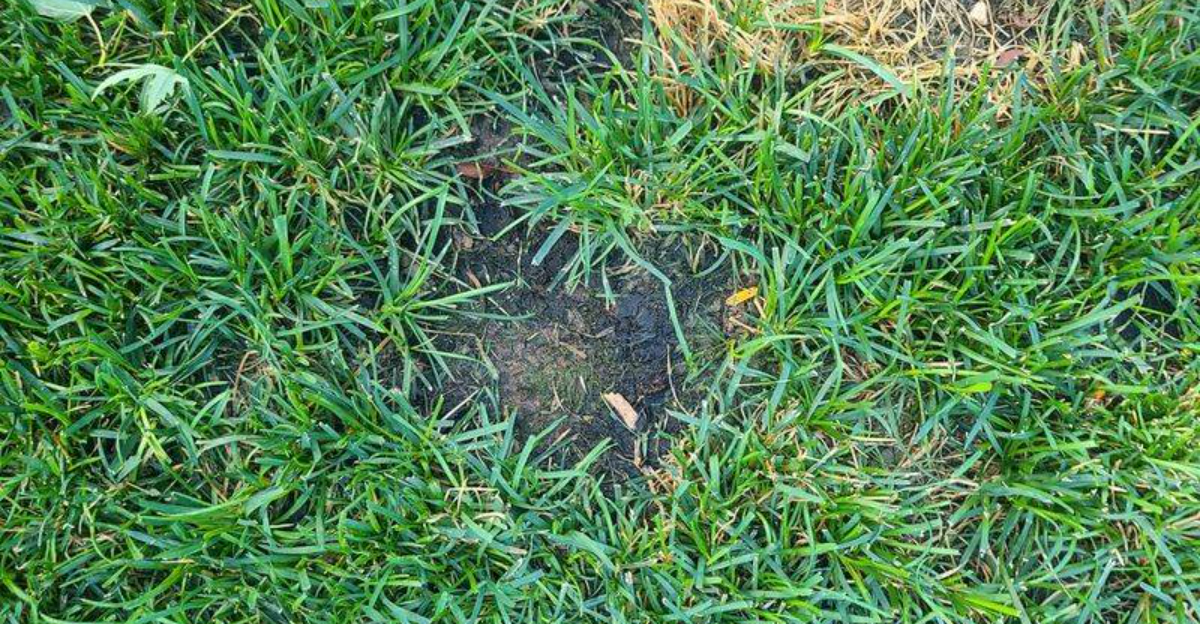
A strange, dark substance has been appearing on lawns across Pennsylvania, leaving homeowners puzzled and concerned.
This mysterious black slime mold looks alarming, but understanding what it is can help you manage it effectively.
Gardeners throughout the state are discovering these unusual growths and wondering whether they should worry about their grass and plants.
Slime Mold Is Not Actually A Fungus
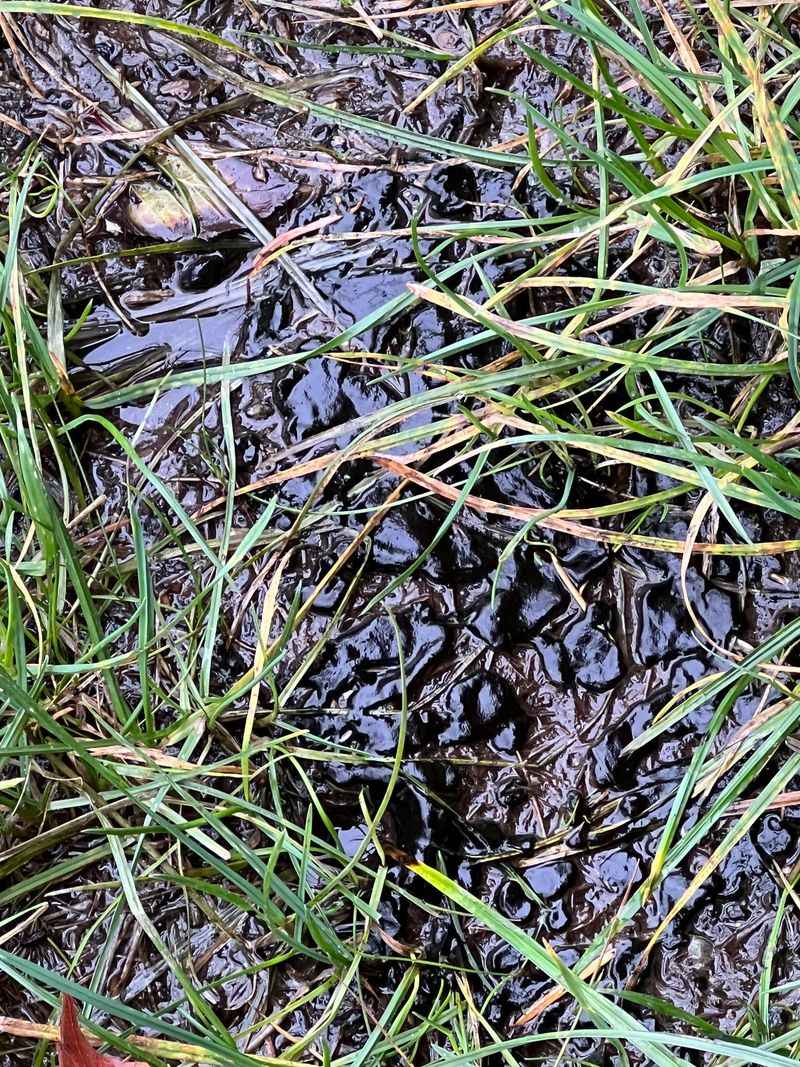
Despite its name and appearance, slime mold belongs to a completely different category of organisms called protists.
Scientists once thought these creatures were fungi, but research revealed they share more characteristics with amoebas than mushrooms.
Protists represent one of the oldest forms of life on Earth, making slime molds fascinating survivors from ancient times.
Pennsylvania gardeners often mistake slime mold for fungal diseases that might harm their lawns.
The truth is much less worrying since slime molds behave very differently from harmful fungi.
They move slowly across surfaces, feeding on bacteria and decaying matter rather than attacking living plants.
Understanding this distinction helps you respond appropriately when you spot these organisms.
Fungicides will not work on slime molds because they are not fungi at all.
Instead of treating your lawn with chemicals, you can simply wait for the slime mold to complete its life cycle and disappear naturally.
This knowledge saves Pennsylvania homeowners money and protects the environment from unnecessary pesticide use.
It Feeds On Bacteria And Organic Matter
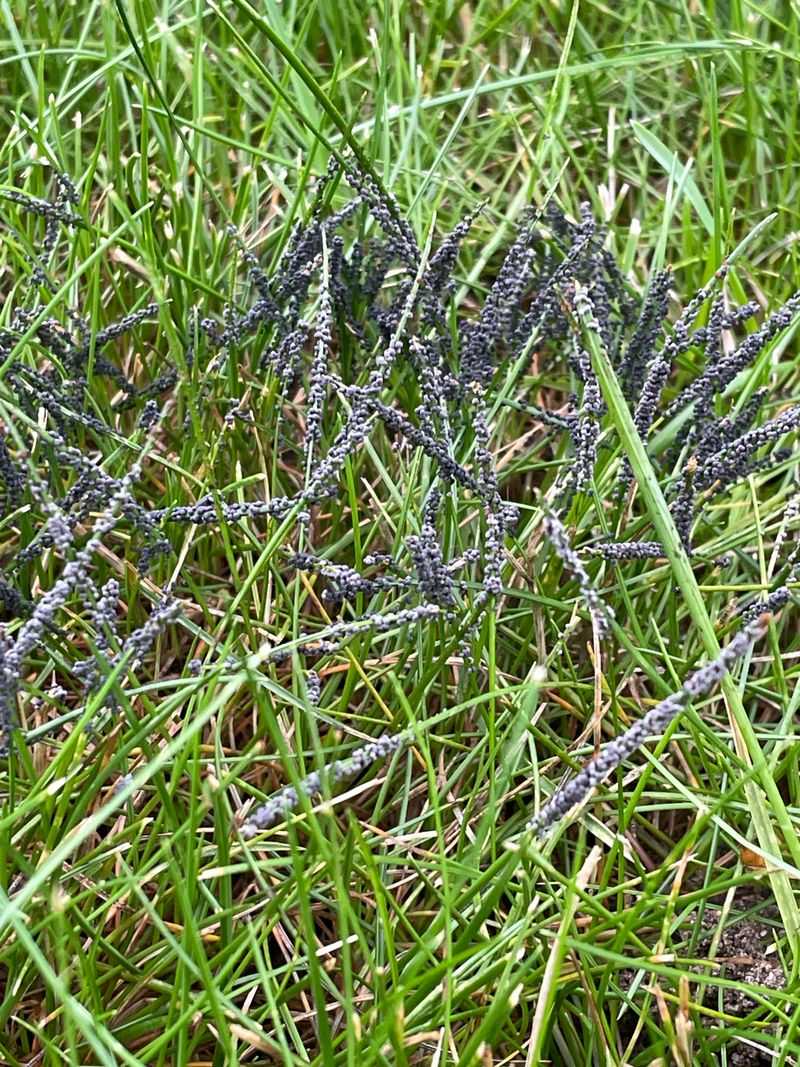
Slime molds act as nature’s cleanup crew, consuming bacteria, fungi spores, and tiny bits of decaying plant material.
Your lawn provides a perfect buffet for these organisms, especially in areas with thick thatch or decomposing grass clippings.
They glide along surfaces, engulfing microscopic food particles much like a giant single-celled creature.
Gardeners in Pennsylvania often notice slime molds appearing after periods of rain when moisture brings bacteria to the surface.
The organisms follow chemical signals to locate their food sources, demonstrating a surprising level of problem-solving ability.
Research has shown that slime molds can even navigate mazes to find nutrients efficiently.
Your grass remains completely safe during this feeding process since slime molds have zero interest in living plant tissue.
They only consume what has already begun breaking down or exists as microscopic organisms.
This feeding behavior actually benefits your lawn by helping decompose organic matter and recycling nutrients back into the soil, making slime molds unexpected allies in maintaining healthy Pennsylvania gardens.
Moisture And Humidity Trigger Its Appearance
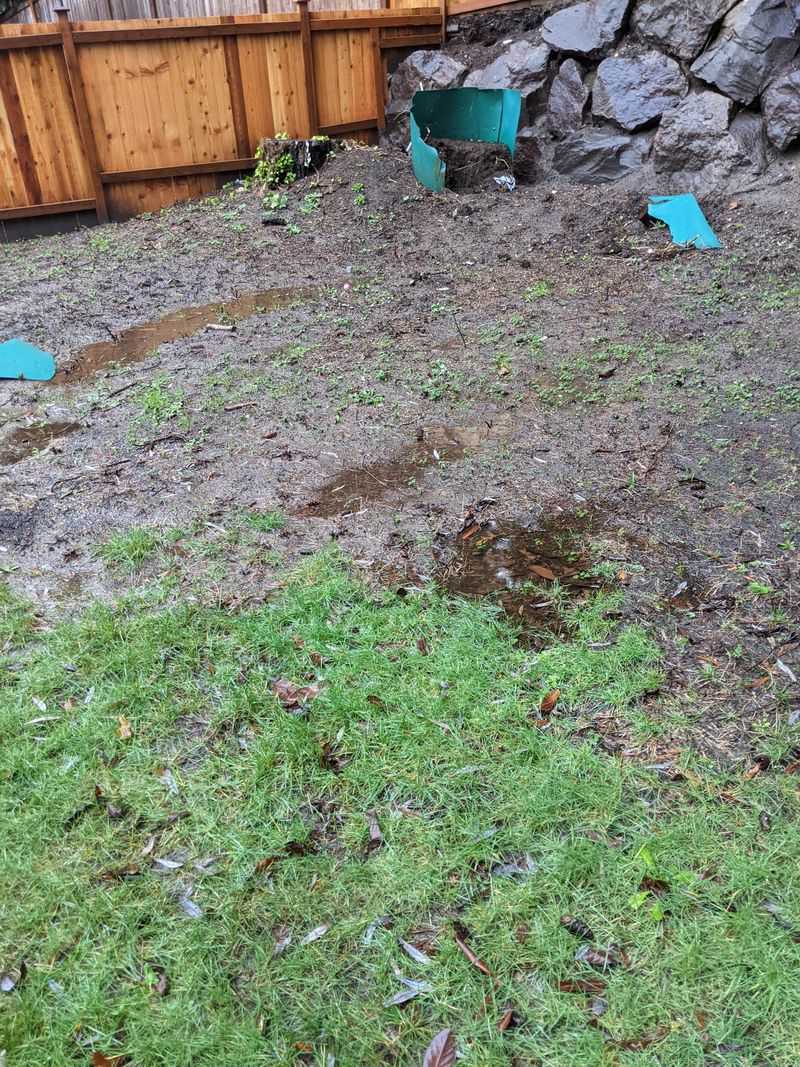
Rainy weather creates ideal conditions for slime molds to emerge and spread across Pennsylvania lawns.
These organisms need moisture to move and reproduce, which explains why they appear most commonly during wet springs and humid summers.
After several days of rain, homeowners often discover the black growths seemingly overnight.
Morning dew and irrigation systems can also provide enough moisture to support slime mold activity.
Shaded areas of your yard that stay damp longer tend to develop more frequent infestations.
Pennsylvania’s climate, with its humid summers and frequent rainfall, provides perfect conditions for these moisture-loving organisms.
The good news is that dry weather naturally controls slime mold populations without any intervention needed.
Your Pennsylvania Garden Changes Every Week. Your Plan Should Too.
Gardening in Pennsylvania changes quickly throughout the season. Every Friday you’ll receive a simple weekly plan showing exactly what to plant, prune, fertilize, harvest, and protect so you never miss the right timing.
When conditions become drier, the organisms form dormant spores and disappear from view.
Many Pennsylvania gardeners find that simply waiting for sunny weather solves the problem completely.
Improving drainage in consistently wet areas can help prevent future appearances, though occasional slime mold growth remains normal and harmless in most landscapes throughout the state.
The Black Color Comes From Mature Spores
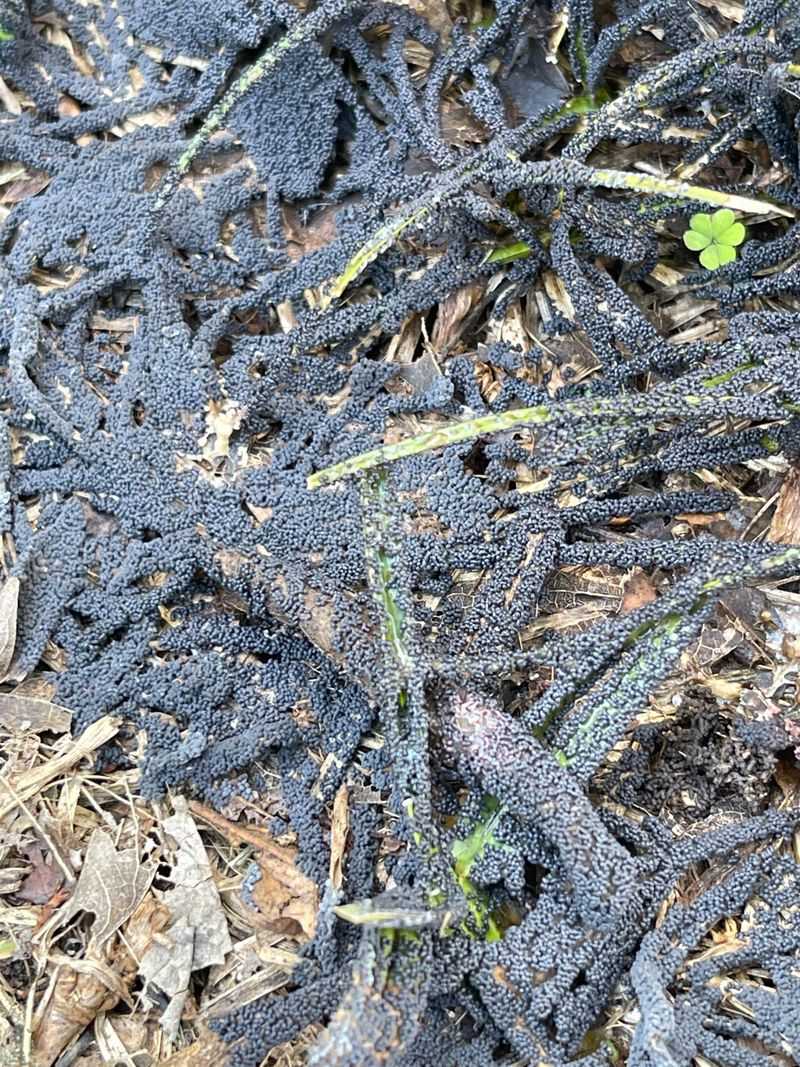
When you first notice slime mold, it might appear yellow, white, or even bright orange before turning black.
The dramatic color change happens as the organism matures and prepares to reproduce.
That dark appearance comes from millions of tiny spores developing within the slime mold’s structure.
Pennsylvania gardeners sometimes describe the black stage as looking like soot, ashes, or spilled ink on their lawns.
The powdery texture you see is actually countless individual spores ready to spread and start new colonies.
Wind, rain, and lawn mowers can scatter these spores across your yard and into neighboring properties.
Touching the black spores usually leaves dark residue on your hands, but this material is completely harmless to humans.
The spores can survive harsh conditions for years, waiting patiently for the right moisture and temperature to germinate.
This explains why slime molds seem to return to the same spots in your Pennsylvania lawn year after year, even when you thought they had vanished permanently from your property.
It Does Not Harm Your Grass
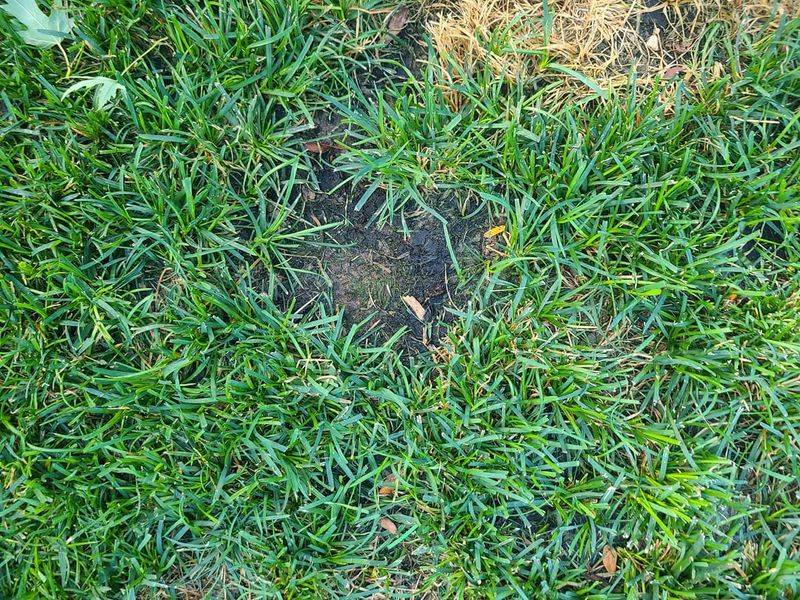
Many Pennsylvania homeowners panic when they see black slime mold covering their carefully maintained lawns.
However, your grass suffers no damage from these temporary visitors.
Slime molds simply rest on top of grass blades without penetrating or feeding on the plant tissue itself.
The organisms might block sunlight temporarily if they cover grass for several days.
Even this situation rarely causes lasting harm since slime molds typically move or dry up quickly.
Once you remove the slime mold or it disappears naturally, the grass underneath springs back to its normal healthy appearance.
Some gardeners notice that grass looks slightly yellowed immediately after slime mold removal.
This temporary discoloration comes from reduced light exposure rather than any damage caused by the organism.
Within a few days of normal sunlight, the grass regains its green color completely.
Pennsylvania lawn care experts emphasize that slime molds represent a cosmetic issue rather than a genuine threat to turf health, so aggressive treatments are unnecessary and potentially more harmful than the slime mold itself.
You Can Remove It With A Rake Or Water
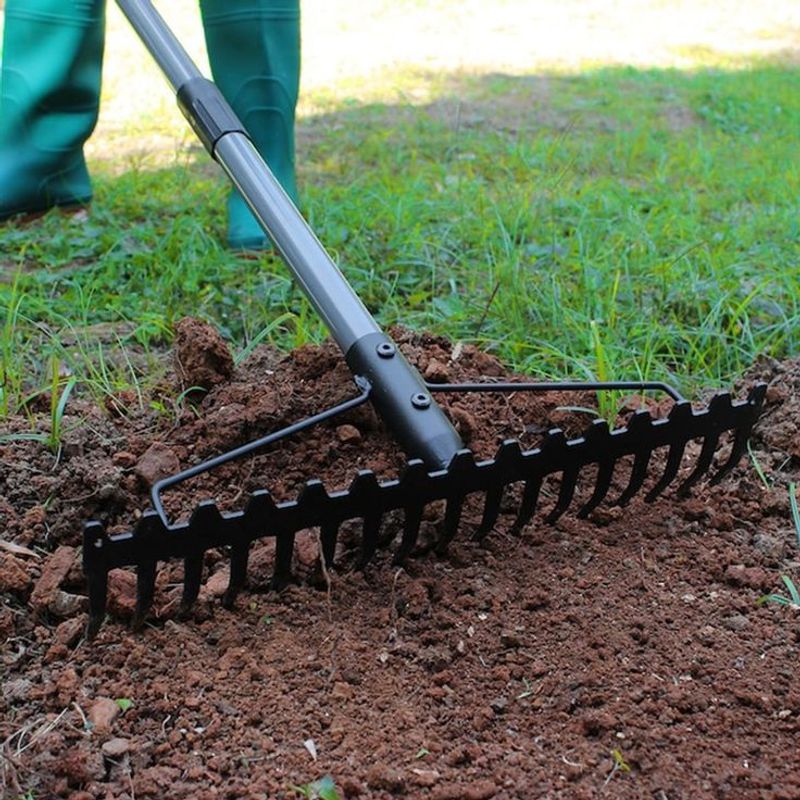
Getting rid of slime mold requires no special chemicals or expensive treatments.
A simple garden rake effectively breaks up and removes the organism from your grass.
Gently raking the affected area scatters the slime mold and exposes your grass to sunlight again.
Pennsylvania gardeners can also use a strong spray from a garden hose to wash slime mold off grass blades.
This method works particularly well for smaller patches or delicate areas where raking might damage plants.
The water breaks apart the slime mold and washes it into the soil where it decomposes harmlessly.
Some homeowners prefer letting nature take its course since slime molds disappear on their own within a week or two.
If you choose active removal, collect the raked material and add it to your compost pile where it continues breaking down organic matter.
Avoid using fungicides or other chemicals since they prove ineffective against slime molds and may harm beneficial organisms in your Pennsylvania soil.
Simple mechanical removal or patient waiting both produce excellent results without environmental risks.
Reducing Thatch Helps Prevent Future Growth
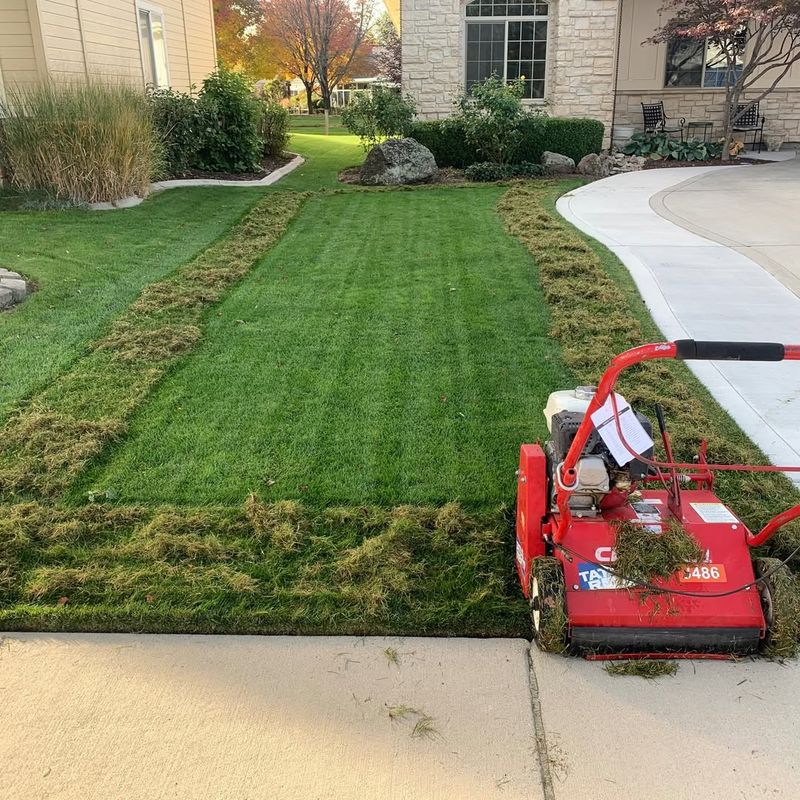
Thick thatch layers create perfect conditions for slime molds by trapping moisture and providing abundant organic matter.
Thatch consists of deceased grass stems, roots, and other plant material that accumulates between living grass and soil.
When this layer exceeds half an inch, it becomes a slime mold paradise.
Pennsylvania lawns often develop excessive thatch due to overwatering, overfertilizing, or infrequent mowing.
Dethatching your lawn in spring or fall removes this material and reduces future slime mold problems.
You can rent a dethatching machine or use a specialized rake for smaller areas.
Core aeration also helps by improving air circulation and reducing moisture retention in the thatch layer.
Many Pennsylvania lawn care services offer aeration as part of their maintenance programs.
After dethatching, continue regular lawn care practices that prevent thatch buildup, including mowing at the proper height and avoiding excessive nitrogen fertilizer.
These preventive measures create less favorable conditions for slime molds while improving overall lawn health and appearance throughout the growing season in your Pennsylvania yard.
Slime Molds Can Actually Move Around
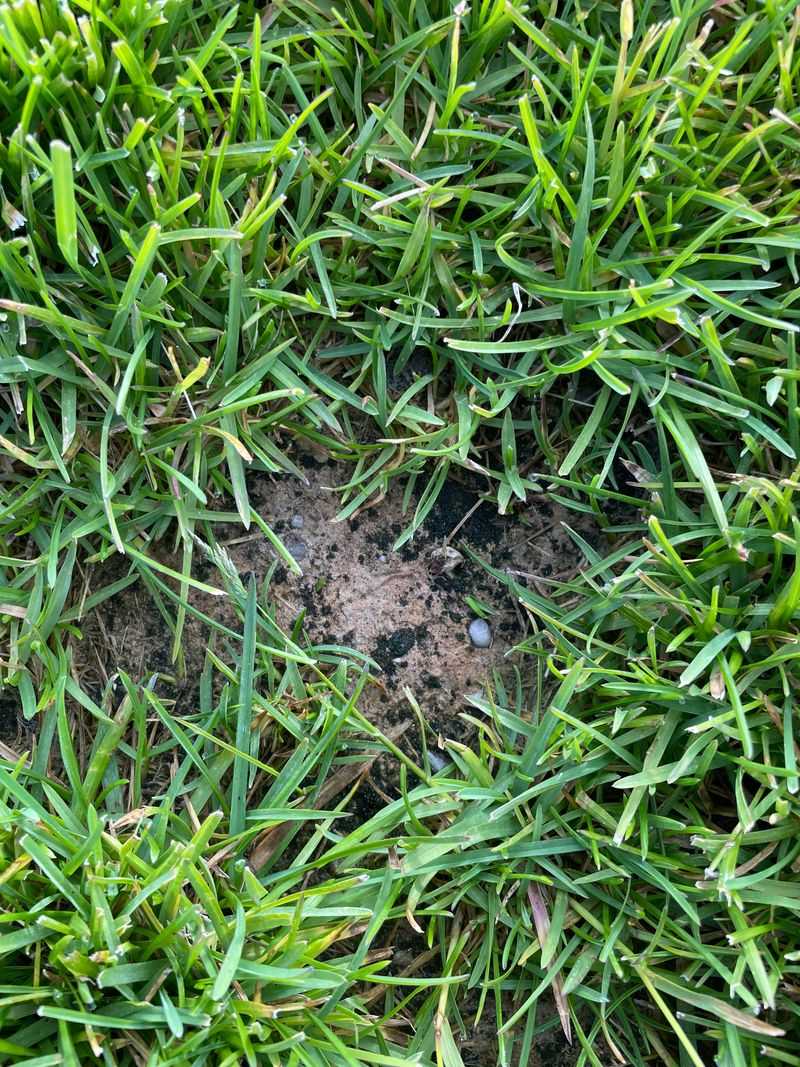
Unlike plants or fungi that stay rooted in one place, slime molds possess the remarkable ability to creep across surfaces.
They move incredibly slowly, typically covering just a few inches per hour, but this mobility sets them apart from other lawn organisms.
Pennsylvania gardeners sometimes notice that slime mold patches change location overnight.
The movement happens through a process called cytoplasmic streaming, where the organism’s internal fluid flows in coordinated waves.
This allows the slime mold to explore its environment in search of food and favorable conditions.
Scientists have studied this movement extensively because it demonstrates simple intelligence without a brain or nervous system.
You might observe slime molds climbing up grass blades, over mulch, or across sidewalks as they travel.
They tend to move away from bright light and toward areas with more moisture and food sources.
This mobility explains why slime molds can suddenly appear in new areas of your Pennsylvania lawn even when you thought you had removed them completely from your property earlier in the season.
It Appears Most Often In Spring And Summer
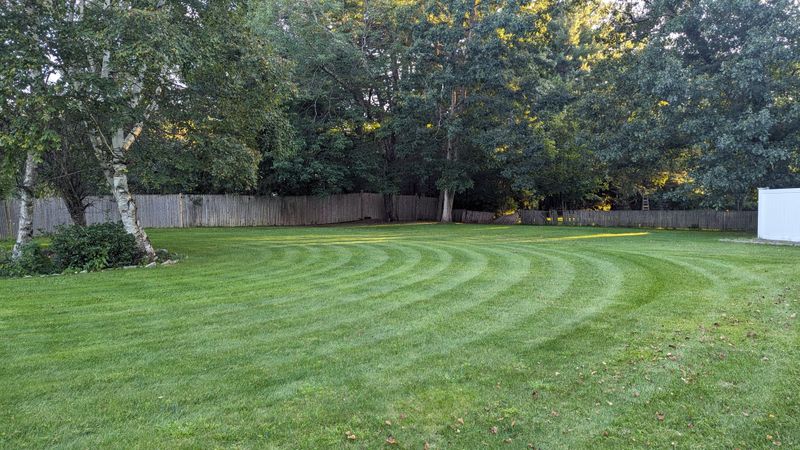
Warm temperatures combined with frequent rainfall make spring and summer prime time for slime mold activity in Pennsylvania.
April through August typically see the most reports of these organisms appearing on lawns throughout the state.
The combination of warmth and moisture triggers dormant spores to germinate and begin their active phase.
Late spring proves especially problematic when Pennsylvania experiences extended rainy periods.
Your lawn stays wet for days, creating continuous favorable conditions for slime mold development.
Summer thunderstorms can also trigger sudden appearances, with homeowners discovering new patches within hours of heavy rain.
Fall and winter appearances remain rare because cooler temperatures slow slime mold activity significantly.
However, unusually warm autumn weather can produce late-season outbreaks in Pennsylvania yards.
Tracking weather patterns helps predict when slime molds might appear on your property.
After several consecutive days of rain and temperatures above sixty degrees, check your lawn for early signs of slime mold so you can address it before it becomes more noticeable to neighbors and visitors throughout your Pennsylvania neighborhood.
Scientists Study It For Its Problem-Solving Abilities
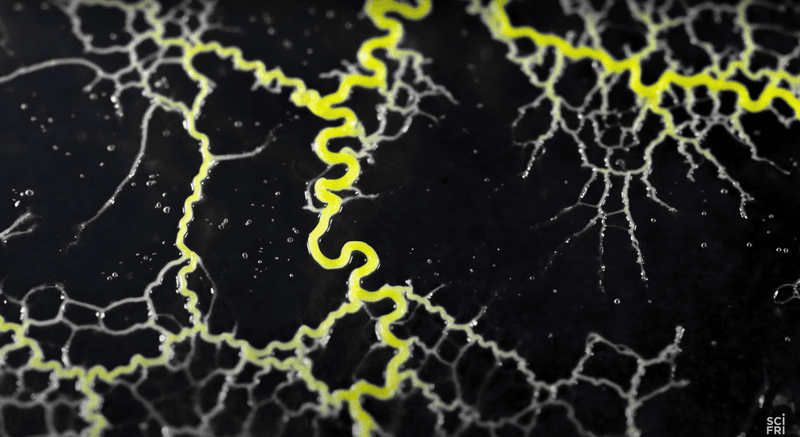
Researchers worldwide find slime molds fascinating because they solve complex problems without possessing a brain.
These organisms can navigate mazes, find the shortest path between food sources, and even make decisions about resource allocation.
Pennsylvania universities have participated in studies exploring these remarkable abilities.
One famous experiment showed that slime molds could recreate the efficient layout of Tokyo’s railway system when food sources were arranged like city stations.
The organisms naturally found the most efficient connections, matching designs that human engineers took years to develop.
This research has applications in network design, traffic management, and computer algorithms.
Medical researchers also study slime molds because their cellular behavior resembles certain aspects of human immune system responses.
Understanding how these simple organisms coordinate movement and respond to their environment provides insights into more complex biological systems.
When you spot slime mold on your Pennsylvania lawn, you are observing an organism that continues teaching scientists about intelligence, efficiency, and biological organization in ways that benefit multiple fields of research and technology development worldwide.