10 Things That Help You Reveal A Coyote Has Been In Your Arizona Yard
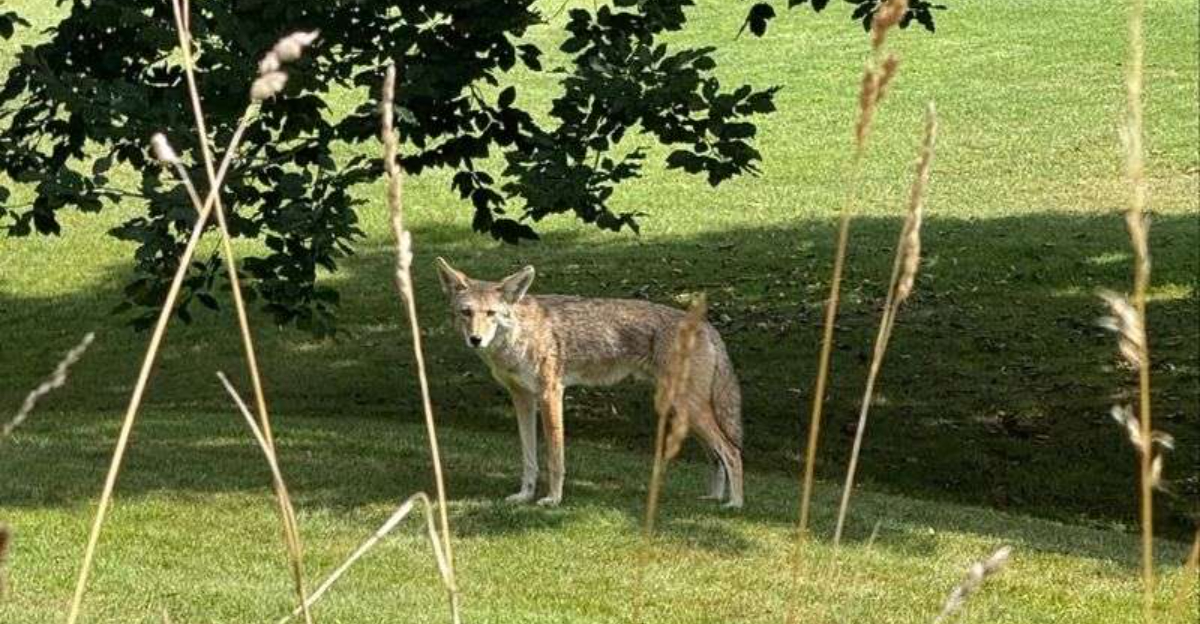
Coyotes are clever, adaptable animals that have learned to live alongside humans in both rural and suburban areas.
While most encounters are harmless, knowing whether a coyote has been visiting your yard is important for keeping pets, small livestock, and even yourself safe.
The challenge is that coyotes are mostly nocturnal and cautious around people, so you may never actually see one in action.
Instead, you can rely on the subtle signs they leave behind, which act as clues to their presence.
By learning to recognize these signs, you can piece together the story of who has been moving through your yard and when.
Tracks in the soil or mud, for example, can show the size of the animal and its direction of travel, while scat can reveal what it’s been eating and how recently it passed through.
Disturbed pet food, garden areas, or small animal shelters may indicate active hunting or scavenging, and scent markings such as urine can communicate territorial boundaries.
Even hearing a distinctive yip, howl, or chatter at night can be an important clue.
Understanding these signs not only helps you confirm a coyote’s presence but also allows you to make informed decisions about safety measures and deterrents.
By paying attention to the patterns coyotes leave behind, you can coexist more safely and reduce the risk of unwanted encounters.
In this article, we’ll explore all the ways you can detect these elusive visitors and what each sign tells you about their behavior.
1. Scat Scattered Across Your Property
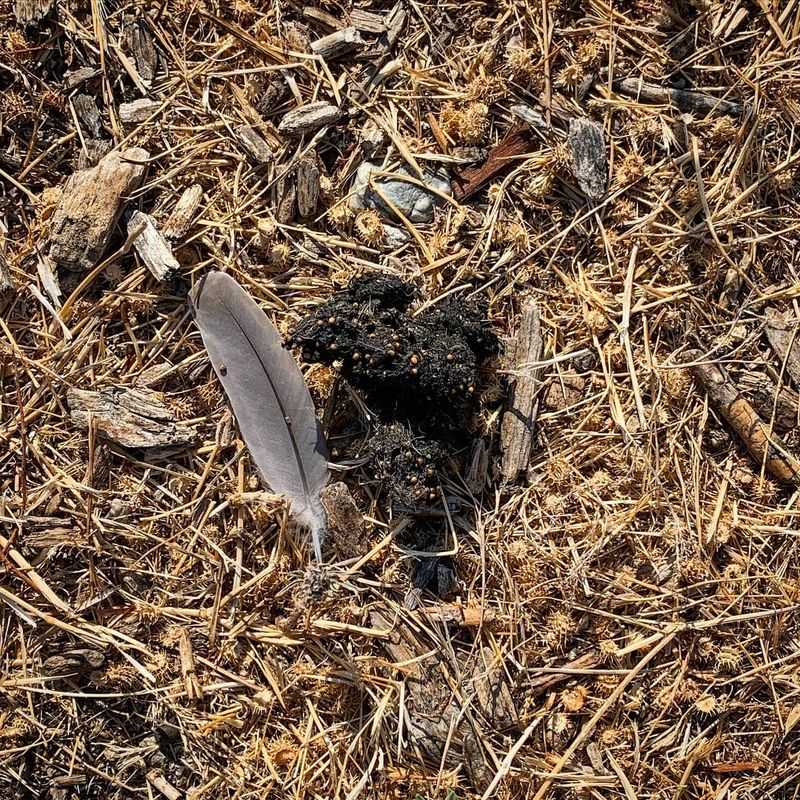
Coyote droppings are one of the most obvious signs that these wild visitors have been exploring your yard.
Their scat typically appears tubular, about three to four inches long, and often contains visible remnants of their recent meals.
You might notice fur, small bones, seeds, or berry fragments mixed throughout.
Unlike dog waste, coyote scat tends to be darker and more twisted, with tapered ends that help distinguish it from domestic animals.
Fresh droppings have a strong musky odor that becomes less noticeable as they dry out over time.
Coyotes often leave their scat in prominent locations like the middle of paths, driveways, or near fence lines.
This behavior serves as a territorial marker, communicating their presence to other coyotes in the area.
Finding multiple piles suggests regular visits rather than a single passing through.
The contents can reveal what the coyote has been eating, whether it’s small rodents, insects, fruits, or unfortunately, pet food left outside.
Always use gloves or a shovel when removing coyote scat, as it can contain parasites harmful to humans and pets.
Proper disposal helps reduce the attraction and discourages return visits.
Documenting where you find droppings helps you understand their movement patterns around your property.
2. Distinctive Paw Prints In Soft Ground
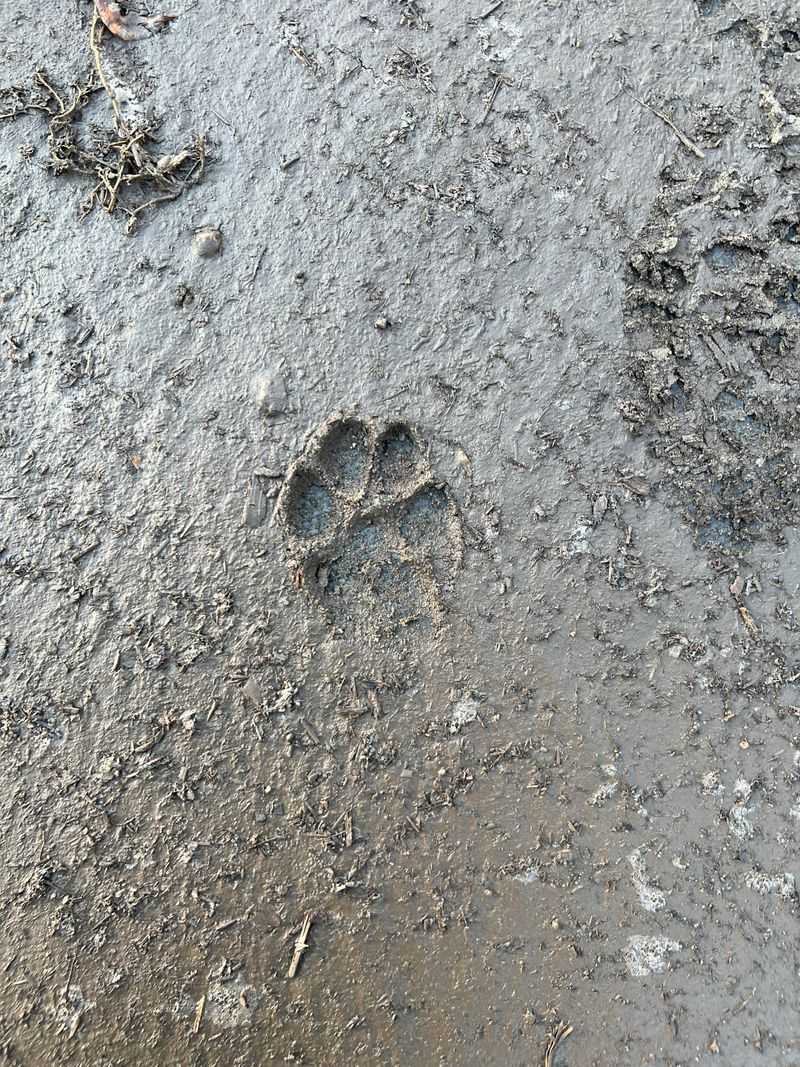
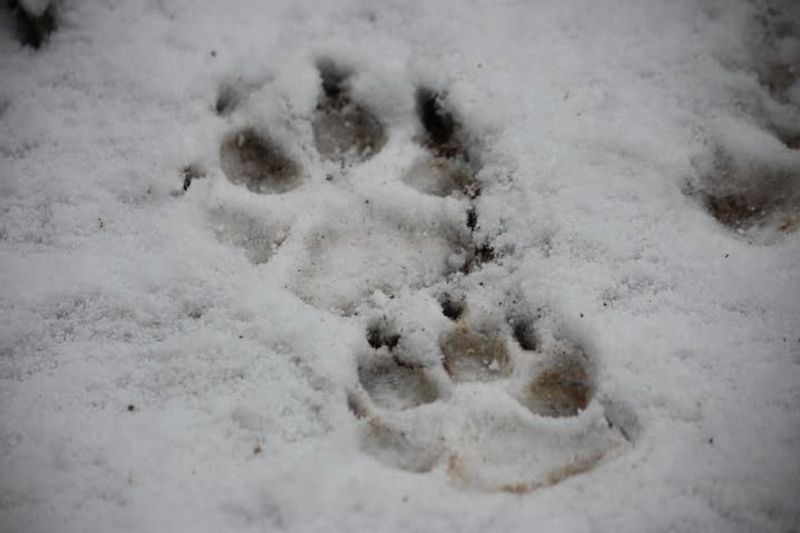
Tracks left in mud, snow, or soft dirt provide concrete evidence of coyote activity around your home.
Coyote prints measure approximately two and a half inches long and two inches wide, forming an oval shape that’s noticeably narrower than most dog tracks.
Your Arizona Garden Changes Every Week. Your Plan Should Too.
Gardening in Arizona changes quickly throughout the season. Every Friday you’ll receive a simple weekly plan showing exactly what to plant, prune, fertilize, harvest, and protect so you never miss the right timing.
The front paws are slightly larger than the hind paws, creating a distinctive walking pattern.
Each print shows four toe pads arranged in a diamond formation with visible claw marks extending from each toe.
The heel pad has a triangular shape with a distinctive notch on the rear edge.
When coyotes walk, their tracks form an almost straight line because their hind feet step into the impressions left by their front feet.
This efficient gait differs from the wider, more scattered pattern typical of domestic dogs.
Fox tracks appear similar but are significantly smaller and more delicate, usually measuring less than two inches long.
Wolf tracks, though rare in most suburban areas, are much larger and rounder than coyote prints.
Fresh tracks with sharp edges indicate recent activity, while weathered prints suggest older visits.
Following the track pattern can reveal entry and exit points in your yard.
Taking photos of tracks helps wildlife experts confirm whether coyotes are truly visiting your property.
3. Missing Or Disturbed Pet Food Bowls

Coyotes possess remarkable resourcefulness when it comes to finding easy meals, and outdoor pet food becomes an irresistible buffet.
If you notice your pet’s food bowl emptied overnight or knocked over with kibble scattered around, a coyote may be the culprit.
These intelligent animals quickly learn feeding schedules and return regularly once they discover a reliable food source.
Water bowls left outside might also show signs of disturbance, with muddy paw prints or debris floating in them.
Coyotes need water just like any other animal, especially during hot summer months.
Bird feeders positioned low to the ground often attract rodents, which in turn attract coyotes hunting for prey.
Gardens with ripe vegetables or fruit trees can also draw coyote attention, particularly when natural food sources become scarce.
You might find partially eaten produce or disturbed soil around your garden beds.
Small livestock like chickens or rabbits face serious risk when coyotes discover their presence.
Damaged coops, missing birds, or scattered feathers indicate a predator has been investigating or attacking.
Bringing pet food indoors at night eliminates this attractant and reduces the likelihood of repeat visits.
Securing garbage cans with tight-fitting lids also helps prevent coyotes from scavenging around your property.
4. Territorial Urine Markings On Vertical Surfaces
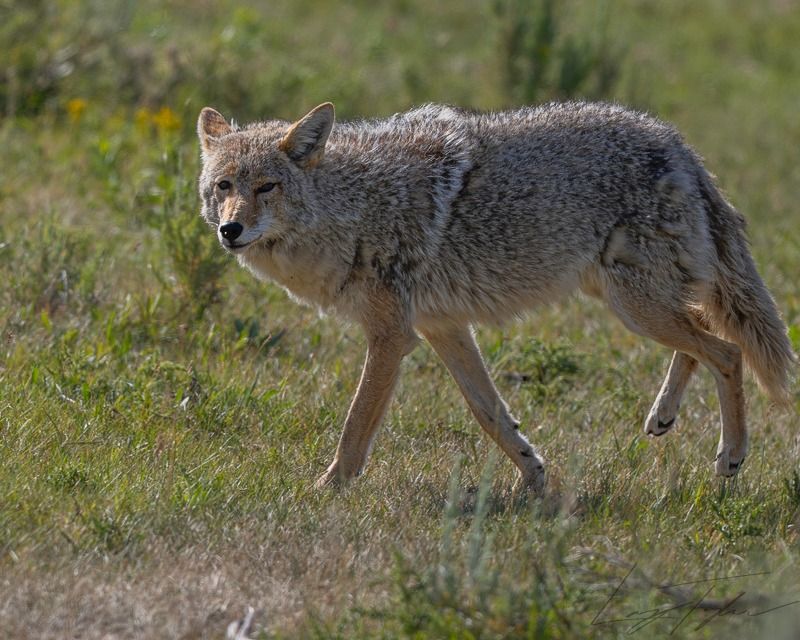
Territorial marking represents a key communication method for coyotes, and urine spots on fence posts, trees, or lawn furniture signal their claimed territory.
Unlike dogs that mark randomly, coyotes deliberately choose prominent vertical objects to maximize scent visibility.
These markings typically appear at nose height for other coyotes, usually about twelve to eighteen inches off the ground.
Fresh urine spots emit a distinctively pungent, musky odor that differs from domestic dog urine.
The scent intensifies during breeding season, which runs from January through March in most regions.
Male and female coyotes both engage in marking behavior to establish boundaries and communicate reproductive status.
You might notice multiple marking spots along your fence line or around the perimeter of your property.
Coyotes often create what wildlife experts call scent posts, returning to the same locations repeatedly to refresh their messages.
Grass beneath these marking spots may appear discolored or burned due to the concentrated urine.
Finding fresh markings suggests active territory claims rather than occasional wandering through your area.
The frequency and freshness of markings help gauge how regularly coyotes visit your yard.
Cleaning marked areas with enzymatic cleaners can help reduce the scent attraction, though determined coyotes may simply re-mark the same spots.
5. Nocturnal Visits During Prime Activity Hours
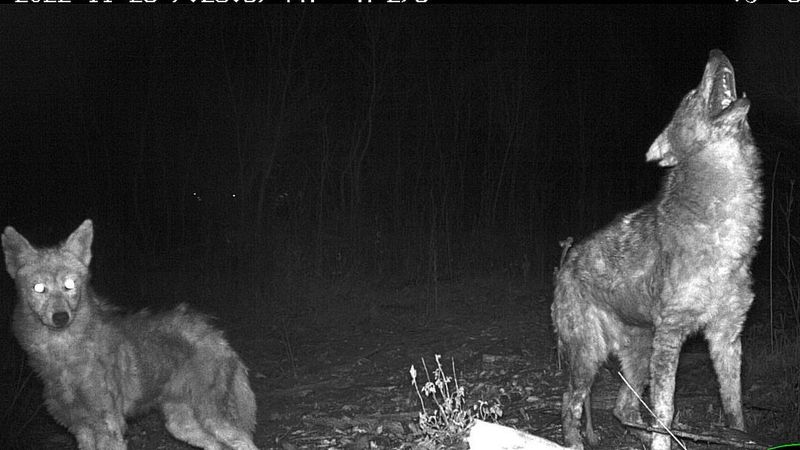
Coyotes are primarily crepuscular, meaning they’re most active during dawn and dusk when shadows provide natural camouflage.
Most yard visits occur between sunset and sunrise, allowing them to hunt and explore while avoiding human encounters.
However, urban coyotes have adapted their schedules to match reduced human activity, becoming increasingly nocturnal in populated areas.
Evidence left behind during these nighttime excursions accumulates while you sleep, appearing mysteriously by morning.
Motion-activated lights that trigger unexpectedly during early morning or evening hours often indicate coyote movement.
Pets acting unusually anxious or alert during these times may sense or smell nearby coyotes.
Dogs might bark persistently toward the yard perimeter, while cats may refuse to go outside during their usual evening routines.
Security cameras with night vision capabilities capture the most reliable evidence of coyote visits.
Reviewing footage from midnight to six in the morning typically reveals the most activity.
During winter months, coyotes may extend their active hours due to shorter days and increased energy needs.
Breeding season also influences activity patterns, with more daytime sightings as coyotes search for mates and establish territories.
Understanding these timing patterns helps you plan outdoor activities and supervise pets during high-risk periods when coyotes are most likely prowling nearby.
6. Strong Musky Odors Near Den Sites
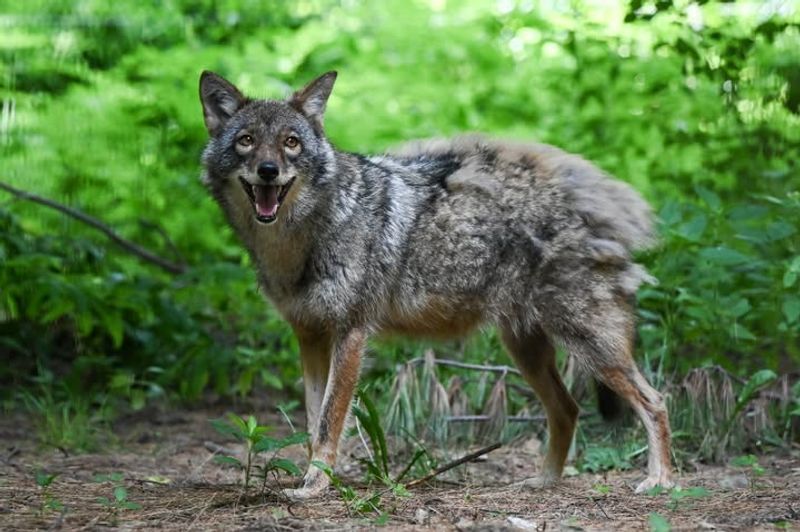
A distinctive musky smell lingering in certain areas of your yard often indicates regular coyote presence or even a nearby den.
This odor comes from scent glands coyotes use for communication and differs noticeably from typical outdoor smells.
The scent intensifies near resting spots, travel routes, or areas where coyotes have marked territory repeatedly.
Coyotes occasionally establish dens in suburban yards, particularly under sheds, decks, or in thick brush piles.
Female coyotes seek protected spaces for raising pups, typically between April and June.
A den entrance appears as a hole roughly twelve inches in diameter with disturbed soil around the opening.
You might notice flattened grass or vegetation leading to the den entrance from repeated traffic.
Scat and food remains often accumulate near active dens as parents bring meals back for their young.
The musky odor becomes particularly strong near these sites due to concentrated activity.
Even without a den, coyotes create temporary resting spots called daybeds in secluded areas.
These shallow depressions in tall grass or under bushes show where a coyote has bedded down.
Finding multiple daybeds suggests your yard has become part of a coyote’s regular territory.
Never approach or disturb a suspected den, as protective parents may become aggressive when defending their young.
7. Seasonal Behavior Changes And Evidence Patterns
Coyote behavior and the signs they leave behind vary dramatically throughout the year, influenced by breeding cycles and food availability.
Winter brings more visible tracks in snow, making it easier to document their movement patterns across your property.
Cold weather also drives coyotes closer to human habitation as they search for easier food sources.
Spring marks breeding season and pup-rearing time, when parent coyotes become more territorial and protective.
You’ll find more scat and territorial markings as they defend denning areas.
Food remains might include more small prey items as parents hunt intensively to feed growing pups.
Summer brings juvenile coyotes learning to hunt, sometimes resulting in clumsy attempts at raiding garbage or approaching pet food.
The evidence becomes more scattered as young coyotes explore and establish their own territories.
Hot weather drives increased water-seeking behavior, with more activity around pools, ponds, or water features.
Fall represents dispersal season when young coyotes leave their parents to find new territories.
This migration increases the likelihood of transient coyotes passing through your yard.
Scat during autumn often contains more berries and fruits as coyotes take advantage of seasonal abundance.
Understanding these seasonal patterns helps you anticipate when to be most vigilant about securing your yard.
8. Trail Camera Footage And Strategic Monitoring
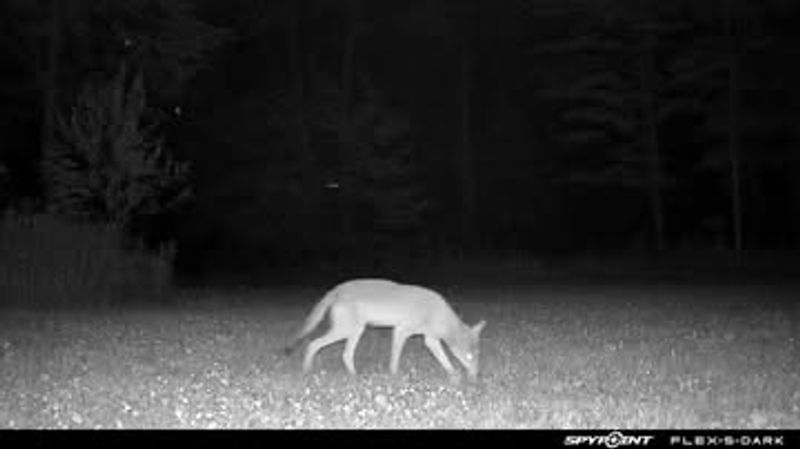
Modern trail cameras provide the most definitive proof of coyote visits without requiring you to stay awake watching.
These motion-activated devices capture photos or videos whenever movement triggers their sensors, documenting wildlife activity automatically.
Position cameras along suspected travel routes, near fence lines, or aimed at areas where you’ve found other signs.
Mount cameras about three feet off the ground, angling them slightly downward to capture clear body shots of passing animals.
Models with infrared night vision prove essential since coyotes primarily move during darkness.
Some cameras even send images directly to your smartphone, providing real-time alerts of yard visitors.
Review footage regularly to identify patterns in timing, frequency, and behavior of coyote visits.
You might discover they use the same entry point consistently or follow predictable paths through your property.
This information helps you make targeted improvements to fencing or lighting in specific problem areas.
Setting up multiple cameras creates a more complete picture of coyote movement throughout your yard.
Date and time stamps on footage reveal whether visits are occasional or regular occurrences.
Sharing quality footage with local wildlife officials helps them track coyote populations and behavior in your neighborhood.
Some communities use collective camera data to map coyote territories and movement corridors across residential areas.
9. Multiple Signs Creating A Complete Picture
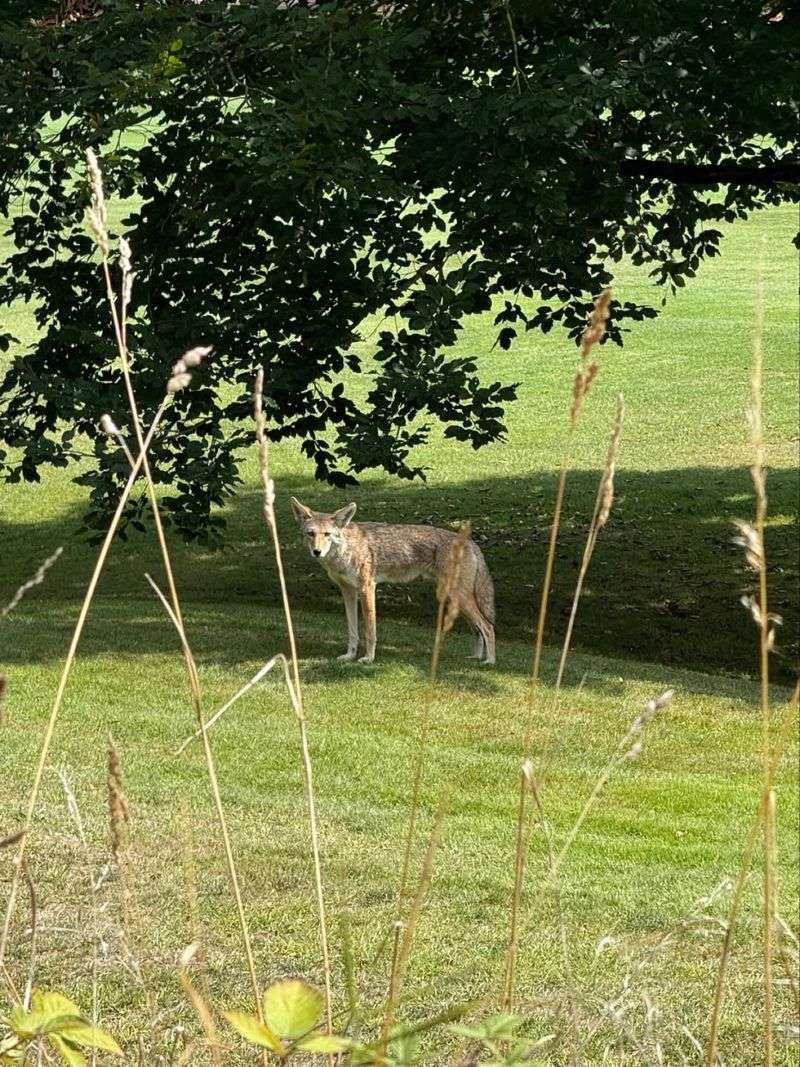
Finding one isolated sign might indicate a coyote simply passed through your area, but multiple indicators together suggest established patterns.
When you discover tracks near scat, along with territorial markings and disturbed pet food, the evidence becomes much more convincing.
Learning to read these signs together like pieces of a puzzle reveals the full story of coyote activity.
Start by creating a simple map of your property, marking locations where you find different types of evidence.
Patterns emerge when you see tracks consistently entering at the same fence gap and scat appearing along the same route.
Fresh signs appearing regularly indicate ongoing visits rather than random wandering.
Pay attention to the condition and age of different signs to establish a timeline of activity.
Fresh tracks with recent scat suggest a visit within the past day or two.
Weathered signs mixed with fresh ones indicate your yard has been part of a coyote’s territory for some time.
Combining physical evidence with behavioral clues from your pets creates an even clearer picture.
Dogs barking at specific times, unusual pet anxiety, and physical signs all work together to confirm coyote presence.
Document everything with photos and notes, including dates and locations.
This comprehensive approach helps you understand whether you’re dealing with occasional visitors or resident coyotes claiming your yard as territory.
10. Safety Precautions After Confirming Presence

Confirming coyote activity in your yard requires immediate action to protect your family and pets without harming the animals.
Remove all attractants by bringing pet food indoors, securing garbage in animal-proof containers, and cleaning up fallen fruit from trees.
These simple changes often reduce visits significantly since coyotes prefer easy food sources.
Install motion-activated lights and sprinklers around your property perimeter to startle and discourage coyotes from entering.
Bright lights disrupt their preferred cover of darkness and make them feel exposed and vulnerable.
Repair any gaps in fencing, ensuring barriers extend at least six feet high with wire buried underground to prevent digging.
Never leave small pets unattended outdoors, especially during dawn, dusk, and nighttime hours when coyotes are most active.
Walk dogs on short leashes and stay close to your home during high-risk periods.
Consider installing coyote rollers on fence tops, which spin when animals try to climb over them.
Practice hazing techniques if you encounter a coyote, making loud noises, waving your arms, and throwing objects near them without hitting them.
This teaches coyotes to fear humans and avoid residential areas.
Contact local wildlife authorities if coyotes appear during daytime, act aggressively, or show no fear of humans.
These behaviors may indicate rabies or habituation requiring professional intervention.