7 Signs A Wolf Passed Quietly Near Your Montana Property Without You Knowing
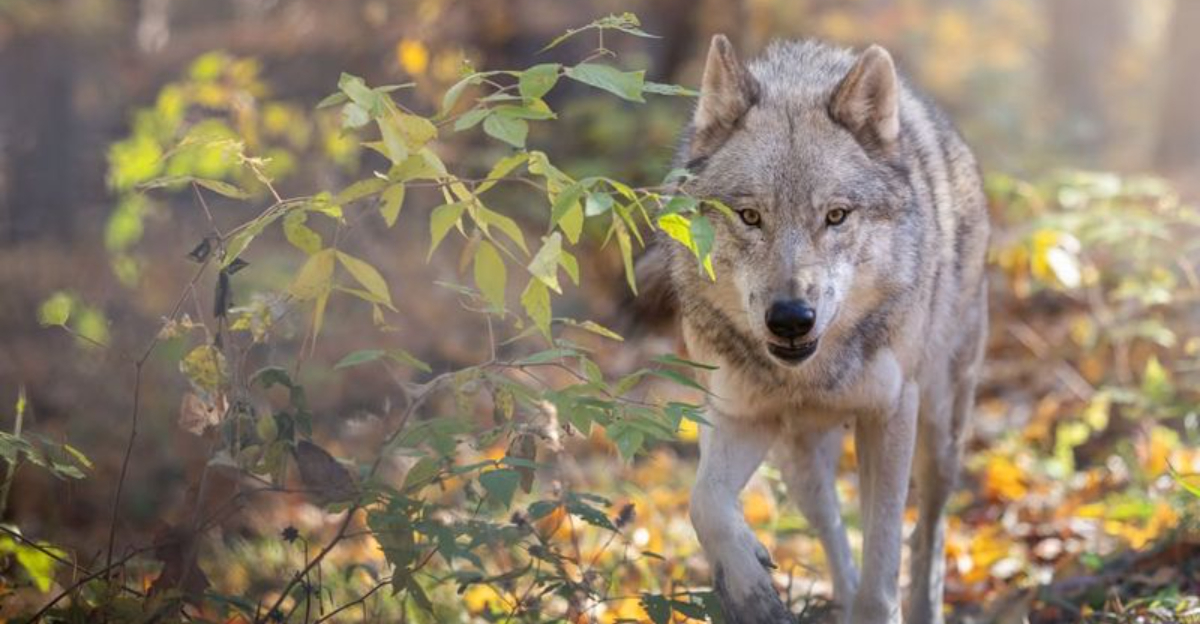
A still Montana morning can hide a trail of secrets. Long before the sun climbs over the pines, a wolf may slip through the outskirts of a property like a ghost on padded feet.
No fanfare, no warning, just a quiet traveler moving with purpose.
By the time daylight hits the ground, everything looks almost the same, yet something feels different, as if the land itself is trying to whisper a story.
A single track pressed into soft dirt, a shift in the behavior of local wildlife, or a narrow path brushed through tall grass can speak louder than a howl in the night.
Wolves are masters of staying one step ahead, leaving hints only a careful eye can catch.
Learning to read those clues keeps a homeowner from being caught flat-footed.
With a bit of patience and a knack for spotting small changes, anyone can uncover signs that a wolf passed close by without making a sound.
1. Large Canine Tracks With Distinct Spacing
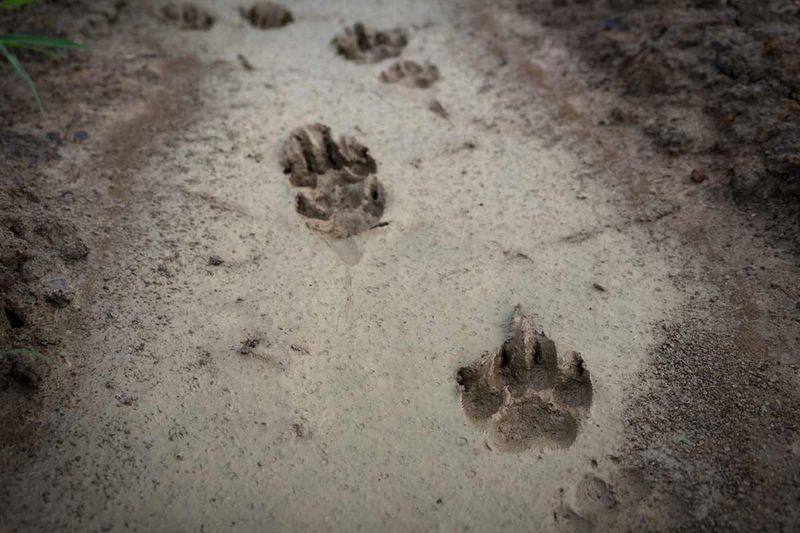
Wolf tracks tell a story that’s easy to miss if you’re not paying attention.
Unlike dog prints that wander aimlessly across your property, wolf tracks follow a purposeful, straight-line pattern.
Each print measures roughly four to five inches long, significantly larger than most domestic dog tracks you’d encounter around Montana ranches.
The spacing between tracks reveals important information too.
Wolves move efficiently, placing their back paws almost exactly where their front paws landed, creating what wildlife experts call a “direct register” walking pattern.
This creates a single-file line of prints rather than the staggered pattern dogs leave behind.
When wolves trot, the spacing between prints stretches to about 30 inches or more.
Look for these tracks in soft soil near water sources, muddy trails, or fresh snow during Montana winters.
The claw marks are visible and prominent, extending well beyond the toe pads.
If you find a trail of large canine prints cutting across your property in a remarkably straight line, especially near forested edges or creek beds, there’s a strong possibility a wolf passed through recently.
Many Montana landowners mistake these for large dog tracks, but the purposeful direction and consistent stride pattern are telltale differences.
Wolves rarely meander or circle back on themselves like domestic dogs do during casual walks.
2. Livestock Behaving Unusually Nervous
Animals possess sensory abilities far beyond human capability, detecting threats we completely miss.
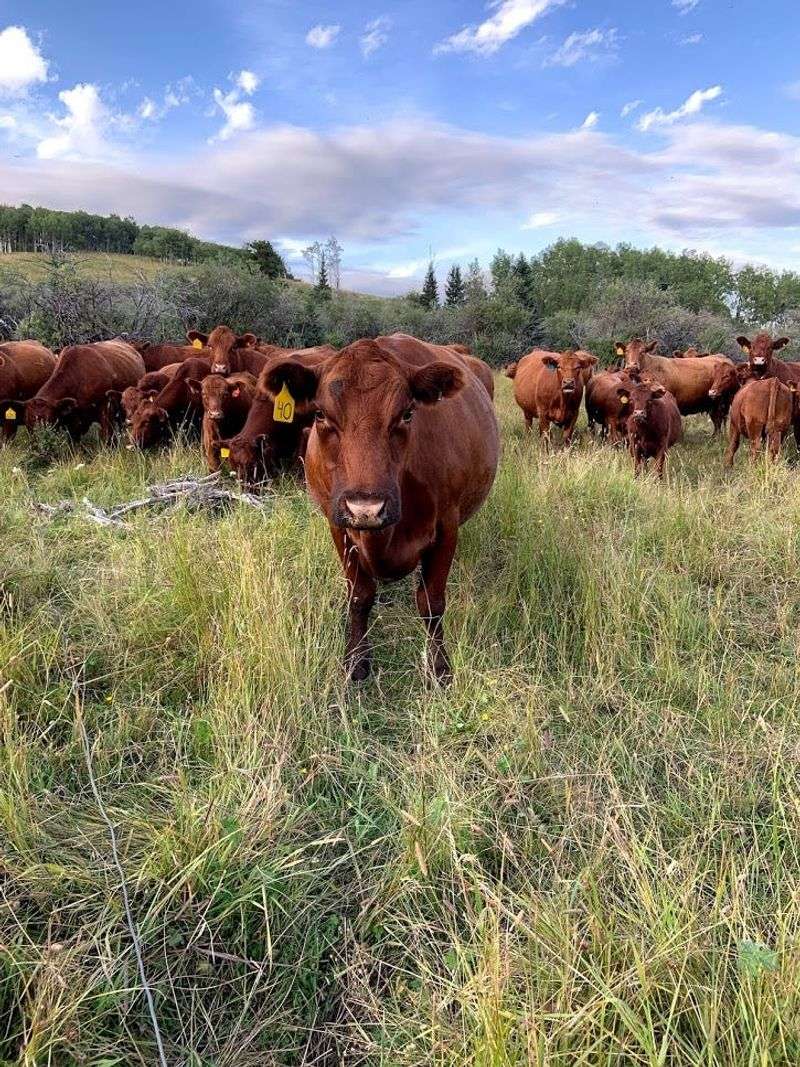
Your cattle, horses, or sheep may start displaying strange behaviors that seem to come from nowhere, bunching together tightly in corners of pastures, refusing to graze in areas they normally frequent, or showing heightened alertness during evening hours.
Horses become particularly reactive when wolves have recently traveled through an area.
They’ll face the same direction with ears pricked forward, nostrils flaring as they test the air for scents.
Some horses will pace fence lines or whinny repeatedly without obvious cause.
Cattle often refuse to spread out naturally across available grazing land, instead staying clustered as a defensive measure.
These behavioral changes can persist for several days after a wolf’s visit to your Montana property.
The predator’s scent lingers on vegetation, fence posts, and the ground itself, keeping your livestock on edge.
Sheep display some of the most dramatic reactions, sometimes refusing to leave barn areas even when fresh pasture is available.
Pay attention when multiple animals show synchronized stress responses, especially during dawn or dusk hours when wolves are most active.
If your livestock suddenly avoids a particular section of your property or acts skittish without explanation, they might be responding to wolf activity you haven’t personally detected yet.
Montana ranchers who track these behavioral patterns often discover wolf presence before finding physical evidence.
3. Eerie Howling Echoing Through Night Hours
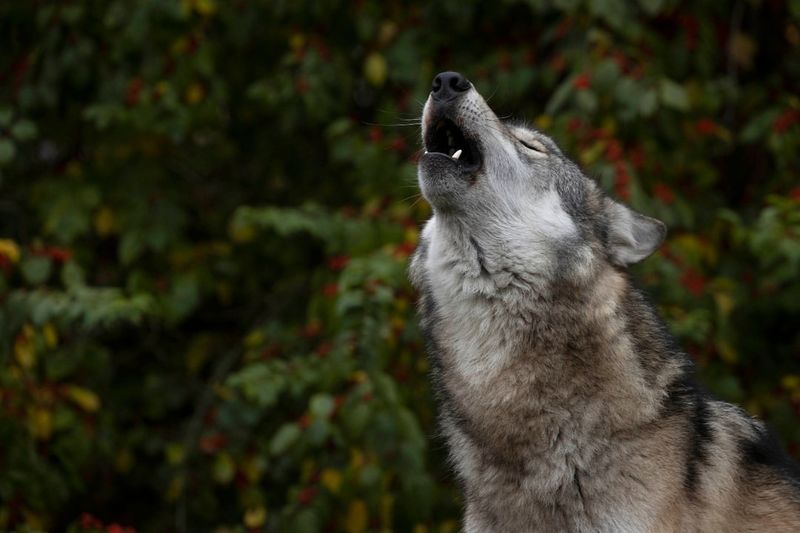
Few sounds are more haunting than wolf vocalizations carrying across Montana’s open spaces during nighttime.
Unlike the familiar barking of neighborhood dogs, wolf howls are long, mournful calls that rise and fall in pitch, often lasting several seconds.
These vocalizations can travel up to six miles across open terrain, meaning the wolf might be much farther from your property than you’d guess.
Wolves howl for various reasons, locating pack members, defending territory, or coordinating before a hunt.
If you hear howling near your property, especially repeated over several nights, a pack has likely established your area within their territorial range.
The calls often come in waves, with multiple wolves joining in to create an overlapping chorus that’s unmistakable once you’ve heard it.
Many Montana residents dismiss these sounds as coyotes, which do share some vocal similarities.
However, coyote calls are higher-pitched, more yipping and yapping, with a frantic quality.
Wolf howls carry a deeper, more resonant tone that seems to vibrate through the air.
They’re often preceded or followed by lower-pitched barks or growls.
Listen carefully during early morning hours just before dawn, and again around dusk.
These are prime times for wolf communication.
If you’ve heard these distinctive vocalizations echoing across your Montana land, wolves are definitely active in your vicinity, even if you haven’t spotted tracks or other physical signs yet.
4. Scattered Remains Of Wildlife Carcasses
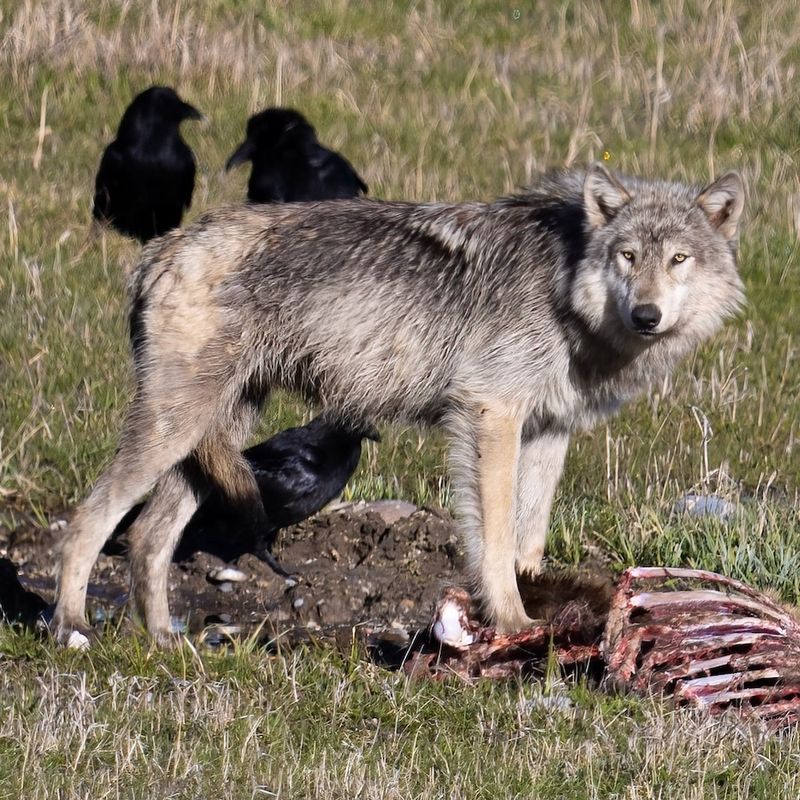
Discovering animal remains on your property might indicate wolf hunting activity in your area.
Wolves are efficient predators that primarily target deer, elk, and occasionally smaller mammals throughout Montana’s ecosystems.
The way they consume their prey leaves distinctive patterns that differ from other predators or natural causes.
Wolf-targeted prey typically shows evidence of a chase, broken branches, disturbed ground, and drag marks leading to where the animal was consumed.
Wolves often eat the nutrient-rich organs first, then work on large muscle groups.
Unlike bears, which tear carcasses apart more violently, wolves consume prey in a relatively methodical manner.
You might find ribs cleanly separated and large bones scattered within a relatively contained area.
The location of these remains tells a story too.
Wolves frequently drag smaller prey into cover, under trees, near creek banks, or into dense brush, where the pack can feed with some concealment.
Larger animals like elk might be consumed where they fell if the location offers adequate security.
Multiple feeding sites across your Montana property over time suggest regular wolf activity.
Fresh carcasses attract other scavengers quickly, so timing matters when identifying the original predator.
Look for large canine tooth marks on bones, particularly on the skull and leg bones.
Ravens, magpies, and coyotes will clean up what wolves leave behind, but the initial feeding pattern provides the clearest evidence of wolf presence near your land.
5. Strong Musky Scent Along Property Boundaries
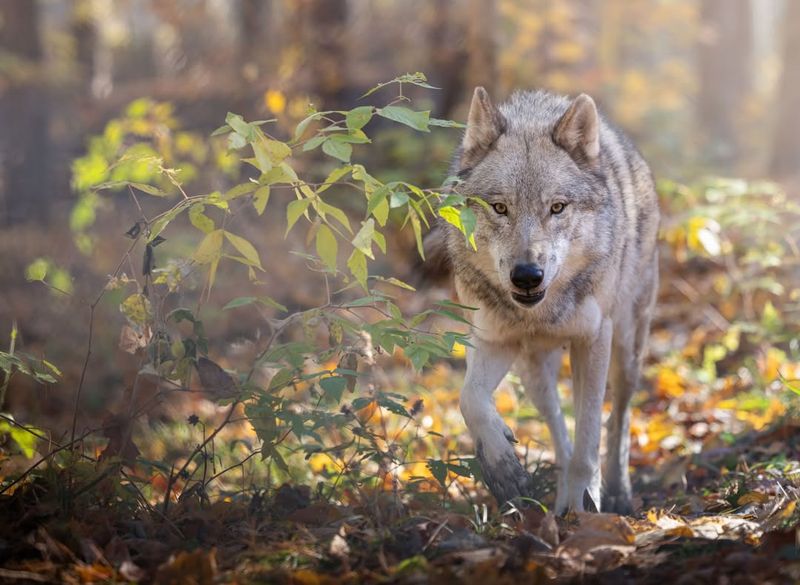
Wolves communicate extensively through scent marking, leaving behind odors that humans can sometimes detect but often overlook.
These territorial markers carry a distinctive musky smell, stronger and more pungent than typical dog urine.
Wolves deliberately mark prominent features along their territory boundaries, large rocks, stumps, fence posts, and trail intersections across Montana properties.
The scent serves as a “keep out” message to other wolf packs and a “we were here” notification to pack members.
Alpha wolves mark most frequently, lifting their legs high to place urine at nose-level for other wolves.
You might notice these markings concentrated along your property’s edges, especially where your land meets forested areas or natural travel corridors.
Walking your property lines in early morning sometimes reveals these scent posts before the day’s heat dissipates the odor.
The smell is notably different from domestic dog markings, more wild and intense, with an almost skunky quality.
Some people describe it as similar to a wet dog smell but significantly stronger and more penetrating.
If your own dogs show unusual interest in specific fence posts, rocks, or trees, sniffing intensely, marking over spots repeatedly, or acting agitated, they’re likely detecting wolf scent markers you can’t smell.
Montana property owners who pay attention to where their dogs react most strongly often discover patterns that reveal regular wolf travel routes crossing through their land.
These invisible highways crisscross rural areas without most people ever realizing they exist.
6. Pets Refusing To Go Outside After Dark

Domestic dogs and cats possess instincts that alert them to nearby predators long before their humans notice anything unusual.
When wolves pass through your Montana property, your pets often know immediately, even if the wolves traveled through hours earlier.
Dogs that normally rush outside eagerly may suddenly plant their feet at the door, refusing to step into the yard after sunset.
This behavior represents genuine fear, not simple stubbornness.
Your dog’s ancestors survived by recognizing and avoiding larger predators, and those instincts remain strong.
Some dogs will whine, bark toward the darkness, or press close to their owners instead of venturing out for their usual evening routine.
Cats become even more dramatic, sometimes refusing to use outdoor areas for days after detecting wolf presence.
The reaction often seems disproportionate to anything you can observe, which is precisely why it’s such a valuable indicator.
Your pets are responding to scent trails, sounds beyond human hearing range, or simply an instinctive awareness that a larger predator has claimed the area temporarily.
Some dogs will go outside only if accompanied by their owner, staying pressed against human legs the entire time.
Montana pet owners should take these behavioral changes seriously.
While wolves rarely bother with domestic animals when wild prey is abundant, small pets left outside unsupervised could potentially attract attention.
If your normally confident outdoor dog suddenly refuses nighttime yard visits or acts terrified of familiar spaces, consider it a strong possibility that wolves have recently wandered near your property, leaving scent evidence your pet clearly recognizes.
7. Game Cameras Capturing Nighttime Shadows
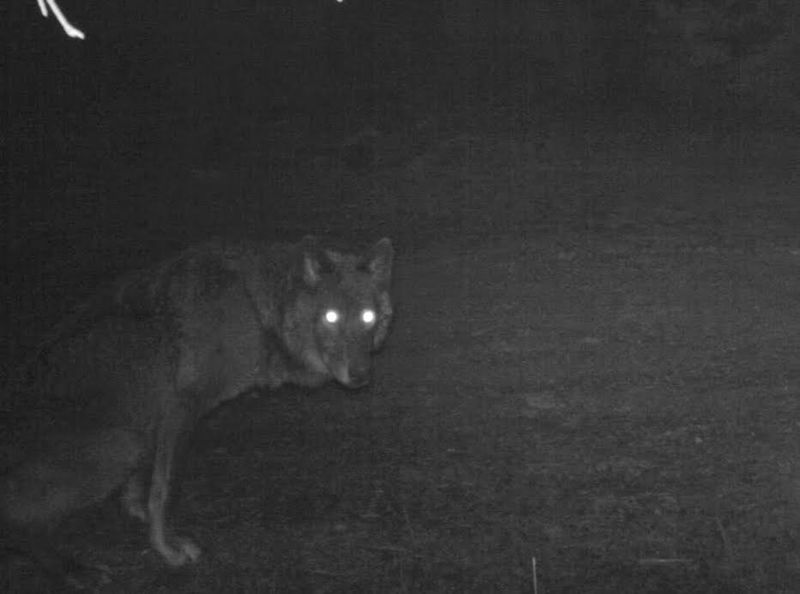
Modern game cameras have revolutionized how Montana property owners monitor wildlife activity, capturing visitors that move through under cover of darkness.
Wolves are primarily nocturnal travelers, moving through rural areas when humans are asleep and visibility is minimal.
Your trail camera might hold photographic evidence of wolf presence even though you’ve never personally spotted one.
Wolves appear as large, long-legged canines with distinctive features, narrow chests, large heads, and straight tails that hang down rather than curling upward like many dog breeds.
Their body proportions look different from dogs, with longer legs relative to body size and a more rangy, athletic build.
Camera timestamps typically show wolf activity between 10 PM and 5 AM, with peaks around midnight and just before dawn.
Many Montana landowners review their game camera footage only when checking for specific game animals, completely missing the wolves captured in background frames or nighttime shots.
Wolves often investigate camera locations, sometimes approaching close enough for clear facial shots.
Their eyes reflect camera flashes with a distinctive greenish or yellowish glow that differs from the bright white reflection typical of deer.
Strategic camera placement increases your chances of documenting wolf activity.
Position cameras along natural funnels, creek crossings, ridge lines, or fence openings, where wolves naturally travel.
Review all nighttime footage carefully, not just the images that initially seem interesting.
That dark shadow you almost deleted might actually be clear documentation that wolves are regularly using your Montana property as part of their established territory.