14 Poisonous Creatures Georgia Homeowners Should Be Familiar With
Georgia’s warm climate and diverse landscape make it a hotspot for wildlife, some of which carry natural toxins as part of their defense.
For homeowners, being informed is half the battle.
Knowing what lives nearby doesn’t mean living in fear; it means staying aware and prepared while enjoying outdoor spaces.
Many of these creatures prefer to stay hidden and only cause issues when accidentally disturbed.
Georgia yards, gardens, and wooded edges provide plenty of places for them to exist without causing daily trouble.
The key is understanding what to look for, where these creatures tend to appear, and why they’re part of the ecosystem in the first place.
Awareness can turn uncertainty into confidence, helping homeowners make smart choices about yard care, storage areas, and outdoor activities.
Rather than reacting after an unexpected encounter, knowing ahead of time allows for calmer responses.
When you understand what’s around you, even surprising discoveries feel more manageable.
In a state as naturally rich as Georgia, a little knowledge goes a long way toward peaceful outdoor living.
1. Eastern Diamondback Rattlesnake
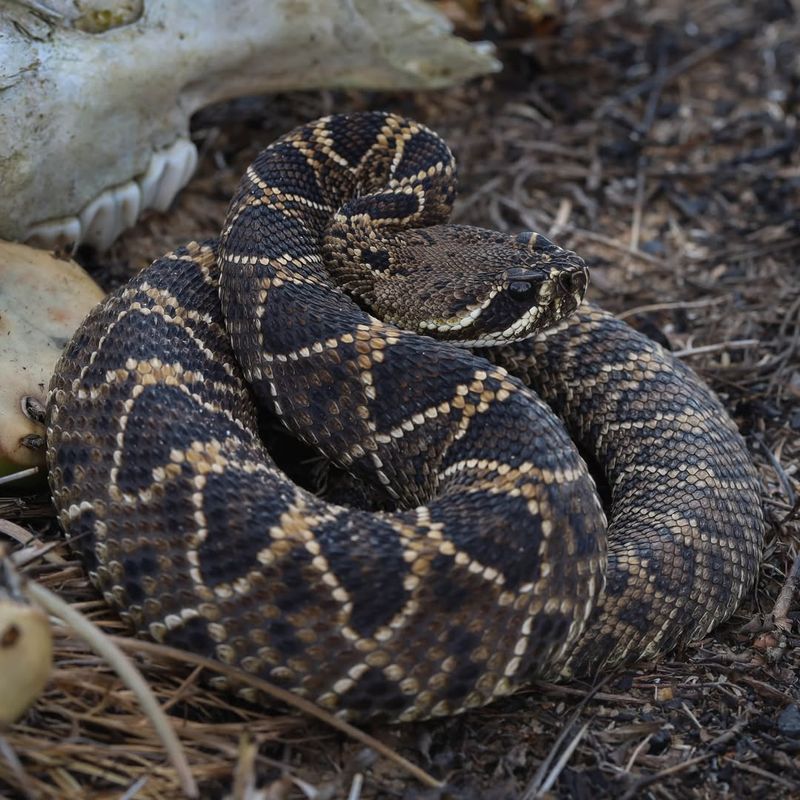
Coastal pine forests and sandy scrublands across Georgia provide ideal habitats for this impressive reptile, which ranks as one of the most recognizable venomous snakes in the Southeast.
Homeowners living near wooded areas or properties with dense underbrush should remain particularly vigilant during warmer months.
The distinctive diamond-shaped patterns along its back make identification relatively straightforward once you know what to look for.
These snakes prefer areas with plenty of cover, including fallen logs, thick vegetation, and rocky outcrops where they can hunt for small mammals and birds.
Their presence in suburban areas has increased as development pushes into their natural territories.
Most encounters happen when people accidentally step too close or disturb their hiding spots.
The rattling sound serves as nature’s warning system, giving you precious seconds to back away slowly and safely.
Never attempt to handle or relocate one yourself, as their strike range can exceed half their body length.
If you spot one near your home, contact wildlife control professionals who have the training and equipment to remove it safely.
Keeping your lawn trimmed, removing debris piles, and sealing gaps around foundations can help discourage these reptiles from taking up residence on your property.
2. Copperhead Snake
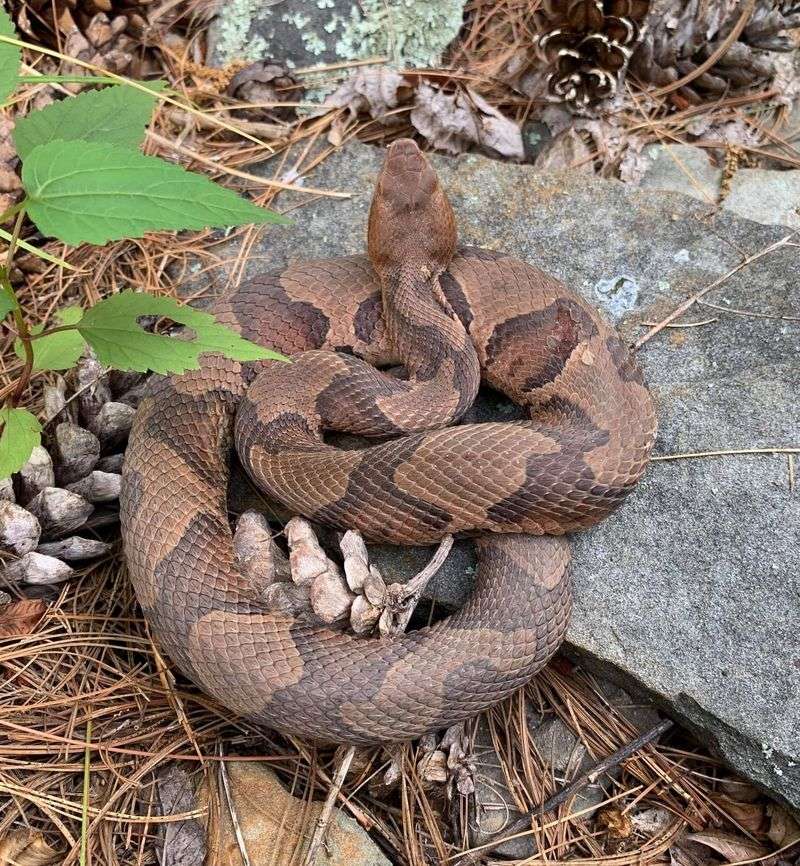
Suburban neighborhoods with mature landscaping often become unexpected homes for these masters of camouflage, whose copper-colored heads and hourglass patterns blend perfectly with fallen leaves.
Many homeowners never realize they’re sharing their yards with these reptiles until an accidental encounter occurs.
Their preference for hiding under leaf litter, wood piles, and garden debris makes them frequent visitors to residential properties.
Unlike more aggressive species, these snakes typically remain motionless when approached, relying on their exceptional camouflage rather than fleeing or striking.
This defensive strategy unfortunately leads to more accidental encounters when people step near them without noticing.
They hunt for mice, voles, and insects during twilight hours, making them beneficial for pest control despite their venomous nature.
Your Georgia Garden Changes Every Week. Your Plan Should Too.
Gardening in Georgia changes quickly throughout the season. Every Friday you’ll receive a simple weekly plan showing exactly what to plant, prune, fertilize, harvest, and protect so you never miss the right timing.
Creating a less hospitable environment involves removing leaf piles promptly, storing firewood away from the house, and maintaining clear sight lines around walkways and play areas.
Children and pets face higher risks because they’re more likely to reach into spaces without looking first.
Teaching family members to watch their step and avoid reaching blindly into dense vegetation can prevent most encounters.
If you discover one near your home, give it space and contact professionals rather than attempting removal yourself.
3. Cottonmouth Water Moccasin
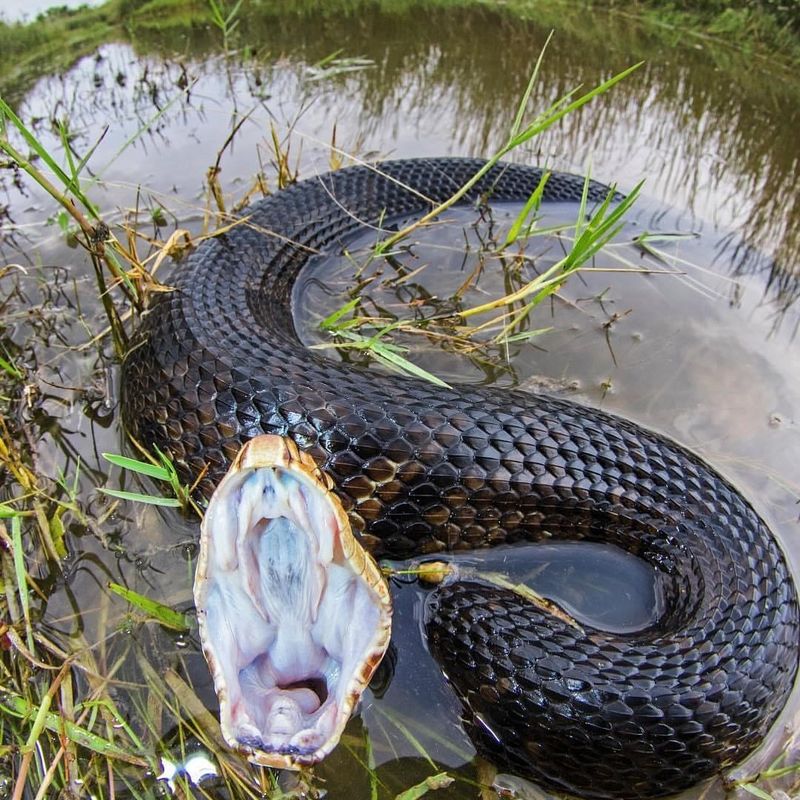
Freshwater environments throughout Georgia attract these semi-aquatic reptiles, which are often found basking on logs, rocks, or branches near ponds, streams, and wetlands.
Properties with water features, irrigation ditches, or proximity to natural waterways should expect occasional visits from these stocky snakes.
Their swimming ability allows them to move between water sources, sometimes crossing yards to reach new hunting grounds.
The defensive mouth-gaping behavior that reveals their bright white interior gives them their common name and serves as an unmistakable warning sign.
Unlike harmless water snakes that quickly flee when approached, these reptiles often hold their ground and display this threatening posture.
They feed on fish, frogs, and small mammals found near water, making them regular residents of suitable habitats.
Homeowners with backyard ponds or properties near wetlands should exercise extra caution during spring and summer when these snakes are most active.
Installing proper fencing around water features and keeping grass trimmed near shorelines improves visibility and reduces hiding spots.
Children should be taught never to approach snakes near water, as identifying species correctly requires expertise most people lack.
Professional removal becomes necessary when these reptiles establish territories in frequently used areas, as their defensive nature increases encounter risks compared to more timid species.
4. Coral Snake
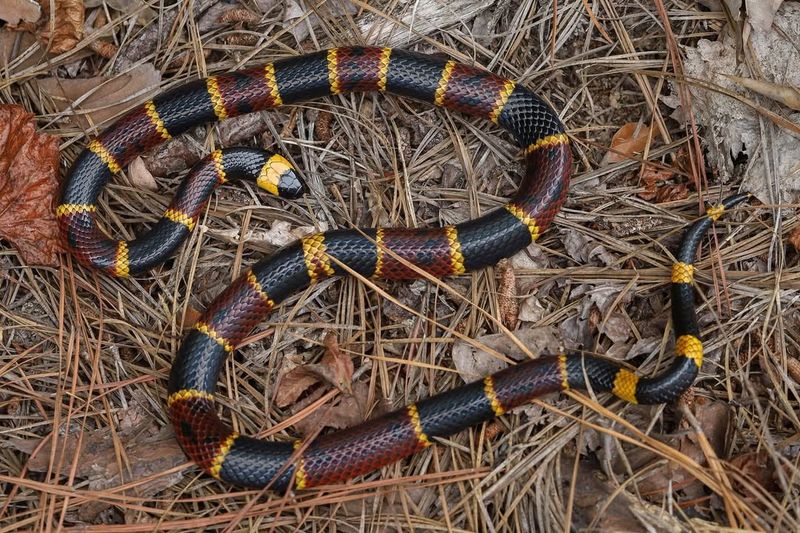
Bright bands of red, yellow, and black create one of nature’s most striking warning patterns, helping homeowners distinguish this highly venomous species from harmless mimics.
The reliable rhyme “red touches yellow, dangerous fellow; red touches black, safe for Jack” provides a memory aid for proper identification.
These secretive reptiles spend most of their time underground or beneath leaf litter, making sightings relatively rare despite their presence throughout Georgia.
Woodland areas with loose soil and plenty of ground cover provide perfect habitats for these burrowing hunters that primarily feed on other small reptiles.
Gardens with heavy mulch, compost piles, and undisturbed debris can inadvertently attract them by creating ideal hunting grounds.
Their small mouths and rear-facing fangs mean they rarely bite humans, but their potent venom demands respect and caution.
Most encounters happen when people work in gardens without gloves or move objects that have been sitting undisturbed for extended periods.
Wearing protective gloves and boots while doing yard work significantly reduces your risk of accidental contact.
These snakes are generally non-aggressive and will attempt to escape rather than confront threats, but handling them remains extremely dangerous.
If you spot one on your property, observe from a safe distance and allow it to move along naturally, as they rarely linger in open areas where human activity occurs.
5. Black Widow Spider
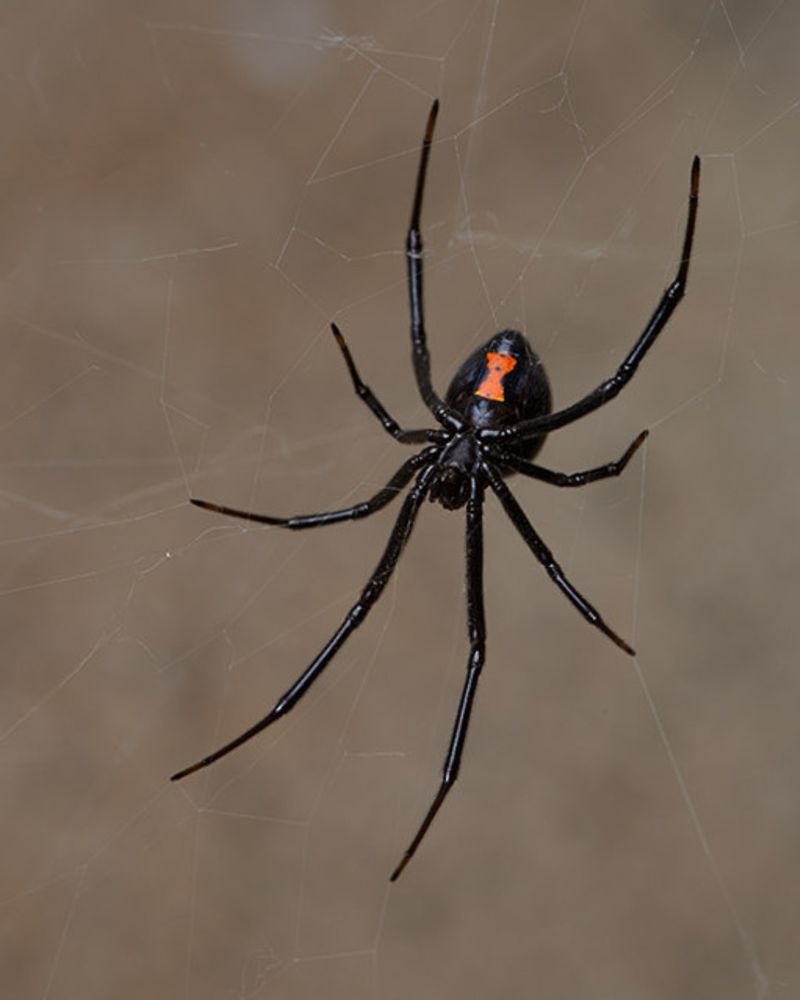
Dark, undisturbed corners around homes become prime real estate for these glossy arachnids, whose distinctive red hourglass marking serves as nature’s danger label.
Garages, sheds, crawl spaces, and outdoor storage areas provide exactly the quiet, protected environments they prefer for building their irregular, sticky webs.
Homeowners often discover them when cleaning out neglected spaces or reaching into areas that haven’t been disturbed for months.
Their webs feel distinctly stronger than those of harmless house spiders, with a characteristic three-dimensional structure rather than a flat pattern.
Female spiders, which are the only ones with medically significant venom, rarely leave their webs and bite only when directly threatened or pressed against skin.
Most bites occur when people put on shoes or gloves that have been stored in garages without checking first.
Prevention focuses on eliminating the cluttered, quiet spaces these spiders find attractive for web construction.
Regular cleaning of storage areas, shaking out stored items before use, and sealing cracks around foundations all help reduce encounter risks.
Installing door sweeps and repairing torn window screens prevents them from entering living spaces.
Outdoor lighting attracts the insects they feed on, so positioning lights away from doors and windows can make your home less appealing.
If you find one, carefully vacuum it up or contact pest control rather than attempting to crush it with your hand.
6. Brown Recluse Spider
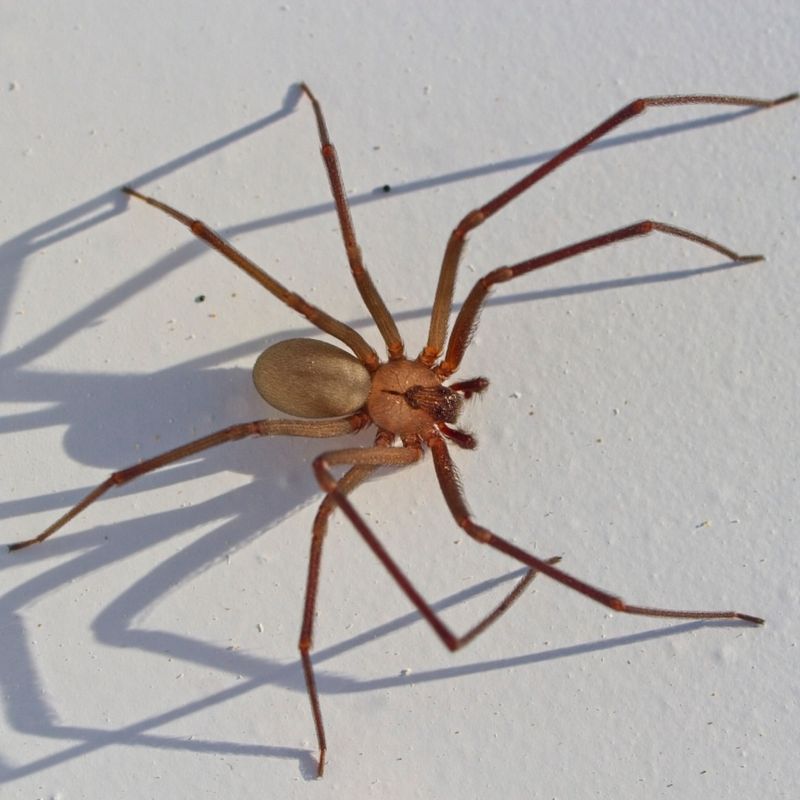
Closets, attics, and basements throughout Georgia homes harbor these shy arachnids, whose violin-shaped marking on their back provides the key identification feature.
Unlike web-building species that stay in one location, these wandering hunters roam at night searching for prey, sometimes ending up in clothing, bedding, or stored boxes.
Their reclusive nature means they avoid human contact whenever possible, but accidental encounters happen when people unknowingly trap them against skin.
Cardboard boxes stacked in storage areas create perfect daytime hiding spots, as do piles of rarely-worn clothing and cluttered spaces with minimal disturbance.
These spiders can survive for months without food or water, allowing them to thrive in areas homeowners rarely visit.
Their bites often occur when people dress in the morning without shaking out clothes first or reach into storage boxes without looking.
Reducing clutter dramatically decreases the available hiding spots and makes your home less attractive to these spiders.
Storing seasonal clothing in sealed plastic containers rather than cardboard boxes eliminates many potential hiding places.
Shaking out shoes, gloves, and clothing that have been stored or left on the floor becomes a simple but effective protective habit.
Sticky traps placed along baseboards and in corners help monitor for their presence while catching individuals before they can become problems.
Professional pest control may be necessary if you find multiple individuals, as this suggests an established population requiring more comprehensive treatment.
7. Fire Ant
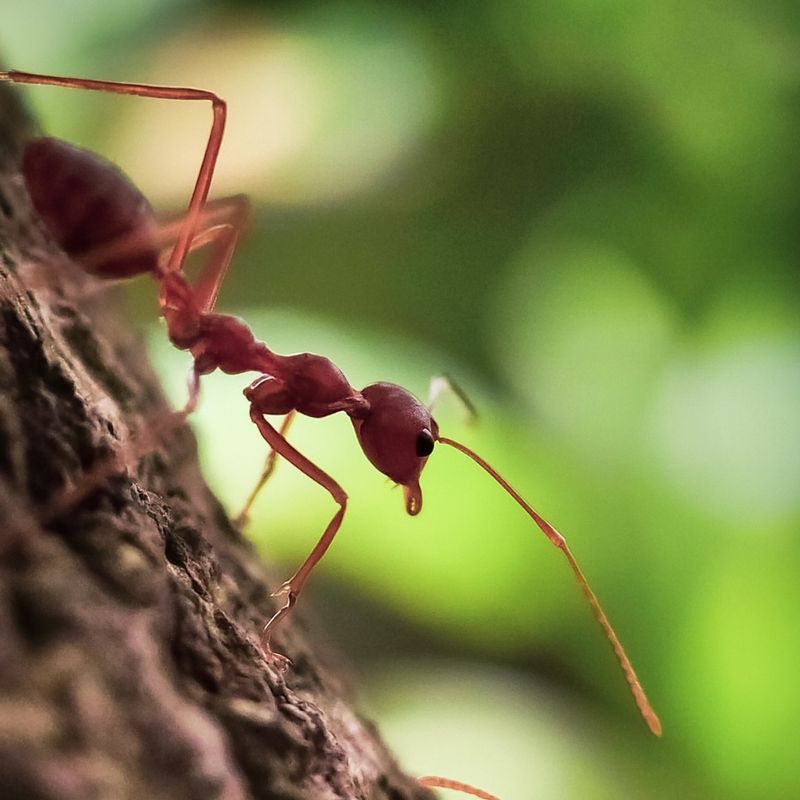
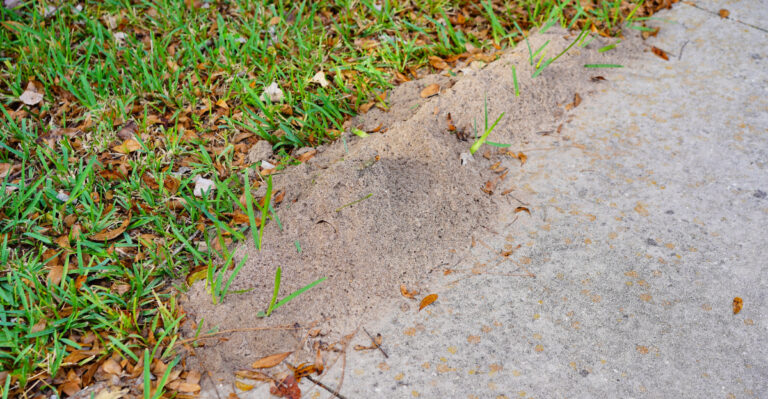
Lawns throughout Georgia become battlegrounds when these aggressive insects establish their distinctive dome-shaped mounds, which can appear seemingly overnight after rain.
A single colony may contain hundreds of thousands of workers ready to swarm and sting anything that disturbs their home.
Their painful, burning stings and persistent nature make them one of the most problematic pests for homeowners, especially those with children and pets.
These insects prefer sunny, open areas with well-drained soil, making residential lawns ideal for colony establishment.
Mounds often appear near sidewalks, driveways, and foundation edges where soil conditions and sun exposure meet their requirements.
The colonies continue growing year-round in Georgia’s mild climate, unlike northern areas where cold winters provide natural population control.
When a mound gets disturbed, workers pour out within seconds and climb onto whatever caused the disturbance before stinging simultaneously.
Each ant can sting multiple times, and the alkaloid venom creates the characteristic burning sensation and pustules that develop over the following days.
Teaching children to recognize and avoid mounds prevents most stinging incidents in home environments.
Effective control requires treating entire colonies rather than just visible mounds, as these insects quickly relocate when their home gets disrupted.
Broadcast baits applied across your lawn work slowly but eliminate colonies by targeting the queen.
Individual mound treatments provide faster results for problem areas near play spaces or high-traffic zones.
Regular monitoring and prompt treatment of new mounds prevents populations from becoming overwhelming.
8. Buck Moth Caterpillar
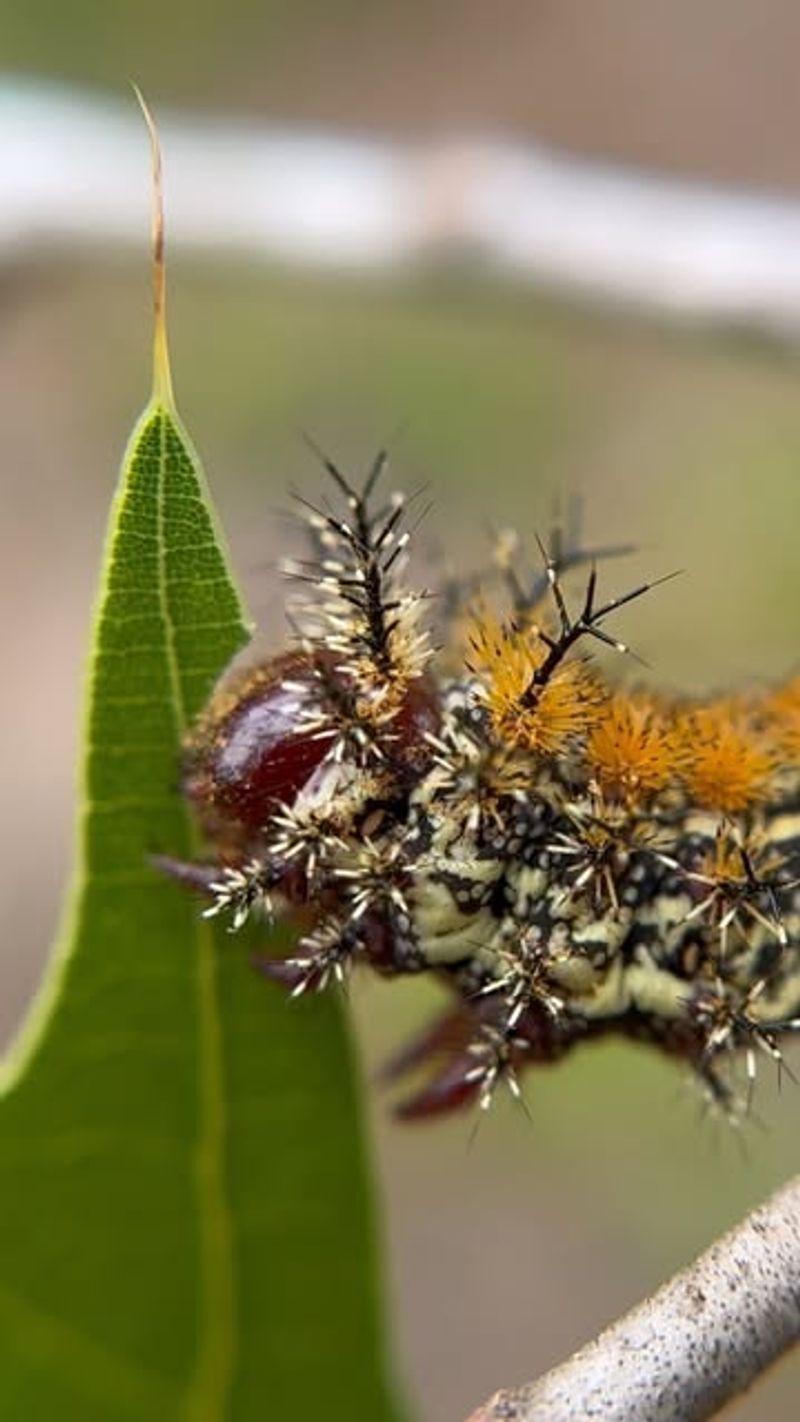
Oak trees throughout Georgia neighborhoods host these spiny larvae during late summer and fall, when their presence becomes impossible to ignore for homeowners with mature oaks.
Clusters of these caterpillars can defoliate entire branches while presenting a stinging hazard to anyone working or playing beneath infested trees.
Their venomous spines deliver painful stings that can cause welts, redness, and burning sensations lasting several hours.
Properties with red oaks, white oaks, and other oak species should expect periodic outbreaks, as these caterpillars feed almost exclusively on oak foliage.
They often descend from trees on silken threads or drop when branches get bumped, landing on unsuspecting people below.
The caterpillars also crawl across sidewalks and driveways when searching for pupation sites, creating additional contact opportunities.
Raking beneath oak trees becomes risky during peak season, as fallen caterpillars hiding in leaf litter can sting through light gloves and clothing.
Wearing long sleeves, pants, and sturdy gloves while doing yard work under oaks provides essential protection during outbreak periods.
Children should be taught to look up before playing under oak trees and to never touch fuzzy or spiny caterpillars.
Severe infestations may warrant professional treatment to protect trees and reduce stinging risks, especially near play areas and outdoor living spaces.
Natural predators including birds and parasitic wasps help control populations, so avoiding broad-spectrum pesticides preserves these beneficial species.
Most outbreaks remain localized and temporary, with populations declining naturally after several weeks.
9. Puss Caterpillar

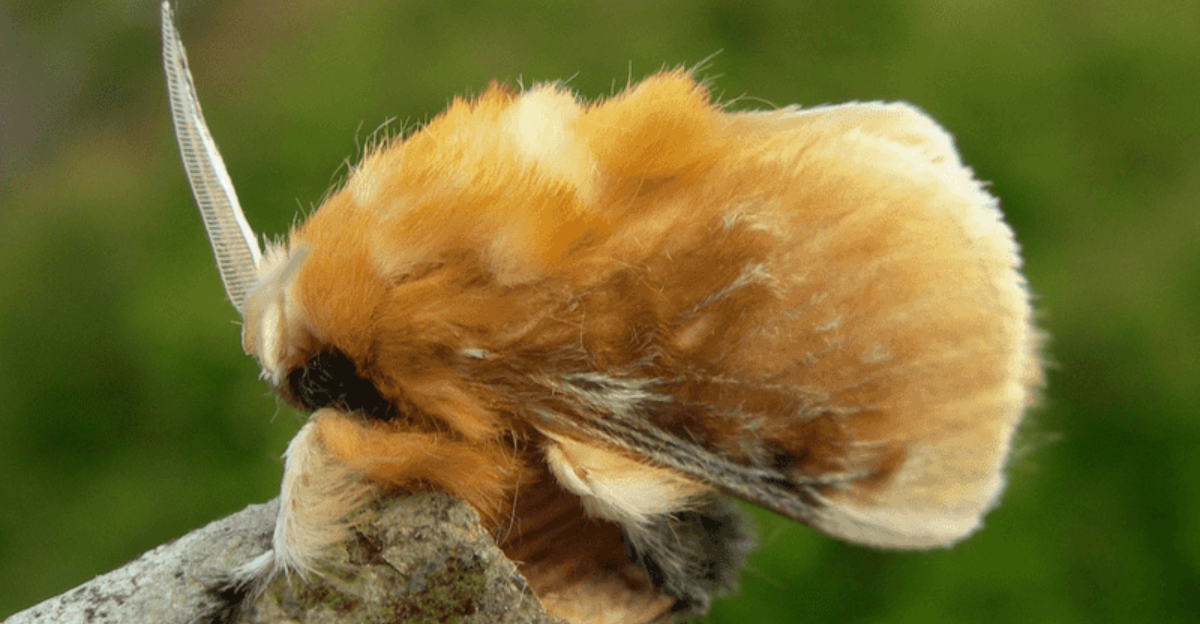
Deceptively fluffy appearances make these larvae look like tiny toupees or cotton balls attached to trees, but beneath that soft-looking exterior hides one of the most painful stinging caterpillars in North America.
Children often want to touch them because they look so harmless and cuddly, making education about their dangers absolutely essential for Georgia families.
The hidden venomous spines break off in skin upon contact, causing immediate, intense pain that can radiate throughout the affected limb.
Shade trees in yards and parks host these caterpillars during spring and fall, with oak, elm, and citrus trees being particular favorites.
They feed on leaves but also crawl along branches and trunks, sometimes dropping onto people walking or standing beneath infested trees.
The pain from their stings has been compared to broken bones or severe burns, with symptoms including swelling, numbness, and even nausea in sensitive individuals.
Teaching everyone in your household to never touch fuzzy caterpillars, no matter how harmless they appear, prevents most stinging incidents.
If you spot these caterpillars on trees near play areas or frequently used outdoor spaces, consider having them professionally removed.
Sticky tape can help remove embedded spines after contact, but medical attention may be necessary for severe reactions.
Inspecting trees before children climb or play beneath them during spring and fall reduces encounter risks significantly.
These caterpillars eventually pupate and transform into flannel moths, which are harmless to humans despite their caterpillar stage’s notorious reputation.
10. Io Moth Caterpillar
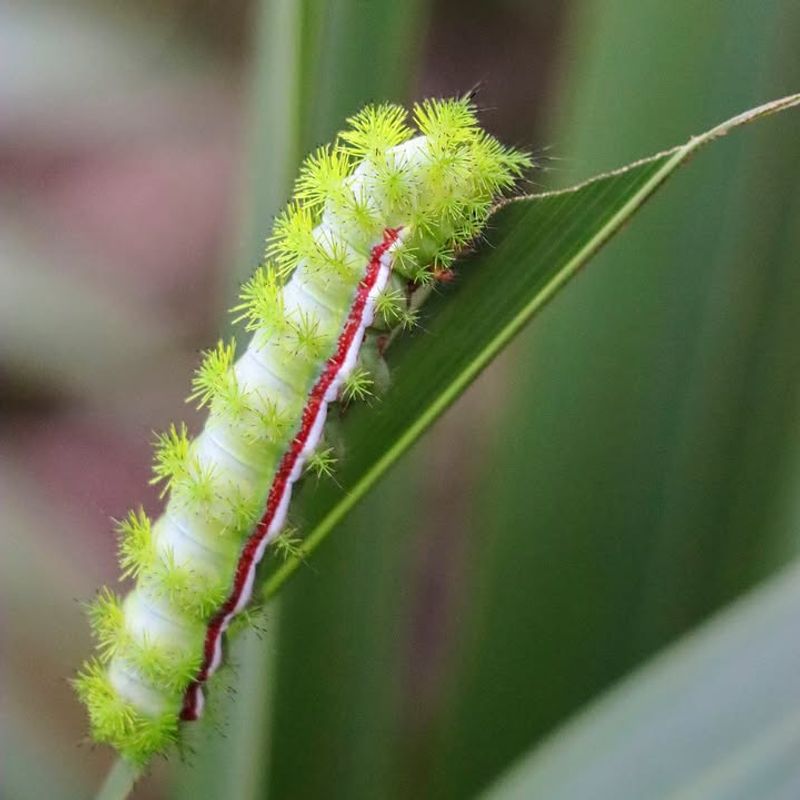
Brilliant green bodies adorned with clusters of branching spines make these caterpillars visually striking, but those spines deliver painful stings that serve as effective protection against predators and curious humans.
Gardens, ornamental plantings, and native vegetation throughout Georgia support these larvae, which feed on a wide variety of trees and shrubs.
Their bright coloration serves as a warning signal that experienced naturalists recognize immediately.
The venomous spines contain toxins that cause immediate burning pain, redness, and welting when they contact skin.
Unlike some caterpillar stings that worsen over time, Io Moth stings typically peak quickly and gradually improve over several hours.
Gardeners frequently encounter them while pruning shrubs or weeding around ornamental plants where the caterpillars feed.
Wearing gloves while gardening provides essential protection, though the spines can sometimes penetrate thin materials.
These caterpillars often feed in groups during their early stages before dispersing as they mature, so finding one usually means others are nearby.
Their presence indicates a healthy ecosystem, as they serve as food for birds and other predators despite their defensive spines.
Most homeowners can tolerate their presence since they rarely occur in numbers large enough to cause significant plant damage.
If you must handle plants where these caterpillars feed, inspect carefully first and use pruning shears to avoid direct contact.
The adult moths that emerge are beautiful creatures with distinctive eyespots on their hindwings, making the caterpillar stage just one chapter in their fascinating life cycle.
Teaching children to observe without touching helps them appreciate these insects while staying safe.
11. Tarantula Hawk Wasp
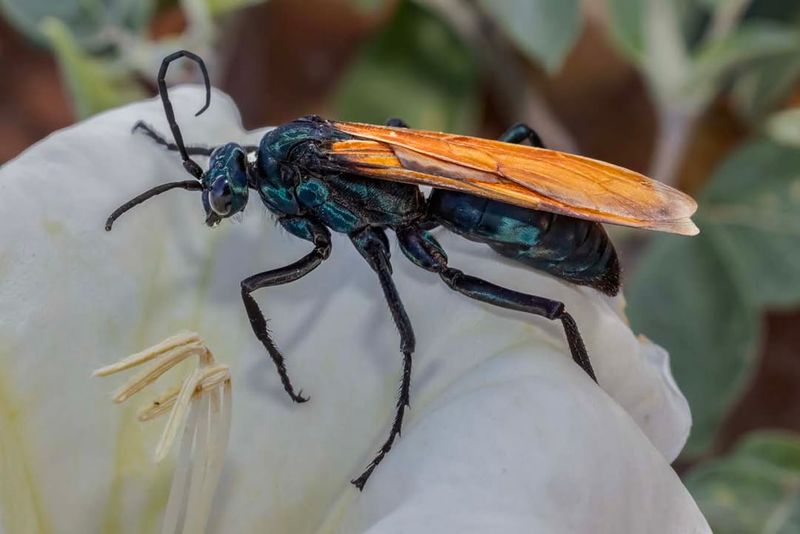
Metallic blue-black bodies and brilliant orange wings create an unforgettable appearance for these massive wasps, which rank among the largest flying insects homeowners encounter in Georgia.
Their size alone often causes alarm, but their generally docile nature toward humans makes them less dangerous than their fearsome appearance suggests.
Open, sunny areas with sandy soil and flowering plants attract these impressive insects during summer months.
Despite possessing one of the most painful stings in the insect world, these wasps rarely sting humans unless grabbed or stepped on with bare feet.
They spend their time searching for tarantulas to paralyze and use as living food storage for their larvae, making them beneficial predators despite their intimidating presence.
Flowers provide nectar for adults, so gardens with abundant blooms may see regular visits from these pollinators.
The wasps often patrol at ground level searching for spider burrows, sometimes alarming homeowners who mistake their hunting behavior for aggression.
Walking barefoot in areas where these wasps hunt increases your risk of accidentally stepping on one, which triggers their defensive response.
Wearing shoes outdoors during summer provides simple but effective protection against accidental encounters.
Their presence indicates healthy populations of tarantulas and other large spiders in your area, demonstrating the interconnected nature of local ecosystems.
These wasps live solitary lives rather than forming colonies, so you won’t find nests requiring removal around your home.
Observing them from a respectful distance allows you to appreciate their role as specialized predators without risking the famously painful sting that has been compared to electric shocks.
12. Paper Wasp
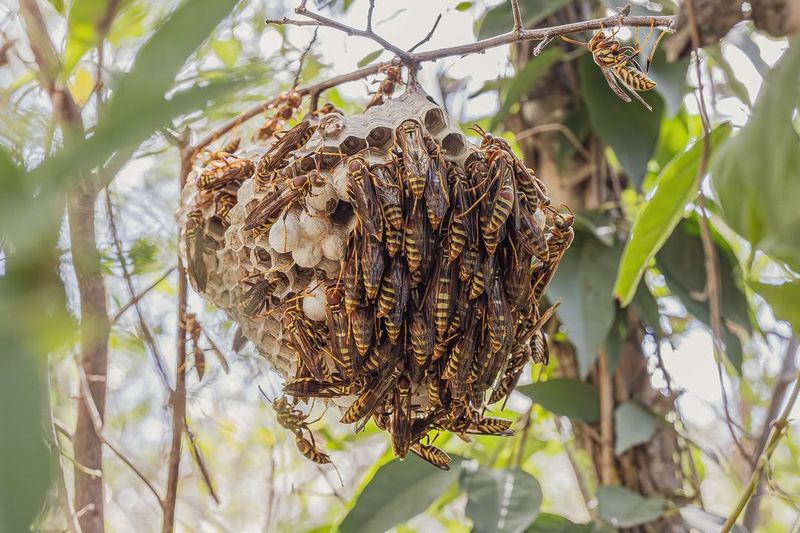
Eaves, porch ceilings, and roof overhangs become construction sites each spring when queen wasps emerge and begin building their distinctive paper nests.
The exposed, umbrella-shaped combs grow throughout summer as colonies expand, sometimes reaching the size of dinner plates by fall.
Unlike more aggressive species, these wasps generally tolerate nearby human activity unless their nest gets directly threatened.
Colonies defend their nests when vibrations, rapid movements, or direct contact trigger their protective instincts.
Homeowners often coexist peacefully with small nests located away from doors and high-traffic areas, as the wasps provide excellent pest control by hunting caterpillars and other insects.
However, nests near entryways or play areas create unacceptable risks, especially for households with allergic individuals.
Early spring offers the best time for prevention, when lone queens search for suitable nest sites before colony establishment.
Spraying or knocking down these initial nests takes seconds and prevents the need for more difficult removal later.
Once colonies grow large, professional removal becomes the safest option rather than DIY attempts that often result in multiple stings.
Sealing cracks and crevices where wasps might start building helps redirect them to other locations away from your home.
Fake nests sometimes deter nest construction, as these territorial insects avoid areas that appear already claimed by other colonies.
Understanding their beneficial role as predators helps homeowners make informed decisions about when removal is truly necessary versus when peaceful coexistence makes sense.
Colonies naturally decline in fall, with only new queens surviving winter to start fresh nests elsewhere the following spring.
13. Yellow Jacket
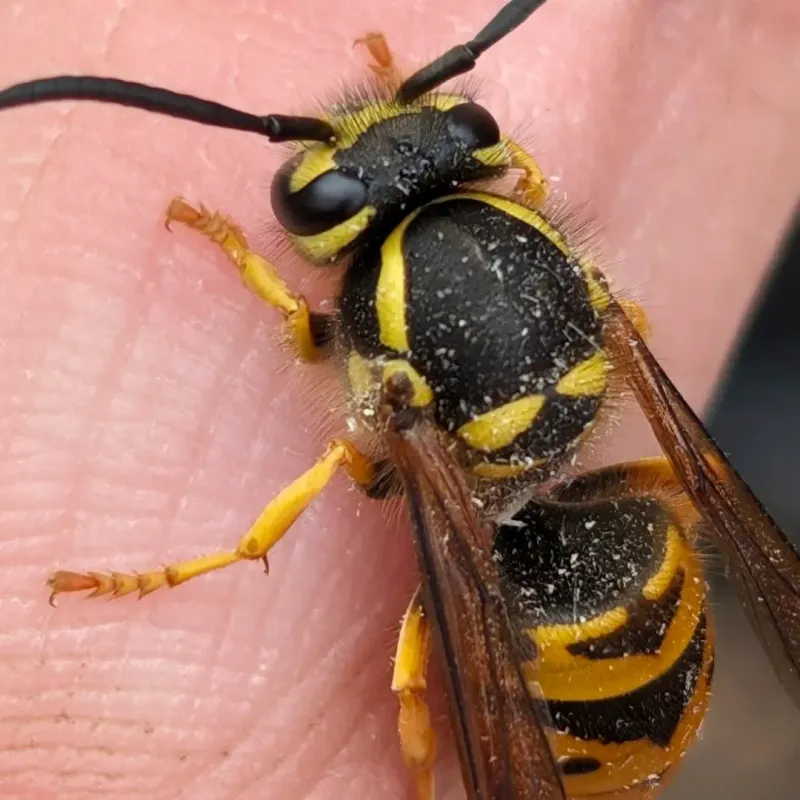
Warm months bring increased activity from these bold, aggressive insects that seem to appear instantly whenever food gets served outdoors.
Their distinctive yellow and black stripes make them easily recognizable, though people often confuse them with less aggressive honeybees.
Ground nests hidden in old rodent burrows, wall voids, and attic spaces can house thousands of workers by late summer, creating serious hazards when accidentally disturbed.
Picnics, barbecues, and outdoor dining attract these scavengers, which feed on sugary drinks, fruits, and protein sources like hamburgers and hot dogs.
Unlike bees that can only sting once, these wasps sting repeatedly and recruit nest mates when they perceive threats, leading to mass stinging incidents.
Their persistence and defensive nature make them particularly problematic around homes with children and pets.
Covering food and drinks when eating outdoors reduces their attraction to your space, though determined individuals may still investigate.
Garbage cans with tight-fitting lids prevent them from accessing the food waste that draws them to residential areas.
Ground nests often go unnoticed until someone mows over them or children play too close, triggering an aggressive defensive response from the colony.
Professional removal becomes essential when nests are discovered near living spaces, as attempting DIY treatments often results in painful stinging incidents.
These insects become increasingly aggressive and numerous as summer progresses, with populations peaking in late August and September.
Colonies naturally decline after the first hard frost, with only new queens surviving to establish fresh nests the following year in different locations.
14. Giant Redheaded Centipede
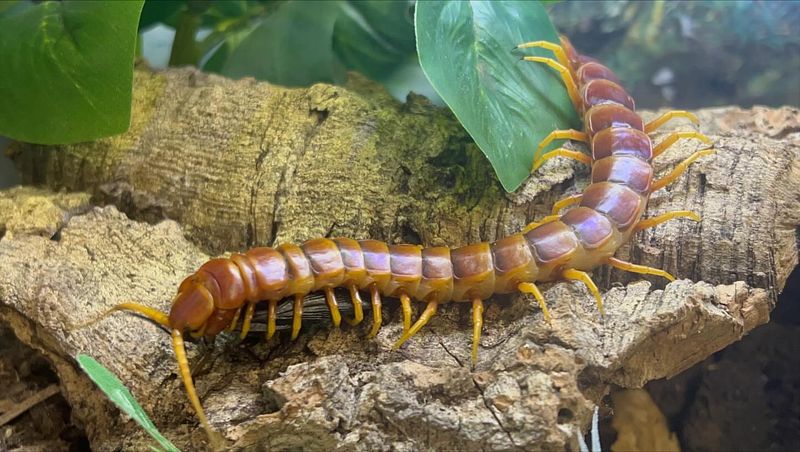
Foundations, crawl spaces, and areas with heavy ground cover shelter these impressive arthropods, which can reach six inches in length and deliver painful venomous bites.
Their reddish-orange heads and numerous legs create an unsettling appearance that startles homeowners who encounter them unexpectedly.
Nocturnal hunting habits mean most sightings occur when people disturb their daytime hiding spots or encounter them during nighttime outdoor activities.
These predators hunt insects, spiders, and other small creatures, making them beneficial for pest control despite their intimidating appearance and venomous bite.
They prefer moist environments with plenty of hiding places, including mulch beds, leaf litter, stacked firewood, and spaces beneath rocks or boards.
Homes with moisture problems or areas of standing water become particularly attractive to these moisture-loving creatures.
Bites typically occur when people accidentally grab them while moving objects or when the centipedes crawl into shoes or clothing left outdoors overnight.
The venom causes immediate pain, swelling, and redness similar to a wasp sting, though reactions vary based on individual sensitivity.
Shaking out shoes and gloves before use prevents most accidental encounters with these and other creatures seeking shelter.
Reducing moisture around your home’s foundation, fixing leaky pipes, and improving drainage makes your property less appealing to these arthropods.
Removing debris piles, excess mulch, and unnecessary ground cover eliminates many of their preferred hiding spots.
Sealing cracks and gaps around foundations prevents them from entering crawl spaces and potentially finding their way into living areas through floor vents or plumbing penetrations.