5 Poisonous Creatures Found In Michigan That Residents Should Know About
Michigan may be known for its lakes and forests, but it’s also home to a small number of animals that use toxins as a natural defense.
These creatures aren’t aggressive by nature and generally prefer to stay out of sight.
Still, knowing they exist helps residents stay mindful while hiking, gardening, or exploring wooded areas.
Awareness doesn’t mean alarm; it simply adds another layer of outdoor understanding.
Michigan’s changing seasons create unique environments where these animals thrive quietly, often without being noticed.
Many people go their entire lives without a close encounter, yet learning about them builds confidence instead of uncertainty.
Knowing what these creatures look like and where they tend to appear helps residents enjoy nature with fewer surprises.
This knowledge is especially useful for families, pet owners, and anyone who enjoys spending time outside.
When you recognize what belongs in Michigan’s natural landscape, even the unexpected feels easier to handle.
1. Eastern Newt (Especially The Red Eft Stage)
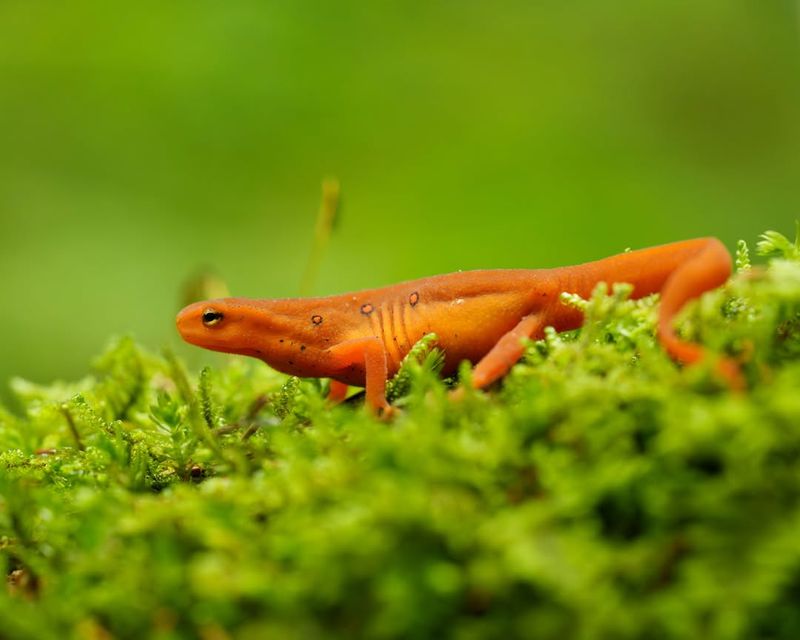
Spotting a bright orange creature crawling across the forest floor might make you want to pick it up, but that would be a mistake.
The Eastern Newt, particularly during its red eft stage, produces skin secretions that contain powerful toxins as a natural defense mechanism.
This vibrant coloring actually serves as a warning to predators that this little amphibian is not a tasty snack.
The red eft is the juvenile land-dwelling phase of the Eastern Newt’s life cycle.
During this stage, which can last anywhere from two to seven years, the newt displays its most brilliant coloration.
The toxins in their skin, called tetrodotoxin, are the same compounds found in pufferfish and can cause serious reactions if ingested or absorbed through mucous membranes.
You’ll typically find these fascinating creatures wandering through moist forests, especially after rain showers.
They move slowly and deliberately, which makes them easy to spot against the brown leaf litter.
Their confidence in moving around during daylight hours comes from their poisonous protection.
If you encounter one of these colorful amphibians, simply observe from a distance and resist the urge to touch.
The toxins won’t harm you through casual contact with intact skin, but it’s best to avoid handling them altogether.
Always wash your hands thoroughly if you accidentally touch one.
Teaching children about these creatures is important since kids are naturally curious and might want to pick up anything interesting they find.
Explain that the bright color is nature’s way of saying “look but don’t touch.”
The Eastern Newt plays an important role in Michigan’s ecosystem by controlling insect populations and serving as a food source for animals that have developed immunity to their toxins.
Respecting these small creatures means appreciating them from a safe distance while they go about their important ecological work.
2. American Toad
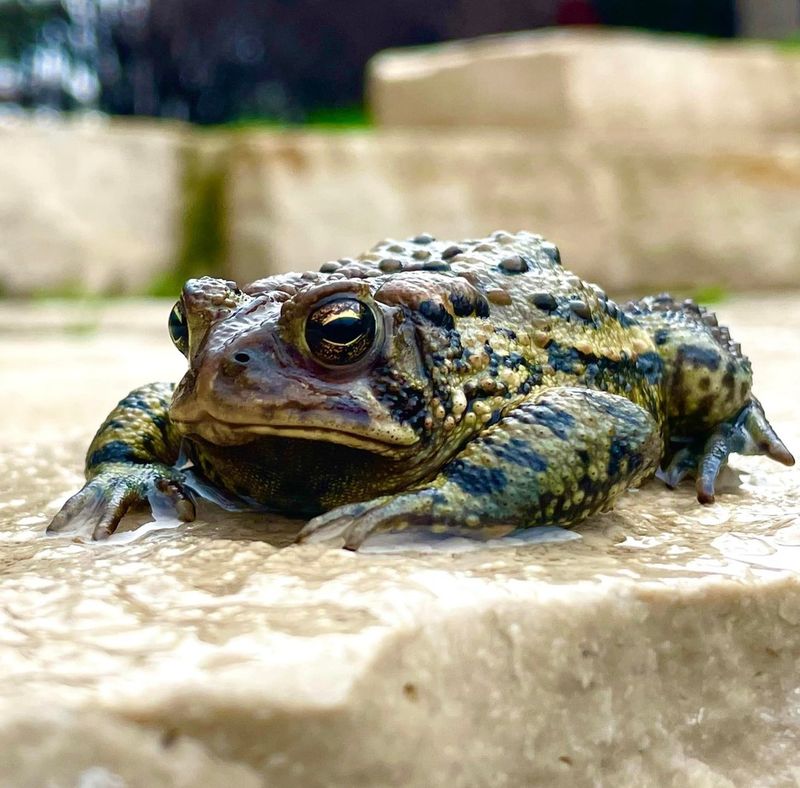
That bumpy-skinned visitor hopping around your garden at dusk is likely an American Toad, one of Michigan’s most common amphibians.
While these toads might look harmless and even cute, their skin contains secretions that can cause uncomfortable reactions if handled improperly.
Your Michigan Garden Changes Every Week. Your Plan Should Too.
Gardening in Michigan changes quickly throughout the season. Every Friday you’ll receive a simple weekly plan showing exactly what to plant, prune, fertilize, harvest, and protect so you never miss the right timing.
Many people grew up hearing that touching toads causes warts, but that’s actually a myth.
However, the truth about their skin secretions is worth knowing.
The bumps on a toad’s skin, called parotoid glands, produce a milky substance that tastes terrible to predators.
This defense mechanism has helped toads survive for millions of years.
If you pick up a toad and then touch your eyes, nose, or mouth, you might experience burning sensations, excessive drooling, or irritation.
Pets, especially curious dogs, sometimes learn this lesson the hard way when they try to mouth a toad.
American Toads are actually beneficial creatures to have around your property.
They consume enormous quantities of insects, slugs, and other garden pests throughout the summer months.
A single toad can eat thousands of insects in just one season, making them natural pest control experts.
Their appetite for mosquitoes alone makes them valuable neighbors.
If you need to relocate a toad from your path or away from a pool area, use gloves or a small container rather than bare hands.
Better yet, gently encourage it to hop away on its own.
Always supervise young children around toads and teach them the same hands-off approach.
After any contact with toads, washing hands with soap and water is essential.
Creating a toad-friendly habitat with moisture, shade, and hiding spots can encourage these helpful amphibians to stick around.
Just remember to admire them without handling, and everyone benefits from this arrangement.
The American Toad’s presence indicates a healthy environment, so consider yourself lucky to have these warty garden helpers as neighbors.
3. Monarch Caterpillar
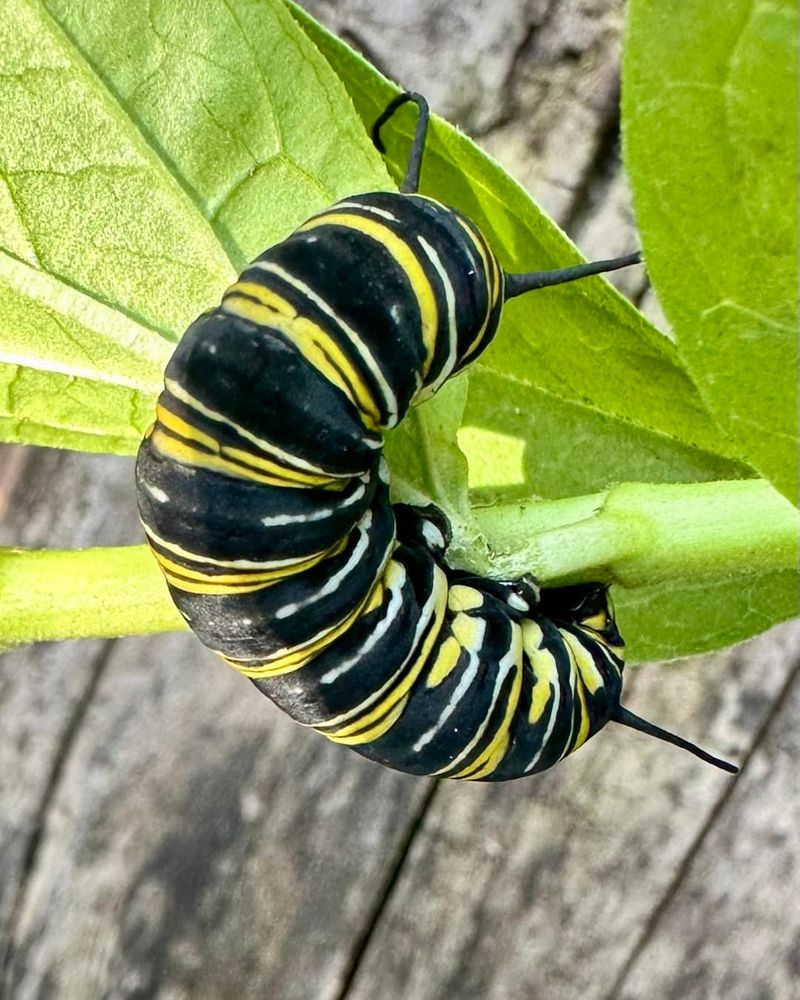
Have you ever wondered why the strikingly beautiful Monarch caterpillar displays such bold black, white, and yellow stripes?
Those vibrant bands serve as a warning sign to birds and other predators that this caterpillar is not safe to eat.
The Monarch caterpillar earns its poisonous status through its exclusive diet of milkweed plants.
Milkweed contains toxic compounds called cardenolides that would harm most insects, but Monarch caterpillars have evolved to not only tolerate these toxins but actually store them in their bodies.
This chemical storage system turns the caterpillar into a poisonous package that predators quickly learn to avoid.
Birds that attempt to eat a Monarch caterpillar often experience immediate discomfort and remember the unpleasant experience.
Finding these caterpillars in your Michigan garden is actually something to celebrate, even though they’re poisonous.
Monarch butterflies are experiencing population challenges, and providing milkweed plants helps support their survival.
The caterpillars won’t harm humans through casual contact, but it’s still wise to observe rather than handle them.
If you’re planting a pollinator garden, including native milkweed species creates habitat for these remarkable insects.
Common milkweed, swamp milkweed, and butterfly weed are all native Michigan options that Monarchs love.
Watching the entire transformation from egg to caterpillar to chrysalis to butterfly is an incredible educational experience for children and adults alike.
The caterpillars go through five growth stages, called instars, and become larger and more impressive with each molt.
During their final instar, they can reach nearly two inches in length.
Their appetite is enormous as they prepare for metamorphosis, sometimes consuming entire milkweed leaves.
If you grow milkweed, expect some leaf damage, but know that you’re contributing to the survival of a species that migrates thousands of miles.
Teaching kids about Monarch caterpillars offers lessons in ecology, adaptation, and conservation.
Just remember to look with your eyes and not your hands, respecting the natural defenses these caterpillars have developed over millions of years of evolution.
4. Monarch Butterfly
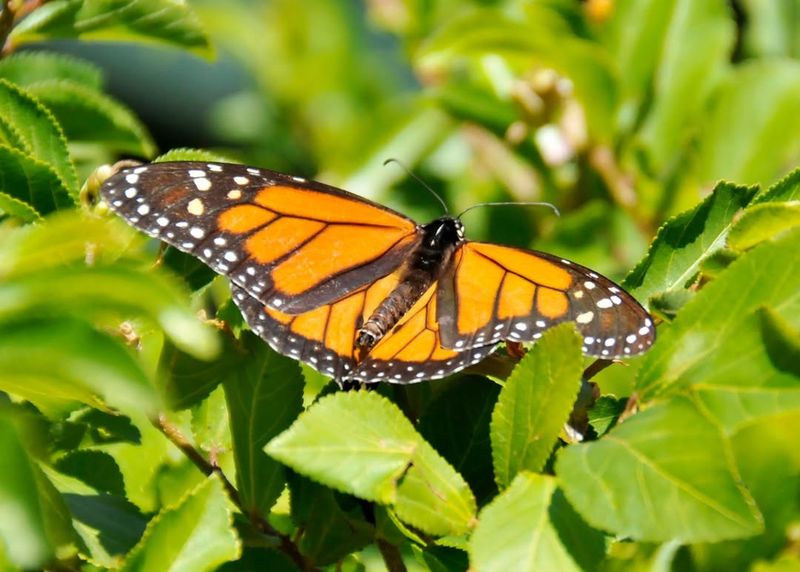
The gorgeous Monarch butterfly, with its iconic orange and black wings, represents one of nature’s most recognizable insects.
What many people don’t realize is that this beautiful flyer carries the same toxins it accumulated during its caterpillar stage.
The transformation from caterpillar to butterfly doesn’t eliminate the poisonous compounds stored in its body.
When a Monarch emerges from its chrysalis, those cardenolides from the milkweed it ate as a caterpillar remain in its system.
This continued protection makes the adult butterfly just as unpalatable to predators as the caterpillar was.
Birds that have tried eating Monarchs quickly learn to associate the distinctive coloring with an upset stomach.
Interestingly, not all Monarch butterflies contain the same level of toxins.
The amount depends on which species of milkweed the caterpillar consumed, as some varieties contain higher concentrations of cardenolides than others.
Michigan’s native milkweed species generally produce butterflies with moderate to high toxin levels.
Monarchs are completely safe for humans to observe and even gently handle if necessary.
The toxins only cause problems if ingested in significant quantities, which obviously isn’t something people do.
However, always wash your hands after touching any butterfly, as they can carry bacteria or pesticide residues on their bodies.
These butterflies undertake one of the most remarkable migrations in the insect world.
Eastern Monarchs, including those from Michigan, travel up to 3,000 miles to overwintering sites in Mexico.
The generation that makes this journey lives much longer than summer generations, sometimes surviving eight months instead of just a few weeks.
Supporting Monarch populations means planting nectar sources like coneflowers, black-eyed Susans, and asters alongside milkweed.
Adult butterflies need energy from flower nectar even though they no longer eat milkweed.
Creating butterfly-friendly spaces in your yard helps ensure these poisonous yet precious insects continue gracing Michigan summers with their presence.
Every Monarch you see represents a successful journey through multiple life stages and serves as a flying reminder of nature’s incredible adaptations.
5. Milkweed Tussock Moth Caterpillar
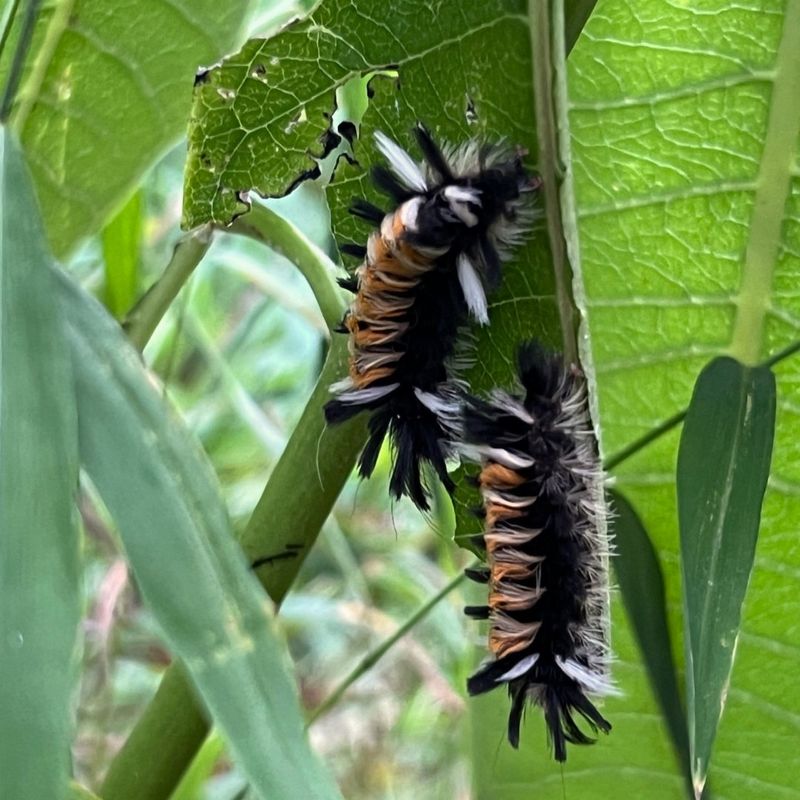
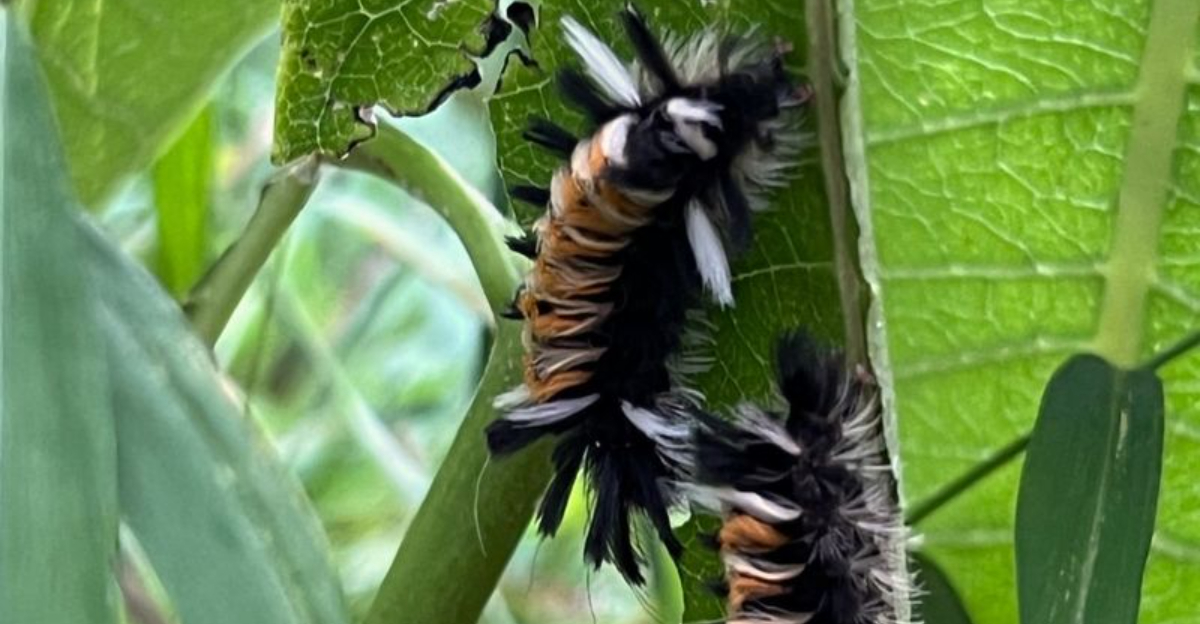
Looking like a tiny punk rocker with its wild tufts of hair, the Milkweed Tussock Moth caterpillar might seem adorable at first glance.
These fuzzy caterpillars sport gray bodies with black and orange markings, along with distinctive white, black, and orange hair tufts that give them their tussock name.
But beneath that fuzzy exterior lies the same defensive strategy used by Monarch caterpillars.
Like their more famous Monarch cousins, Milkweed Tussock Moth caterpillars feed exclusively on milkweed plants.
They sequester the plant’s toxic cardenolides in their bodies, making themselves poisonous to birds and other potential predators.
This shared food source means you might find both species munching on the same milkweed patch in your Michigan garden.
The hairy appearance serves as an additional warning signal beyond just the coloring.
While the hairs themselves aren’t particularly irritating compared to some other caterpillar species, they still provide a physical deterrent.
Some people may experience mild skin irritation from handling these caterpillars, though reactions are generally less severe than with other hairy caterpillar species.
These caterpillars tend to feed in groups during their early stages, creating a striking visual display on milkweed plants.
You might spot dozens of them clustered together on a single plant, their fuzzy bodies creating quite a spectacle.
As they mature, they become more solitary and spread out to different plants.
The adult Milkweed Tussock Moth is far less showy than the caterpillar, appearing as a modest gray moth with subtle markings.
Unlike the caterpillar, the adult moth doesn’t retain high levels of toxins and relies more on camouflage for protection.
If you’re growing milkweed for Monarchs, you’ll likely host these caterpillars too.
Don’t worry about competition, as there’s usually enough milkweed to support both species.
Plant extra milkweed if you notice heavy feeding activity.
Observing these fuzzy caterpillars offers another opportunity to appreciate the complex relationships between plants and insects in Michigan ecosystems.
Just remember to use the same hands-off approach you would with any poisonous creature, and teach children to admire these punk-rock caterpillars from a respectful distance.