14 Fast-Growing Shade Trees Perfect If You Have A Smaller Yard
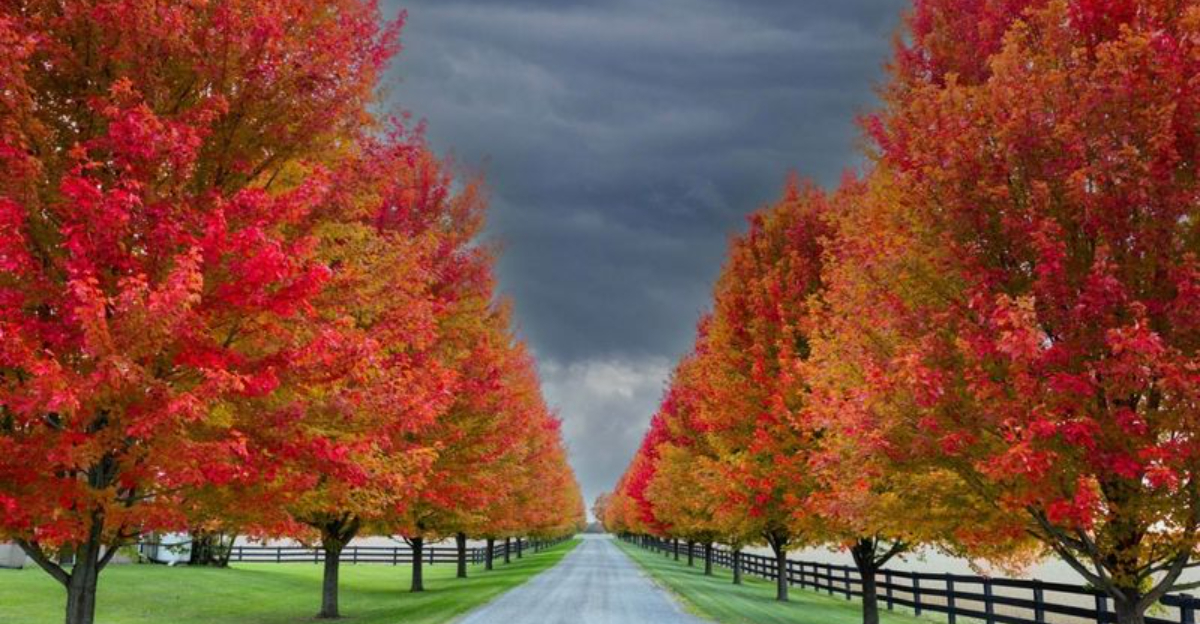
I know the feeling of standing in a small yard on a hot day, wishing for a patch of shade that doesn’t take twenty years to show up.
Big trees sound great on paper, but in tight spaces they can feel like trying to park a truck in a compact spot.
That’s why fast-growing shade trees have become my go-to solution for smaller yards.
I wanted something that would cool things down, add beauty, and still play nice with fences, patios, and nearby houses.
Waiting forever was not an option.
Fast growers filled that gap, shooting up quickly and creating shade without taking over the whole space.
It felt like hitting the sweet spot between patience and payoff.
I also learned that the right tree can make a small yard feel bigger, more inviting, and far more livable.
Afternoon sun becomes manageable, outdoor time lasts longer, and the yard finally feels finished instead of bare.
Choosing the right shade tree changed how I use my space.
For anyone working with a smaller yard, fast-growing shade trees can be a smart move that pays off sooner than expected.
1. Japanese Maple
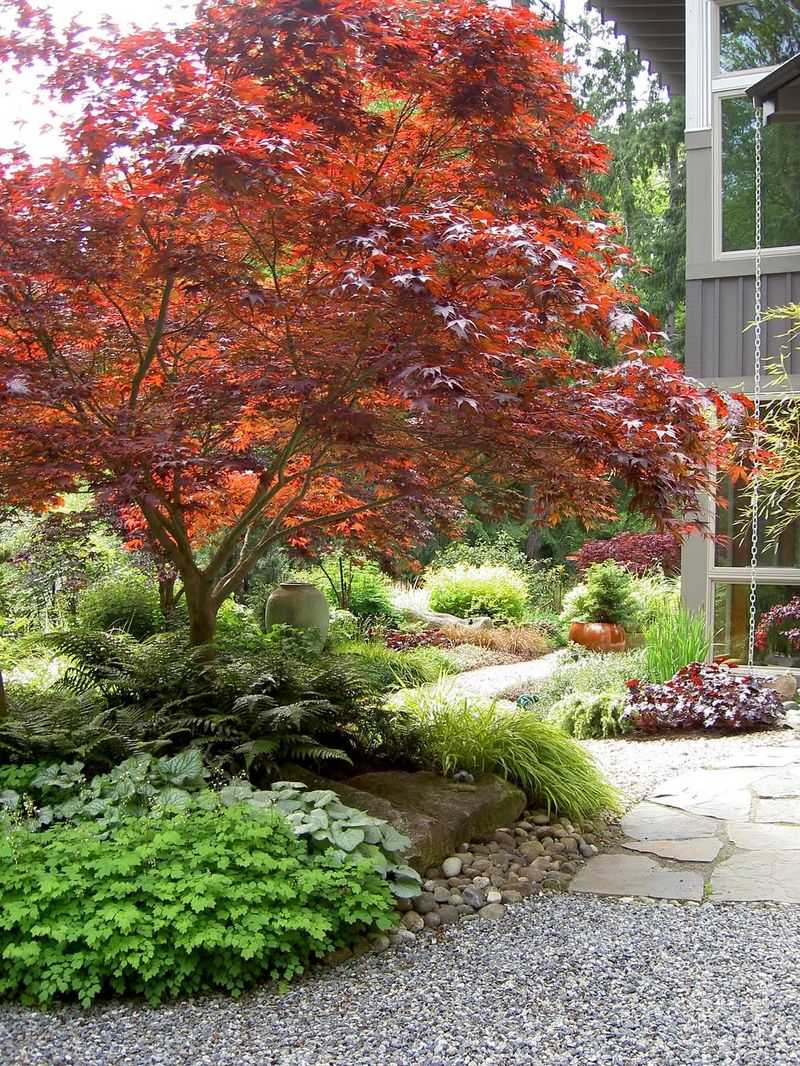
There’s something almost magical about Japanese maples with their delicate, lacy leaves that dance in the slightest breeze.
They come in so many varieties, from deep burgundy to bright green, giving you tons of options to match your garden’s vibe.
Most stay relatively small, usually topping out between 15 and 25 feet, which is perfect when space is tight.
Their growth rate is moderate to fast depending on the cultivar, so you’ll see noticeable progress each season.
Japanese maples prefer partial shade, especially in hotter climates where afternoon sun can scorch those beautiful leaves.
The branching structure is naturally artistic, creating stunning silhouettes even in winter when the leaves have dropped.
These trees do appreciate consistent moisture, so mulching around the base helps retain water and keeps roots cool.
They’re not heavy feeders, but a little compost in spring keeps them happy and healthy.
Plant one as a focal point near an entryway or garden bed where its beauty can really shine.
Watching the leaves change through the seasons becomes a genuine joy you’ll look forward to every year.
2. Crape Myrtle
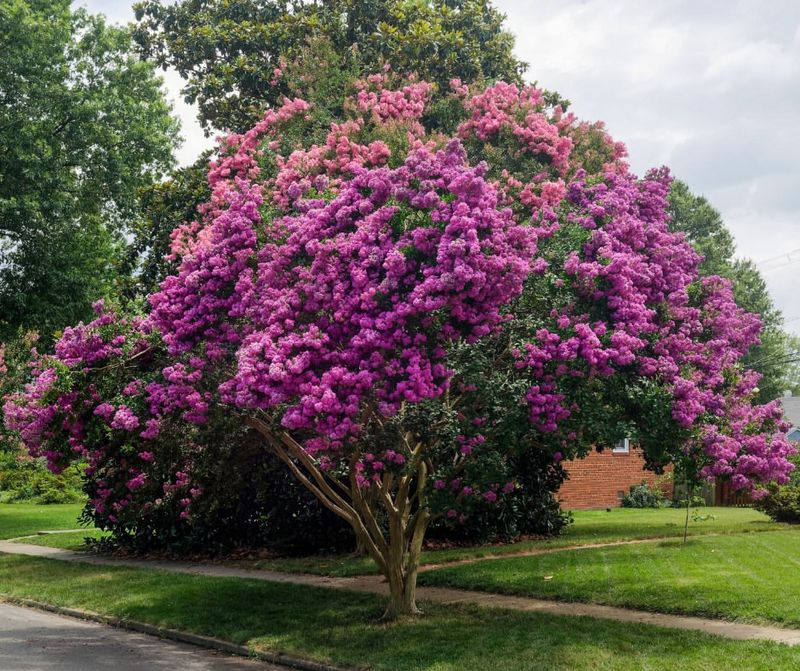
Crape myrtles are like the showstoppers of summer, bursting with clusters of pink, purple, red, or white flowers that last for weeks.
They grow quickly, often gaining a couple of feet per year, and many varieties stay under 20 feet tall.
The smooth, mottled bark is gorgeous year-round, peeling to reveal shades of cinnamon, gray, and cream underneath.
These trees love full sun and heat, thriving in areas where other plants might struggle during summer.
Their compact size and upright growth habit make them ideal for small yards, patios, or even large containers.
Pruning in late winter encourages more blooms and helps maintain a tidy shape without much effort.
Crape myrtles are pretty drought-tolerant once established, so they’re low-maintenance and forgiving if you forget to water occasionally.
They also provide lovely fall color, with leaves turning shades of orange, red, and yellow before dropping.
Plant them where you can enjoy the flowers up close, maybe near a deck or along a walkway.
The combination of summer blooms, interesting bark, and fall foliage gives you something beautiful to appreciate in every season.
3. Red Maple
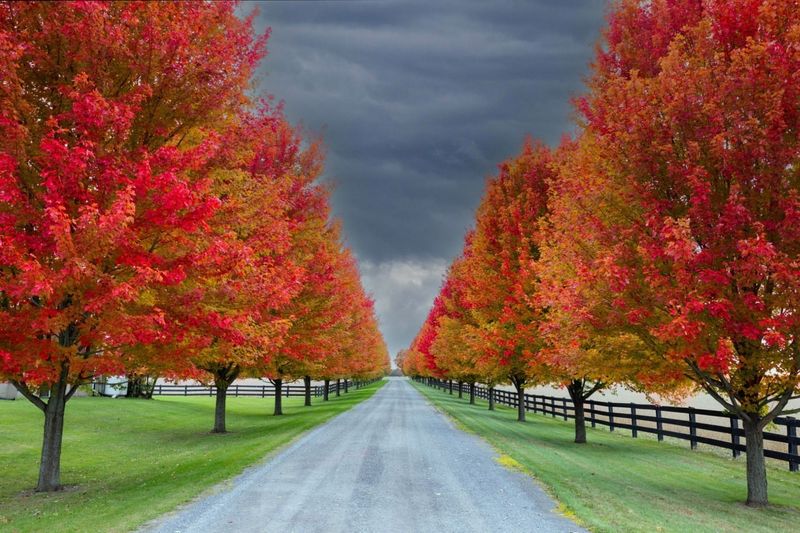
Red maples have this amazing ability to adapt to almost any soil type, which makes them incredibly forgiving for beginners.
They shoot up fast, often adding two feet or more each year, so you won’t be waiting forever for that shade you’re craving.
The brilliant red and orange leaves in fall are honestly breathtaking, turning your yard into a seasonal masterpiece.
These trees typically stay around 40 to 50 feet tall, but you can find smaller cultivars bred specifically for compact spaces.
Their roots aren’t overly aggressive, so you won’t have to worry too much about them disrupting your walkways or foundation.
Red maples prefer full sun but can handle a bit of shade, making them pretty flexible for different yard layouts.
Watering regularly during the first couple of years helps them establish strong roots.
Once settled in, they’re quite drought-tolerant and require minimal fussing.
Consider placing one near a patio or seating area where you’ll really appreciate the cooling shade on hot afternoons.
The beautiful color show each autumn is just an added bonus that never gets old.
4. Dogwood
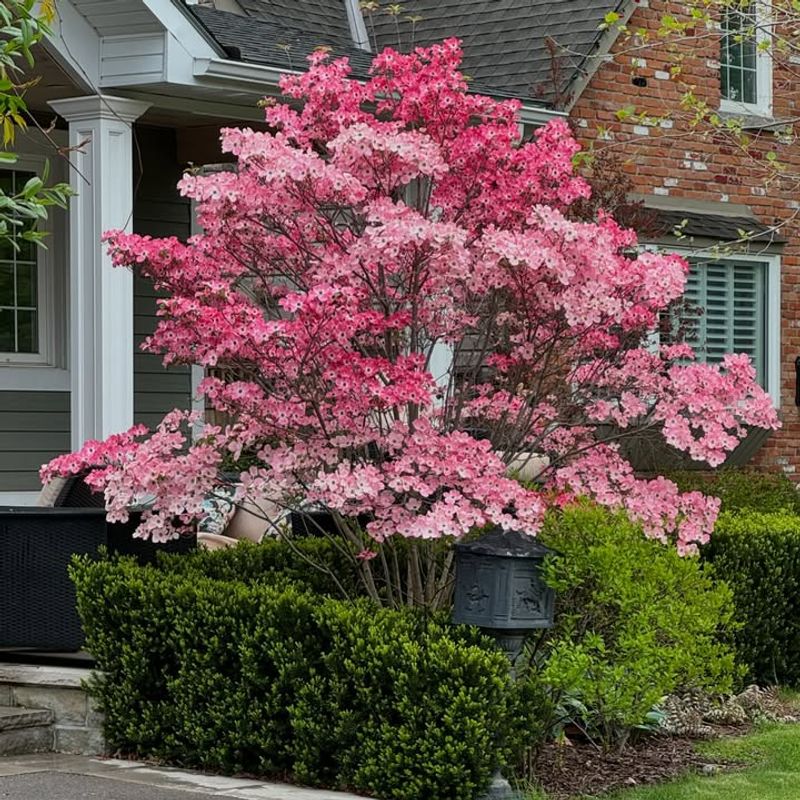
Dogwoods have this graceful, layered branching pattern that looks almost architectural, giving your yard instant elegance.
In spring, they produce stunning white or pink flowers that cover the tree like a cloud, signaling that warmer days are finally here.
Most varieties stay between 15 and 30 feet tall, making them manageable for smaller properties without sacrificing beauty.
They prefer partial shade, especially in hotter regions, so they’re perfect for planting under taller trees or on the north side of your house.
The growth rate is moderate, but you’ll notice significant development each year as the tree fills out.
Fall brings another show with bright red berries that birds absolutely love, plus leaves that turn deep red or purple.
Dogwoods appreciate well-drained soil with plenty of organic matter, so mixing in some compost at planting time really helps.
Mulching around the base keeps roots cool and moist, which these trees definitely prefer.
Avoid planting too deep, as dogwoods like their root flare slightly exposed to prevent rot issues.
Position one where you can see it from a window, and you’ll enjoy the seasonal changes from the comfort of your home.
5. River Birch
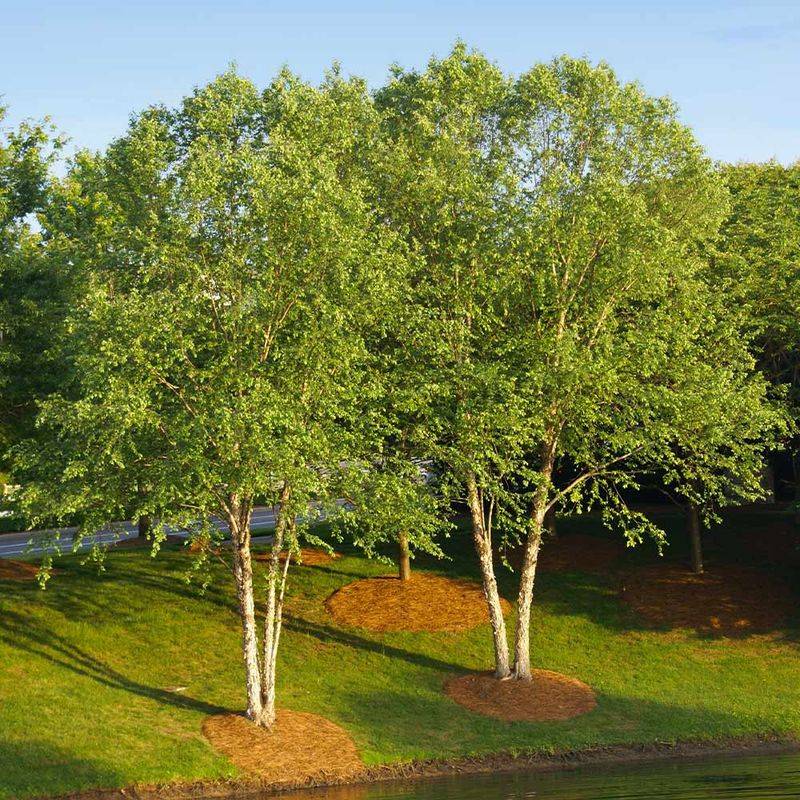
River birch trees have this incredibly unique bark that peels in papery layers, revealing salmon, cream, and tan colors underneath.
It’s honestly one of the most interesting textures you can add to a landscape, catching your eye even from across the yard.
These trees grow fast, sometimes adding three feet or more annually, so shade arrives quickly.
They typically reach 40 to 70 feet at maturity, but dwarf varieties stay much smaller and work beautifully in compact spaces.
River birches love moisture and can tolerate wet areas where other trees might struggle, making them versatile for tricky spots.
Their diamond-shaped leaves turn a soft yellow in fall, adding a gentle touch of autumn color.
Unlike other birches, they’re resistant to bronze birch borer, a pest that often plagues their relatives.
Planting them in full sun to partial shade gives the best growth and bark coloration.
Regular watering during dry spells keeps them looking their best, especially when young and establishing roots.
Consider planting one near a pond, low area, or even just where you need quick shade and year-round visual interest from that stunning bark.
6. Eastern Redbud
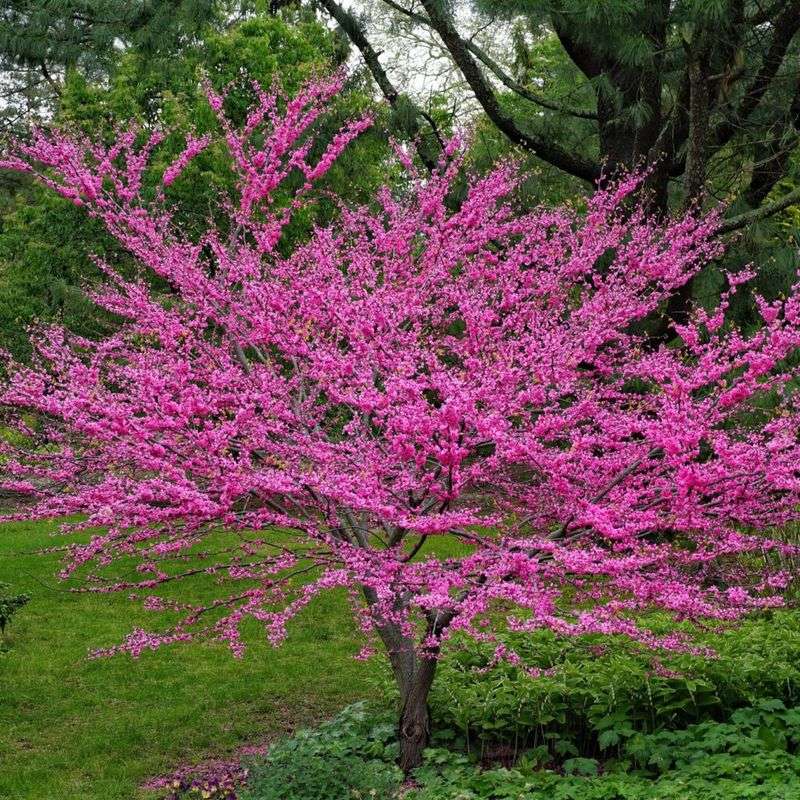
Eastern redbuds are one of the first trees to bloom in spring, covering their branches with clusters of pink-purple flowers before leaves even appear.
It’s such a cheerful sight after a long winter, like the tree is celebrating the arrival of warmer weather right along with you.
These trees stay relatively small, usually between 20 and 30 feet tall, with a rounded canopy that provides nice dappled shade.
They grow at a moderate to fast pace, filling out nicely within just a few seasons.
The heart-shaped leaves are lovely too, emerging with a reddish tint before turning green, then shifting to yellow in fall.
Redbuds are native to much of the eastern United States, so they’re well-adapted and low-maintenance once established.
They prefer well-drained soil and can handle full sun to partial shade, making them pretty adaptable.
Planting one near your home’s entrance creates a welcoming burst of color each spring.
These trees also attract pollinators like bees and butterflies, which is great for the overall health of your garden.
Watching the progression from bare branches to flower-covered beauty to lush green foliage is genuinely rewarding every single year.
7. Serviceberry
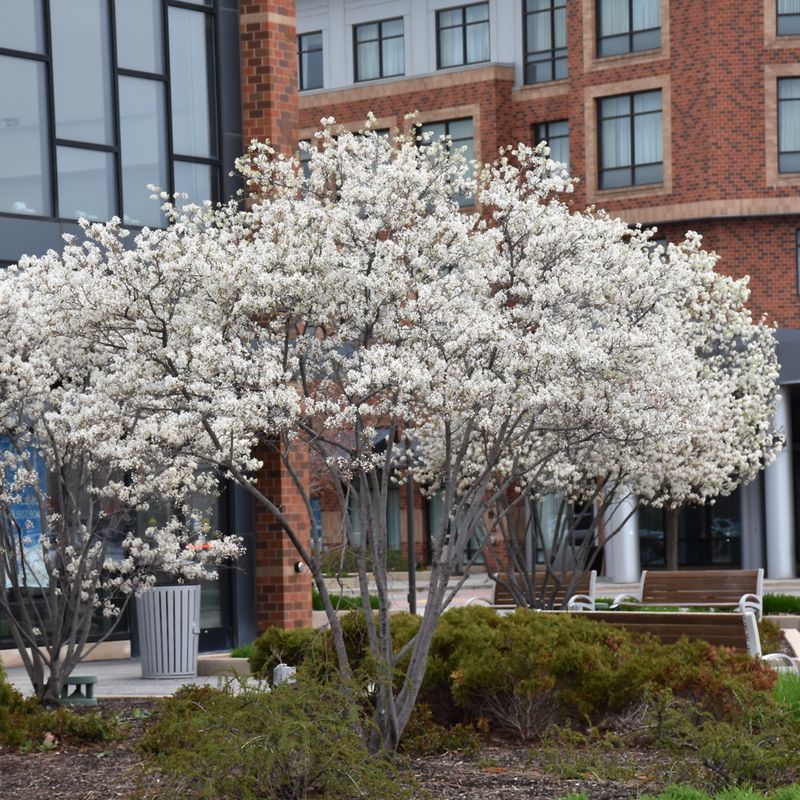
Serviceberries are like the multi-taskers of the tree world, offering beautiful white flowers in spring, edible berries in summer, and brilliant fall color.
The berries taste a bit like blueberries and are loved by birds, though if you’re quick, you can snag some for pies or jams.
These trees typically stay between 15 and 25 feet tall, making them ideal for smaller yards where every foot of space matters.
They grow at a moderate pace, steadily filling out without becoming overwhelming or unruly.
Serviceberries can handle full sun to partial shade and aren’t too picky about soil, as long as it drains reasonably well.
The smooth gray bark becomes more interesting with age, developing subtle ridges that add winter character.
Fall foliage ranges from yellow to orange to red, sometimes all on the same tree, creating a stunning display.
They’re native to North America, so they support local wildlife and require less maintenance than exotic species.
Planting one near a patio or deck lets you enjoy the flowers, watch the birds feast on berries, and admire the fall colors up close.
It’s a tree that truly gives back throughout the entire growing season.
8. Thornless Honeylocust
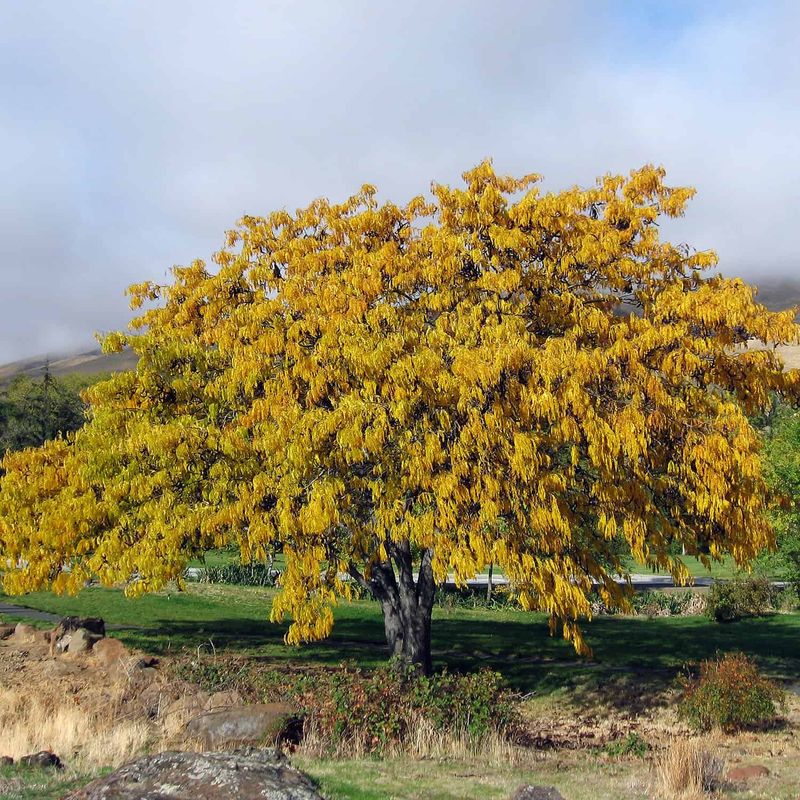
Thornless honeylocust trees have these delicate, fern-like leaves that create a light, airy canopy, allowing dappled sunlight to filter through.
This means you get shade without completely blocking out the sun, so grass and plants can still grow underneath.
They’re incredibly fast growers, often shooting up two to three feet each year, which is perfect when you’re impatient for shade.
Most varieties reach about 30 to 50 feet tall, but their open branching structure keeps them from feeling too heavy or imposing.
These trees are super tough, tolerating urban pollution, compacted soil, drought, and even salt from winter roads.
Their small leaflets break down quickly in fall, so cleanup is way easier than with larger leaves that mat down and smother your lawn.
Honeylocusts prefer full sun and aren’t fussy about soil type, making them adaptable to a wide range of conditions.
They produce small seed pods, but thornless varieties have been bred to minimize mess.
Planting one along a driveway or near a street works well since they handle tough conditions without complaining.
The filtered shade and easy care make them a practical choice for busy homeowners who want beauty without constant maintenance.
9. American Hornbeam
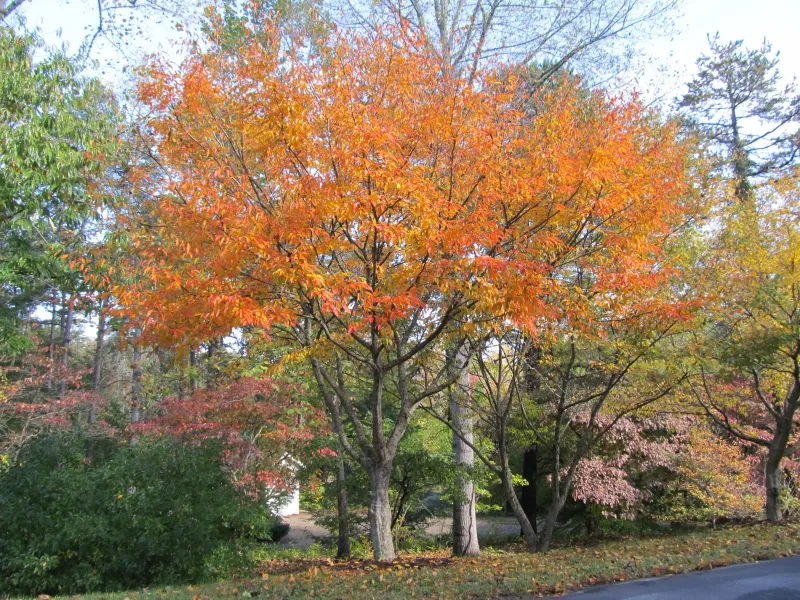
American hornbeams have this smooth, sinewy gray bark that looks almost muscular, earning them the nickname “musclewood.”
It’s a distinctive feature that adds year-round interest, especially in winter when the bark really stands out.
These trees grow slowly to moderately, eventually reaching about 20 to 30 feet tall with a similar spread, perfect for smaller properties.
They prefer shade to partial shade, making them excellent understory trees or choices for yards with limited direct sunlight.
The dense foliage provides excellent shade, and the leaves turn beautiful shades of yellow, orange, and red in fall.
American hornbeams are native to eastern North America, so they’re well-suited to local conditions and support native wildlife.
They’re quite tolerant of wet soils and can handle occasional flooding, which is helpful in low-lying areas.
These trees are also fairly pest and disease resistant, requiring minimal intervention once established.
Planting one in a shaded corner or along a woodland edge creates a naturalistic look that feels peaceful and grounded.
The combination of interesting bark, dense shade, and vibrant fall color makes this tree a hidden gem that more people should consider.
10. Paperbark Maple
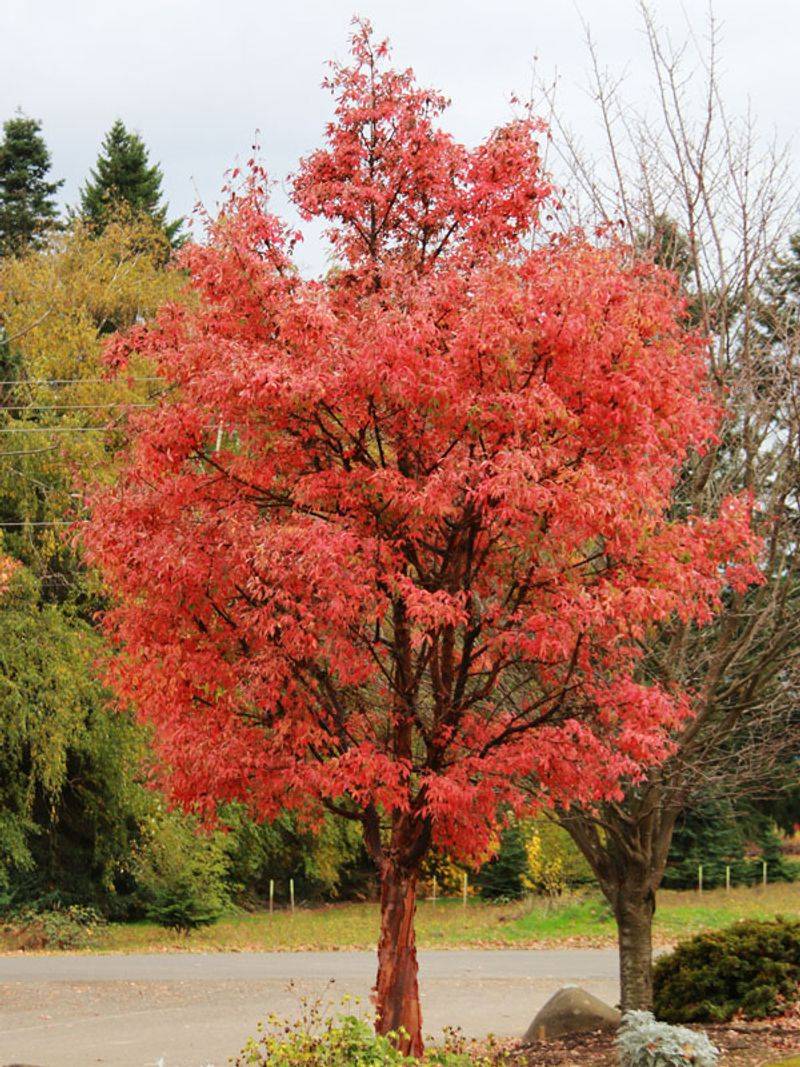
Paperbark maples are absolute stunners with bark that peels in thin, papery sheets to reveal cinnamon and reddish-brown tones underneath.
Honestly, the bark alone is worth the price of admission, providing incredible visual interest even when the tree is bare.
These trees stay relatively small, typically reaching 20 to 30 feet tall, making them perfect for compact yards or as specimen plants.
They grow at a moderate pace, steadily developing their beautiful form without taking over your entire landscape.
The trifoliate leaves are lovely too, turning shades of red, orange, and purple in fall for a vibrant seasonal display.
Paperbark maples prefer well-drained soil and full sun to partial shade, thriving in a variety of garden settings.
They’re not overly demanding and can handle cold winters, making them suitable for northern climates.
Planting one where you can see it from multiple angles, like near a patio or pathway, lets you appreciate the bark from all sides.
These trees are often overlooked but deserve way more attention for their year-round beauty and manageable size.
If you want something truly special that sparks conversation, a paperbark maple is an excellent choice.
11. Kousa Dogwood
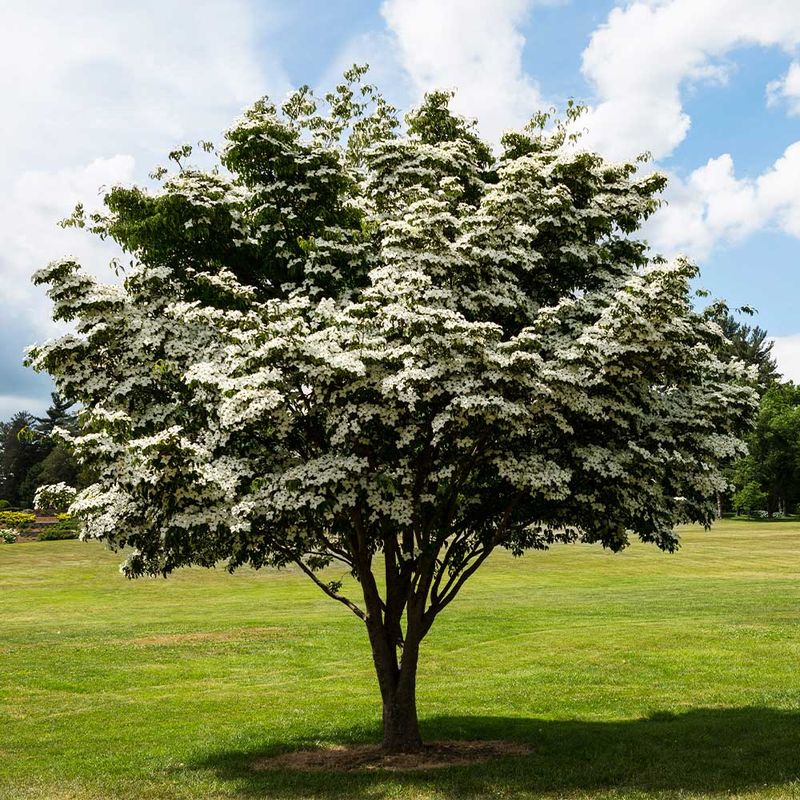
Kousa dogwoods bloom a bit later than their American cousins, covering themselves with elegant white or pink star-shaped flowers in late spring.
The flowers last for weeks, giving you an extended show that brightens up your yard just as everything else is settling into summer mode.
These trees typically stay between 15 and 30 feet tall, with a graceful, layered branching habit that looks almost Japanese in style.
They’re more disease-resistant than American dogwoods, especially against anthracnose, making them easier to grow in some regions.
In late summer, they produce raspberry-like fruits that are edible and attract birds, adding another layer of interest.
Fall brings vibrant red and purple foliage, and the exfoliating bark reveals patches of tan and gray for winter appeal.
Kousa dogwoods prefer well-drained soil and full sun to partial shade, adapting well to various landscape conditions.
They grow at a moderate pace, filling out nicely without requiring constant pruning or shaping.
Plant one where you can enjoy the flowers from a window or seating area, and you’ll appreciate the multi-season beauty.
It’s a tree that keeps giving, with something new to admire almost every month of the year.
12. Trident Maple
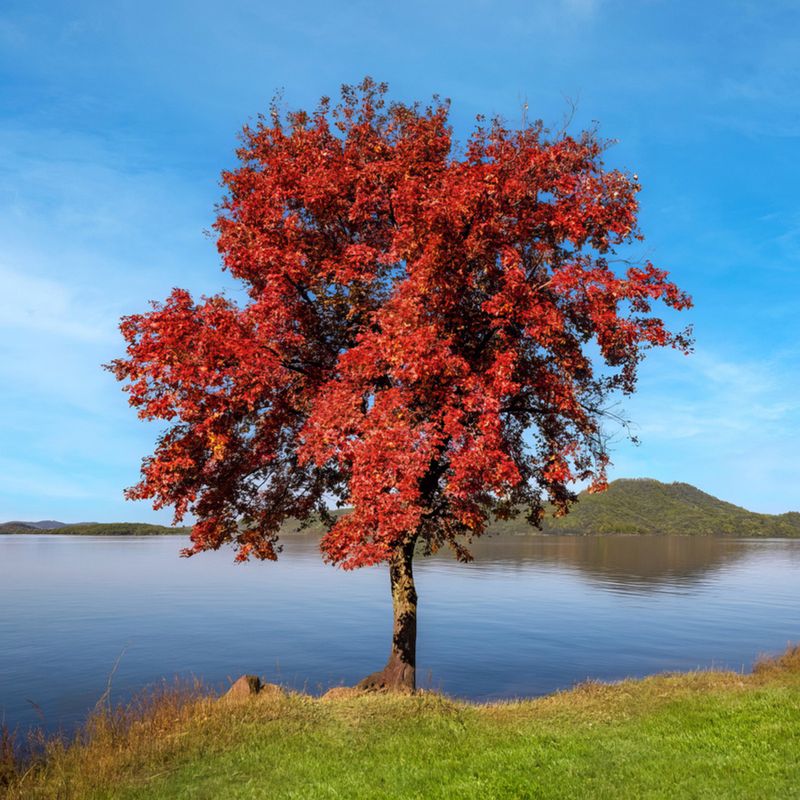
Trident maples have this compact, rounded form that looks almost sculpted, like nature decided to create the perfect small shade tree.
They grow at a moderate to fast pace, quickly developing a dense canopy that provides excellent cooling shade.
These trees typically reach about 20 to 35 feet tall, making them manageable for smaller properties without sacrificing coverage.
The three-lobed leaves are attractive throughout the growing season, turning brilliant shades of yellow, orange, and red in fall.
Trident maples are incredibly adaptable, tolerating a wide range of soils, urban pollution, and even drought once established.
Their bark becomes flaky and exfoliating with age, revealing orange-brown patches that add winter interest.
These trees prefer full sun but can handle some shade, making them flexible for different yard layouts and conditions.
They’re also popular for bonsai, which speaks to their naturally attractive branching structure and ability to handle pruning.
Planting one near a driveway, patio, or lawn area gives you reliable shade without the worry of aggressive roots or excessive leaf drop.
The combination of fast growth, compact size, and year-round beauty makes trident maples a smart choice for smaller yards.
13. Crabapple
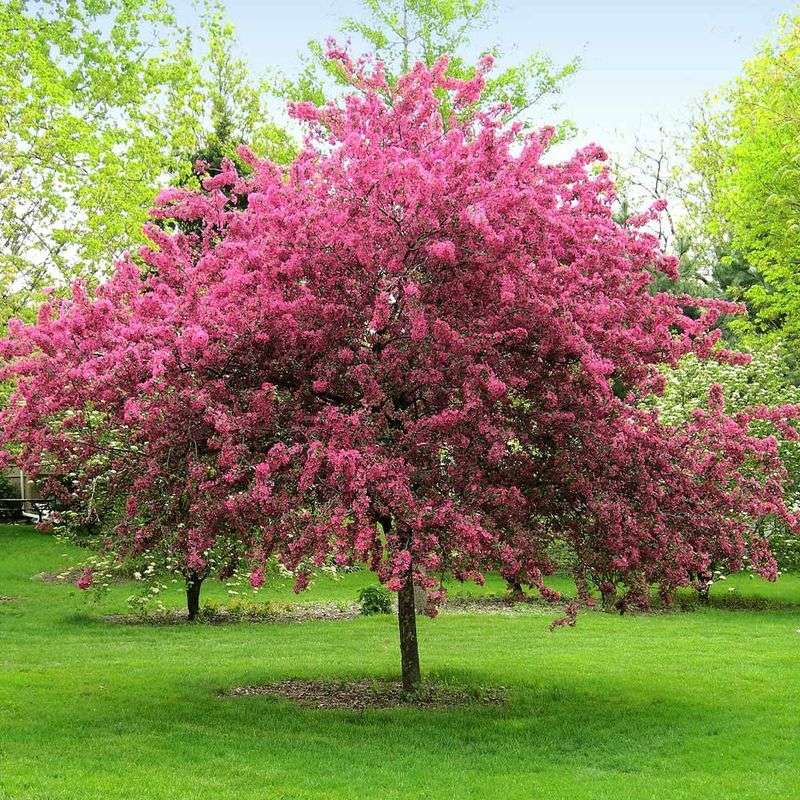
Crabapple trees explode with color in spring, covering themselves in pink, white, or red blossoms that smell absolutely amazing.
It’s the kind of sight that stops you in your tracks and makes you grateful you planted one in the first place.
These trees come in many sizes, but dwarf and semi-dwarf varieties stay between 10 and 20 feet tall, perfect for smaller yards.
They grow at a moderate to fast pace, quickly becoming a focal point that draws attention throughout the seasons.
After the flowers fade, small colorful fruits appear, ranging from red to yellow to orange, persisting into winter and feeding birds.
Many newer varieties have been bred for disease resistance, so they require less spraying and maintenance than older cultivars.
Crabapples prefer full sun and well-drained soil, thriving in a variety of climates from cold to moderate.
Their dense branching provides nice shade, and the fall foliage often turns shades of yellow, orange, or red.
Plant one near your home’s entrance or along a property line where the spring blossoms can really shine.
The combination of stunning flowers, attractive fruit, and compact size makes crabapples a classic choice that never goes out of style.
14. Amur Maple
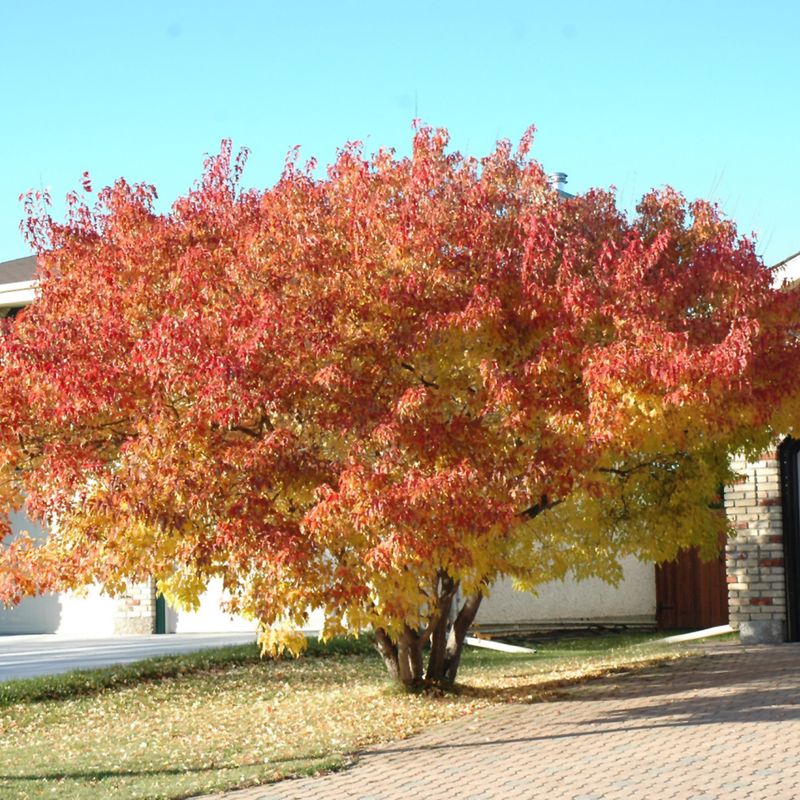
Amur maples are tough little trees that pack a serious punch when fall arrives, turning brilliant shades of red and orange that rival any larger maple.
They typically grow as multi-stemmed small trees or large shrubs, reaching about 15 to 20 feet tall, which is ideal for tight spaces.
Their growth rate is moderate, steadily filling out without becoming invasive or overwhelming your landscape.
These trees are incredibly cold-hardy, thriving in northern climates where other trees might struggle with harsh winters.
The small, three-lobed leaves create a fine-textured appearance that looks elegant throughout the growing season.
Amur maples produce small, red-winged seeds in late summer that add a pop of color before the fall foliage show begins.
They prefer full sun to partial shade and aren’t picky about soil, tolerating everything from clay to sandy conditions.
Their compact size and dense branching make them excellent for screening, shade, or as specimen plants in smaller yards.
Planting one near a seating area or along a walkway lets you enjoy the fall color up close.
It’s a hardworking tree that delivers beauty without demanding constant attention or taking up too much precious yard space.