8 Toxic Trees You Should Avoid Planting In Arizona Yards

Planting a tree in an Arizona yard often feels like a long-term investment, but not every tree earns its keep.
Some come with hidden risks that can turn a good idea into a real headache.
Beneath shady canopies and pretty flowers, certain trees carry toxic leaves, seeds, or sap that pose dangers to people, pets, and local wildlife.
Arizona’s hot climate and dry conditions can amplify these problems.
Toxic trees may drop harmful debris year-round or release irritants that cause trouble during routine yard work.
Kids and pets are especially at risk when parts of a tree look tempting but carry toxic compounds.
What seems harmless at first can quickly become a wolf in sheep’s clothing.
Many homeowners choose trees for shade or looks alone, missing warning signs that only show up later.
Once planted, removing a mature tree can cost a pretty penny and disrupt the entire yard.
Poor choices can linger for decades, creating ongoing safety concerns.
Knowing which toxic trees to avoid helps prevent regret down the road.
Smart planting decisions protect families, pets, and landscapes while keeping yards safe and enjoyable.
In Arizona, the right tree brings comfort and beauty, not hidden danger waiting to surface.
1. Oleander
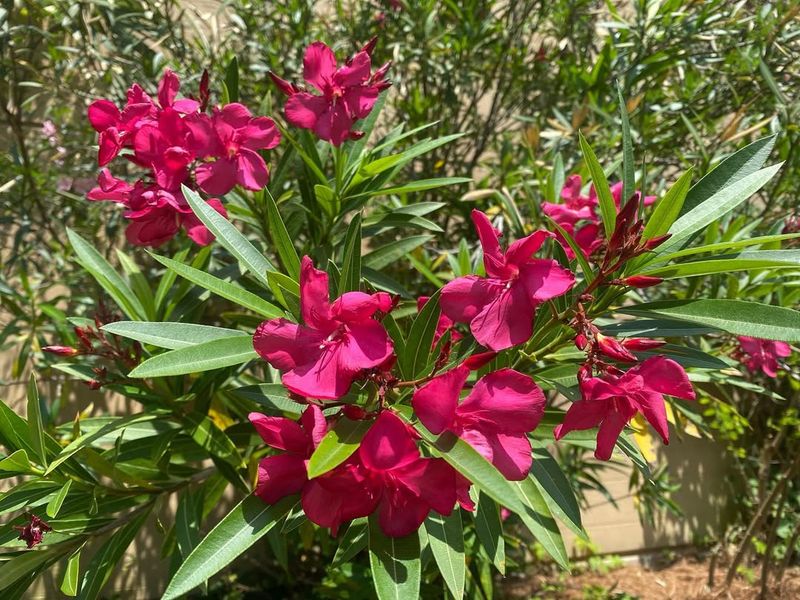
Every part of the oleander contains cardiac glycosides that affect heart function in humans and animals.
Despite its popularity as a drought-tolerant ornamental throughout Arizona neighborhoods, this Mediterranean native ranks among the most hazardous plants you can grow near homes.
Just a single leaf contains enough toxic compounds to cause serious health complications if ingested by curious children or pets.
Gardeners sometimes underestimate the risks because oleanders grow so commonly along Arizona highways and commercial properties.
However, residential settings present different concerns where kids play and pets roam freely.
The attractive blooms come in pink, white, red, and yellow varieties, making them tempting additions to desert landscapes seeking color and privacy screening.
Even handling oleander branches during pruning can cause skin irritation in sensitive individuals.
The smoke from burning oleander wood also releases toxic fumes that should never be inhaled.
Many Arizona cities have started discouraging oleander plantings in public spaces for these very reasons.
Safer alternatives exist that offer similar drought tolerance and attractive foliage without the health risks.
Consider desert willow, Texas ranger, or yellow bells instead for your Arizona property.
These native and adapted species provide beautiful blooms and require minimal water while keeping your family and furry friends out of harm’s way.
Your landscape can be both stunning and safe with thoughtful plant selection.
2. Yellow Oleander (Thevetia Peruviana)
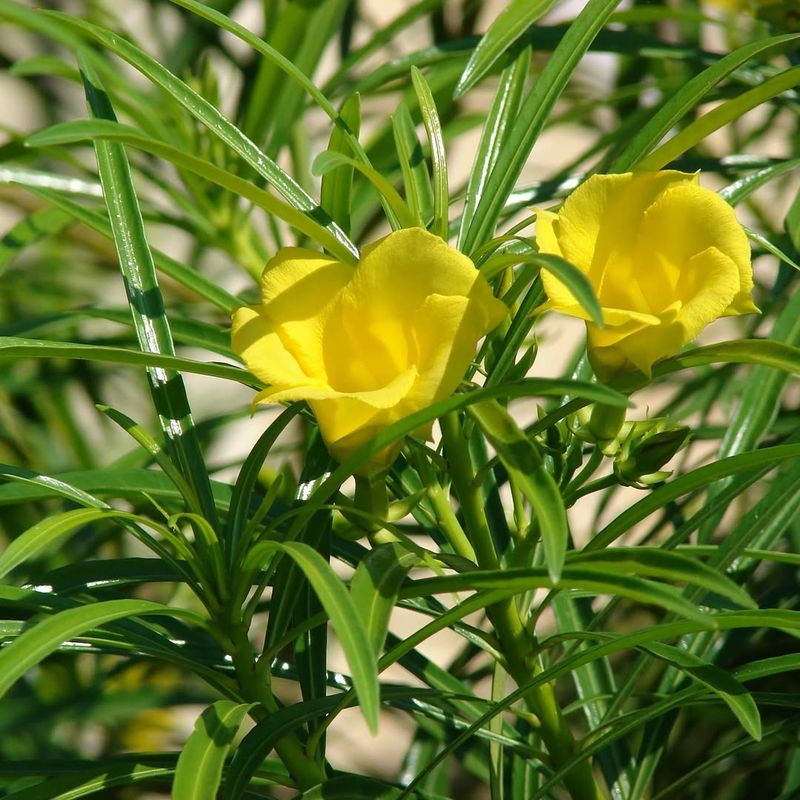
Often confused with its more common cousin, yellow oleander actually contains even more potent compounds throughout its structure.
This tropical species has adapted surprisingly well to Arizona’s warm climate, appearing in some older neighborhoods and commercial landscapes.
The cheerful yellow trumpet flowers might seem inviting, but every portion of this tree poses significant hazards to anyone who touches or consumes it.
Particularly concerning are the green fruits that develop after flowering, which children might mistake for something edible.
Your Arizona Garden Changes Every Week. Your Plan Should Too.
Gardening in Arizona changes quickly throughout the season. Every Friday you’ll receive a simple weekly plan showing exactly what to plant, prune, fertilize, harvest, and protect so you never miss the right timing.
These seed pods contain concentrated amounts of cardiac glycosides similar to those found in prescription heart medications.
Even small amounts can cause serious complications, making yellow oleander completely unsuitable for residential Arizona properties where families spend time outdoors.
The tree’s ability to thrive in hot, dry conditions has led some landscapers to recommend it for water-wise gardens.
This advice ignores the substantial safety concerns that should outweigh any drought-tolerance benefits.
Arizona homeowners have numerous better options that don’t require constant vigilance to prevent accidental exposure.
If you already have yellow oleander on your property, consider removal and replacement with safer alternatives.
Desert bird of paradise, red yucca, or fairy duster provide similar tropical aesthetics without the danger.
Professional removal ensures the toxic plant material gets disposed of properly, protecting your family and creating peace of mind in your Arizona outdoor spaces.
3. Chinaberry Tree
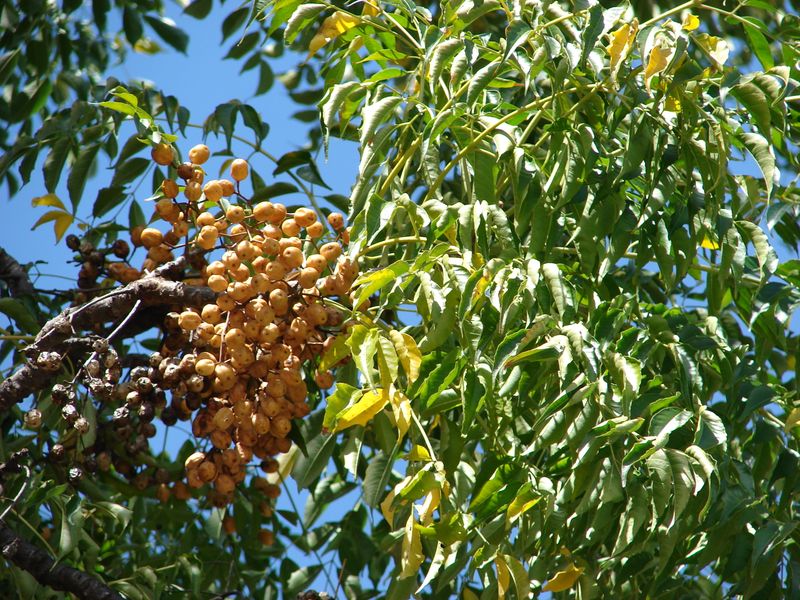
Brought to Arizona decades ago as an ornamental shade tree, chinaberry has since revealed its problematic nature in multiple ways.
The golden berries that appear in fall contain compounds that affect the nervous system and digestive tract.
Birds sometimes eat these berries without apparent harm, which misleads people into thinking they’re safe for mammals, but dogs and children face serious risks from consumption.
Beyond the toxicity concerns, chinaberry has become an invasive species in parts of Arizona, spreading aggressively and displacing native vegetation.
The tree drops messy fruits that stain patios and sidewalks while creating attractive nuisances that draw curious pets and kids.
Its fast growth rate initially appeals to homeowners seeking quick shade, but this advantage quickly becomes a liability as the brittle wood breaks easily during monsoon storms.
Arizona’s climate provides ideal conditions for chinaberry to flourish and reproduce rapidly through seeds and root suckers.
Once established, these trees prove difficult to eliminate completely from properties.
The combination of toxicity, invasiveness, and structural weakness makes chinaberry a triple threat that has no place in responsible Arizona landscaping.
Native alternatives like desert willow or Arizona ash provide excellent shade without the associated problems.
These species support local ecosystems while keeping your yard safe for everyone who enjoys it.
Removing existing chinaberry trees improves both safety and environmental health across Arizona communities.
4. Black Locust
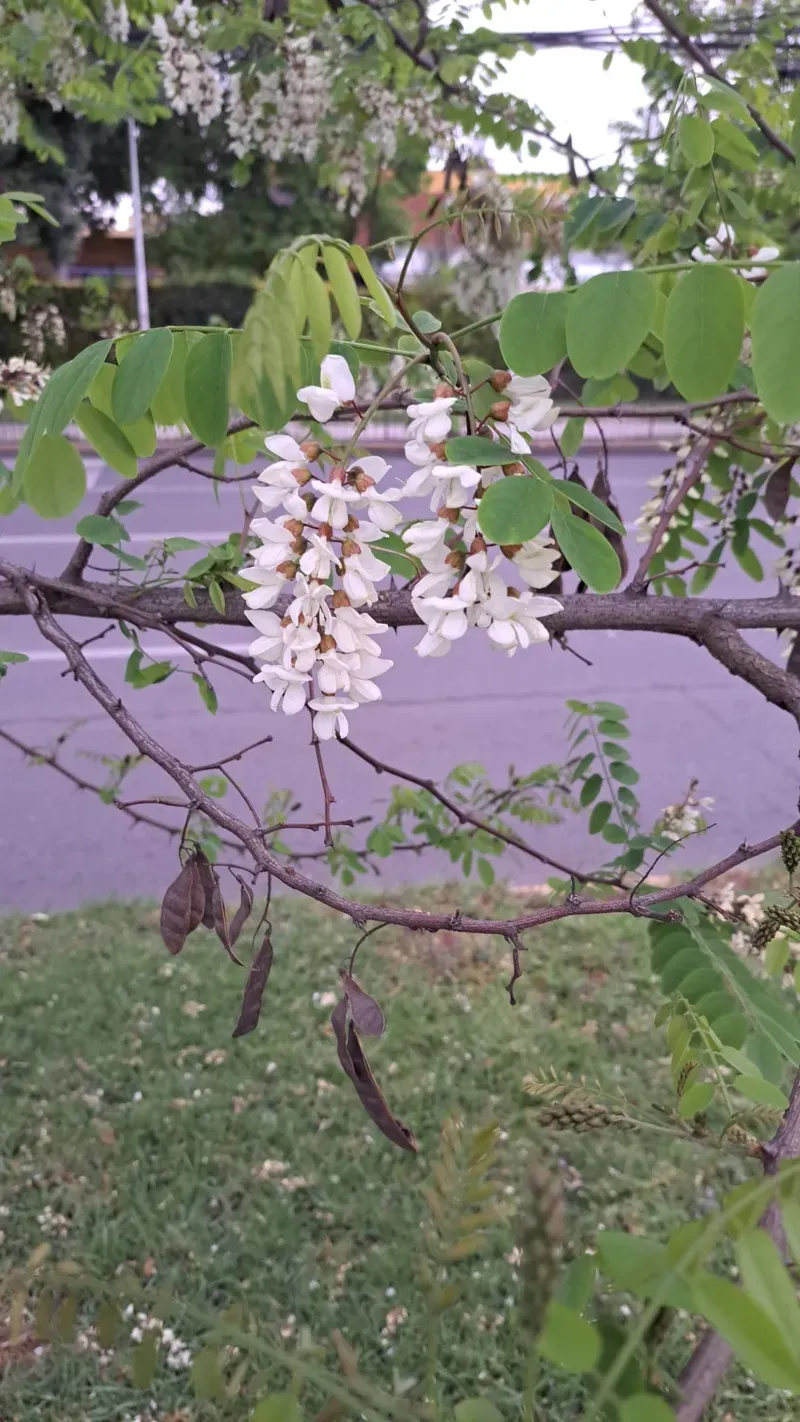
Fragrant white flower clusters make black locust seem like an appealing choice for Arizona yards seeking spring beauty.
However, the bark, leaves, and seeds all contain toxins that can cause digestive upset and other health issues if consumed.
The tree’s thorny branches add another hazard, particularly in areas where children play or people walk frequently.
Originally from the eastern United States, black locust adapts surprisingly well to Arizona’s lower elevations and has appeared in some landscapes.
The hard wood and rapid growth initially attracted homeowners, but the tree’s aggressive root system often damages sidewalks, foundations, and underground utilities.
These spreading roots also produce numerous suckers that pop up across lawns and gardens, creating ongoing maintenance headaches.
The seed pods that develop after flowering contain the highest concentrations of toxic compounds.
Children might be tempted to play with these long, dark pods, increasing exposure risks.
Pets that chew on fallen branches or consume the seeds can experience serious discomfort and require veterinary attention.
Arizona offers much better options for homeowners wanting spring flowers and quick-growing shade trees.
Palo verde, our state tree, provides stunning yellow blooms without the toxicity or aggressive growth habits.
Desert museum palo verde hybrids combine beauty with better structure and less mess.
Sweet acacia delivers fragrant flowers and lacy foliage while remaining safe for families and pets throughout Arizona’s diverse climate zones.
5. Castor Bean Tree
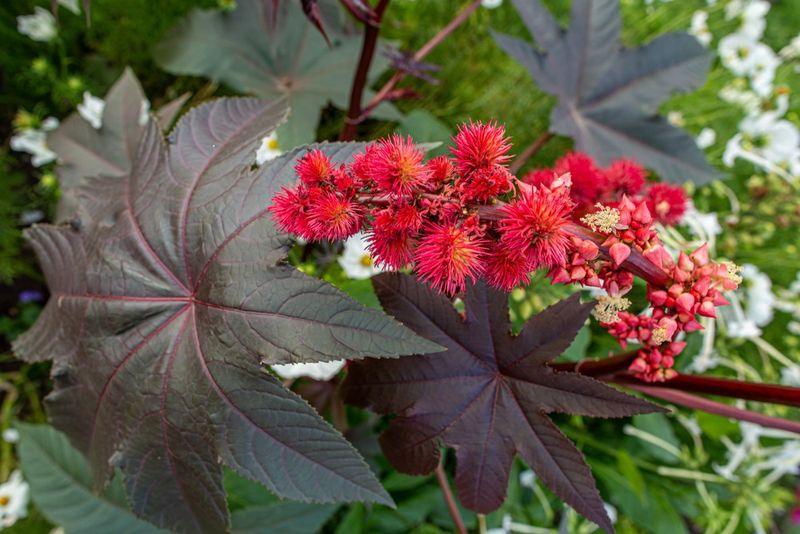
Technically a large shrub that can reach tree-like proportions, castor bean plants contain ricin, one of nature’s most potent toxins.
The attractive star-shaped leaves and unusual seed pods might catch your eye at garden centers, but this plant has absolutely no place in Arizona residential landscapes.
Even tiny amounts of the seeds can cause severe health emergencies, making castor bean far too dangerous for areas where children or pets spend time.
Some gardeners mistakenly believe that growing castor bean in Arizona’s heat somehow reduces its toxicity, but this couldn’t be further from the truth.
The plant actually thrives in warm climates and produces abundant seeds throughout the growing season.
These spiky seed capsules eventually split open, scattering the mottled beans across your yard where they remain hazardous for extended periods.
The dramatic foliage sometimes appears in tropical-themed landscapes across Arizona, particularly in Phoenix and Tucson areas.
Designers who include castor bean in their plans either don’t understand the serious risks or prioritize aesthetics over safety.
No amount of visual appeal justifies exposing families to such extreme hazards.
For that bold, tropical look without the danger, consider elephant ear plants (grown as annuals in most Arizona zones), banana plants in protected areas, or large-leaved hibiscus varieties.
These alternatives provide similar dramatic impact while keeping everyone safe in your Arizona outdoor living spaces.
6. Coral Tree (Erythrina)
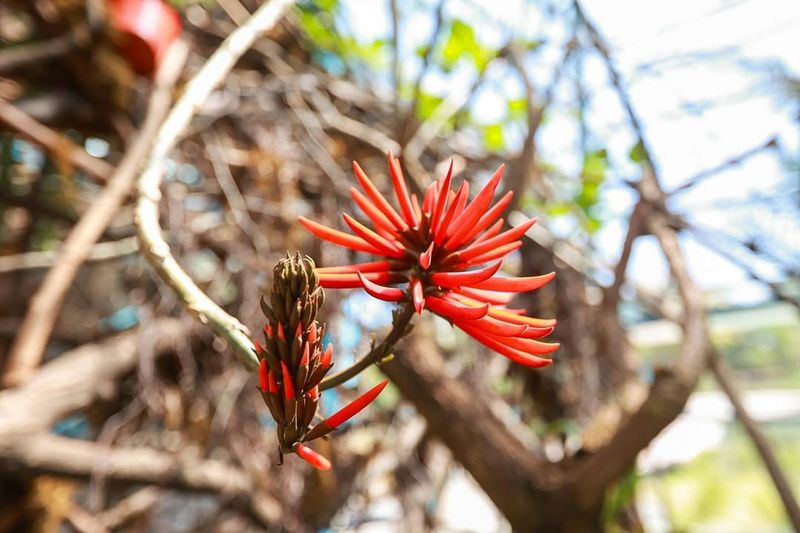
Spectacular red-orange blooms make coral trees stand out in Arizona landscapes, but their beauty comes with significant concerns.
The seeds, bark, and leaves contain alkaloids that affect the nervous system when consumed.
Sharp thorns covering the trunk and branches create additional hazards, particularly problematic in yards where people and pets move around freely.
Several coral tree species grow successfully in Arizona’s warmer regions, especially in low desert areas around Phoenix and Yuma.
The dramatic winter or spring flowering period attracts hummingbirds and attention from neighbors, tempting homeowners to overlook the safety issues.
However, the large seed pods that follow the flowers contain beans that children might find interesting, increasing the risk of accidental ingestion.
Coral trees also suffer from structural problems in Arizona landscapes.
The soft wood breaks easily during summer monsoon storms, and the trees often develop awkward shapes without regular pruning.
This maintenance requirement means more frequent contact with the thorny branches and potentially toxic plant material.
If you’re drawn to coral trees for their spectacular flowers, consider desert bird of paradise or red justicia instead.
Both provide brilliant red blooms that attract hummingbirds without the toxicity concerns.
Ocotillo offers dramatic vertical interest and red flowers while being completely safe for Arizona families.
These alternatives let you enjoy stunning color and desert character while maintaining a secure environment for everyone who enjoys your yard throughout the year.
7. Kentucky Coffee Tree
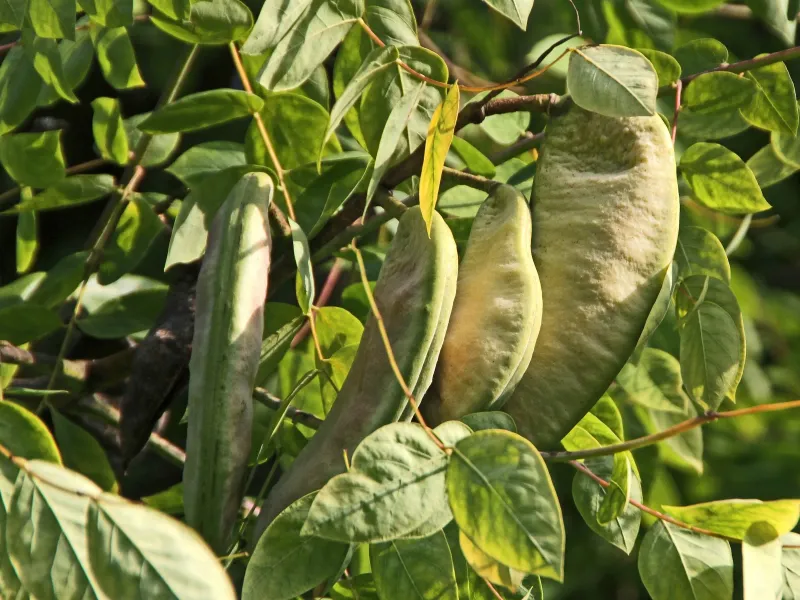
Named for early settlers who roasted the seeds as a coffee substitute, Kentucky coffee tree has appeared in some Arizona landscapes seeking unusual shade trees.
Raw seeds and pulp contain compounds that cause digestive issues and other health problems if consumed.
While roasting apparently neutralizes these substances, nobody should be experimenting with processing tree seeds, especially with children and pets around.
The enormous compound leaves create dense shade, which initially appeals to Arizona homeowners battling intense summer sun.
However, these same leaves create massive cleanup tasks twice yearly when they drop in spring and fall.
The long, thick seed pods that hang on the tree through winter eventually fall and litter yards with their toxic contents.
Kentucky coffee tree struggles somewhat in Arizona’s climate, particularly in areas with alkaline soil and hard water.
The tree requires more irrigation than truly drought-adapted species, making it a poor choice for water-conscious Arizona landscaping.
Its eastern origins mean it never quite thrives in desert conditions the way native or well-adapted species do.
For reliable shade without the toxicity concerns, consider Arizona ash, Chinese pistache, or Chilean mesquite instead.
These species provide excellent canopy coverage while handling Arizona’s climate challenges far better than Kentucky coffee tree.
Tipu tree offers similar compound leaves and shade in warmer Arizona zones without the toxic seed issues, creating safer outdoor spaces for your family to enjoy year-round.
8. Yew (Taxus Species)
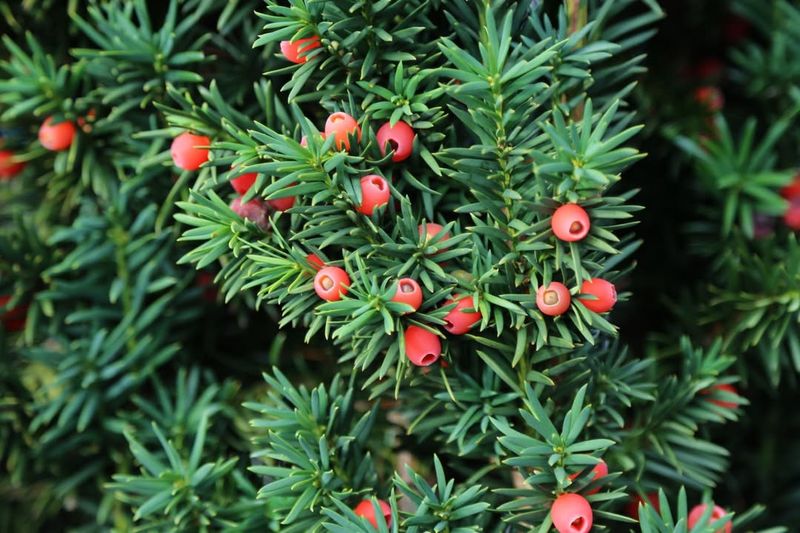
Popular in cooler climates for their evergreen foliage and formal appearance, yews contain taxine compounds throughout their needles, bark, and seeds.
Only the fleshy red aril surrounding the seed is non-toxic, but this distinction means nothing to children or pets who might consume the plant material.
Yews struggle in most Arizona locations anyway, making them doubly unsuitable for desert landscapes.
Some homeowners in Arizona’s higher elevations around Flagstaff and Prescott have attempted growing yews for that traditional evergreen look.
While the cooler temperatures in these areas make survival possible, the toxicity concerns remain unchanged regardless of location.
The attractive red berries appear in fall and look temptingly edible, creating risks for anyone unfamiliar with the plant’s dangerous nature.
Yews require consistent moisture and don’t tolerate the temperature extremes found even in Arizona’s mountain communities.
The effort required to keep these plants alive hardly seems worthwhile given the safety issues and numerous better alternatives available.
Their formal appearance also clashes with the natural desert aesthetic that works best in Arizona landscapes.
For evergreen options that actually thrive in Arizona conditions, consider Texas sage, rosemary shrubs trained as small trees, or Arizona cypress in higher elevations.
These species provide year-round color and structure while being completely safe for families and pets.
They also require far less water and maintenance than struggling yews ever would in Arizona’s challenging climate.