That Red Mushroom Spreading Across North Carolina Lawns Has A Scientific Explanation
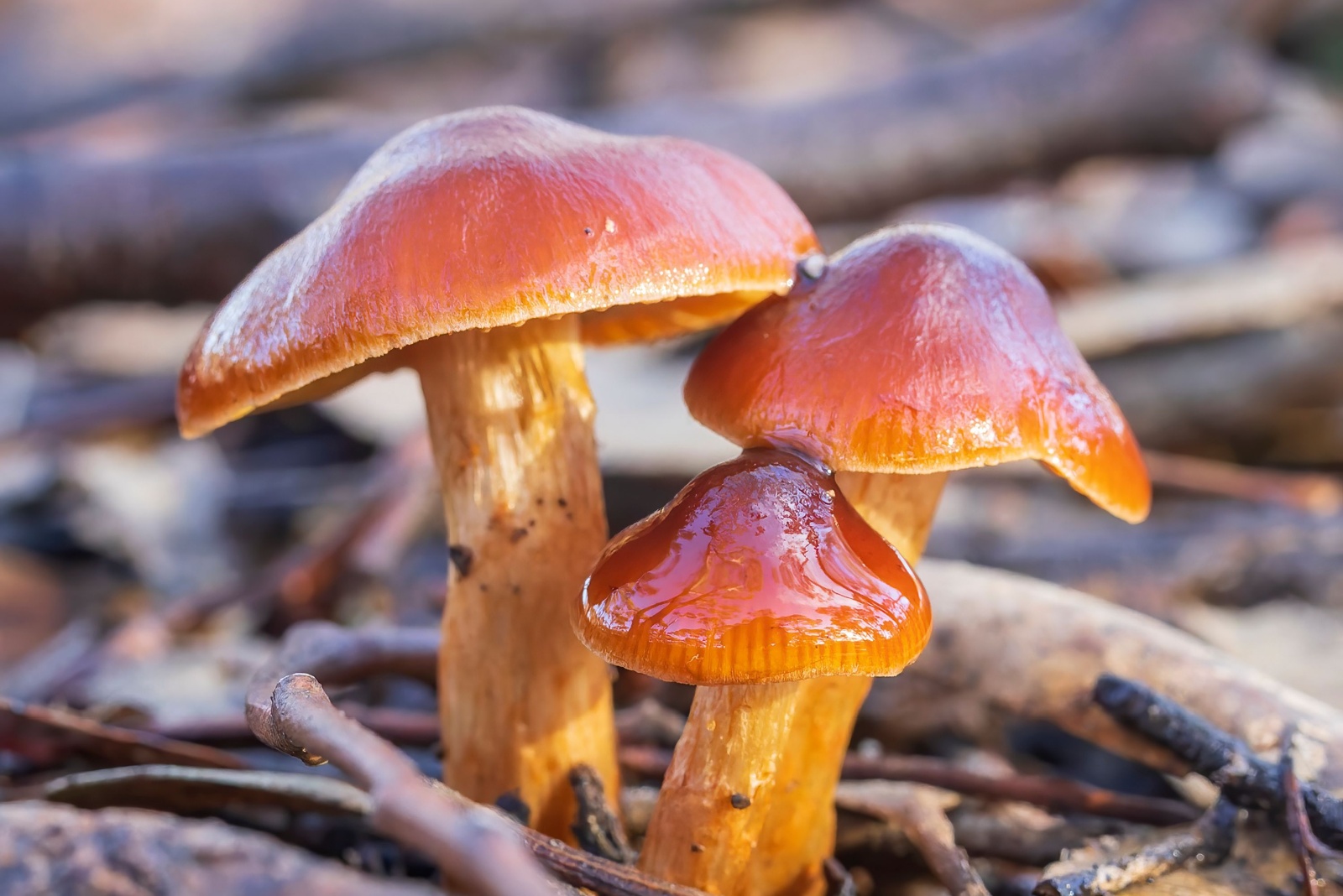
A splash of bright red has been catching eyes across North Carolina lawns, standing out sharply against green grass and dark mulch.
These vivid mushrooms seem to appear overnight, clustered along walkways, garden beds, and recently landscaped yards.
Their bold color feels almost tropical, leading many homeowners to wonder how such an unusual sight found its way into familiar neighborhoods.
Social media posts and local conversations reflect the same reaction: surprise mixed with concern.
This striking fungus has a name—Leratiomyces ceres—and its sudden rise follows clear biological patterns rather than chance.
Warm temperatures, steady rainfall, and mulch-rich soil create ideal conditions for this species to flourish.
Far from signaling lawn damage, its presence points to active soil life beneath the surface.
The mushroom feeds on decaying organic material, quietly recycling nutrients back into the ground.
Recent weather trends across the state have simply amplified the conditions it prefers, allowing it to spread quickly and visibly.
What looks alarming at first glance turns out to be a natural response to shifting environmental factors.
By examining its origins, growth habits, and role in the ecosystem, the red mushroom’s rapid appearance across North Carolina lawns begins to make perfect sense—and loses much of its mystery along the way.
Identifying Leratiomyces Ceres By Its Bright Red Cap
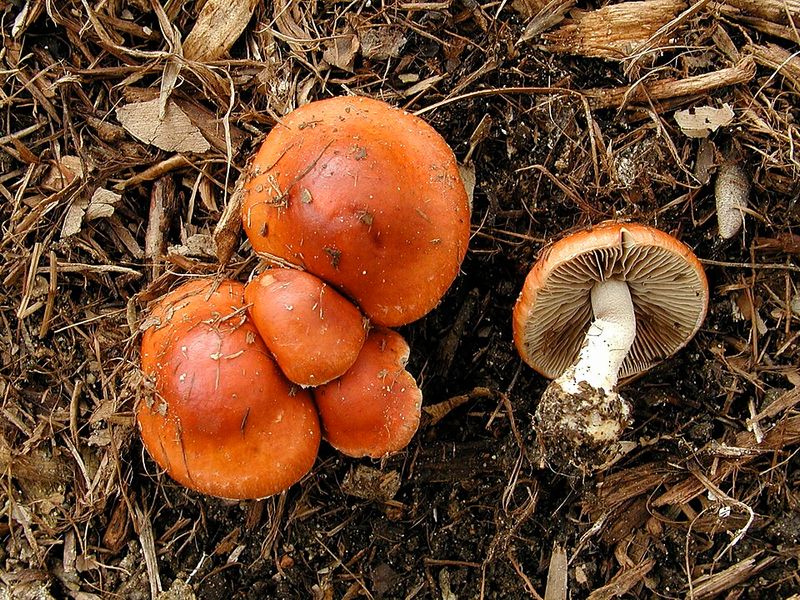
Leratiomyces ceres stands out immediately because of its vibrant scarlet cap that looks almost like a painted decoration on your North Carolina lawn.
The cap typically measures between one to three inches wide and starts out rounded before flattening as the mushroom matures over time.
Fresh specimens display a glossy, almost sticky surface that catches sunlight beautifully, making them impossible to miss during morning walks around your property.
As the mushroom ages, the cap color may fade slightly from brilliant red to more orange or yellowish tones near the edges.
Underneath the cap, you will find gills that are initially pale but darken to purplish-brown as spores develop and mature inside them.
The stem is usually white or cream-colored, smooth, and relatively thin compared to the cap, standing about two to four inches tall.
Young mushrooms often have a partial veil covering the gills, which breaks away as the cap expands, leaving a ring on the stem.
This distinctive appearance makes Leratiomyces ceres easy to identify once you know what features to look for in your North Carolina yard.
Why Mulch And Wood Chips Attract This Species
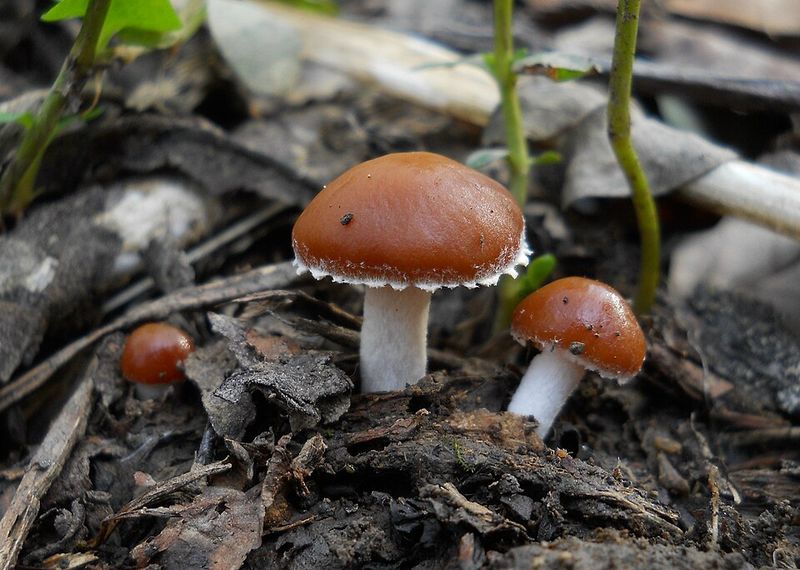
Mulch provides the perfect food source for Leratiomyces ceres because this mushroom feeds on decaying wood and organic plant material found there.
Many North Carolina homeowners spread wood chips around flower beds, trees, and landscaping features without realizing they are creating ideal mushroom habitats in the process.
The fungus breaks down cellulose and lignin in the wood, which are complex compounds that most plants cannot decompose on their own.
Your North Carolina Garden Changes Every Week. Your Plan Should Too.
Gardening in North Carolina changes quickly throughout the season. Every Friday you’ll receive a simple weekly plan showing exactly what to plant, prune, fertilize, harvest, and protect so you never miss the right timing.
This decomposition process actually benefits your soil by releasing nutrients that plants can absorb, improving overall garden health and fertility over time.
Freshly applied mulch tends to produce more mushrooms because it contains higher moisture levels and more readily available nutrients for fungal growth.
The mycelium, which is the underground network of fungal threads, spreads throughout the mulch layer, absorbing nutrients and water from the material.
When conditions become favorable with the right temperature and moisture, fruiting bodies suddenly emerge, which are the visible mushrooms we see above ground.
Removing mulch entirely would reduce mushroom growth, but it would also eliminate the beneficial effects mulch provides to your North Carolina landscaping and plants.
Moisture And Temperature Conditions That Trigger Growth

Heavy rainfall creates the perfect moisture conditions that signal dormant fungal networks to start producing visible mushrooms across your entire lawn area.
Leratiomyces ceres prefers temperatures between 60 and 80 degrees Fahrenheit, which explains why they appear most commonly during spring and fall seasons.
Summer thunderstorms in North Carolina provide both warmth and moisture simultaneously, creating an explosion of mushroom growth within just a few days.
The mycelium remains hidden underground year-round, waiting patiently for environmental conditions to become favorable before expending energy on producing fruiting bodies.
Humidity levels also play a crucial role, as mushrooms need moist air to prevent their delicate tissues from drying out too quickly.
Morning dew can provide enough moisture to sustain mushroom growth even when rainfall has been minimal, especially in shaded areas under trees.
Once the soil dries out or temperatures become too hot or cold, the visible mushrooms disappear quickly, but the mycelium remains alive below.
Understanding these environmental triggers helps explain why mushrooms seem to appear overnight and then vanish just as mysteriously a few days later.
The Role Of Spores In Spreading Across Neighborhoods

Each mature Leratiomyces ceres mushroom releases millions of microscopic spores into the air, which the wind carries to new locations throughout your North Carolina neighborhood.
These spores are incredibly lightweight and can travel significant distances, landing on lawns, gardens, and mulch beds blocks away from their origin point.
When a spore lands in a suitable location with adequate food and moisture, it germinates and begins forming a new mycelial network.
Two compatible spores must meet and fuse together before the fungus can complete its life cycle and eventually produce its own mushrooms.
This explains why Leratiomyces ceres seems to spread rapidly through communities once it establishes itself in a few yards with favorable conditions.
Lawn equipment, shoes, and even pets can also transport spores mechanically from one property to another without anyone noticing the tiny particles.
The purple-brown spore print left by mature mushrooms can sometimes be seen on nearby leaves or grass blades beneath the caps.
Trying to prevent spore dispersal is practically impossible because they are so small and numerous, making this mushroom a permanent neighborhood resident.
Safety Considerations And Toxicity Concerns For Families
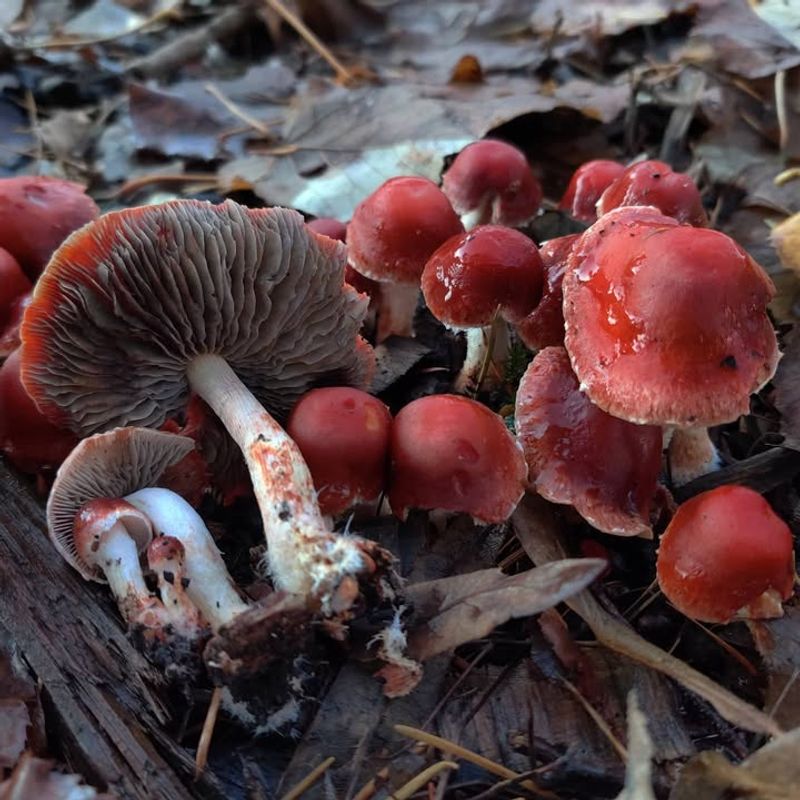
Leratiomyces ceres contains compounds that can cause gastrointestinal upset if consumed, making it important to keep children and pets away from them.
While not considered highly toxic or dangerous, eating these mushrooms can lead to nausea, vomiting, and stomach cramps that are unpleasant and uncomfortable.
Small children may be tempted to pick or taste these colorful mushrooms because their bright red caps look appealing and almost like toys.
Dogs sometimes nibble on mushrooms out of curiosity, so monitoring pets during outdoor playtime becomes essential when mushrooms are present in your North Carolina yard.
The best practice is to remove visible mushrooms regularly before children or animals have a chance to interact with them or put them near their mouths.
Teach kids that wild mushrooms should never be eaten, no matter how pretty or interesting they look, because many species are harmful or toxic.
If someone accidentally ingests any wild mushroom, contact poison control immediately and try to save a sample for identification purposes by medical professionals.
Wearing gloves while handling mushrooms is a good precaution, though touching them briefly with bare hands typically causes no harm to most people.
Ecological Benefits These Mushrooms Provide To Soil
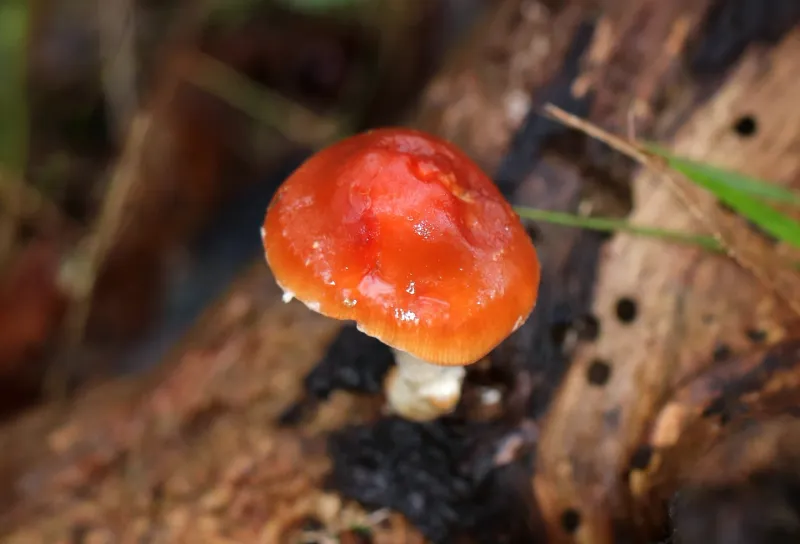
Fungi like Leratiomyces ceres serve as nature’s recyclers, breaking down deceased plant material and returning essential nutrients back into the soil ecosystem.
Without decomposers working constantly in your North Carolina yard, organic matter would accumulate endlessly, and nutrients would remain locked inside deceased plant tissues forever.
The mycelial network improves soil structure by creating tiny channels that allow water and air to penetrate deeper into the ground more effectively.
This enhanced soil structure helps plant roots access moisture and oxygen more easily, promoting healthier growth for grass, flowers, and shrubs in your landscape.
As the fungus digests wood and organic matter, it releases nitrogen, phosphorus, and other minerals that plants need for strong development and vitality.
Many gardeners actually appreciate mushrooms as indicators of healthy, biologically active soil that supports diverse life forms working together in harmony below ground.
The presence of mushrooms suggests that your soil contains adequate organic matter and moisture, which are both essential for maintaining a thriving lawn.
Rather than viewing these mushrooms as pests, consider them helpful partners in maintaining a balanced, productive yard ecosystem that benefits all plants.
Management Strategies For Homeowners Concerned About Appearance
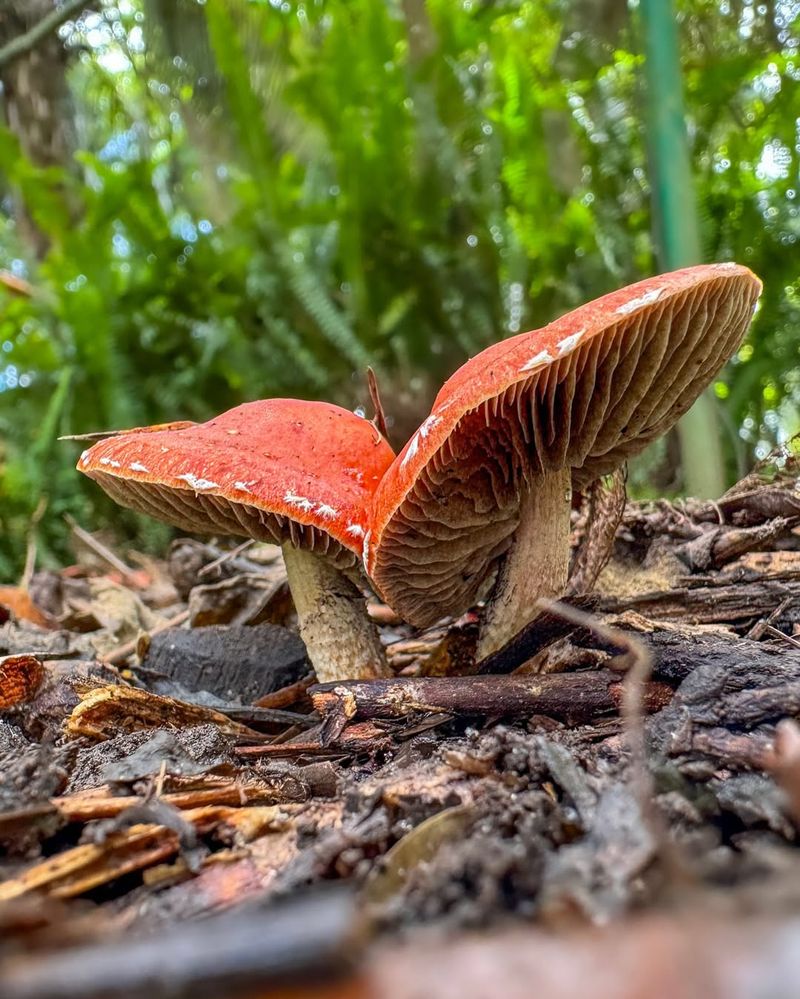
Simply picking mushrooms by hand or with a rake provides the quickest way to remove visible fruiting bodies from your North Carolina lawn temporarily.
Remember that removing mushrooms does not eliminate the underground mycelium, so they will likely reappear when conditions become favorable again in the future.
Reducing irrigation frequency can help decrease mushroom production by creating drier soil conditions that are less suitable for fruiting body formation and development.
Improving drainage in areas where water tends to pool will also discourage mushroom growth by eliminating the persistent moisture they need to thrive.
Aerating your lawn helps water penetrate deeper into the soil rather than sitting near the surface where mushroom mycelium concentrates its activity.
Removing old mulch and replacing it with fresh material can temporarily reduce mushroom numbers, though new fungi will colonize the replacement eventually too.
Fungicides are generally not recommended because they provide only temporary results, can harm beneficial soil organisms, and often prove ineffective against established mycelial networks.
Accepting mushrooms as a natural part of a healthy lawn ecosystem may be the most practical approach for most homeowners in North Carolina.