10 Garden Plants That Are Illegal Or Facing Bans In Alabama
Alabama gardens thrive in warm weather and rich soil, yet not every plant earns a welcome mat.
Some species grow too fast, spread too far, or cause problems that reach beyond the backyard fence.
What starts as an attractive addition can quickly turn into a headache, crowding out native plants, harming wildlife, or upsetting the natural balance.
That is why certain garden plants have landed on the wrong side of the rules, with bans already in place or looming on the horizon.
Many homeowners plant with good intentions, drawn in by bold flowers or fast growth.
Still, a plant that looks harmless at first can become a runaway guest that refuses to leave.
These troublemakers often slip under the radar until the damage is done.
Laws and restrictions step in to protect local ecosystems and keep small issues from snowballing into statewide problems.
Knowing which plants raise red flags saves time, money, and frustration.
It also helps gardens stay healthy and law abiding.
A smart garden choice keeps beauty blooming without inviting trouble.
In Alabama, staying informed means planting with confidence and avoiding surprises that no gardener wants to dig up later.
1. Japanese Honeysuckle
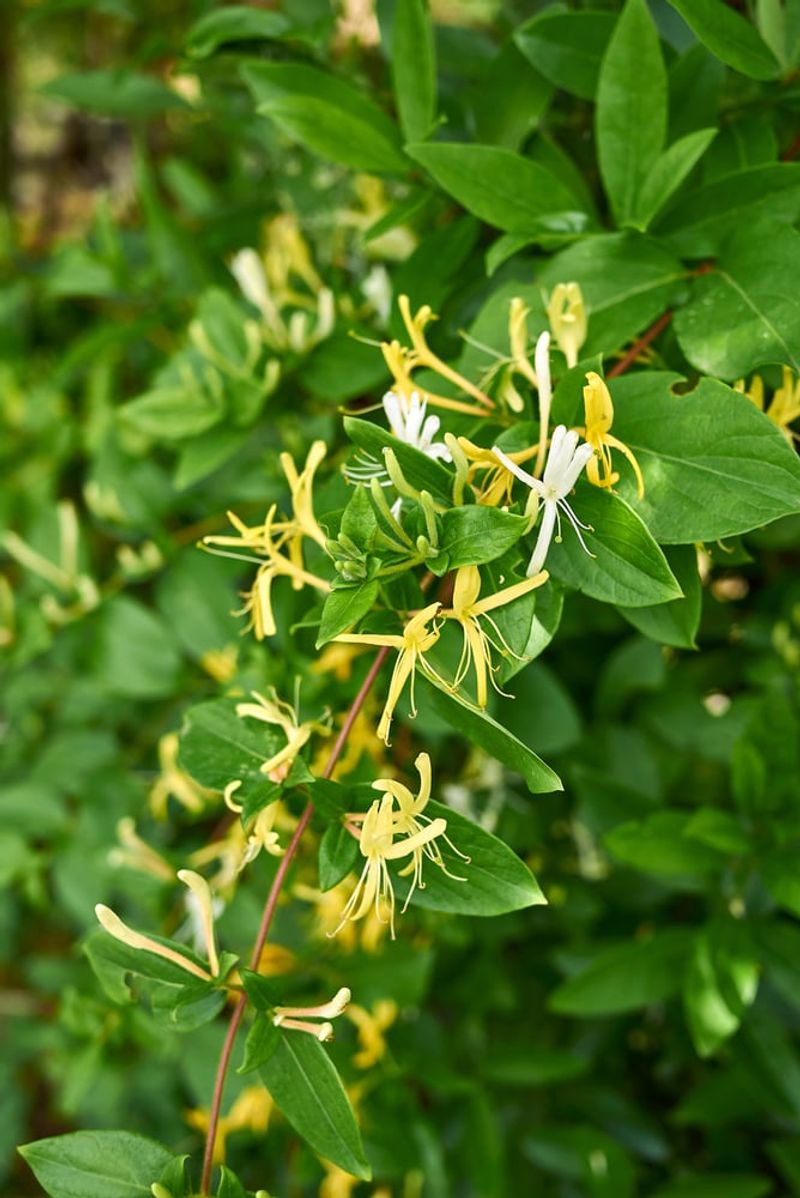
Sweet-smelling blooms might attract you to this vine, but Japanese honeysuckle has earned its reputation as one of Alabama’s most aggressive invaders.
Brought to America as an ornamental plant in the 1800s, this vine quickly escaped gardens and now smothers native vegetation across the state.
It climbs trees, wraps around shrubs, and creates dense mats that block sunlight from reaching other plants.
Alabama forests suffer tremendously as this vine changes entire ecosystems by preventing native species from thriving.
The Alabama Department of Conservation and Natural Resources has identified Japanese honeysuckle as a significant threat to biodiversity.
Landowners spend thousands of dollars trying to control its spread each year.
The vine grows so rapidly that it can advance several feet in just weeks during growing season.
Removing established Japanese honeysuckle requires persistent effort and often professional help.
The roots run deep and any fragment left behind can regenerate into a new plant.
Alabama regulations now restrict planting this species, and future legislation may impose stricter penalties.
Native alternatives like coral honeysuckle offer similar beauty without the ecological damage, making them much better choices for Alabama gardens.
2. Kudzu
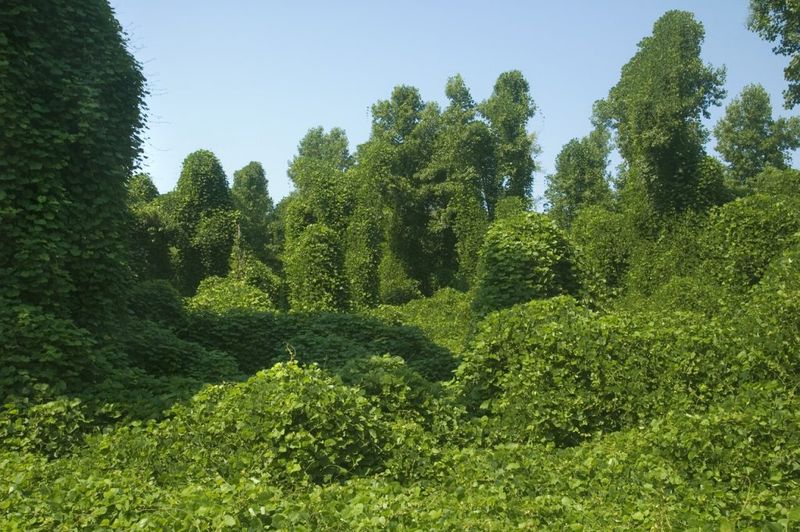
Locals call it “the vine that ate the South,” and for good reason.
Kudzu blankets millions of acres across Alabama, transforming landscapes into eerie green sculptures where nothing else survives.
Originally imported from Japan in the late 1800s for erosion control, this aggressive climber proved to be a catastrophic mistake.
Under ideal Alabama conditions, kudzu can grow up to a foot per day, overwhelming everything in its path.
The economic impact reaches far beyond aesthetics.
Power companies constantly battle kudzu threatening electrical lines, while farmers watch it consume valuable pastureland.
Alabama forestry operations lose millions annually as kudzu smothers timber stands and reduces property values.
State authorities have long recognized kudzu as a noxious weed, making it illegal to plant or distribute in Alabama.
Your Alabama Garden Changes Every Week. Your Plan Should Too.
Gardening in Alabama changes quickly throughout the season. Every Friday you’ll receive a simple weekly plan showing exactly what to plant, prune, fertilize, harvest, and protect so you never miss the right timing.
Eradication efforts involve years of repeated cutting, herbicide applications, and grazing by livestock.
Even with aggressive management, kudzu remains nearly impossible to eliminate once established.
Climate change may worsen the kudzu problem as warmer temperatures extend growing seasons across Alabama.
Scientists warn that without continued vigilance, this vine could claim even more territory.
Smart gardeners avoid kudzu entirely and report any new infestations to local agricultural extension offices.
3. Chinese Privet
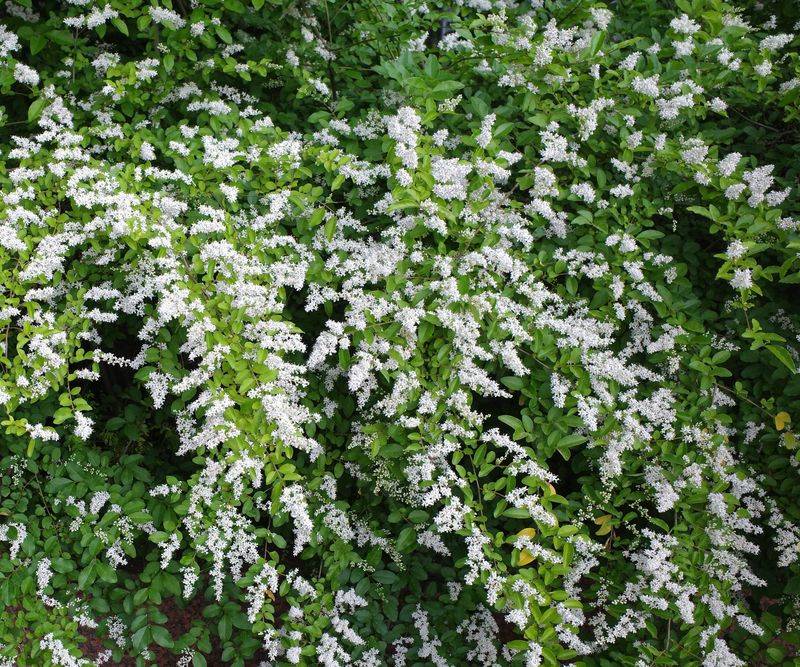
Walk through any Alabama forest and you’ll likely encounter this deceptively attractive shrub dominating the understory.
Chinese privet arrived as a landscaping favorite decades ago, prized for its fast growth and dense foliage that created instant privacy screens.
Homeowners loved how quickly it filled bare spots and tolerated various soil conditions.
Unfortunately, these same qualities make it an ecological disaster throughout Alabama.
Birds eat the small fruits and spread seeds far and wide, establishing new colonies in natural areas.
The shrub forms impenetrable thickets that exclude native wildflowers, ferns, and young trees.
Alabama’s biodiversity suffers as wildlife lose food sources and nesting habitat.
State environmental agencies now classify Chinese privet as a major invasive species across Alabama.
Removal requires cutting stems close to ground level and treating stumps with herbicide to prevent resprouting.
Many Alabama communities organize volunteer workdays to clear privet from public lands and nature preserves.
Regulations increasingly restrict Chinese privet sales and planting throughout the state.
Nurseries face pressure to stop carrying this species despite its popularity.
Native alternatives like American beautyberry or yaupon holly provide similar screening without threatening Alabama ecosystems, making them far superior choices for responsible gardeners.
4. Cogongrass
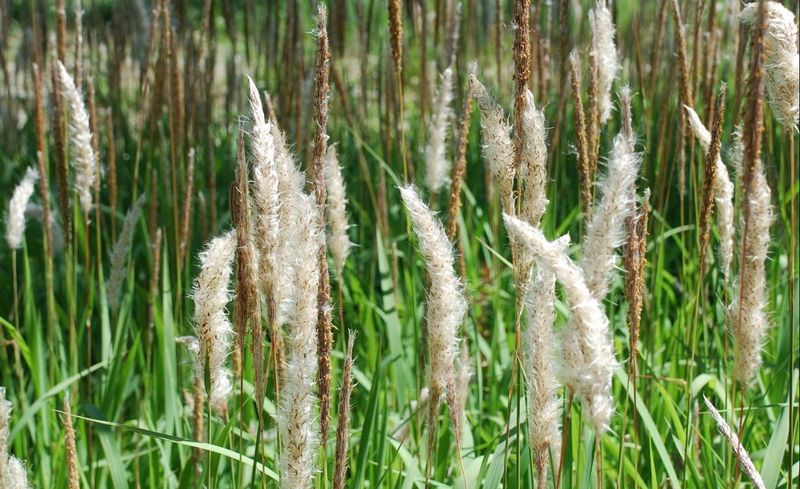
Federal officials call this grass one of the worst invasive plants on Earth, and Alabama knows this firsthand.
Cogongrass creates monocultures that push out every other plant species across thousands of Alabama acres.
Its sharp-edged leaves contain high silica content that makes them nearly inedible to livestock and wildlife.
The grass spreads through underground rhizomes and windborne seeds, making containment extremely difficult.
Alabama farmers face devastating losses when cogongrass invades pastures and cropland.
The grass reduces forage quality to zero and increases wildfire risks with its highly flammable dried material.
Forestry operations also suffer as cogongrass prevents tree seedlings from establishing and reduces timber productivity.
State law strictly prohibits planting, selling, or transporting cogongrass anywhere in Alabama.
Violators face significant fines and potential criminal charges.
The Alabama Cooperative Extension System provides resources for identification and management strategies.
Eradication requires multiple years of intensive herbicide treatments timed precisely to the grass’s growth cycle.
Even small root fragments can regenerate, making complete elimination nearly impossible once established.
Alabama researchers continue studying biological control methods including imported insects that feed specifically on cogongrass.
Property owners must report infestations immediately to prevent further spread across Alabama’s agricultural and natural lands.
5. Water Hyacinth
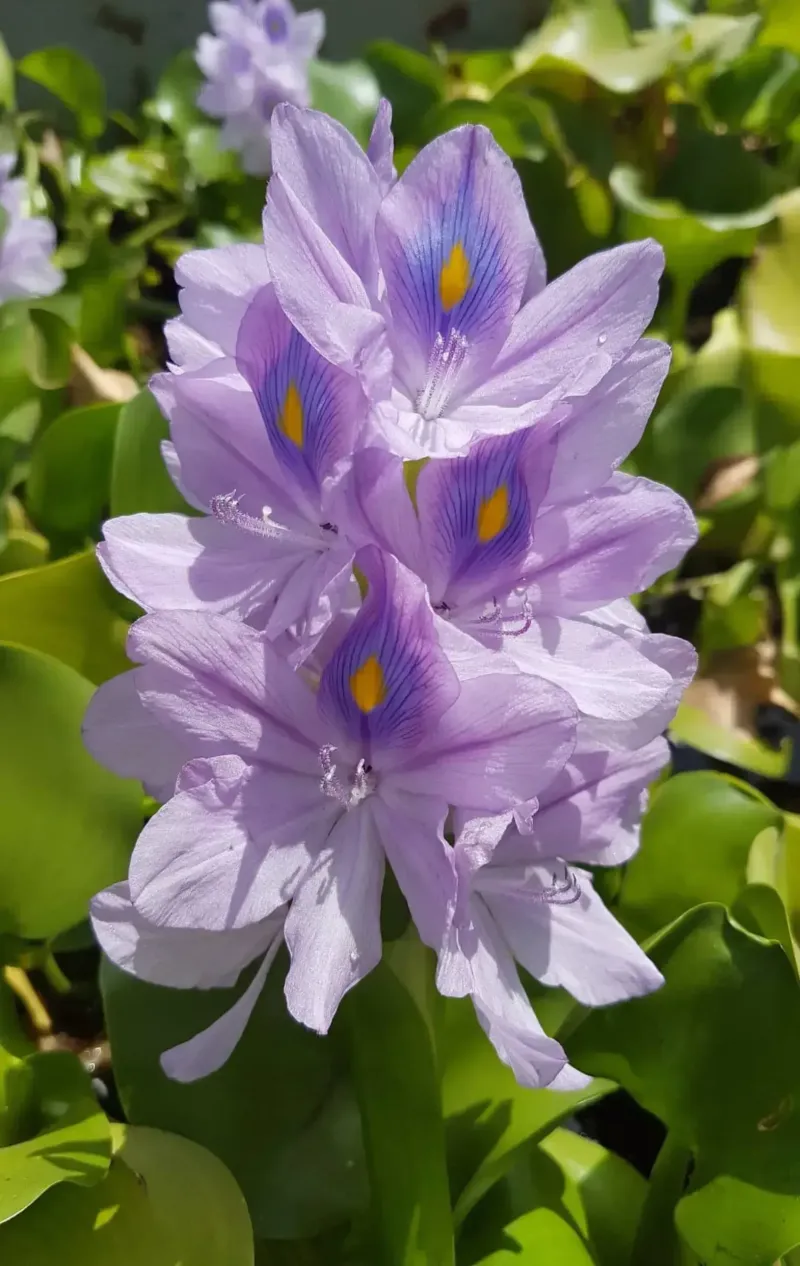
Beautiful purple flowers hide the destructive nature of this floating menace.
Water hyacinth reproduces so rapidly that a single plant can generate thousands of offspring within months.
The dense mats cover Alabama ponds, lakes, and slow-moving streams, blocking sunlight and depleting oxygen levels.
Fish populations crash as their habitat becomes uninhabitable, and recreational activities become impossible.
Alabama water bodies from the Tennessee Valley to Mobile Bay face ongoing battles with water hyacinth.
The plant clogs irrigation systems, damages boat propellers, and interferes with fishing and swimming.
Municipal water treatment facilities spend considerable resources removing hyacinth from intake pipes.
State regulations classify water hyacinth as a prohibited species throughout Alabama.
Possessing, selling, or introducing this plant into any water body carries serious legal consequences.
Alabama environmental agencies conduct regular monitoring and rapid response efforts to catch new infestations early.
Control methods include mechanical harvesting, herbicide applications, and introducing specialized weevils that feed on the plants.
However, complete eradication remains challenging as fragments break off and establish new colonies downstream.
Climate change may expand suitable habitat across Alabama as winters become milder.
Gardeners should never release aquarium or water garden plants into natural water bodies, as this commonly introduces invasive species like water hyacinth throughout Alabama.
6. Bamboo
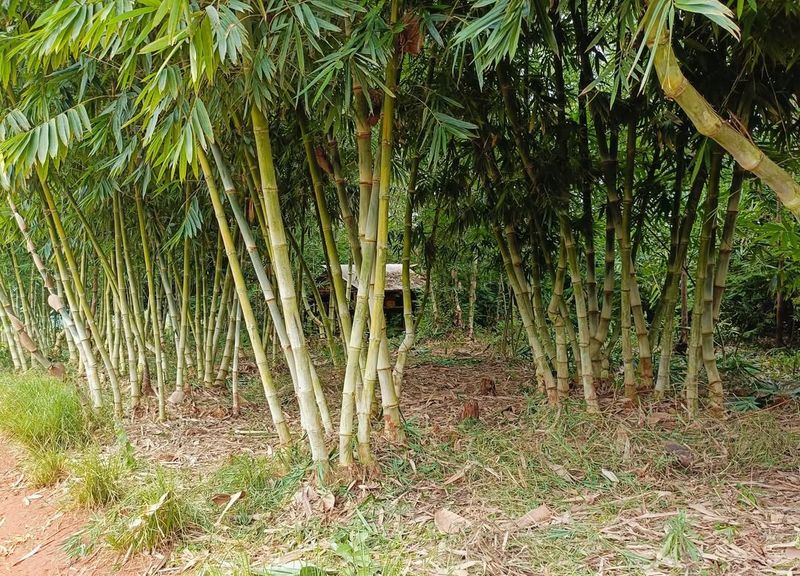
That exotic bamboo grove might seem like a tropical paradise until it invades your neighbor’s property.
Running bamboo species spread through underground rhizomes that can travel 20 feet or more from the original planting.
These aggressive roots push up through driveways, damage foundations, and infiltrate sewer lines.
Alabama homeowners often face expensive removal projects and legal disputes when bamboo crosses property boundaries.
While clumping bamboo varieties stay relatively contained, running types create persistent problems across Alabama neighborhoods.
The shoots emerge with surprising force, breaking through asphalt and even concrete.
Once established, bamboo proves incredibly difficult to eliminate completely.
Alabama municipalities increasingly restrict or ban bamboo plantings, especially running varieties near property lines.
Some areas require barriers installed at least three feet deep to contain rhizome spread.
Homeowner associations frequently prohibit bamboo entirely due to liability concerns.
Removing bamboo requires digging out all rhizomes or repeated cutting combined with herbicide applications over several years.
Many Alabama residents resort to hiring specialized removal services costing thousands of dollars.
The plant’s resilience means any overlooked rhizome fragment can restart the invasion.
Future Alabama regulations may impose stricter controls on bamboo sales and plantings.
Native grasses like river oats or switchgrass provide vertical interest without the invasive tendencies.
Smart gardeners throughout Alabama choose contained alternatives rather than risking bamboo’s uncontrollable spread.
7. English Ivy
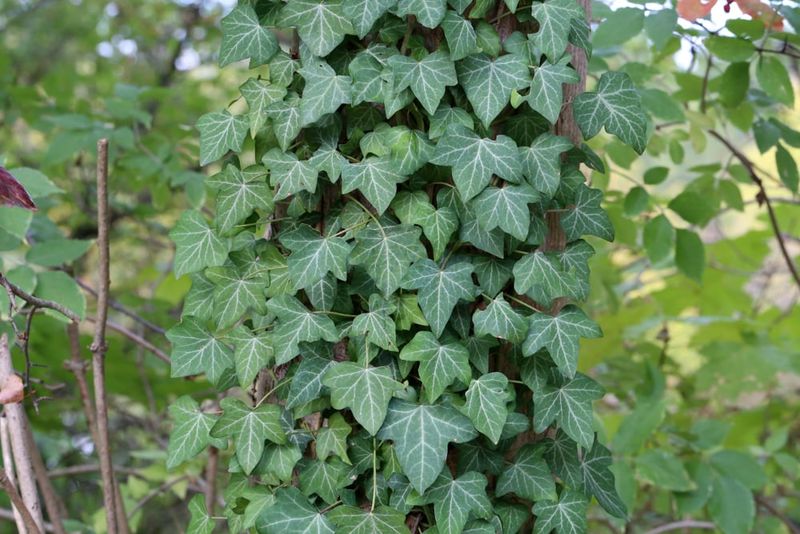
Charming on brick walls but riksy for Alabama’s forest trees.
English ivy seems innocent when planted as ground cover or trained on structures.
However, this evergreen vine readily escapes cultivation and climbs native trees throughout Alabama.
The heavy growth adds weight to branches and creates sail-like surfaces that make trees vulnerable during storms.
Alabama forests face increasing ivy invasions as birds spread the seeds from landscaped areas into natural habitats.
The vine forms dense mats on the forest floor that prevent native wildflowers and tree seedlings from establishing.
Mature ivy produces berries that further accelerate its spread across Alabama landscapes.
Trees covered in English ivy suffer from reduced photosynthesis as leaves become shaded.
The extra weight and wind resistance increase the likelihood of limb breakage and complete tree failure.
Alabama urban forests lose valuable trees when ivy infestations go unmanaged for years.
Some Alabama communities now discourage or restrict English ivy plantings, especially near wooded areas.
Removal involves carefully pulling vines from trees without damaging bark, then treating cut stems with herbicide.
Ground infestations require persistent effort to eliminate completely.
Native alternatives like Virginia creeper or crossvine provide similar coverage without threatening Alabama ecosystems.
Forward-thinking regulations may soon classify English ivy as a restricted species throughout the state.
Gardeners should remove existing ivy before it escapes into Alabama’s natural areas.
8. Tropical Soda Apple
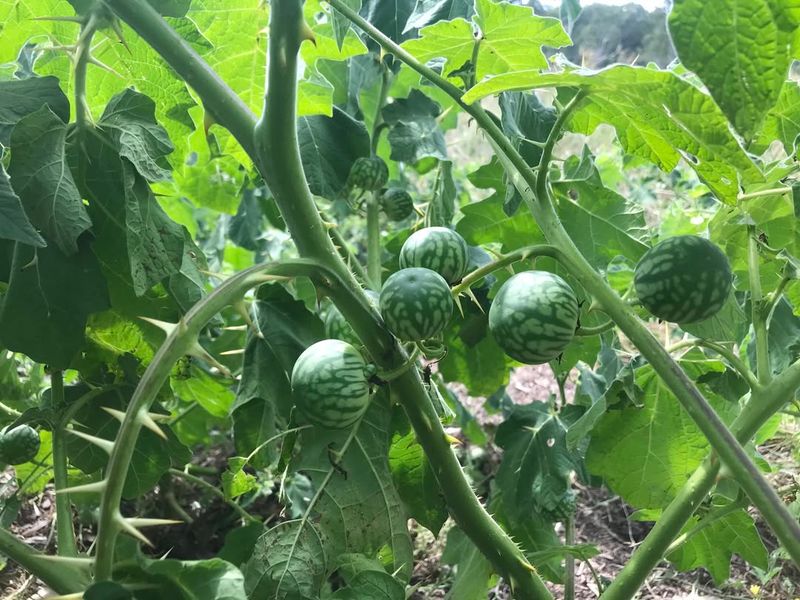
Cattle ranchers across Alabama consider this thorny invader their worst nightmare.
Tropical soda apple transforms productive pastures into impenetrable thickets of spiny stems that livestock refuse to graze.
The plant spreads aggressively through seeds dispersed in cattle manure, creating a vicious cycle of infestation.
Alabama agricultural losses reach millions of dollars annually as grazing capacity plummets.
Each plant produces thousands of golf ball-sized fruits containing numerous seeds that remain viable for years.
Wildlife, especially feral hogs, eat the fruits and spread seeds across vast Alabama territories.
The spines injure livestock and make manual removal dangerous without heavy protective equipment.
Alabama law designates tropical soda apple as a noxious weed, requiring landowners to control infestations on their property.
The state operates inspection programs to prevent spread through contaminated hay, equipment, and livestock movements.
Failure to manage this pest can result in quarantines and fines.
Control strategies combine herbicide applications with biological agents like leaf-feeding beetles imported specifically to combat this plant.
However, eradication demands years of consistent effort as the seed bank gradually depletes.
Alabama Cooperative Extension agents provide guidance on integrated management approaches.
Climate suitability throughout Alabama makes tropical soda apple a persistent threat to agriculture and natural areas.
Early detection and rapid response remain critical to preventing new infestations from establishing across Alabama counties.
9. Callery Pear
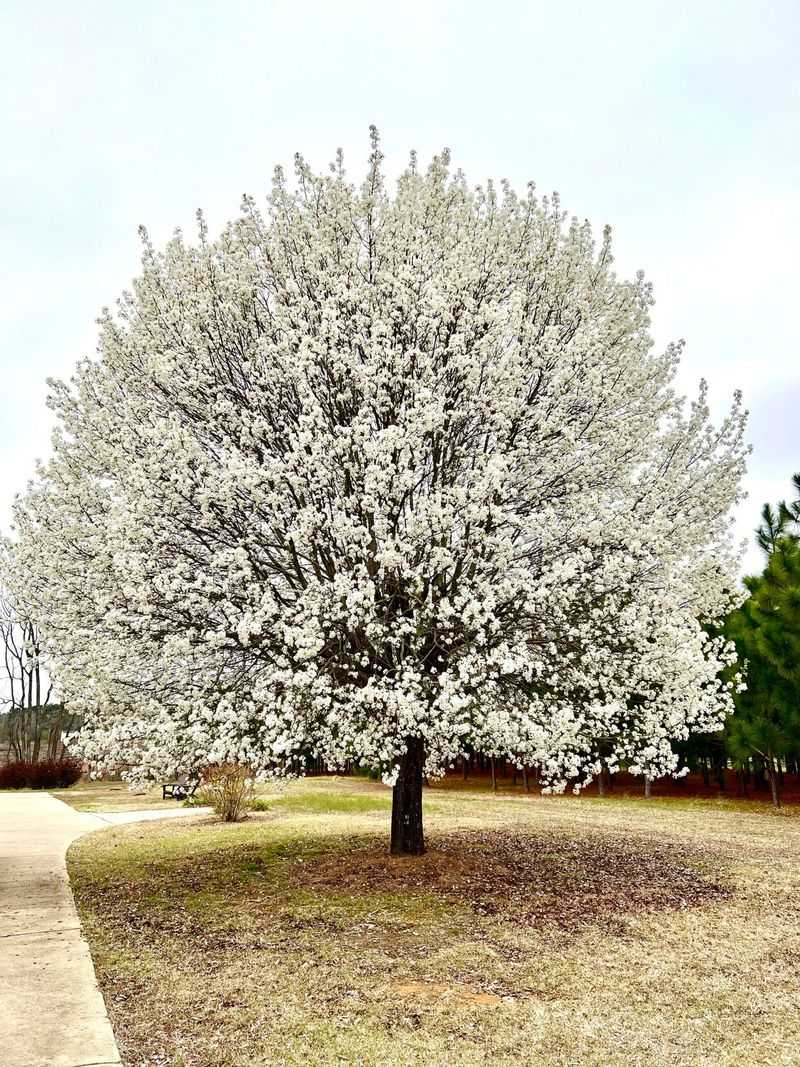
Those stunning white blossoms lining Alabama streets come with a hidden environmental cost.
Callery pear trees, including the popular Bradford variety, were planted extensively across Alabama for their showy spring flowers and fast growth.
Landscape architects loved their uniform shape and tolerance of urban conditions.
However, these trees proved to be invasive throughout Alabama as different cultivars cross-pollinate and produce viable seeds.
Birds feast on the small fruits and deposit seeds in natural areas where aggressive Callery pear seedlings outcompete native vegetation.
Unlike the cultivated varieties, these wild offspring develop long thorns and form dense thickets.
Alabama forests and roadsides increasingly suffer from Callery pear invasions that reduce biodiversity.
The trees also have weak branch structures that fail during Alabama storms, causing property damage and creating hazards.
Municipalities spend considerable resources cleaning up fallen limbs and removing damaged trees after severe weather events.
Several states have already banned Callery pear sales, and Alabama may follow suit soon.
Some Alabama nurseries voluntarily stopped selling these trees as awareness of their invasive nature increased.
Existing trees should be removed and replaced with native alternatives.
Species like serviceberry, fringe tree, or native plums provide similar spring beauty without threatening Alabama ecosystems.
Forward-thinking communities throughout Alabama now prohibit Callery pears in new landscape plantings and encourage property owners to choose better alternatives.
10. Mimosa Tree
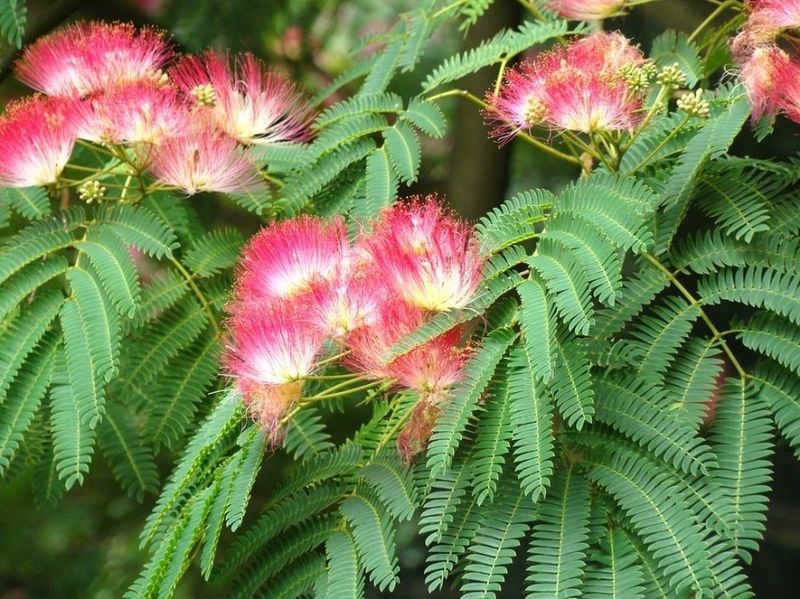
Grandma’s favorite tree might be tomorrow’s banned species across Alabama.
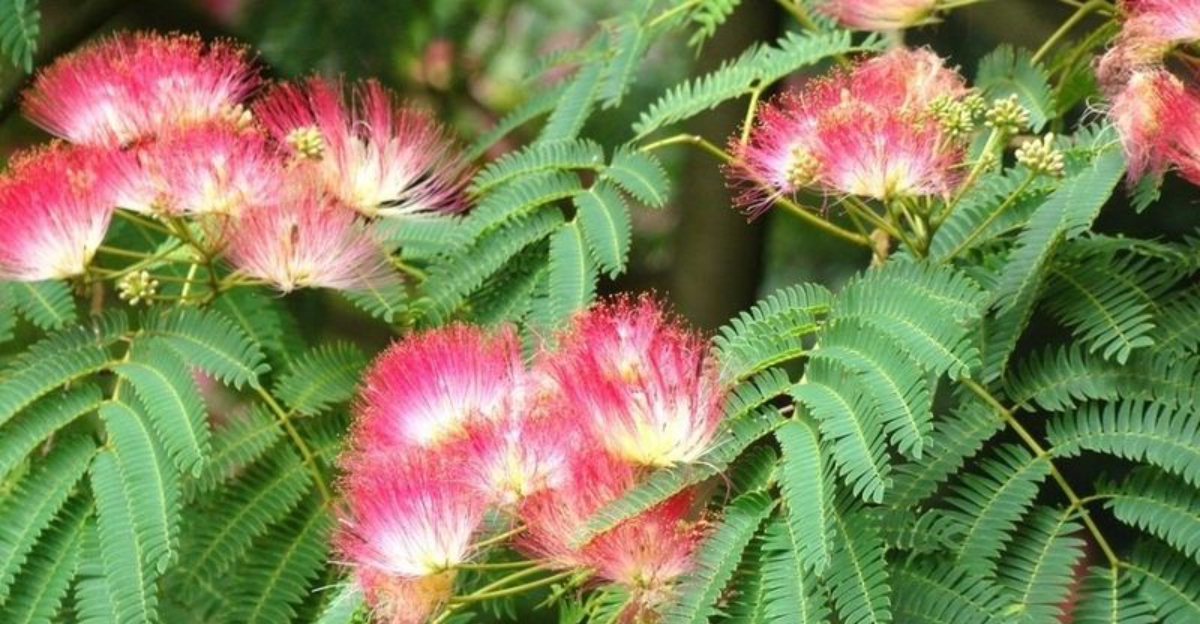
Mimosa trees hold nostalgic value for many Alabama residents who remember their fragrant pink blooms from childhood.
These fast-growing trees spread readily through prolific seed production, with a single tree generating thousands of seeds annually.
Alabama roadsides, forest edges, and disturbed areas become colonized by mimosa seedlings that crowd out native plants.
The trees also suffer from vascular wilt disease that often results in rapid decline, leaving specimens throughout Alabama landscapes.
Weak wood makes them prone to storm damage, and their shallow roots can buckle sidewalks and driveways.
Environmental groups across Alabama advocate for mimosa restrictions as the species increasingly invades natural areas.
The trees alter soil chemistry and create dense shade that prevents native wildflowers and shrubs from thriving.
Alabama’s ecological balance shifts as mimosa displaces plants that native wildlife depend upon.
Some Alabama municipalities already discourage mimosa plantings and may implement formal restrictions soon.
Removal involves cutting trees and treating stumps to prevent resprouting from the aggressive root system.
Seeds remain viable in soil for years, requiring ongoing management.
Native alternatives like redbud or fringe tree offer similar ornamental value without the invasive tendencies.
As Alabama regulations evolve, mimosa trees may join the list of prohibited species.
Gardeners should plan ahead by selecting natives that support Alabama ecosystems rather than threaten them.