7 Invasive Plants In Michigan That Are Easier To Remove In Winter
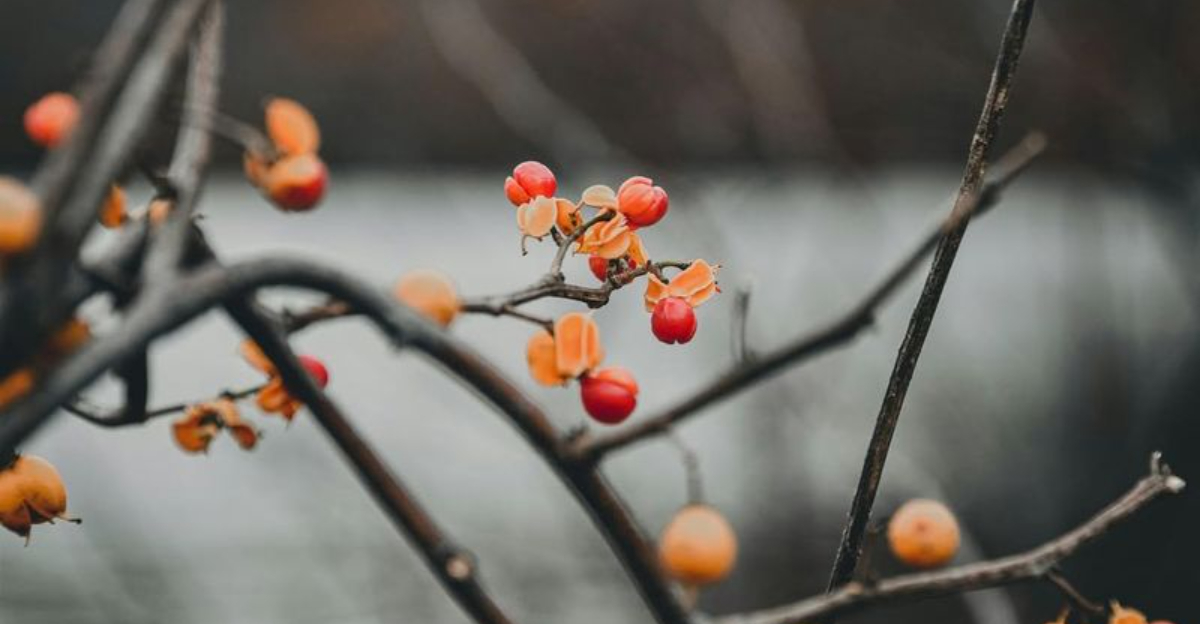
Winter in Michigan may feel like nature hits the pause button, but beneath the snow and frost, an important opportunity waits in the wings.
When native plants rest and the ground firms up, invasive species lose their edge.
The leaves drop, growth slows, and hidden troublemakers become easier to spot.
It is a rare window when the odds finally tilt in your favor.
Invasive plants spread like gossip at a small-town diner, fast and hard to stop once they take hold.
They crowd out native plants, steal nutrients, and change the landscape inch by inch.
During warmer months, fighting them can feel like a losing battle.
Winter changes the game.
With less foliage in the way, roots and stems stand out clearly, making removal more direct and less exhausting.
Cold weather also means less damage to surrounding soil and nearby plants.
Pulling, cutting, or digging becomes cleaner and more controlled.
For homeowners and land managers alike, winter offers a chance to get ahead of the curve instead of playing catch-up.
Tackle invasive plants now, and you set the stage for a healthier, stronger Michigan landscape come spring.
1. Autumn Olive
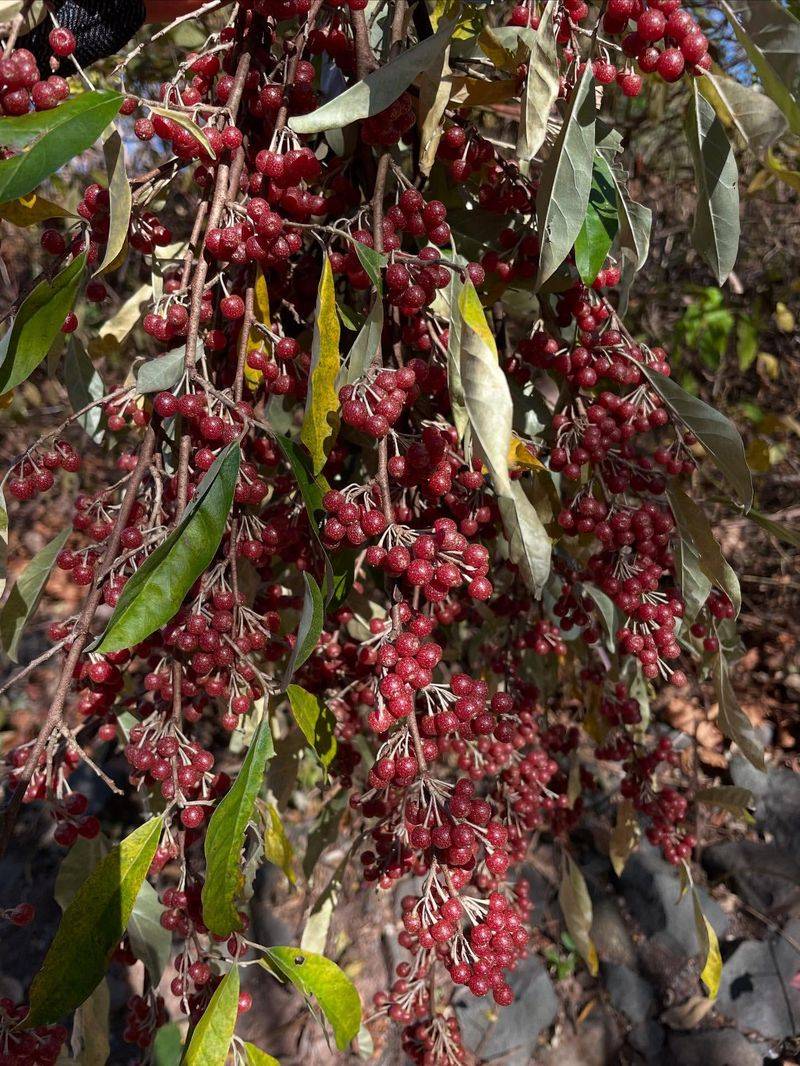
Autumn olive arrived in Michigan decades ago as an ornamental shrub, but quickly escaped cultivation to become one of the state’s most aggressive invaders.
Its silvery-green leaves and nitrogen-fixing roots allow it to thrive in poor soils where native plants struggle.
By producing thousands of small red berries each fall, this shrub spreads rapidly through bird droppings, colonizing fields, forest edges, and roadsides throughout Michigan.
Winter offers the perfect window for removal because the shrub’s distinctive silvery bark stands out against the snow and bare landscape.
The ground freezes just enough to provide stability while you work, yet remains soft enough to dig out roots.
Young plants can be pulled by hand when the soil is slightly thawed, while larger specimens require cutting followed by careful root extraction.
Focus your efforts on smaller plants first, as they’re easier to remove completely before their root systems expand.
For larger autumn olive shrubs in Michigan, cut them close to the ground and mark the stumps for follow-up treatment in spring.
The key is removing as much of the root system as possible, since even small fragments can resprout.
Winter removal prevents the spring berry production that would spread seeds across your property.
Working during dormancy also protects native plants from accidental damage during removal efforts.
Many Michigan landowners find that tackling autumn olive in winter significantly reduces the overall population by the following growing season, making ongoing management much more manageable.
2. Buckthorn
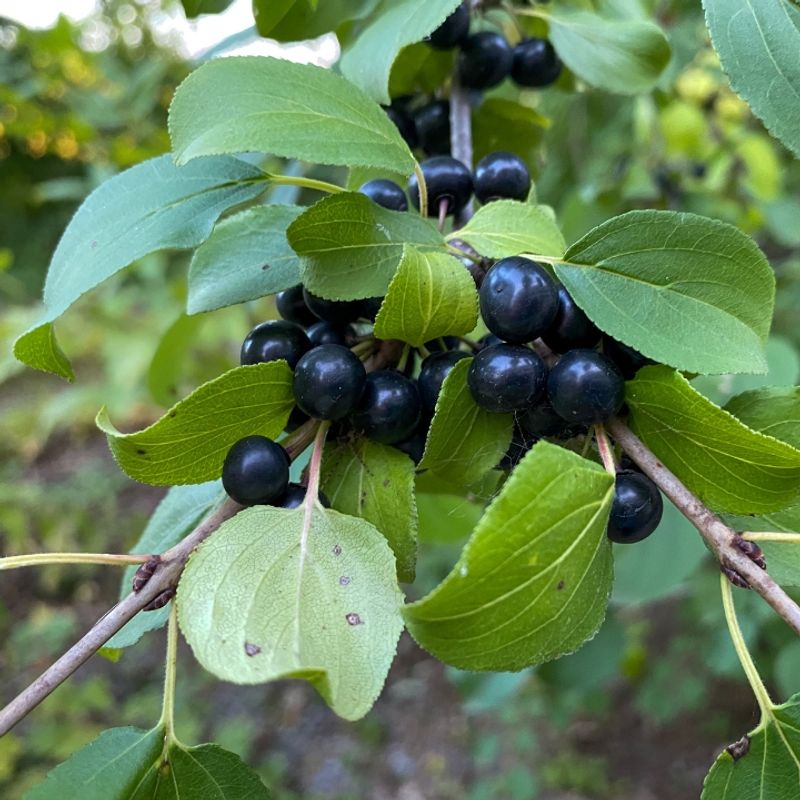
Buckthorn has earned its reputation as one of Michigan’s most troublesome invasive plants, forming dense thickets that crowd out everything else.
Two species plague the state: common buckthorn and glossy buckthorn, both sharing the ability to leaf out earlier and hold their leaves longer than native plants.
This extended growing season gives them an unfair advantage, shading out competitors and altering soil chemistry in ways that favor their own growth.
Your Michigan Garden Changes Every Week. Your Plan Should Too.
Gardening in Michigan changes quickly throughout the season. Every Friday you’ll receive a simple weekly plan showing exactly what to plant, prune, fertilize, harvest, and protect so you never miss the right timing.
Identifying buckthorn becomes remarkably easier once winter strips away competing vegetation.
Look for shrubs with dark bark, opposite branching patterns, and small buds that often appear in clusters.
The branches frequently end in sharp thorns, giving the plant its common name.
In Michigan forests, buckthorn often remains partially green even into early winter, making it stand out among fully dormant natives.
Cold weather transforms buckthorn removal from a difficult chore into a manageable task.
The plant’s shallow root system comes out more easily when the ground experiences freeze-thaw cycles.
Smaller plants under three feet tall can often be pulled entirely by hand, especially after a mild thaw loosens the soil.
Larger specimens require digging around the base to expose major roots before pulling.
Michigan conservation groups often organize winter buckthorn removal events because this season offers the highest success rates.
Removing the entire root crown prevents resprouting, something that’s much harder to achieve during the growing season.
Winter work also protects the native wildflowers and ground covers that would otherwise get trampled during removal efforts in spring or summer.
3. Garlic Mustard
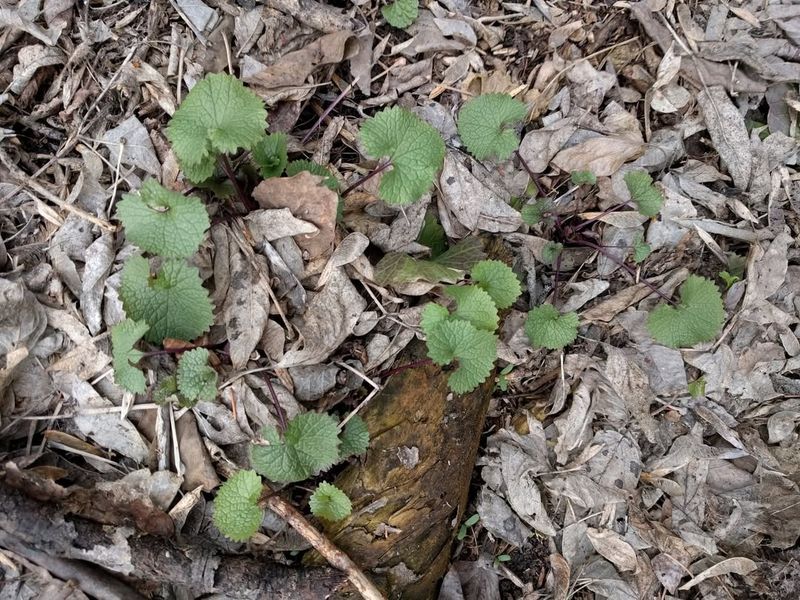
Garlic mustard might seem harmless at first glance, but this biennial invader has transformed Michigan’s forest understories over the past few decades.
Its secret weapon lies in chemicals released from its roots that suppress the growth of native plants and interfere with beneficial soil fungi.
A single plant can produce thousands of seeds that remain viable in the soil for years, creating persistent seed banks that make eradication challenging.
During winter months, garlic mustard exists as low-growing rosettes of kidney-shaped leaves hugging the ground.
These rosettes stay green throughout Michigan’s winter, making them easy to spot against snow or brown leaf litter.
The plants actually benefit from cold exposure, which triggers them to flower the following spring.
Catching them in their rosette stage prevents this flowering and subsequent seed production.
Hand-pulling garlic mustard rosettes in winter proves surprisingly effective because the plants haven’t yet developed their deep taproots.
The leaves remain close to the ground, making them accessible even when snow cover is light.
Michigan’s freeze-thaw cycles actually help loosen the soil around the roots, allowing you to extract the entire plant with a gentle tug.
Target your removal efforts before the ground freezes solid, typically in late fall through early winter in most Michigan regions.
Pull plants when the soil is moist but not frozen, ensuring you get the entire root system.
Collect the pulled plants in bags rather than leaving them on the ground, as they can sometimes reroot if conditions are favorable.
Winter removal eliminates plants before they flower, preventing the next generation from establishing.
4. Japanese Knotweed
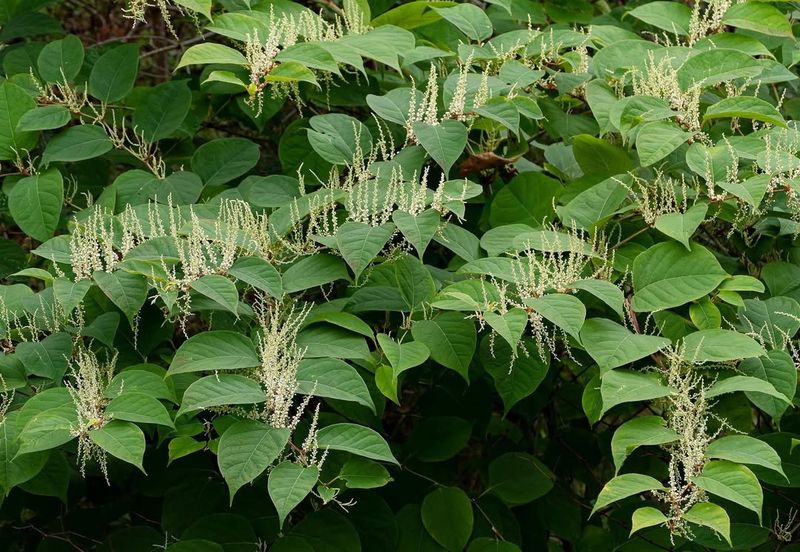
Few invasive plants inspire as much dread among Michigan landowners as Japanese knotweed.
This aggressive perennial spreads through underground rhizomes that can extend 20 feet horizontally and seven feet deep, creating a network that’s incredibly difficult to eliminate.
The hollow, bamboo-like stems can grow more than 10 feet tall in a single season, forming impenetrable thickets that exclude all other vegetation and even damage building foundations.
Winter reveals the full extent of Japanese knotweed infestations in Michigan as the distinctive dried stems remain standing long after other plants have collapsed.
These tan or reddish-brown stalks look like bamboo and often bear dried flower clusters at their tops.
The persistent stems make winter the ideal time for mapping infestations and planning removal strategies without the distraction of lush summer growth.
Cold weather offers unique advantages for tackling this formidable invader.
The above-ground stems have died back, making it safer to access the root zone without the dense foliage that characterizes growing season.
Digging becomes more effective when you can see exactly where stems emerge from the ground.
Michigan’s frozen soil actually helps contain the disturbance, preventing you from accidentally spreading rhizome fragments to new areas.
Focus on excavating as much of the rhizome network as possible, though complete removal often requires multiple seasons.
Dig down at least two feet and extend several feet beyond the visible stem locations.
Any rhizome fragments left behind can regenerate, so careful removal and disposal are essential.
Winter work in Michigan also means you’re not battling the plant’s vigorous summer growth, which can quickly overwhelm control efforts.
5. Multiflora Rose
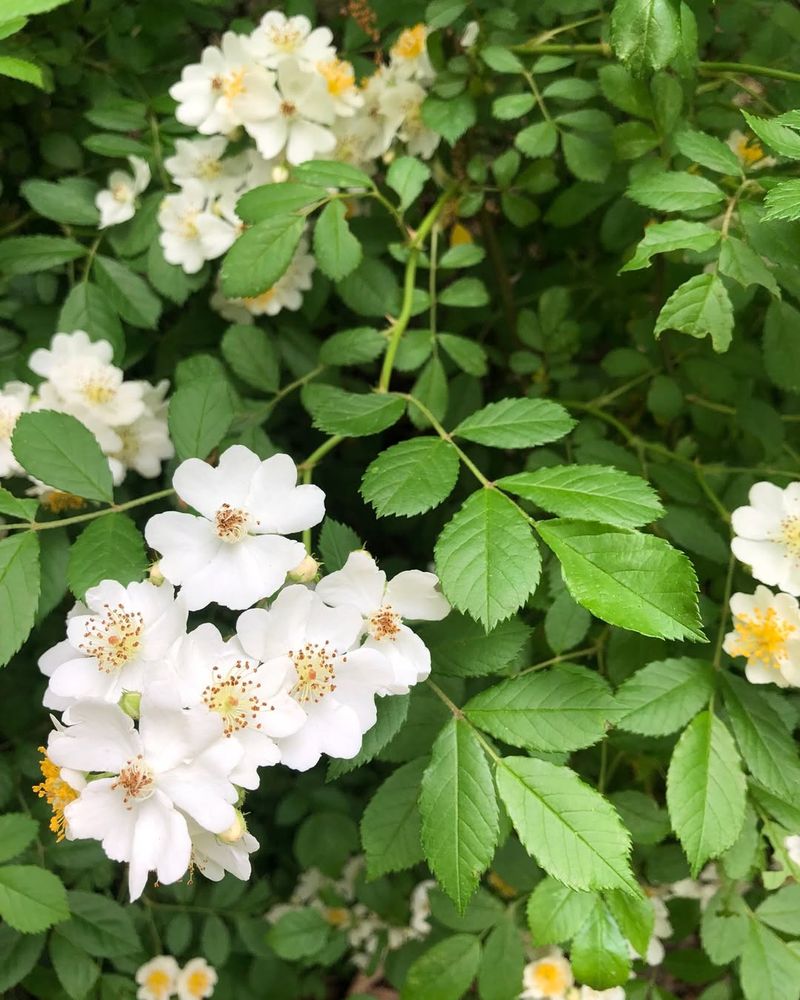
Multiflora rose transforms Michigan pastures and forest edges into impenetrable thickets of thorny canes that nothing can easily penetrate.
Originally promoted for erosion control and living fences, this Asian import quickly revealed its invasive nature by spreading aggressively through bird-dispersed seeds.
Each plant produces hundreds of small rose hips that birds eagerly consume, depositing seeds across the landscape and creating new colonies far from the parent plant.
The arching canes of multiflora rose remain visible throughout Michigan’s winter, often forming dome-shaped mounds that can reach 15 feet across.
Clusters of small, dried rose hips cling to the branches, providing identification clues even after leaves have fallen.
The recurved thorns that line every stem become especially apparent in winter, reminding you why protective clothing is essential for removal work.
Winter dormancy makes multiflora rose significantly easier to manage in Michigan landscapes.
The absence of leaves allows you to see the plant’s structure clearly and identify the main crown where canes emerge.
Frozen or firm ground provides stable footing while you work, and the lack of active growth means cut canes won’t immediately resprout.
The plant’s energy reserves are at their lowest during dormancy, giving removal efforts the best chance of success.
Cut larger canes close to the ground first, clearing away the thorny tangle to access the root crown.
Then dig around the crown to expose major roots before attempting to pull the entire plant.
Smaller specimens can sometimes be pulled directly if the ground has recently thawed.
Properly dispose of all plant material, as canes can root if left in contact with soil.
Michigan’s winter conditions prevent the plant from recovering quickly, giving you time to address any regrowth before spring arrives.
6. Oriental Bittersweet
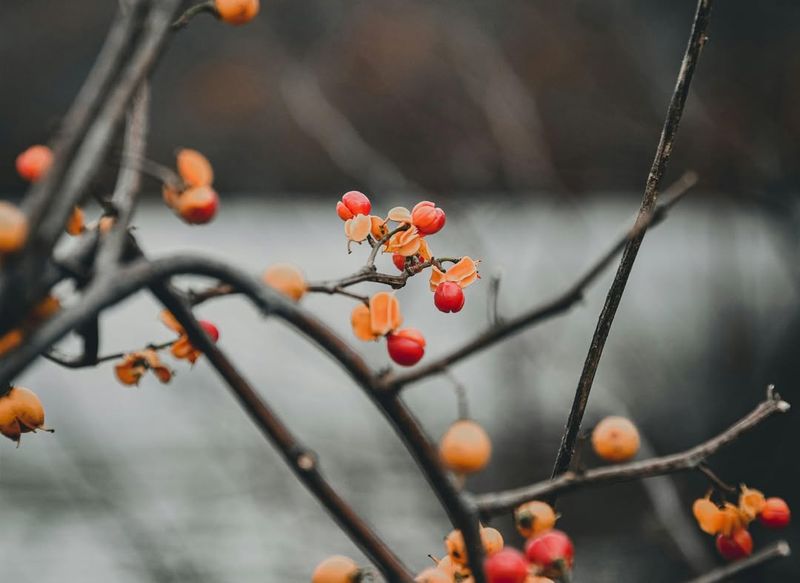
Oriental bittersweet vines climb high into Michigan’s tree canopy, eventually strangling their hosts and blocking sunlight from reaching the forest floor.
Unlike its native cousin, this Asian import grows with alarming speed, producing woody vines as thick as a person’s arm.
The weight of mature vines can break branches during storms, and the tight wrapping around trunks restricts the flow of water and nutrients, weakening even healthy trees over time.
Winter makes oriental bittersweet highly visible in Michigan forests as the distinctive orange and yellow berries stand out brilliantly against bare branches and snow.
The fruits split open to reveal bright red-orange seeds that persist throughout the cold months, creating eye-catching displays that unfortunately ensure continued spread.
The woody vines themselves remain obvious, spiraling around tree trunks and hanging between branches like thick ropes.
Cold weather provides the safest time to remove this aggressive vine without damaging the trees it has colonized.
Cut the vines at ground level and again about chest height, removing the section in between to prevent the upper portion from rooting downward.
Michigan’s winter conditions slow the vine’s response, preventing the rapid resprouting that often defeats warm-season removal attempts.
The lack of leaves also makes it easier to unwind vines from tree branches without causing collateral damage.
After cutting, dig out the root crown to prevent regrowth, as oriental bittersweet readily sprouts from remaining roots.
Smaller vines can be pulled entirely if you catch them before they become well-established.
Monitor the area through the following growing season, as seeds in the soil may germinate.
Winter removal in Michigan gives native plants a better chance to recover before the growing season begins, filling the space before invasive seeds can establish.
7. Purple Loosestrife
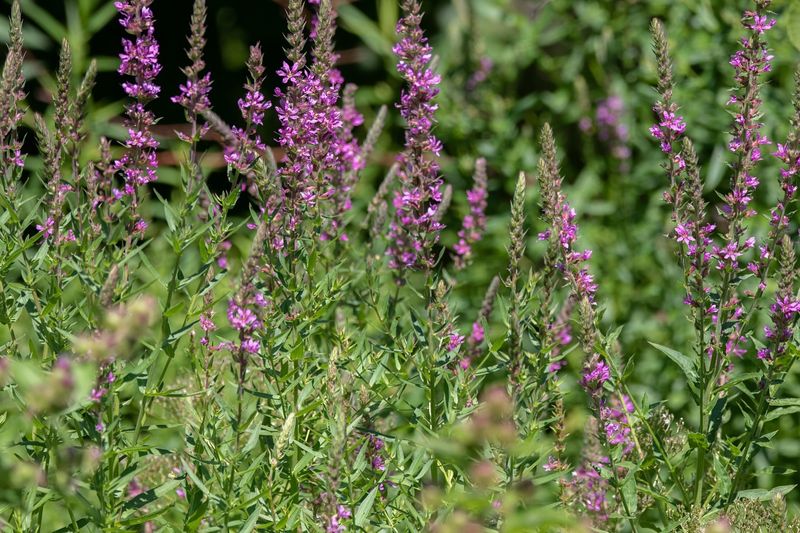
Purple loosestrife has transformed countless Michigan wetlands from diverse wildlife habitats into monoculture stands of a single invasive species.
Each plant produces millions of tiny seeds annually, spreading through water, wildlife, and human activity to colonize new wetlands rapidly.
The dense root systems alter water flow patterns and soil chemistry, creating conditions that favor more purple loosestrife while excluding native wetland plants that waterfowl and other wildlife depend on.
Winter in Michigan reveals purple loosestrife’s distinctive architecture as tall, rigid stems remain standing in frozen wetlands.
The square stems and dried seed capsules arranged in long spikes make identification straightforward even months after flowering has ended.
These persistent stalks often stand three to six feet tall, rising above most other wetland vegetation and marking infestations clearly against the winter landscape.
Frozen wetlands provide access that’s impossible during Michigan’s growing season when standing water and soft mud prevent entry.
Walking on frozen ground or ice lets you reach plants that would otherwise be inaccessible, and the firm surface supports the tools needed for effective removal.
Winter also means you’re not disturbing nesting birds or other wildlife that depend on wetlands during warmer months.
Dig out the entire root mass, which can be substantial in older plants, using a sharp spade or digging fork.
The goal is removing enough of the crown and roots to prevent spring regrowth.
Smaller plants pull out more easily, especially if you can work during a thaw when the ground softens slightly.
Bag all plant material, including seed heads, as the seeds remain viable even after winter exposure.
Michigan wetland managers often find that winter removal, combined with monitoring and follow-up, provides the most effective long-term control of this persistent invader.