10 Eye-Catching Coral Bells Varieties North Carolina Homeowners Should Give A Chance This Year
North Carolina yards come alive when color does more than play it safe, and coral bells know how to steal the show.
These plants may look delicate at first glance, but they are tough as nails and full of personality.
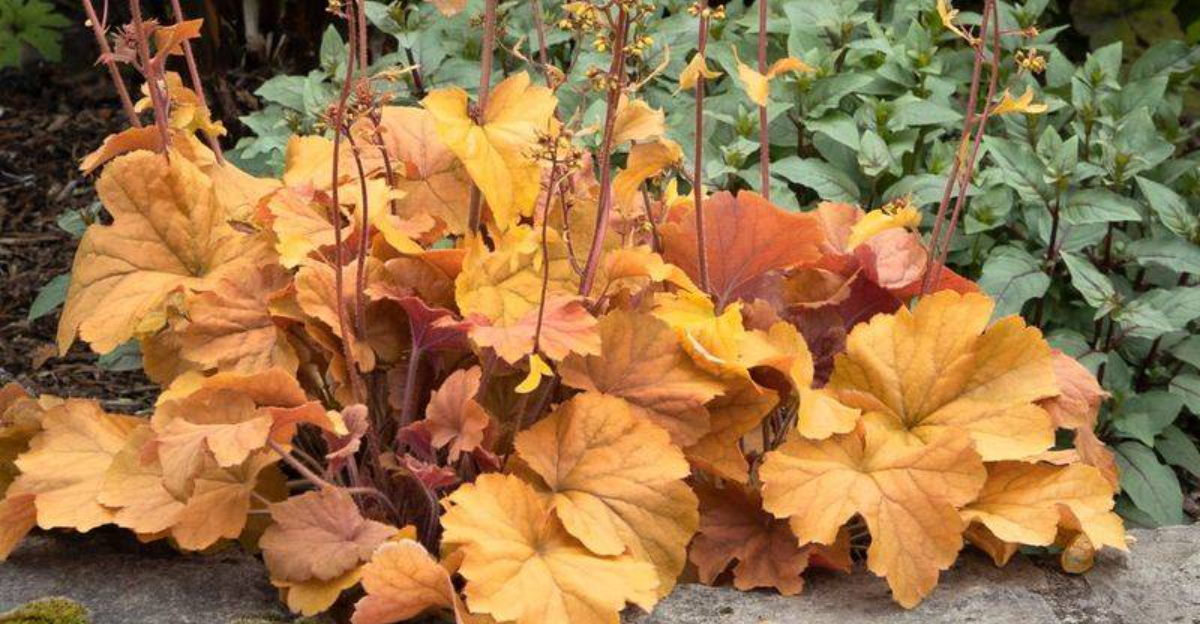
With leaves painted in shades of plum, caramel, silver, lime, and deep green, coral bells bring eye candy to garden beds that need a fresh spark.
They shine in shade, handle part sun with ease, and keep looking sharp through much of the year.
Coral bells earn their keep by doing the heavy lifting where other plants fall flat.
They fill bare spots, soften edges, and add texture that makes a garden feel finished instead of thrown together.
Their airy flower stalks float above the foliage like icing on the cake, drawing in pollinators without stealing focus from the leaves below.
For homeowners ready to shake things up, these eye-catching varieties are worth a closer look.
They bring color without drama, charm without fuss, and prove that sometimes the best upgrades come in small, leafy packages.
1. Palace Purple
Palace Purple earned its spot as a garden classic for good reason, bringing deep burgundy foliage that practically glows when backlit by morning sun.
This variety was actually the first coral bells to win the Perennial Plant of the Year award back in 1991, and it remains a top choice for North Carolina homeowners looking to add drama to shaded areas.
The leaves emerge with a metallic sheen that deepens to rich purple-bronze as they mature, creating a stunning backdrop for the delicate white flowers that appear on tall stems in early summer.
North Carolina’s warm springs and mild falls give this variety an extended growing season, allowing the foliage to maintain its vibrant color from March through November.
Palace Purple works beautifully as an edging plant along pathways or grouped in masses under trees where grass struggles to grow.
The compact size of 12 to 18 inches makes it perfect for layering in front of taller perennials like hostas or ferns.
Gardeners in the Piedmont and mountain regions of North Carolina find this variety especially reliable, as it tolerates both heat and occasional drought once established.
Pair it with golden-leaved plants like creeping Jenny or chartreuse hostas to create eye-catching color contrasts that brighten shady spots throughout your landscape.
2. Lime Rickey
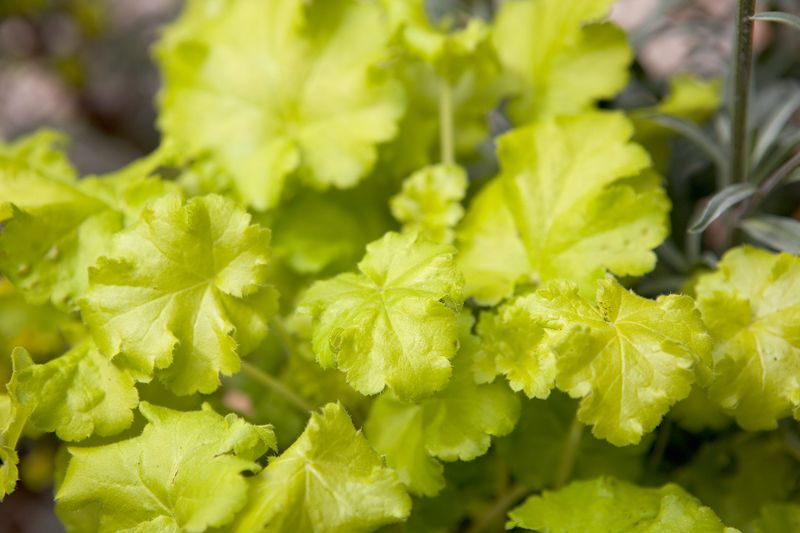
Bright chartreuse leaves make Lime Rickey one of the most attention-grabbing coral bells you can plant in North Carolina gardens.
This variety practically radiates light in shaded areas, transforming dark corners into vibrant focal points that draw the eye from across the yard.
The lime-green foliage holds its brilliant color throughout the growing season, even in the heat and humidity that North Carolina summers bring.
Lime Rickey reaches about 10 inches tall with a spread of 20 inches, making it an excellent groundcover choice for areas where you want low-maintenance color without constant fussing.
The ruffled leaf edges add extra texture and interest, catching dewdrops in the morning and creating beautiful patterns of light and shadow.
Your North Carolina Garden Changes Every Week. Your Plan Should Too.
Gardening in North Carolina changes quickly throughout the season. Every Friday you’ll receive a simple weekly plan showing exactly what to plant, prune, fertilize, harvest, and protect so you never miss the right timing.
White flowers bloom on stems that rise 18 inches above the foliage in late spring, providing a delicate contrast to the bold leaves.
This variety performs exceptionally well in the Charlotte and Triangle areas, where it benefits from dappled shade during the hottest part of the day.
Combine Lime Rickey with purple-leaved coral bells or dark-leaved heucheras to create stunning color combinations that look professionally designed.
The vibrant foliage also pairs beautifully with blue hostas and purple ajuga for a cool-toned planting scheme that feels refreshing even on hot summer days.
3. Obsidian
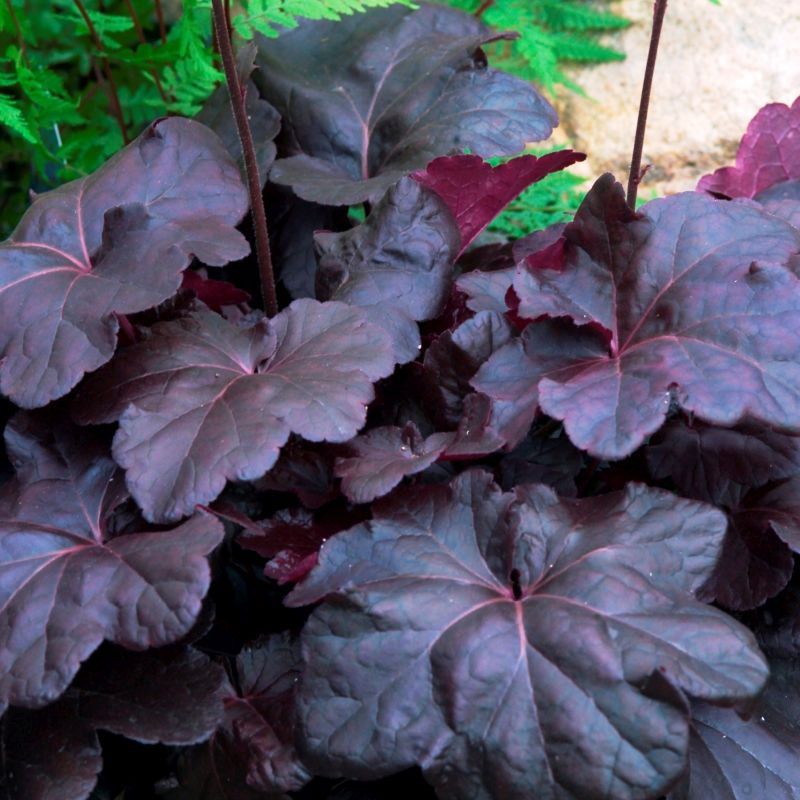
Nearly black foliage gives Obsidian a sophistication that few other perennials can match, making it a must-have for North Carolina gardeners who appreciate dramatic color.
The glossy, dark purple-black leaves emerge in spring with a slight red undertone that intensifies as temperatures warm up.
This variety maintains its deep coloration even in partial sun, though it develops the darkest hues when grown in bright shade with protection from harsh afternoon rays.
Obsidian grows 8 to 10 inches tall with a spread of about 16 inches, forming tight clumps that fill in quickly to create a striking groundcover.
Creamy white flowers appear on burgundy stems in early summer, rising 20 inches above the foliage and attracting hummingbirds that visit North Carolina gardens.
The compact growth habit makes this variety perfect for container plantings on shaded porches or patios throughout the state.
Gardeners in coastal North Carolina appreciate how well Obsidian tolerates humidity and occasional salt spray when planted in protected locations.
Try planting it alongside silver-leaved plants like lamium or brunnera to create high-contrast combinations that look stunning from spring through fall.
The dark foliage also makes an excellent backdrop for colorful annuals like impatiens or begonias in mixed container designs.
4. Caramel
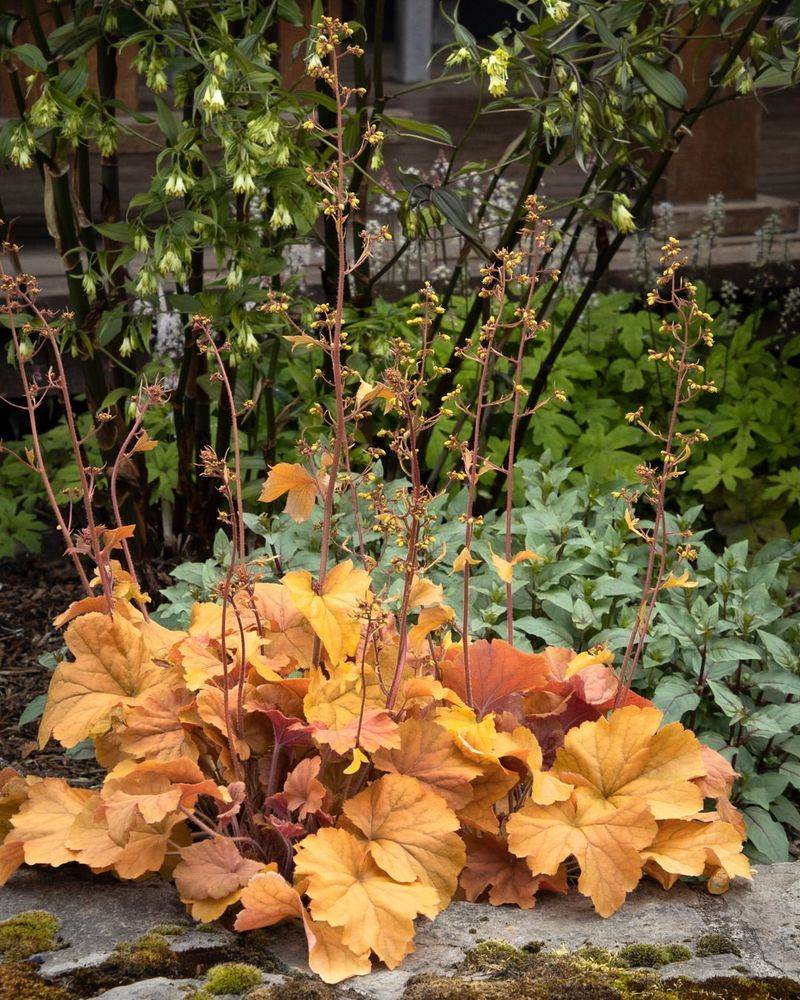
Warm peachy-orange leaves with golden undertones make Caramel a standout choice for North Carolina homeowners seeking something different from typical green or purple foliage plants.
The color shifts throughout the seasons, starting with apricot tones in spring, deepening to rich caramel in summer, and developing amber highlights in fall.
This variety thrives in the transition zones between sun and shade, making it ideal for planting under high-branched trees or along the edges of wooded areas common in North Carolina landscapes.
Caramel reaches 8 to 10 inches in height with a 14-inch spread, forming neat mounds that require minimal maintenance once established.
The ruffled leaves catch light beautifully, creating a warm glow that enhances evening gardens and looks particularly stunning when illuminated by landscape lighting.
Small cream-colored flowers bloom on coral-pink stems in late spring, adding another layer of subtle color to the display.
Gardeners in the Triad region find this variety especially adaptable, tolerating both the heat of summer and the occasional cold snaps that North Carolina winters bring.
Pair Caramel with purple-leaved varieties like Palace Purple or dark-leaved heucheras to create warm-cool contrasts that feel balanced and sophisticated.
The peachy tones also complement roses, daylilies, and other warm-colored perennials beautifully.
5. Plum Pudding
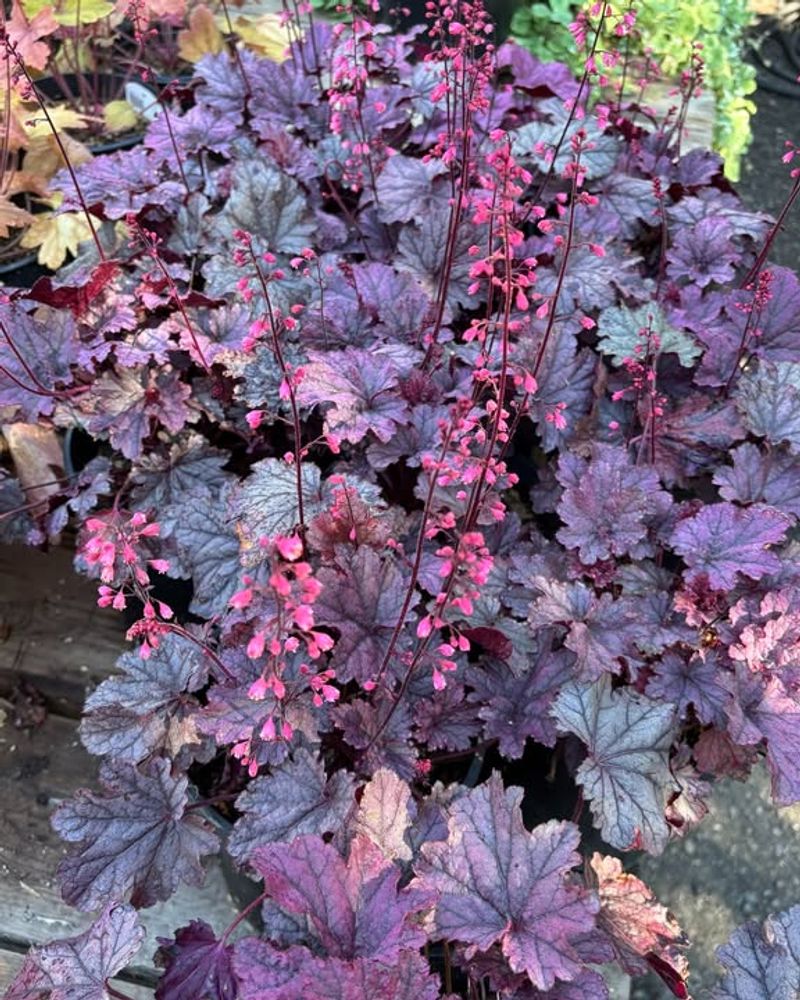
Silvery-purple leaves with prominent dark veins give Plum Pudding a distinctive appearance that catches attention in North Carolina shade gardens.
The metallic sheen on the foliage creates an almost iridescent effect when viewed from different angles, making this variety particularly interesting to observe throughout the day.
Plum Pudding was bred to withstand heat and humidity, which makes it exceptionally well-suited for North Carolina’s challenging summer conditions.
The plant forms compact clumps about 10 inches tall and 18 inches wide, filling in spaces between larger perennials with ease.
Dark purple undersides on the leaves provide additional interest, especially when breezes flip the foliage to reveal the contrasting colors.
White flowers bloom on purple-tinged stems in early summer, rising 16 inches above the leaves and attracting pollinators to your North Carolina garden.
This variety performs beautifully in Asheville and other mountain communities, where cooler temperatures intensify the silvery coloration.
The unique coloring works well with both warm and cool-toned companion plants, making Plum Pudding incredibly versatile for mixed borders.
Try combining it with blue-flowered perennials like amsonia or with golden grasses for unexpected color combinations that feel fresh and modern.
The heat tolerance also makes it reliable for gardeners in warmer parts of North Carolina.
6. Citronelle
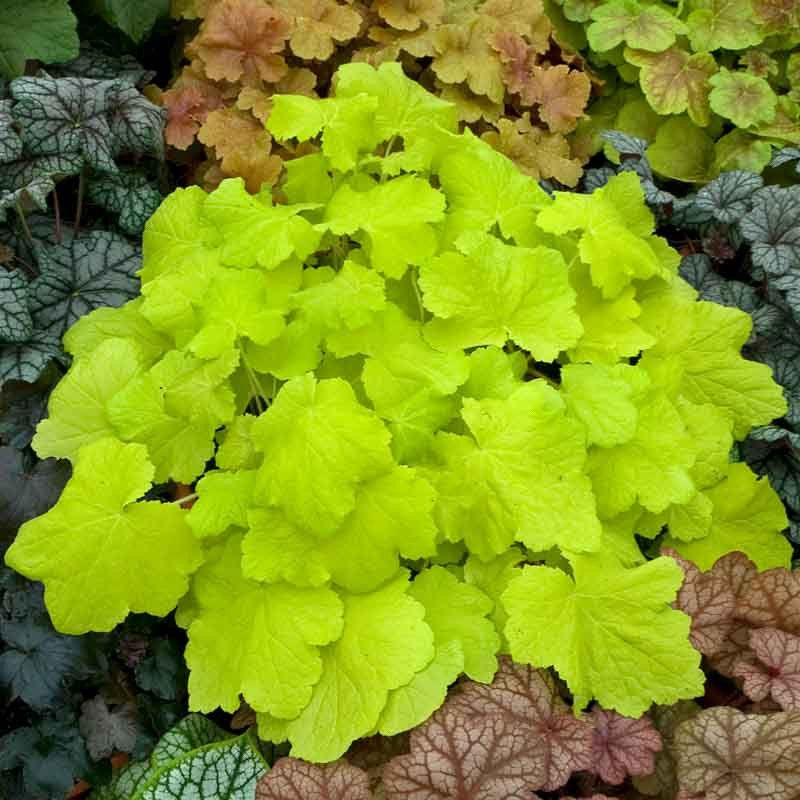
Brilliant yellow-green foliage makes Citronelle one of the brightest coral bells available, perfect for North Carolina gardeners who want to illuminate shady areas.
The chartreuse leaves practically glow in low-light conditions, bringing a sense of sunshine to spots where few other plants provide such vibrant color.
Citronelle was specifically bred for improved heat tolerance, making it an excellent choice for the hot, humid summers that North Carolina experiences.
The plant grows 9 inches tall with a 20-inch spread, creating low mounds that work beautifully as edging along shaded pathways or grouped in masses under trees.
Rounded leaves with slightly ruffled edges add textural interest that complements the bold color, creating visual appeal even when the plant isn’t flowering.
White flowers appear on stems that rise 16 inches above the foliage in late spring, adding vertical interest without overwhelming the bright leaves.
Gardeners throughout the Coastal Plain region appreciate how well Citronelle maintains its color even in warm conditions that cause other chartreuse plants to fade.
Pair it with dark-leaved coral bells like Obsidian or purple ajuga to create striking contrasts that look intentional and professionally designed.
The bright foliage also combines beautifully with blue hostas and white-variegated plants for cool-toned planting schemes that feel refreshing throughout North Carolina’s long growing season.
7. Berry Smoothie
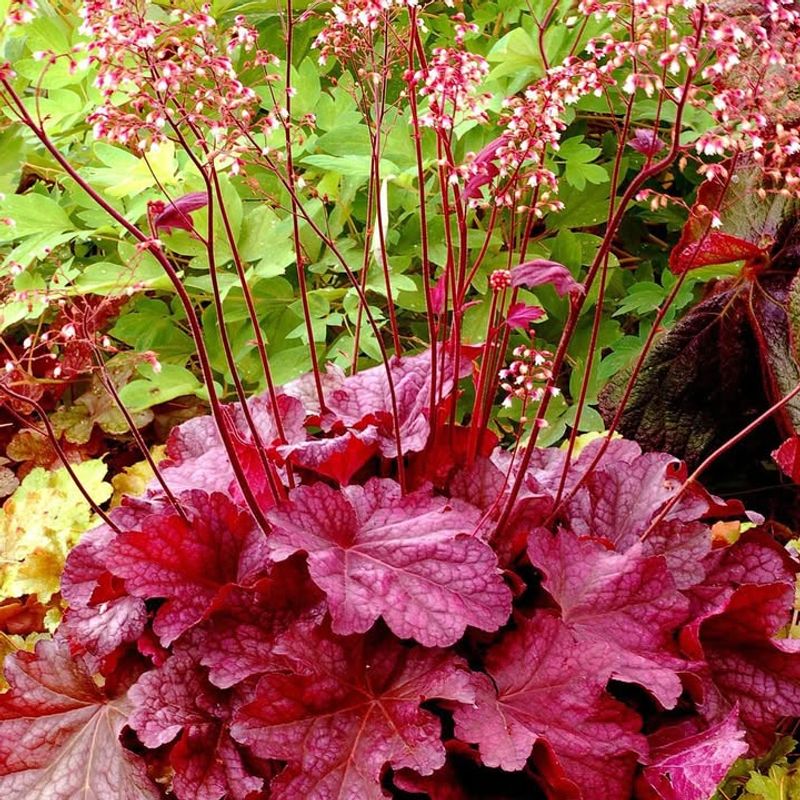
Rose-pink leaves with silver overlay create a romantic, cottage-garden feel that North Carolina homeowners adore for softening landscape designs.
Berry Smoothie brings a feminine touch to shaded areas, with colors that shift from coral-pink in spring to deeper rose tones as summer progresses.
The silvery sheen across the leaf surface catches morning dew and reflects light, creating sparkle in shaded corners that might otherwise feel dark and forgotten.
This variety grows 9 to 11 inches tall with a spread of about 18 inches, forming tidy clumps that require little maintenance beyond occasional watering during dry spells.
Dark purple undersides on the leaves add depth and interest, especially when planted where you can view the foliage from multiple angles.
Pink flowers bloom on burgundy stems in early summer, rising 20 inches above the leaves and complementing the foliage colors perfectly.
Gardeners in Raleigh and Durham find this variety especially reliable, as it handles both the heat of summer and the variable conditions of North Carolina’s transitional climate.
Berry Smoothie pairs beautifully with white-flowering perennials like astilbe or with silver-leaved plants like lamium for soft, romantic planting combinations.
The pink tones also work wonderfully with blue hostas and purple-leaved coral bells for harmonious color schemes that feel cohesive throughout the growing season.
8. Electric Lime
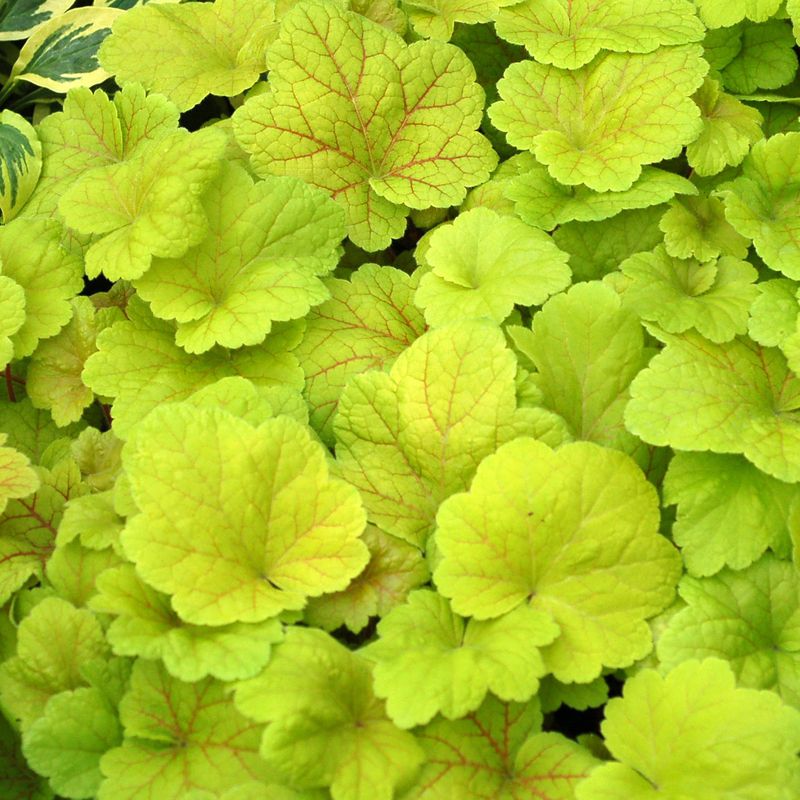
Neon yellow-green leaves make Electric Lime impossible to overlook, bringing bold color to North Carolina gardens that need a jolt of energy.
The incredibly bright foliage holds its intense color from spring through fall, even in the challenging heat and humidity that characterizes North Carolina summers.
Electric Lime was bred for superior performance in warm climates, making it one of the most reliable chartreuse coral bells for Southern gardens.
The plant reaches 8 inches tall with a 16-inch spread, forming compact mounds that work perfectly for edging beds or filling gaps between larger perennials.
Rounded leaves with slightly ruffled margins add texture that enhances the eye-catching color, creating interest even from a distance.
Chartreuse flowers bloom on matching lime-green stems in late spring, creating a monochromatic effect that feels modern and intentional.
Gardeners in Winston-Salem and Greensboro appreciate how this variety brightens shaded areas under mature trees where grass struggles to establish.
Electric Lime combines beautifully with purple-leaved plants like Persian shield or dark-leaved coral bells for high-contrast pairings that create focal points in the landscape.
The neon foliage also looks stunning with blue-flowered perennials like brunnera or with burgundy-leaved plants for complementary color schemes that feel vibrant and alive throughout North Carolina’s extended growing season.
9. Midnight Rose
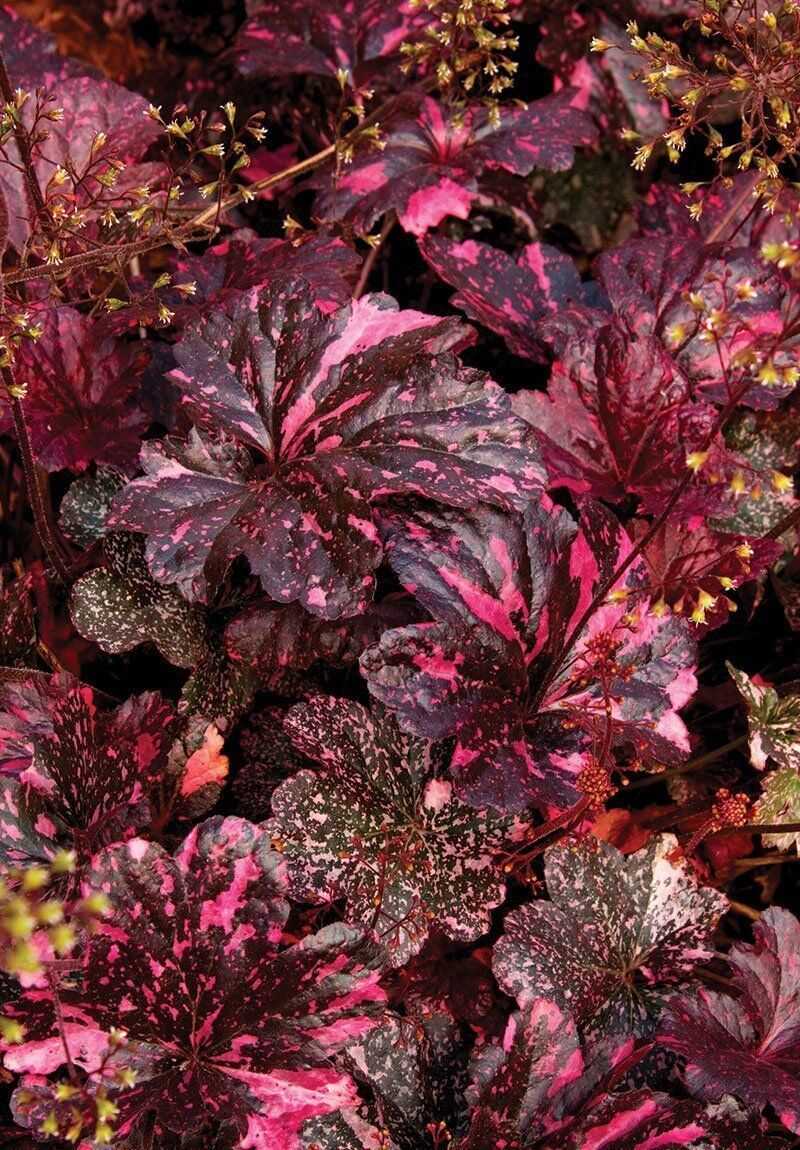
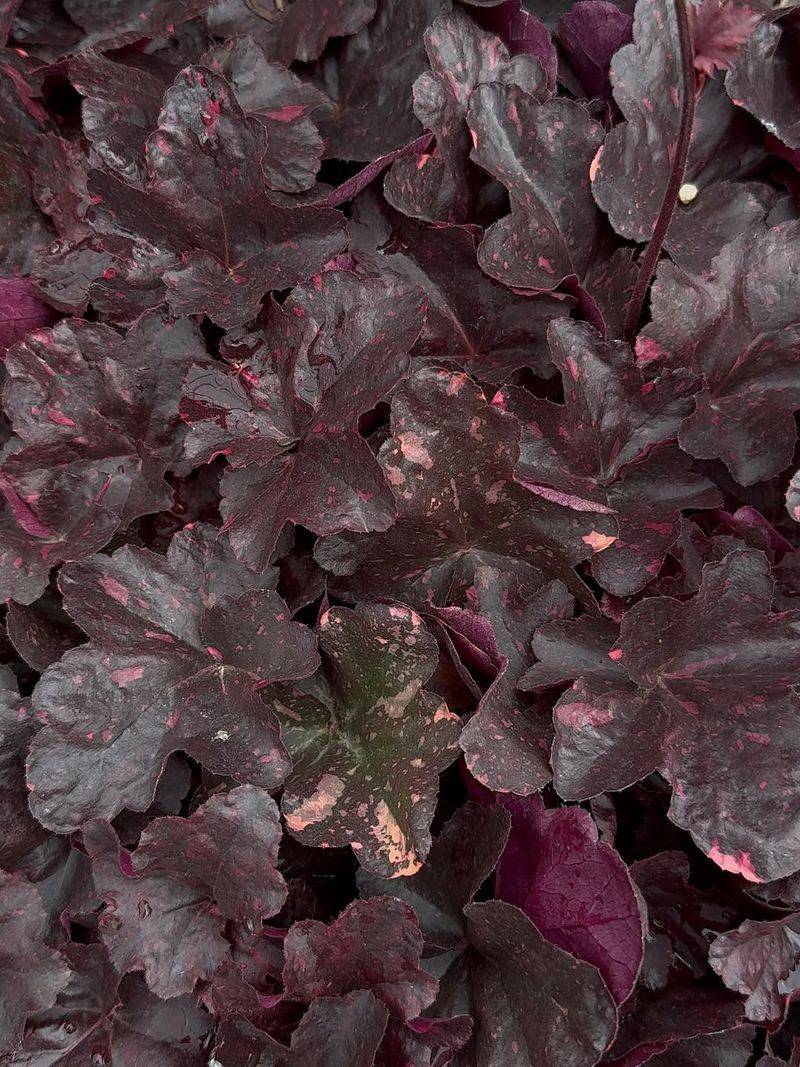
Hot pink speckles scattered across deep purple leaves create a whimsical, almost painted appearance that makes Midnight Rose a conversation starter in North Carolina gardens.
The unique variegation pattern looks like someone flicked a paintbrush loaded with magenta paint across the dark foliage, creating random splashes of color that vary from leaf to leaf.
Midnight Rose brings an element of surprise and playfulness to shaded areas, with spotting that becomes more pronounced as the season progresses and temperatures warm.
The plant grows 8 to 10 inches tall with a 20-inch spread, forming low mounds that work beautifully in containers or as groundcover beneath taller perennials.
Each leaf displays a different pattern of pink spots, making every plant slightly unique and adding to the handcrafted feel of this variety.
Light pink flowers bloom on dark stems in late spring, rising 18 inches above the foliage and attracting hummingbirds that frequent North Carolina gardens.
Gardeners in Charlotte and surrounding areas find this variety especially eye-catching when planted where morning or evening light can illuminate the spotted leaves.
Midnight Rose pairs wonderfully with solid-colored coral bells or with plants that have pink flowers like bleeding hearts for cohesive color schemes.
The spotted foliage also creates interesting contrasts with fine-textured plants like ferns or with bold-leaved hostas for dynamic planting combinations.
10. Marmalade
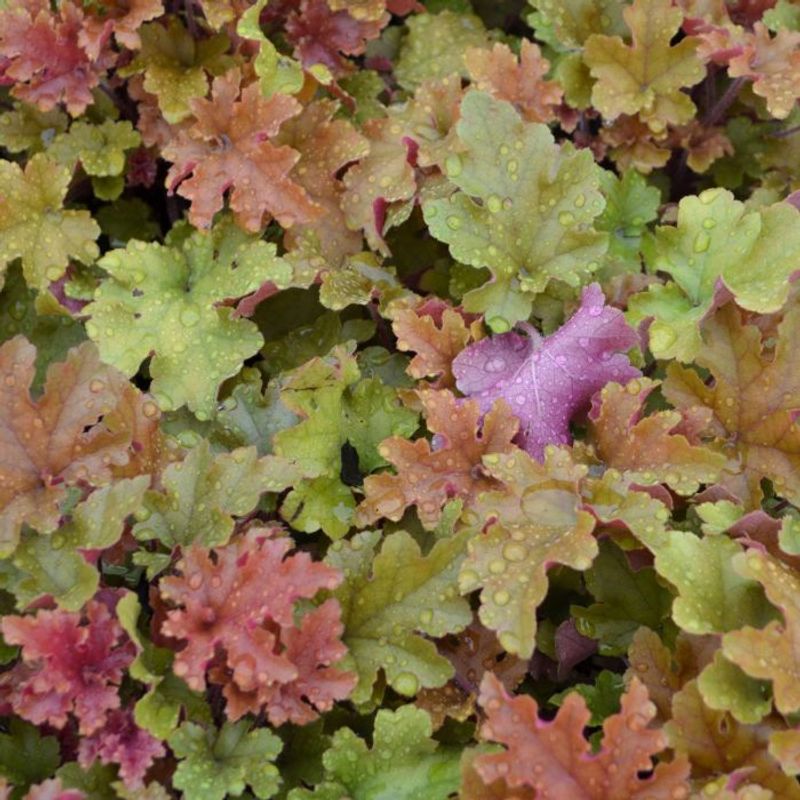
Copper-orange foliage with amber undertones brings warmth and richness to North Carolina shade gardens that need a touch of autumn color year-round.
Marmalade displays color shifts throughout the seasons, starting with peachy tones in spring, intensifying to deep copper in summer, and developing reddish highlights as fall approaches.
The metallic sheen on the leaves catches light beautifully, creating a glowing effect that enhances evening gardens and looks particularly stunning in late-afternoon sun.
This variety reaches 10 inches tall with an 18-inch spread, forming neat clumps that fill spaces between larger perennials without becoming aggressive.
Ruffled leaf edges add extra dimension and texture, creating shadows and highlights that make the foliage even more interesting to observe up close.
Coral-pink flowers bloom on matching coral stems in late spring, complementing the warm foliage tones and attracting hummingbirds to your North Carolina landscape.
Gardeners in the Sandhills region find this variety particularly adaptable, tolerating the sandy soils and variable moisture conditions common in that part of the state.
Marmalade combines beautifully with cool-toned plants like blue hostas or purple coral bells for complementary color schemes that feel balanced and sophisticated.
The copper tones also pair wonderfully with yellow-flowering perennials or with burgundy-leaved plants for warm, inviting combinations that enhance North Carolina gardens throughout the growing season.