How Often To Water A Money Tree In Illinois To Keep It Healthy And “Lucky” Throughout 2026
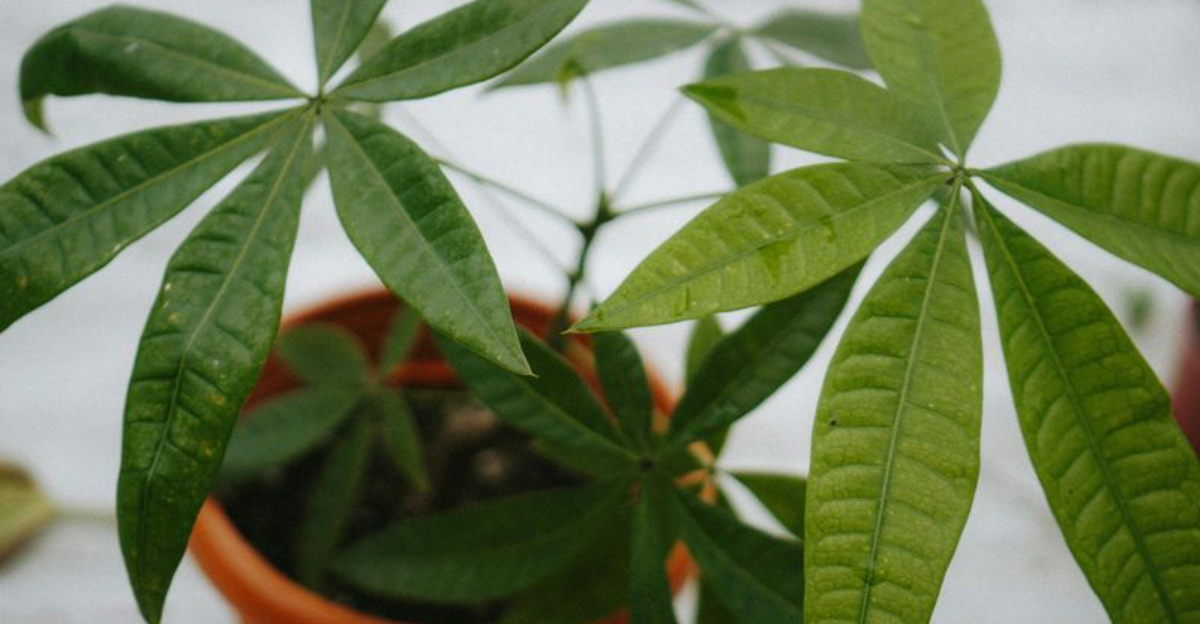
Money trees, scientifically known as Pachira aquatica, have become a staple in Illinois homes thanks to their attractive braided trunks, glossy green leaves, and long-standing reputation for attracting good fortune.
Rooted in Feng Shui traditions, money trees are said to symbolize financial stability, positive energy, and growth.
While these symbolic meanings add charm, the real secret to a money tree’s “luck” lies in proper care—especially watering.
In Illinois, where seasons bring extreme changes in temperature, humidity, and indoor air quality, watering correctly is the most important factor in keeping a money tree healthy throughout 2026.
Many plant owners assume money trees are nearly indestructible, but improper watering is the leading cause of decline.
Overwatering suffocates roots and causes rot, while underwatering stresses leaves and slows growth.
Because Illinois experiences humid summers, dry winters, and heavy reliance on heating and cooling systems, a money tree’s watering needs shift significantly over the year.
Learning how often to water based on season rather than habit allows your plant to thrive rather than merely survive.
Money trees originate from tropical regions of Central and South America, where they grow near riverbanks and wetlands.
In Illinois homes, recreating this balance requires attention to seasonal changes, indoor climate control, and careful observation of your plant’s signals.
With the right approach, a money tree can remain vibrant, resilient, and visually stunning all year long.
Spring Watering Schedule: March Through May
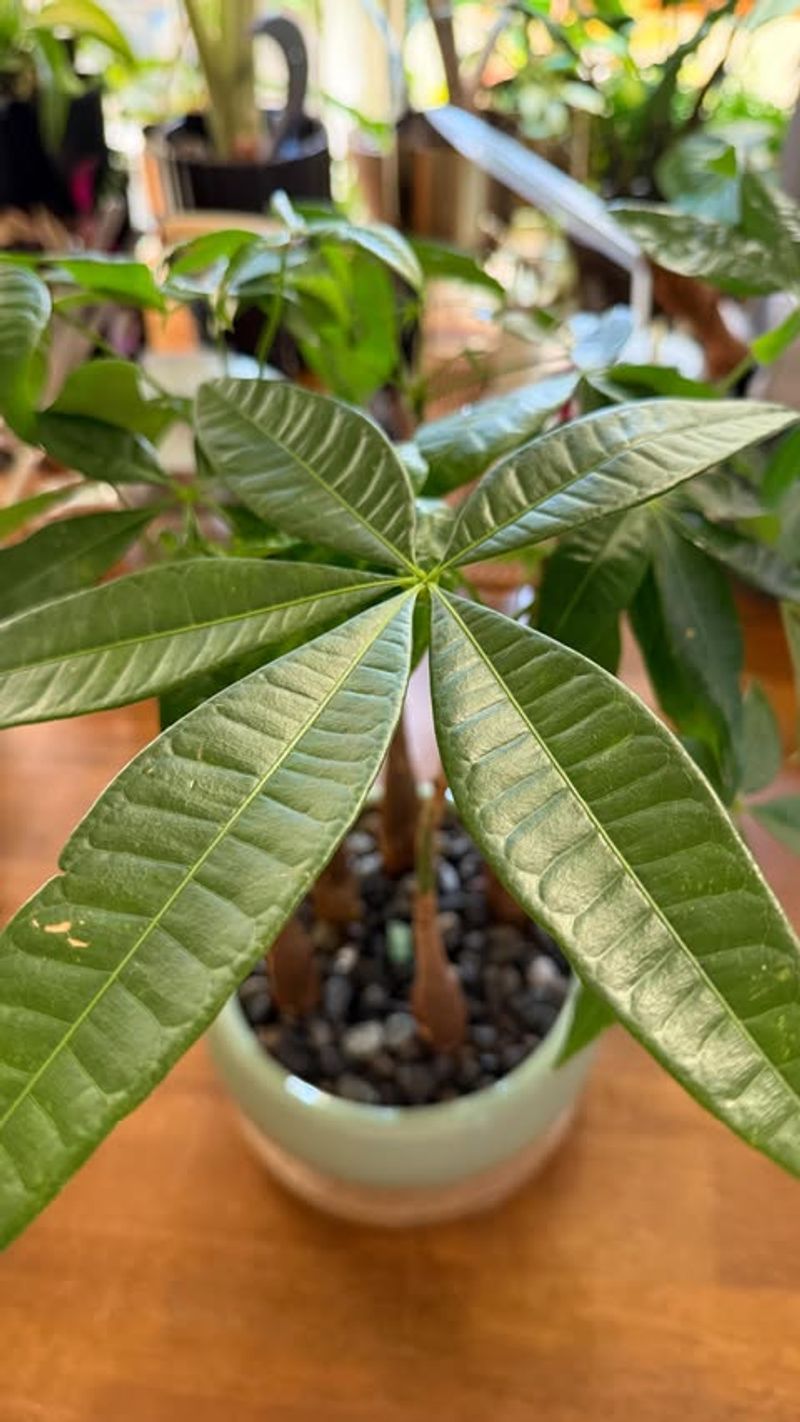
As winter fades and daylight lengthens across Illinois, money trees respond to increasing light by exiting dormancy and initiating new growth in both leaves and roots.
This renewed activity increases water demand compared to winter, though the need remains moderate due to lingering cool temperatures and fluctuating indoor heating use.
From March through May, most money trees perform best when watered approximately every seven to ten days, provided soil moisture levels support adequate root oxygenation.
Before watering, the top two inches of soil should feel dry, signaling that excess moisture has evaporated and that roots are ready for another watering cycle.
Illinois spring weather is notoriously unpredictable, with sudden warm spells followed by cold snaps that prompt intermittent heating, causing soil moisture to fluctuate unexpectedly.
Homes with forced-air heating systems often experience faster evaporation, requiring closer monitoring of soil dryness during early spring.
Room-temperature water should always be used in spring because cold water can shock roots that are transitioning back into active growth.
Overwatering in spring frequently results in yellowing leaves and soft stems, symptoms often mistaken for nutrient deficiencies or insufficient light.
Healthy spring growth is characterized by firm stems, upright posture, evenly green leaves, and gradual rather than explosive leaf production.
Proper drainage is critical during this season, as spring root growth depends on oxygen availability as much as moisture.
Allowing excess water to collect in saucers or decorative pots creates anaerobic conditions that quickly lead to fungal infections and root decay.
Summer Hydration: June Through August Heat
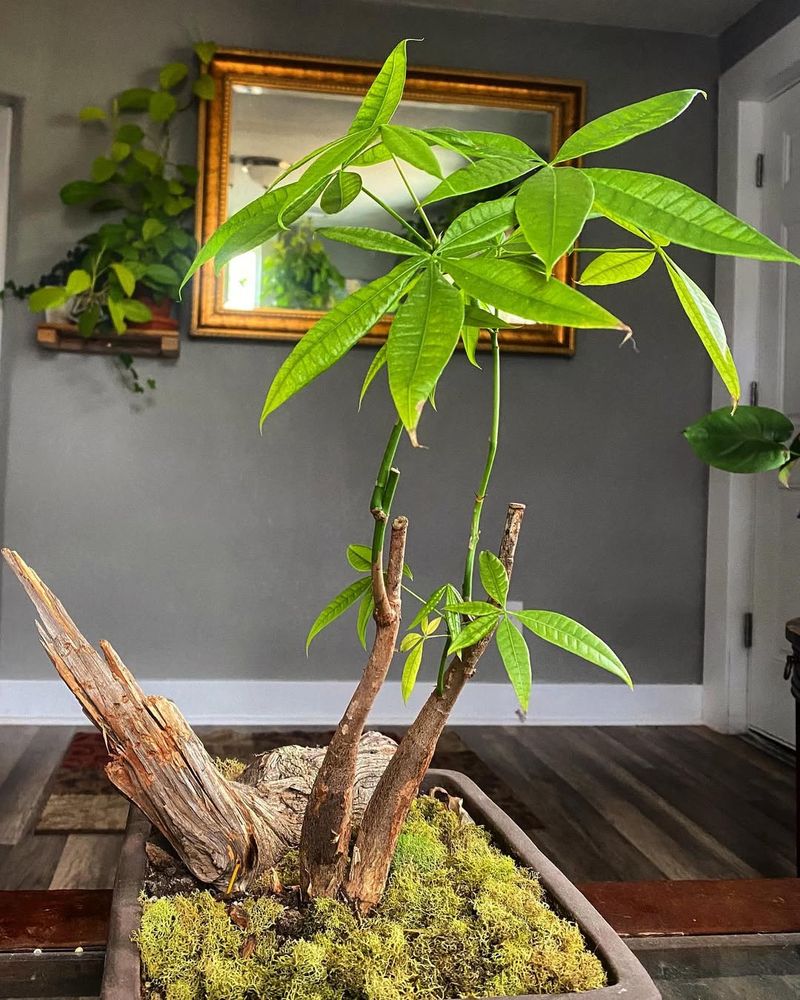
Summer represents the most demanding period for money tree watering in Illinois due to increased light intensity, longer days, and accelerated metabolic activity.
Your Illinois Garden Changes Every Week. Your Plan Should Too.
Gardening in Illinois changes quickly throughout the season. Every Friday you’ll receive a simple weekly plan showing exactly what to plant, prune, fertilize, harvest, and protect so you never miss the right timing.
During this season, money trees use more water to support photosynthesis, leaf expansion, transpiration, and trunk hydration.
Most money trees require watering every five to seven days during summer, though exact timing depends on indoor humidity, pot size, and airflow.
Air conditioning, while essential for comfort, drastically reduces indoor humidity and accelerates soil drying even when outdoor humidity is high.
Illinois homes can feel humid outside yet maintain indoor humidity levels well below what tropical plants prefer due to constant cooling cycles.
Watering during summer should be slow and thorough, allowing moisture to saturate the entire root ball rather than pooling near the surface.
Deep watering encourages strong, evenly distributed root systems that help stabilize the plant and improve drought tolerance.
Shallow or inconsistent watering leads to weak roots, uneven moisture zones, and increased susceptibility to stress.
Browning leaf tips during summer often indicate low humidity or irregular watering rather than pests or disease.
Rotating the plant weekly prevents leaning and promotes balanced growth, as money trees naturally grow toward light sources during periods of rapid development.
Maintaining consistent watering habits during summer prevents stress that can weaken the plant before fall arrives.
Fall Transition: September Through November Adjustments
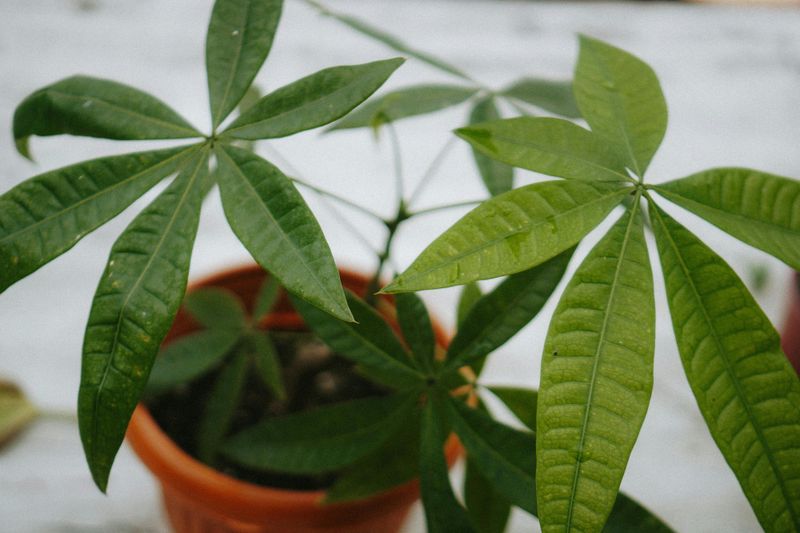
As daylight hours shorten and temperatures cool across Illinois, money trees begin transitioning from active growth to a slower metabolic state.
During fall, water consumption decreases even though indoor air may feel dry due to the early use of heating systems.
Watering frequency should be reduced to approximately every ten to fourteen days, depending on how quickly soil dries.
Many money tree owners overwater in fall because dry indoor air is mistakenly interpreted as increased water demand.
Money trees are naturally equipped to handle brief dry periods thanks to their water-storing trunks, making reduced watering safer than excess moisture.
Leaf drop during fall is common and often reflects the plant shedding older foliage to conserve energy rather than a watering failure.
Consistent yellowing accompanied by persistently wet soil, however, indicates overwatering and poor drainage.
Fertilization should be discontinued in fall because unused nutrients accumulate in soil and damage roots during slowed growth.
Temperature stability becomes increasingly important, as repeated exposure to drafts or heating vents stresses foliage and disrupts moisture balance.
Fall provides an opportunity to observe overall plant structure and soil behavior without making drastic care changes.
Winter Care: December Through February Dormancy
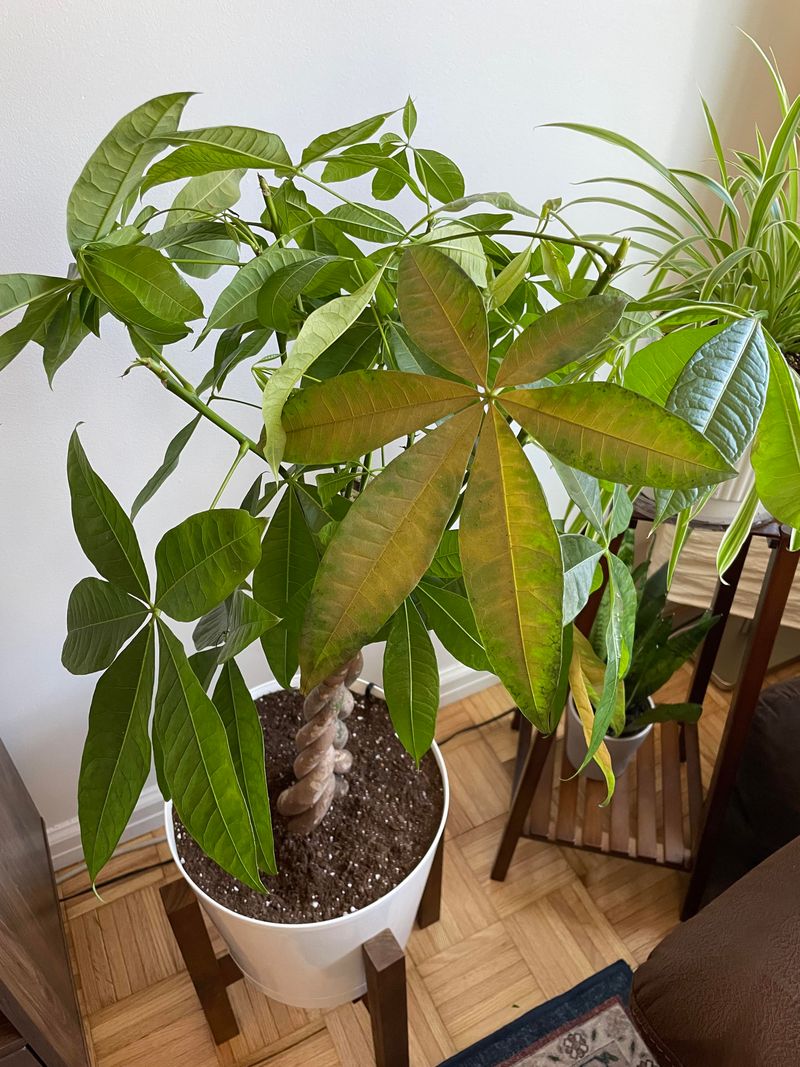
Winter is the most critical period for money tree care in Illinois due to limited sunlight, cold outdoor temperatures, and extremely dry indoor air.
During winter, money trees enter a dormant phase in which growth slows dramatically and water uptake is minimal.
Watering should be limited to every fourteen to twenty-one days, allowing soil to dry thoroughly between sessions.
Overwatering during winter is the leading cause of money tree decline because roots absorb moisture slowly in cool, low-light conditions.
Symptoms of winter overwatering include brown leaf spots, yellow foliage, soft stems, and eventual trunk collapse.
These symptoms are often misinterpreted as dehydration or cold stress, leading owners to water more frequently and worsen the problem.
Water volume should be slightly reduced in winter, and excess water should never be allowed to sit beneath the pot.
Indoor humidity levels in Illinois homes often fall below twenty percent during winter, creating stress for tropical plants.
Despite dry air, increasing watering frequency is not appropriate, as root health depends more on oxygen availability than ambient humidity.
Humidity should instead be raised using humidifiers, plant grouping, or relocation to naturally more humid rooms.
Money trees should be positioned away from cold windows and exterior doors to prevent temperature shock and leaf damage.
Illinois Climate Considerations: Humidity And Temperature Factors
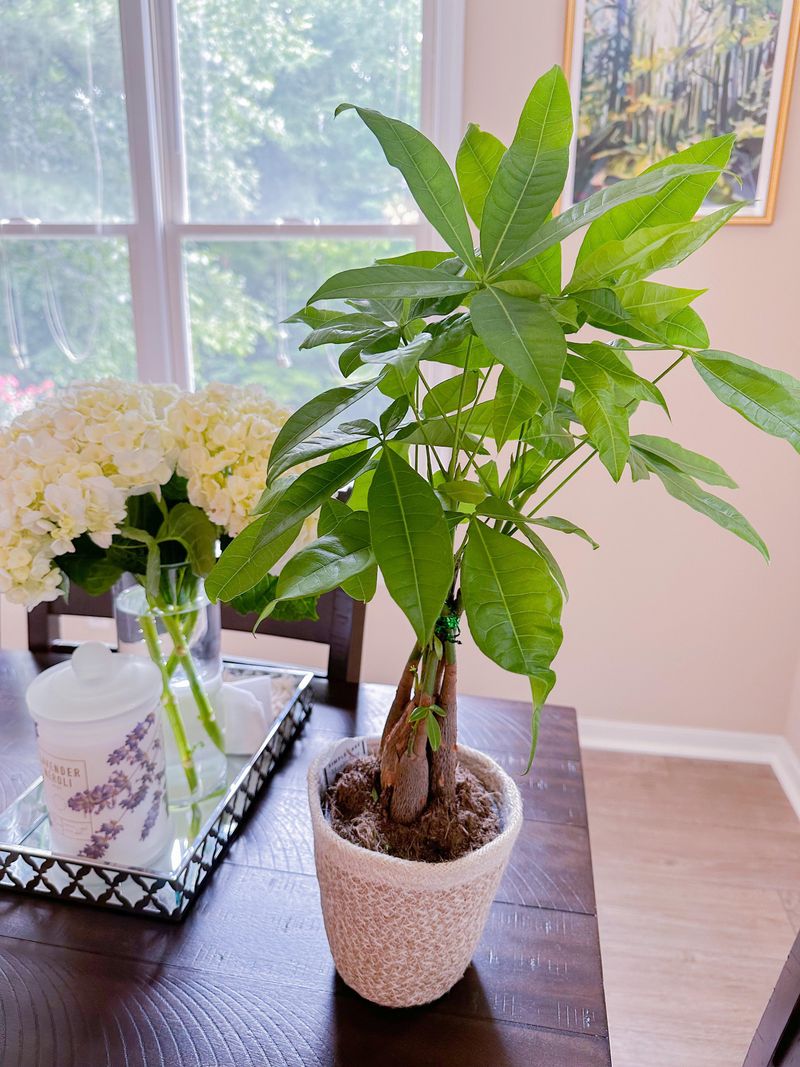
Illinois poses a unique challenge for money tree care because the state experiences some of the most dramatic seasonal shifts in temperature and humidity in the United States, forcing indoor environments to change drastically several times each year.
During summer, outdoor humidity in Illinois can exceed seventy percent, yet indoor air often becomes significantly drier due to continuous air conditioning that strips moisture from both the air and potting soil.
In contrast, winter heating systems can drive indoor humidity levels below twenty percent, creating conditions similar to arid climates that stress tropical plants adapted to consistent moisture and warmth.
Money trees perform best when exposed to stable temperatures between sixty-five and seventy-five degrees, as repeated exposure to hot or cold drafts disrupts cellular function and accelerates moisture loss through leaves.
Placing a money tree near radiators, fireplaces, air vents, or air conditioners creates localized temperature extremes that dry soil unevenly and increase the risk of both underwatering and overwatering.
Monitoring indoor humidity with a hygrometer allows Illinois homeowners to understand how quickly moisture evaporates from soil and leaves under changing seasonal conditions.
Grouping houseplants together creates a microclimate where transpiration naturally increases humidity, reducing water stress without requiring more frequent soil watering.
Basements and interior rooms in Illinois homes often maintain more stable humidity levels than upper floors, though adequate lighting must be provided to support photosynthesis and healthy growth.
Signs Of Proper Watering: Healthy Versus Stressed Plants
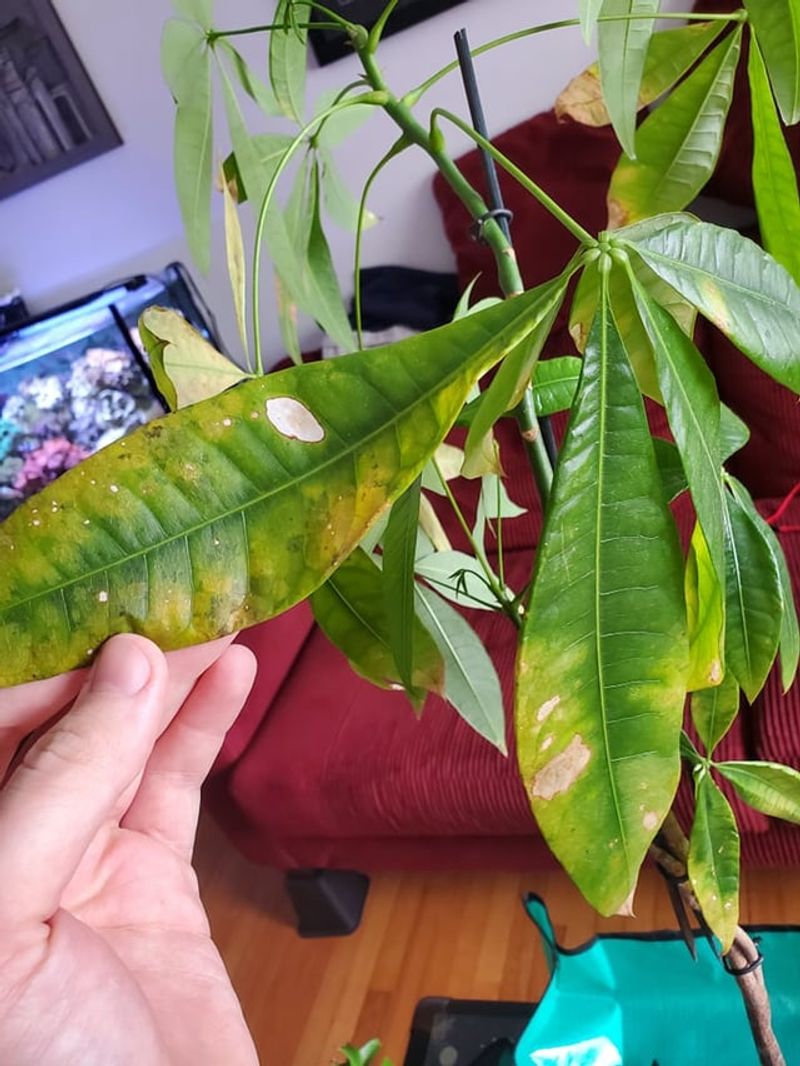
A properly watered money tree displays firm, glossy green leaves with good color saturation and natural shine, and those leaves remain upright and evenly spaced along the stems, indicating that internal water pressure and nutrient transport are functioning as they should.
The trunk of a healthy money tree should feel solid when gently pressed, with only slight natural flexibility that reflects its role as a water-storage structure, rather than feeling soft, spongy, or increasingly weak over time.
Soil in a well-watered pot should feel lightly moist a few inches below the surface while remaining loose and well-aerated, allowing roots to access both water and oxygen instead of sitting in compacted, waterlogged material.
Overwatered money trees often develop yellowing leaves, softened stems, and soil that remains wet for extended periods, which signals oxygen deprivation in the root zone and creates conditions that encourage fungal growth and root rot.
Underwatered plants typically show drooping or curling foliage, dry brown leaf edges, and slowed growth, yet they usually recover more easily than overwatered plants because intact roots respond quickly once consistent moisture is restored.
Consistently observing leaf color, stem firmness, soil moisture, and growth patterns provides far more reliable guidance than fixed watering schedules, especially in Illinois homes where indoor temperature, humidity, and airflow can vary dramatically.