Garden Plants That Can Last For Over 100 Years In Pennsylvania Landscapes
Some Pennsylvania gardens feel like they have a memory of their own.
Long after hands have changed and seasons have rolled by, certain plants keep growing, rooted in the same soil for decades on end.
These are not flash-in-the-pan flowers.
They are the strong, steady types that stand the test of time and quietly become part of the landscape’s story.
Plants with century-long lifespans bring more than beauty.
They offer stability, shade, and a sense of continuity that newer plantings cannot match.
Once established, they settle in for the long haul, surviving harsh winters, humid summers, and everything in between.
Many grow stronger with age, spreading wider, blooming bigger, and adding character year after year.
In Pennsylvania landscapes, these long-living plants become living landmarks.
They anchor gardens, frame homes, and connect generations through shared spaces.
Planting them is a long game, but the payoff lasts a lifetime and then some.
With patience and care, these enduring plants turn ordinary yards into lasting legacies that grow richer with every passing season.
1. Eastern White Pine
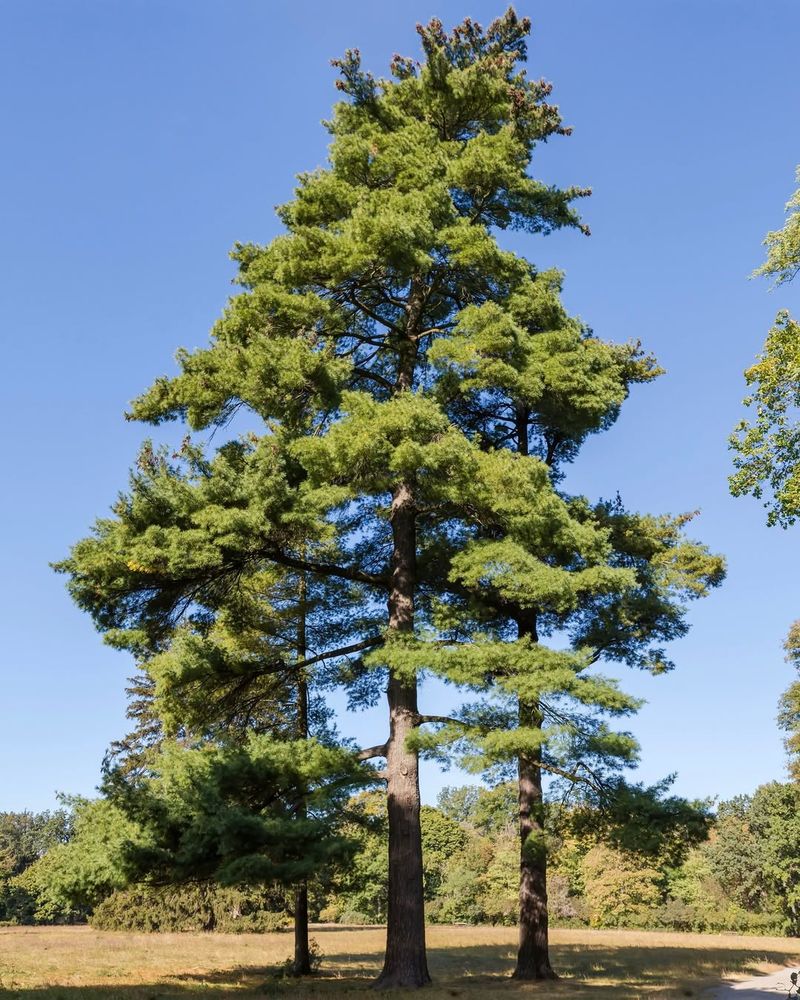
Picture a towering giant that has watched over Pennsylvania families for generations, and you’re looking at the Eastern White Pine.
This magnificent evergreen stands as one of the tallest trees native to the eastern United States, reaching heights that can exceed 80 feet in favorable conditions.
Its soft, flexible needles grow in bundles of five and create a feathery appearance that sways gracefully in the breeze.
Pennsylvania soil suits this pine perfectly, especially in areas with good drainage and full sun exposure.
The tree adapts well to various soil types found throughout the state, from the Pocono Mountains to the Allegheny Plateau.
Young pines grow quickly, adding several feet per year during their first decades, then settling into a steady growth pattern that continues for centuries.
Homeowners appreciate how this pine provides year-round privacy screening while offering shelter to countless birds and small mammals.
The long, slender cones produce seeds that feed wildlife throughout winter months.
Unlike some evergreens, the Eastern White Pine maintains its lower branches for many years, creating a full, pyramidal shape that enhances any landscape.
Maintenance remains minimal once established, requiring only occasional pruning to remove damaged branches.
The tree resists most pests and diseases when planted in appropriate locations.
Its shallow root system means you should avoid planting too close to structures, but this same characteristic allows it to thrive where other deep-rooted trees might struggle.
Historical records show Eastern White Pines living well beyond 200 years in Pennsylvania, making them perfect for multi-generational properties.
2. Sugar Maple

Few trees capture the essence of Pennsylvania seasons quite like the Sugar Maple.
Every autumn, this deciduous beauty transforms into a spectacular display of orange, red, and golden yellow that stops traffic and fills camera rolls.
Beyond its visual appeal, this tree has served communities for centuries, providing shade, syrup, and stunning hardwood lumber.
Growing conditions across Pennsylvania suit the Sugar Maple wonderfully, particularly in the northern and western regions where cooler temperatures prevail.
Your Pennsylvania Garden Changes Every Week. Your Plan Should Too.
Gardening in Pennsylvania changes quickly throughout the season. Every Friday you’ll receive a simple weekly plan showing exactly what to plant, prune, fertilize, harvest, and protect so you never miss the right timing.
The tree prefers moist, well-drained soil with a slightly acidic to neutral pH.
Full sun exposure produces the most vibrant fall colors, though the tree tolerates partial shade reasonably well.
Mature specimens can reach 75 feet tall with equally impressive crown spreads.
Spring brings delicate flowers before the leaves emerge, followed by the distinctive winged seeds that children love spinning through the air.
Summer offers dense shade that can reduce cooling costs for nearby homes.
The bark develops attractive vertical ridges as the tree ages, adding winter interest to the landscape.
Pennsylvania’s climate provides the perfect cold winters that Sugar Maples need to produce their famous sap for maple syrup production.
Many homeowners tap their backyard trees each February and March, continuing a tradition that connects them to the land.
The process doesn’t harm the tree when done correctly, and a healthy Sugar Maple can be tapped annually for over a century.
Planting one means investing in a tree that could easily outlive your great-grandchildren while providing beauty and function throughout its long life in Pennsylvania gardens.
3. American Beech
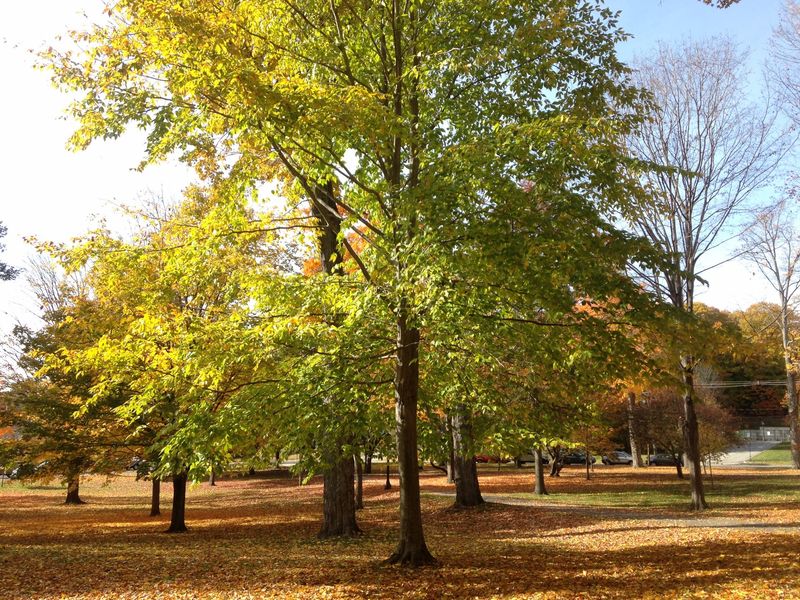
Smooth, silvery-gray bark that feels like elephant skin makes the American Beech instantly recognizable among Pennsylvania’s native trees.
This characteristic bark has tempted generations to carve initials and dates, creating living historical records that remain visible for decades.
The tree’s distinctive appearance and incredible longevity make it a standout choice for anyone planning a lasting landscape.
Pennsylvania’s woodlands naturally host many ancient American Beech trees, some estimated at 300 to 400 years old.
These survivors demonstrate the species’ remarkable ability to thrive in the state’s varied conditions.
The tree prefers rich, moist soil with good drainage and grows best in partial shade, though it adapts to full sun locations.
Mature height typically reaches 50 to 70 feet with a dense, rounded crown.
Spring leaves emerge as a bright, fresh green that darkens through summer before turning bronze and golden in fall.
Many leaves cling to branches throughout winter, rustling in cold winds and providing visual interest when other deciduous trees stand bare.
The small, triangular nuts appear in prickly husks and provide important food for wildlife including squirrels, deer, and various bird species.
Root systems spread widely but remain relatively shallow, creating challenges for growing grass underneath but also forming natural connections between neighboring beech trees.
This interconnected root network helps the trees share resources and resist storm damage.
Pennsylvania gardeners should provide adequate space for the spreading canopy and root zone.
Once established, American Beech trees require virtually no maintenance and resist most diseases and pests that plague other hardwoods across the state.
4. White Oak
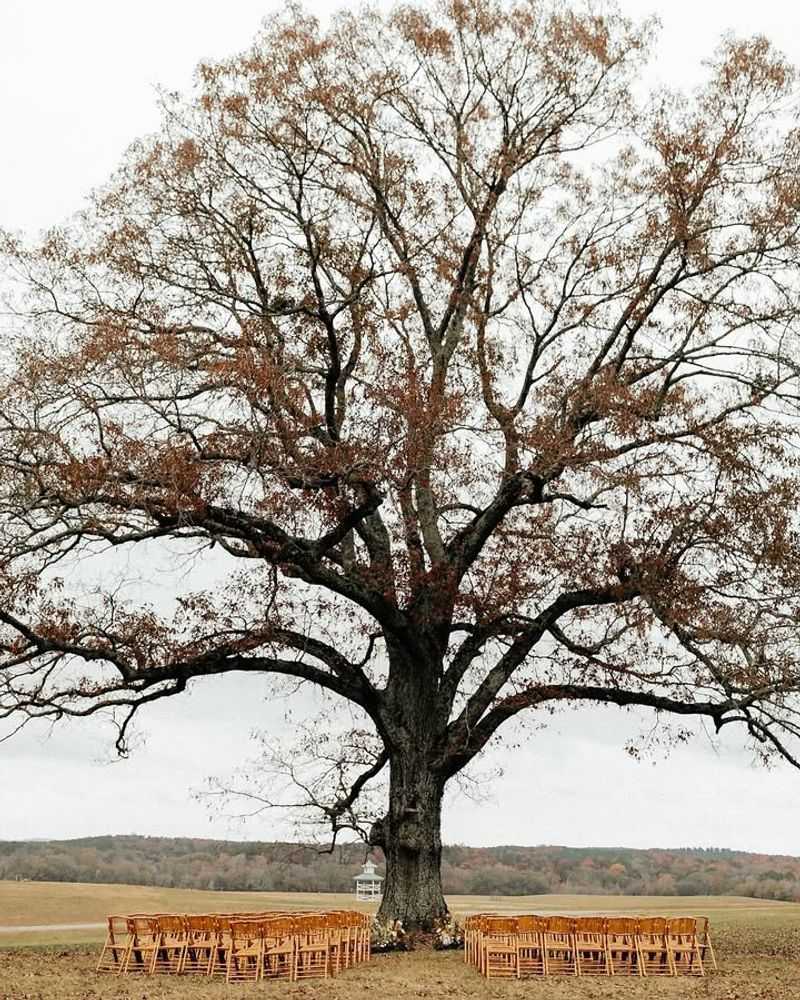
Strength, endurance, and majesty define the White Oak, a tree that has shaped American history and Pennsylvania landscapes for centuries.
Its wood built colonial homes, Revolutionary War ships, and countless barrels for aging whiskey.
Living specimens can exceed 300 years, with some Pennsylvania examples documented at over 400 years old, making this oak a true investment in the future.
The tree thrives throughout Pennsylvania, adapting to various soil types as long as drainage remains adequate.
Full sun produces the healthiest growth, with mature trees reaching 80 to 100 feet tall and equally wide.
Young White Oaks grow slowly, adding only 12 to 18 inches annually, but this measured pace contributes to the dense, durable wood that makes the species so valuable.
Leaves display the classic oak shape with rounded lobes rather than the pointed lobes of red oak species.
Fall brings rich burgundy and purple tones that persist for weeks before the leaves finally drop.
Acorns mature in a single season, unlike the two-year cycle of red oaks, and provide crucial food for Pennsylvania wildlife from turkeys to black bears.
Pennsylvania homeowners prize White Oaks for their shade, longevity, and relatively low maintenance requirements.
The deep taproot system anchors the tree securely against storms while accessing water during dry spells.
This same root structure means transplanting large specimens proves difficult, so choose planting locations carefully.
Urban and suburban settings suit White Oaks well, as they tolerate pollution and compacted soil better than many native trees.
Their impressive lifespan means planting one today creates shade and beauty that your descendants will enjoy well into the 22nd century.
5. American Sycamore
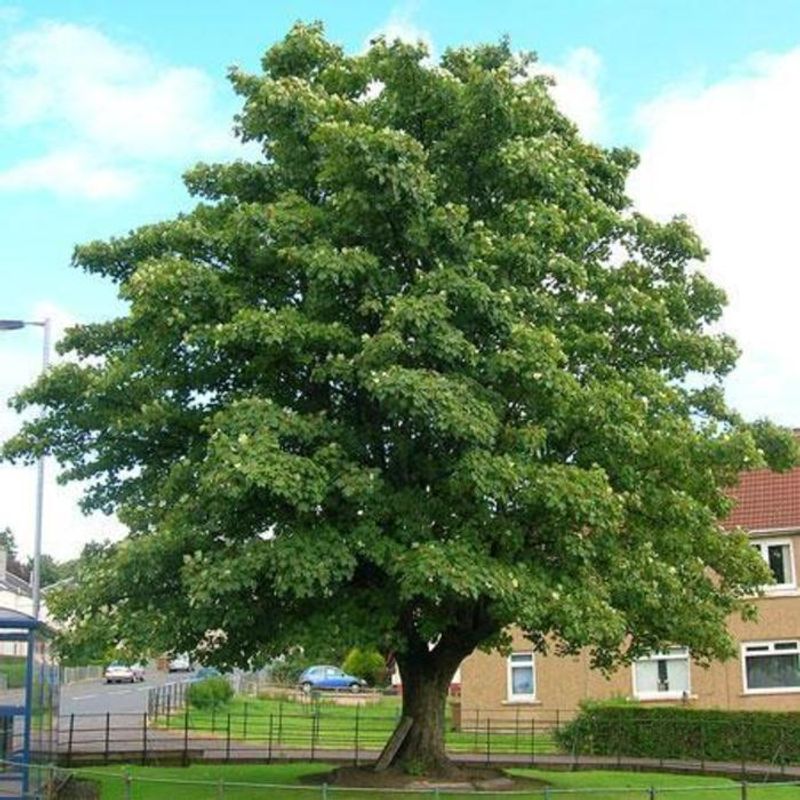
No other tree announces its presence quite like the American Sycamore with its jigsaw puzzle bark that peels away in irregular patches.
The exposed inner bark creates a stunning mosaic of white, tan, green, and gray that looks hand-painted by nature.
This fast-growing native can reach massive proportions, with trunk diameters exceeding 10 feet and heights approaching 100 feet in ideal Pennsylvania locations.
Stream banks and floodplains throughout Pennsylvania provide perfect growing conditions, though the tree adapts to various landscape settings.
Moist, deep soil produces the best growth, but established sycamores tolerate both flooding and brief drought periods.
The tree’s natural habitat along waterways makes it an excellent choice for low-lying areas where other species struggle.
Broad, maple-like leaves can measure nearly 10 inches across, creating dense summer shade that cools large areas.
Fall brings modest yellow-brown colors before the leaves drop to reveal the spectacular bark.
Round seed balls hang from long stems through winter, eventually breaking apart to scatter fuzzy seeds on the wind.
Pennsylvania’s humid summers occasionally promote a harmless fungal condition that causes some leaf browning, but this rarely affects the tree’s overall health or longevity.
The species resists serious diseases and pests, contributing to lifespans that regularly exceed 200 years.
Historical records document sycamores living 500 to 600 years in protected locations.
Large properties benefit most from this giant, as the tree needs substantial space for its spreading crown and root system.
Smaller yards might struggle to accommodate a mature sycamore, but those with room will enjoy a spectacular specimen that becomes a neighborhood landmark lasting generations.
6. Eastern Hemlock
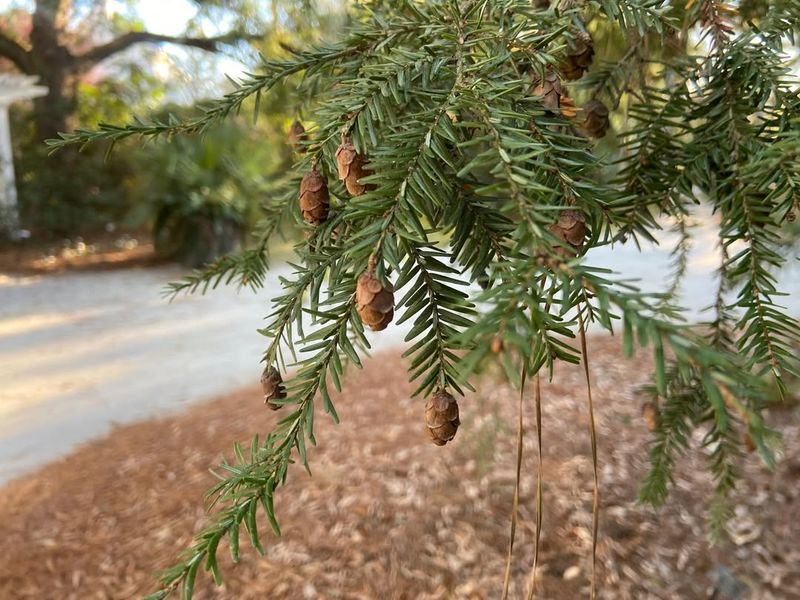
Graceful, feathery branches create an elegant silhouette that makes the Eastern Hemlock a favorite among Pennsylvania gardeners seeking refined evergreen beauty.
Unlike the coarser texture of pines, this hemlock displays delicate, short needles arranged in flat sprays that give the tree an almost lacy appearance.
The species naturally inhabits cool, shaded ravines and north-facing slopes throughout Pennsylvania’s mountain regions.
Shade tolerance sets Eastern Hemlock apart from most evergreens, making it invaluable for woodland gardens and understory plantings.
The tree actually prefers partial shade in Pennsylvania landscapes, though it grows in full sun with adequate moisture.
Cool, moist, acidic soil produces the healthiest specimens, mimicking the tree’s natural forest habitat.
Mature height typically reaches 60 to 70 feet with a pyramidal to irregular crown.
Tiny cones, barely an inch long, dangle from branch tips and add textural interest throughout the year.
The dense foliage provides excellent screening and windbreaks while offering shelter for birds year-round.
Pennsylvania winters see hemlock groves serving as thermal refuges where temperatures remain several degrees warmer than surrounding open areas.
Recent decades brought challenges from an invasive insect pest, but Pennsylvania foresters and homeowners have developed effective management strategies.
Healthy hemlocks receiving proper care can resist or recover from pest pressure, continuing their centuries-long presence in the landscape.
Many documented specimens exceed 300 years old, with some ancient trees in remote Pennsylvania forests estimated at 500-plus years.
Planting Eastern Hemlock means committing to regular watering during establishment and occasional monitoring for pests, but the reward is a sophisticated evergreen that graces your property for multiple human lifetimes.
7. Tulip Poplar
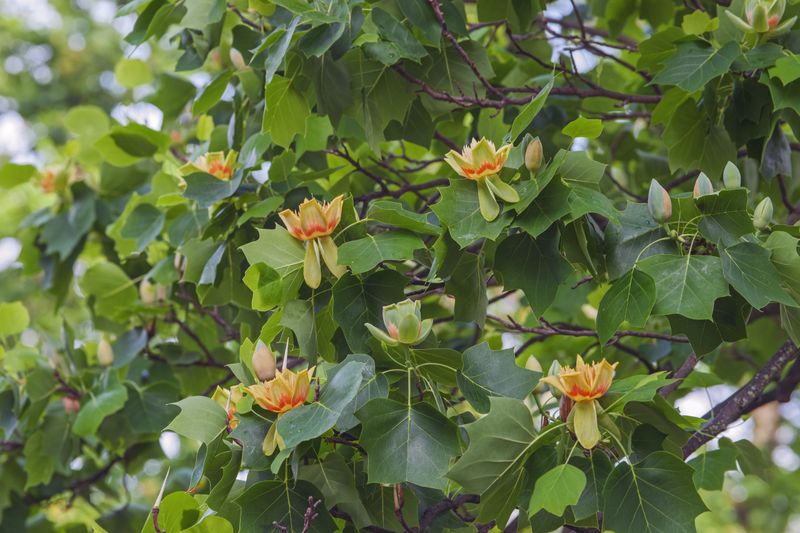
Unique, four-lobed leaves that look like someone snipped off the tip with scissors make the Tulip Poplar instantly identifiable among Pennsylvania’s native trees.
This fast-growing giant produces stunning tulip-shaped flowers in late spring, combining yellow-green petals with orange markings that create one of the most beautiful blooms of any native tree.
The species ranks among the tallest eastern hardwoods, regularly exceeding 100 feet in Pennsylvania forests.
Rich, moist soil in full sun produces the most impressive growth, with young trees adding 2 to 3 feet annually during their first decades.
Pennsylvania’s climate throughout the state supports Tulip Poplars, from the southeastern counties to the northern tier.
The tree prefers well-drained sites and struggles in compacted or poorly drained soil.
Spring flowers appear high in the canopy, often going unnoticed until fallen petals carpet the ground below.
Bees and hummingbirds visit the blooms enthusiastically, making Tulip Poplars valuable for pollinators.
Summer foliage creates a bright green canopy that turns clear yellow in fall, lighting up Pennsylvania landscapes with golden color.
The straight, tall trunk and relatively light, soft wood made this species important for colonial construction and furniture making.
Living trees serve modern landscapes by providing rapid shade and vertical interest.
Root systems spread widely but don’t typically cause problems with foundations or underground utilities.
Pennsylvania specimens regularly live 200 to 300 years when protected from storm damage and disease.
The combination of fast growth and extreme longevity makes Tulip Poplar an excellent choice for homeowners who want to see substantial growth during their lifetime while planting a tree that will serve many future generations across the state.