Why Cyclamen Leaves Turn Silvery In Georgia Homes — And When You Shouldn’t Worry
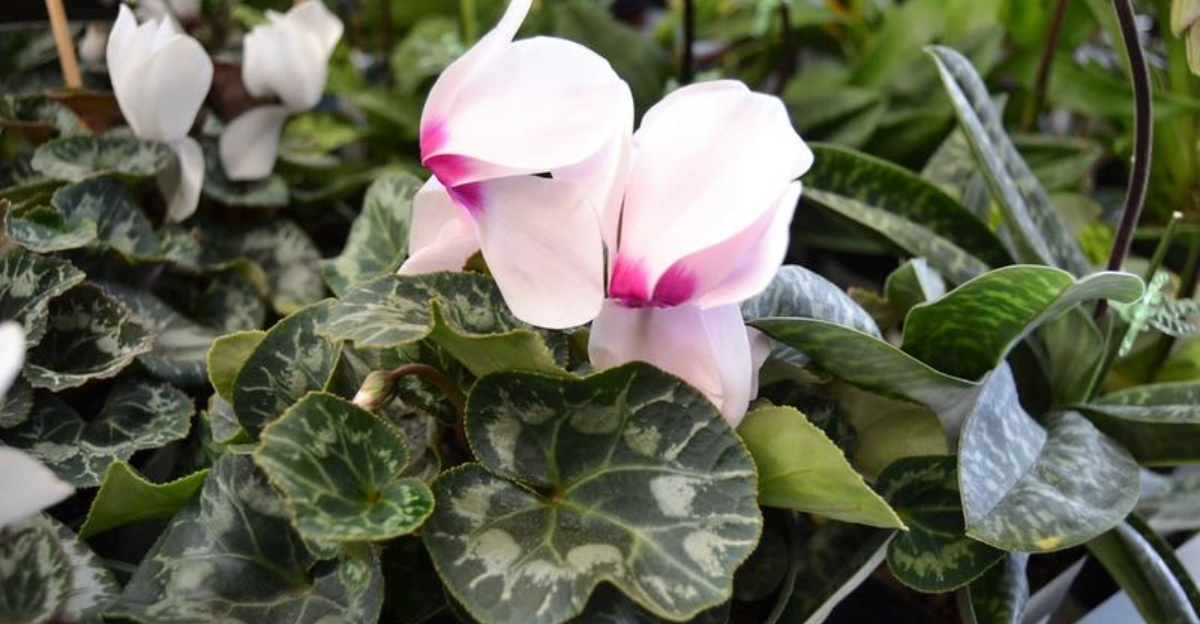
Cyclamen leaves can take on a silvery look in Georgia homes, often catching attention when the change happens quickly or without warning.
This shift is not always a sign of trouble, especially during seasonal changes that affect light, temperature, and indoor air.
Knowing when silvery leaves are normal helps avoid unnecessary fixes and keeps care focused on what actually supports healthy cyclamen growth.
1. Natural Leaf Patterning That Looks Silvery Under Indoor Light
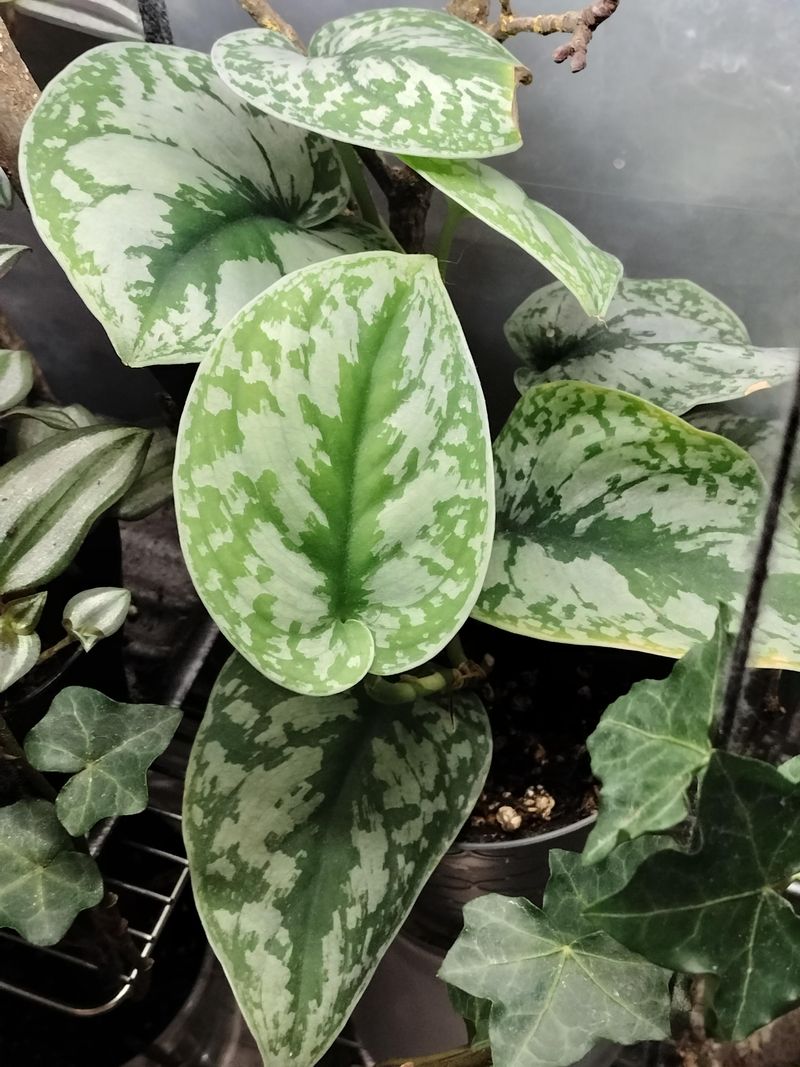
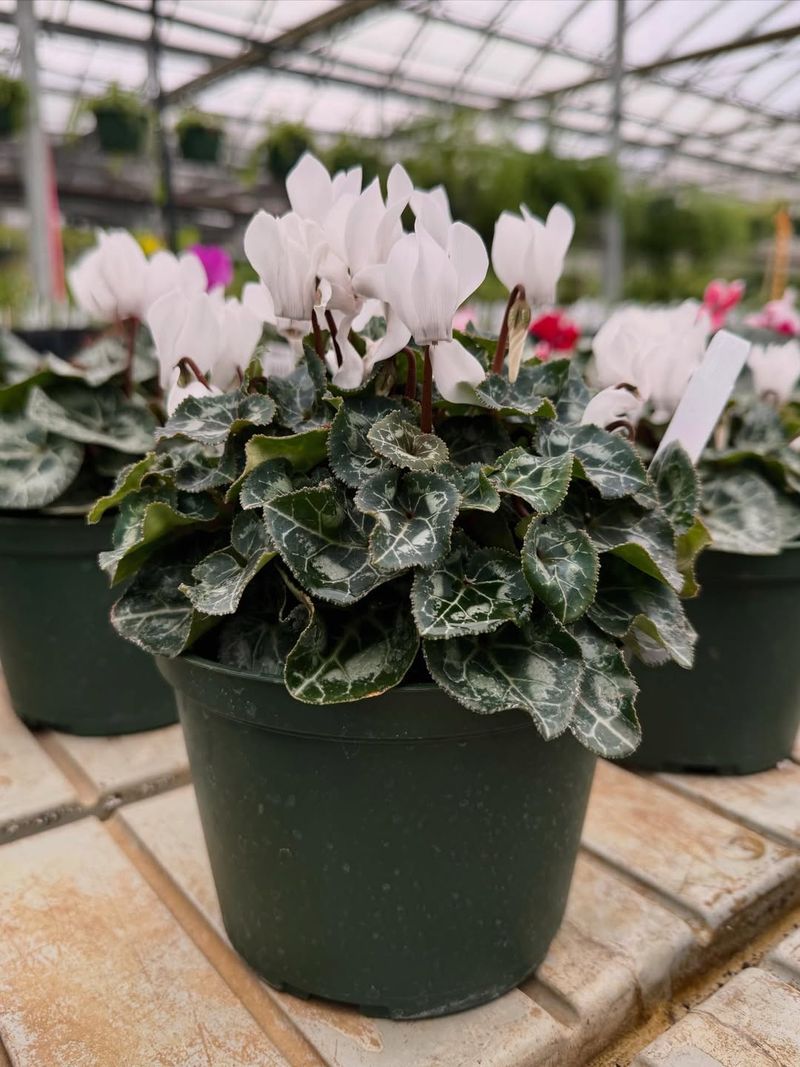
Many cyclamen varieties naturally display silvery patterns across their heart-shaped leaves, creating beautiful designs that catch your eye when you walk past them indoors.
These markings are part of the plant’s genetic makeup, similar to how some people have freckles or birthmarks that make them uniquely recognizable everywhere.
Georgia homes often have specific lighting conditions that make these natural patterns appear more pronounced, especially when sunlight filters through windows during winter afternoons.
The silvery zones on cyclamen leaves actually contain less chlorophyll than the green areas, which creates the stunning contrast you see every single day.
Different cyclamen cultivars show varying amounts of silver patterning, with some displaying just tiny flecks while others feature bold, sweeping designs across entire leaves.
When you purchase a cyclamen in Georgia, check if the silvery look matches the variety’s typical appearance by comparing it with pictures online or asking.
This natural variegation doesn’t harm the plant at all and actually adds to its ornamental value, making it a popular choice for indoor decoration statewide.
If the silvery pattern remains consistent and the plant continues growing new leaves and flowers, you can relax knowing everything is perfectly normal and healthy.
2. Cool Indoor Temperatures During Georgia Winters
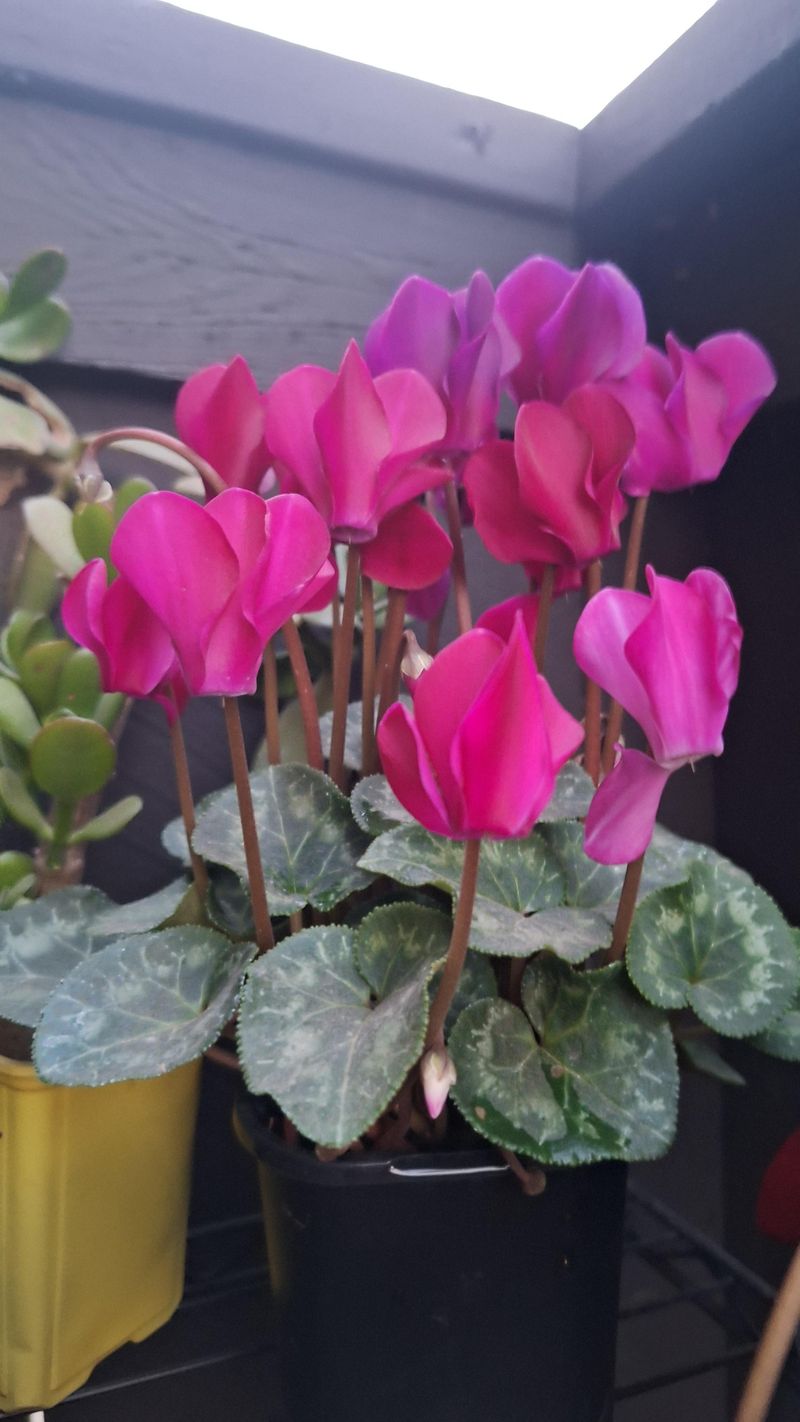
Cyclamen plants actually prefer cooler temperatures than most houseplants, thriving best when Georgia homes maintain indoor conditions between fifty-five and sixty-five degrees Fahrenheit.
Cold winter nights across Georgia can cause indoor temperatures to drop, which may give cyclamen leaves a temporary silvery or slightly pale appearance overnight.
This temperature-related color shift happens because cooler air slows down some of the plant’s metabolic processes, reducing the intensity of green pigmentation temporarily throughout.
Rooms near exterior walls or windows often experience more temperature fluctuation in Georgia, making cyclamen placed in these spots more likely to develop silvery tones.
The good news is that this silvery appearance typically reverses itself once daytime temperatures warm up again, returning leaves to their normal coloration naturally.
Cyclamen are winter-blooming plants that evolved in Mediterranean climates with cool seasons, so Georgia’s winter conditions actually suit them remarkably well for healthy growth.
If your plant looks slightly silvery on cold mornings but returns to normal by afternoon, the temperature variation is likely the cause without any concern.
Keeping your cyclamen in a consistently cool spot in your Georgia home will help it bloom longer and maintain more stable leaf coloration throughout winter.
3. Bright Window Light Causing Surface Reflection On Leaves
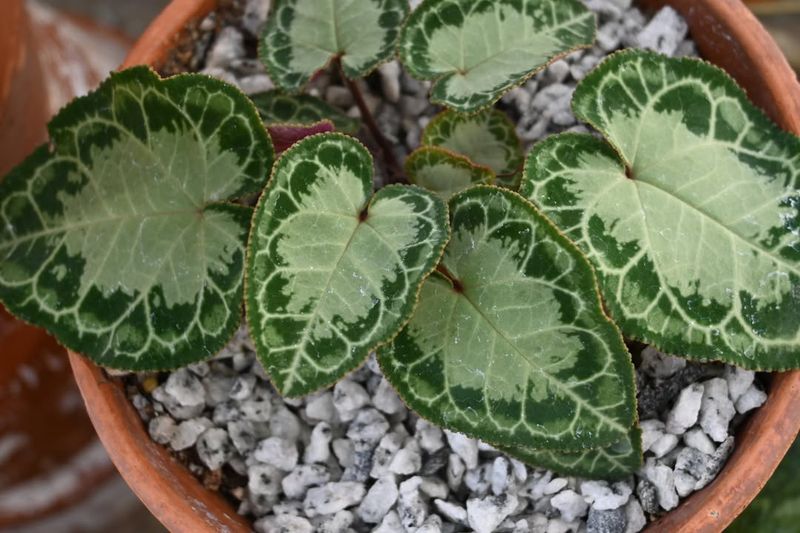
Strong sunlight streaming through Georgia windows can create a reflective, silvery sheen on cyclamen leaves that looks almost metallic when viewed from certain angles daily.
Your Georgia Garden Changes Every Week. Your Plan Should Too.
Gardening in Georgia changes quickly throughout the season. Every Friday you’ll receive a simple weekly plan showing exactly what to plant, prune, fertilize, harvest, and protect so you never miss the right timing.
The waxy coating on cyclamen leaves serves as natural protection against moisture loss, and this coating reflects light particularly well under bright indoor conditions.
Morning and afternoon sun in Georgia during winter months sits lower in the sky, creating intense beams that highlight this reflective quality more dramatically.
When you move around the room, you might notice the silvery appearance changes or even disappears depending on your viewing angle and position.
This optical effect is completely harmless and actually indicates your cyclamen has a healthy protective layer on its foliage that helps it conserve water efficiently.
Plants positioned in south-facing or west-facing windows in Georgia homes are most likely to display this silvery reflection because they receive the strongest light.
If you gently touch a leaf that appears silvery, you’ll often feel a smooth, slightly waxy texture that confirms the reflective coating is present naturally.
Rather than worrying about this silvery sheen, consider it a sign that your cyclamen is well-adapted to its environment and maintaining proper leaf health.
4. Normal Aging Of Older Cyclamen Leaves
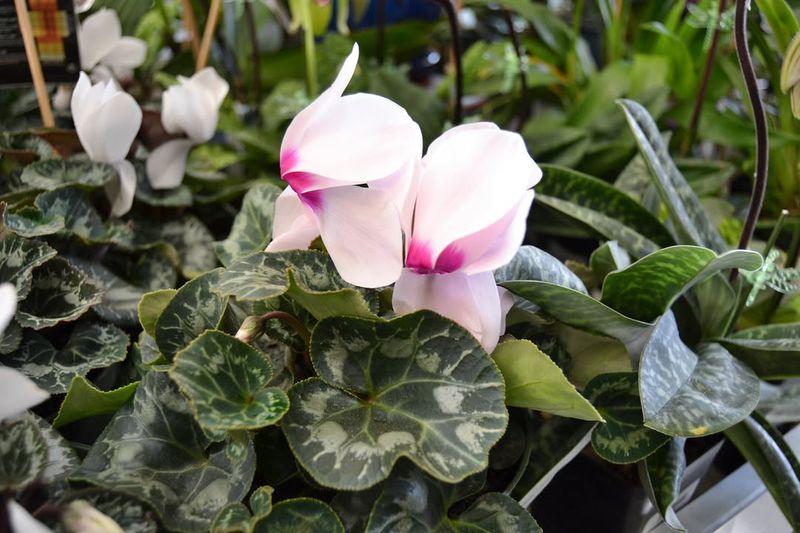
Just like trees lose leaves in autumn, cyclamen plants naturally shed their oldest foliage over time, and these aging leaves often develop silvery or grayish tones.
Older leaves typically sit on the outer edges of the plant, while fresh growth emerges from the center, creating a natural cycle of renewal throughout.
As leaves age in your Georgia home, chlorophyll breaks down gradually, causing green pigments to fade and revealing underlying silvery or pale tones beneath them.
This process is completely normal and doesn’t indicate disease or poor care, just the plant’s natural way of redirecting energy toward new growth and flowers.
Cyclamen grown indoors in Georgia typically maintain leaves for several months before they naturally begin to fade, turn silvery, and eventually yellow before dropping off.
If only the outermost, oldest leaves show silvery coloration while newer leaves remain vibrant green, your plant is simply going through its normal life cycle.
You can gently remove aging silvery leaves by giving them a firm tug near the base, which helps the plant look tidier and focus energy elsewhere.
Watching for new growth in the center of your cyclamen is the best way to confirm the plant remains healthy despite some older leaves changing color.
5. Dry Indoor Air From Heating Systems
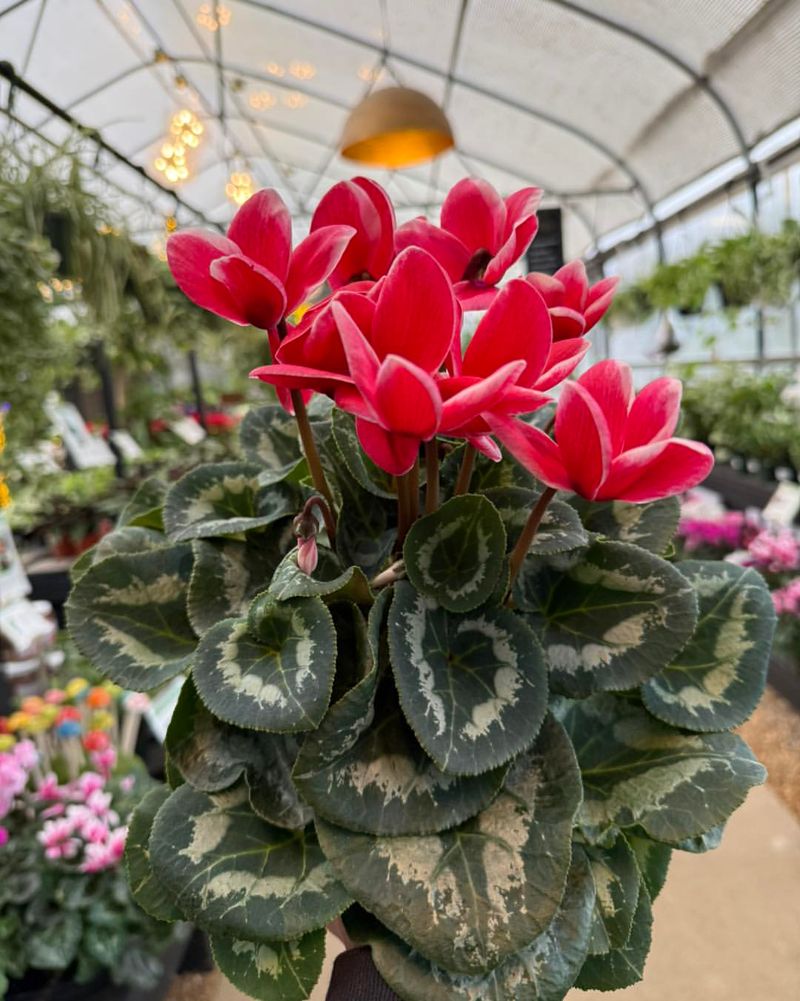
Winter heating systems in Georgia homes can dramatically reduce indoor humidity levels, sometimes dropping below thirty percent, which affects how cyclamen leaves look and feel.
Low humidity causes cyclamen leaves to lose moisture through their surface more quickly, which can create a dull, silvery appearance instead of glossy green color.
Central heating, space heaters, and forced-air systems all contribute to dry indoor air throughout Georgia, particularly during cold snaps when heating runs continuously overnight.
Cyclamen prefer moderate humidity levels around fifty percent, so Georgia’s dry winter indoor air can stress them slightly, causing temporary changes in leaf appearance overall.
Placing a small humidifier near your cyclamen or setting the pot on a tray filled with pebbles and water can help increase moisture around it.
Grouping several houseplants together in your Georgia home also creates a micro-climate with higher humidity, benefiting all the plants in that specific arrangement.
If your cyclamen’s leaves feel papery or look slightly silvery and dull, misting them lightly every few days can help restore their natural shine temporarily.
Maintaining better humidity doesn’t require expensive equipment; even a bowl of water near your plant can help improve conditions in dry Georgia homes during winter.
6. Recent Watering Changes Affecting Leaf Texture
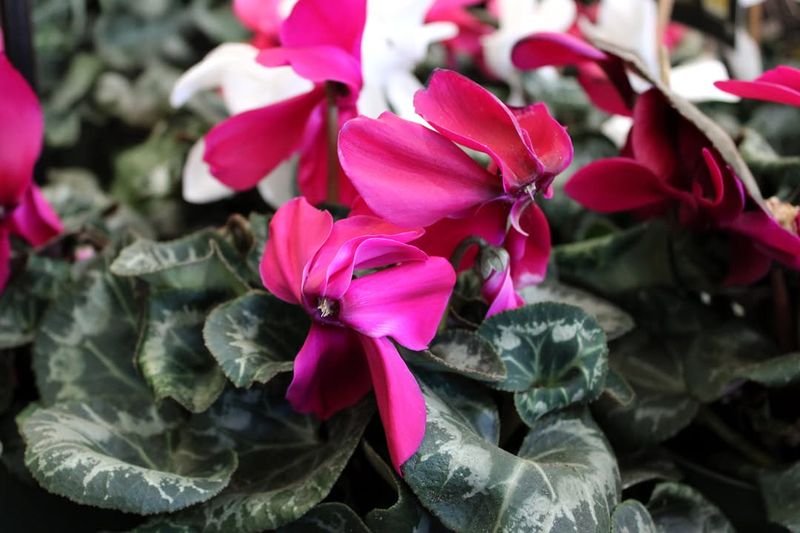
Adjusting your watering routine, whether giving more or less water than before, can temporarily change how cyclamen leaves look, including developing silvery tones across them.
Cyclamen prefer their soil to dry slightly between waterings, and overwatering in Georgia homes can cause roots to struggle, affecting how leaves absorb nutrients efficiently.
When roots can’t function properly due to soggy soil, leaves may develop a silvery, pale, or slightly translucent appearance because nutrients aren’t reaching them adequately.
Conversely, underwatering can cause leaves to lose turgidity and develop a silvery, slightly shriveled look as cells lose moisture and collapse inward over time.
Georgia’s variable winter weather sometimes confuses plant owners about watering frequency, leading to inconsistent moisture levels that stress cyclamen plants temporarily but not permanently.
The best approach is checking soil moisture by inserting your finger about an inch deep; if it feels dry, your cyclamen likely needs water soon.
Water cyclamen from below by placing the pot in a saucer of water for fifteen minutes, allowing roots to absorb moisture without wetting the crown.
If you’ve recently changed watering habits and notice silvery leaves, give your plant a few weeks to adjust to the new routine before worrying further.
7. Temporary Stress After Moving The Plant Indoors
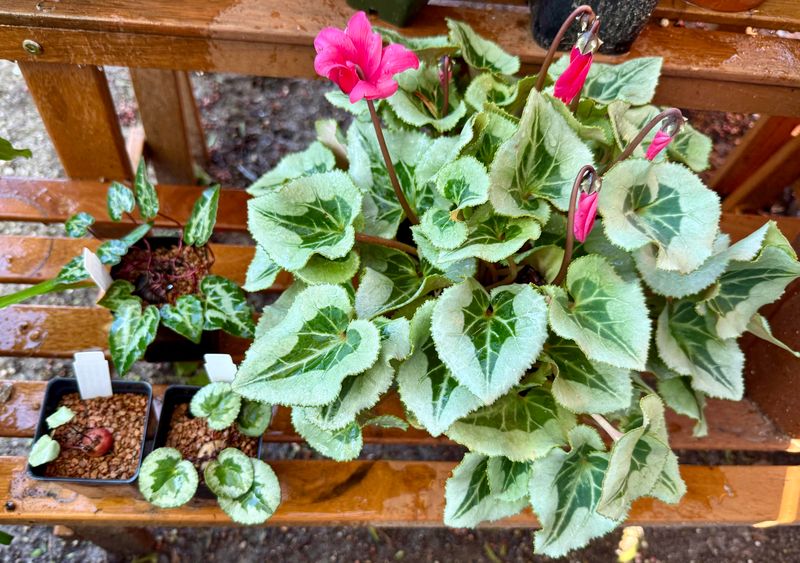
Bringing cyclamen indoors from outdoor garden centers or patios in Georgia creates an environmental shift that can temporarily stress plants, causing leaves to look silvery.
Plants need time to adjust to new light levels, temperature ranges, and humidity conditions, and during this transition period, foliage may change color slightly overall.
Indoor environments in Georgia typically have lower light intensity than outdoors, even near bright windows, which can cause cyclamen to temporarily reduce chlorophyll production in leaves.
This adjustment period usually lasts one to three weeks, during which silvery or pale tones may appear before the plant acclimates to its new home.
Moving cyclamen between rooms within your Georgia house can also cause mild stress, though typically less dramatic than the outdoor-to-indoor transition most plants experience.
During the adjustment phase, avoid making additional changes like repotting, fertilizing, or moving the plant again, which could compound stress and prolong the silvery appearance.
Keep your newly moved cyclamen in a consistent spot with bright, indirect light and maintain regular watering to help it settle in more quickly and comfortably.
Once the plant adapts to its new Georgia indoor environment, the silvery tones should gradually fade as leaves return to their normal vibrant coloration naturally.
8. Harmless Seasonal Changes During Cyclamen’s Active Growth
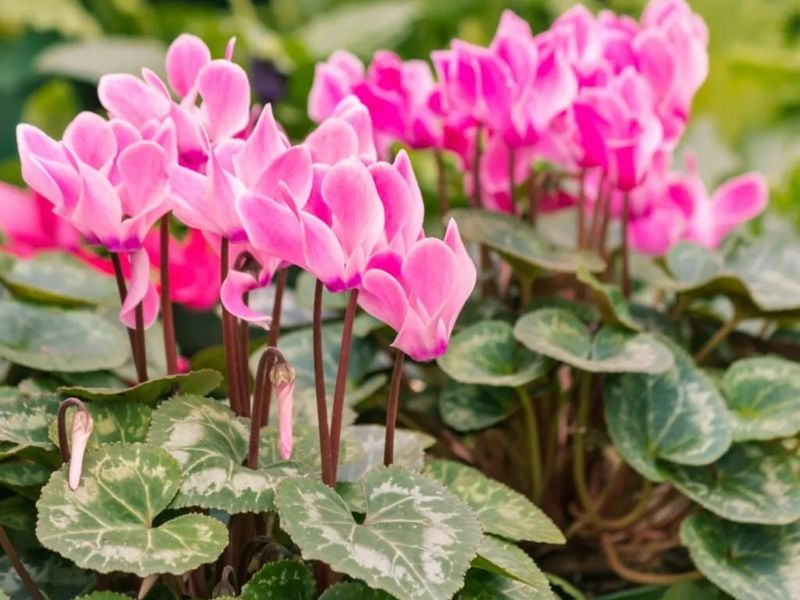
Cyclamen follow a unique growth cycle that’s opposite to many houseplants, actively growing and blooming during Georgia’s cooler months while resting in summer heat.
During their active growth phase from fall through spring, cyclamen constantly produce new leaves and flowers, which requires significant energy redistribution throughout the entire plant.
As the plant channels energy toward flower production, some older leaves may temporarily appear silvery or slightly faded, which is perfectly normal during blooming periods.
Georgia cyclamen owners often notice these silvery changes coincide with heavy flowering, when the plant focuses resources on maintaining blooms rather than leaf pigmentation exclusively.
This energy allocation is a smart survival strategy that ensures the plant can reproduce successfully even when resources are limited in its natural environment originally.
New leaves emerging in the center of your cyclamen should remain vibrant green, indicating the plant is healthy despite some older foliage looking silvery temporarily.
Providing diluted liquid fertilizer every two to three weeks during the growing season helps Georgia cyclamen maintain both healthy foliage and abundant flowers simultaneously together.
If your cyclamen continues producing new growth and flowers while some leaves look silvery, there’s no cause for concern about the plant’s overall health.
9. Mineral Deposits From Hard Water In Georgia Areas
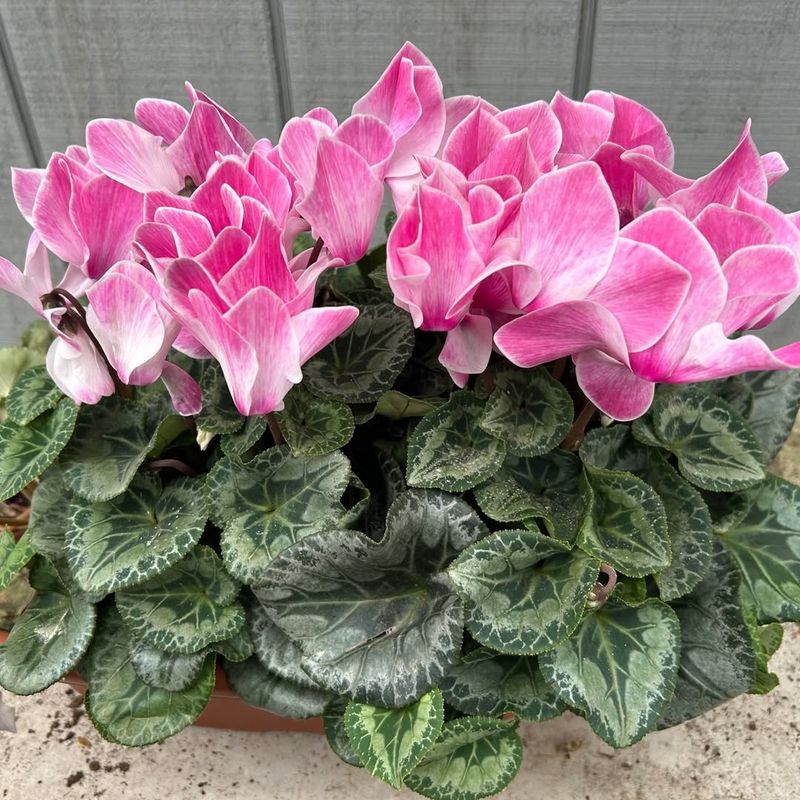
Many Georgia regions have moderately hard water containing dissolved minerals like calcium and magnesium, which can leave silvery-white deposits on cyclamen leaf surfaces over time.
When you water cyclamen from above or mist the leaves, water droplets evaporate quickly, leaving behind mineral residue that creates silvery spots or a chalky film.
These deposits are purely cosmetic and don’t harm the plant, though they can make leaves look dull, dusty, or silvery instead of their natural glossy green.
Municipal water supplies throughout Georgia vary in hardness depending on your specific location, with some areas having significantly higher mineral content than others nearby.
You can test your water hardness with inexpensive strips from hardware stores, or simply observe whether you notice mineral buildup on faucets and showerheads regularly.
To prevent mineral deposits on your cyclamen in Georgia, use filtered water, rainwater, or distilled water for watering and avoid misting the foliage directly overhead.
If silvery mineral deposits have already formed, gently wipe leaves with a soft, damp cloth to remove the buildup and restore their natural shine effectively.
Bottom watering cyclamen by placing pots in water-filled saucers helps avoid leaf contact with hard water altogether, preventing future silvery deposit formation on foliage surfaces.
10. Light Pest Activity Causing Silvery Stippling On Foliage
Occasionally, tiny pests like spider mites or thrips can cause silvery stippling or a speckled appearance on cyclamen leaves, though this is less common indoors.
These microscopic pests feed by piercing leaf cells and extracting contents, leaving behind tiny silvery or bronze-colored dots that gradually spread across the foliage surface.
Georgia’s dry indoor winter air creates conditions that favor spider mite populations, making them more likely to appear on houseplants during heating season unfortunately.
Early pest activity often looks like faint silvery speckling that’s easy to mistake for dust or natural leaf patterns, so close inspection is important here.
If you notice silvery stippling accompanied by very fine webbing on leaf undersides or between stems, spider mites are likely the cause in your Georgia home.
Thrips create silvery streaks or patches on leaves and may leave behind tiny black droppings that help confirm their presence when you look closely at foliage.
Treating minor pest problems early prevents them from spreading; rinse leaves with lukewarm water or use insecticidal soap labeled safe for cyclamen plants specifically.
Increasing humidity around your cyclamen in Georgia helps discourage spider mites, as they thrive in dry conditions but struggle in more humid environments naturally occurring elsewhere.