Climbing Plants That Thrive In Georgia Gardens With Little Or No Sun
Georgia gardens don’t always come with perfect light, but that hasn’t stopped homeowners from reaching for the sky.
In shady corners and north-facing walls, climbing plants are proving that you don’t need full sun to make a big impact.
You just need the right match.
These climbers are tough, adaptable, and more than willing to work with what they’re given.
They soften fences, dress up brick walls, and turn forgotten spaces into lush backdrops.
Instead of fighting the shade, Georgia gardeners are leaning into it, choosing plants that thrive without fuss.
The result is a garden that feels intentional rather than compromised.
Vines add height, texture, and movement, drawing the eye upward and making small spaces feel larger.
It’s a lesson in gardening smarter, not harder—and a reminder that even in the shadows, beauty knows how to climb.
Crossvine (Bignonia Capreolata)
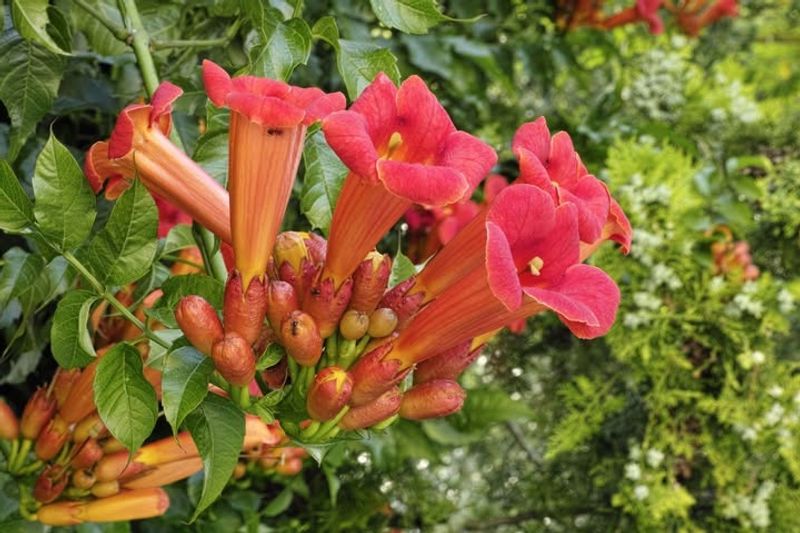
Native to the southeastern United States, crossvine stands out as one of the most reliable choices for shady Georgia gardens.
This vigorous climber naturally grows in woodland settings, making it perfectly adapted to low-light conditions that would challenge many other vines.
Its ability to tolerate deep shade while still producing stunning trumpet-shaped flowers in spring makes it a gardener’s dream.
The foliage remains evergreen to semi-evergreen throughout Georgia’s mild winters, providing year-round visual interest even when other plants have gone dormant.
Crossvine attaches itself to surfaces using tendrils, so it climbs fences, trellises, and walls with ease and without damaging structures.
The reddish-orange tubular flowers appear in April and May, attracting hummingbirds and adding a splash of color to shaded areas.
Once established, this native vine requires minimal maintenance and tolerates Georgia’s summer humidity beautifully.
It grows quickly, reaching heights of 30 to 50 feet in ideal conditions, though regular pruning keeps it manageable.
For gardeners looking to support local wildlife while covering shaded vertical spaces, crossvine delivers both ecological benefits and ornamental appeal.
Its drought tolerance once mature makes it even more practical for busy gardeners.
Carolina Jessamine (Gelsemium Sempervirens)
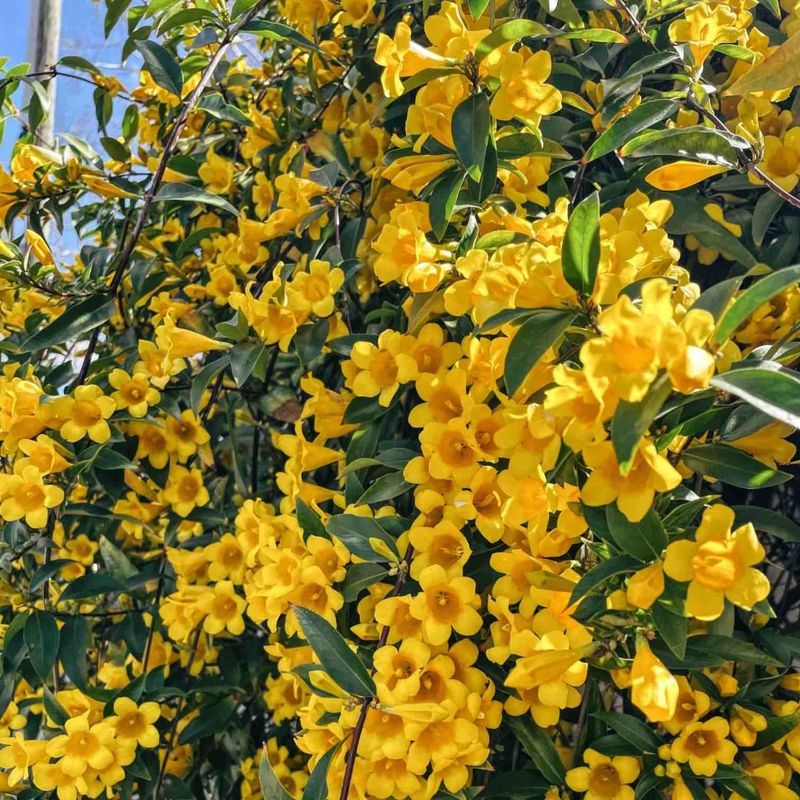
South Carolina’s state flower also happens to be one of Georgia’s most charming shade-tolerant climbers.
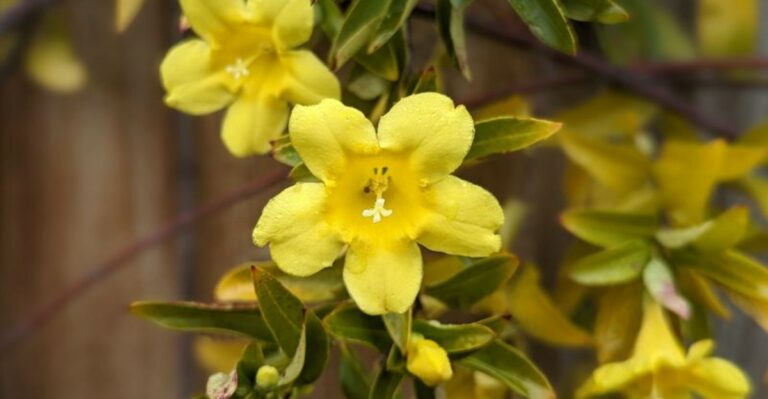
Carolina jessamine produces masses of bright yellow, fragrant flowers in late winter and early spring, often blooming when little else in the garden shows color.
This native evergreen vine performs remarkably well in partial to heavy shade, making it ideal for north-facing walls and shaded arbors.
The glossy green leaves provide attractive coverage throughout the year, creating a lush backdrop even during winter months.
This vine twines around supports naturally, so it needs a trellis, fence, or arbor to climb successfully.
In shadier locations, growth may be slower than in sunny spots, but the plant still thrives and flowers reliably.
Carolina jessamine tolerates Georgia’s clay soils once established and handles the state’s occasional cold snaps without damage.
The early blooms provide crucial nectar for pollinators emerging in late winter.
Gardeners should note that all parts of this plant contain toxic compounds, so it’s best planted away from areas where children or pets play.
Your Georgia Garden Changes Every Week. Your Plan Should Too.
Gardening in Georgia changes quickly throughout the season. Every Friday you’ll receive a simple weekly plan showing exactly what to plant, prune, fertilize, harvest, and protect so you never miss the right timing.
Despite this caution, its beauty and resilience make it a beloved choice for adding vertical interest to shaded southern gardens.
Virginia Creeper (Parthenocissus Quinquefolia)
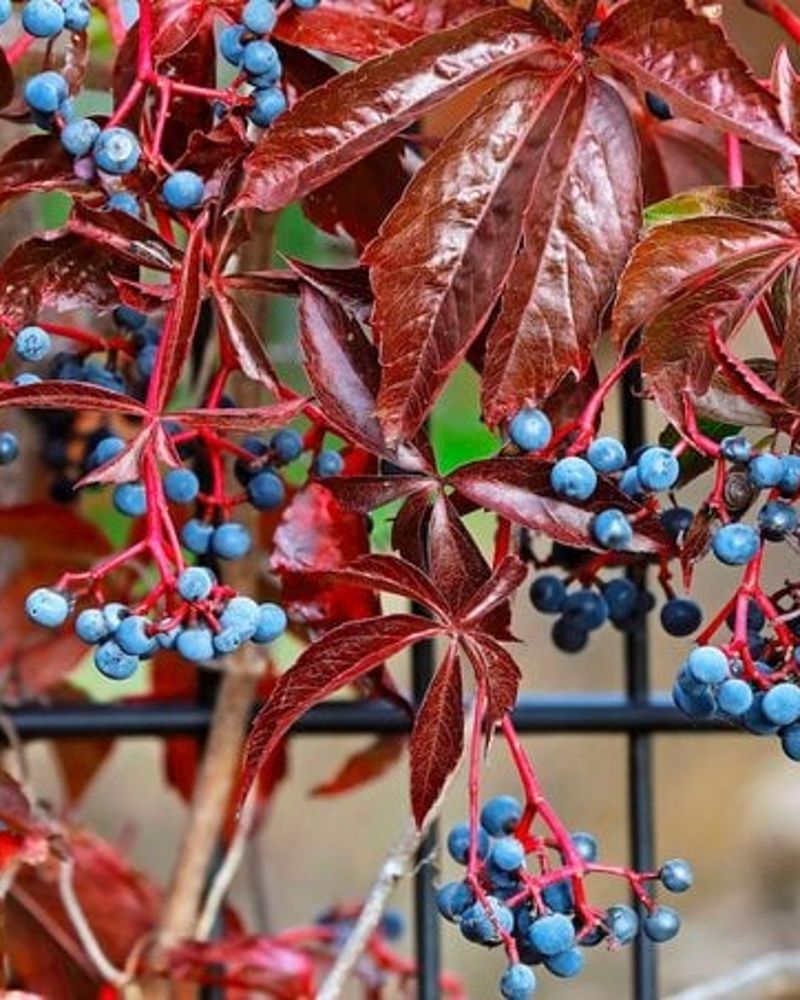
Few vines match Virginia creeper’s enthusiasm for conquering shaded spaces with minimal fuss.
This native deciduous climber spreads quickly across walls, fences, and tree trunks, providing dense coverage even where sunlight barely reaches.
The five-leaflet compound leaves create a lush green tapestry throughout spring and summer, then transform into brilliant shades of red and burgundy come fall.
Virginia creeper attaches using adhesive tendrils with tiny suction cups, allowing it to climb virtually any surface without additional support.
In Georgia’s climate, this vine grows vigorously and can cover large areas in just a few seasons, making it perfect for hiding unsightly structures or creating privacy screens.
It tolerates a wide range of soil conditions and requires almost no maintenance once established.
Birds appreciate the small blue-black berries that appear in late summer, adding wildlife value to your shaded garden spaces.
While some gardeners worry about its aggressive growth, regular pruning keeps Virginia creeper under control and looking tidy.
Its ability to thrive in deep shade where other plants struggle makes it invaluable for challenging garden spots.
This workhorse vine brings seasonal color changes and effortless greenery to Georgia’s shadiest corners.
Climbing Hydrangea (Hydrangea Anomala Subsp. Petiolaris)
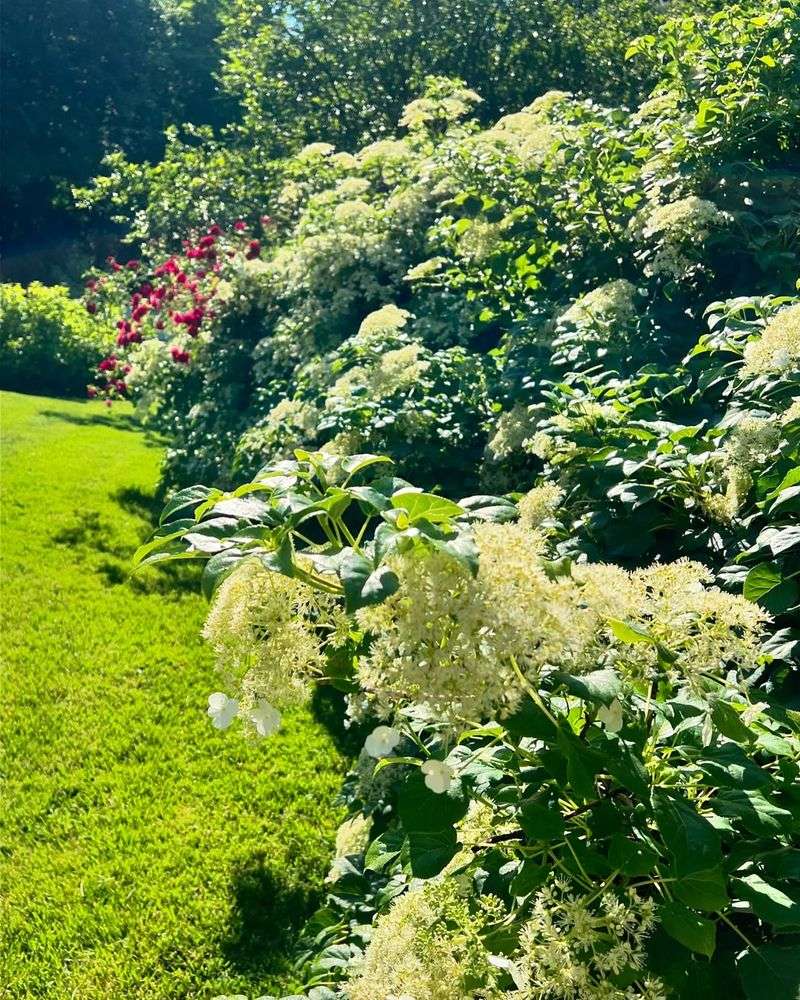
Elegant and sophisticated, climbing hydrangea brings a touch of woodland magic to shaded Georgia gardens.
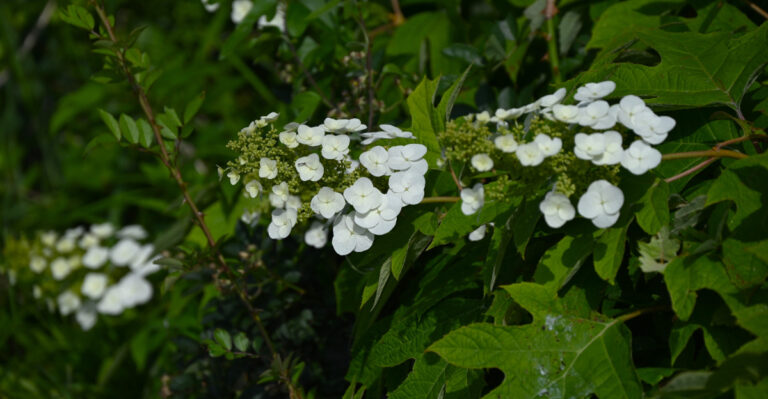
Unlike most flowering vines that demand sunshine, this deciduous climber actually prefers shade and produces its beautiful white lacecap flowers even in low-light conditions.
The blooms appear in late spring and early summer, creating stunning displays against dark walls or tree trunks.
Climbing hydrangea attaches itself using aerial rootlets that cling to surfaces without causing damage to most materials.
In Georgia’s climate, this vine grows slowly at first, sometimes taking a few years to establish before showing vigorous growth.
Patience pays off, though, as mature plants create spectacular coverage with their glossy heart-shaped leaves and exfoliating cinnamon-colored bark that adds winter interest.
The plant tolerates Georgia’s summer humidity well and appreciates the moisture retention that shaded locations typically provide.
Climbing hydrangea reaches impressive heights of 30 to 50 feet over time, making it suitable for covering large walls or growing up mature trees.
Its preference for consistent moisture makes it ideal for shaded areas that stay naturally damp.
For gardeners seeking a refined, low-maintenance climber that performs beautifully without full sun, this hydrangea variety delivers year-round appeal.
Evergreen Clematis (Clematis Armandii)
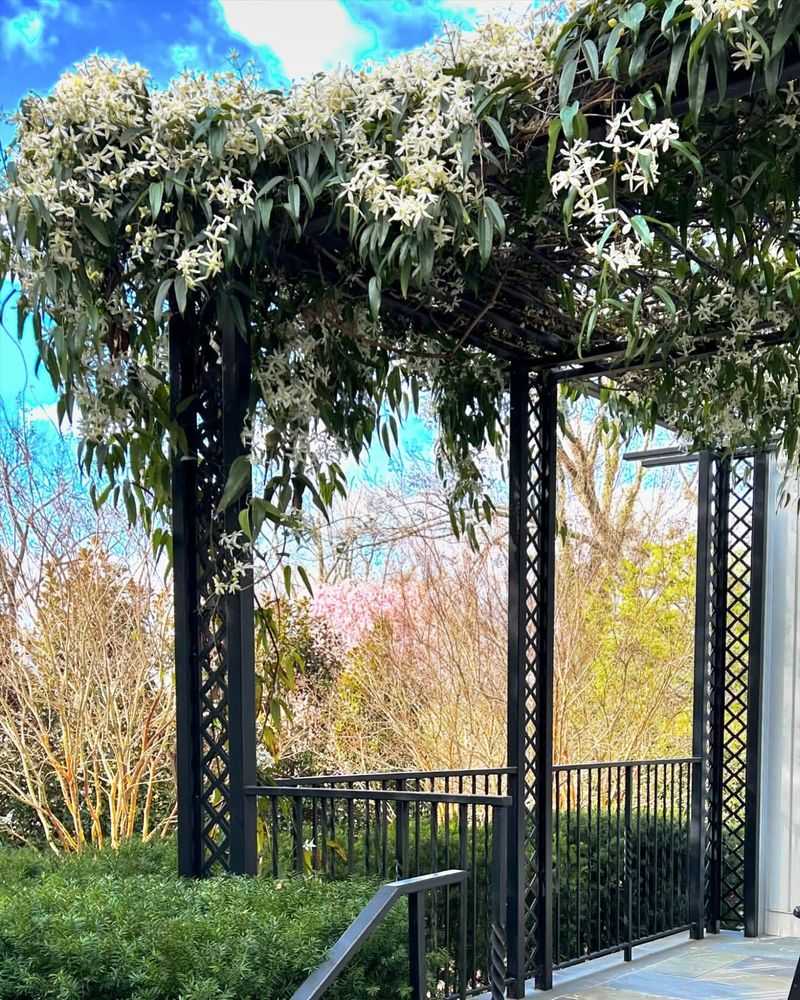
Breaking the mold of typical shade plants, evergreen clematis combines glossy foliage with sweetly fragrant spring flowers.
This vigorous vine tolerates partial shade beautifully and thrives in Georgia’s mild winters, keeping its attractive leaves throughout the year.
The white or pale pink blooms appear in early spring, filling shaded garden areas with a vanilla-almond fragrance that’s absolutely intoxicating.
Evergreen clematis twines around supports, so providing a sturdy trellis or arbor helps it climb effectively.
In Georgia gardens, this clematis performs best when its roots stay cool and shaded while the upper portions receive dappled light.
The leathery, lance-shaped leaves create a tropical appearance that contrasts nicely with other shade-loving plants.
Unlike many clematis varieties that prefer full sun, this species adapts well to lower light levels and still flowers reliably.
Growth can be quite vigorous, reaching 20 to 30 feet, so regular pruning after flowering keeps it within bounds.
The plant appreciates consistent moisture and benefits from mulching to keep roots cool during Georgia’s hot summers.
For gardeners wanting year-round greenery and early spring fragrance in shaded spaces, evergreen clematis offers an uncommon combination of beauty and practicality that’s hard to beat.
Japanese Honeysuckle (Lonicera Japonica)
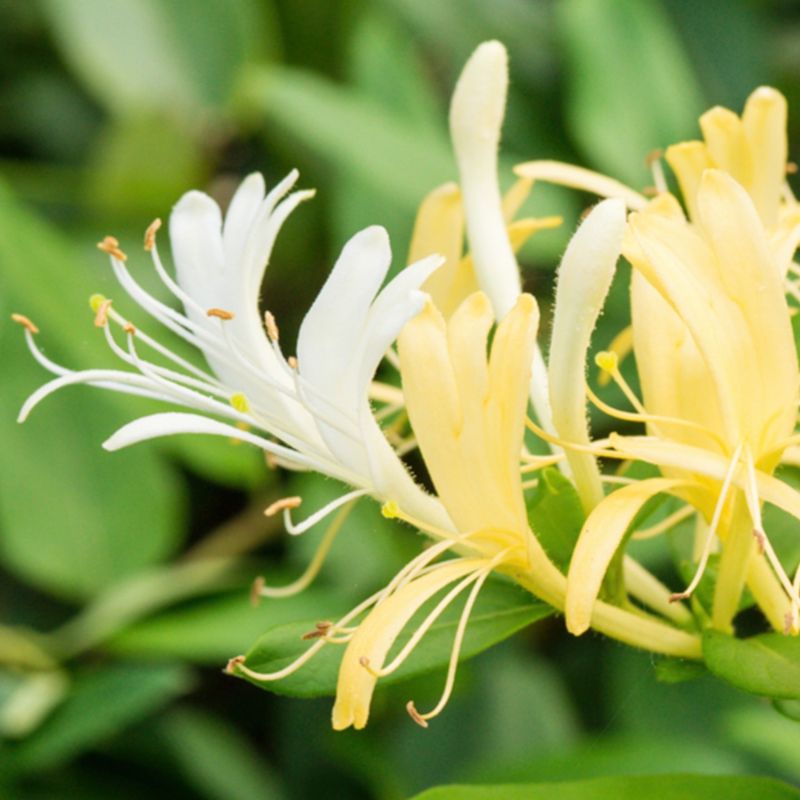
Incredibly adaptable but notoriously aggressive, Japanese honeysuckle grows with abandon in Georgia’s shaded areas.
This evergreen to semi-evergreen vine produces sweetly fragrant white flowers that age to yellow, filling summer evenings with their distinctive perfume.
It thrives in full shade, partial shade, and even dense woodland conditions where few other plants can establish themselves.
The vigorous twining stems quickly cover fences, arbors, and anything else in their path.
In Georgia, Japanese honeysuckle has become invasive in many natural areas, spreading rapidly and smothering native vegetation.
Gardeners who choose to plant it must commit to regular, aggressive pruning and management to prevent it from escaping into wild spaces.
The vine’s ability to grow in deep shade makes it useful for covering problem areas quickly, but this same characteristic makes it problematic in natural settings.
Some municipalities in Georgia discourage or prohibit planting Japanese honeysuckle due to its invasive nature.
If you already have it established and want to keep it, frequent trimming and removing seed-bearing flowers helps control spread.
For those seeking a well-behaved alternative with similar fragrance and shade tolerance, consider native trumpet honeysuckle instead, which offers beauty without the ecological concerns.
Trumpet Honeysuckle (Lonicera Sempervirens)
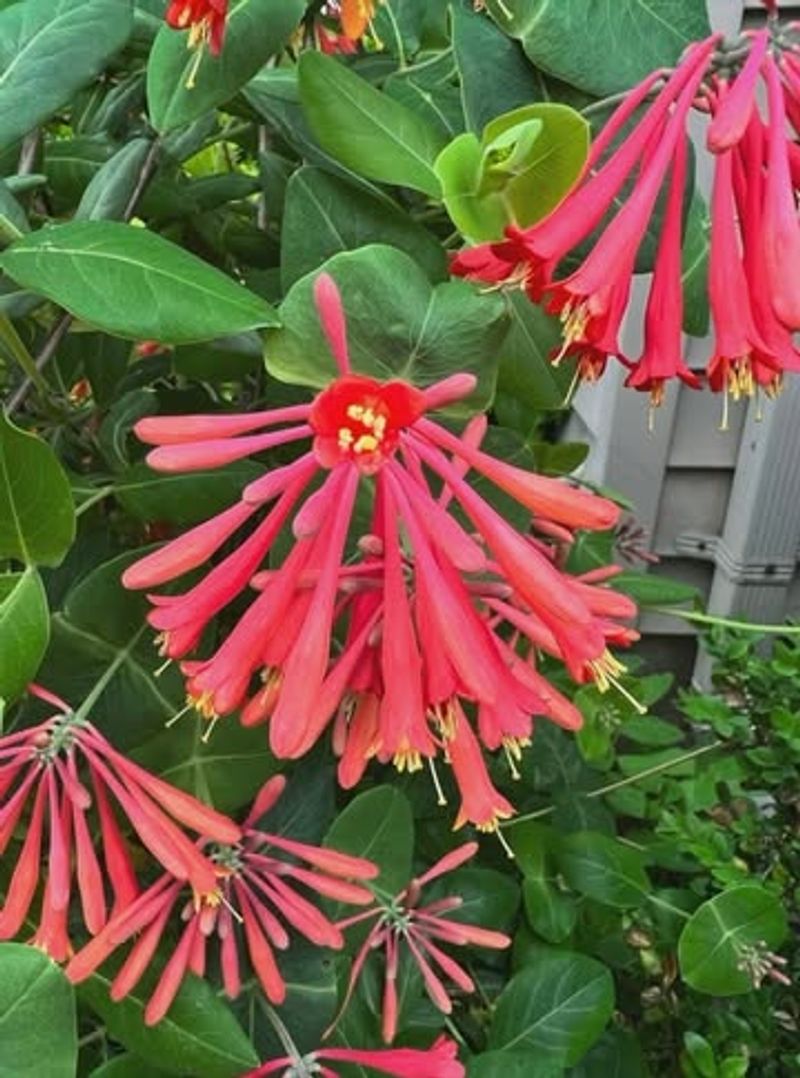
Native and non-invasive, trumpet honeysuckle offers all the charm of honeysuckle vines without the headaches.
This deciduous to semi-evergreen climber produces tubular red, orange, or yellow flowers from spring through fall, creating long-lasting color in partially shaded Georgia gardens.
Hummingbirds find the nectar-rich blooms irresistible, making this vine a magnet for these delightful visitors.
Unlike its invasive cousin Japanese honeysuckle, trumpet honeysuckle grows at a moderate pace and stays manageable with minimal pruning.
In Georgia’s climate, this native vine performs beautifully in partial shade, though flowering may be slightly reduced compared to sunnier locations.
The blue-green foliage provides an attractive backdrop for the showy flowers, and the plant tolerates Georgia’s summer heat and humidity with ease.
Trumpet honeysuckle twines around supports and works well on fences, trellises, and arbors in shaded areas.
The vine typically reaches 10 to 20 feet, making it suitable for smaller garden spaces or more controlled vertical plantings.
Birds enjoy the small red berries that follow the flowers, adding wildlife value beyond the hummingbird attraction.
For environmentally conscious gardeners wanting a beautiful, shade-tolerant climber that supports local ecosystems, trumpet honeysuckle checks all the boxes perfectly.
English Ivy (Hedera Helix)
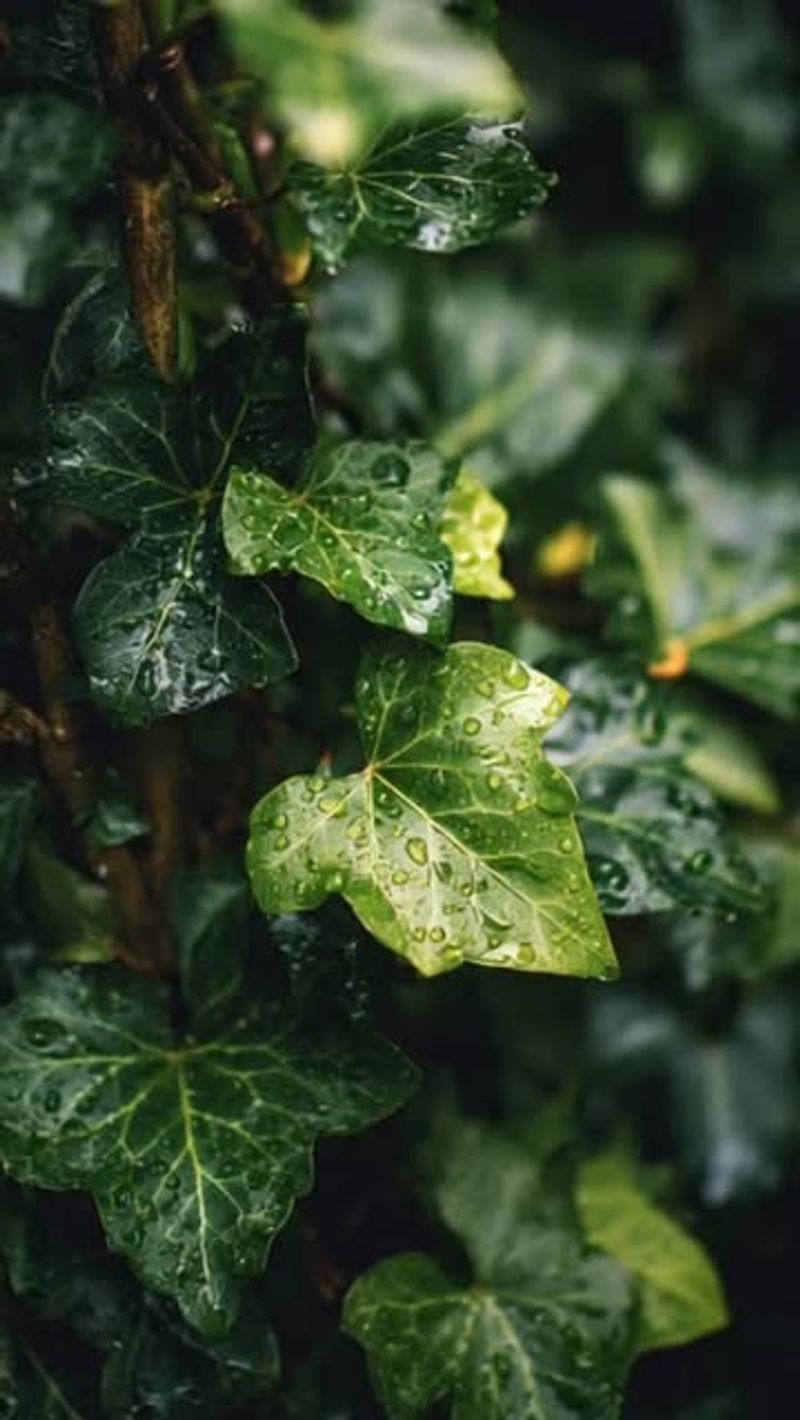
Perhaps the most famous shade-loving climber, English ivy covers walls and ground with equal enthusiasm.
This evergreen vine thrives in heavy shade and low-sun conditions, making it ideal for the darkest corners of Georgia gardens where almost nothing else will grow.
The glossy, lobed leaves create dense coverage year-round, and the plant attaches to surfaces using aerial rootlets that cling tenaciously.
English ivy grows vigorously in Georgia’s climate, sometimes too vigorously for some gardeners’ tastes.
While it provides quick coverage and requires minimal care once established, English ivy can become invasive in natural areas and may damage certain building materials over time.
The vine’s weight when mature can pull down weak structures, and removing it from surfaces can be challenging.
In Georgia, English ivy has escaped cultivation in many areas and threatens native plant communities in woodlands.
Gardeners who choose to plant it should confine it to controlled areas and prevent it from spreading into natural spaces.
Regular pruning keeps the vine from becoming overwhelming and prevents it from developing the mature, fruiting form.
For covering shaded walls quickly or creating evergreen screens in low-light areas, English ivy remains effective, but responsible management is essential to prevent ecological problems.
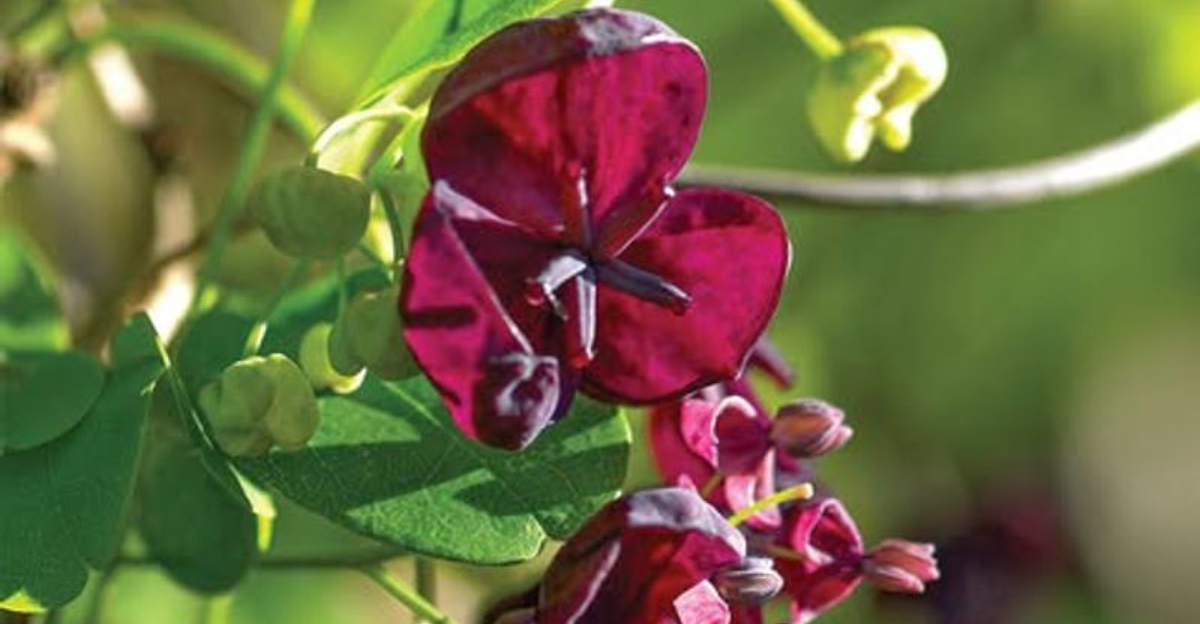
Chocolate Vine (Akebia Quinata)
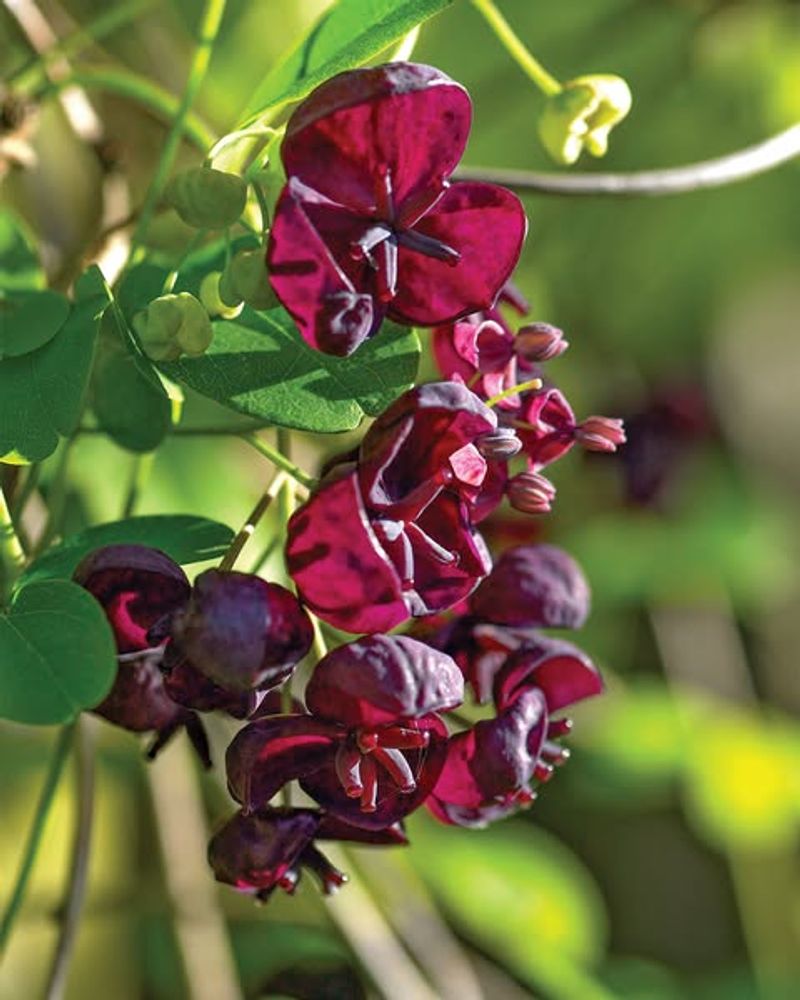
With a whimsical name and unusual flowers, chocolate vine brings unexpected interest to shaded Georgia gardens.
This semi-evergreen to deciduous climber tolerates shade remarkably well and grows vigorously in Georgia’s climate, sometimes covering large areas in just a few seasons.
The compound leaves with five rounded leaflets create a delicate, almost fern-like texture that contrasts beautifully with bolder-leaved plants.
In spring, chocolate vine produces small, fragrant purple-brown flowers that supposedly smell like chocolate, though the scent is subtle and somewhat elusive.
The vine twines around supports and can reach 20 to 40 feet, making it suitable for covering arbors, pergolas, and fences in partially shaded locations.
In Georgia, chocolate vine may produce edible purple fruits in fall, though this requires having multiple plants for cross-pollination.
The fruits have a mild, sweet flavor and unusual appearance that adds novelty value.
Gardeners should note that chocolate vine can grow aggressively and may become weedy in some Georgia gardens, requiring regular pruning to keep it contained.
Its shade tolerance and rapid growth make it useful for quickly covering problem areas or creating privacy screens.
For those seeking something different from typical climbing plants, chocolate vine offers quirky charm and reliable performance in low-light conditions.
Confederate Jasmine (Trachelospermum Jasminoides)
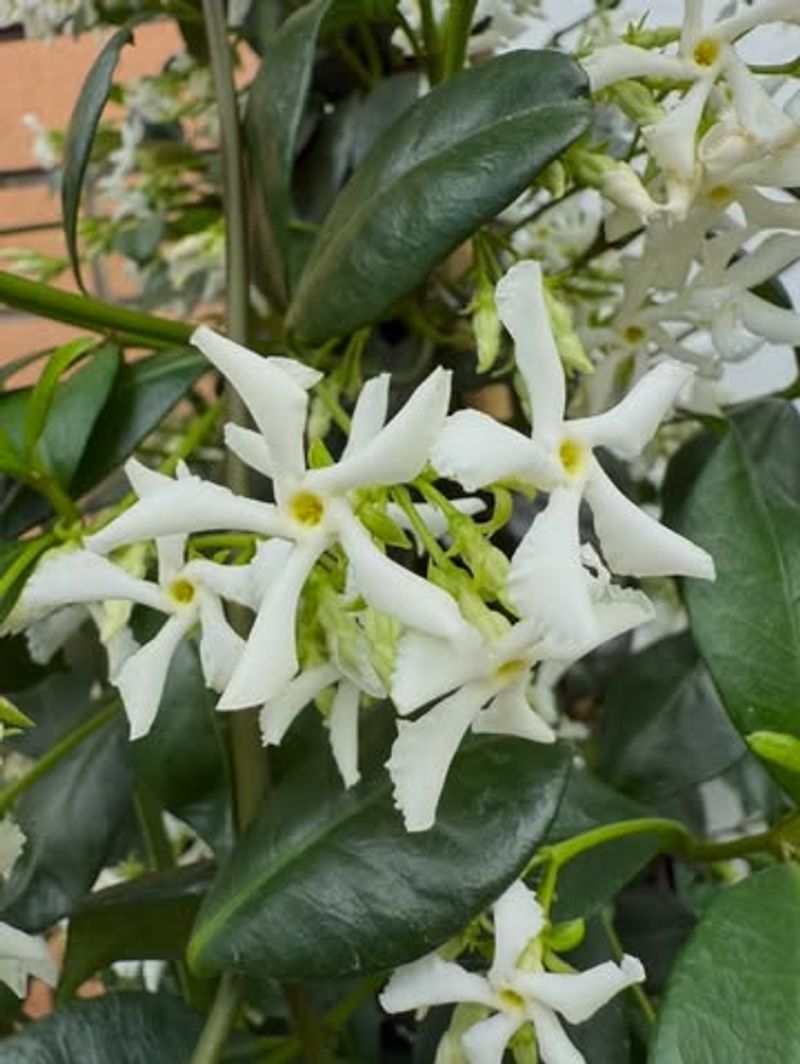
Sweetly fragrant and elegantly evergreen, Confederate jasmine adapts surprisingly well to shaded Georgia gardens once established.
While this vine flowers most profusely in sunnier locations, it tolerates partial to moderate shade and still produces its signature white pinwheel flowers in late spring.
The intense fragrance of the blooms can perfume entire garden areas, creating a sensory experience that makes shaded spaces feel special.
The glossy, dark green leaves provide year-round coverage and create a refined backdrop for other shade-loving plants.
Confederate jasmine twines around supports and grows at a moderate pace in Georgia’s climate, eventually reaching 15 to 20 feet.
In shadier locations, growth may be slower and flowering somewhat reduced, but the plant remains healthy and attractive.
The vine tolerates Georgia’s summer heat and humidity beautifully and handles occasional cold snaps without damage.
Once established, Confederate jasmine shows good drought tolerance and requires minimal maintenance beyond occasional pruning to shape.
Its evergreen nature makes it valuable for providing consistent coverage on trellises, walls, and arbors throughout the year.
For gardeners wanting fragrance, elegance, and reliable evergreen coverage in partially shaded areas, Confederate jasmine delivers southern charm and practical beauty that enhances any Georgia garden space.