10 Plants That Thrive In Ohio Bathrooms All Year Long
Ohio bathrooms hold quiet power.
Steam rises, tiles gleam, and light shifts through small windows.
Many plants wilt under low sun or steady moisture, yet a few flourish like champs.
These picks relish humidity, tolerate shade, and keep color when snow piles high outside.
A leafy ally can soften hard lines, clean stale air, and turn a rushed morning into a calm start.
No greenhouse skills required.
With the right choice, a shelf or tub edge becomes a pocket jungle that stays fresh month after month.
Expect bold leaves, subtle scent, and growth that feels effortless.
Add one, add several, and watch a plain room gain life and charm.
When winter drags and summer storms pound, these plants stand their ground with style intact always.
1. Boston Fern
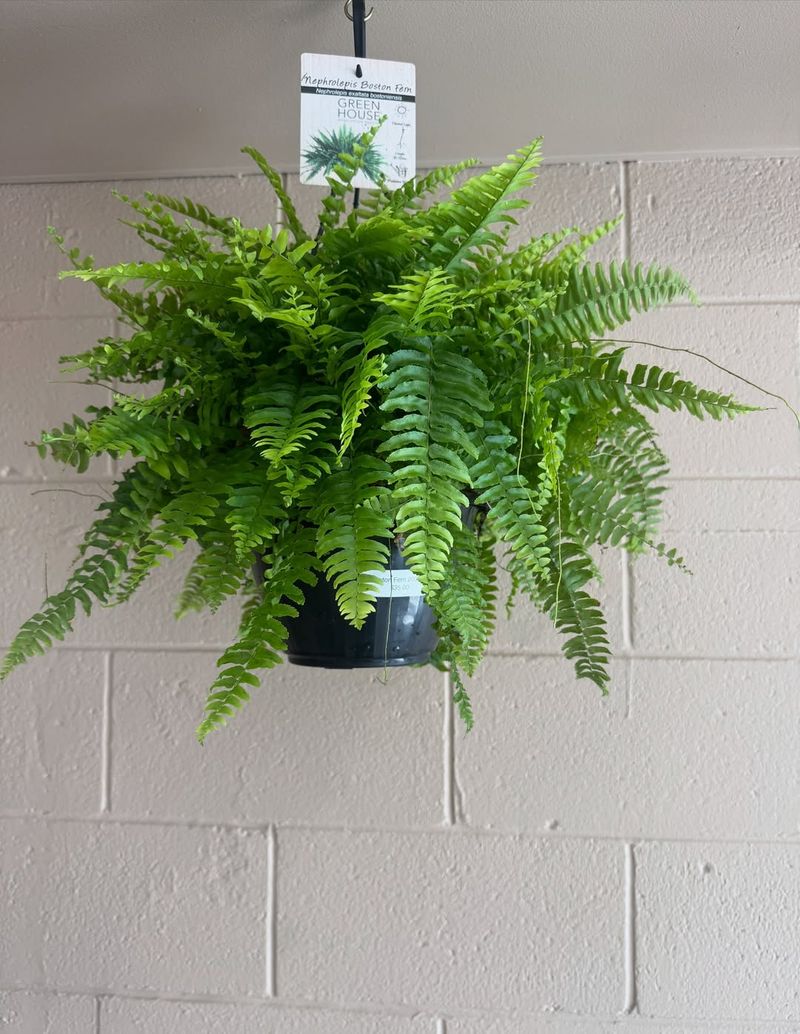
Humidity lovers by nature, Boston ferns soak up all that steam from your morning shower like a sponge absorbs water.
Their feathery fronds cascade beautifully from hanging baskets or shelves, creating an elegant waterfall effect that softens any bathroom space.
Native to tropical regions, these ferns have adapted wonderfully to indoor life when moisture levels stay consistent.
Ohio bathrooms provide just the right balance of warmth and dampness that keeps their delicate leaves looking fresh and vibrant.
You can place them near a window with filtered light, but they also tolerate shadier corners surprisingly well.
Mist the leaves occasionally if your bathroom runs dry between showers, though most Ohio homes maintain enough humidity naturally.
Watch for browning tips, which usually signal the air has become too dry or the plant needs more frequent watering.
Feed your Boston fern monthly during spring and summer with diluted liquid fertilizer to encourage lush growth.
Temperature fluctuations rarely bother these hardy beauties, making them ideal for year-round bathroom conditions.
Trim away any brown or damaged fronds to keep the plant looking tidy and to promote new growth from the base.
2. Snake Plant
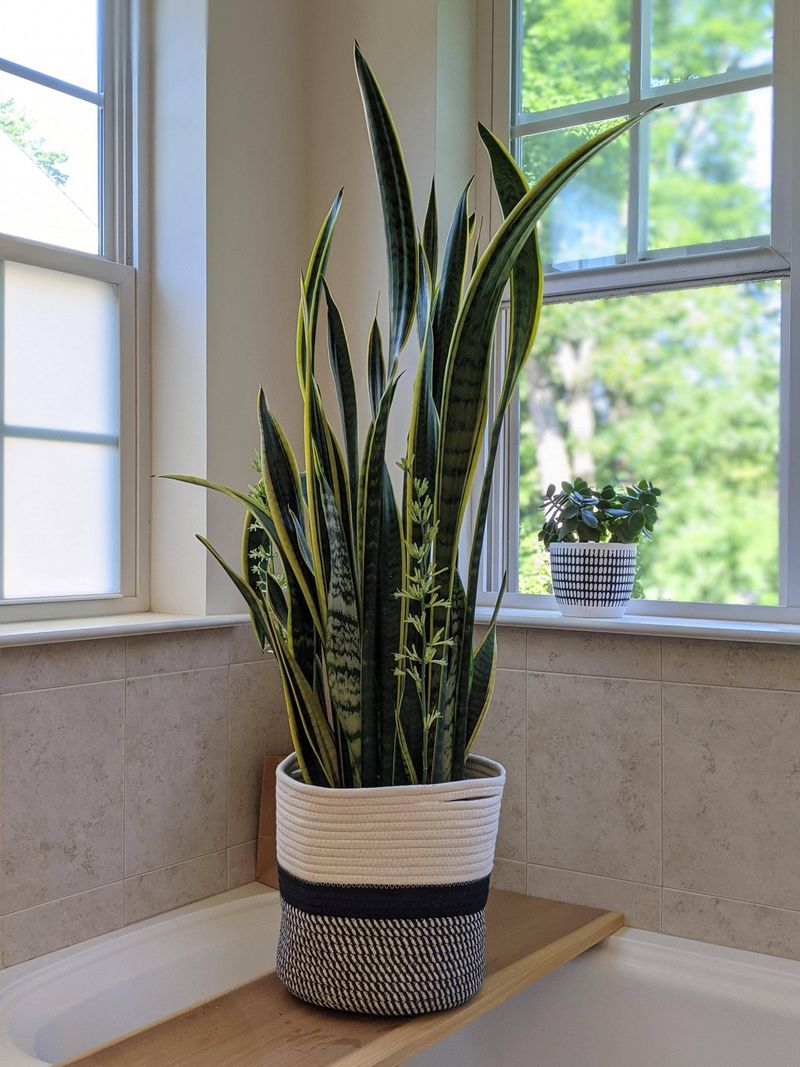
Nearly indestructible, snake plants stand tall with their sword-like leaves that seem to say they can handle anything.
Low light conditions do not faze them one bit, which makes them perfect for bathrooms with tiny windows or no natural light at all.
Their ability to tolerate neglect is legendary among plant enthusiasts who forget to water for weeks at a time.
Ohio winters can make some bathrooms cooler, but snake plants shrug off temperature drops without complaint.
Air purification is one of their secret talents, as they filter toxins and release oxygen even at night.
Variegated patterns on the leaves add visual interest with stripes of green, yellow, and cream that catch the eye.
Watering needs are minimal—once every two to three weeks during active growth, and even less in winter months.
Root rot becomes a concern only if you overwater, so always check that the soil has dried out completely before adding more moisture.
Place them on countertops, floors, or shelves where their upright form creates striking vertical lines.
Propagation is simple through leaf cuttings or division, so you can share baby plants with friends who admire your bathroom oasis.
Your Ohio Garden Changes Every Week. Your Plan Should Too.
Gardening in Ohio changes quickly throughout the season. Every Friday you’ll receive a simple weekly plan showing exactly what to plant, prune, fertilize, harvest, and protect so you never miss the right timing.
3. Pothos
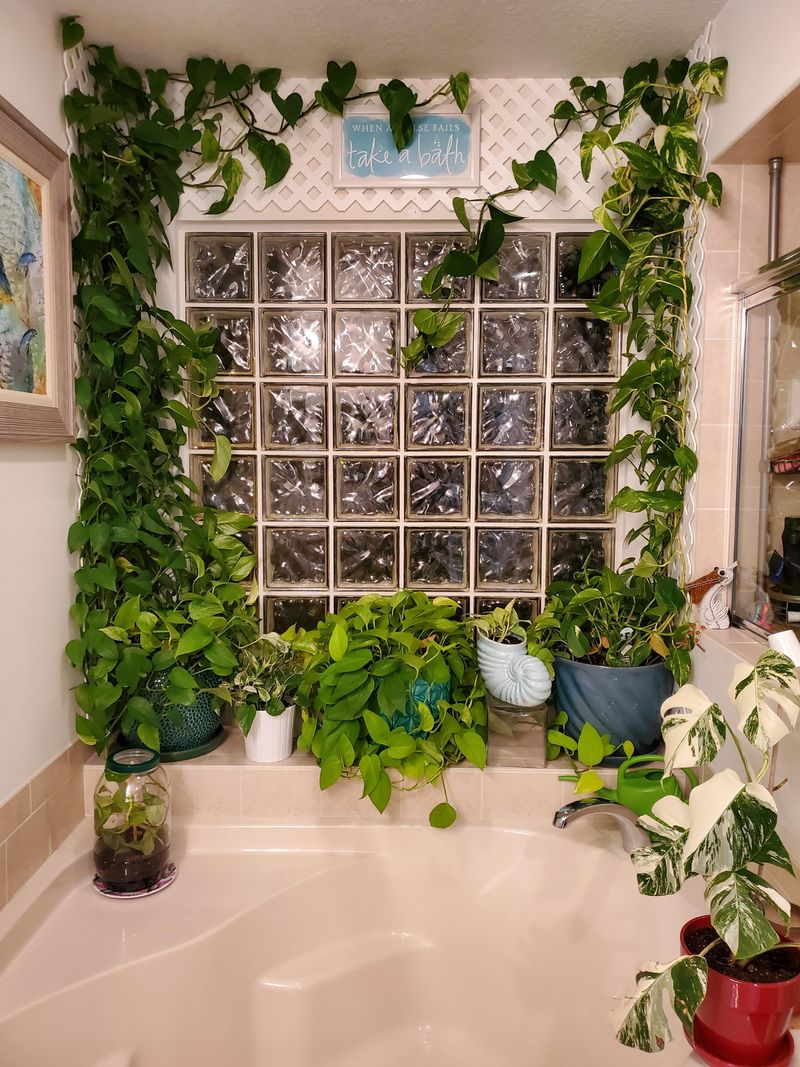
Trailing vines seem to grow faster than you can measure when pothos settles into a steamy bathroom environment.
Heart-shaped leaves in shades of green, gold, or marble create a cheerful display that brightens even the dullest spaces.
Adaptability is what makes pothos a favorite among beginners and experienced plant parents alike.
Fluorescent bathroom lighting works just fine, though they appreciate some natural light when available.
Ohio bathroom humidity keeps their leaves glossy and prevents the crispy edges that plague plants in drier rooms.
You can train the vines along shelves, around mirrors, or let them dangle freely from high perches.
Watering becomes intuitive once you learn to read the leaves—they droop slightly when thirsty and perk up hours after a drink.
Root development happens quickly in water, so propagating new plants from cuttings is almost foolproof.
Toxicity to pets means you should keep them out of reach if curious cats or dogs share your home.
Dust accumulation on leaves can be wiped away with a damp cloth, which also helps the plant breathe and photosynthesize more efficiently.
4. Peace Lily
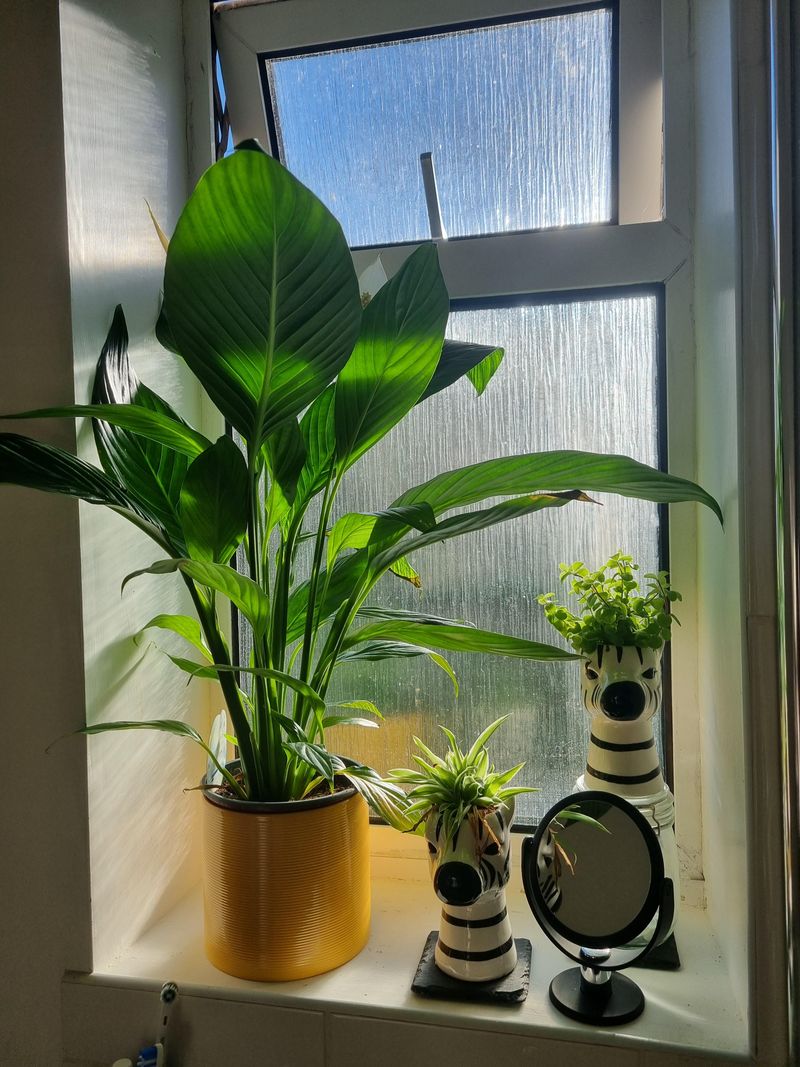
Elegant white blooms emerge like tiny flags of surrender when peace lilies feel content in their environment.
Dark green foliage provides a stunning backdrop for those graceful white spathes that many people mistake for petals.
Bathroom conditions in Ohio homes mimic their native tropical forest floors, where dappled light and constant moisture are the norm.
Air purification studies have shown peace lilies excel at removing common household toxins from the surrounding environment.
They communicate their needs clearly by drooping dramatically when thirsty, then perking up within hours of watering.
Medium to low light suits them perfectly, so bathrooms without direct sun exposure become ideal locations.
Blooming cycles repeat several times yearly when care conditions remain consistent and the plant feels comfortable.
Wipe the broad leaves regularly to remove dust and help the plant absorb more light through its surface.
Yellowing leaves usually indicate overwatering or poor drainage, so adjust your watering schedule accordingly.
Keep them away from cold drafts near windows during Ohio winters to prevent stress and maintain their tropical happiness.
5. Spider Plant
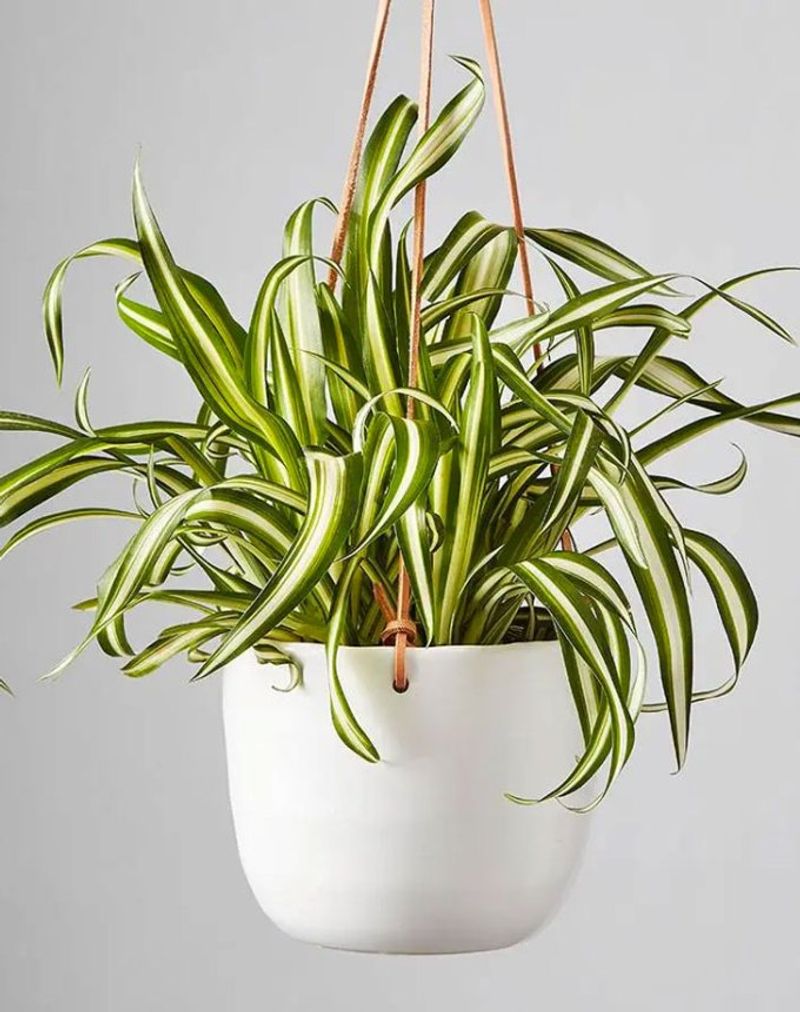
Arching leaves fountain outward from the center like a fireworks display frozen in time.
Baby plantlets dangle from long stems called runners, creating a charming cascading effect that adds dimension to bathroom spaces.
Resilience defines spider plants, as they bounce back from occasional neglect and adapt to various light conditions.
Ohio bathroom humidity prevents the brown leaf tips that often plague spider plants in drier environments.
Variegated varieties offer stripes of white or cream that contrast beautifully against the green base color.
Placement options are endless—hang them high, set them on shelves, or position them on countertops where their form can spread naturally.
Those dangling babies can be snipped off and rooted in water or soil to create new plants for other rooms.
Fluoride sensitivity sometimes causes tip browning, so using filtered or distilled water helps maintain pristine foliage.
Temperature tolerance is impressive, handling both warm steamy showers and cooler nighttime bathroom temperatures without complaint.
Fertilize sparingly during growing season, as too much food can actually reduce the production of those adorable baby plantlets that make spider plants so distinctive.
6. Orchid
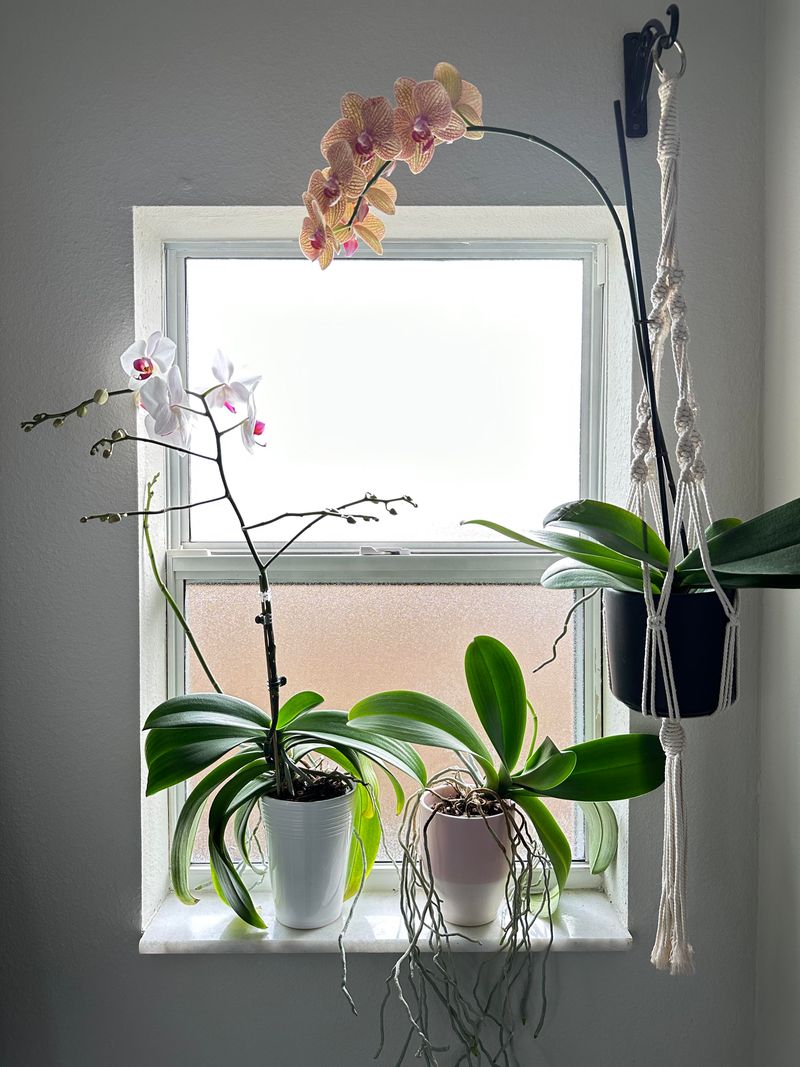
Exotic blooms last for months when orchids find themselves in the perfect bathroom microclimate.
Contrary to popular belief, these beauties are not as fussy as their reputation suggests.
Bathroom humidity in Ohio homes replicates their natural rainforest habitat where moisture hangs in the air constantly.
Phalaenopsis orchids, commonly called moth orchids, are the easiest variety for bathroom growing and the most widely available.
Indirect light from a bathroom window provides just enough energy without scorching their delicate petals or leaves.
Watering once weekly by soaking the roots for fifteen minutes, then draining completely, prevents root rot while maintaining moisture.
Bark-based potting mix allows air circulation around roots, which is essential for these epiphytic plants that grow on trees in nature.
Blooming cycles can be encouraged by exposing the plant to slightly cooler nighttime temperatures, which naturally occurs in many bathrooms.
Flower spikes emerge from between leaves and slowly develop buds that open sequentially over several weeks.
After blooms fade, cut the spike above a node to potentially trigger a secondary bloom on the same stem.
7. Aloe Vera
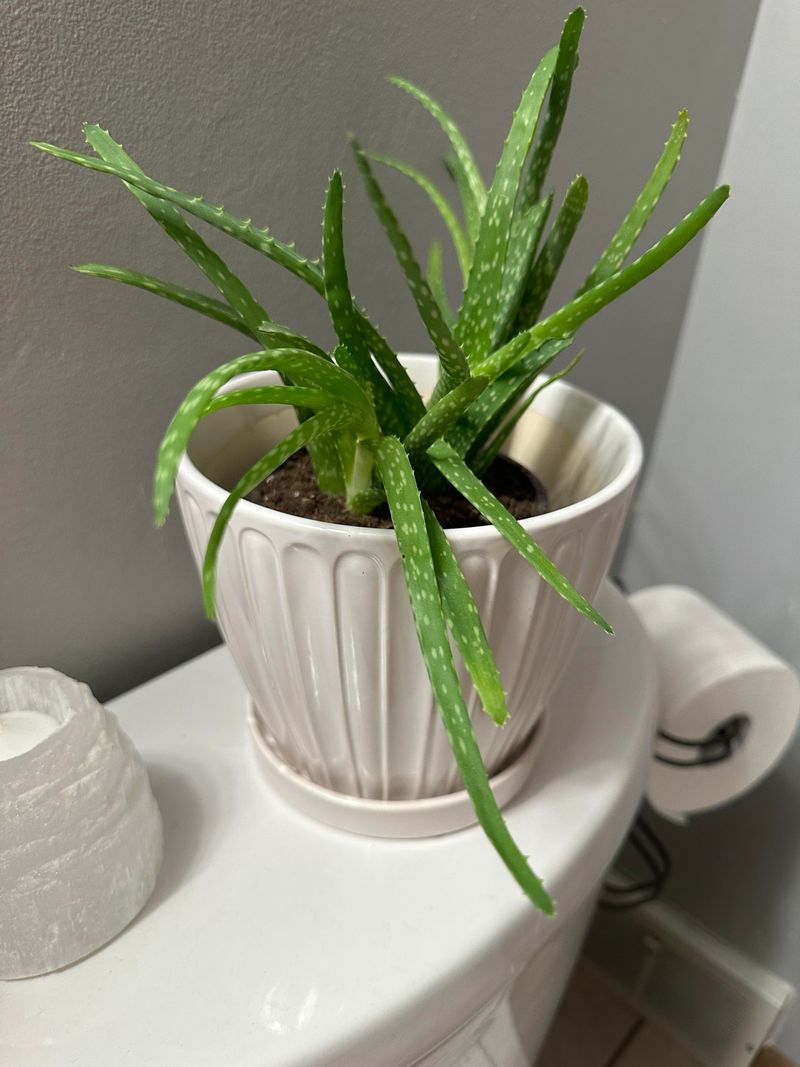
Succulent leaves store water and soothing gel that can treat minor burns and skin irritations right when you need it.
Bathroom placement makes sense since you can snip off a leaf tip after accidentally touching a hot curling iron or spending too long in the sun.
Bright indirect light from a bathroom window suits aloe perfectly, though they tolerate lower light better than most succulents.
Ohio bathroom humidity adds just enough moisture to the air without making the soil soggy, which aloe plants despise.
Watering frequency drops to every two or three weeks since their thick leaves hold plenty of moisture reserves.
Well-draining soil is non-negotiable—mix regular potting soil with sand or perlite to ensure excess water escapes quickly.
Baby offsets, called pups, grow around the base of mature plants and can be separated to create new aloe plants.
Brown leaf tips usually signal too much direct sun or mineral buildup from tap water.
Temperature stability in bathrooms prevents the stress that causes aloe leaves to turn brown or mushy.
Medicinal properties have been valued for centuries, making this both a decorative and functional addition to your bathroom garden.
8. Bamboo
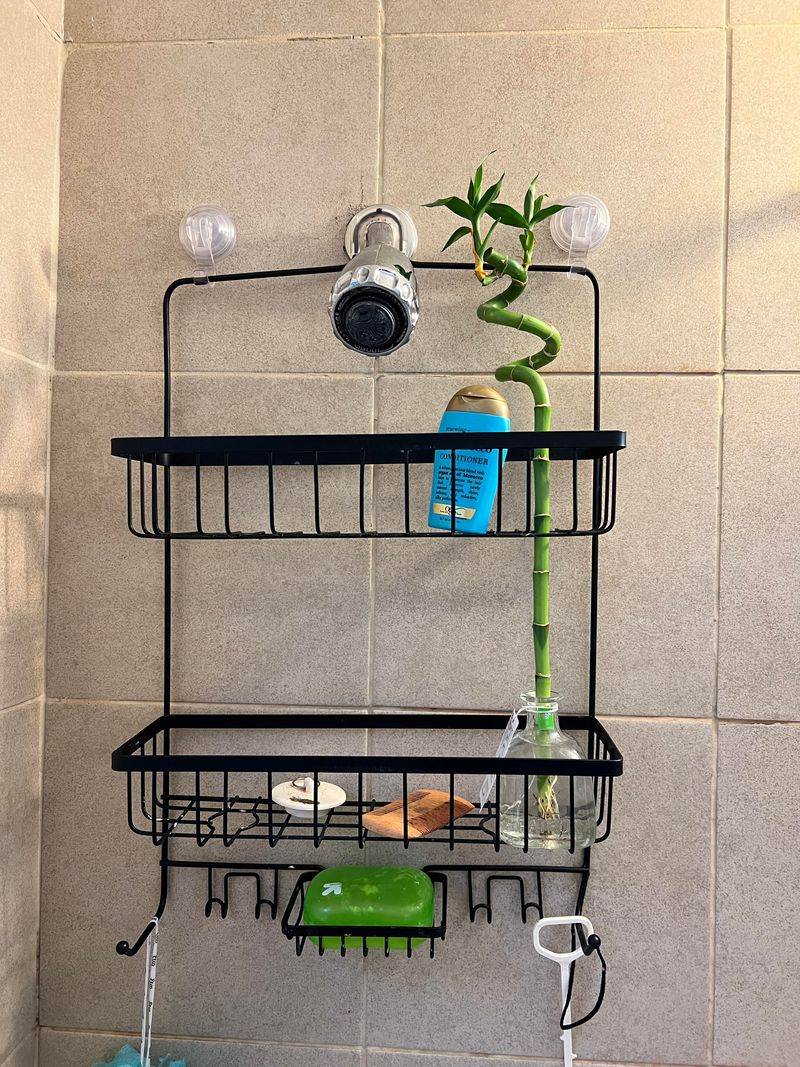
Lucky bamboo is not actually bamboo at all but a type of tropical water lily called Dracaena sanderiana.
Growing in just water makes care incredibly simple—no soil, no mess, just clean stalks rising from decorative pebbles or marbles.
Bathroom counters and windowsills become perfect homes for these architectural plants that add zen-like calm to the space.
Ohio tap water works fine, though changing it every two weeks prevents algae growth and keeps stalks healthy.
Indirect light prevents yellowing leaves while still providing enough energy for slow, steady growth.
Stalks can be arranged in various configurations—straight, twisted, or braided—to create different visual effects.
Feng shui traditions associate lucky bamboo with good fortune, prosperity, and positive energy flow.
Different numbers of stalks carry different meanings, with three representing happiness and five representing wealth.
Yellowing stalks cannot be reversed but can be removed while healthy stalks continue thriving.
Fertilizer drops designed for water-grown plants can be added monthly during growing season to maintain vibrant green color and encourage new leaf growth from the top nodes.
9. Philodendron
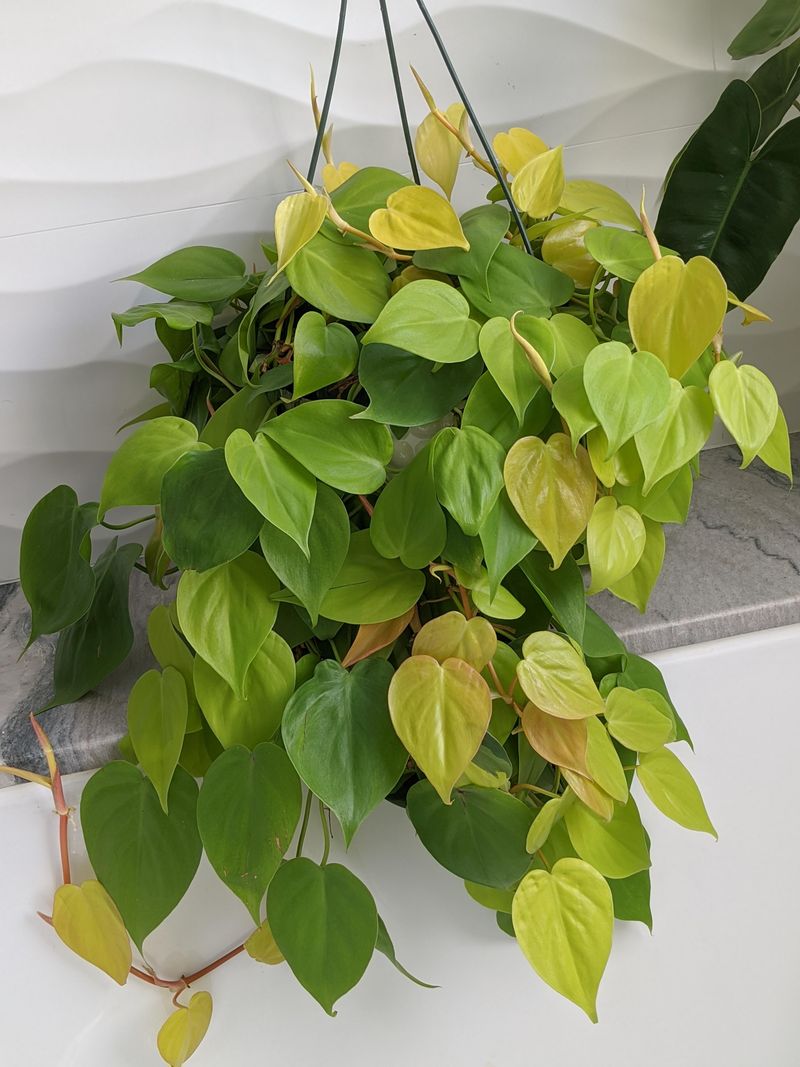
Heart-leaf philodendrons climb and trail with enthusiasm when bathroom humidity keeps their roots and leaves happy.
Glossy foliage catches bathroom light beautifully, reflecting it back and making small spaces feel brighter and more alive.
Adaptability to various light levels means they work in bathrooms with windows or those relying solely on artificial lighting.
Ohio bathroom conditions provide the tropical warmth and moisture these South American natives crave year-round.
Vining growth can be directed upward on a moss pole or allowed to cascade downward from high shelves.
Watering becomes necessary when the top inch of soil feels dry, usually once weekly depending on humidity levels.
New leaves emerge wrapped in protective sheaths that unfurl to reveal fresh green growth.
Aerial roots develop along stems and help the plant climb in nature, though they also absorb moisture from humid air.
Propagation through stem cuttings roots easily in water, creating new plants to expand your collection or share.
Toxicity to pets means placement should consider curious animals that might nibble on dangling leaves within their reach.
10. English Ivy
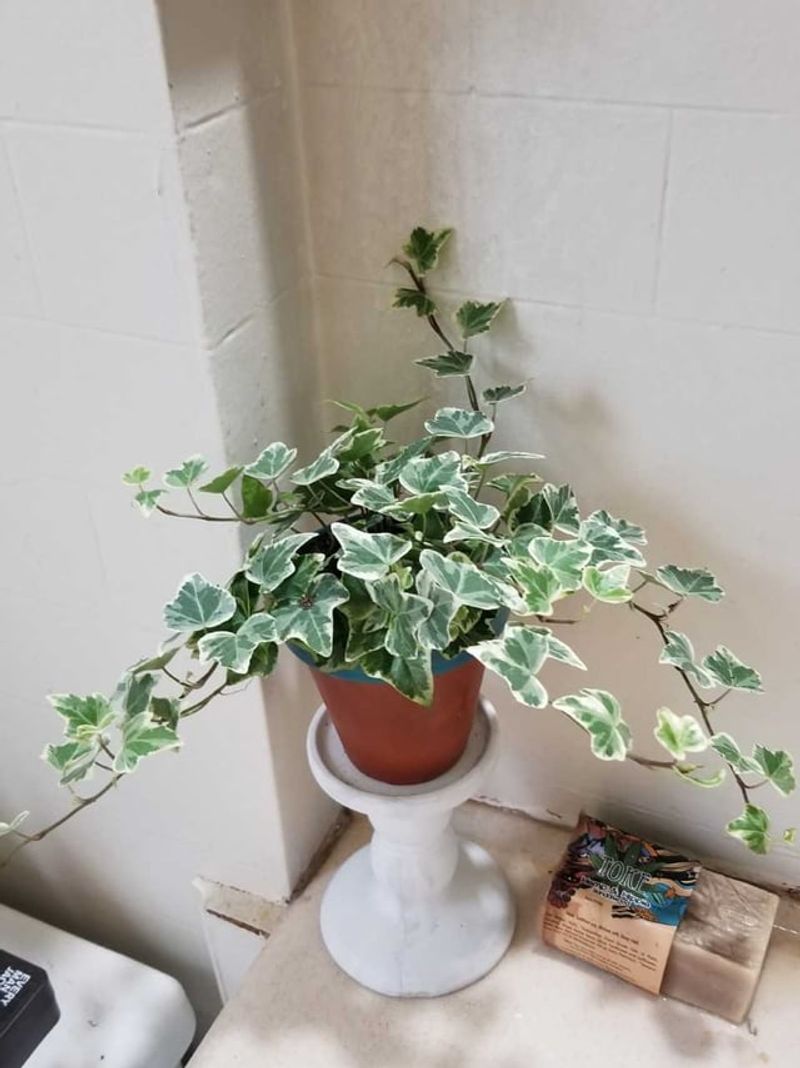
Cascading vines create living curtains when English ivy finds the perfect spot in your Ohio bathroom.
Air purification abilities rank among the best, as studies show ivy removes mold spores from the air—particularly useful in damp bathroom environments.
Cool temperatures that might stress tropical plants actually suit English ivy perfectly, making them ideal for bathrooms that run cooler in winter.
Variegated varieties offer leaves edged in white or cream that brighten darker spaces with their lighter coloring.
Moderate to bright indirect light keeps growth compact and encourages the dense foliage that makes ivy so attractive.
Humidity from showers prevents the spider mite infestations that plague ivy in drier indoor environments.
Regular pinching of growing tips encourages branching and creates fuller, bushier plants instead of long, sparse vines.
Soil should stay evenly moist but never waterlogged, so check it regularly and water when the surface feels dry.
Training vines around mirrors, windows, or bathroom fixtures creates custom living artwork that changes as the plant grows.
Propagation happens quickly from stem cuttings placed in water, rooting within weeks and ready for potting in fresh soil.