What Looks Like A Nest In Your Ohio Tree May Be Something Entirely Different

Spotting a dense clump tucked into the branches of an Ohio tree often sparks concern.
Is it a nest? A pest infestation? A sign the tree is in trouble?
The truth is, what looks alarming at first glance is often something far less dramatic—and sometimes completely harmless.
These structures can form from natural growth patterns, seasonal debris, or plant responses to stress.
In other cases, they’re the work of wildlife that no longer uses them—or never intended them as nests at all.
Misidentifying these formations leads many homeowners to panic or remove them unnecessarily.
Understanding what these clumps really are helps homeowners decide whether action is needed or observation is enough.
In many cases, intervention causes more harm than good.
Sometimes nature doesn’t explain itself right away.
Learning to pause, look closer, and ask the right questions can turn confusion into clarity—and save your tree from unnecessary damage.
Witches’ Broom (Abnormal Branch Growth)

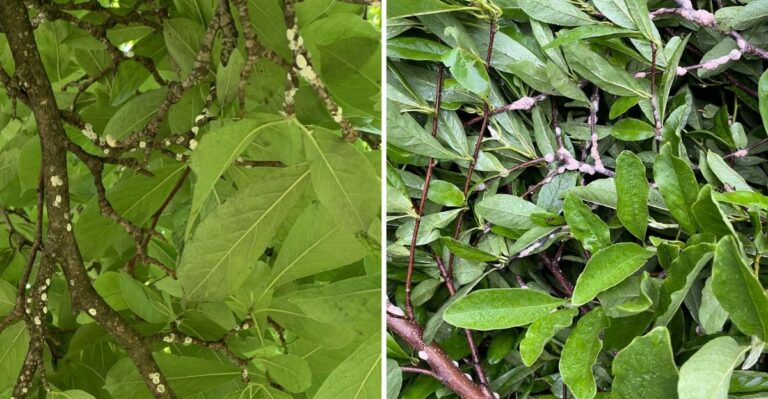
Nature sometimes creates its own peculiar artwork in the form of witches’ broom, a strange growth pattern that produces dense clusters of twigs bunched together like an old-fashioned broom.
These masses can easily trick your eye into thinking you’re looking at an oversized nest wedged into the branches.
The cause behind this odd phenomenon varies from fungal infections to tiny mites or even genetic mutations within the tree itself.
In Ohio, you’ll most commonly spot witches’ broom on hackberry trees, though maples, cherries, and pines can also develop these unusual formations.
The affected area produces an abnormal number of shoots growing from a single point, creating a tangled ball of branches that can range from basketball-sized to several feet across.
Unlike true nests, these growths are permanent parts of the tree and won’t blow away or decompose.
Witches’ broom rarely harms the overall health of the tree, though it does create an interesting talking point for curious neighbors.
The dense twig clusters often collect leaves, snow, and debris, making them appear even more nest-like from a distance.
Some people find them fascinating, while others consider them unsightly.
If you notice these formations staying in place year after year without changing position, you’re definitely looking at a witches’ broom rather than any kind of animal dwelling.
Old Leaf Pile Caught In Branch Forks
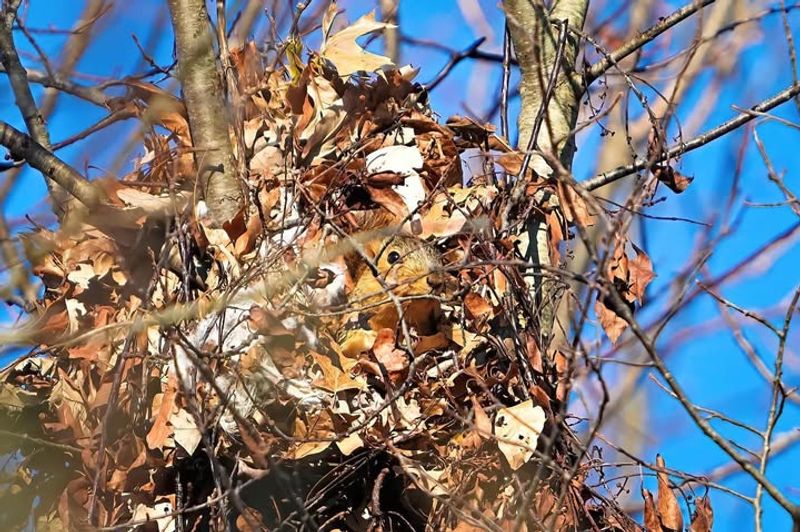
Mother Nature has her own way of organizing things, and sometimes that means piling leaves into spots where they simply get stuck.
Branch forks create perfect little pockets where wind-blown leaves naturally accumulate during fall.
Rain then packs them down, creating compact masses that can easily pass for constructed nests at first glance.
These leaf collections lack the careful weaving and structural integrity of actual bird nests or squirrel dreys.
If you could climb up and examine them closely, you’d find just a jumbled heap of leaves with no interlocking twigs or binding materials.
Strong winds eventually scatter most of these temporary piles, though some persist through winter in particularly sheltered branch angles.
Your Ohio Garden Changes Every Week. Your Plan Should Too.
Gardening in Ohio changes quickly throughout the season. Every Friday you’ll receive a simple weekly plan showing exactly what to plant, prune, fertilize, harvest, and protect so you never miss the right timing.
Ohio’s autumn winds carry millions of leaves through the air, and trees with multiple forking branches act like natural collection baskets.
Oaks, maples, and ash trees commonly trap these leaf piles because of their branching patterns.
The accumulations often grow larger after each storm, adding more material to the existing pile.
No animals construct or use these random leaf heaps, though they might occasionally provide temporary shelter for insects or spiders.
By spring, most have either blown away or decomposed into nutrient-rich material that feeds the tree.
They’re harmless curiosities that demonstrate how wind patterns interact with tree architecture.
Abandoned Bird Nest From A Previous Season
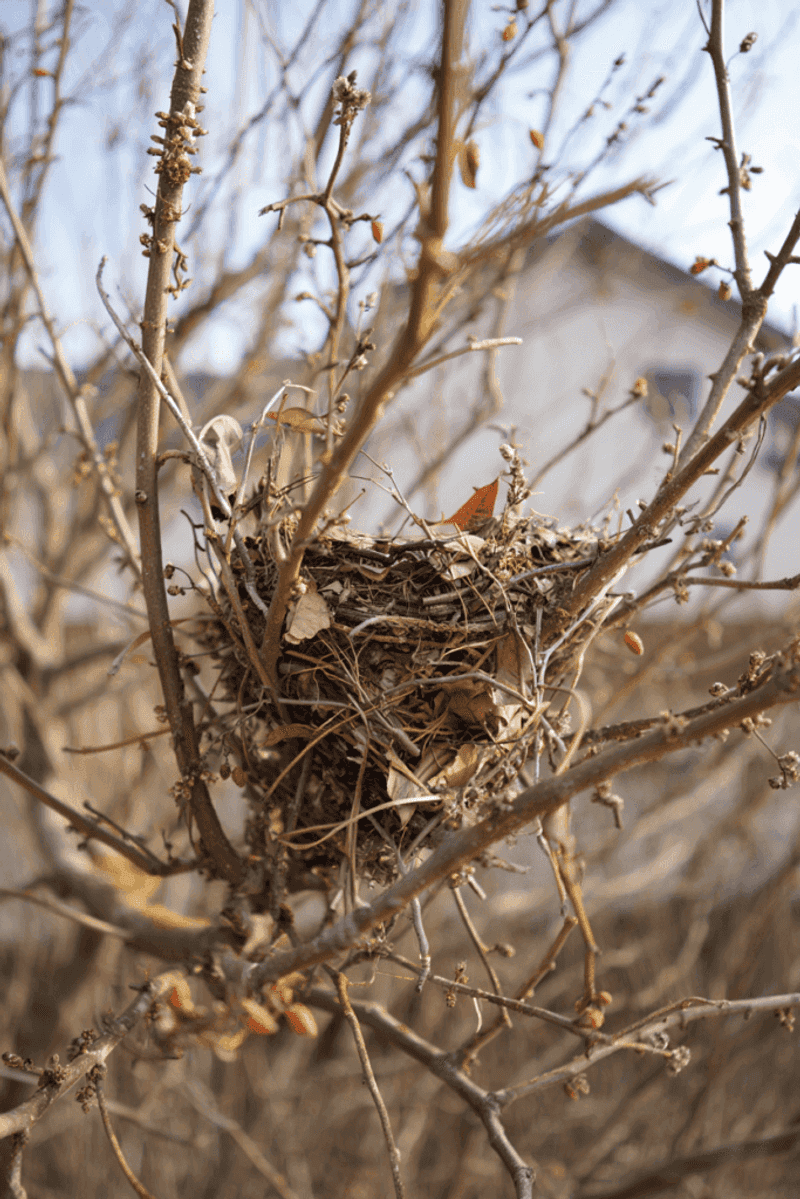
Birds are remarkably skilled builders, but they rarely reuse the same nest year after year.
Most species construct fresh nests each breeding season, leaving their previous homes to weather the elements.
These abandoned structures become much more visible once surrounding leaves fall away in autumn, revealing their precise locations to curious observers below.
Last year’s nests typically show obvious signs of aging and exposure.
The once-tidy cup shape may have partially collapsed, and the binding materials like spider silk and mud have often deteriorated.
Rain, snow, and ice take their toll, causing the nest to sag or lose pieces over time.
Some nests fade to gray or brown as the sun bleaches plant fibers and breaks down organic matter.
In Ohio, you might spot old robin nests still clinging to horizontal branches, or the deeper cup nests of cardinals tucked into shrubs and small trees.
Larger platform nests from mourning doves often remain visible for months after their builders have migrated south.
While these structures served important purposes during breeding season, they now stand empty as historical markers of successful bird families.
It’s fascinating to realize that what looks like an active nest might actually be a relic from last spring.
The worn, weathered appearance tells the story of months spent exposed to Ohio’s changing seasons.
Hornet Or Wasp Nest (Inactive Season)

Those impressive paper structures hanging from your tree branches aren’t bird nests at all, but rather the architectural masterpieces of bald-faced hornets or paper wasps.
These insects chew wood fibers and mix them with saliva to create a papery building material that they form into large, rounded or teardrop-shaped nests.
By the time Ohio’s cold weather arrives, the colony has typically dispersed, leaving behind an empty shell.
Bald-faced hornet nests are particularly striking, often growing to the size of a basketball or larger by season’s end.
The gray, papery exterior features distinctive overlapping layers that protect the inner honeycomb chambers where larvae once developed.
These nests usually hang from sturdy branches and can remain intact through winter, gradually deteriorating as moisture and weather break down the paper.
Unlike active summer colonies that pose stinging risks, winter nests are completely safe to observe from a distance.
The queen has already left to hibernate elsewhere, and all worker hornets have perished with the first hard frost.
Some people even collect these fascinating structures once they’re certain no insects remain inside.
Paper wasp nests tend to be smaller and more open in structure, resembling an upside-down umbrella with visible hexagonal cells.
Both types can fool observers into thinking they’re looking at unusual bird nests, especially when viewed from ground level through bare branches.
Tent Caterpillar Or Webworm Nest

Spring and late summer in Ohio bring waves of caterpillars that create silken shelters among tree branches.
Eastern tent caterpillars build their characteristic white webs in the crotches of branches during early spring, while fall webworms spin similar structures at branch tips later in the year.
Long after the caterpillars have transformed into moths and flown away, their silk tents remain visible, often collecting debris and taking on a nest-like appearance.
These silk structures start out as delicate, gossamer webs but gradually accumulate leaves, twigs, and caterpillar droppings as the colony feeds and grows.
By the time the caterpillars have finished their life cycle, the web has often collapsed into a tangled mass that resembles a messy nest.
Weather and time cause the silk to gray and tatter, while trapped leaves and plant material add bulk to the structure.
Cherry, apple, and crabapple trees are favorite hosts for tent caterpillars in Ohio, while fall webworms prefer walnuts, hickories, and various other hardwoods.
The webs serve as communal living spaces where dozens of caterpillars gather for protection while venturing out to feed on nearby leaves.
Even months after the caterpillars have gone, their abandoned silk tents cling stubbornly to branches.
The dried, debris-filled webs can persist through winter, fooling observers into thinking they’re examining some type of unusual nest construction.
Squirrel Drey (Leaf Nest)
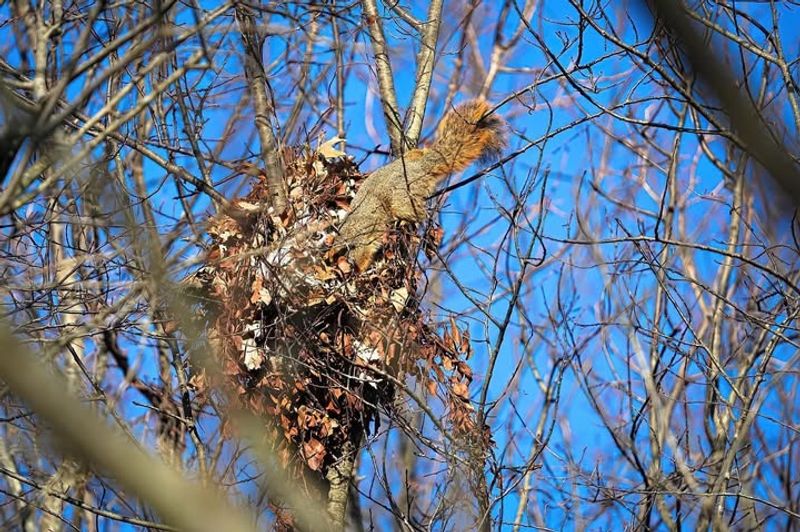
Squirrels are master architects when it comes to creating cozy homes high above the ground.
Their nests, called dreys, are woven from leaves, twigs, and bark strips into football-shaped bundles that sit securely in the forks of tree branches.
Unlike bird nests, dreys are much larger and messier in appearance, often measuring a foot or more across.
Once autumn arrives and Ohio’s deciduous trees shed their leaves, these dreys become incredibly obvious against the bare branches.
You might notice several in a single tree, since squirrels often build multiple dreys for different purposes throughout the year.
Some serve as nurseries for baby squirrels, while others function as temporary shelters or food storage spots.
The outer layer of a drey consists of loosely woven sticks and leaves, but inside, squirrels line their homes with softer materials like moss, grass, and shredded bark.
This insulation keeps them warm during harsh Ohio winters.
While they might look abandoned from the ground, many dreys remain actively used throughout cold months.
If you see what appears to be a giant, untidy bird nest high in your oak or maple tree, chances are excellent that it belongs to a busy gray or fox squirrel preparing for winter.
Mistletoe (Rare But Possible In Ohio)
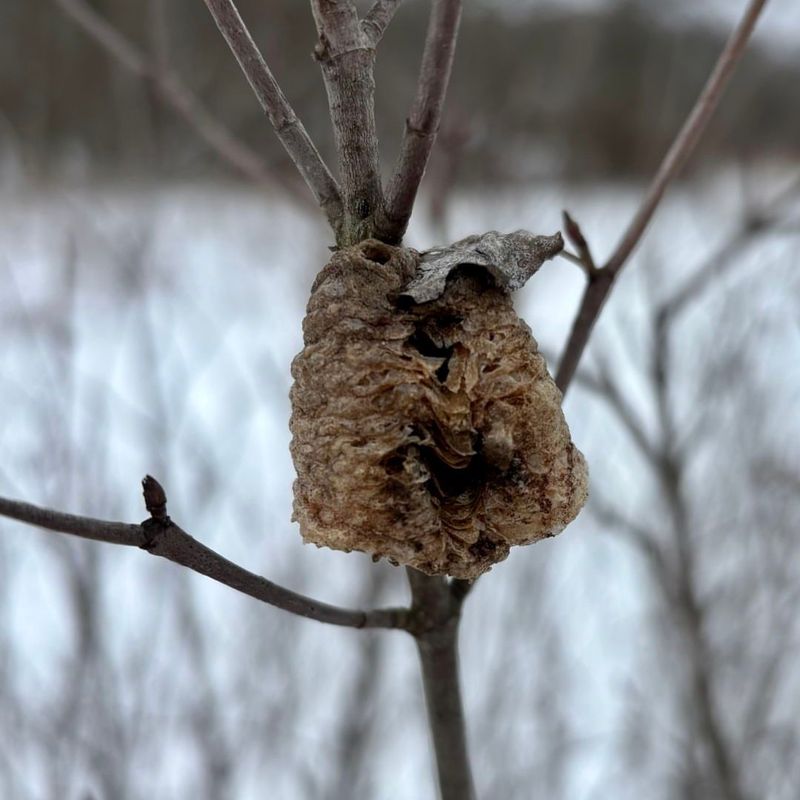
While mistletoe is more commonly associated with southern states, it does occasionally appear in Ohio’s warmer regions, particularly in the southern counties.
This parasitic plant creates rounded, evergreen clumps in tree branches that remain leafy and green even during winter months.
From a distance, these bushy growths can easily be mistaken for bird nests, especially when surrounding trees have dropped their leaves.
Mistletoe sends specialized roots called haustoria into the host tree’s branches, stealing water and nutrients to support its own growth.
The plant produces thick, leathery leaves that cluster together in ball-shaped masses ranging from a few inches to several feet across.
Unlike nests made from twigs and leaves, mistletoe is a living plant that continues growing year-round, producing small white berries that birds spread to other trees.
Oak, hickory, and maple trees can all host mistletoe in Ohio, though sycamores and elms are particularly susceptible.
The evergreen nature of mistletoe makes it stand out dramatically against bare winter branches, creating an obvious contrast that draws attention.
Some property owners consider it a charming addition with holiday associations, while others view it as an unwanted parasite.
If that nest-like clump stays bright green throughout winter while everything else has turned brown, you’re almost certainly looking at mistletoe rather than any kind of animal dwelling or tree abnormality.
Broken Branch Tangle From Storm Damage
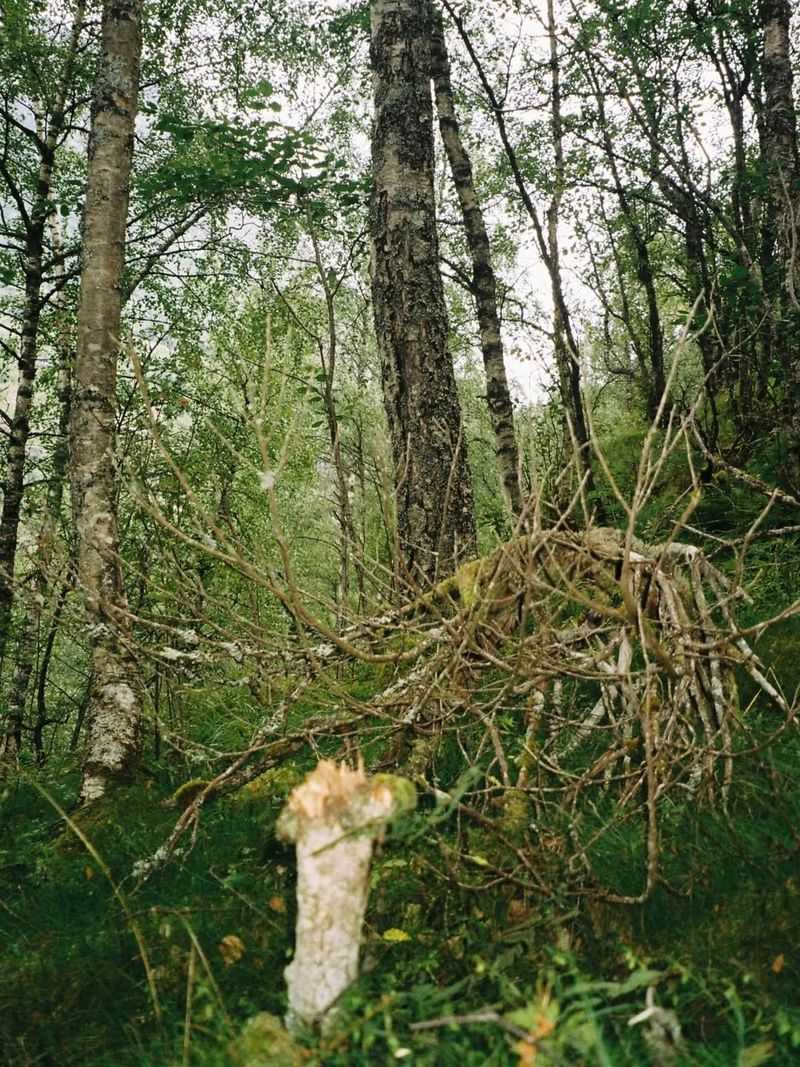
Ohio’s spring thunderstorms and winter ice storms regularly snap smaller branches that don’t fall cleanly to the ground.
Instead, these broken limbs often catch in the branches below, creating tangled masses of wood, bark, and trapped leaves.
When several broken branches accumulate in one spot, the resulting cluster can look remarkably similar to a large nest from ground level.
Strong winds twist and weave these broken pieces together, sometimes adding fresh leaves, vines, or other debris to the mix.
The random nature of storm damage means these tangles appear in unpredictable locations throughout the tree canopy.
Unlike the symmetrical placement of actual nests, storm debris tends to lodge wherever physics and chance dictate, often in awkward or precarious positions.
You can often identify these false nests by their irregular shapes and the presence of obviously broken or splintered wood.
Real nests feature carefully woven or stacked materials, while storm tangles show the chaos of violent weather events.
The debris may shift position after subsequent storms or gradually work loose and fall over time.
Trees with weak branch unions or previous damage are most likely to develop these deceptive clusters.
After major storms pass through Ohio, you might notice several new nest-like formations appearing in your trees practically overnight.
These tangles serve no purpose for wildlife and simply represent the tree’s battle scars from weathering harsh conditions.
Dense Evergreen Branch Growth
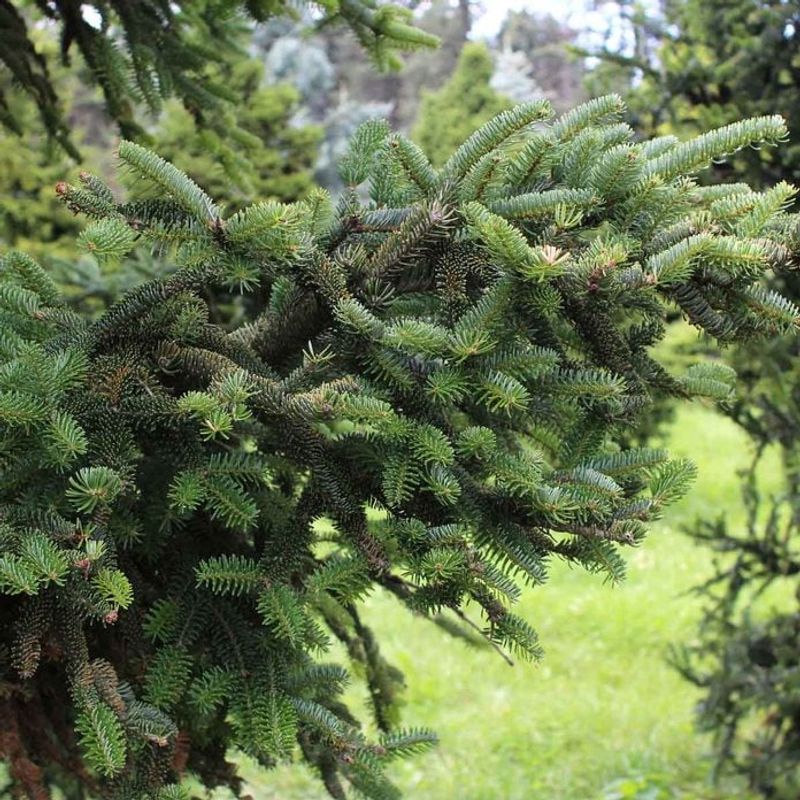
Evergreen trees like spruces, pines, and junipers sometimes develop unusually compact growth patterns where multiple branches cluster tightly together.
These dense areas create rounded masses of needles and twigs that can easily fool observers into thinking they’re looking at nests built by large birds.
The illusion becomes even more convincing when snow, ice, or windblown debris collects within the tight branch network.
Certain growing conditions encourage this compact branching, including damage to the terminal bud, insect activity, or simply the tree’s natural growth habit.
Some evergreen varieties naturally produce denser branch clusters as they mature, creating multiple spots throughout the tree that appear nest-like.
Unlike deciduous trees that reveal their secrets in winter, evergreens maintain their foliage year-round, keeping these formations visible in every season.
Ohio landscapes feature many ornamental spruces and pines that display this growth pattern, particularly older specimens with decades of development behind them.
The branches interweave so tightly that they create solid-looking masses capable of supporting accumulated snow and providing shelter for small birds during storms.
Some birds even choose to nest within these natural fortresses, adding actual nests to the already nest-like appearance.
If you’re examining what appears to be a nest in an evergreen tree, look for the telltale signs of living branches with fresh green needles extending throughout the mass rather than woven twigs and leaves.
Multiple Natural Features Overlapping

Sometimes nature creates perfect puzzles by combining several different elements in one location, making identification nearly impossible without climbing up for a closer look.
An old bird nest might collect windblown leaves, which then trap broken twigs from a recent storm, while a squirrel occasionally adds nesting material to the mix.
The result is a confusing jumble that defies easy categorization from ground level.
These composite formations often develop in prime real estate locations where strong branch forks provide stable foundations.
Over months or years, layer upon layer of different materials accumulates, with each new addition obscuring the original structure.
What started as a simple robin nest might eventually incorporate elements of leaf piles, storm debris, and even insect webs into one mysterious mass.
Ohio’s four distinct seasons contribute to this layering effect, with each season adding its own characteristic materials.
Spring might add nesting materials and fresh leaves, summer brings lush foliage and insect activity, fall deposits more leaves and seeds, and winter contributes ice, snow, and broken branches.
The constant cycling makes these mixed features incredibly difficult to identify accurately.
Property owners often find these ambiguous clusters the most intriguing because they spark curiosity and debate about their true nature.
Without direct inspection, you might never know exactly what combination of natural processes created that particular formation in your backyard tree.