8 Best Plants To Create A Jungle Vibe In Your Michigan Home This Winter
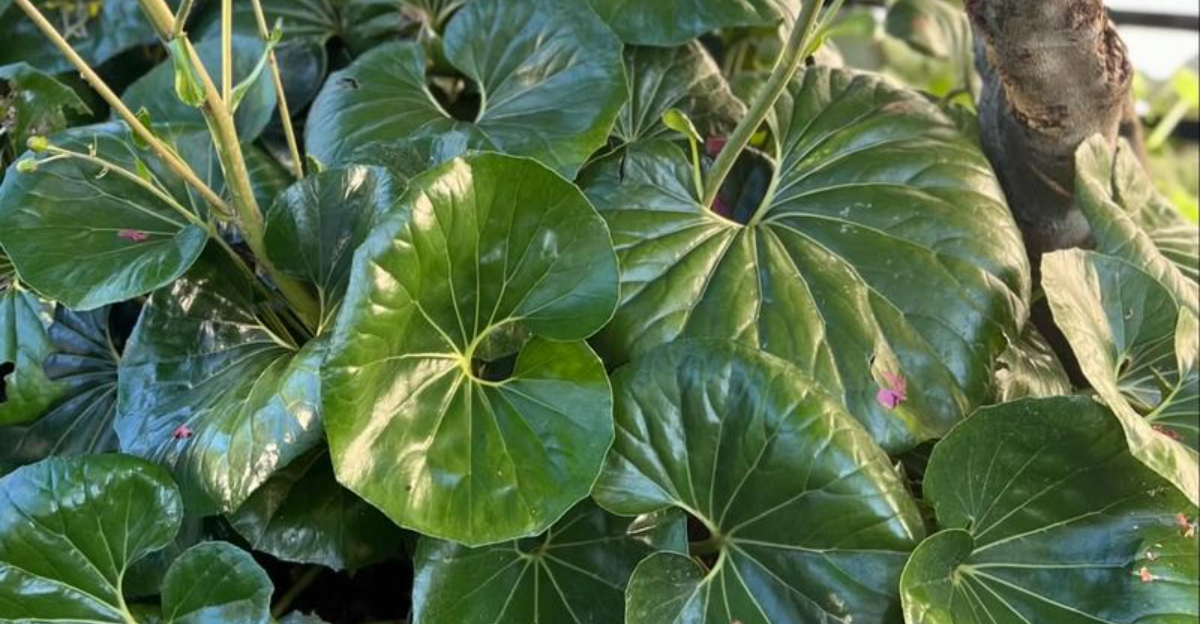
Michigan winters can make homes feel gray and closed in, but the right plants can completely change that.
You don’t need tropical temperatures to create a lush, jungle-inspired indoor space—just the right houseplants that thrive in warm rooms and low winter light.
Large leaves, rich green tones, and trailing growth instantly soften hard lines and add life to interiors when outdoor landscapes are dormant.
Many jungle-style plants actually prefer the stable temperatures and indoor humidity found in Michigan homes during winter, making this the perfect season to enjoy them.
From statement floor plants to cascading vines, these choices create a layered, immersive feel that turns ordinary rooms into cozy green retreats.
Beyond looks, houseplants also improve mood, boost humidity, and make winter spaces feel calmer and more inviting.
With a few well-chosen plants and the right placement, Michigan homeowners can enjoy a tropical escape indoors all winter long—no travel required.
1. Elephant Ears
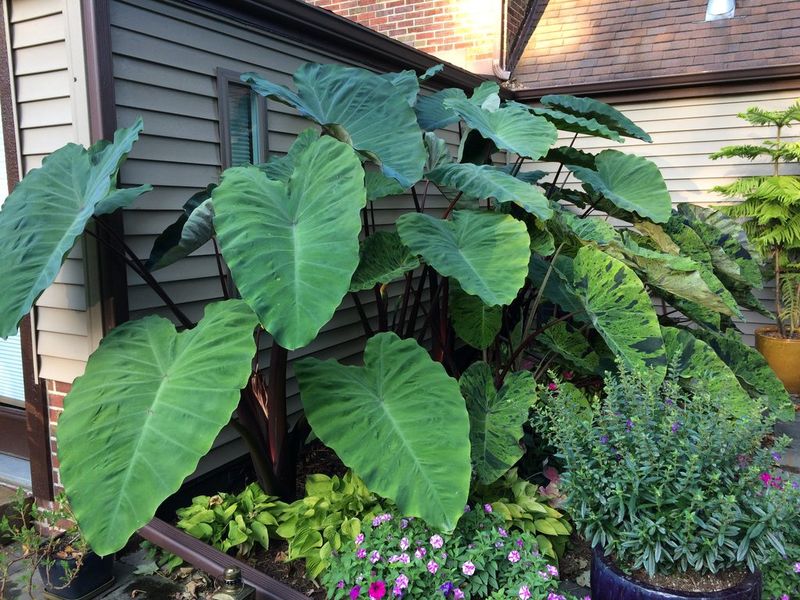
Few plants deliver instant tropical drama quite like elephant ears, with their massive heart-shaped leaves that can grow as large as three feet across.
These showstoppers earn their name from the resemblance their foliage bears to actual elephant ears, creating an unmistakable focal point wherever they’re planted.
Gardeners across Michigan have discovered that these beauties thrive in the warm summer months, bringing that coveted jungle aesthetic to patios, borders, and garden beds.
The secret to success with elephant ears lies in providing them with rich, moist soil and plenty of sunshine or partial shade.
They’re heavy feeders, so mixing compost into the planting area and adding fertilizer throughout the growing season keeps those enormous leaves looking their best.
In Michigan’s climate, these plants grow rapidly once temperatures warm up in late spring, often reaching impressive heights by midsummer.
Since elephant ears are tropical plants, they cannot survive Michigan winters outdoors.
Before the first frost arrives, you’ll need to dig up the bulbs and store them indoors in a cool, dry location until spring returns.
Some gardeners prefer to grow them in large containers, which makes the transition indoors much simpler when cold weather approaches.
Different varieties offer exciting color options beyond traditional green, including deep purple and burgundy-black foliage that adds even more visual interest.
Pairing elephant ears with other jungle-style plants creates layers of texture and height that truly capture that tropical rainforest feeling.
Their bold presence transforms ordinary Michigan gardens into extraordinary outdoor escapes that neighbors will admire all season long.
2. Cannas
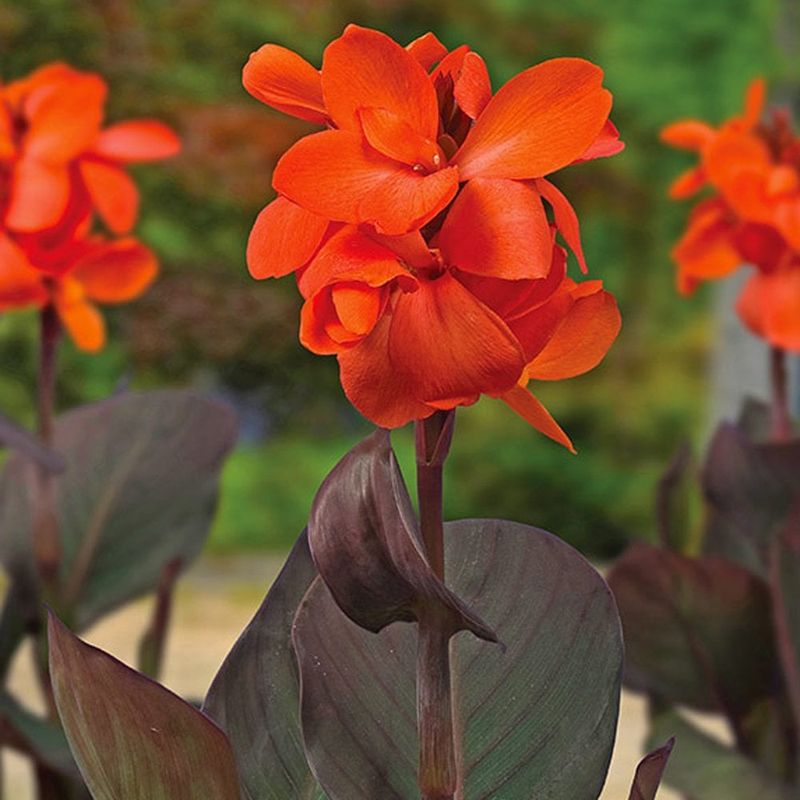
Bursting with color and personality, cannas bring both stunning flowers and lush foliage to Michigan gardens seeking that jungle vibe.
These versatile performers produce broad, paddle-shaped leaves in shades ranging from deep green to bronze and even striped varieties that catch every eye.
But the real showstopper arrives when their tall flower spikes emerge, displaying brilliant blooms in reds, oranges, yellows, and pinks that last throughout summer and into fall.
Cannas are surprisingly tough plants despite their exotic appearance, handling Michigan’s summer heat with enthusiasm.
Your Michigan Garden Changes Every Week. Your Plan Should Too.
Gardening in Michigan changes quickly throughout the season. Every Friday you’ll receive a simple weekly plan showing exactly what to plant, prune, fertilize, harvest, and protect so you never miss the right timing.
They prefer full sun and consistent moisture, though they’re more forgiving of occasional dry spells than many tropical-looking plants.
Planting them in groups creates that dense, jungle-packed look, while their height makes them perfect for adding vertical interest to the back of borders or as standalone statement pieces.
One of the best things about growing cannas in Michigan is their relatively easy winter storage.
After frost blackens the foliage, cut the stalks down and dig up the rhizomes, letting them dry for a few days before storing them in peat moss or sawdust in a cool basement.
Come spring, you can divide larger rhizomes to multiply your collection without spending extra money.
Different canna varieties offer unique characteristics, from compact types perfect for containers to towering giants that reach six feet or more.
Their fast growth rate means you won’t wait long to see results, and they attract hummingbirds and butterflies, adding movement and life to your jungle garden throughout Michigan’s growing season.
3. Hardy Banana Plants
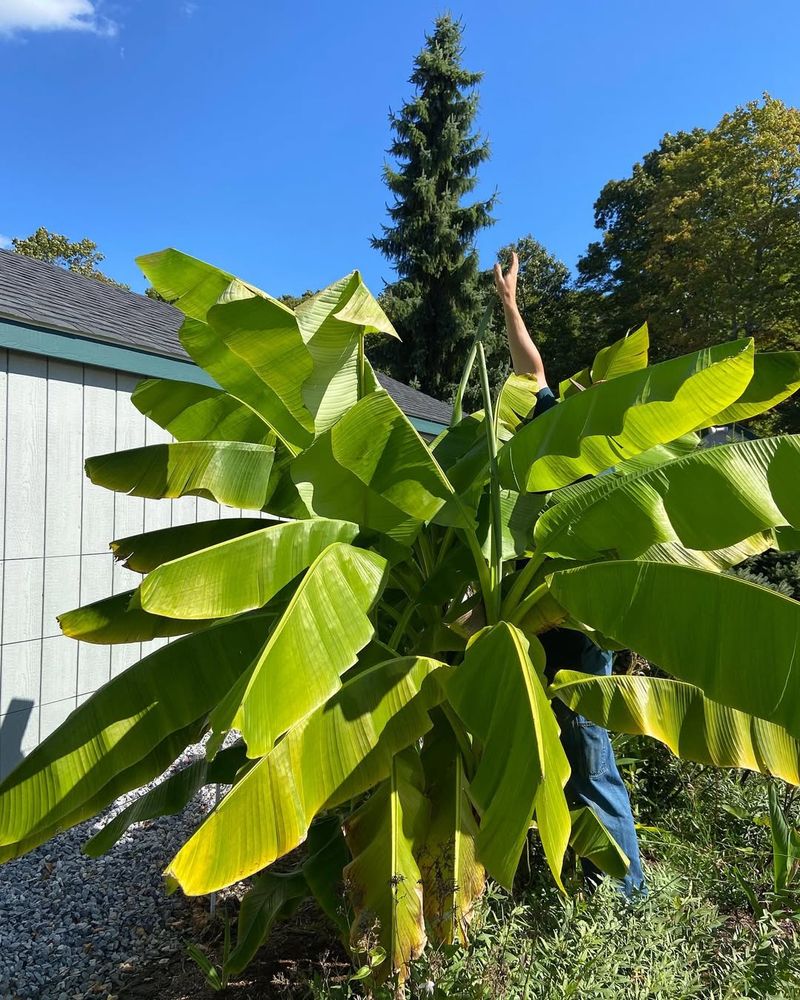
Nothing says jungle quite like a banana plant, and surprisingly, certain varieties can actually survive Michigan winters with proper protection.
The Japanese fiber banana, scientifically known as Musa basjoo, is the most cold-hardy banana species available, capable of withstanding temperatures that would eliminate most tropical plants.
While you won’t be harvesting edible bananas in Michigan, the spectacular foliage alone makes these plants worth growing for their dramatic visual impact.
These remarkable plants produce enormous paddle-shaped leaves that can reach six feet in length, creating an instant tropical canopy effect in your garden.
During Michigan’s warm growing season, hardy bananas grow at an astonishing rate, sometimes adding several inches of height per week when conditions are favorable.
They prefer rich, well-draining soil and consistent moisture, along with protection from strong winds that can shred their delicate leaves.
The winter survival strategy for hardy bananas in Michigan involves heavy mulching after the first frost.
Cut the plant back to about two feet, then surround it with a thick layer of leaves, straw, or other insulating material, creating a protective mound over the root zone.
Some gardeners build wire cages around their bananas and fill them with insulation for extra protection during particularly harsh winters.
By their second or third year, established hardy banana plants develop multiple shoots, forming impressive clumps that dominate the landscape.
Their towering presence and massive leaves create the ultimate jungle backdrop for other plants, and they pair beautifully with elephant ears and cannas for a truly tropical Michigan garden experience.
4. Japanese Forest Grass
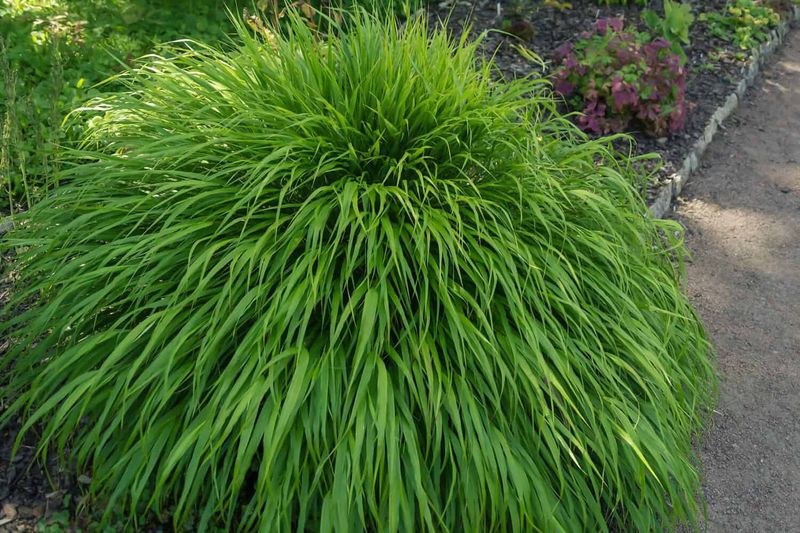
Graceful and flowing, Japanese forest grass brings a softer texture to the jungle garden while maintaining that lush, tropical feel.
This ornamental grass forms elegant mounds of cascading foliage that sways with the slightest breeze, adding movement and a sense of tranquility to shaded areas.
Unlike many grasses that prefer full sun, this beauty thrives in partial to full shade, making it perfect for those tricky spots under trees or along the north side of buildings in Michigan.
The most popular varieties feature striking golden-yellow or variegated foliage that brightens up darker garden areas like natural spotlights.
This luminous quality makes Japanese forest grass particularly valuable in jungle-style plantings, where it can be tucked beneath larger plants to create layers of contrasting textures.
The grass grows slowly but steadily in Michigan, eventually forming substantial clumps that spread gently without becoming invasive.
Maintenance couldn’t be simpler for this well-behaved plant.
It appreciates consistent moisture and benefits from organic mulch to keep roots cool during summer heat.
In late winter or early spring, simply cut back the previous year’s growth to make room for fresh new blades that emerge as temperatures warm.
Japanese forest grass is fully winter-hardy throughout Michigan, returning reliably year after year without any special protection.
Its fine texture contrasts beautifully with bold-leaved plants like hostas and ferns, creating visual interest through the interplay of different leaf shapes and sizes.
The way it catches and reflects light adds depth to shaded jungle gardens, proving that not all tropical-looking plants need to have enormous leaves to make a big impact.
5. Hostas
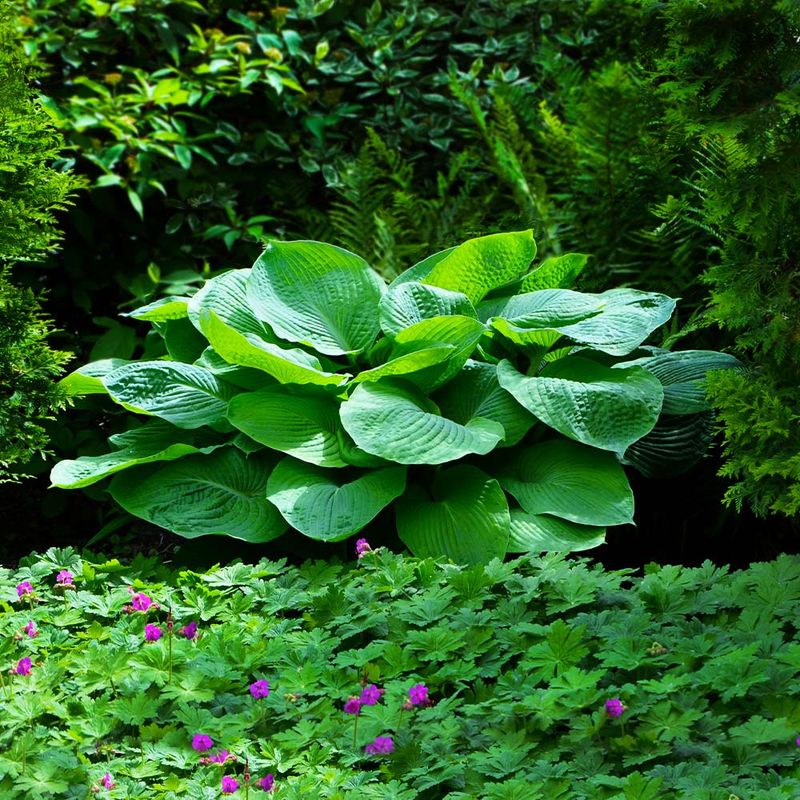
Hostas might be common in Michigan gardens, but their ability to create that lush, layered jungle look is anything but ordinary.
These shade-loving perennials produce generous clumps of broad, ribbed foliage that comes in an astounding variety of sizes, colors, and patterns.
From miniature types perfect for edging to giant varieties with leaves the size of dinner plates, hostas offer endless options for building that dense, tropical appearance in shaded areas.
The largest hosta varieties truly shine when you’re aiming for jungle vibes.
Cultivars like Sum and Substance, Empress Wu, and Blue Angel develop massive mounds of foliage that can reach three to four feet tall and spread even wider.
Their substantial presence fills space quickly, creating that important sense of abundance and lushness that defines jungle-style gardens.
What makes hostas particularly valuable for Michigan gardeners is their incredible reliability and low maintenance requirements.
Once established, they return faithfully each spring, gradually increasing in size and impact over the years.
They tolerate a wide range of shade conditions, from dappled sunlight to deep shade, though most prefer morning sun and afternoon protection.
Combining different hosta varieties creates fascinating textural contrasts, with some offering smooth, glossy leaves while others display puckered or wavy edges.
Color variations range from deep blue-green to chartreuse and variegated patterns featuring white, cream, or yellow markings.
In early to midsummer, many hostas send up tall flower spikes with tubular blooms that attract hummingbirds, adding another dimension to your Michigan jungle garden while providing vertical interest among the foliage.
6. Ferns
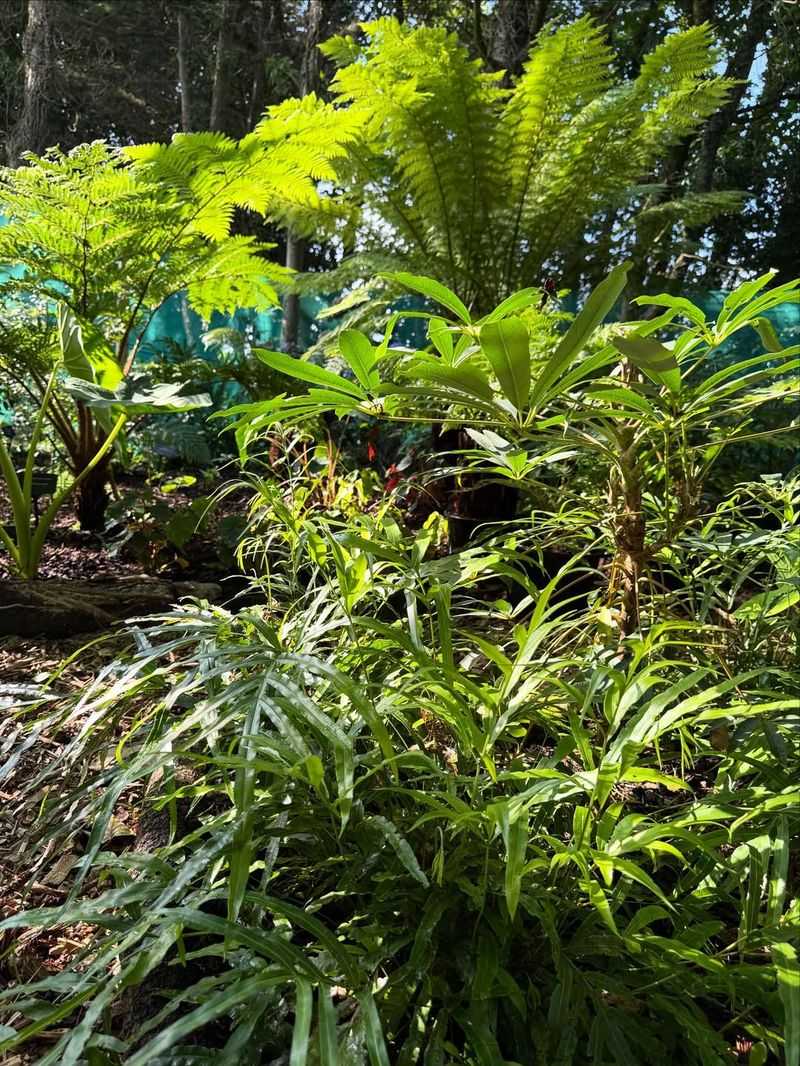
When building an authentic jungle atmosphere in Michigan, ferns are absolutely essential for capturing that wild, primeval forest feeling.
Their delicate, feathery fronds create the perfect understory layer beneath taller plants, mimicking the way ferns naturally carpet the forest floor in tropical regions.
Michigan’s native and adapted fern species thrive in shaded, moisture-retentive conditions, making them ideal companions for other jungle-style plants in your landscape.
Several fern varieties work particularly well for creating that lush look.
Ostrich ferns produce tall, vase-shaped clumps of bright green fronds that can reach four feet or more in height, providing substantial presence and vertical interest.
Japanese painted ferns offer stunning burgundy and silver coloration that adds unexpected beauty to shaded areas, while autumn ferns emerge with coppery-bronze new growth that matures to glossy green.
Ferns appreciate consistent moisture and organic-rich soil, conditions that often exist naturally in shaded areas of Michigan gardens.
Mulching around ferns helps retain moisture and mimics the leaf litter found on forest floors, creating an environment where these plants truly flourish.
Most ferns spread gradually through underground rhizomes, eventually forming impressive colonies that fill space beautifully without aggressive takeover behavior.
The textural contrast ferns provide is invaluable when designing jungle-style plantings.
Their fine, lacy foliage plays against the bold leaves of hostas, elephant ears, and other large-leaved plants, creating visual complexity and interest.
Ferns also remain attractive throughout Michigan’s growing season, maintaining their fresh appearance from spring through fall and contributing to that consistently lush, green jungle aesthetic that makes outdoor spaces feel like tropical retreats.
7. Hardy Hibiscus
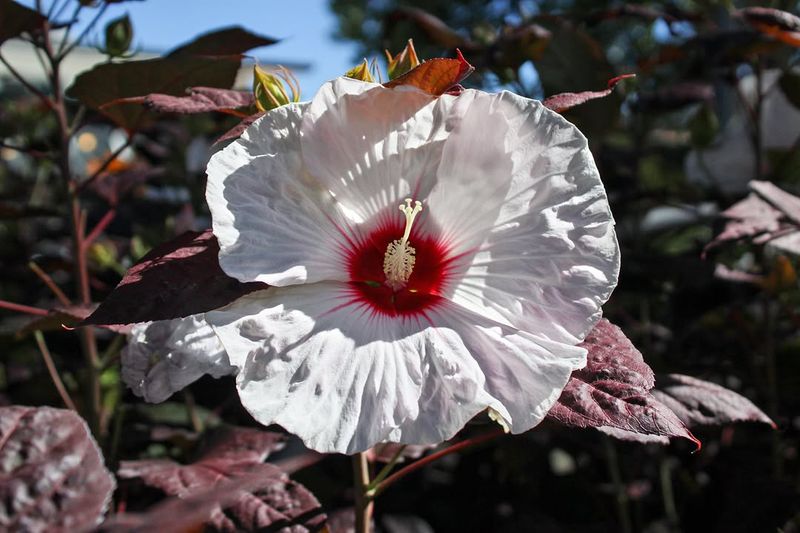
Prepare to be amazed by hardy hibiscus, a plant that produces flowers so enormous they seem almost unreal.
These dinner-plate-sized blooms can measure eight to twelve inches across, displaying spectacular colors including white, pink, red, and even deep burgundy shades.
Combined with their large, tropical-looking leaves, hardy hibiscus plants deliver serious jungle impact while being completely winter-hardy throughout Michigan, returning reliably year after year without any special protection.
Don’t confuse these tough perennials with their tender tropical cousins that require indoor overwintering.
Hardy hibiscus, also called rose mallow, are native to North America and laugh at Michigan winters, emerging from the ground each spring to quickly rebuild their impressive stature.
They typically reach four to six feet tall by midsummer, creating substantial shrub-like plants covered in those show-stopping flowers from July through September.
These plants perform best in full sun and appreciate consistent moisture, especially during hot Michigan summers when they’re actively blooming.
Rich soil amended with compost supports their vigorous growth and prolific flowering.
Each individual bloom lasts only a day, but plants produce so many buds that there’s always a fresh display of flowers opening throughout the blooming season.
Hardy hibiscus are late to emerge in spring, often not showing signs of life until May when soil temperatures warm sufficiently.
Patience pays off, though, as their rapid growth quickly makes up for the late start.
Their bold flowers attract butterflies and hummingbirds, adding movement and wildlife interest to your Michigan jungle garden while providing that essential tropical flower power that completes the lush, exotic look.
8. Ligularia
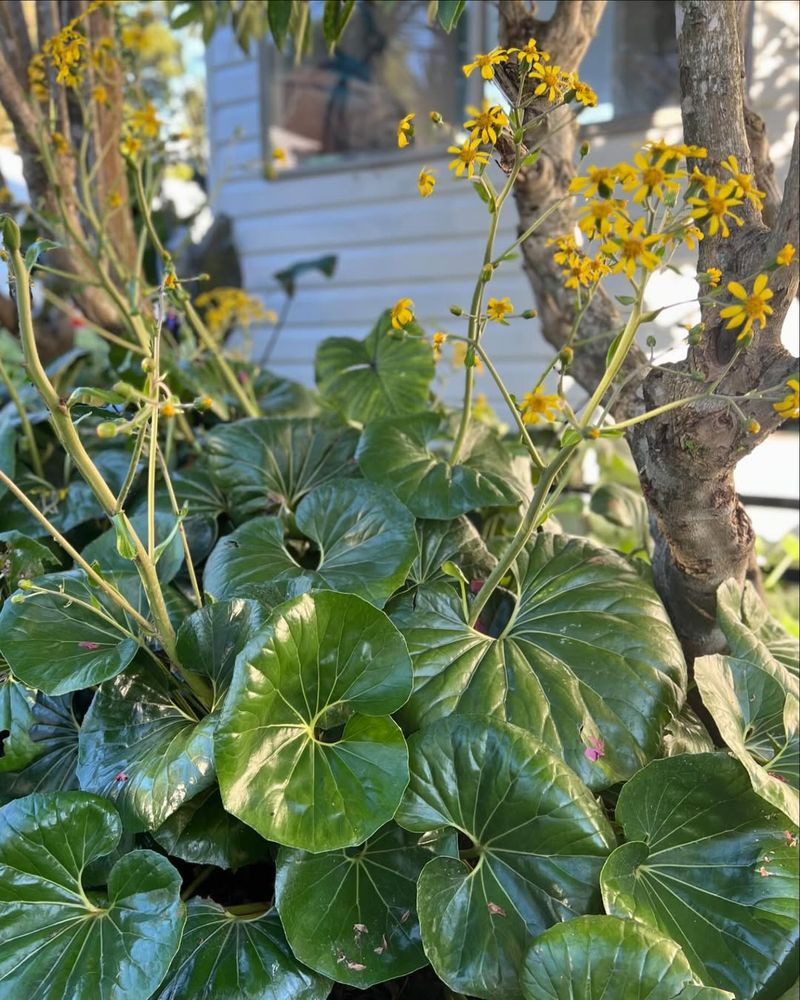
Often overlooked but absolutely spectacular, ligularia brings bold foliage and bright flowers to shaded jungle gardens in Michigan.
This underappreciated perennial produces large, rounded or deeply cut leaves that can span a foot or more in width, creating substantial visual weight in the garden.
Some varieties feature dark purple undersides or burgundy-tinged foliage that adds unexpected color depth, while others display dramatic jagged edges that enhance the wild, untamed jungle aesthetic.
Ligularia thrives in the same moist, shaded conditions where many other jungle plants excel, making it a natural companion for hostas, ferns, and Japanese forest grass.
In midsummer, tall spikes of bright yellow or orange daisy-like flowers emerge above the foliage, providing a cheerful color contrast that lights up darker garden areas.
These flower spikes can reach four to five feet tall, adding important vertical dimension to layered plantings.
The key to success with ligularia in Michigan is providing adequate moisture and protection from hot afternoon sun.
In too-sunny locations or during dry spells, the large leaves tend to wilt dramatically, though they typically recover once evening arrives or moisture is restored.
Planting them in naturally moist areas or near water features ensures they maintain their lush appearance throughout the growing season.
Ligularia is completely winter-hardy in Michigan, requiring no special care beyond cutting back dead foliage in late fall or early spring.
Established clumps grow larger and more impressive each year, eventually forming substantial masses that anchor shaded jungle plantings with their bold presence and reliable performance season after season in Michigan gardens.