13 Rare And Beautiful Philodendrons Georgia Indoor Gardeners Are Searching For Right Now

Georgia indoor gardeners are chasing more than just greenery—they’re hunting for philodendrons that stop people mid-sentence.
Rare varieties with dramatic leaves, unusual textures, and collector-level appeal are in high demand, turning houseplants into living art.
These philodendrons bring a tropical edge indoors, thriving in Georgia’s naturally humid environment.
While they may look exotic and intimidating, many adapt surprisingly well to home conditions when given the right balance of light and care.
Each new leaf feels like a small event, unfolding slowly and showing off colors or shapes you won’t find in common varieties.
For collectors, the thrill lies in the search. For decorators, these plants instantly elevate a space.
And for gardeners, they offer the satisfaction of nurturing something rare and beautiful year-round.
As interest grows, so does appreciation for philodendrons that feel less like houseplants and more like statement pieces.
In Georgia homes, these rare beauties aren’t just trending—they’re becoming obsessions.
1. Philodendron Spiritus-Sancti

Among plant collectors worldwide, few species command as much reverence as this incredibly scarce Brazilian native.
Its narrow, elongated leaves cascade downward in an elegant display that instantly sets it apart from typical philodendrons.
Growing at a snail’s pace, this species demands patience from its caretakers, but the reward is witnessing one of nature’s most refined creations.
Conservation efforts have placed this plant in the spotlight, as it teeters on the brink in its natural habitat.
Serious Georgia collectors view ownership as both privilege and responsibility, often participating in propagation programs to preserve genetic diversity.
The leaves can stretch impressively long when mature, creating a waterfall effect that makes a powerful statement in any collection.
Indoor cultivation requires attention to humidity and temperature stability, conditions many Georgia homes can provide with minor adjustments.
Because of its rarity, expect to join waiting lists or pay premium prices when opportunities arise.
This philodendron represents more than just a houseplant—it’s a living connection to endangered ecosystems.
For those lucky enough to acquire one, the journey becomes about stewardship as much as aesthetics.
2. Philodendron Gloriosum
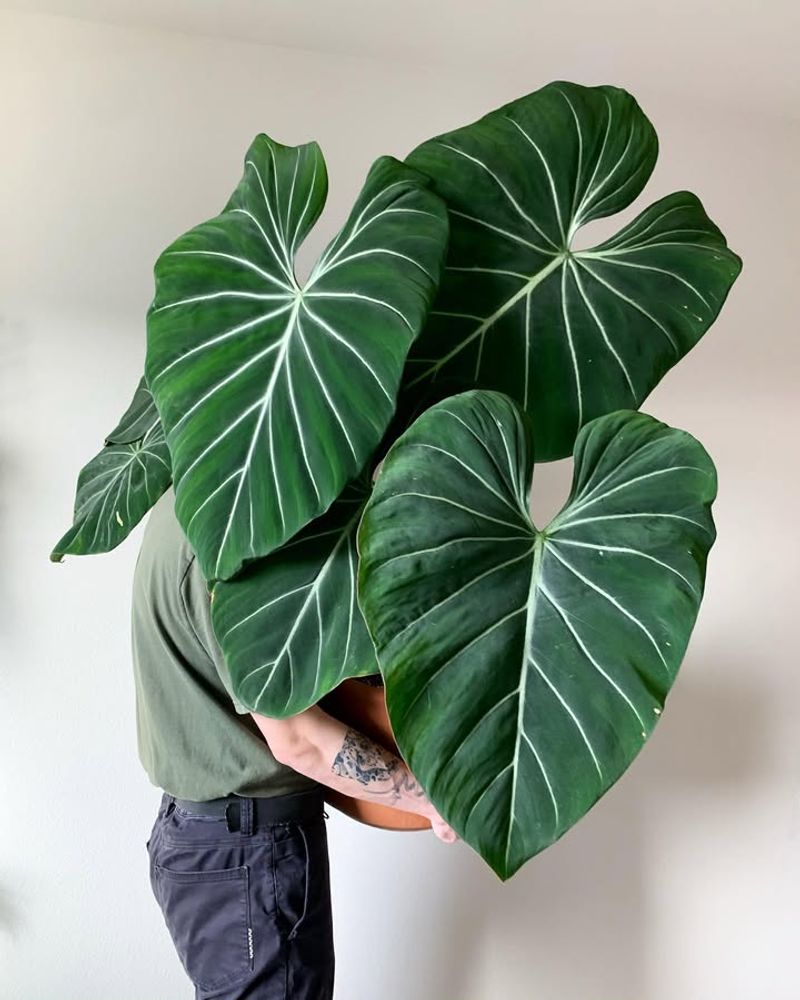
Velvet-textured leaves in magnificent heart shapes have made this Colombian species a sensation among Georgia plant enthusiasts.
Unlike climbing varieties, this beauty spreads horizontally across surfaces, creating a captivating groundcover effect indoors.
Bold white veins trace intricate patterns across deep green foliage, forming natural artwork that changes as each leaf unfolds.
The crawling rhizome produces leaves sequentially, offering ongoing anticipation as your plant matures and expands.
Georgia’s indoor environments suit this species remarkably well, especially when humidity levels stay moderately elevated.
Shallow, wide containers work best to accommodate the spreading growth pattern, allowing the plant to showcase its full potential.
Each leaf emerges slightly different from the last, with vein patterns that vary subtly, making every specimen unique.
Collectors appreciate how manageable this philodendron remains compared to towering climbers, fitting beautifully on plant stands or shelves.
Regular misting or placement near humidifiers keeps the velvety texture looking its absolute best.
The contrast between dark foliage and pale veins intensifies under bright indirect light, creating stunning visual impact.
Your Georgia Garden Changes Every Week. Your Plan Should Too.
Gardening in Georgia changes quickly throughout the season. Every Friday you’ll receive a simple weekly plan showing exactly what to plant, prune, fertilize, harvest, and protect so you never miss the right timing.
For those seeking statement plants without vertical space requirements, this species delivers magnificently.
3. Philodendron Melanochrysum

Deep emerald foliage with an almost midnight quality makes this climbing philodendron absolutely mesmerizing in person.
Velvety leaves catch light in ways that create dimension and drama, transforming ordinary corners into exotic focal points.
Georgia plant lovers embrace this species for its ability to create vertical jungle vibes without requiring massive floor space.
When provided with a sturdy moss pole or wooden plank, the climbing habit kicks into high gear, producing increasingly larger leaves.
Juvenile leaves start relatively small, but mature foliage can reach impressive dimensions that command attention.
The dark coloration pairs beautifully with lighter-colored walls and furniture, offering sophisticated contrast in modern interiors.
Consistent moisture in both soil and air helps maintain the characteristic velvety sheen that makes this plant so desirable.
Collectors often position these climbers near bright windows with filtered light, where the leaves seem to glow from within.
As the plant ascends its support structure, the transformation from small to large leaves creates a gradient effect.
This philodendron thrives on neglect less than others, rewarding attentive care with spectacular growth.
For dramatic indoor jungle aesthetics, few varieties compete with this showstopper.
4. Philodendron Verrucosum
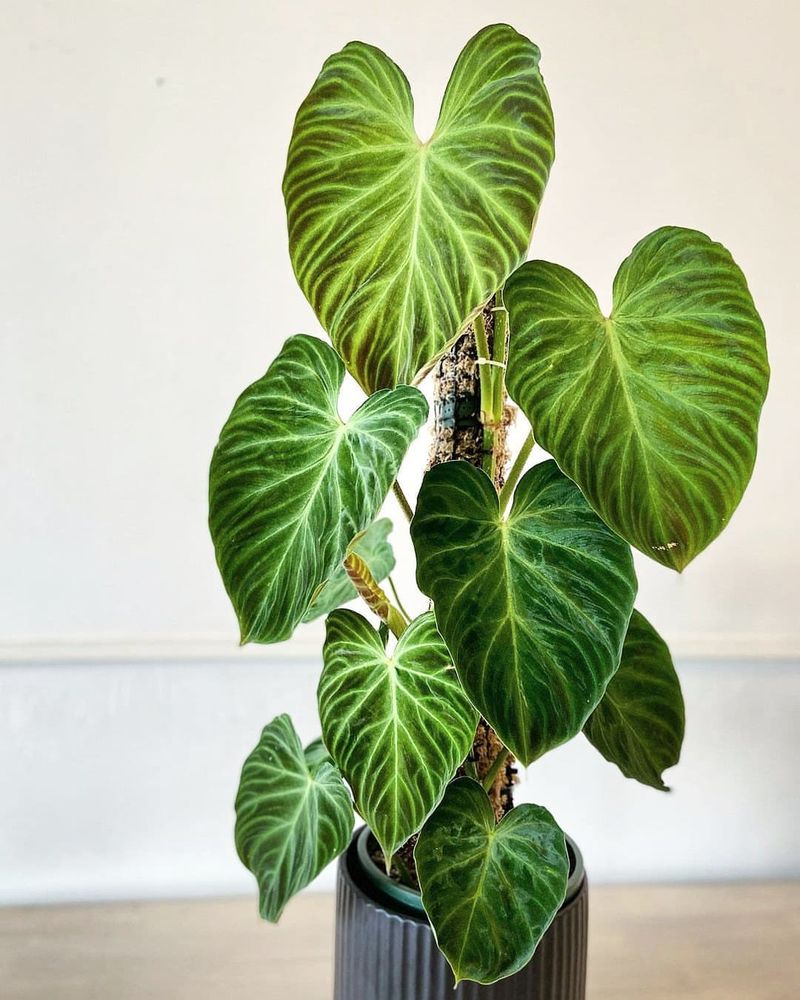
Striking vein contrast transforms each leaf into a masterpiece, with colors ranging from emerald to bronze depending on light conditions.
The petioles feature a fuzzy, textured surface that adds tactile interest and distinguishes this species from smoother-stemmed relatives.
Georgia’s naturally humid climate during warmer months creates ideal conditions for this moisture-loving beauty.
Indoor growers often find success by grouping plants together or using pebble trays to maintain ambient humidity levels.
Leaf surfaces display an iridescent quality that shifts as you move around the plant, creating ever-changing visual appeal.
The veining pattern appears almost painted on, with lighter shades creating roadmap-like designs across darker backgrounds.
Collectors prize specimens with particularly vivid vein coloration, though all examples of this species impress.
Climbing support encourages larger leaf development, though even smaller leaves showcase the signature characteristics beautifully.
Temperature stability matters significantly for this philodendron, making indoor cultivation more predictable than outdoor attempts in Georgia.
Bright indirect light intensifies both leaf color and vein contrast, bringing out the full potential of this stunner.
For those willing to provide extra humidity, the rewards include some of the most ornamental foliage in the plant kingdom.
5. Philodendron Billietiae
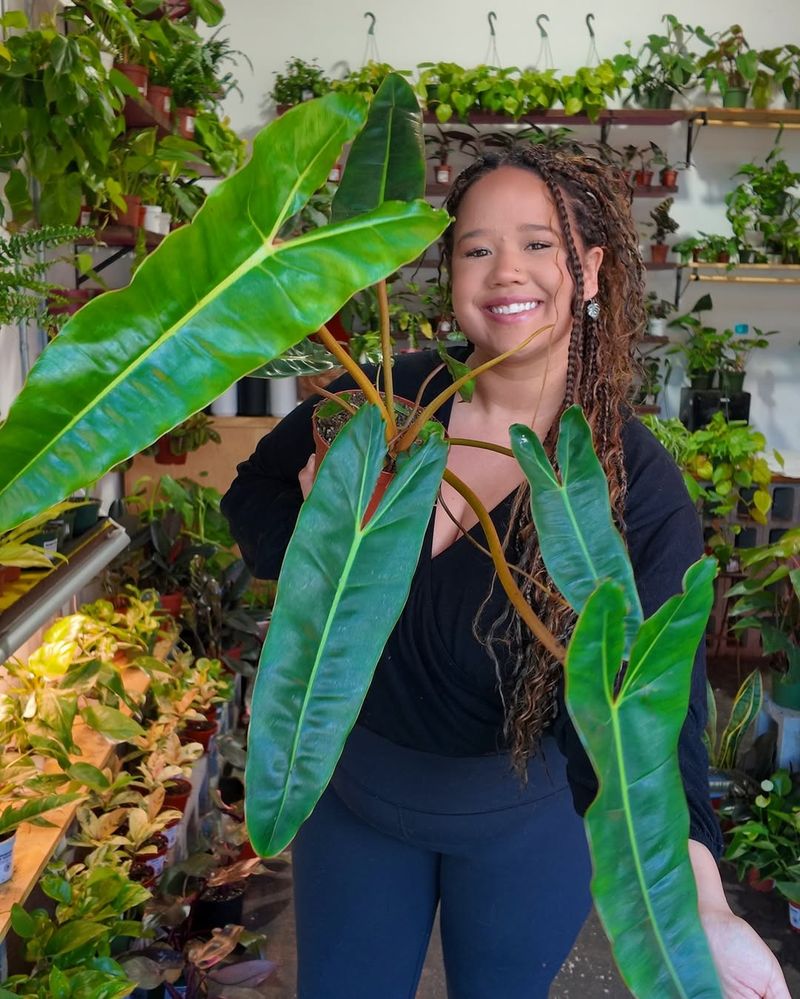
Bright orange petioles create instant recognition, making this species impossible to confuse with any other philodendron.
Long, narrow leaves stretch elegantly from those colorful stems, creating a graceful silhouette that stands out in any collection.
Georgia indoor plant enthusiasts appreciate how the orange coloration remains vibrant year-round, adding warm tones to green-dominated spaces.
As a climbing variety, providing vertical support allows the plant to reach its full potential and produce increasingly impressive foliage.
The leaves develop a slightly wavy edge as they mature, adding movement and texture to the overall appearance.
Compared to some finicky rare philodendrons, this species adapts reasonably well to typical household conditions.
Bright indirect light keeps both leaf and stem colors saturated, though the plant tolerates slightly lower light than some relatives.
The contrast between orange stems and green leaves creates a color combination that feels both tropical and sophisticated.
Collectors often position these plants where the distinctive petioles catch light, maximizing their visual impact.
Growth rates stay moderate, making this philodendron manageable for those without unlimited space.
For anyone seeking something instantly recognizable and conversation-worthy, this beauty delivers every time.
6. Philodendron Pink Princess

Pink variegation splashed across deep green leaves has created one of the most sought-after houseplants in recent years.
Georgia indoor growers quickly learned that light levels directly influence how much pink appears on new growth.
Too little light produces mostly green leaves, while excessive brightness can fade the precious pink tones to white or cream.
Finding that sweet spot requires experimentation, but the payoff is foliage that looks almost too beautiful to be real.
Each leaf emerges as a surprise, with variegation patterns that range from subtle blushes to dramatic half-moon splashes.
The unpredictability adds excitement to growing this cultivar, as no two leaves ever look exactly alike.
Demand continues to outpace supply despite increased propagation efforts, keeping prices elevated for quality specimens.
Georgia collectors often trade cuttings within local plant communities, building connections while expanding their collections.
Bright indirect light near east or west-facing windows typically produces the most vibrant and stable coloration.
Regular pruning of all-green growth helps encourage more variegated leaves to develop over time.
For those patient enough to dial in the care requirements, this philodendron rewards with truly spectacular foliage.
7. Philodendron White Knight
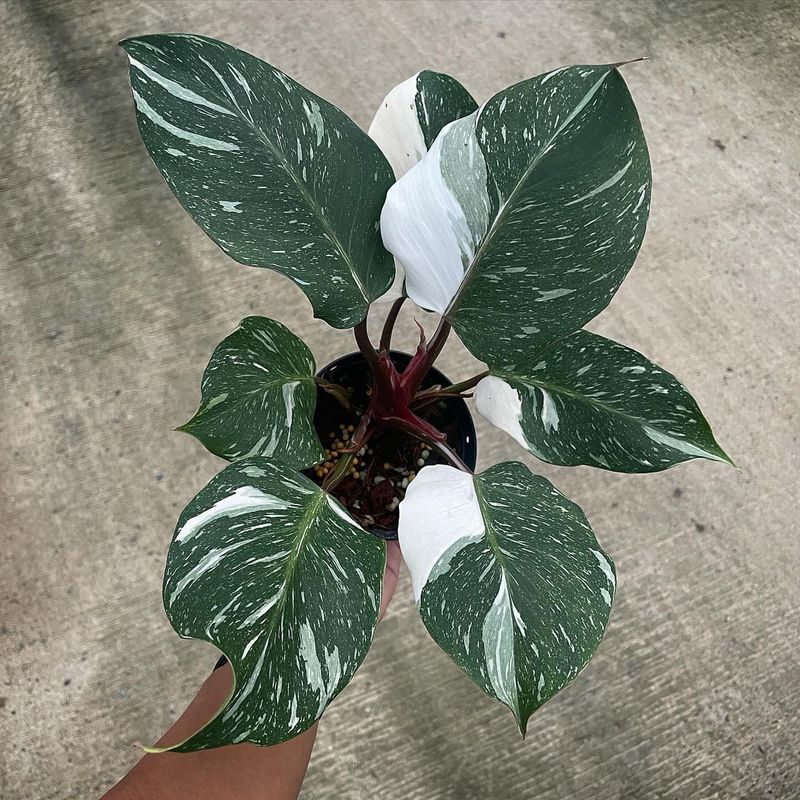
Crisp white variegation contrasts beautifully against darker stems, creating a sophisticated color palette that appeals to modern collectors.
The stems themselves display deeper burgundy or brown tones, distinguishing this cultivar from similar white-variegated varieties.
Georgia plant enthusiasts appreciate how the white portions stay bright and clean-looking rather than fading to cream or yellow.
Each leaf unfolds with anticipation, revealing unique variegation patterns that make every specimen one-of-a-kind.
The contrast between light and dark creates striking visual interest that photographs beautifully for social media sharing.
Growth habits remain relatively compact compared to some climbing philodendrons, making this variety apartment-friendly.
Bright indirect light maintains variegation stability, though too much direct sun can scorch the delicate white portions.
Indoor growers find that consistent care routines produce the most reliable results with this somewhat finicky cultivar.
The white sections contain less chlorophyll, meaning the plant relies heavily on green portions for energy production.
Maintaining a balance between variegated and green growth ensures long-term plant health and vigor.
Collectors willing to provide attentive care are rewarded with one of the most elegant variegated philodendrons available.
For those seeking refined beauty with contemporary appeal, this cultivar hits all the right notes.
8. Philodendron White Wizard

Clean white variegation appears more stable and predictable than many other white-patterned cultivars, reducing frustration for growers.
Georgia indoor gardeners favor this variety for its relatively consistent performance under typical household conditions.
The variegation tends to appear in sectoral patterns, creating bold blocks of white rather than speckled or splashed effects.
Growth rates remain moderate and manageable, making this philodendron suitable for those without endless vertical space.
Leaves emerge with exciting anticipation, though the patterns prove more reliable than some temperamental variegated varieties.
Bright indirect light supports healthy growth while maintaining the crisp white coloration that makes this cultivar so desirable.
The stems typically show green or light coloring, differentiating this variety from darker-stemmed white-variegated cousins.
Indoor cultivation in Georgia works particularly well during humid summer months, though humidifiers help during drier seasons.
Collectors appreciate how forgiving this cultivar proves compared to some notoriously fussy variegated philodendrons.
Regular feeding during growing seasons supports robust growth and helps the plant maintain both green and white portions effectively.
For those wanting striking variegation without constant anxiety about reversion, this variety offers welcome reliability.
The clean aesthetic appeals to minimalist interiors while still providing that coveted rare plant status.
9. Philodendron White Princess
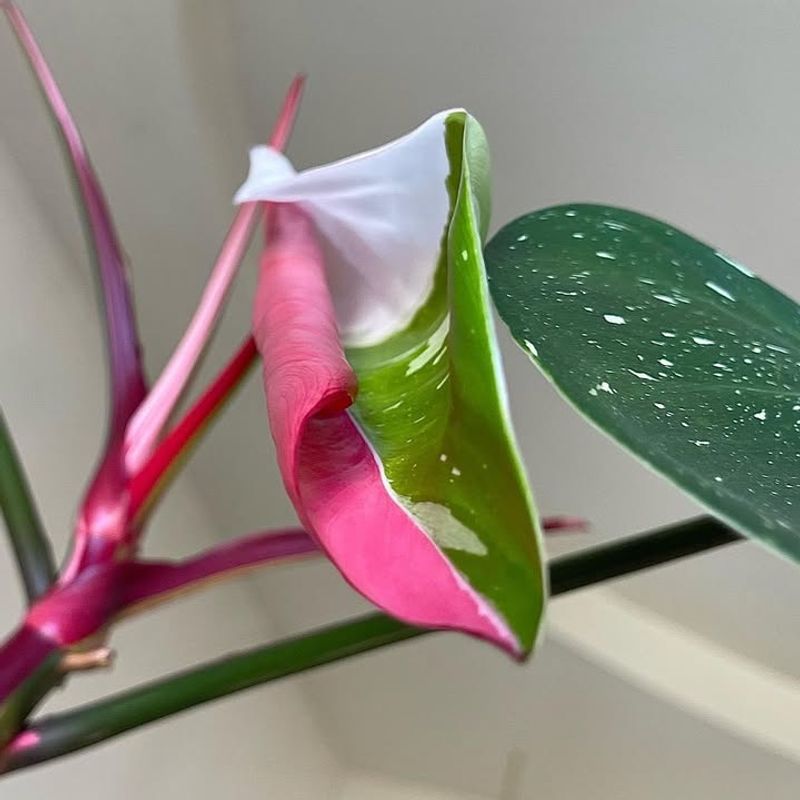
Subtle pink tones mixed throughout white variegation create a softer, more romantic appearance than pure white varieties.
Georgia collectors seeking something slightly different from standard white-variegated options find this cultivar particularly appealing.
The pink blush appears most prominently on new growth and along veins, adding delicate warmth to the color palette.
Light conditions influence how much pink develops, with bright indirect light generally encouraging the most colorful results.
Each leaf tells a slightly different story, with variegation ranging from mostly green to predominantly white with pink undertones.
The combination of three colors creates depth and visual interest that solid green plants simply cannot match.
Growing conditions similar to other variegated philodendrons work well, though extra attention to light placement optimizes coloration.
Indoor growers often position these plants near windows with sheer curtains, providing brightness without harsh direct rays.
The pink tones can intensify or fade depending on season and care, adding an element of dynamic change to the plant.
Collectors enjoy photographing this variety because the subtle color variations create stunning images that showcase plant diversity.
For those drawn to softer, more nuanced variegation, this cultivar delivers exceptional beauty with a gentle touch.
10. Philodendron Luxurians
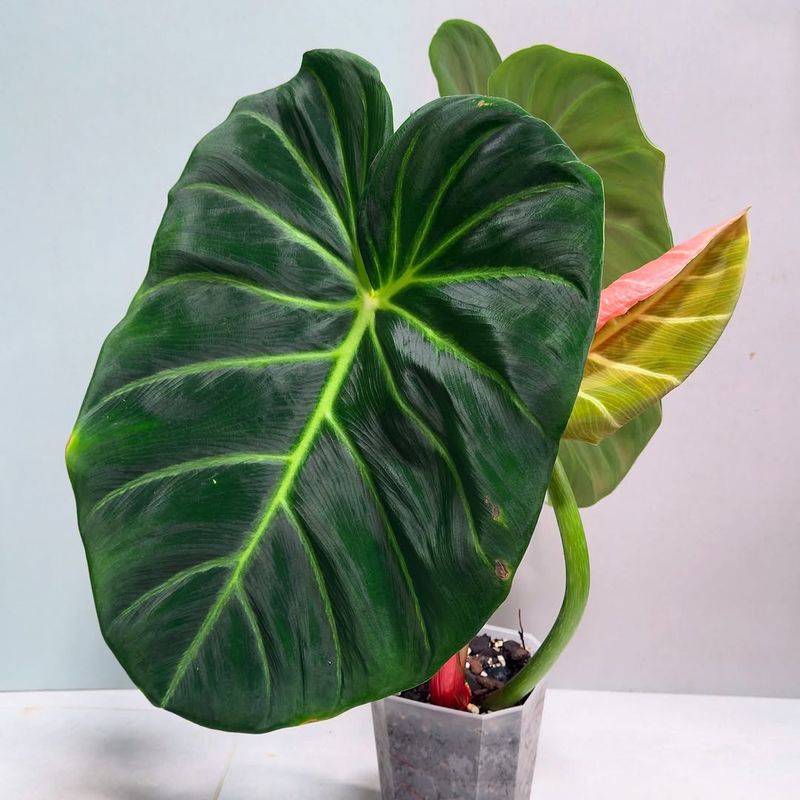
Thick, deeply textured leaves feel almost quilted to the touch, creating a tactile experience unlike smooth-leaved varieties.
Slow growth rates contribute significantly to rarity, as propagation takes considerable time and patience from growers.
Georgia collectors drawn to unusual textures and forms find this species absolutely captivating despite its leisurely development pace.
The leaves display a leathery quality that suggests durability, though careful attention to moisture levels remains important.
Deep veining creates dimensional patterns across leaf surfaces, with valleys and ridges that catch light beautifully.
As a climbing species, vertical support encourages the plant to produce larger, more dramatically textured leaves over time.
Indoor cultivation works well when humidity stays moderately elevated, conditions achievable through simple environmental adjustments.
The rarity factor makes this philodendron a conversation starter, as few plant enthusiasts have encountered it in person.
Collector appeal extends beyond appearance to include the challenge and satisfaction of successfully growing something uncommon.
Bright indirect light supports healthy growth without scorching the thick foliage, which tolerates lower light better than some relatives.
For those patient enough to appreciate slow beauty, this species offers rewards that fast-growing plants cannot provide.
The textured leaves create visual and tactile interest that keeps collectors engaged long-term.
11. Philodendron Plowmanii
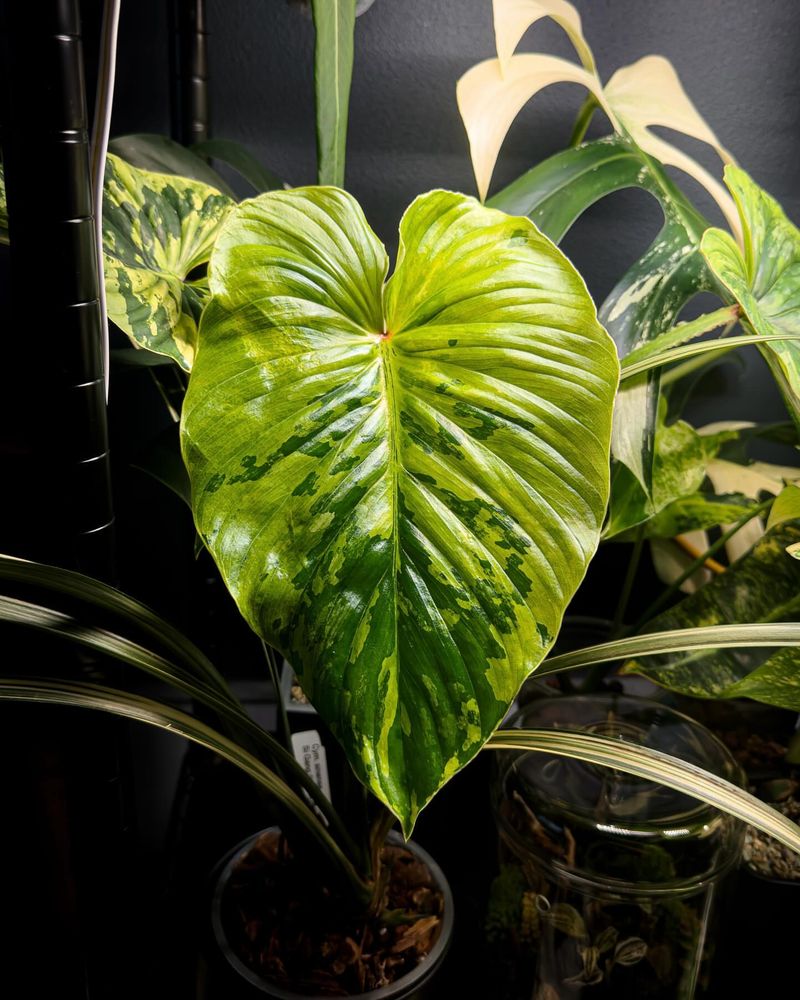
Rippled leaf edges create a ruffled appearance that adds movement and dimension to this crawling species.
Wide, shallow containers showcase the horizontal growth habit beautifully, allowing the plant to spread naturally across surfaces.
Georgia indoor gardeners appreciate how this philodendron fills space horizontally rather than demanding vertical room like climbing varieties.
The leaves emerge from a creeping rhizome, producing foliage sequentially as the plant expands outward.
Silver markings sometimes appear on leaf undersides, adding a hidden surprise element that delights observant plant parents.
This species adapts well to typical household conditions, proving less demanding than some rare philodendrons.
Bright indirect light keeps growth compact and foliage vibrant, though the plant tolerates moderate shade reasonably well.
The wavy leaf margins become more pronounced as the plant matures, creating increasingly dramatic visual impact.
Collectors often position these plants on broad plant stands or shelves where the spreading habit can be fully appreciated.
Regular watering when the top soil layer dries maintains healthy growth without risking root issues from overwatering.
For those seeking something different from typical upright or climbing philodendrons, this species offers refreshing variety.
The architectural leaf shape creates sculptural interest that works beautifully in contemporary interior designs.
12. Philodendron Pastazanum
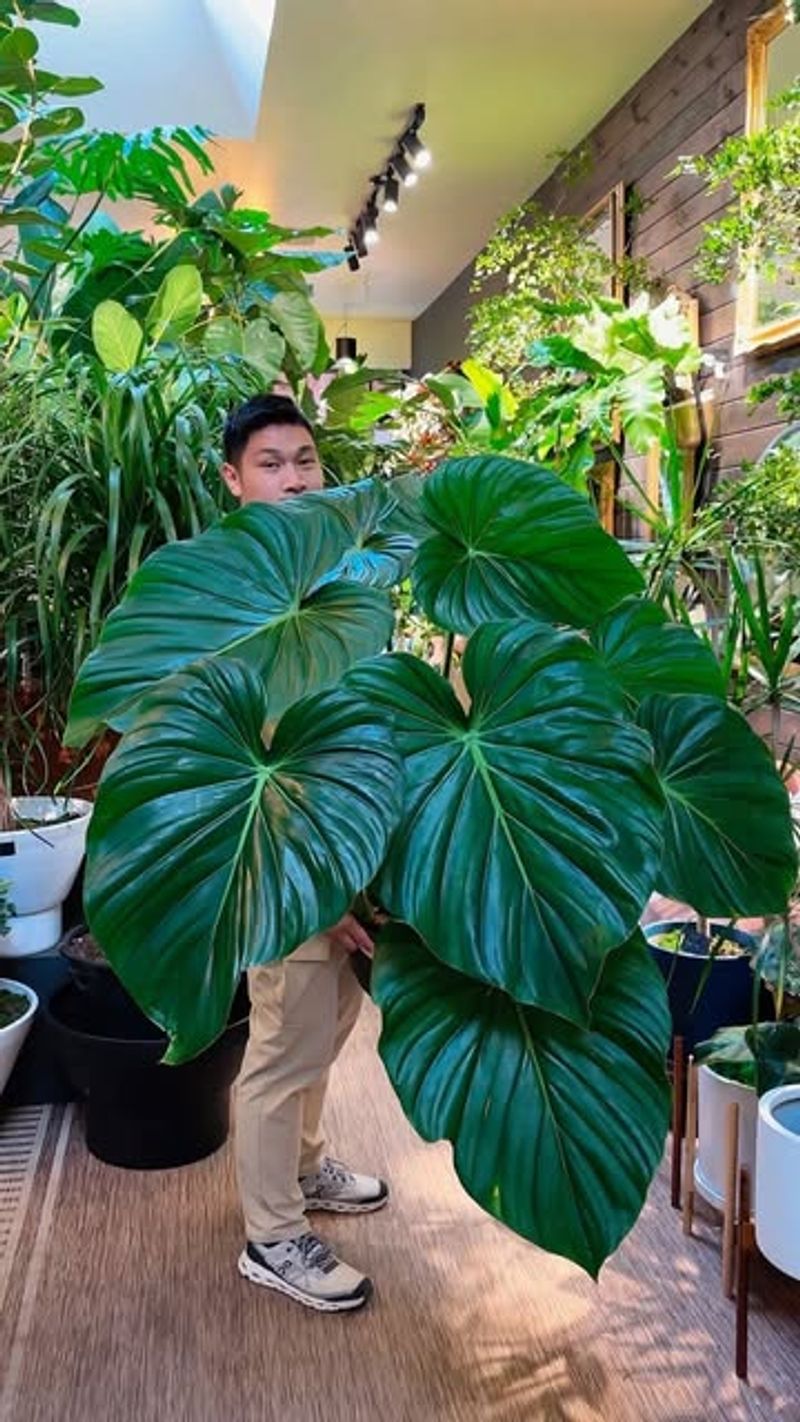
Broad, glossy leaves resemble gloriosum at first glance, but closer inspection reveals distinct differences in shape and sheen.
Georgia collectors appreciate this species as a standalone treasure rather than simply a substitute for its more famous relative.
Leaf shapes tend toward rounder forms with less pronounced heart-shaped indentations than gloriosum displays.
The glossy finish catches light differently than velvety-textured varieties, creating bright reflections that add visual interest.
As a crawling species, horizontal growth patterns suit wide containers and allow the plant to spread naturally across surfaces.
The rhizome produces leaves in succession, offering ongoing anticipation as each new leaf unfolds and expands.
Indoor cultivation succeeds with moderate humidity levels, making this philodendron accessible to growers without elaborate setups.
Bright indirect light maintains the glossy leaf finish and supports healthy, vigorous growth throughout the year.
Collectors value the subtle differences that distinguish this species from similar-looking relatives, celebrating botanical diversity.
The leaves maintain their shine with occasional gentle cleaning, removing dust that can accumulate on smooth surfaces.
For those building diverse philodendron collections, this species adds variety without requiring dramatically different care approaches.
The glossy foliage creates a polished, sophisticated appearance that complements modern interior aesthetics beautifully.
13. Philodendron Joepii

Unusually shaped leaves with irregular lobes create one of the most distinctive silhouettes in the entire philodendron genus.
The mysterious history surrounding this species adds intrigue, as its exact origins remain somewhat unclear despite modern documentation efforts.
Georgia indoor gardeners fascinated by botanical oddities find this philodendron absolutely irresistible for its unconventional appearance.
Each leaf develops a unique shape, with lobes that appear almost hand-carved rather than naturally formed.
The unusual form sparks conversations and questions from visitors who have never encountered such distinctive foliage.
As a climbing variety, providing sturdy support allows the plant to produce increasingly dramatic leaves as it matures.
Indoor cultivation requires attention to humidity and consistent moisture, conditions that reward growers with spectacular growth.
Bright indirect light supports healthy development while preventing the leaf burn that can occur with excessive direct sun.
Collectors view ownership of this rare species as a badge of honor within plant enthusiast communities.
The sculptural quality of the leaves creates living art that changes and evolves as the plant grows.
For those seeking the ultimate conversation piece, few philodendrons compete with this remarkably unusual species.
The combination of rarity, mystery, and extraordinary appearance makes this one of the most coveted varieties available.