The Resurrection Shrub That Thrives Where Almost Nothing Grows In Arizona
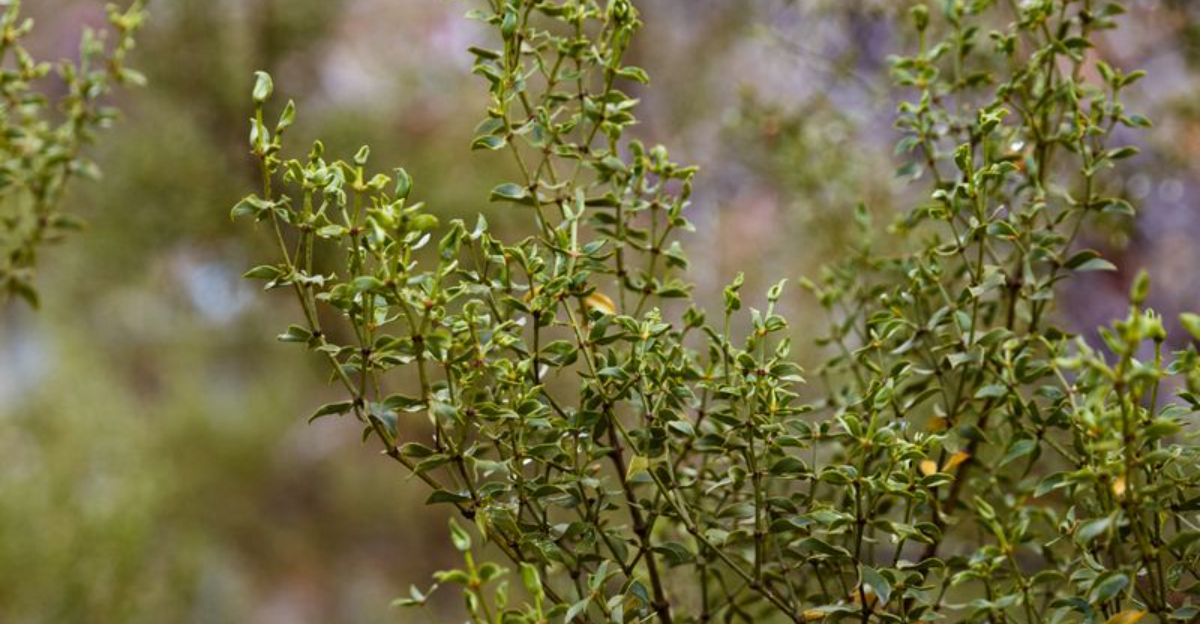
In Arizona’s harsh landscapes, survival is an achievement—and this resurrection shrub takes it to another level.
Able to appear completely lifeless for long periods, it springs back to life after rain, seemingly overnight.
This remarkable adaptation allows it to thrive in extreme heat, drought, and poor soil where few plants can survive.
For Arizona gardeners and desert enthusiasts, it’s a symbol of resilience and efficiency.
The shrub’s ability to shut down and restart growth makes it perfectly suited to unpredictable desert conditions.
It doesn’t just survive adversity—it’s built for it.
It’s The Creosote Bush (Larrea Tridentata) — One Of The Toughest Shrubs In North America
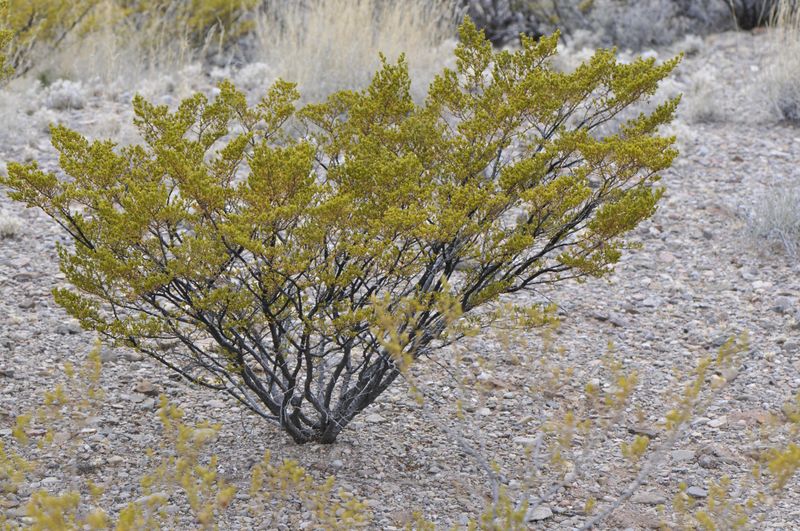
When people talk about Arizona’s resurrection shrub, they’re referring to the legendary creosote bush, a native desert plant with survival skills that border on miraculous.
This evergreen shrub dominates vast stretches of the Sonoran, Mojave, and Chihuahuan deserts, thriving in places where summer temperatures regularly exceed 110°F and annual rainfall barely reaches five inches.
While countless plant species struggle or fail completely in such brutal conditions, the creosote bush not only survives but actually dominates the landscape.
Its dark green foliage and distinctive spacing pattern create the classic desert scenery that defines much of the American Southwest.
Scientists have studied this remarkable plant for decades, fascinated by its ability to endure prolonged drought, extreme heat, and nutrient-starved soils.
The creosote bush has evolved over millions of years to master desert living, developing specialized features that allow it to conserve every precious drop of moisture.
Native Americans and early settlers quickly recognized its toughness and used it for medicine, waterproofing, and fuel.
Today, this hardy shrub continues to inspire botanists, gardeners, and anyone who appreciates nature’s most resilient survivors.
Understanding the creosote bush means understanding how life adapts to seemingly impossible challenges.
It Can Appear Lifeless For Months — Then Instantly Revive After Rain
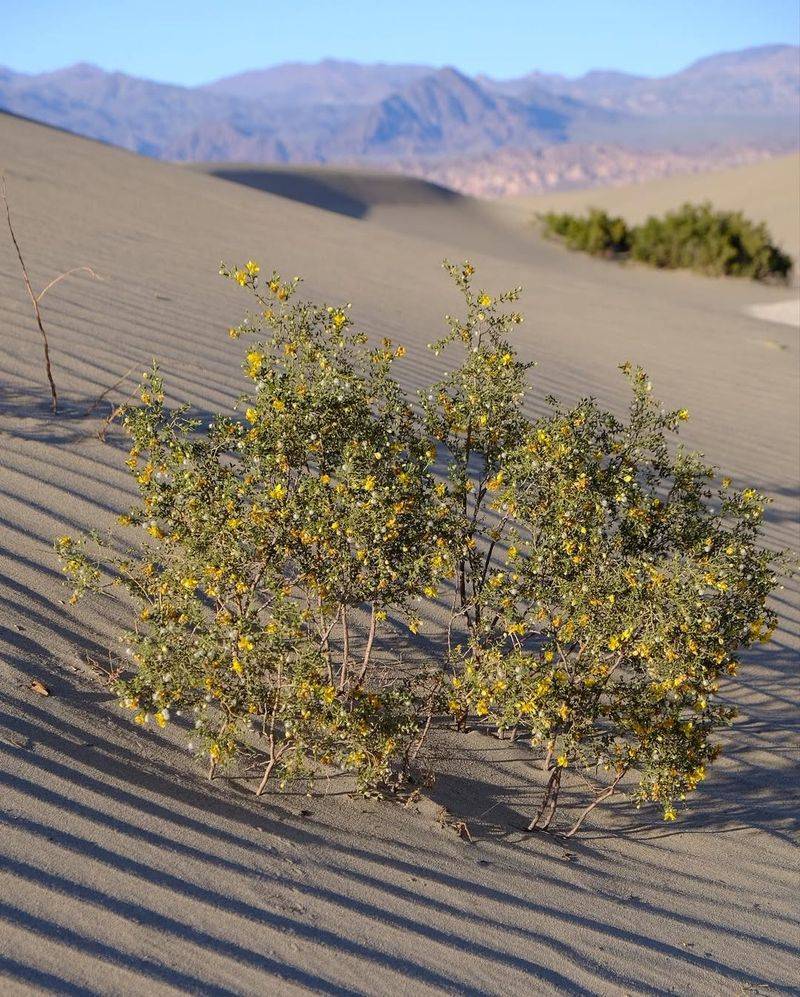
One of the creosote bush’s most astonishing tricks is its ability to essentially shut down operations during extended dry periods, only to spring back to vibrant life within hours of receiving rainfall.
During severe drought conditions that can last for months, the shrub enters a dormant state where it drops many of its smaller leaves and drastically reduces all metabolic activity.
To an untrained observer, the plant might look completely lifeless, with brittle branches and sparse, dull foliage that appears beyond saving.
But this dormancy is actually a brilliant survival strategy rather than a sign of decline or weakness.
The moment moisture arrives, whether from a passing monsoon storm or winter rain, the transformation begins almost immediately.
Within just a few hours, the remaining leaves begin to rehydrate, their cells swelling with precious water and their color deepening to a rich green.
New leaf buds that were waiting in suspended animation suddenly burst forth, and within days the entire shrub looks completely refreshed and healthy.
This rapid revival capability allows the creosote to take maximum advantage of unpredictable desert rainfall patterns.
Your Arizona Garden Changes Every Week. Your Plan Should Too.
Gardening in Arizona changes quickly throughout the season. Every Friday you’ll receive a simple weekly plan showing exactly what to plant, prune, fertilize, harvest, and protect so you never miss the right timing.
The speed of this resurrection process continues to amaze researchers who study desert plant physiology.
Its Resin-Coated Leaves Prevent Water Loss
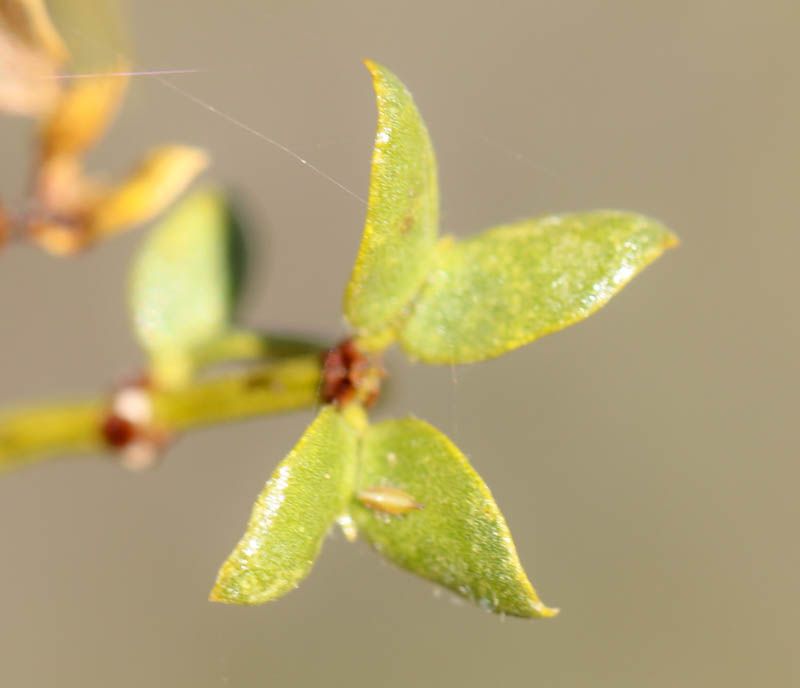
Every single leaf on a creosote bush comes equipped with a natural waterproof coating that would make any engineer jealous.
The plant produces a thick, sticky resin that covers both sides of its small, paired leaves, creating a glossy, almost varnished appearance that reflects sunlight.
This resinous layer serves multiple critical functions in the plant’s fight against dehydration in one of North America’s most unforgiving environments.
First and most importantly, the coating dramatically reduces water loss through evaporation, which is especially crucial during Arizona’s scorching summer months when temperatures routinely climb above 115°F.
The resin also helps protect the leaf tissue from intense ultraviolet radiation that would otherwise damage the plant’s photosynthetic machinery.
Additionally, this coating makes the leaves less palatable to many herbivores, providing a chemical defense against animals that might otherwise browse on the shrub’s foliage.
On hot days, you can actually smell the distinctive creosote aroma as the resin volatilizes slightly in the heat, releasing aromatic compounds into the desert air.
This same resin has been harvested by humans for centuries for use in traditional medicines, adhesives, and waterproofing applications.
The effectiveness of this natural coating demonstrates millions of years of evolutionary refinement.
It Thrives In Some Of The Poorest Soils On Earth
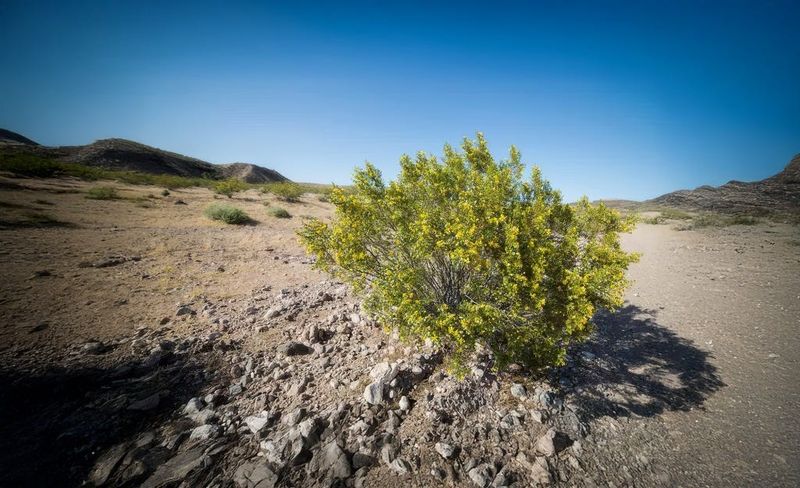
While most garden plants demand rich, nutrient-filled soil to flourish, the creosote bush has mastered the art of thriving in substrate that barely qualifies as soil at all.
Across Arizona’s deserts, you’ll find these tough shrubs growing in rocky, gravelly, compacted ground that contains almost no organic matter and offers minimal nutrients.
The soil pH in these areas often ranges from highly alkaline to moderately acidic, and the texture can vary from pure sand to heavy caliche-laden clay that becomes concrete-hard when dry.
Most agricultural crops would perish within weeks in such conditions, unable to extract sufficient nitrogen, phosphorus, or other essential minerals from such impoverished ground.
The creosote bush, however, has evolved highly efficient root systems that can extract trace nutrients from even the most barren substrates.
Its roots form beneficial relationships with specialized fungi that help increase nutrient uptake, particularly of phosphorus which is often locked in unavailable forms in desert soils.
The plant has also adapted to require far fewer nutrients than most other shrubs, operating on what amounts to a starvation diet by typical plant standards.
This ability to thrive in terrible soil makes the creosote bush an invaluable pioneer species that can colonize disturbed or degraded landscapes where other plants cannot establish themselves.
Its Roots Spread Wide Instead Of Deep
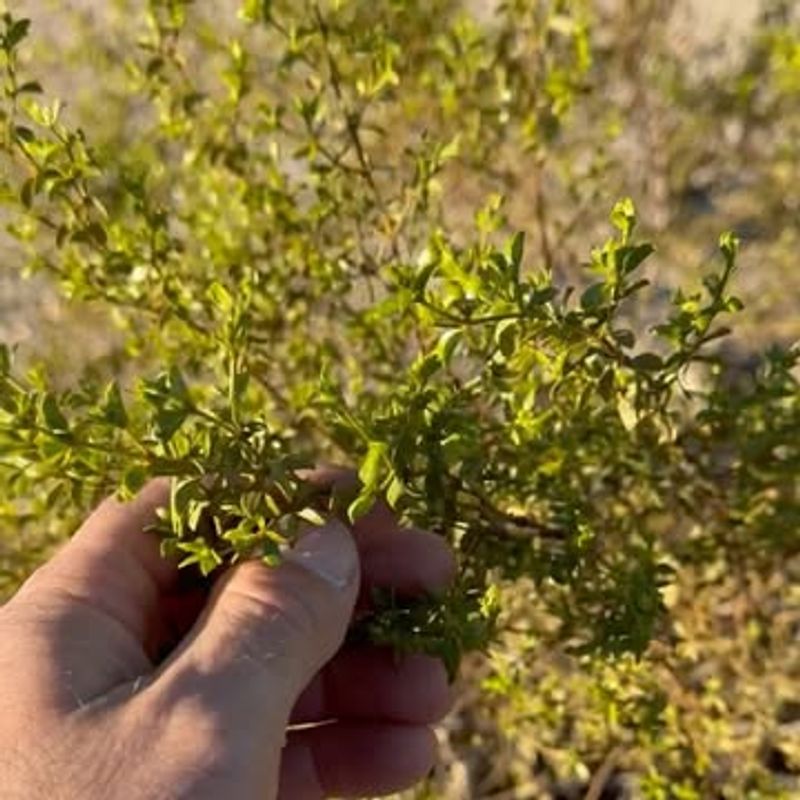
Rather than sending a single taproot deep into the earth like many trees, the creosote bush employs a completely different underground strategy that’s perfectly suited to desert conditions.
Its root system spreads horizontally in a wide, shallow network that can extend twenty feet or more from the main stem, typically staying within the top two feet of soil.
This architectural choice might seem counterintuitive at first, but it’s actually brilliantly adapted to capturing the brief, intense rainfall events that characterize Arizona’s desert climate.
When a monsoon thunderstorm dumps an inch of rain in thirty minutes, that water rarely penetrates more than a few inches into the dry, compacted desert soil before the scorching sun begins evaporating it again.
Deep roots would miss this fleeting moisture entirely, but the creosote’s shallow, wide-spreading network can quickly absorb water across a large surface area before it disappears.
The extensive root system also serves another purpose by establishing the plant’s territory and reducing competition from neighboring shrubs.
During rare periods when deeper moisture is available, some creosote bushes can develop secondary roots that reach down several feet to tap into groundwater or deeper soil reserves.
This flexible root architecture allows the plant to exploit whatever water sources become available, whether they’re shallow or deep, abundant or scarce.
Some Creosote Rings Are Thousands Of Years Old
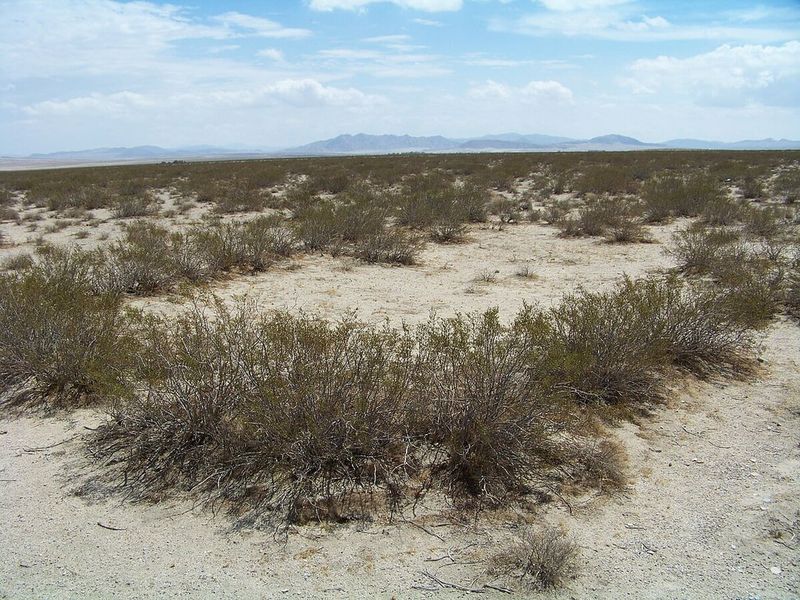
Perhaps the most mind-blowing fact about creosote bushes is that some individuals living today first sprouted when ancient civilizations were just beginning to build pyramids.
Scientists have discovered that certain creosote bushes reproduce by cloning themselves, with the original plant gradually expanding outward in a circular pattern over thousands of years.
As the central, oldest stems eventually age and disappear, the outer ring of genetically identical clones continues growing, creating distinctive circular or arc-shaped formations visible from aerial photographs.
The famous “King Clone” creosote ring in California’s Mojave Desert has been estimated at over 11,000 years old, making it one of the oldest living organisms on our entire planet.
Similar ancient rings exist throughout Arizona’s deserts, though they often go unnoticed by casual observers who see them as separate individual shrubs rather than connected clones.
These living time capsules have witnessed the entire span of human civilization in the Americas, from the first indigenous peoples to modern times.
Radiocarbon dating of the woody tissue and growth rate calculations allow researchers to estimate the age of these remarkable formations.
The longevity of these clonal rings demonstrates the creosote’s ultimate survival strategy—individual stems may age and fade, but the genetic individual can essentially live forever by continuously producing new growth at its expanding edges.
It Releases Chemicals That Suppress Nearby Plant Growth
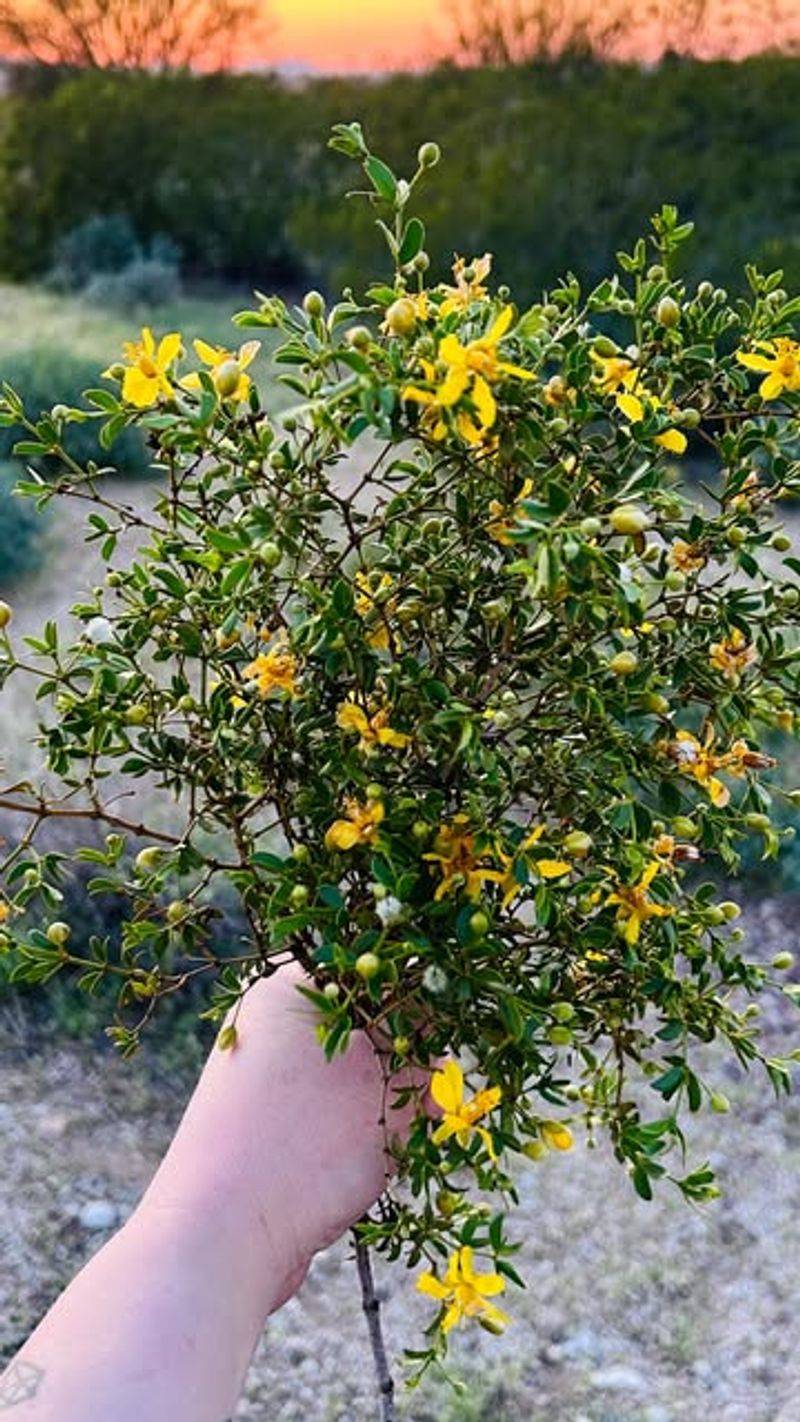
Walking through Arizona’s creosote-dominated desert, you’ll notice something peculiar—the shrubs are almost always evenly spaced, as if someone deliberately planted them with mathematical precision.
This uniform distribution isn’t coincidental but rather the result of chemical warfare that the creosote bush wages against potential competitors.
The plant produces and releases allelopathic compounds, specialized chemicals that inhibit seed germination and growth of other plants within its root zone and even in the soil beneath its canopy.
These toxic substances leach from living roots, fallen leaves, and even wash off the resinous foliage during rainfall, creating a chemical barrier that protects the creosote’s access to scarce water and nutrients.
The allelopathic effect is so powerful that the bare zones between mature creosote bushes often remain conspicuously empty of vegetation, creating the distinctive spotted pattern that characterizes creosote flats.
This strategy allows individual shrubs to minimize competition in an environment where resources are desperately limited and sharing could mean the difference between survival and failure.
Interestingly, the creosote’s own seedlings are also affected by these chemicals, which is why new creosote plants typically only establish themselves at the edge of the parent’s chemical influence zone or after the parent plant has disappeared.
This self-spacing mechanism ensures that each shrub has adequate territory to support itself through the harshest droughts.
Arizona’s Heat And Sun Actually Benefit It
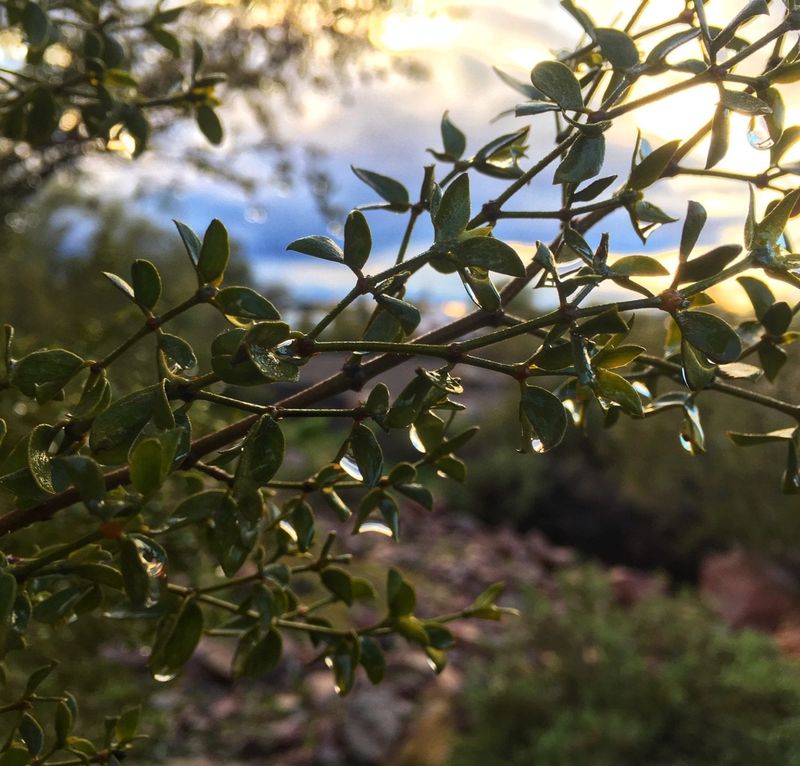
While most plants wilt and suffer under the relentless Arizona sun, the creosote bush has evolved to not just tolerate but actually benefit from conditions that would spell doom for less adapted species.
The shrub’s photosynthetic machinery is specially adapted to function efficiently at extremely high temperatures that would denature the proteins and enzymes in ordinary plants.
Research has shown that creosote bushes can maintain photosynthesis and growth at temperatures exceeding 115°F, a feat that very few plant species can match.
The intense solar radiation that beats down on the Sonoran Desert actually provides abundant energy for photosynthesis, allowing the creosote to produce food efficiently when water is available.
Its small, waxy leaves are oriented to minimize direct exposure during the hottest part of the day, reducing heat stress while still capturing adequate light for energy production.
The plant’s dark green color, rather than being a liability in the heat, actually helps it absorb the specific wavelengths of light most useful for photosynthesis while reflecting infrared radiation that would otherwise cause overheating.
During summer months when many desert annuals have long since dried up and even some perennials go dormant, the creosote bush continues its slow, steady growth whenever moisture is available.
This heat tolerance gives the creosote a significant competitive advantage, allowing it to dominate landscapes where temperature extremes eliminate less hardy competitors.
It Blooms Quickly After Rainfall
Timing is everything in the desert, and the creosote bush has perfected the art of seizing brief opportunities when they arise.
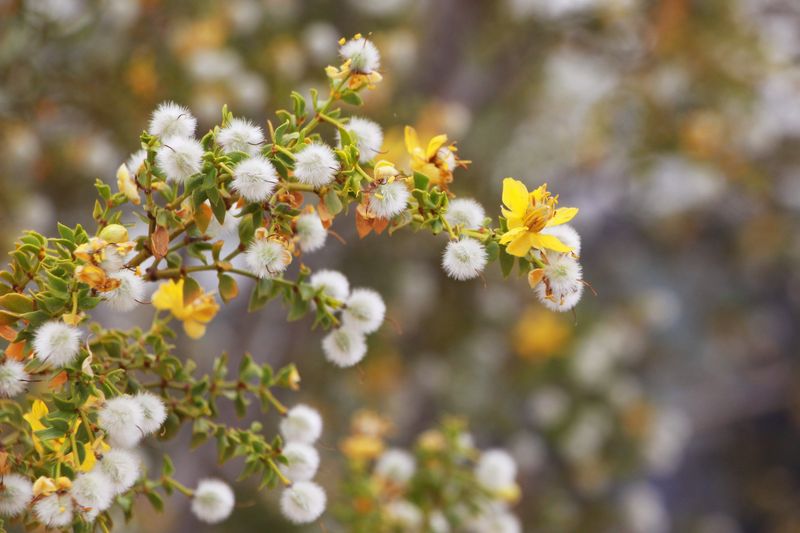
Within days of receiving adequate rainfall, creosote bushes burst into bloom, producing cheerful yellow flowers that dot the landscape with unexpected color.
Each flower is relatively small, measuring about half an inch across with five twisted petals that give them a distinctive pinwheel appearance.
This rapid flowering response allows the plant to take advantage of the moisture pulse before the water evaporates and the soil dries out again.
The flowers typically appear in spring following winter rains and again in late summer after monsoon storms, though the plant can bloom opportunistically whenever conditions permit.
Pollination occurs quickly, with native bees, flies, and other insects visiting the blooms to collect pollen and nectar, inadvertently transferring pollen between flowers in the process.
After successful pollination, the flowers develop into small, fuzzy white seed capsules covered with fine hairs that help them disperse on desert winds.
The entire process from flower to mature seed can occur in just a few weeks, ensuring that the next generation is ready before the moisture window closes.
This reproductive timing demonstrates the creosote’s sophisticated ability to respond to environmental cues and maximize its chances of successfully producing offspring in an unpredictable climate.
Its Scent Signals Rain In The Desert
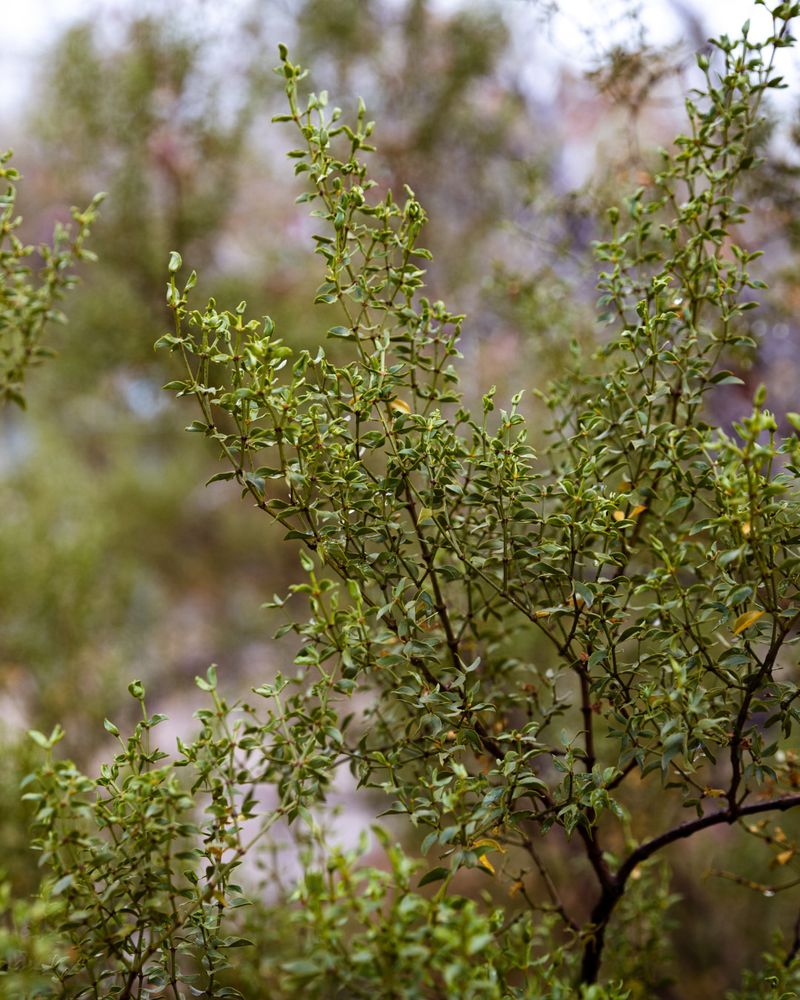
Ask any longtime Arizona resident about the smell of rain in the desert, and they’ll likely describe the distinctive, earthy aroma released by creosote bushes when moisture hits their resinous leaves.
This powerful fragrance, often described as clean, medicinal, or reminiscent of creosote wood preservative (hence the plant’s common name), has become deeply associated with desert rainstorms in the collective consciousness of Southwestern communities.
The scent comes from volatile organic compounds stored in the leaf resin that are released when raindrops strike the foliage, creating an aromatic cloud that can perfume the air for miles around.
Many people find the smell deeply pleasant and nostalgic, evoking memories of childhood monsoons or the relief that comes with summer thunderstorms breaking a long dry spell.
The intensity of the fragrance can be so strong after a good rain that it permeates clothing, vehicles, and buildings, becoming an olfactory signature of the desert environment.
Scientists believe these aromatic compounds may serve multiple functions for the plant, potentially deterring some herbivores and inhibiting fungal growth on the moist leaves after rainfall.
For desert dwellers, the creosote’s scent has become an informal weather indicator—catching a whiff of that distinctive aroma often means rain is falling somewhere nearby, even if you can’t see the clouds yet.
This sensory connection between plant and people illustrates how deeply the creosote bush is woven into the cultural fabric of Arizona’s desert communities.
Wildlife Depends On It For Shelter And Survival

Despite its chemical defenses and harsh habitat, the creosote bush serves as a critical resource for numerous desert animals that have adapted to live alongside this resilient shrub.
The dense, evergreen canopy provides precious shade in an environment where temperatures can literally become lethal for small animals exposed to direct sun.
Lizards, including desert spiny lizards and whiptails, frequently shelter beneath creosote bushes during the hottest parts of the day, using the cooler microclimate to regulate their body temperature.
Ground-nesting birds such as cactus wrens and thrashers often build their nests within the protective branches, where the shrub’s spacing and structure provide both support and concealment from predators.
Numerous insect species have evolved to feed on creosote foliage despite its toxic compounds, including specialized grasshoppers and beetles that can detoxify or tolerate the plant’s chemical defenses.
These insects, in turn, provide food for insectivorous birds, lizards, and small mammals, making the creosote bush a foundation species that supports entire food webs.
Pack rats frequently build their stick nests at the base of creosote shrubs, taking advantage of the shelter and using creosote twigs as construction material.
Even the bare soil between widely-spaced creosote bushes creates important habitat for burrowing animals like kangaroo rats and ground squirrels.
Without the creosote bush, Arizona’s desert ecosystem would look dramatically different and support far fewer animal species.
It Plays A Key Role In Preventing Desert Erosion
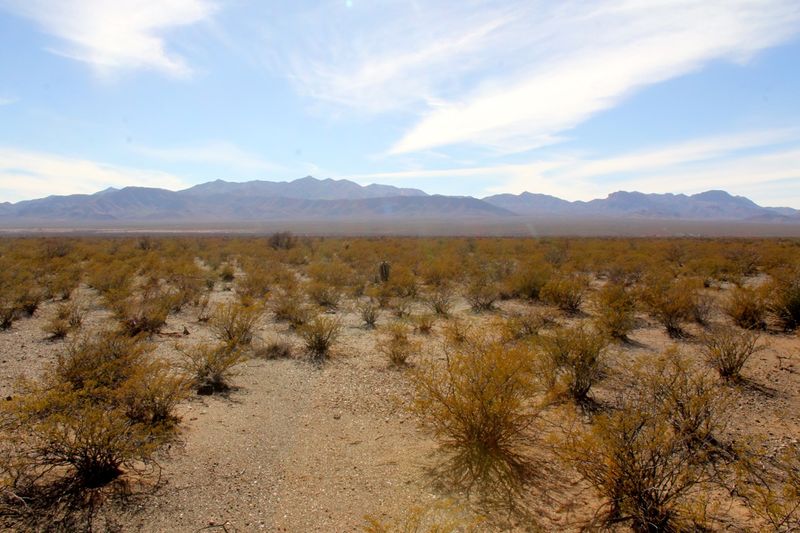
Beyond its own survival, the creosote bush performs vital ecological services that benefit the entire desert landscape, with erosion control being among the most important.
The extensive shallow root system that spreads widely beneath each shrub acts like a living net, binding loose desert soils and preventing them from washing away during intense monsoon thunderstorms.
Arizona’s summer monsoons can drop several inches of rain in just an hour or two, creating flash floods that would strip away topsoil if vegetation weren’t there to anchor it.
The creosote’s roots stabilize slopes and washes, slowing water flow and allowing more moisture to infiltrate into the ground rather than running off immediately.
The shrub’s canopy also plays a role by breaking the force of falling raindrops, which can otherwise dislodge soil particles and begin the erosion process.
Fallen leaves and twigs accumulate beneath the canopy, creating a protective mulch layer that further shields the soil surface from both rain impact and wind erosion.
Over decades and centuries, creosote bushes help shape the physical structure of desert landscapes by creating small mounds of accumulated soil and organic matter beneath their canopies.
These raised microsites, called “fertility islands,” become important locations where other plant species can occasionally establish themselves in the otherwise harsh environment.
The erosion control provided by creosote bushes helps maintain the integrity of desert ecosystems and protects against landscape degradation.
It Requires Almost No Human Care To Survive

In an era when water conservation and sustainable landscaping have become critical concerns, the creosote bush has emerged as a superstar of xeriscaping and low-maintenance desert gardening.
Once established in an appropriate location, a creosote bush requires absolutely zero supplemental watering, fertilization, or pest control to thrive in Arizona’s desert environments.
This remarkable self-sufficiency makes it increasingly popular among landscape designers, restoration ecologists, and homeowners who want to create beautiful outdoor spaces without the environmental cost of traditional lawns and exotic ornamentals.
Native plant nurseries throughout Arizona now regularly stock creosote bushes for landscaping projects, recognizing that this once-overlooked desert native offers tremendous practical advantages.
The plant’s natural form requires no pruning or shaping, and it doesn’t produce messy fruit or aggressive seeds that create maintenance headaches.
Its evergreen foliage provides year-round visual interest and habitat value, while its drought dormancy means it simply pauses during dry periods rather than requiring intervention to stay alive.
Restoration projects in degraded desert areas increasingly use creosote bushes as pioneer species to stabilize soil and begin rebuilding native plant communities.
For homeowners transitioning from water-intensive landscaping to desert-appropriate gardens, the creosote bush represents the ultimate low-maintenance choice that works with nature rather than against it.
Its care requirements can be summed up simply: plant it and leave it alone.
Its Survival Strategy Is Pure Dormancy, Not Weakness
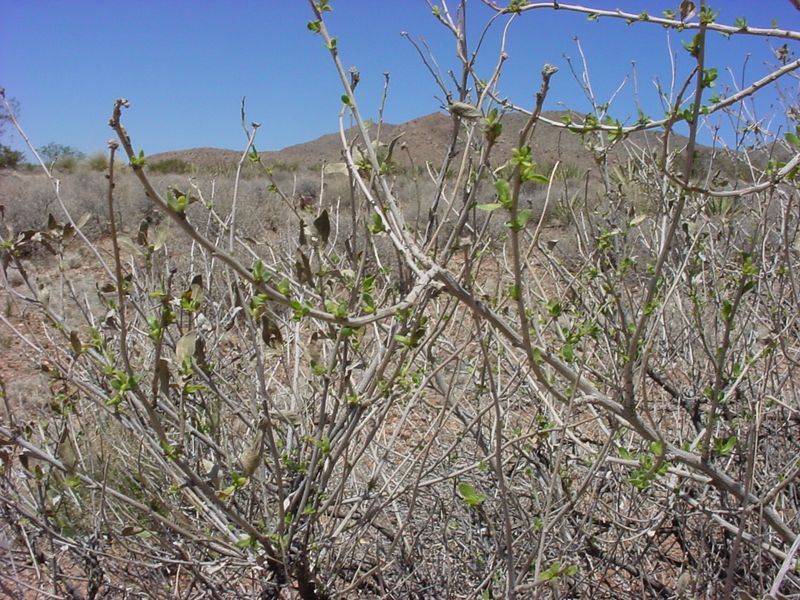
Perhaps the most important lesson the creosote bush teaches us is that knowing when to pause is just as important as knowing when to push forward.
Many people mistakenly interpret the shrub’s dormant appearance during drought as a sign of weakness, decline, or impending failure, when in reality it represents one of nature’s most sophisticated survival strategies.
The ability to shut down non-essential functions and wait out unfavorable conditions requires complex physiological adaptations that took millions of years to evolve and perfect.
During dormancy, the creosote bush isn’t simply enduring or barely hanging on—it’s actively conserving resources, protecting vital tissues, and positioning itself to explode back into growth the moment conditions improve.
This strategic dormancy allows the plant to survive drought periods that would completely eliminate species that attempt to maintain normal growth and metabolism throughout dry spells.
The creosote’s approach demonstrates that survival sometimes requires flexibility and the wisdom to recognize when conditions demand a different strategy rather than stubborn persistence.
In our modern culture that often glorifies constant activity and productivity, the creosote bush offers a powerful counterexample of success through strategic rest and patience.
Understanding that dormancy is strength rather than weakness changes how we view not just this remarkable plant but also the broader concept of adaptation and resilience in challenging environments.
The resurrection shrub doesn’t just survive Arizona’s harshest deserts—it thrives there by knowing exactly when to grow and when to wait.