15 Smart Trellis Ideas For Lush Climbing Plants In Louisiana Gardens
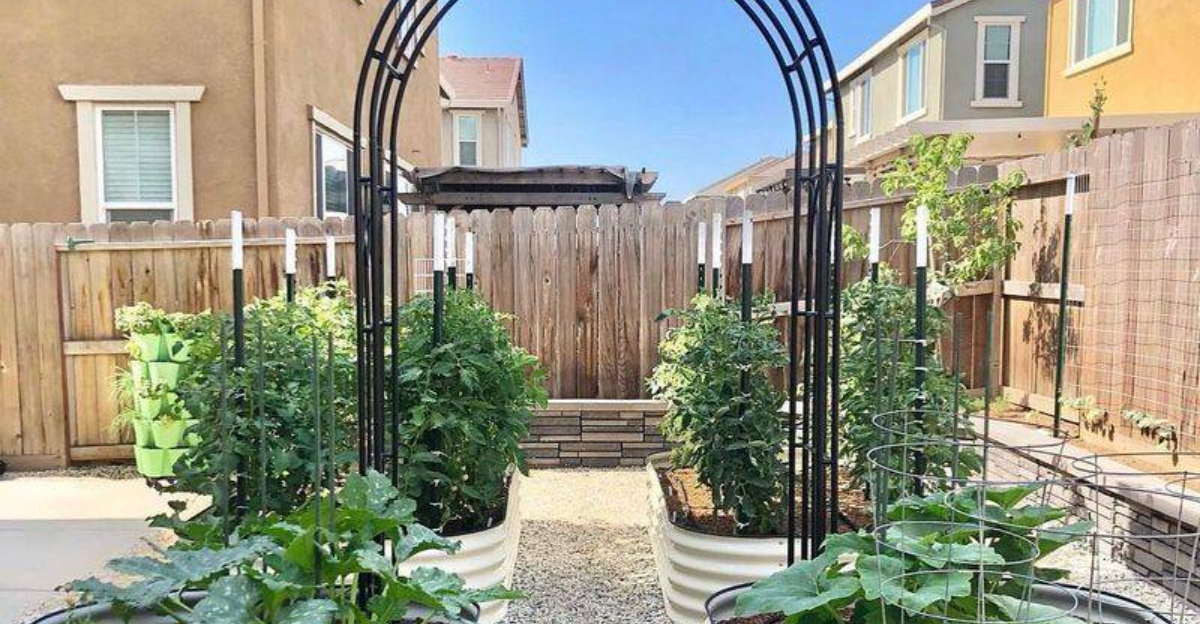
In Louisiana gardens, plants don’t just grow—they take over.
With heat, humidity, and long growing seasons on their side, climbing plants can turn from charming to chaotic in the blink of an eye.
That’s where a smart trellis comes in, acting as both traffic cop and stage manager for vines that want to steal the show.
A well-designed trellis isn’t just about support—it’s about airflow, disease prevention, visual balance, and keeping vigorous growers from swallowing fences, sheds, or unsuspecting shrubs.
In Louisiana’s climate, the right structure can mean the difference between a lush, magazine-worthy garden and a tangled jungle you dread pruning.
From classic arches to unexpected repurposed materials, creative trellising helps gardeners harness that explosive growth instead of fighting it.
These fifteen trellis ideas are tailored for Louisiana conditions, where durability matters and style doesn’t take a back seat.
When climbing plants are given the right framework, they reward you with height, drama, and flowers that stop people mid-sentence.
1. Weather-Resistant Wooden Trellises For Louisiana’s Humid Climate
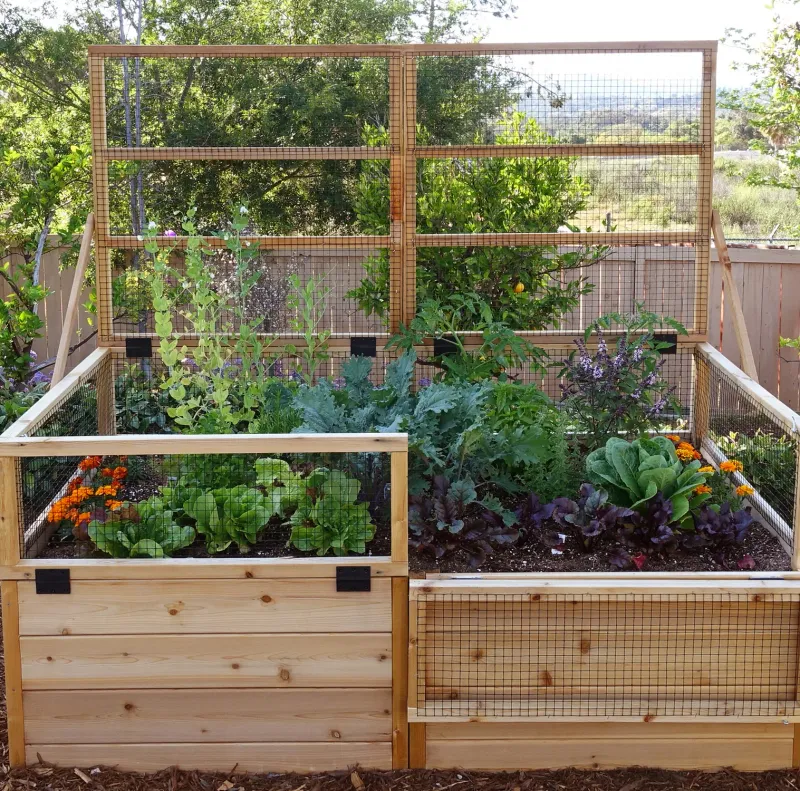
Cedar and cypress stand out as champion materials when building trellises for Louisiana’s moisture-heavy environment.
These rot-resistant woods contain natural oils that repel insects and prevent decay even when exposed to constant humidity and summer downpours.
Unlike pine or other softwoods that deteriorate quickly in wet conditions, cedar and cypress can last decades with minimal upkeep.
Applying a clear wood sealer every two years helps preserve the natural beauty while extending the lifespan even further.
Regular inspection for loose joints or splintering ensures your trellis remains sturdy enough to support heavy vines throughout hurricane season.
Confederate jasmine, Carolina jessamine, and climbing roses thrive beautifully on wooden structures because the natural texture provides excellent grip for tendrils.
The warm tones of aged cedar complement traditional Southern landscaping styles while blending seamlessly with brick homes and cottage gardens.
Position wooden trellises where they receive good air circulation to prevent moisture from settling in joints and crevices.
Consider pre-drilling holes before assembly to prevent splitting, especially important in humid climates where wood expands and contracts frequently.
The investment in quality rot-resistant wood pays dividends through years of reliable performance supporting your most treasured climbing plants.
2. Metal Trellises That Handle Heat, Rain, And Storms
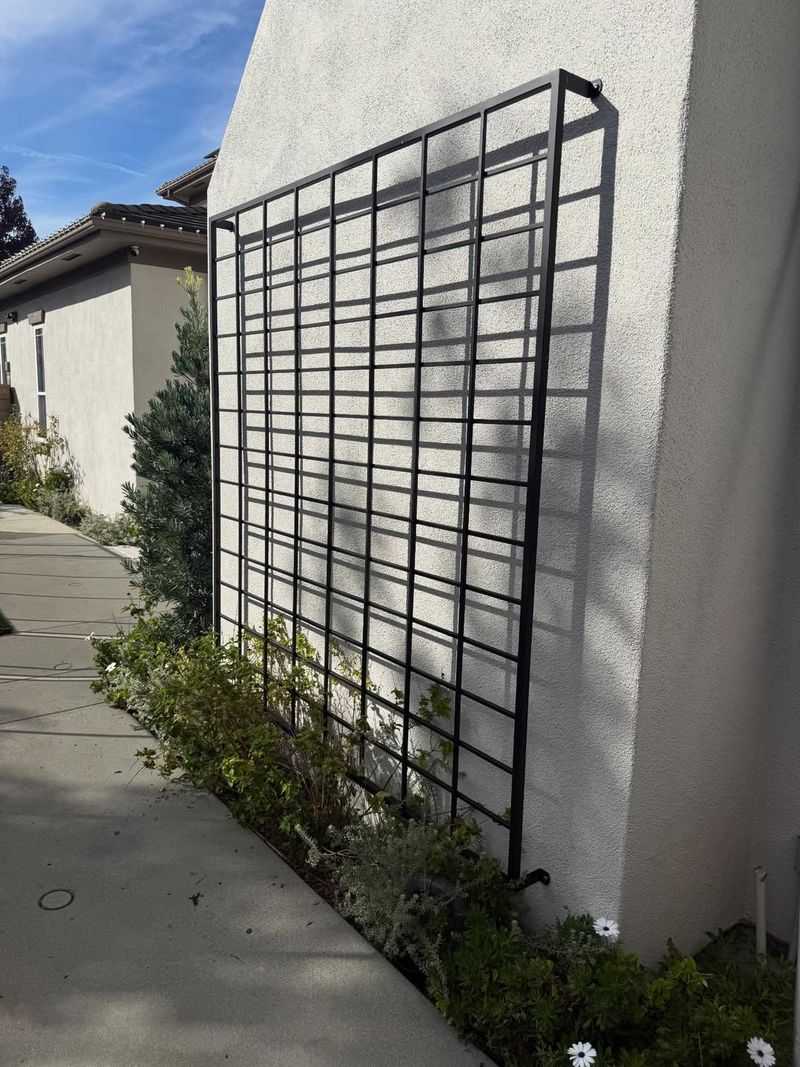
Powder-coated steel and galvanized metal trellises offer unmatched durability when Louisiana weather turns extreme.
These materials laugh in the face of torrential rains, scorching summer heat, and even the occasional tropical storm that sends lighter structures tumbling.
The powder-coating process creates a protective barrier that prevents rust while offering color options that coordinate with your existing landscape design.
Black metal trellises provide dramatic contrast against flowering vines, while bronze and copper finishes add warmth to traditional garden spaces.
Metal structures require virtually no maintenance beyond an annual inspection for loose bolts or damaged coating.
Their strength allows them to support heavyweight climbers like wisteria, trumpet vine, and muscadine grapes without bowing or collapsing.
The open framework of metal designs promotes excellent airflow, reducing fungal problems that plague Louisiana gardens during humid months.
Your Louisiana Garden Changes Every Week. Your Plan Should Too.
Gardening in Louisiana changes quickly throughout the season. Every Friday you’ll receive a simple weekly plan showing exactly what to plant, prune, fertilize, harvest, and protect so you never miss the right timing.
Anchor metal trellises securely in concrete footings if you plan to grow vigorous vines that add considerable weight over time.
The initial investment costs more than wood, but metal trellises often outlast their owners, making them true heirloom garden features.
Pair metal structures with passionflower, clematis, or morning glories for stunning vertical displays that withstand whatever Mother Nature delivers.
3. Arched Trellises For Dramatic Garden Entrances
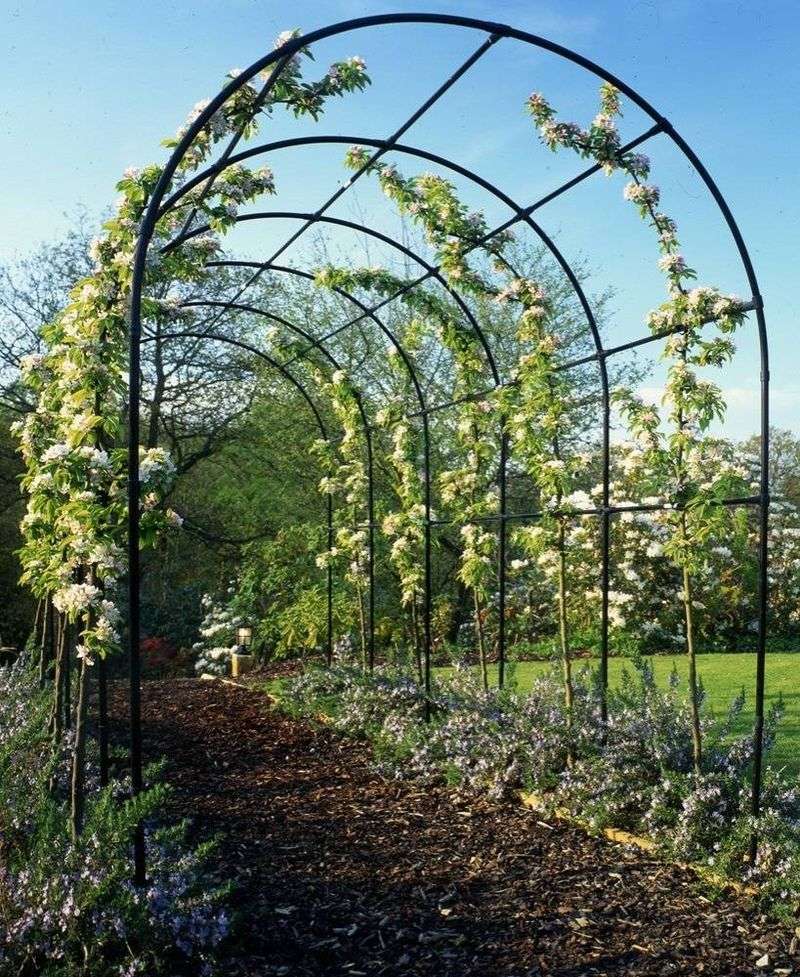
Nothing announces a garden space quite like an arched trellis draped in cascading blooms and fragrant foliage.
These romantic structures transform ordinary pathways into enchanting passages that invite exploration while adding vertical interest to flat Louisiana landscapes.
Arched trellises work beautifully at garden entries, over gates, or positioned to frame special views like fountains or seating areas.
Choose arches constructed from sturdy materials like welded steel or thick timber that can support the considerable weight of mature vines.
In Louisiana’s climate, arches covered with Confederate jasmine create year-round greenery punctuated by sweetly scented white flowers in spring.
Climbing roses transform arches into spectacular focal points, though they require regular maintenance to prevent overcrowding and ensure healthy blooms.
Lady Banks roses, particularly the yellow variety, tolerate Louisiana heat exceptionally well and produce masses of small flowers that cover arches completely.
Position arches where they receive at least six hours of sunlight daily for best flowering performance from most climbing plants.
Ensure the arch height accommodates comfortable passage even when vines hang down, typically requiring at least seven feet of clearance.
Regular pruning keeps growth contained and encourages lateral branching that fills out the arch structure evenly from bottom to top.
4. Wall-Mounted Trellises For Small Louisiana Yards
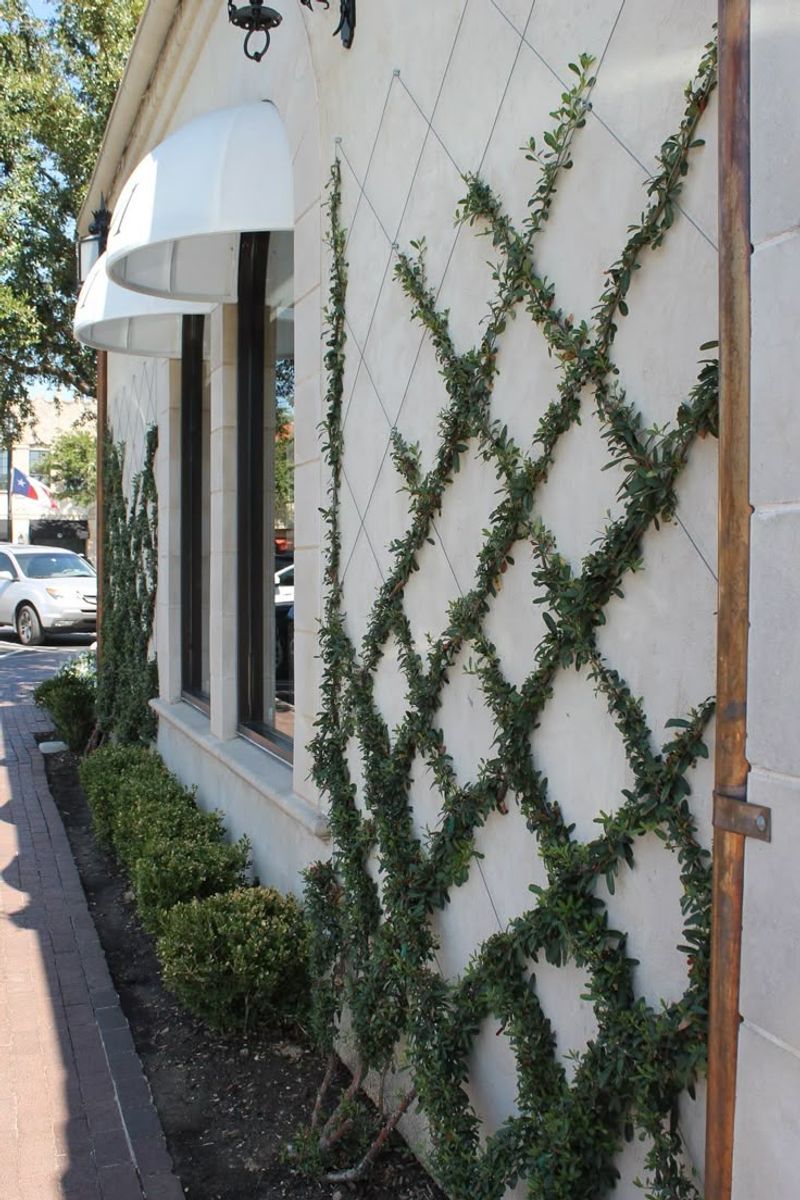
Maximizing vertical space becomes essential when working with compact Louisiana yards where every square foot counts.
Wall-mounted trellises attach directly to home exteriors, fences, or garage walls, creating lush green walls without consuming precious ground space.
These space-saving solutions allow apartment dwellers and townhouse owners to enjoy climbing plants even when traditional garden beds prove impossible.
Mounting trellises against walls improves air circulation around plants, reducing the fungal diseases that thrive in Louisiana’s humid conditions.
The wall absorbs and radiates heat, creating a microclimate that helps heat-loving vines like bougainvillea and mandevilla flourish.
Install wall-mounted trellises with standoffs that create several inches of space between the structure and the wall surface.
This gap prevents moisture from becoming trapped against your home while giving tendrils room to weave through the trellis framework.
Lighter-weight climbers like sweet peas, black-eyed Susan vine, and moonflower work perfectly on wall-mounted structures without overwhelming the mounting hardware.
Consider the mature size of your chosen plants before installation, ensuring the trellis dimensions accommodate full growth without requiring constant pruning.
Paint or stain wall-mounted trellises to match your home’s exterior for a cohesive look, or choose contrasting colors that make the living wall pop visually.
5. Trellis Panels For Fast-Growing Vines
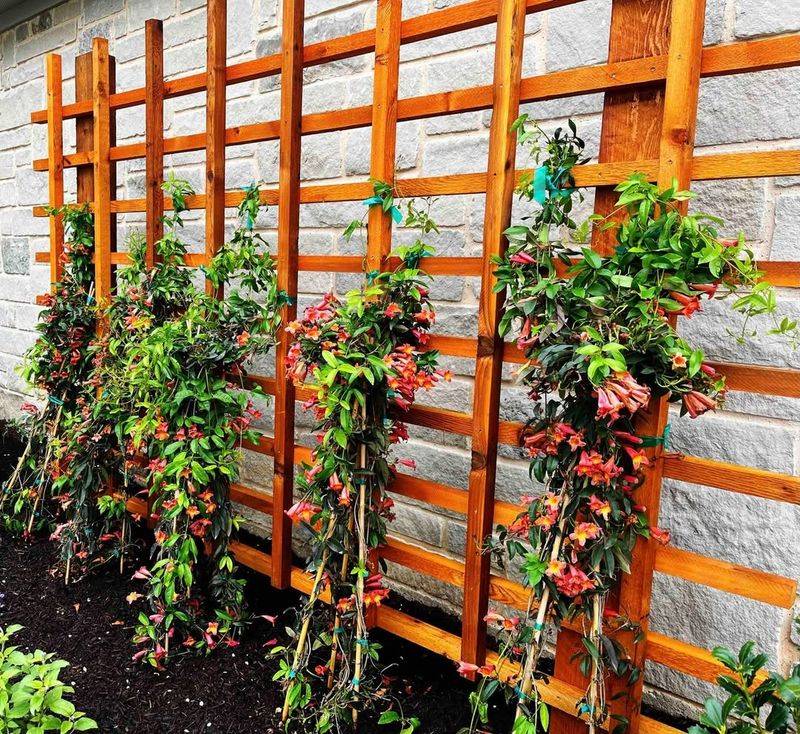
Fast-growing vines common to Louisiana gardens demand trellises built tough enough to handle aggressive growth habits.
Panel-style trellises with close grid spacing provide numerous attachment points that support vigorous climbers as they race upward.
Trumpet vine, passionflower, and coral honeysuckle can cover a six-foot panel in a single growing season under ideal conditions.
Choose panels constructed from heavy-gauge materials rather than flimsy lattice that buckles under the weight of mature vines.
Spacing between grid openings should measure between four and six inches to accommodate stems while providing adequate support.
Installing panels in series creates living walls perfect for screening unsightly views or blocking noise from nearby roads.
Regular pruning during the growing season prevents vines from becoming so dense that airflow becomes restricted, inviting mildew problems.
Remove old growth annually to encourage fresh shoots that produce more flowers and maintain manageable vine size.
Secure panels firmly to posts sunk at least two feet deep, accounting for Louisiana’s occasional high winds and heavy rainfall.
Fast growers like hyacinth bean vine offer stunning purple flowers and foliage that create dramatic displays on panel trellises throughout summer months.
Monitor growth weekly during peak season, redirecting wayward stems and removing any that venture beyond desired boundaries.
6. Living Privacy Screens With Climbing Plants
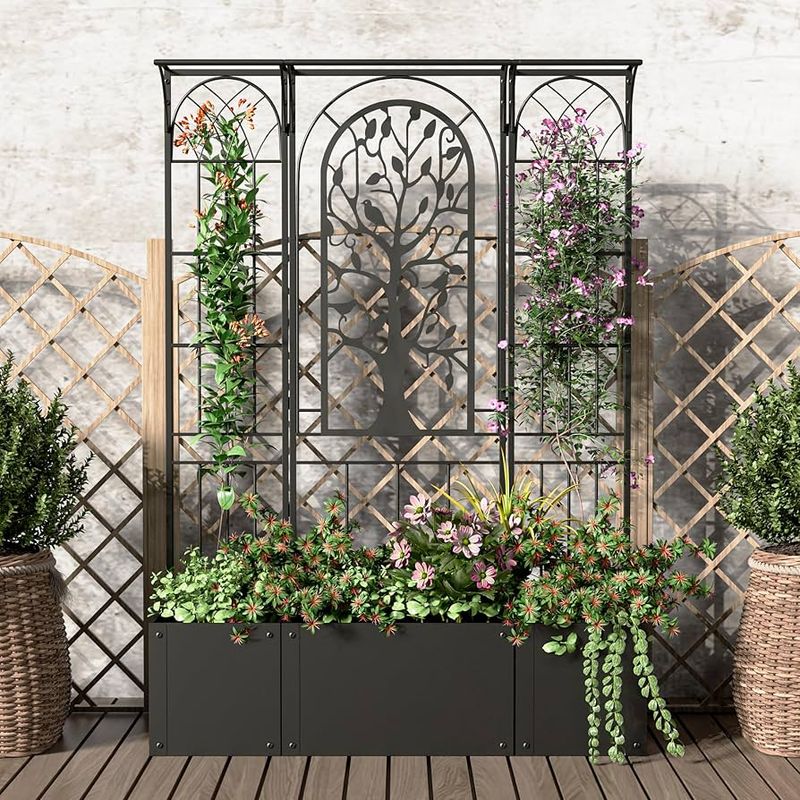
Creating natural privacy barriers with trellises and climbing plants offers a softer alternative to solid fencing while enhancing biodiversity.
Evergreen climbers like Carolina jessamine and cross vine maintain year-round coverage, ensuring privacy even during winter months.
Strategically positioned trellis screens block sight lines from neighboring properties while filtering noise and creating peaceful outdoor sanctuaries.
Height matters when designing privacy screens, with most effective barriers standing at least six feet tall and extending several feet wide.
Combining multiple plant varieties on a single trellis creates visual interest while ensuring some coverage if one species experiences seasonal dieback.
Flowering vines like coral honeysuckle attract hummingbirds and butterflies, transforming privacy screens into wildlife observation stations.
Dense-growing climbers fill in trellis openings more completely, though they require more frequent maintenance to prevent overwhelming the structure.
Installing privacy screens along property lines requires checking local ordinances regarding fence heights and setback requirements.
Consider sight lines from second-story windows when planning screen placement, ensuring adequate coverage from all viewing angles.
Combining trellises with strategically placed shrubs at the base creates layered privacy that looks natural and established even in new landscapes.
Regular watering during establishment helps privacy plantings fill in quickly, providing desired screening within one to two growing seasons.
7. Pergola-Style Trellises For Shade And Beauty
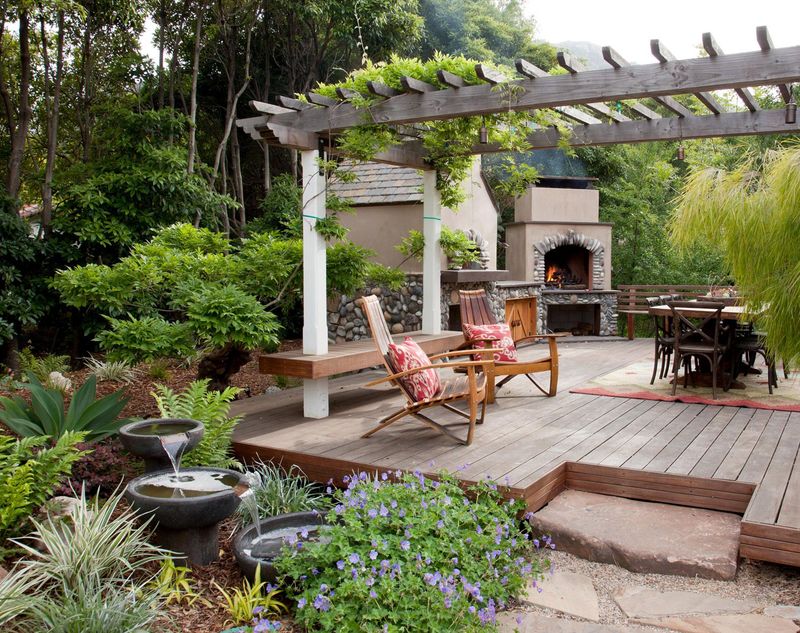
Pergola trellises serve double duty by supporting climbing plants while creating shaded retreats from Louisiana’s intense summer sun.
These overhead structures transform patios and seating areas into comfortable outdoor rooms where temperatures drop several degrees beneath leafy canopies.
Wisteria creates spectacular spring displays on pergolas, though its aggressive growth requires diligent pruning to prevent structural damage.
Muscadine grapes offer edible rewards along with shade, producing abundant fruit in late summer while tolerating heat and humidity beautifully.
Position pergolas to shade west-facing areas that receive the most intense afternoon sun, maximizing cooling benefits during the hottest months.
Construction must be robust, with posts anchored in concrete and beams sized appropriately to bear the considerable weight of mature vines.
Spacing overhead slats four to six inches apart provides sufficient support for climbing plants while allowing dappled sunlight to filter through.
Annual pruning in late winter keeps vine growth manageable and encourages the lateral branching that creates denser overhead coverage.
Deciduous vines work particularly well on pergolas, providing summer shade while allowing warming winter sun to penetrate when leaves drop.
Adding outdoor lighting to pergola structures extends their usability into evening hours, creating magical spaces for entertaining or relaxation.
Combine pergolas with hanging baskets and container plants below for layered gardens that maximize vertical growing space.
8. Raised Bed Trellises For Vegetable Gardens
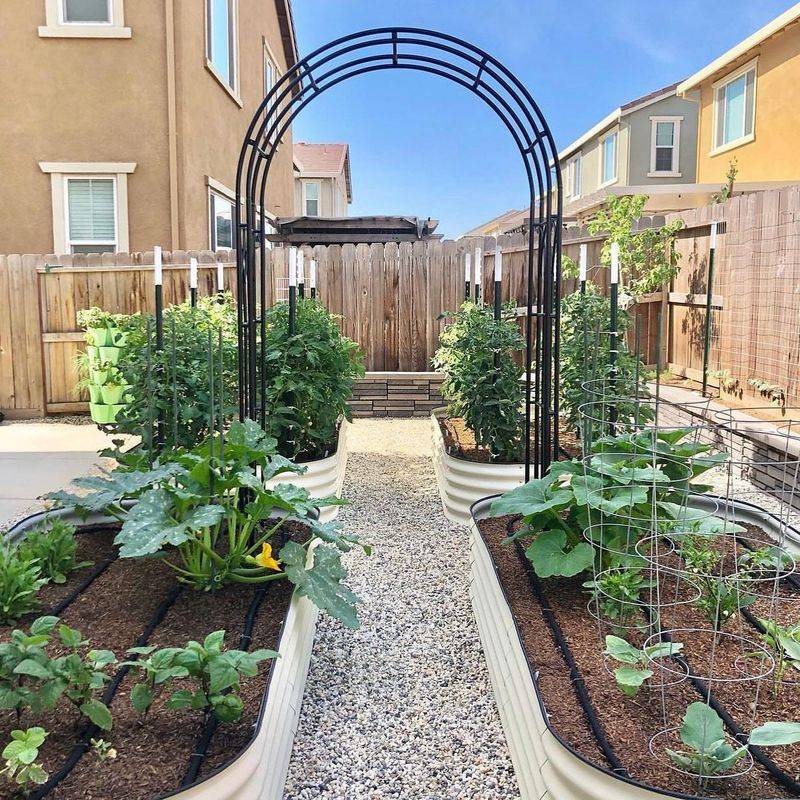
Integrating trellises directly into raised bed designs maximizes productivity in Louisiana vegetable gardens where space often limits planting options.
Vertical growing on trellises keeps fruits and vegetables off damp ground, reducing rot and pest problems common in humid climates.
Pole beans, cucumbers, and small-fruited melons thrive on raised bed trellises, producing abundant harvests from minimal square footage.
Installing trellises on the north side of raised beds prevents shading lower-growing crops like lettuce and herbs planted in front.
Sturdy construction proves essential since vegetable vines laden with ripening produce add considerable weight throughout the growing season.
A-frame trellis designs work exceptionally well over raised beds, providing support on both sides while allowing easy access for harvesting.
Louisiana’s long growing season permits succession planting, with cool-season peas giving way to summer beans on the same trellis structure.
Training vines upward improves air circulation around leaves and fruits, reducing fungal diseases that plague ground-level vegetable plants.
Netting or string trellises offer economical options that can be removed at season’s end and replaced fresh each spring.
Position raised bed trellises where they receive full sun exposure, typically requiring eight or more hours of direct light daily for optimal production.
Regular harvesting encourages continued production, with most climbing vegetables producing more prolifically when picked frequently throughout the season.
9. Decorative Trellises That Add Southern Charm
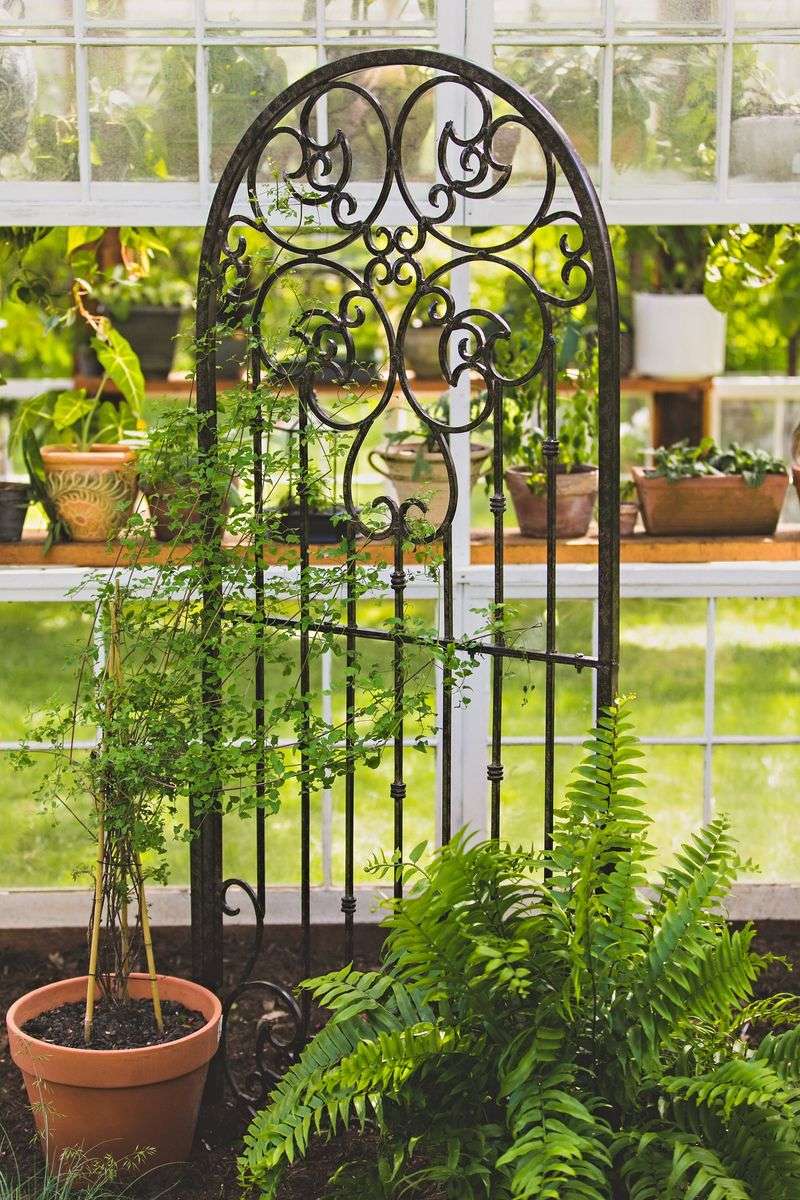
Ornamental trellises function as garden art even before climbing plants cover their decorative frameworks with foliage and flowers.
Scrollwork, geometric patterns, and architectural details transform functional plant supports into focal points that enhance traditional Southern garden aesthetics.
Wrought iron trellises with classic designs complement historic Louisiana homes, adding authenticity to period-appropriate landscape restorations.
Painted trellises in colors like Charleston green, colonial blue, or crisp white create striking backdrops that make flowering vines pop visually.
Position decorative trellises where they can be appreciated from multiple viewpoints, including views from interior rooms through windows and French doors.
Climbing roses pair beautifully with ornamental metalwork, their romantic blooms enhancing the elegant lines of well-crafted trellis designs.
Confederate jasmine softens formal trellis structures while providing evergreen coverage and intensely fragrant spring flowers beloved throughout the South.
Consider scale carefully when selecting decorative trellises, ensuring the structure size balances appropriately with surrounding landscape elements.
Antique or vintage trellis pieces found at salvage yards add character and history to gardens, becoming conversation pieces among visitors.
Lighting decorative trellises at night extends their visual impact beyond daylight hours, creating dramatic shadows and highlighting architectural details.
Maintenance requirements increase with ornate designs, as intricate details collect leaves and debris that require regular cleaning to maintain appearance.
10. DIY Trellis Ideas Using Budget-Friendly Materials
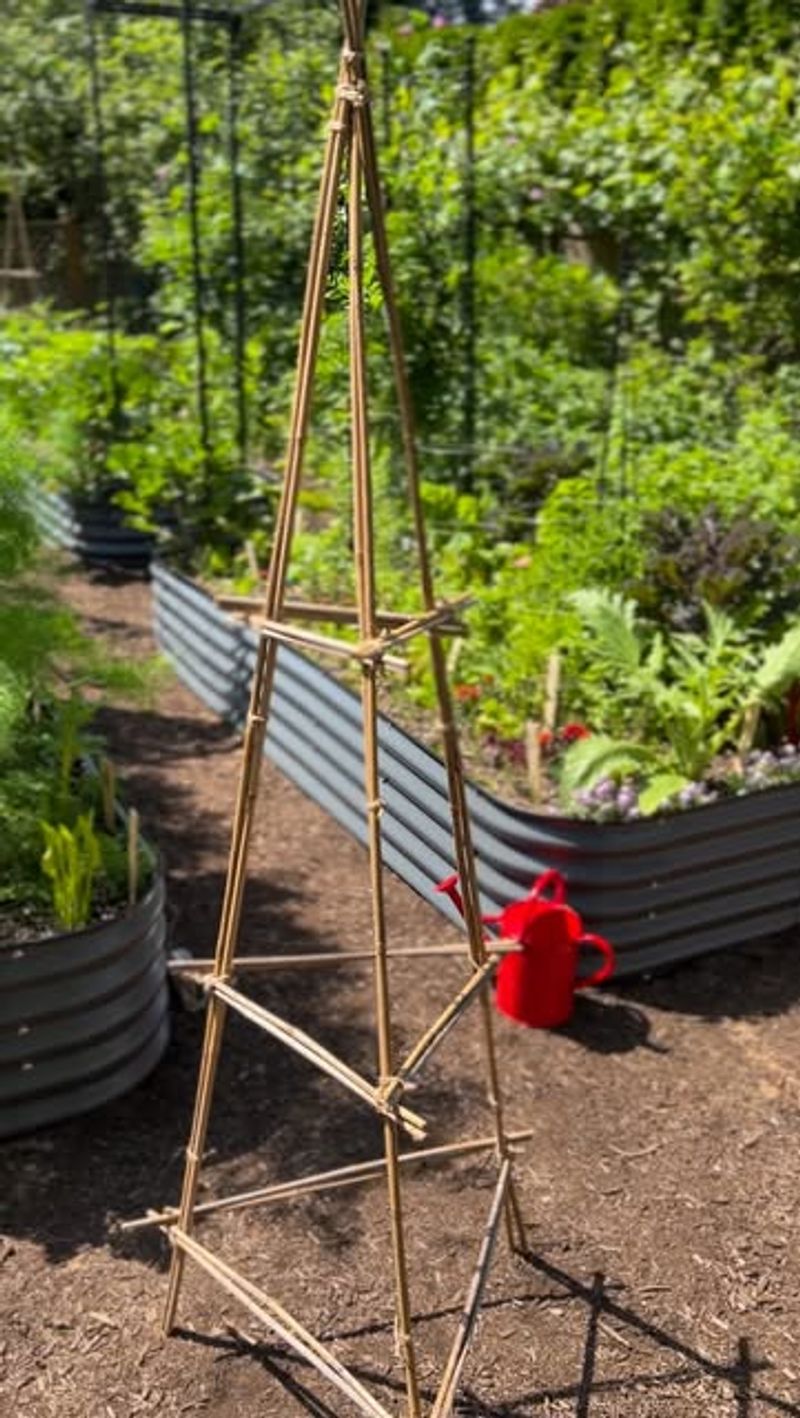
Creativity and resourcefulness can produce stunning trellises without draining your gardening budget or requiring advanced carpentry skills.
Bamboo poles lashed together with weather-resistant twine create attractive teepee-style trellises perfect for pole beans and flowering vines.
Cattle panels, available at farm supply stores, bend into sturdy arches that support even heavyweight climbers for years at minimal cost.
Salvaged wooden pallets, when properly treated and secured, transform into rustic trellis panels that suit cottage garden styles beautifully.
PVC pipe resists Louisiana’s humidity and moisture while remaining affordable, though it requires proper anchoring to withstand wind.
Old ladders leaned against walls or fences provide instant vertical growing space with built-in rustic charm and character.
Branches pruned from trees can be arranged into natural-looking trellis structures that blend seamlessly into woodland garden settings.
Ensure all DIY materials are properly treated or naturally rot-resistant to withstand constant moisture exposure without deteriorating.
Safety considerations include checking for protruding nails, splinters, or sharp edges that could cause injury during maintenance tasks.
Concrete footings or deep post placement prevents DIY trellises from toppling during Louisiana’s occasional severe weather events.
Even budget trellises benefit from annual inspections, with repairs or reinforcements made before structures become compromised by age or weather damage.
11. Freestanding Trellises For Flexible Garden Layouts
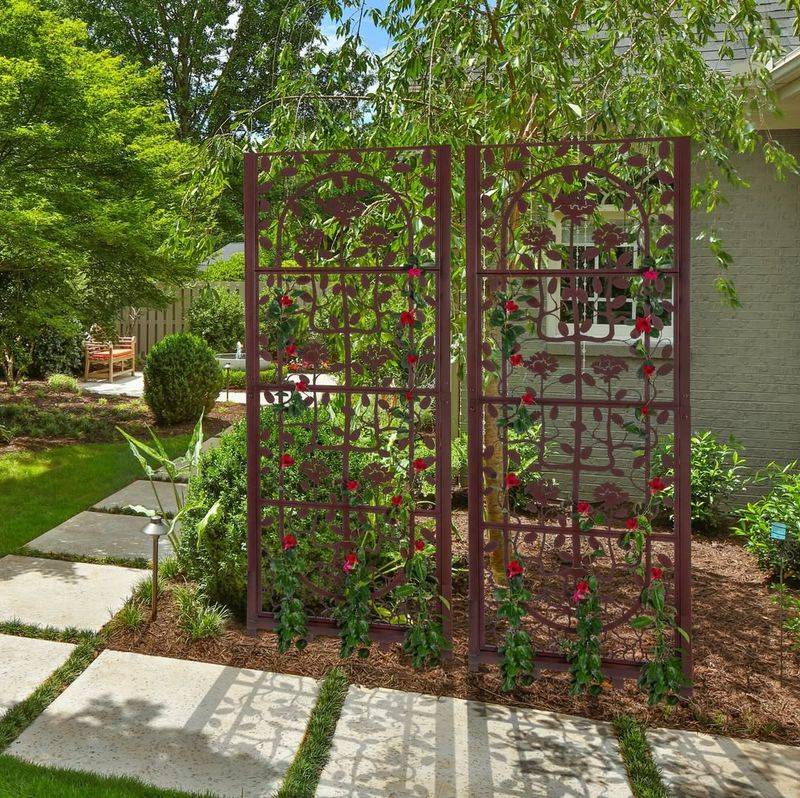
Gardening preferences and needs evolve over time, making freestanding trellises valuable for their adaptability to changing landscape designs.
These independent structures move easily to follow sun patterns, accommodate new plantings, or refresh garden layouts without permanent commitment.
Wide, stable bases prevent freestanding trellises from toppling during Louisiana’s summer thunderstorms and occasional tropical weather systems.
Container plants combined with freestanding trellises create portable garden vignettes perfect for renters or those planning future landscape changes.
Positioning freestanding trellises to block afternoon sun protects heat-sensitive plants while creating comfortable microclimates in outdoor seating areas.
Seasonal flexibility allows moving trellises to provide spring shade for cool-season crops before relocating them to support summer flowering vines.
Obelisk-style freestanding trellises add vertical interest to perennial borders while supporting clematis, morning glories, or annual climbing flowers.
Weight considerations become important when selecting plants for freestanding structures, as excessive vine mass can destabilize even well-designed trellises.
Anchoring freestanding trellises with ground stakes or sandbags provides extra security during severe weather without permanent installation.
Regular repositioning prevents grass beneath freestanding structures from becoming stressed or damaged by prolonged shading.
The versatility of freestanding trellises makes them ideal for experimental gardeners who enjoy trying new plant combinations and design concepts annually.
12. Trellises For Flowering Vines That Love Louisiana Heat
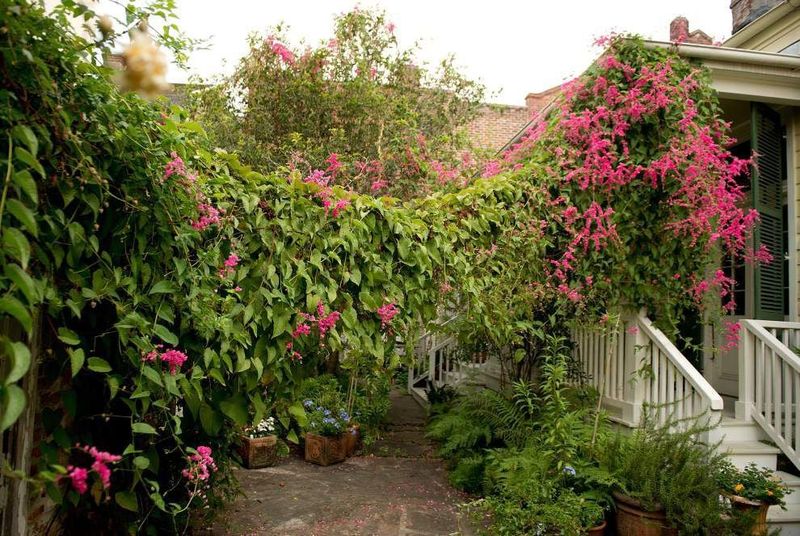
Louisiana summers test plant endurance with temperatures regularly soaring into the nineties alongside oppressive humidity levels.
Certain flowering vines actually thrive under these challenging conditions, producing spectacular blooms when other plants struggle merely to survive.
Mandevilla vines explode with trumpet-shaped flowers in shades of pink, red, and white throughout the hottest months.
Bougainvillea tolerates intense heat beautifully, creating masses of colorful bracts that many mistake for flowers in brilliant purples, pinks, and oranges.
Coral vine earns its common name firecracker vine through sprays of tiny pink flowers that cascade dramatically from trellis structures.
Choose trellis materials that remain cool to touch even in direct sun, as metal structures can become hot enough to damage tender vine stems.
Adequate irrigation becomes crucial for heat-loving flowering vines, as even drought-tolerant species perform best with consistent moisture during bloom periods.
Positioning trellises to receive morning sun with some afternoon shade often produces the most prolific flowering in Louisiana’s extreme summer conditions.
Bloom timing varies among heat-loving vines, with some flowering continuously while others produce distinct flushes throughout the growing season.
Deadheading spent flowers encourages repeat blooming in many species, though some vines flower prolifically without any maintenance beyond occasional pruning.
13. Trellises That Improve Airflow And Reduce Disease
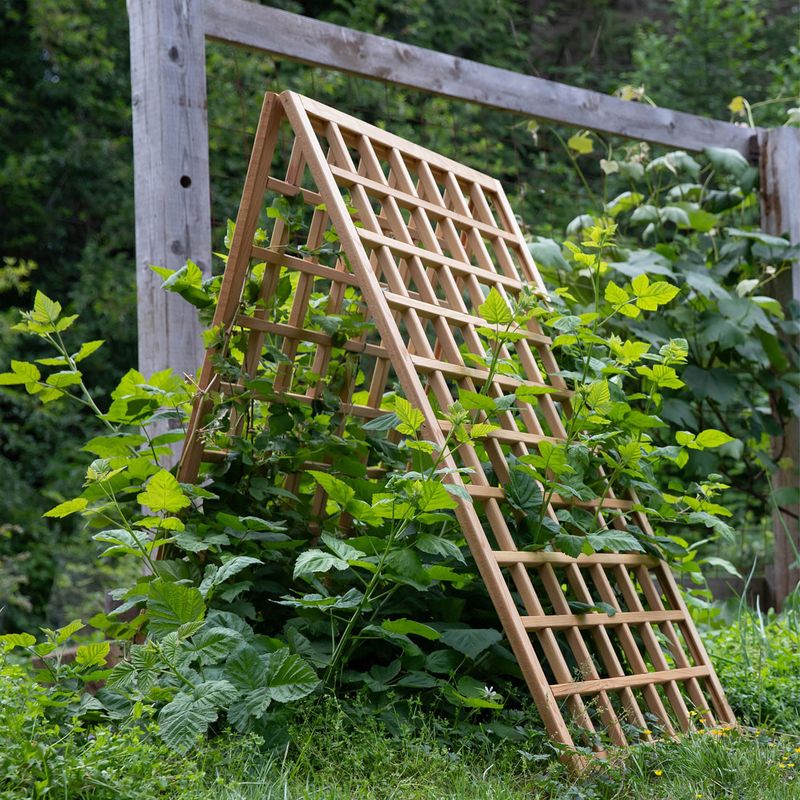
Fungal diseases thrive in Louisiana gardens where humidity levels regularly approach saturation and overnight dew persists into morning hours.
Proper trellis design significantly reduces disease pressure by promoting air movement through foliage and keeping leaves dry faster after rain or irrigation.
Open frameworks with adequate spacing between support elements allow breezes to penetrate vine growth rather than creating stagnant air pockets.
Positioning trellises away from walls and solid fences improves air circulation on all sides, reducing the damp conditions fungi require.
Training vines vertically rather than allowing them to sprawl on the ground exposes foliage to better airflow and faster drying.
Regular pruning removes excess growth that creates dense tangles where air cannot circulate effectively through the vine canopy.
Spacing between individual plants on shared trellises should allow at least twelve inches of separation to prevent overcrowding as vines mature.
Morning sun exposure helps dry overnight moisture from leaves quickly, reducing the hours fungi have to establish infections.
Selecting disease-resistant plant varieties provides additional protection when combined with proper trellis design and placement strategies.
Monitoring plants regularly for early disease signs allows prompt treatment before problems spread throughout the entire vine structure.
Proper trellis design and maintenance create healthier growing conditions that reduce or eliminate the need for chemical fungicide applications.
14. Combining Trellises With Fencing For Extra Support
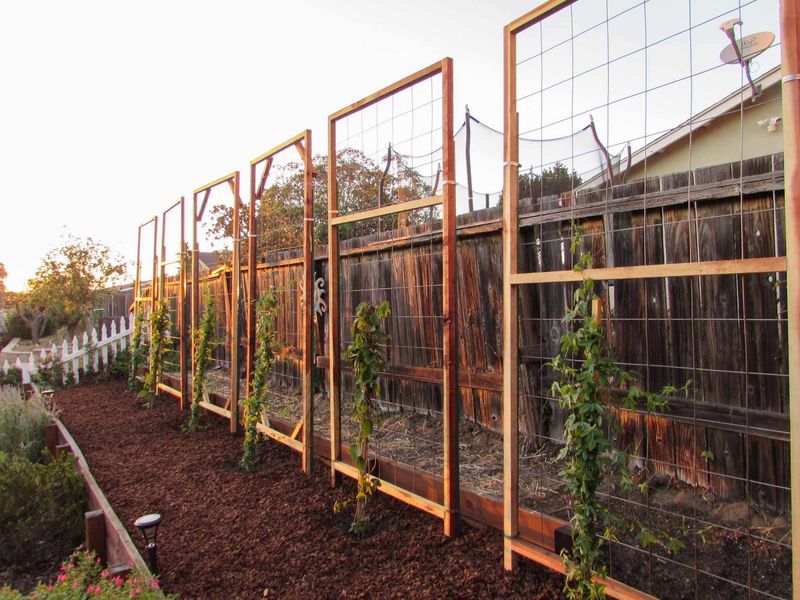
Existing fences provide ready-made foundations for trellis systems that support even the most vigorous climbing plants.
Attaching trellis panels to fence posts distributes weight across multiple anchor points, creating stability that handles heavyweight vines safely.
Chain-link fences transform into attractive vertical gardens when covered with flowering or edible climbing plants trained on supplementary trellis frameworks.
Privacy fences gain extended height by topping them with trellis extensions that add screening without creating solid barriers.
Combining structures proves particularly valuable for aggressive growers like wisteria or trumpet vine that can overwhelm standalone trellises.
Installation requires ensuring fence posts remain structurally sound and capable of bearing additional weight without leaning or failing.
Standoffs between trellis panels and fence surfaces allow air circulation while providing space for vine stems to weave through support structures.
Property line considerations become important when adding trellises to boundary fences, potentially requiring neighbor consultation or approval.
Painting or staining both fence and trellis in coordinating colors creates cohesive appearances that look intentionally designed rather than hastily added.
Regular inspection of mounting hardware prevents failures that could damage both the trellis and the fence during severe weather events.
The combined strength of fence and trellis creates nearly indestructible supports capable of lasting decades with minimal maintenance requirements.
15. Choosing The Right Trellis For Your Louisiana Garden Style
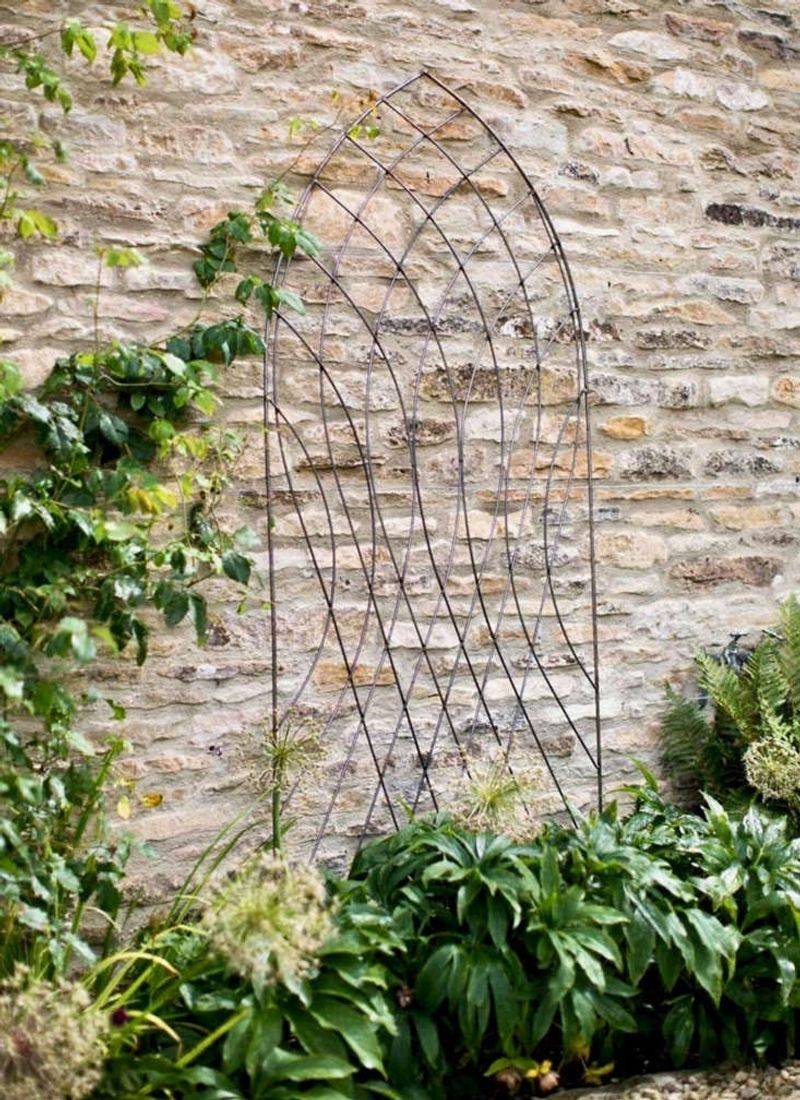
Selecting the perfect trellis requires balancing aesthetic preferences with practical considerations specific to Louisiana’s climate and your chosen plants.
Garden size influences trellis scale, with smaller yards benefiting from wall-mounted or vertical designs that maximize limited space efficiently.
Plant selection drives material choices, as lightweight annual vines require less robust support than mature woody climbers or fruit-bearing species.
Maintenance tolerance matters significantly, with busy gardeners favoring low-maintenance metal or treated wood over materials requiring frequent upkeep.
Budget considerations span initial costs through long-term durability, making investment in quality materials worthwhile for permanent garden features.
Architectural style of your home should guide trellis design choices, with traditional structures complementing historic homes while modern designs suit contemporary architecture.
Sun exposure in the planting location determines which climbing plants will thrive, subsequently influencing the trellis strength and size requirements.
Local weather patterns including wind exposure and storm frequency should inform material selection and installation methods for maximum longevity.
Personal gardening goals ranging from privacy screening to food production to ornamental displays all factor into optimal trellis selection.
Consulting with experienced local gardeners or extension agents provides valuable insights into what works best in your specific Louisiana microclimate.
Starting with a well-chosen trellis sets the foundation for years of beautiful vertical gardens that enhance your outdoor living spaces.