8 Indoor Plants You Can Easily Turn Into Bonsai In California Homes
Indoor gardening in California takes on a whole new level when plants transform into living works of art.
Bonsai offers a way to bring calm, elegance, and creativity indoors, and certain indoor plants respond beautifully to shaping and training.
Small or medium-sized houseplants can be pruned, wired, and guided to develop miniature trees that make a bold statement on a windowsill, shelf, or tabletop.
Turning an indoor plant into a bonsai is more than just decoration.
It becomes a project that blends patience, artistry, and care.
Each snip and bend shapes the plant’s personality, while leaves and branches tell a story that evolves over months and years.
Bonsai adds texture, height, and a sense of tranquility to any space, making rooms feel deliberate and harmonious.
California’s climate and abundant light make it possible to grow many indoor plants successfully as bonsai.
Hardy, fast-growing species adapt well to containers and indoor conditions, offering beginners and experienced gardeners alike the joy of miniature landscapes.
With consistent care and thoughtful placement, these plants turn ordinary indoor spaces into serene, living showcases, proving that a little creativity can transform everyday greenery into extraordinary artistry.
1. Jade Plant (Crassula Ovata)
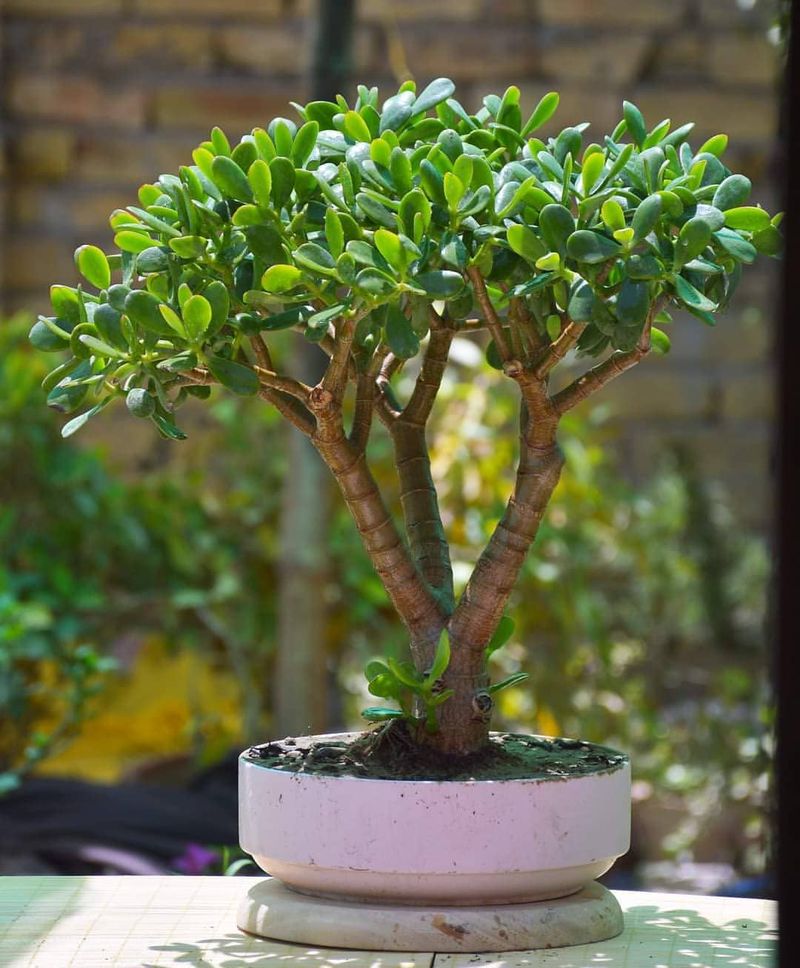
Jade plants make fantastic bonsai subjects because their thick, woody stems naturally look like miniature tree trunks.
Native to South Africa but thriving in California’s indoor environments, these succulents store water in their fleshy leaves, making them forgiving if you forget to water occasionally.
Their glossy, oval-shaped leaves catch the light beautifully, and they can live for decades with proper care.
Training a jade plant into bonsai form is straightforward because they respond well to pruning and shaping.
You can trim branches to create the classic bonsai silhouette, and the plant will develop calluses that look like aged bark over time.
California’s bright indoor light conditions are perfect for jade plants, which need several hours of sunlight daily to maintain their compact growth and prevent legginess.
Watering should be moderate, allowing the soil to dry out between sessions, which fits well with California’s lower humidity levels.
Jade plants grow slowly, giving you plenty of time to shape them without worrying about rapid, uncontrolled growth.
Their ability to handle occasional neglect makes them ideal for beginners experimenting with bonsai techniques.
Position your jade bonsai near a south-facing window in your California home for best results.
With patience and regular pruning, you’ll develop a stunning miniature tree that becomes more character-rich with age.
2. Ficus Retusa (Chinese Banyan)

Ficus retusa stands out as one of the most popular bonsai choices worldwide, and California homes provide ideal conditions for these tropical beauties.
The species develops impressive aerial roots that cascade down from branches, creating that dramatic, ancient-tree appearance bonsai enthusiasts love.
These roots become more prominent as the tree matures, adding unique character to your indoor landscape.
California’s mild indoor temperatures suit ficus perfectly since they prefer consistent warmth year-round.
The plant’s small, glossy leaves naturally fit the bonsai aesthetic without requiring extensive defoliation techniques.
Your California Garden Changes Every Week. Your Plan Should Too.
Gardening in California changes quickly throughout the season. Every Friday you’ll receive a simple weekly plan showing exactly what to plant, prune, fertilize, harvest, and protect so you never miss the right timing.
Ficus retusa tolerates pruning exceptionally well, quickly producing new growth wherever you make cuts, allowing you to refine the shape continuously throughout the growing season.
Light requirements are moderate, making them adaptable to various spots in your California home, though they appreciate bright, indirect sunlight.
The species responds dramatically to wiring techniques, letting you bend and position branches into artistic shapes that hold over time.
Regular misting benefits these tropical plants, especially during California’s drier months, helping maintain healthy foliage.
Beginners appreciate how forgiving ficus bonsai can be with minor care mistakes.
The tree communicates its needs clearly through leaf condition, making it easy to adjust your care routine.
With consistent attention, your ficus retusa will develop that coveted aged appearance much faster than many other bonsai species.
3. Dwarf Schefflera (Umbrella Tree)
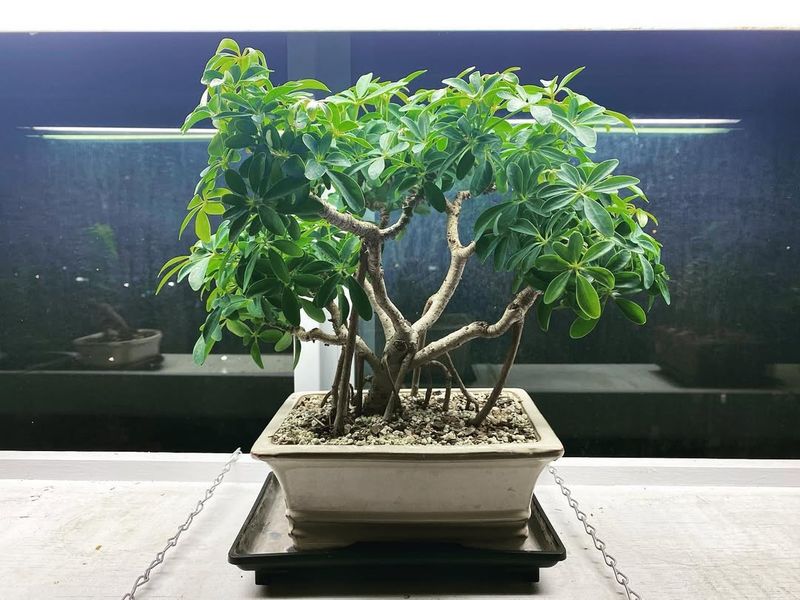
Schefflera arboricola brings a tropical feel to California homes while being surprisingly easy to train as bonsai.
The distinctive umbrella-shaped leaf clusters create instant visual interest, with each leaf radiating from a central point like tiny green parasols.
This plant grows vigorously, giving you plenty of material to work with when shaping your bonsai design.
California’s indoor climate suits dwarf schefflera perfectly, as they handle average room temperatures without complaint.
The species develops a thick trunk relatively quickly, giving your bonsai a mature appearance sooner than slower-growing varieties.
Pruning encourages dense branching, and the plant responds by producing multiple shoots from each cut, creating that full, bushy canopy bonsai artists seek.
Lighting needs are flexible, as schefflera tolerates both bright and moderate light conditions found in California homes.
The plant’s resilience to various humidity levels makes it low-maintenance compared to more finicky tropical species.
Wiring young branches is effective for positioning, though the wood becomes brittle with age, so shape early in the branch’s development.
Root pruning during repotting doesn’t stress this hardy plant, and it quickly establishes itself in fresh soil.
California growers appreciate how schefflera maintains its leaves year-round, providing constant greenery in your indoor space.
The plant’s forgiving nature makes mistakes less costly, perfect for learning bonsai fundamentals without pressure.
4. Desert Rose (Adenium Obesum)
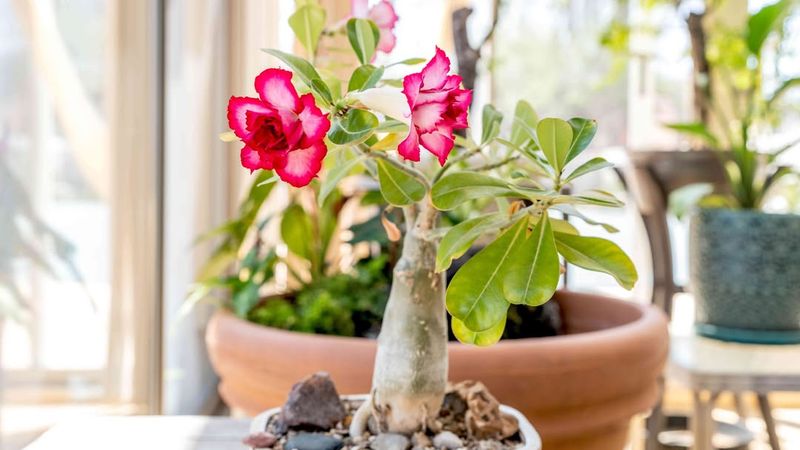
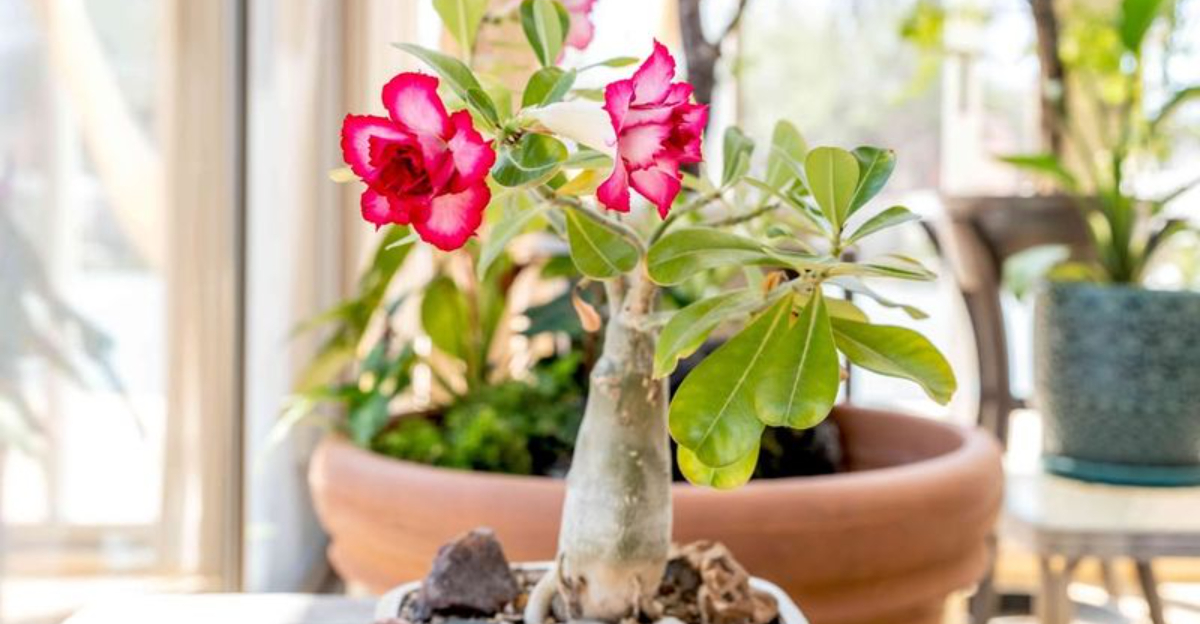
Desert rose brings stunning blooms and sculptural form to California bonsai collections, making it a showstopper among indoor plants.
The swollen trunk base, called a caudex, develops naturally and gives instant bonsai character without years of training.
Vibrant pink, red, or white flowers appear throughout the growing season, adding color that traditional bonsai species rarely offer.
California’s warm indoor temperatures perfectly match this plant’s native African habitat, eliminating concerns about cold damage.
The species thrives in the bright light that many California homes receive, especially near south or west-facing windows.
Desert rose stores water in its thick trunk and roots, making it incredibly drought-tolerant and forgiving if you travel or forget watering schedules.
Shaping focuses on exposing and elevating the caudex above the soil line, creating that distinctive raised-root appearance.
Pruning encourages branching and more flowering points, though timing matters since flowers appear on new growth.
The plant’s succulent nature means it handles California’s lower indoor humidity without requiring constant misting or humidity trays.
Winter dormancy is mild in California homes, with the plant simply slowing growth rather than dropping all leaves.
Repotting is infrequent since desert rose prefers slightly root-bound conditions, reducing maintenance requirements.
The combination of exotic flowers, sculptural form, and easy care makes this an exciting bonsai choice for California residents wanting something different from traditional green trees.
5. Fukien Tea (Carmona Retusa)

Fukien tea has been a bonsai favorite for generations, offering delicate white flowers and tiny dark green leaves that create refined elegance.
The bark develops a beautiful mottled appearance as it ages, transitioning from smooth tan to rough gray, adding visual depth to your miniature tree.
Small red berries sometimes follow the flowers, providing additional seasonal interest in your California home.
This evergreen species maintains its foliage year-round, ensuring your indoor space stays green regardless of season.
California’s stable indoor temperatures benefit fukien tea, which dislikes sudden temperature swings or cold drafts.
The plant appreciates the bright, indirect light available in many California rooms, though it can adapt to slightly lower light conditions with adjusted watering.
Branch structure becomes intricate with regular pruning, creating that aged, gnarled appearance bonsai collectors admire.
The wood is flexible when young, accepting wire training readily to position branches in artistic arrangements.
Fukien tea grows at a moderate pace, giving you control over development without overwhelming rapid growth.
Humidity preferences are moderate, manageable in California homes with occasional misting during drier months.
The species signals stress through leaf drop, making it important to maintain consistent care routines.
Root systems develop densely, requiring repotting every couple of years to maintain health.
With attention to watering and light, fukien tea rewards California growers with continuous blooms and classic bonsai beauty that improves with each passing year.
6. Portulacaria Afra (Elephant Bush)
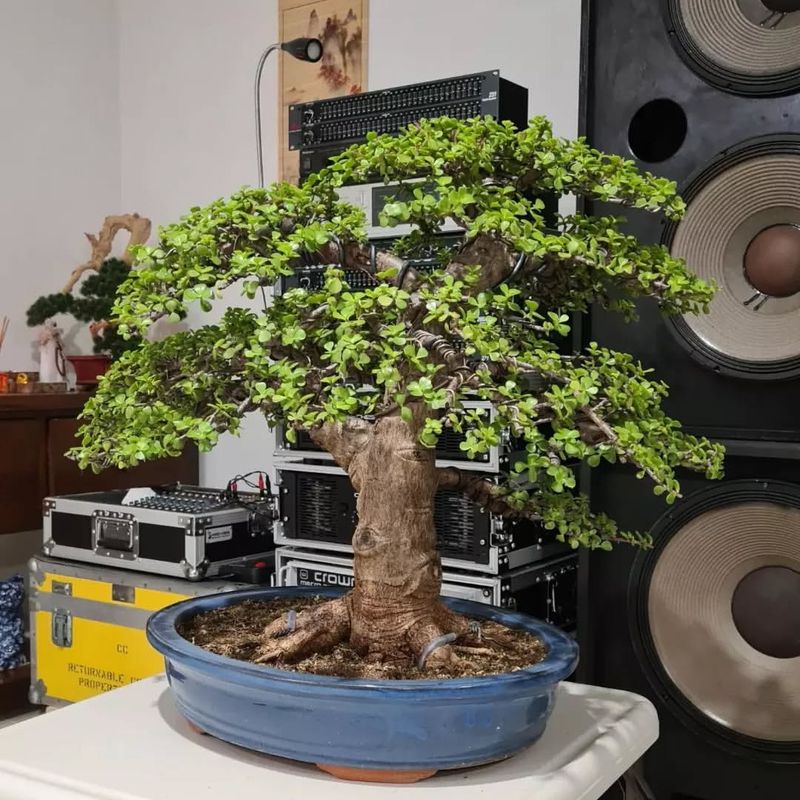
Elephant bush earned its nickname from being a favorite food of African elephants, but California bonsai enthusiasts love it for entirely different reasons.
The tiny, round succulent leaves grow densely along reddish-brown stems, creating a miniature tree appearance almost instantly.
This plant grows quickly compared to traditional bonsai, letting you see results from your training efforts within months rather than years.
California’s indoor climate is nearly perfect for portulacaria, which handles the dry air and bright light conditions beautifully.
The succulent nature means watering mistakes are less critical, as the plant stores reserves in its leaves and stems.
Pruning encourages ramification, where one branch becomes many, building that full canopy essential to convincing bonsai design.
The stems lignify and develop bark texture surprisingly fast, giving young plants a mature appearance.
Wiring is effective on younger growth, though the branches become brittle with age, so timing your shaping is important.
California’s year-round growing season allows continuous development, unlike regions where plants go dormant for months.
Portulacaria tolerates root pruning well, bouncing back quickly after repotting sessions.
The plant occasionally produces tiny pink flowers, though they’re rare on indoor specimens.
Its ease of propagation means you can experiment with multiple trees, trying different styles without significant investment.
For California residents wanting quick results and forgiving care requirements, elephant bush delivers impressive bonsai without the decade-long wait traditional species require.
7. Chinese Elm (Ulmus Parvifolia)
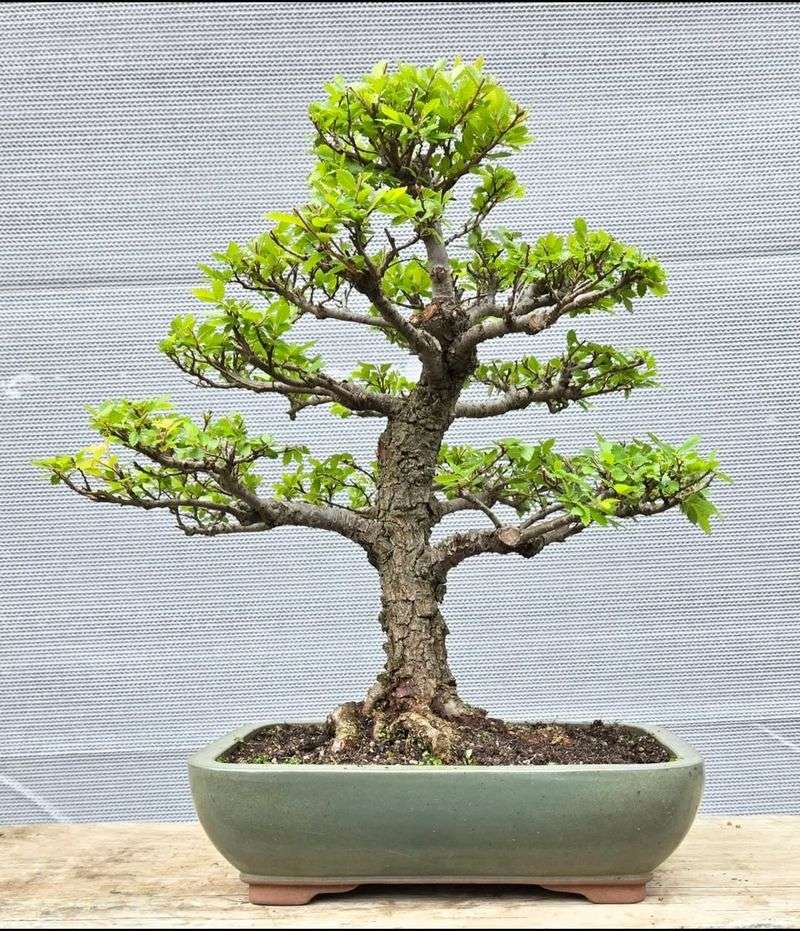
Chinese elm represents the classic bonsai experience, with small serrated leaves and bark that naturally exfoliates to reveal beautiful mottled patterns underneath.
This species has been cultivated as bonsai for centuries, and the techniques are well-documented, making it accessible for California beginners.
The tree’s proportions naturally suit miniaturization, with tiny leaves that don’t require reduction techniques to look authentic.
While Chinese elm can grow outdoors in California, it adapts remarkably well to indoor conditions when given adequate light.
Positioning near bright windows in your California home provides the light levels this species craves for compact growth.
The tree responds to pruning by producing dense branching, creating that full, mature canopy relatively quickly.
Seasonal interest comes from semi-deciduous behavior, where the tree may drop some leaves during California’s mild winters before flushing fresh spring growth.
This cycle feels natural and connects your indoor bonsai to outdoor seasonal changes.
Branch flexibility when young allows extensive wiring and shaping, with the wood holding positions permanently as it matures.
Chinese elm tolerates various watering schedules better than many species, though consistent moisture produces best results.
Root systems develop rapidly, requiring annual or biannual repotting for young trees.
The bark’s transformation from smooth to textured happens within a few years, accelerating that aged appearance collectors prize.
California’s climate lets you occasionally move the tree outdoors for fresh air, strengthening growth without the stress of extreme temperature changes found in other regions.
8. Hawaiian Umbrella Tree (Schefflera Arboricola)
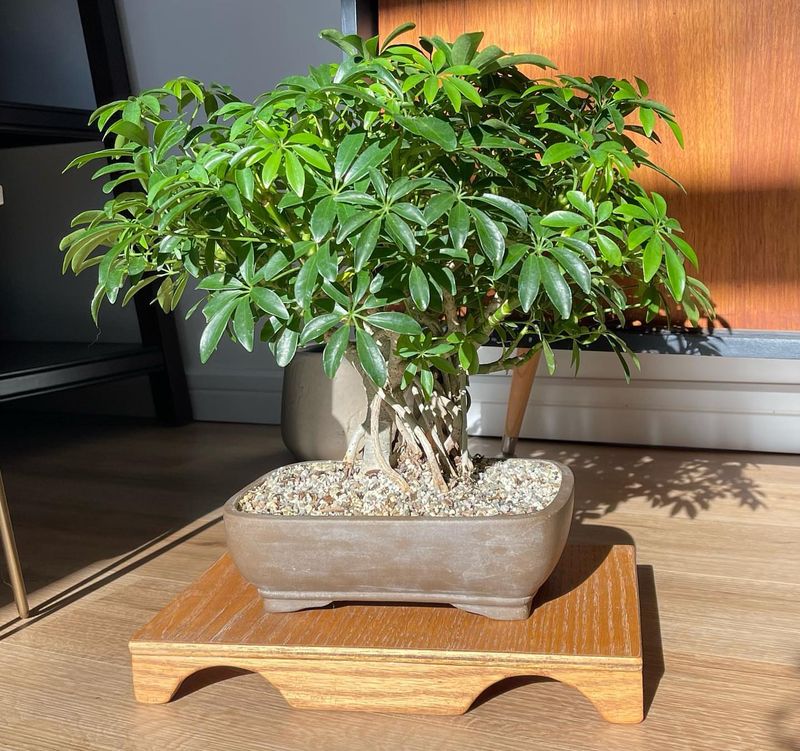
Hawaiian umbrella tree brings tropical ambiance to California homes while being remarkably forgiving for bonsai newcomers.
The glossy, compound leaves create lush canopies that feel full even on younger trees, providing instant gratification.
Growth is vigorous, meaning you’ll have plenty of opportunities to practice pruning and shaping techniques without worrying about stunting development.
California’s indoor environment suits this tropical species perfectly, as it thrives in the warm, stable temperatures most homes maintain year-round.
The plant adapts to various light conditions, though it performs best in the bright, indirect light common in California rooms with good window exposure.
Aerial roots sometimes develop, adding that aged, tropical forest character to your miniature tree.
Pruning back to two or three leaves encourages branching and keeps the canopy dense and proportional to the trunk.
The trunk thickens relatively quickly, especially if you allow some unrestricted growth periods between heavy pruning sessions.
Wiring is effective on younger branches, letting you create movement and artistic shapes in the trunk and primary branches.
Root development is strong, and the plant tolerates root pruning during repotting without significant stress.
California growers appreciate how this species maintains consistent appearance year-round, never going dormant or dropping leaves seasonally.
The combination of rapid growth, forgiving nature, and tropical beauty makes Hawaiian umbrella tree an excellent choice for California residents wanting to develop bonsai skills while enjoying an attractive plant from day one.