13 Shrubs With Golden Foliage That Brighten California Gardens
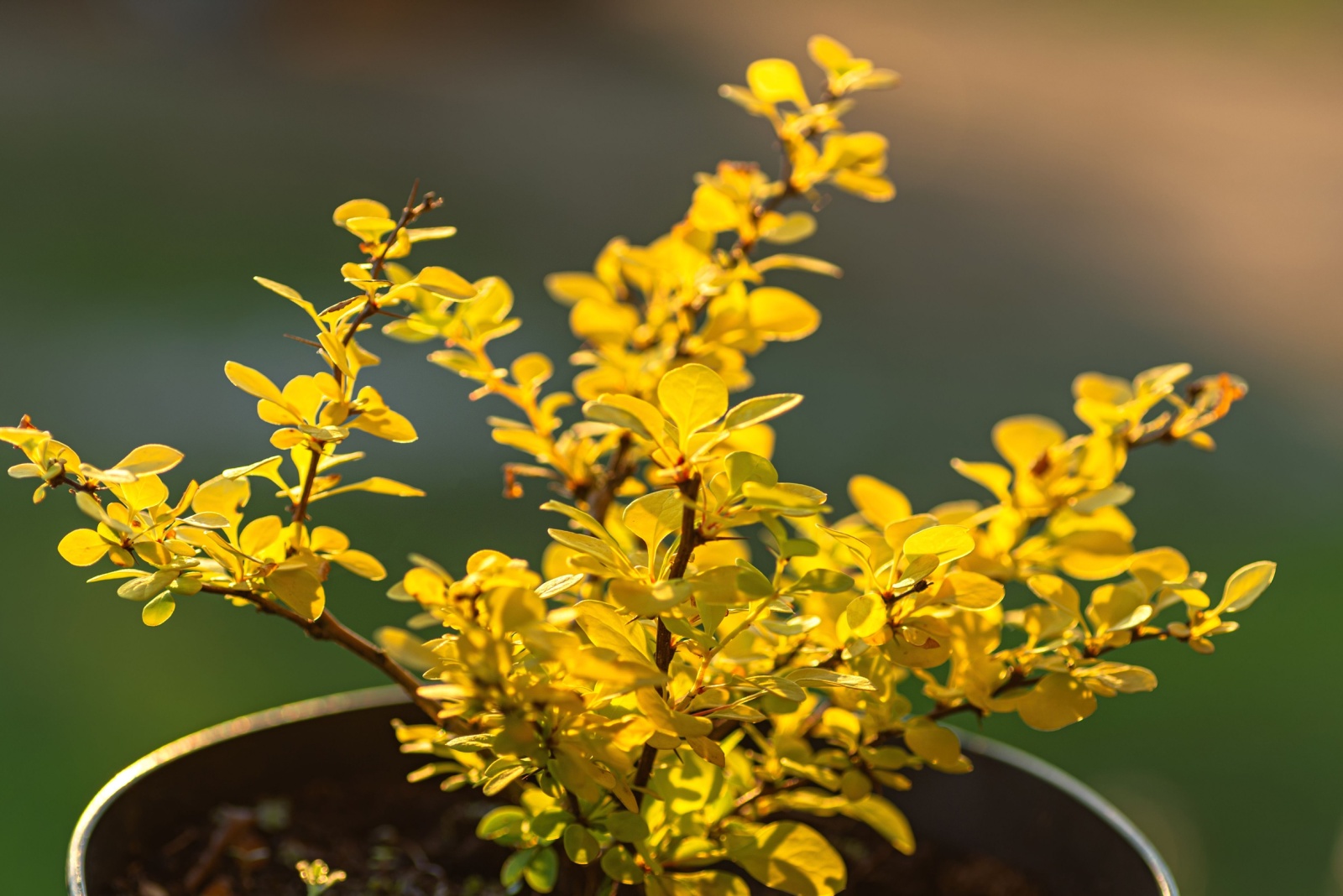
Golden foliage shrubs add a stunning visual punch to California gardens, transforming ordinary landscapes into vibrant, sunlit outdoor spaces year-round.
These plants thrive in California’s Mediterranean climate, offering low maintenance options that save water while delivering bold, cheerful color continuously.
From compact border plants to tall statement pieces, golden shrubs create contrast, brighten shaded corners, and complement flowering perennials beautifully.
Discover thirteen outstanding shrubs with golden leaves that will make your California garden glow with warmth, energy, and unforgettable visual appeal.
1. Golden Barberry
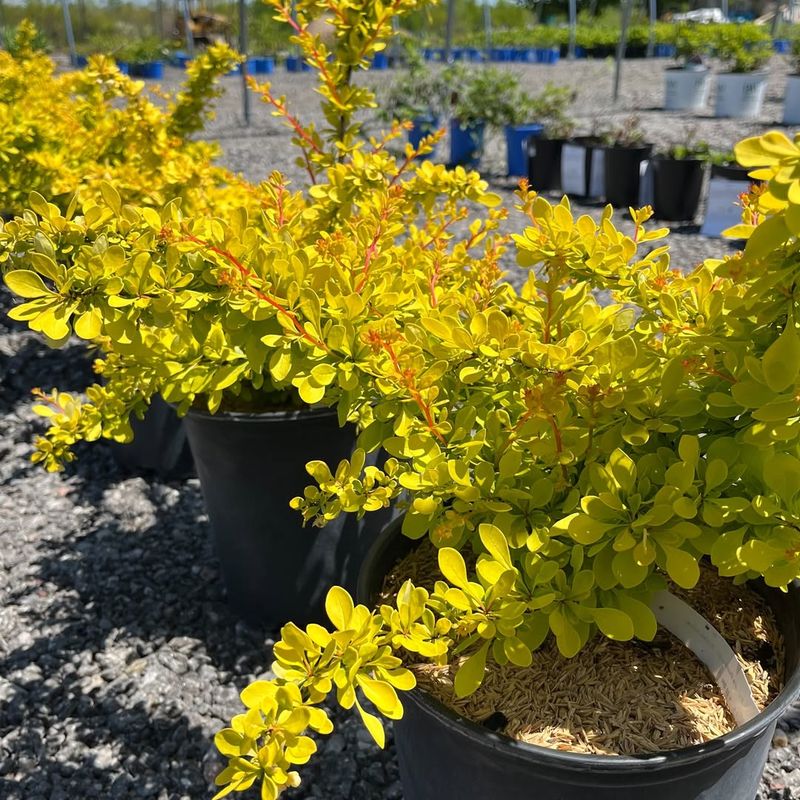
Berberis thunbergii ‘Aurea’ lights up garden beds with electrifying chartreuse leaves that practically glow when sunlight hits them each morning.
This compact deciduous shrub grows three to four feet tall and wide, making it perfect for borders, foundation plantings, or container displays.
The foliage emerges bright golden-yellow in spring, deepening to lime-green during summer heat, then transitioning to orange-red before dropping in fall.
Plant it in full sun for the most intense color, though it tolerates partial shade in hotter inland California regions.
Golden barberry thrives in well-drained soil and requires minimal watering once established, making it drought-tolerant for water-wise landscapes.
Small thorns provide natural deer resistance, while the dense branching structure offers year-round interest and privacy screening potential for smaller spaces.
Prune lightly after flowering to maintain shape, or let it grow naturally for a relaxed, cottage-garden vibe that attracts beneficial insects.
Pair it with purple foliage plants like smoke bush or deep green conifers to create stunning color contrasts that wow visitors.
2. Sunshine Ligustrum
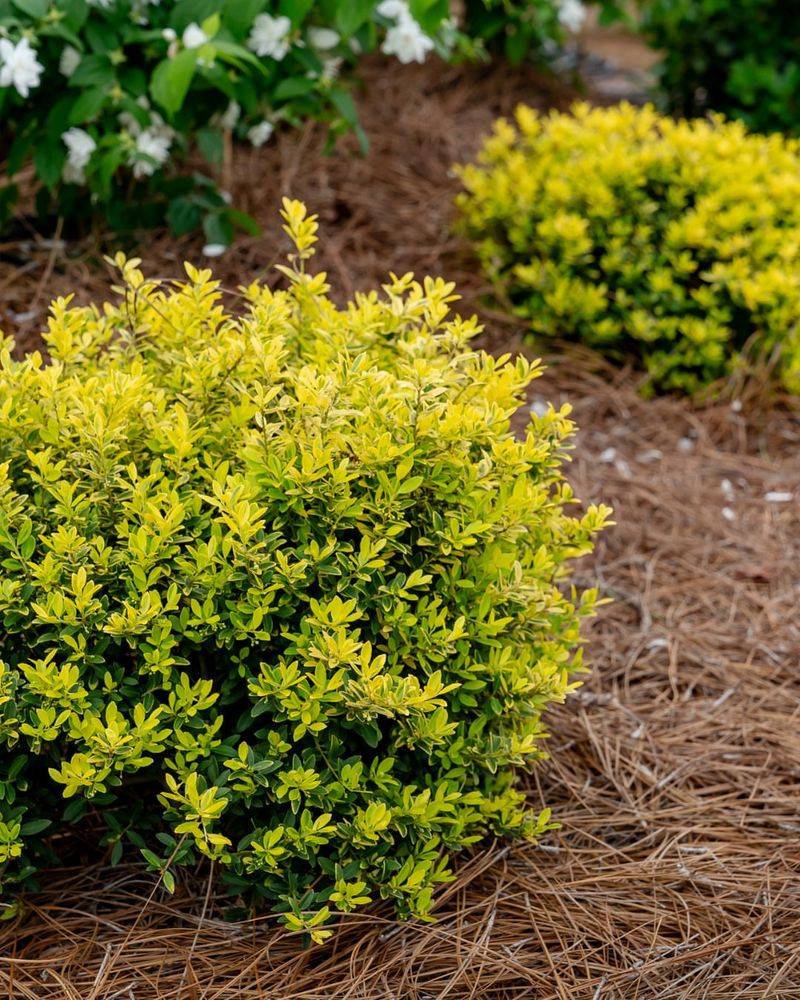
Ligustrum sinense ‘Sunshine’ earns its cheerful name with brilliant golden-yellow foliage that radiates warmth throughout every season without fading badly.
Unlike traditional green privets, this evergreen cultivar maintains its sunny color year-round, growing four to six feet tall with equal spread.
The small oval leaves create a fine-textured appearance that contrasts beautifully against bold architectural plants like agaves or ornamental grasses nearby.
California gardeners appreciate its adaptability to various soil types, from clay to sandy loam, as long as drainage remains adequate.
It handles both coastal conditions and inland heat remarkably well, though occasional deep watering during extreme droughts keeps foliage looking fresh.
White fragrant flowers appear in spring, attracting bees and butterflies, followed by small blue-black berries that birds eagerly consume in fall.
Use it as a low hedge, accent plant, or mass planting to create glowing ribbons of color along pathways and property lines.
Prune anytime to control size or shape, and watch how quickly it rebounds with fresh golden growth that brightens even dreary days.
3. Gold Mound Spirea
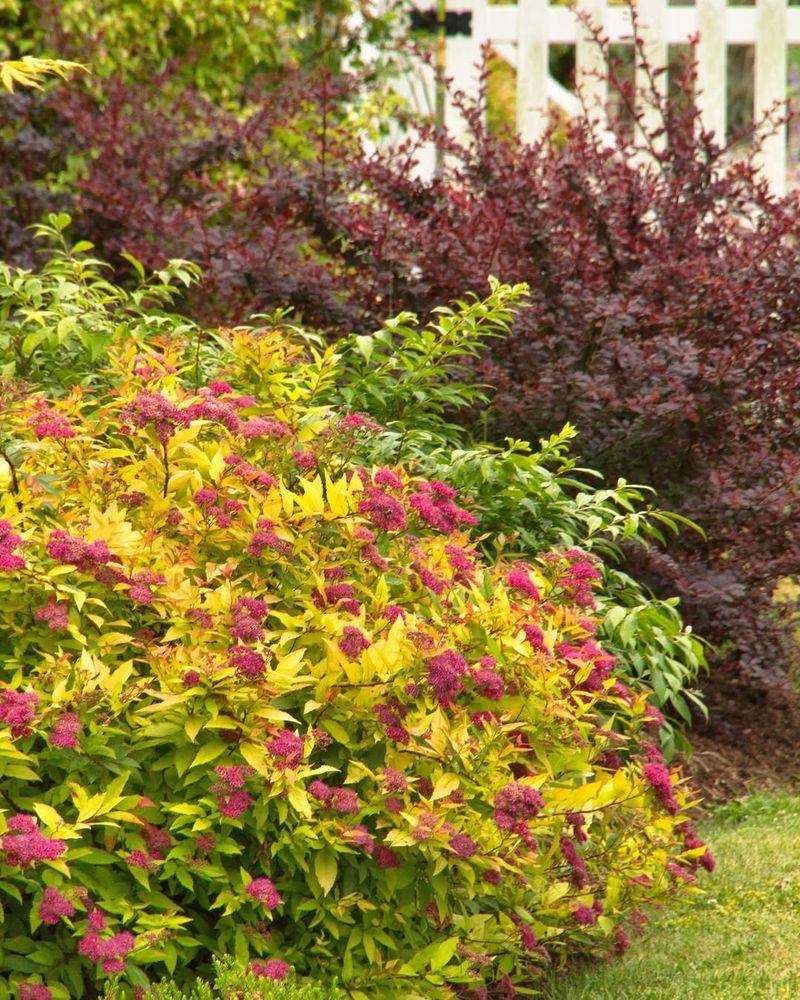
Spiraea japonica ‘Gold Mound’ forms perfect dome-shaped mounds of bright golden foliage that look hand-sculpted but require almost no maintenance effort.
This deciduous shrub reaches two to three feet in height and width, making it ideal for edging walkways, filling gaps, or anchoring perennial borders.
The leaves emerge brilliant gold in spring, hold their color through summer, then shift to orange and red before dropping in autumn.
Pink flower clusters appear in late spring, creating a striking contrast against the golden leaves and attracting pollinators from across your neighborhood.
Your California Garden Changes Every Week. Your Plan Should Too.
Gardening in California changes quickly throughout the season. Every Friday you’ll receive a simple weekly plan showing exactly what to plant, prune, fertilize, harvest, and protect so you never miss the right timing.
Plant it in full sun to partial shade, with more sun producing the brightest foliage color and most abundant blooms.
Gold mound spirea tolerates various soil conditions but prefers consistent moisture during establishment, then becomes moderately drought-tolerant once roots settle in.
Prune lightly after flowering to encourage compact growth and remove any withered wood that accumulates over winter months in colder regions.
Combine it with purple salvias, blue catmint, or burgundy heucheras to create eye-catching color combinations that look professionally designed yet remain easy to maintain.
4. Choisya ‘Sundance’
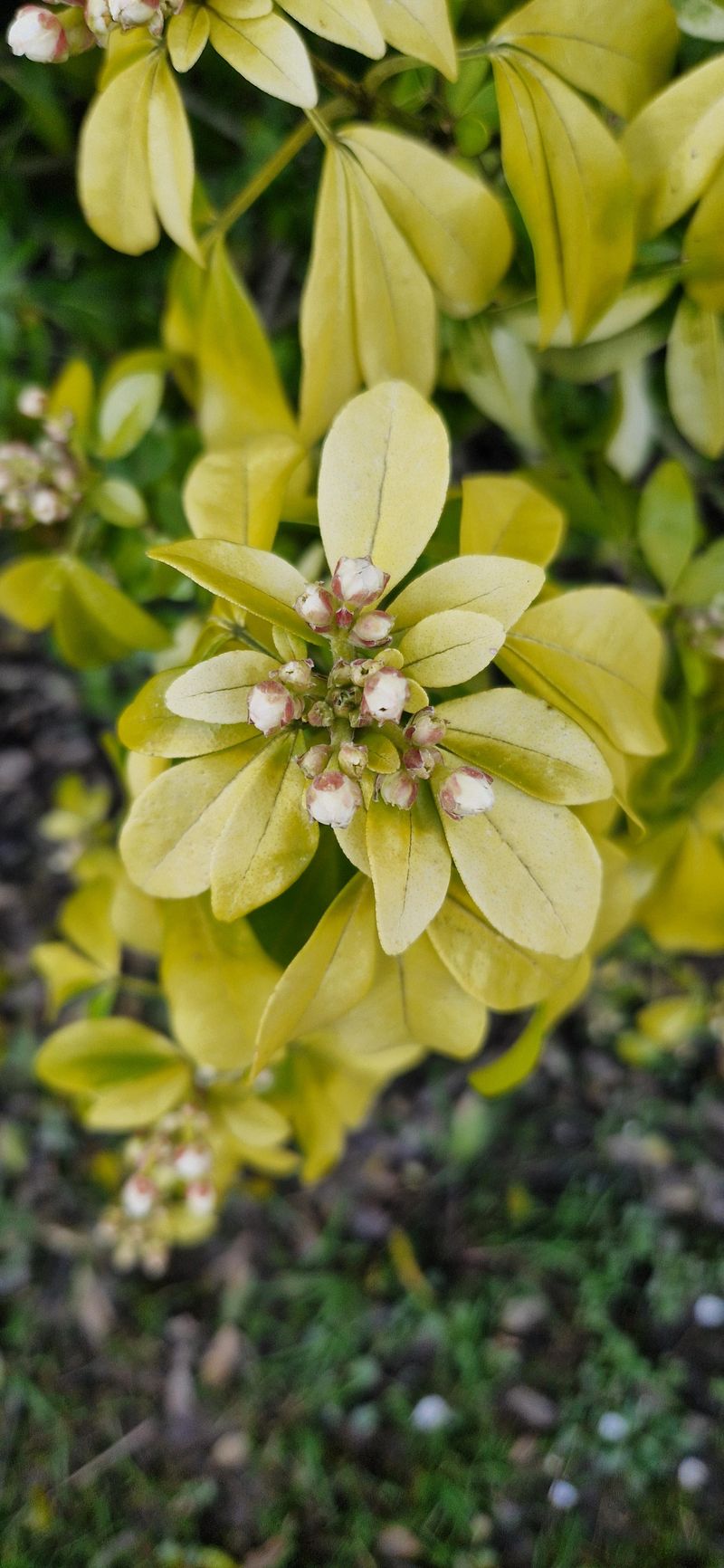
Choisya ternata ‘Sundance’ brings a tropical vibe to California gardens with glossy golden leaves that release a delightful citrus scent when brushed.
This evergreen shrub grows four to six feet tall and wide, creating a luminous focal point that draws attention year-round.
The aromatic foliage emerges bright yellow in spring, mellowing to lime-green in summer heat, especially in inland areas with intense sun exposure.
Fragrant white flowers appear in spring and often rebloom in fall, filling the air with sweet orange-blossom perfume that drifts across patios.
Plant it in partial shade in hot interior valleys or full sun along cooler coastal regions where temperatures remain moderate throughout summer.
Choisya ‘Sundance’ prefers well-drained soil and moderate watering, though it handles short dry periods once established without significant stress or leaf drop.
Deer typically avoid it due to the aromatic oils in the foliage, making it an excellent choice for gardens plagued by browsing wildlife.
Use it near entryways, patios, or windows where you can enjoy the fragrance and golden color from both inside and outside your home.
5. Golden Euonymus
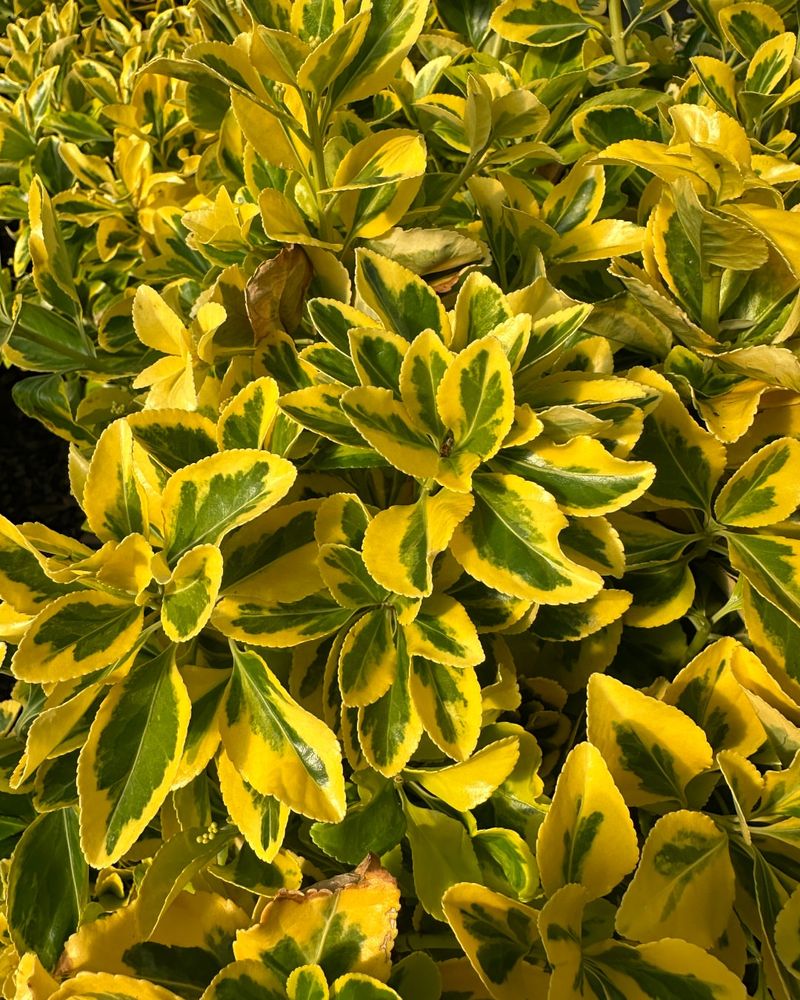
Euonymus japonicus ‘Aureomarginatus’ displays stunning variegated leaves edged in bright golden-yellow, creating a multicolored effect that never looks boring or monotonous.
This evergreen shrub grows slowly to four to six feet tall, with glossy oval leaves that provide year-round visual interest and structure.
The variegation remains consistent throughout all seasons, with golden margins contrasting beautifully against dark green centers on each leaf.
California gardeners value its tolerance to coastal conditions, including salt spray and ocean winds that damage more delicate plants near the beach.
It adapts to various soil types and light conditions, from full sun to partial shade, though variegation appears most vibrant in brighter locations.
Golden euonymus requires minimal pruning and handles formal shaping well, making it popular for hedges, topiaries, or foundation plantings around homes.
Water regularly during establishment, then reduce frequency as roots spread, since mature plants tolerate moderate drought without losing foliage color.
Watch for scale insects occasionally, treating promptly with horticultural oil if infestations appear, but overall this shrub remains relatively pest-free and low-maintenance throughout its life.
6. Golden Privet
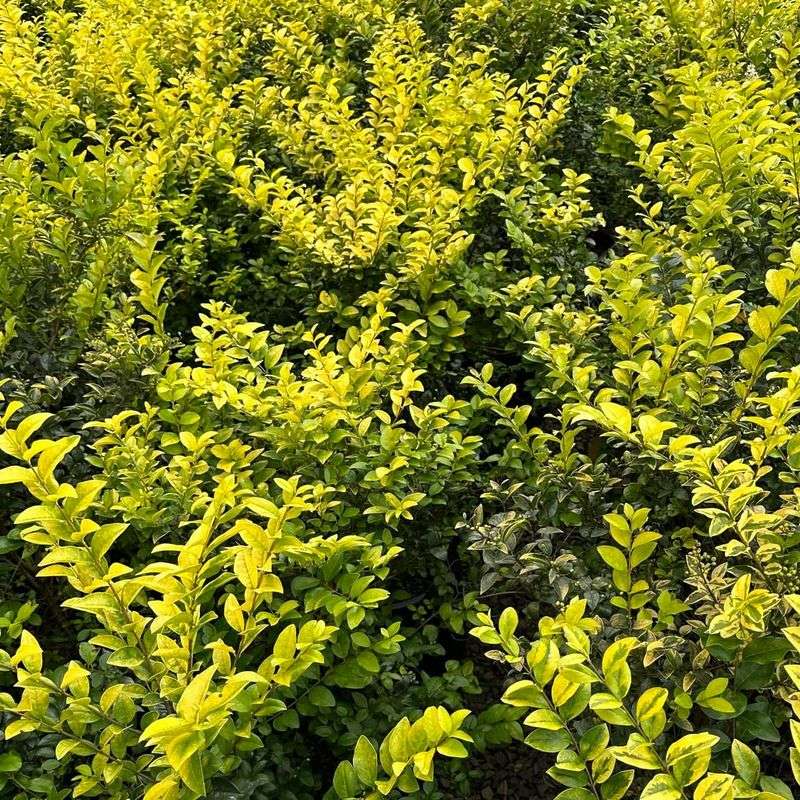
Ligustrum ‘Vicaryi’ transforms traditional privet hedges into glowing golden screens that provide privacy while adding cheerful color to property boundaries and garden rooms.
This semi-evergreen shrub reaches eight to twelve feet tall if left unpruned, but responds beautifully to shearing and shaping for formal hedges.
The leaves emerge brilliant golden-yellow in spring, maintaining their vibrant color throughout summer when planted in full sun for maximum intensity.
White flowers bloom in early summer, though many gardeners prune them off to maintain the focus on the spectacular foliage display.
California’s mild winters allow golden privet to retain most of its leaves, providing year-round screening unlike deciduous alternatives that bare themselves completely.
Plant it in well-drained soil with regular watering during establishment, then gradually reduce irrigation as roots spread and plants become self-sufficient.
It tolerates urban pollution, compacted soil, and various pH levels, making it adaptable to challenging city garden conditions where other shrubs struggle.
Use it as a backdrop for darker foliage plants, a bright hedge along driveways, or a tall accent that draws eyes upward in mixed borders.
7. Lonicera ‘Baggesen’s Gold’
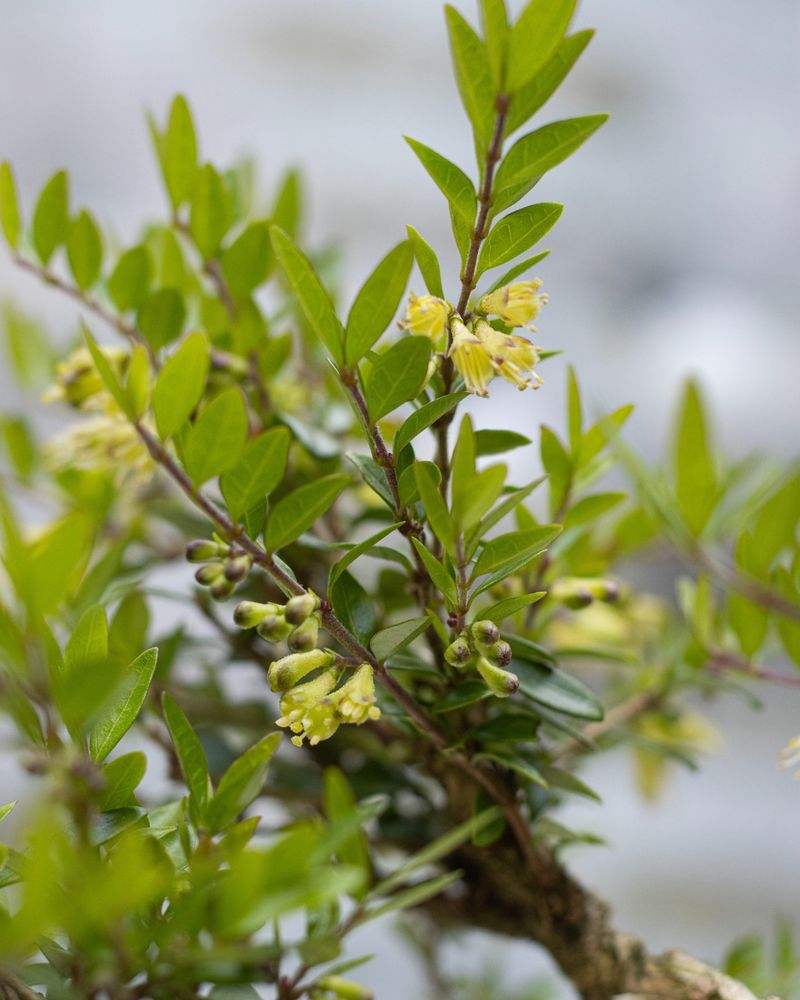
Lonicera nitida ‘Baggesen’s Gold’ offers delicate golden foliage on gracefully arching branches that sway gently in coastal breezes and create soft textural interest.
This evergreen shrub grows four to six feet tall and wide, with tiny oval leaves that create a fine-textured appearance unlike bolder foliage plants.
The color ranges from bright golden-yellow in full sun to lime-green in shadier spots, allowing flexibility in garden placement and design options.
Small creamy-white flowers appear in spring but remain inconspicuous among the foliage, followed by translucent purple berries that birds appreciate in fall.
California gardeners appreciate its fast growth rate, filling spaces quickly while remaining easy to prune and shape into hedges or topiary forms.
Plant it in well-drained soil with moderate watering, increasing irrigation during hot spells to prevent leaf scorch in inland valleys with intense heat.
It handles coastal conditions beautifully, tolerating salt spray and fog that rolls in regularly from the Pacific Ocean during summer months.
Combine it with burgundy foliage plants, blue-flowering perennials, or silver artemisia to create sophisticated color palettes that look curated and intentional rather than random.
8. Golden Abelia
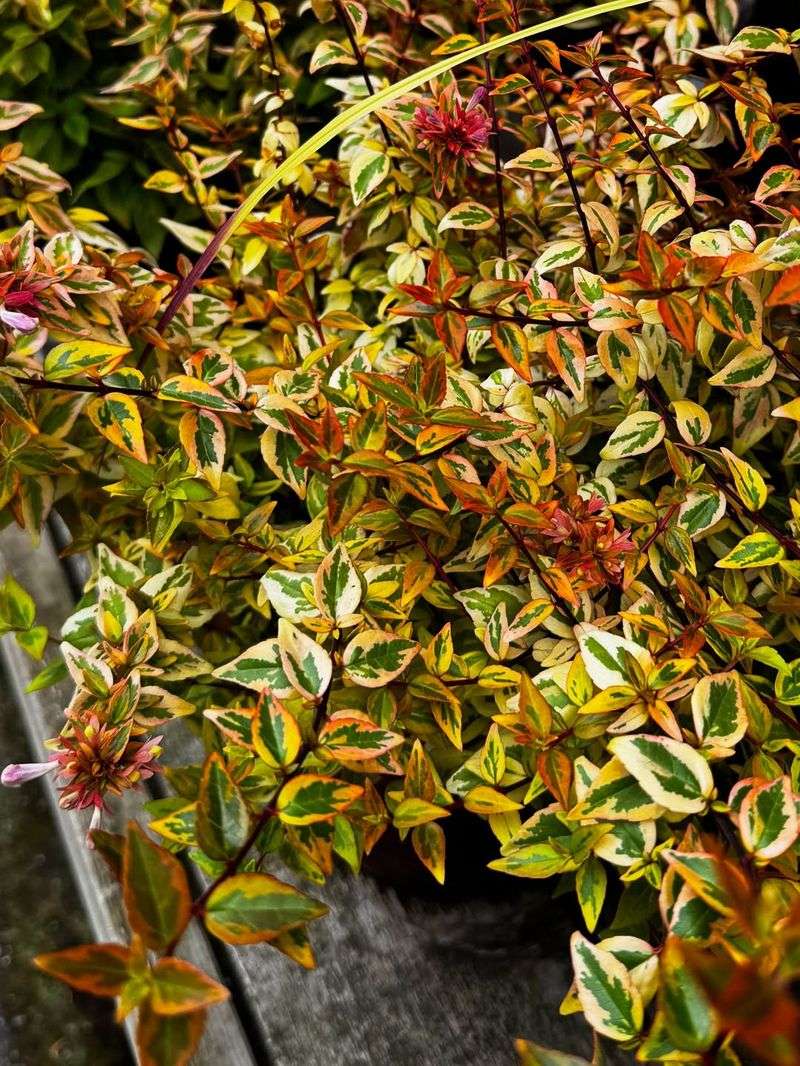
Abelia ‘Kaleidoscope’ lives up to its name with leaves that shift through shades of golden-yellow, orange, and red throughout seasons like a living kaleidoscope.
This semi-evergreen shrub grows two to three feet tall and wide, making it perfect for low borders, mass plantings, or colorful groundcover.
The variegated foliage provides constant visual interest, with colors intensifying during cooler months when temperatures drop and days shorten in fall.
Fragrant white flowers tinged with pink appear from late spring through fall, attracting hummingbirds, butterflies, and bees to your California garden reliably.
Plant it in full sun to partial shade, with more sun producing the most vibrant foliage colors and abundant blooms throughout summer.
Golden abelia tolerates various soil types and handles moderate drought once established, though occasional deep watering keeps foliage looking fresh and prevents leaf drop.
Prune lightly in early spring to control size and shape, removing any winter-damaged branches that appear brown or brittle to the touch.
Use it along pathways where you can appreciate the changing colors up close, or mass it in drifts for bold sweeps of golden color.
9. Golden Japanese Yew
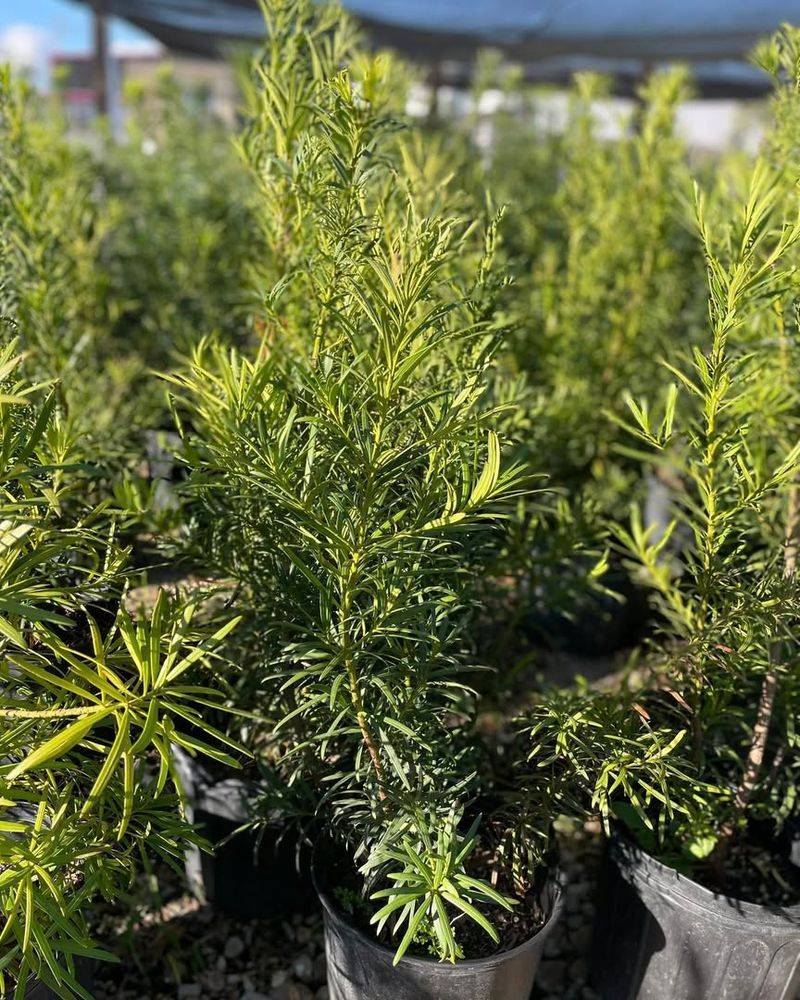
Taxus cuspidata ‘Aurescens’ brings a coniferous element to golden foliage collections with soft needle-like leaves that glow bright yellow-gold in spring growth flushes.
This evergreen shrub grows slowly to four to six feet tall, developing a compact upright form that works well in formal gardens.
The new growth emerges brilliant golden-yellow, contrasting beautifully against older dark green needles that remain from previous seasons on interior branches.
California gardeners value its shade tolerance, performing well in locations where many golden shrubs would fade to green or struggle entirely.
Plant it in well-drained soil with regular watering, as yews prefer consistent moisture and suffer in prolonged drought or waterlogged conditions.
It handles pruning exceptionally well, making it ideal for hedges, topiaries, or formal shapes that require precise maintenance and regular trimming.
Deer typically avoid yews due to toxic compounds in the foliage, though birds enjoy the red berries that female plants produce occasionally.
Combine it with ferns, hostas, or other shade-loving perennials to create lush woodland garden scenes that thrive under tree canopies where sun-loving shrubs fail completely.
10. Golden Hinoki Cypress
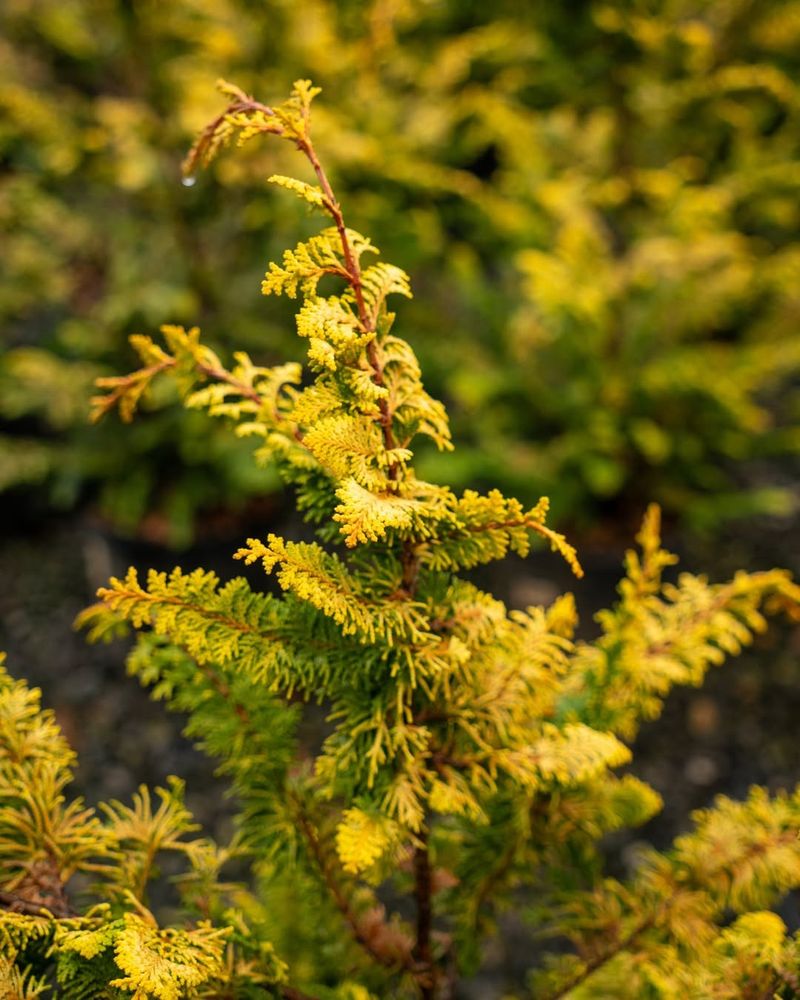
Chamaecyparis obtusa ‘Crippsii’ stands out among golden conifers with feathery foliage that holds its brilliant color throughout entire years without seasonal fading.
This evergreen shrub grows slowly to six to eight feet tall over many years, developing a graceful pyramidal form that anchors garden beds.
The scale-like leaves create a soft texture that contrasts beautifully with broad-leaved shrubs and perennials planted nearby in mixed borders.
Golden Hinoki cypress thrives in California’s coastal regions where cool temperatures and moderate humidity keep foliage looking fresh and vibrant year-round.
Plant it in well-drained soil with regular watering, as it dislikes both drought stress and soggy conditions that cause root rot.
It performs best in full sun to partial shade, with more sun producing the most intense golden color on new growth tips.
This shrub requires minimal pruning and maintains its shape naturally, making it ideal for low-maintenance gardens where time remains limited for chores.
Use it as a specimen plant, focal point, or vertical accent that draws eyes upward and adds structure to informal cottage-style gardens filled with flowering perennials.
11. Gold Dust Aucuba
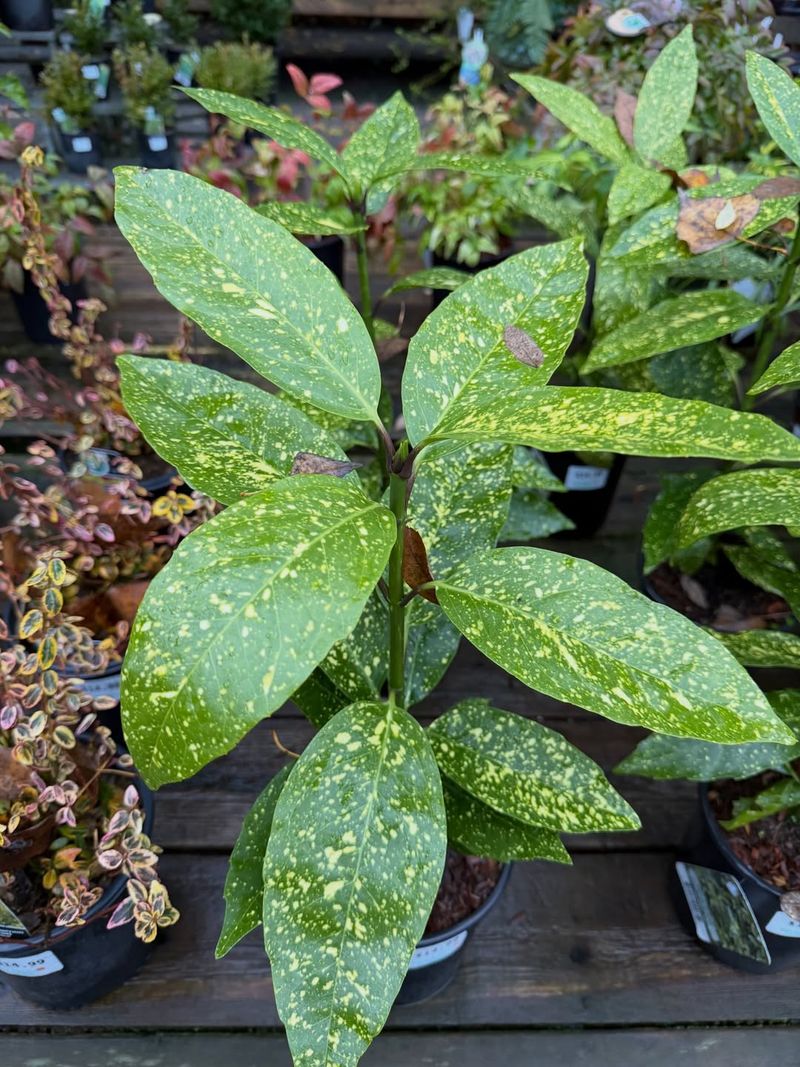
Aucuba japonica ‘Variegata’ earns its common name from leaves that appear dusted with gold flecks, creating a sparkling effect in shaded garden corners.
This evergreen shrub grows four to six feet tall and wide, with large glossy leaves that brighten dark spots where few plants thrive.
The variegation consists of irregular golden-yellow spots scattered across dark green leaf surfaces, with each leaf displaying unique patterns and markings.
California gardeners treasure its shade tolerance, performing beautifully under tree canopies, on north-facing walls, or in courtyard gardens with limited sun exposure.
Plant it in rich, well-drained soil with regular watering and organic mulch to keep roots cool during summer heat in inland areas.
Red berries appear on female plants in fall if male pollinators grow nearby, adding another season of interest to this already valuable shrub.
It handles urban pollution, deer browsing pressure, and root competition from trees better than most shade-loving alternatives in challenging garden situations.
Combine it with ferns, astilbes, or coral bells to create lush shade gardens that feel tropical and exotic despite California’s Mediterranean climate patterns.
12. Gold Leaf Pittosporum
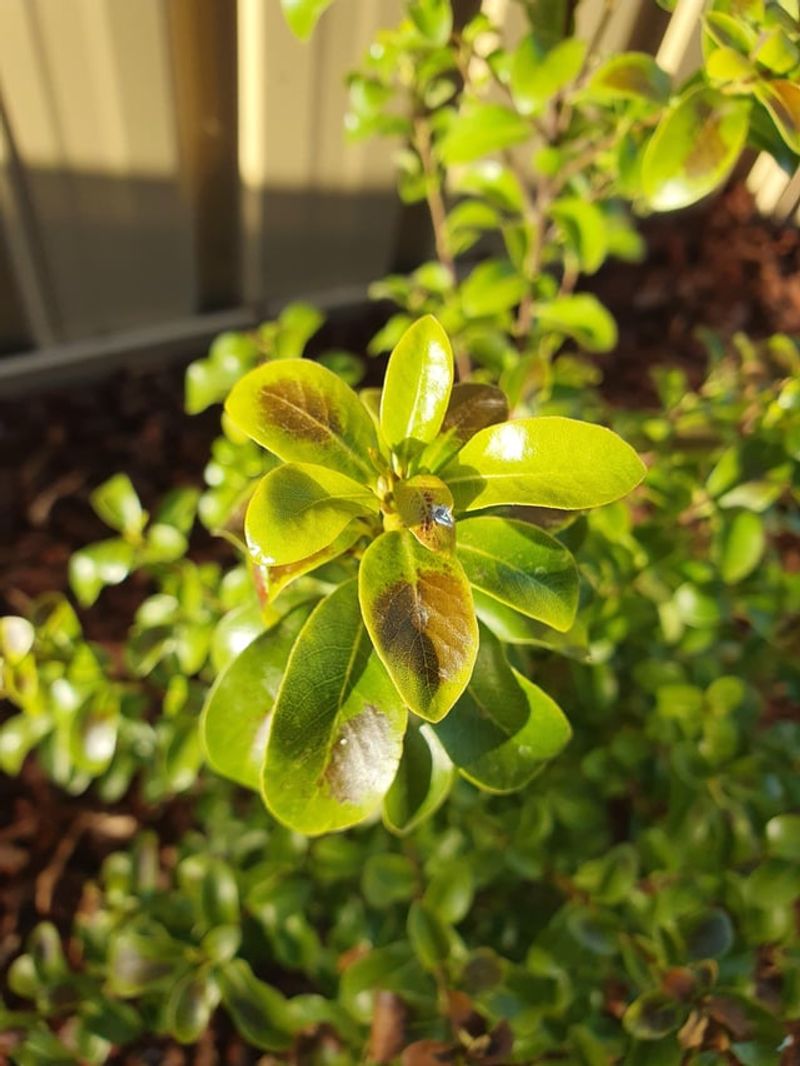
Pittosporum tenuifolium ‘Gold Star’ illuminates gardens with wavy-edged leaves that emerge bright chartreuse-gold and hold their color throughout entire growing seasons beautifully.
This evergreen shrub grows six to eight feet tall with a naturally rounded form that requires minimal shaping or maintenance pruning.
The unusual leaf texture adds visual interest beyond just color, with undulating margins that catch light and create shadow patterns throughout the day.
Tiny dark purple flowers bloom in spring, releasing a sweet honey fragrance that perfumes patios and outdoor seating areas during warm evenings.
California’s coastal gardeners particularly appreciate its salt tolerance and ability to handle ocean winds without burning or browning at leaf margins and tips.
Plant it in full sun to partial shade with well-drained soil and moderate watering, reducing irrigation once established and roots spread widely.
It works beautifully as a hedge, screen, specimen plant, or backdrop for flowering perennials that benefit from its luminous golden background color.
Combine it with purple-flowering plants like lavender, salvia, or society garlic to create stunning color contrasts that photograph beautifully and impress garden visitors consistently.
13. Gold Leaf Elderberry
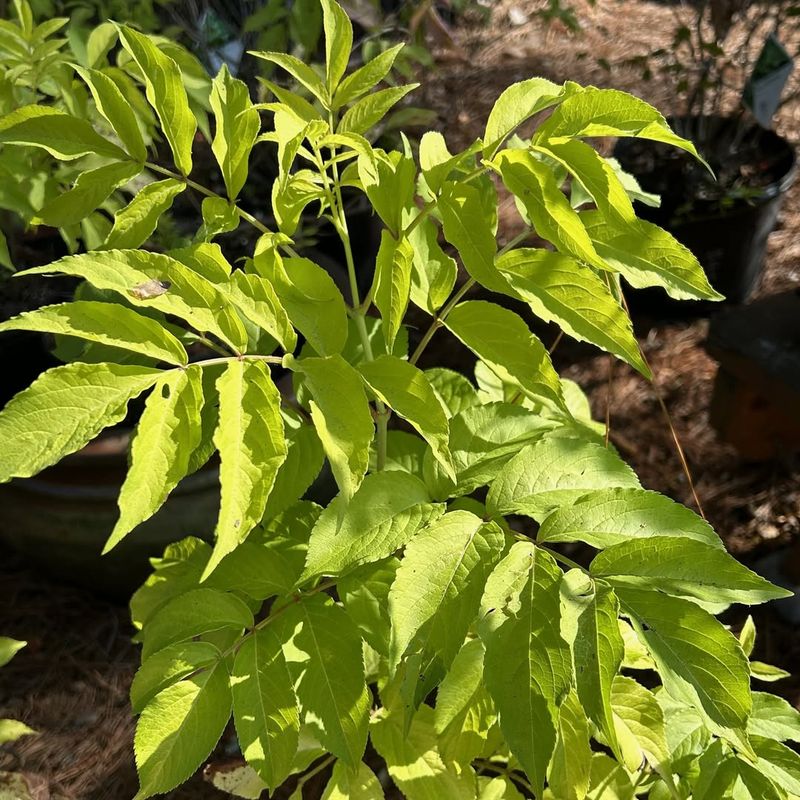
Sambucus nigra ‘Aurea’ explodes with bright golden compound leaves that create bold textural statements in mixed borders and informal cottage-style garden designs.
This deciduous shrub grows rapidly to eight to twelve feet tall, filling spaces quickly and providing instant impact in new landscape installations.
The large pinnate leaves consist of multiple leaflets that create a fine-textured appearance despite the overall large size of each compound leaf structure.
Creamy-white flower clusters appear in late spring, followed by dark purple-black berries that birds devour eagerly throughout summer and early fall months.
Plant it in full sun to partial shade with rich, moist soil, as elderberries prefer consistent water and suffer in prolonged droughts.
California gardeners appreciate its fast growth rate, though it requires more pruning than slower-growing alternatives to maintain manageable sizes and shapes.
Cut it back hard in late winter to encourage vigorous new golden growth and prevent it from becoming too large or sprawling.
Use it as a backdrop for perennial borders, a fast-growing screen, or a wildlife-friendly shrub that supports birds, bees, and beneficial insects throughout multiple seasons reliably.