14 Indoor Vining Plants That Instantly Add A Tropical Feel To California Homes
California homes already have sunshine on their side—but sometimes they still crave that lush, tropical vibe.
Indoor vining plants deliver it effortlessly, trailing, climbing, and softening spaces in a way few décor choices can match.
One well-placed vine can turn a plain room into a living retreat.
Vining plants bring movement and texture, drawing the eye upward or cascading gracefully from shelves.
In California’s mild indoor conditions, many of these plants thrive with minimal intervention, making them as practical as they are beautiful.
They love bright rooms, reward consistency, and quickly fill empty corners with life.
These fourteen indoor vining plants are favorites for a reason.
They’re adaptable, visually striking, and capable of transforming apartments and houses alike.
Whether draped over a bookcase or trained along a window, they create that relaxed, vacation-at-home feeling Californians love—without stepping outside.
1. Pothos (Epipremnum Aureum)
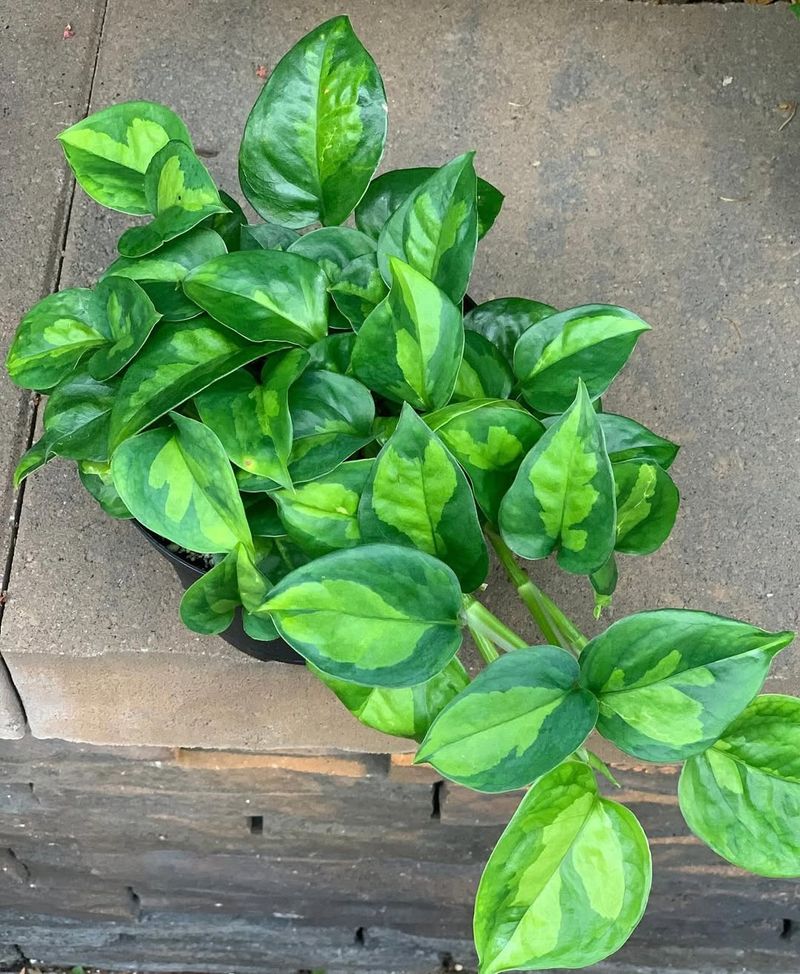
Often called the beginner’s best friend, pothos offers effortless beauty with its cascading heart-shaped leaves that seem to grow endlessly.
This plant thrives in almost any light condition, from bright indirect sunlight to lower-light corners, making it incredibly versatile for California homes.
Its trailing vines can reach impressive lengths, creating stunning waterfalls of greenery from shelves, mantels, or hanging baskets.
Pothos comes in several varieties, including golden, marble queen, and neon, each offering unique leaf patterns and colors.
The plant tolerates occasional neglect and can bounce back quickly from underwatering, though it prefers consistent moisture.
California’s mild climate means your pothos will grow year-round, producing new leaves regularly when given proper care.
Simply trim back overgrown vines to maintain your desired shape, and propagate cuttings in water to create new plants for other rooms.
This tropical native naturally purifies indoor air while adding that coveted jungle aesthetic.
Place it high where its vines can trail freely, and watch as it transforms your space into a verdant oasis.
With minimal effort, pothos delivers maximum tropical impact that perfectly complements California’s relaxed lifestyle.
2. Monstera Adansonii (Swiss Cheese Vine)
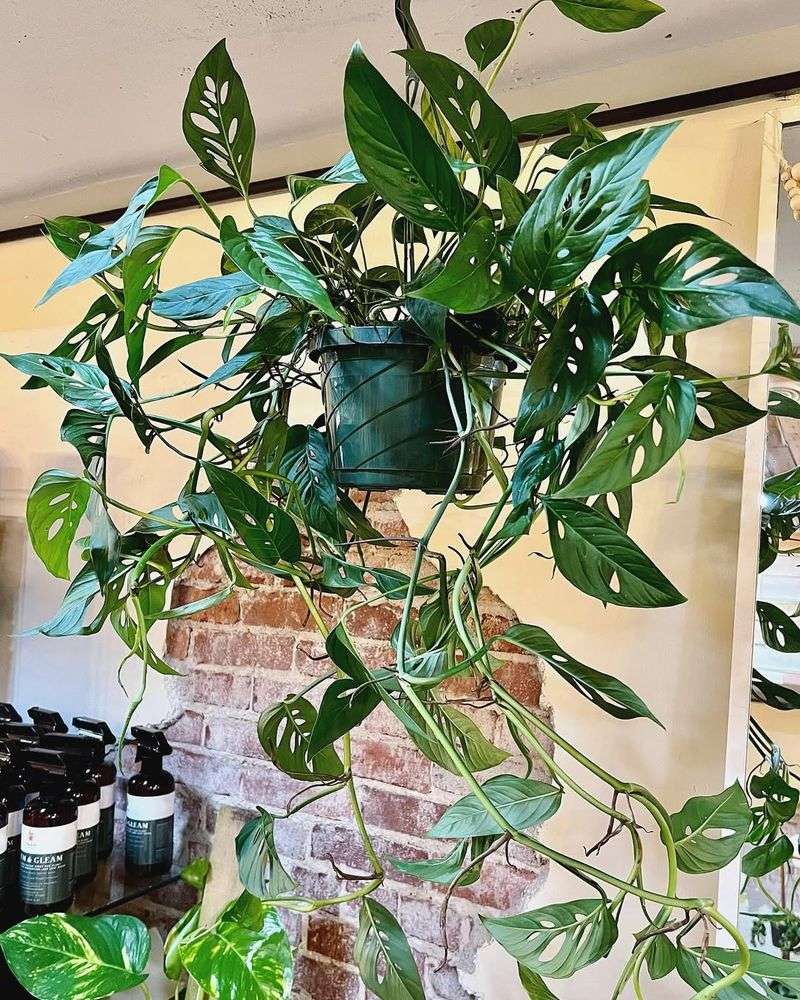
Fenestrated leaves full of natural holes make this monstera variety an instant conversation starter and a true showstopper.
Unlike its larger cousin Monstera deliciosa, this vining version stays more compact while still delivering dramatic tropical flair.
The unique perforations in each leaf create fascinating shadow patterns when sunlight filters through, adding depth to your interior design.
This climbing beauty appreciates something to grip onto, whether that’s a moss pole, trellis, or even a simple string system along your wall.
California’s humidity levels work wonderfully for this plant, though occasional misting can boost leaf health and vibrancy.
Bright indirect light brings out the best growth and leaf fenestration, making east or west-facing windows ideal placement spots.
Water when the top two inches of soil feel dry, adjusting frequency based on your home’s specific conditions and seasonal changes.
New growth emerges as solid leaves that develop holes as they mature, creating an ever-changing display of botanical artistry.
Train the vines upward for vertical interest or let them cascade down for a more relaxed jungle appearance.
Your California Garden Changes Every Week. Your Plan Should Too.
Gardening in California changes quickly throughout the season. Every Friday you’ll receive a simple weekly plan showing exactly what to plant, prune, fertilize, harvest, and protect so you never miss the right timing.
This plant rewards attentive care with rapid growth and increasingly impressive foliage that screams tropical paradise.
3. Philodendron Brasil

Sporting electric lime and deep green variegation, Philodendron Brasil brings a burst of sunshine to any California interior space.
Each leaf displays unique patterns of chartreuse splashes against rich emerald backgrounds, ensuring no two plants look exactly alike.
This fast-growing vine adapts beautifully to various light conditions, though brighter spots intensify the striking yellow variegation.
The heart-shaped leaves emerge in tight curls before unfurling to reveal their colorful patterns, providing constant visual interest.
California homeowners appreciate how this philodendron tolerates the occasional watering mishap while still maintaining its vibrant appearance.
Its vines grow quickly during warmer months, easily reaching several feet in length when given proper support and nutrition.
Position it where the trailing stems can drape freely or guide them along shelves to create living green borders.
The plant thrives in typical household temperatures, making it perfectly suited for California’s mild year-round climate.
Propagation happens easily through stem cuttings, allowing you to multiply your collection or share with fellow plant enthusiasts.
Regular pruning keeps growth bushy and full rather than leggy, while removed sections root readily in water or soil.
This philodendron variety delivers tropical vibes without demanding expertise, making it perfect for both beginners and experienced collectors.
4. String Of Hearts (Ceropegia Woodii)
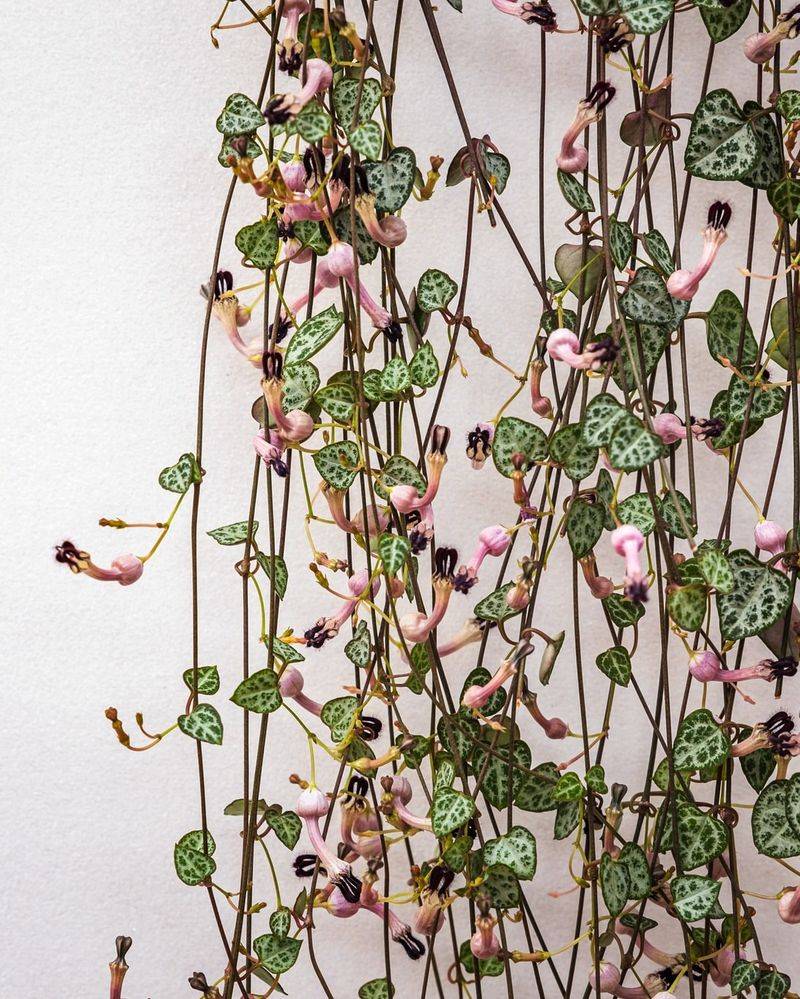
Delicate chains of tiny heart-shaped leaves create an enchanting waterfall effect that adds romantic charm to any California space.
This trailing succulent produces impossibly thin stems that can grow several feet long, creating ethereal curtains of purple-tinged foliage.
Each miniature heart features silvery variegation on top with burgundy undersides, offering two-toned beauty from every viewing angle.
California’s bright sunshine suits this plant perfectly, as it originates from sunny South African regions and craves abundant light.
The succulent nature means it stores water in its leaves and tuberous roots, requiring less frequent watering than typical vining plants.
Small pink tubular flowers occasionally appear along the stems, adding unexpected pops of color to the already charming display.
This plant looks spectacular in hanging baskets, mounted on walls, or cascading from high shelves where its delicate nature shines.
Growth accelerates during spring and summer, while winter months bring slower development and reduced water needs.
Propagate by laying stems on soil where they’ll develop roots at the nodes, or plant the aerial tubers that form along mature vines.
The whimsical appearance brings a softer, more romantic take on tropical style compared to bold-leafed varieties.
Perfect for adding vertical interest without overwhelming smaller California apartments or cozy reading nooks.
5. English Ivy (Hedera Helix)
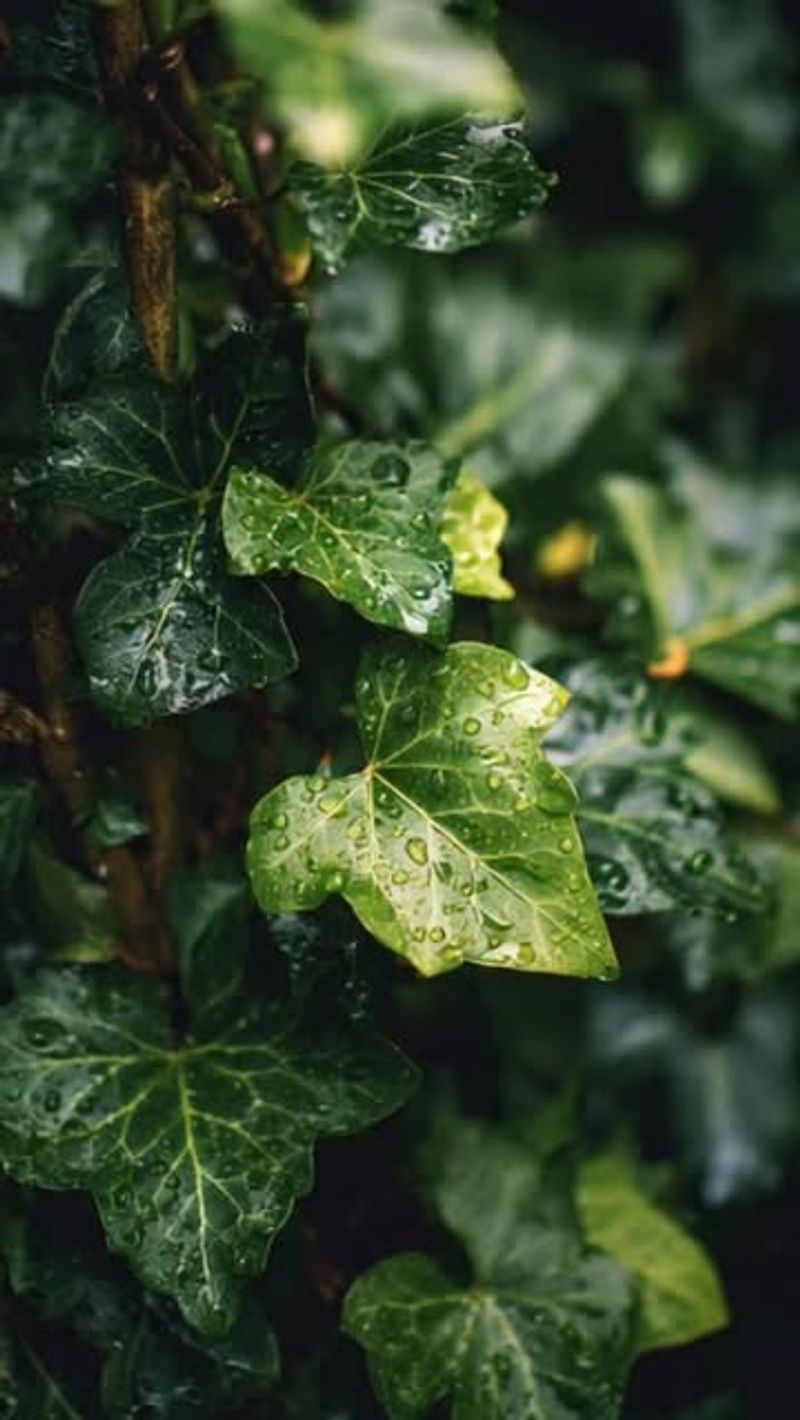
Classic lobed leaves in various shades of green create timeless elegance that complements both modern and traditional California home styles.
This versatile climber adapts to numerous growing conditions, from bright spaces to shadier corners where other vining plants might struggle.
English ivy naturally reaches for surfaces to climb, using tiny aerial rootlets to grip walls, trellises, or decorative structures.
Multiple cultivars exist with different leaf shapes, sizes, and variegation patterns, from solid green to cream-edged varieties.
California’s cooler coastal climates particularly suit this plant, as it prefers moderate temperatures over intense heat.
Regular pruning maintains desired shapes and encourages bushier growth rather than long, sparse vines that lose lower leaves.
The plant appreciates consistent moisture without waterlogging, making well-draining soil and pots with drainage holes essential.
Indoor air quality improves with ivy’s presence, as studies show it filters certain airborne toxins effectively.
Train stems along picture frames, around windows, or up decorative ladders to create living architectural elements.
This traditional favorite brings European garden charm indoors while still contributing to that lush, tropical atmosphere.
Misting foliage occasionally helps prevent spider mites, especially during California’s drier months when indoor humidity drops.
With proper care, English ivy becomes a long-term companion that grows more impressive with each passing season.
6. Hoya Carnosa (Wax Plant)
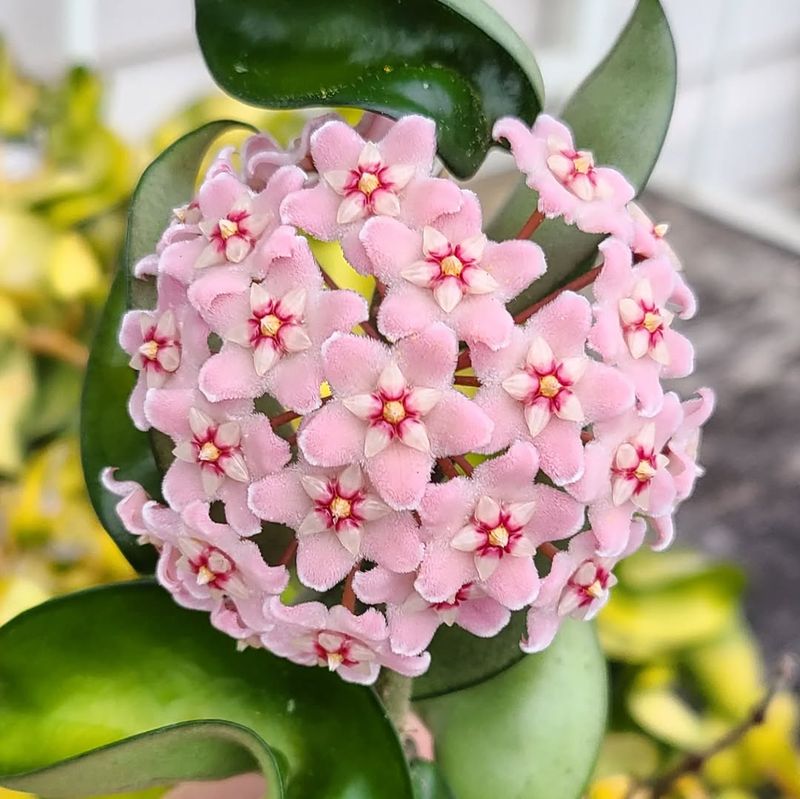
Thick, waxy leaves give this tropical vine its common name while providing a sculptural quality that stands out among softer foliage plants.
Mature hoyas reward patient growers with clusters of fragrant star-shaped flowers that smell sweetest during evening hours.
The blooms appear in shades of pink, white, or red depending on variety, adding unexpected color to your green collection.
California’s bright light conditions help hoyas bloom more reliably, as they need substantial sunshine to trigger flower production.
These plants prefer to be slightly rootbound, so resist the urge to repot too frequently for best flowering results.
The vines grow slowly compared to pothos or philodendrons, but their durability and longevity make them worthwhile investments.
Allow soil to approach dryness between waterings, as hoyas store moisture in their succulent-like leaves and stems.
Variegated versions like ‘Krimson Queen’ or ‘Tricolor’ add cream, pink, or yellow splashes to the classic green foliage.
Once flower buds form, avoid moving the plant or changing its orientation, as this can cause bud drop before blooms open.
The trailing stems look beautiful cascading from macrame hangers or trained along decorative supports for upward growth.
This hoya brings tropical sophistication with minimal demands, perfectly matching California’s easy-breezy lifestyle.
7. Scindapsus Pictus (Satin Pothos)
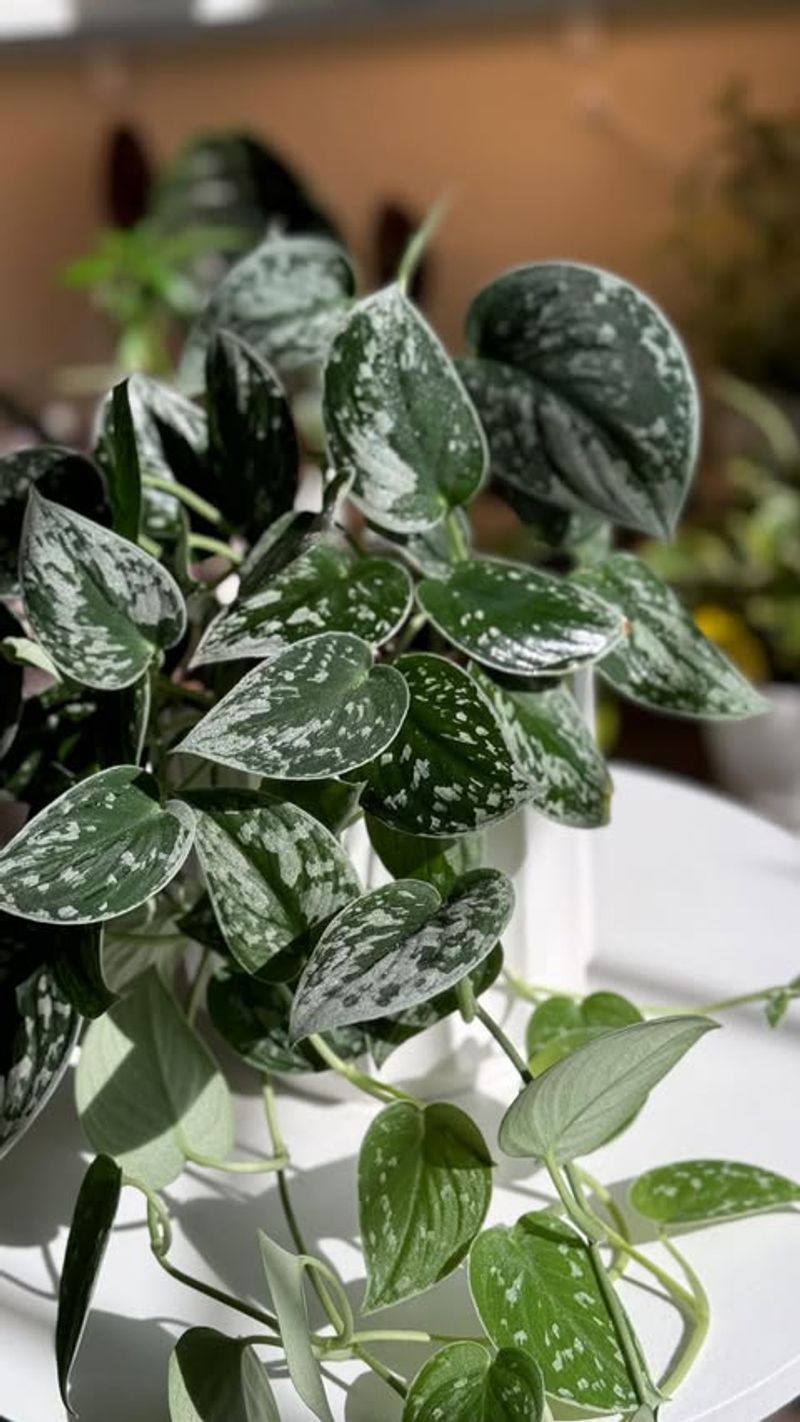
Silvery splashes across deep green leaves create a shimmering effect that catches light beautifully in California’s abundant sunshine.
Despite its common name, this plant isn’t actually a true pothos but shares similar easy-care characteristics and vining growth habits.
The velvety texture of the leaves adds tactile interest alongside visual appeal, making it impossible to resist touching the foliage.
Several varieties exist, including ‘Argyraeus’ with smaller leaves and ‘Exotica’ with larger, more dramatic silver variegation.
This plant prefers slightly less light than golden pothos, making it excellent for rooms with moderate rather than bright illumination.
California homeowners love how it maintains its metallic shimmer without requiring complicated care routines or constant attention.
Water when the top inch of soil dries out, being careful not to overwater as this can cause leaf yellowing and root issues.
The trailing vines grow at a moderate pace, creating full, lush displays within a single growing season under good conditions.
Position it where indirect light will highlight the silvery variegation without causing leaf burn from direct sun exposure.
Propagation through stem cuttings works reliably, allowing you to expand your collection or create fuller pots by replanting cuttings.
This sophisticated vine brings understated elegance and tropical flair without overwhelming other design elements in your space.
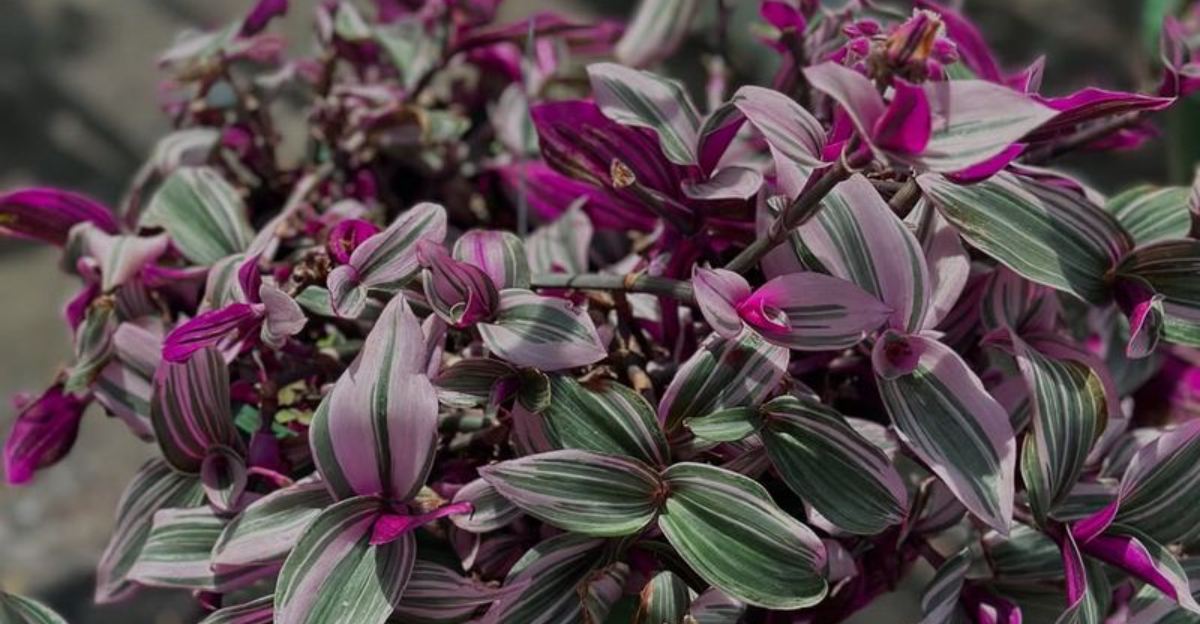
8. Tradescantia Zebrina (Wandering Jew)
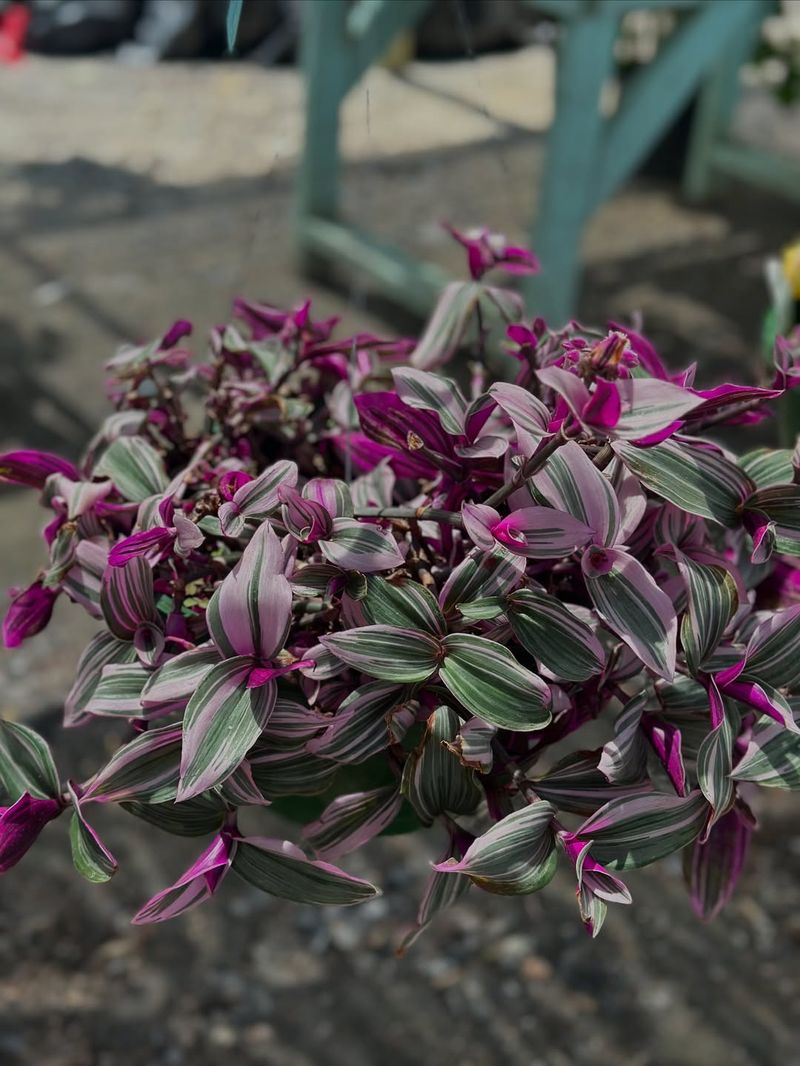
Bold purple undersides paired with silver-striped tops create a two-toned spectacle that commands attention in any California interior.
This fast-growing trailer produces abundant foliage quickly, making it perfect for filling empty spaces or creating instant jungle vibes.
The colorful leaves seem to glow when backlit by California sunshine, revealing their rich purple hues most dramatically.
Small three-petaled flowers in pink or purple occasionally appear, adding delicate blooms to the already vibrant foliage display.
Bright indirect light maintains the most intense coloration, while lower light causes the purple tones to fade toward green.
This plant appreciates consistent moisture and will quickly show signs of thirst through limp leaves that perk up after watering.
California’s mild temperatures suit tradescantia perfectly, allowing year-round growth without dormancy periods or seasonal slowdowns.
Pinching back growing tips encourages bushier growth and prevents the long, bare stems that can develop with age.
Propagation couldn’t be easier—simply snip stems and place them in water or directly into soil where they’ll root within days.
The vigorous growth means you’ll need to trim regularly, but those clippings become new plants to share or expand your collection.
This bold beauty brings maximum tropical color with minimal effort, perfect for busy California lifestyles.
9. Rhaphidophora Tetrasperma (Mini Monstera)
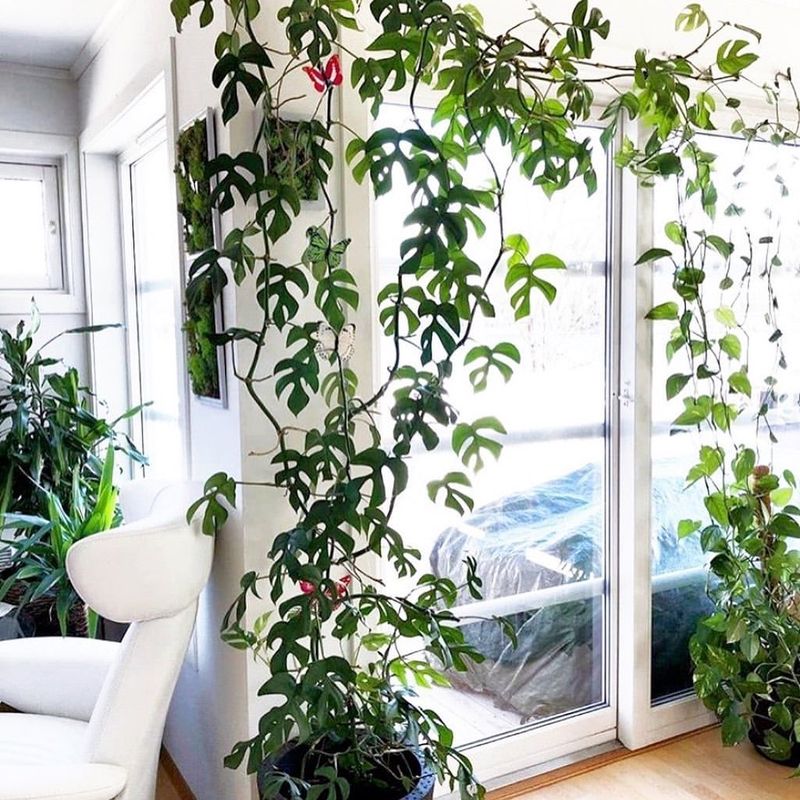
Split leaves resembling miniature monstera foliage earned this plant its nickname, though it’s actually a different genus entirely.
Rapid growth makes this vine particularly satisfying for impatient gardeners who want to see visible progress within weeks.
The fenestrations develop naturally as the plant matures, with younger leaves emerging solid before splitting as they expand.
California’s warm temperatures accelerate growth rates, potentially producing new leaves every few weeks during peak growing season.
Providing a climbing support like a moss pole or trellis encourages larger leaves with more dramatic splits and fenestrations.
Bright indirect light keeps growth compact and healthy, while insufficient light causes leggy stems with widely spaced leaves.
This plant appreciates slightly higher humidity than typical household levels, making occasional misting or pebble trays beneficial additions.
Water when the top two inches of soil dry out, maintaining consistent moisture without allowing the roots to sit in water.
The glossy green leaves bring a fresh, vibrant energy that instantly elevates any room’s tropical aesthetic.
Propagate through stem cuttings that include at least one node, rooting them in water before transferring to soil.
This trendy plant delivers monstera vibes in a more manageable size, perfect for California apartments or smaller spaces.
10. Cissus Discolor (Rex Begonia Vine)
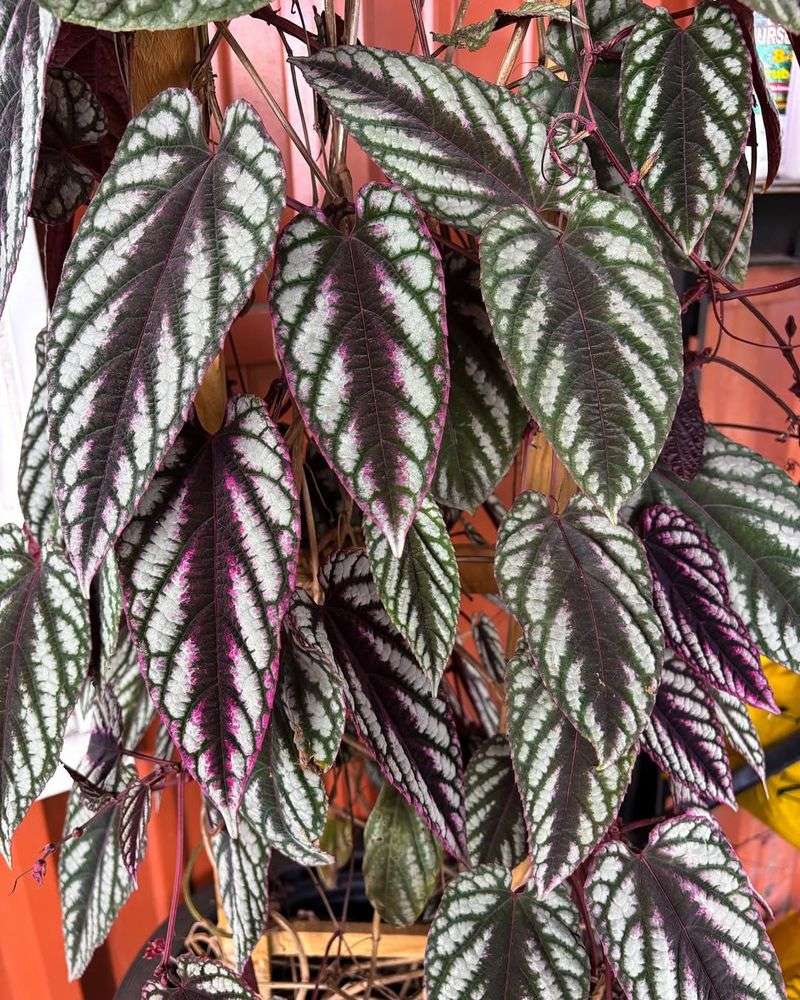
Spectacular multicolored leaves featuring silver, green, and burgundy patterns make this vine one of the most visually striking options available.
Each heart-shaped leaf displays unique markings, with silvery zones contrasting against deep green and rich purple undersides.
This tropical beauty originates from Southeast Asian rainforests, bringing authentic jungle aesthetics to California homes.
The plant appreciates higher humidity levels than many other vines, making bathrooms or kitchens ideal placement locations.
Bright indirect light maintains the most vibrant leaf coloration, though direct afternoon sun can scorch the delicate foliage.
California’s coastal regions provide naturally suitable humidity, while inland areas may require humidifiers or frequent misting.
Growth slows during winter months when the plant may partially rest, requiring reduced watering and no fertilization.
The vining stems use tendrils to climb, naturally reaching for supports and wrapping around nearby structures.
Consistent moisture keeps leaves looking their best, as drying out can cause browning edges and leaf drop.
This showstopper works beautifully in hanging baskets where both the colorful tops and purple undersides remain visible.
Though slightly more demanding than pothos or philodendrons, the stunning foliage justifies the extra attention required.
Serious plant collectors treasure this vine for its unmatched beauty and tropical authenticity.
11. Philodendron Micans (Velvet Leaf Philodendron)
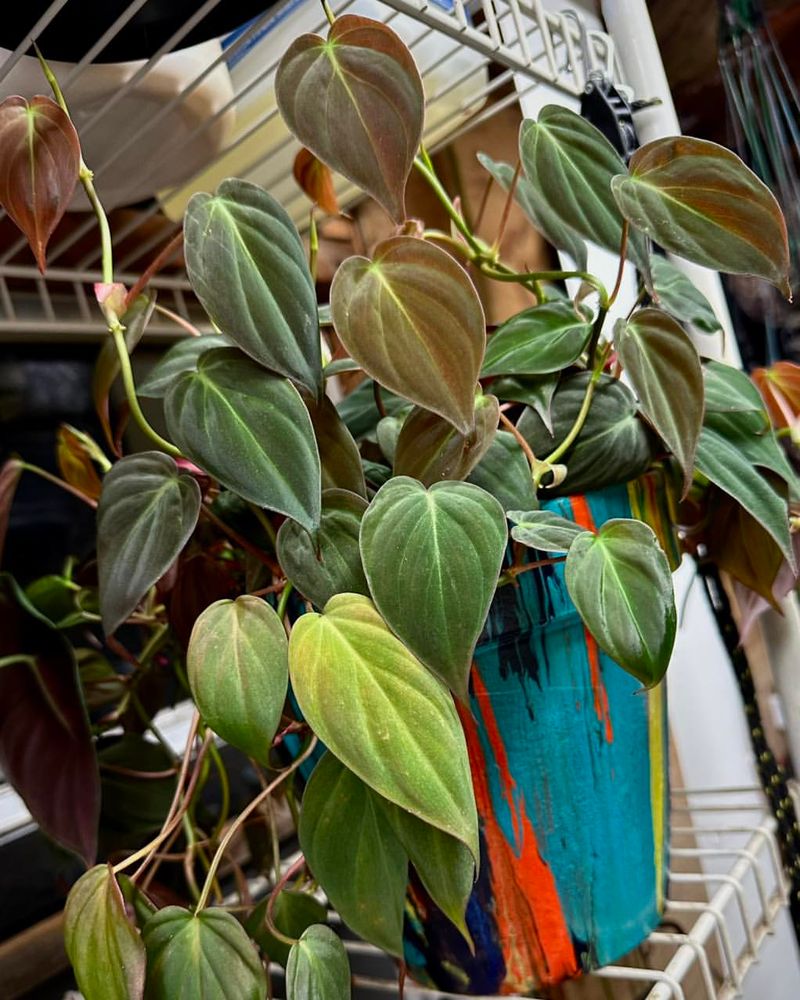
Velvety leaves in shades of bronze, burgundy, and forest green create a rich, luxurious appearance that feels incredibly soft to touch.
The iridescent quality of the foliage shifts in different lighting, appearing almost metallic when California sunshine hits at certain angles.
This compact philodendron variety stays relatively small compared to its larger relatives, making it perfect for tighter spaces.
New growth emerges in shades of rusty orange before maturing to deeper tones, providing constant color variation throughout the plant.
California’s mild climate allows this tropical native to grow consistently without the extreme temperature fluctuations that stress many houseplants.
Moderate to bright indirect light keeps growth compact and leaf colors intense, while lower light causes paler, less vibrant foliage.
The trailing habit looks stunning in hanging planters or cascading from high shelves where its unique coloring stands out.
Water when the top inch of soil dries, maintaining even moisture without waterlogging the roots or allowing complete dryness.
This philodendron appreciates occasional pruning to maintain fullness and prevent the bare lower stems that develop on neglected vines.
Propagation through stem cuttings works reliably, with new roots forming quickly when placed in water or moist soil.
The sophisticated color palette brings depth and warmth to plant collections dominated by bright greens.
Easy care combined with exceptional beauty makes this velvet philodendron a must-have for California plant enthusiasts.
12. Dischidia Nummularia (String Of Nickels)

Tiny round leaves resembling miniature coins line delicate stems, creating charming cascades that bring whimsical character to any space.
This epiphytic plant naturally grows on trees in tropical forests, making it perfectly adapted to the bright, airy conditions California homes provide.
The succulent-like leaves store water efficiently, allowing the plant to tolerate brief periods of drought without showing stress.
California’s abundant natural light suits this sun-lover perfectly, though some protection from intense afternoon rays prevents leaf scorching.
Unlike heavy, bold-leafed vines, this delicate trailer adds airy, floating greenery that doesn’t visually overwhelm smaller rooms.
The plant grows slowly compared to vigorous vines like pothos, but its neat, compact habit requires less maintenance and pruning.
Well-draining soil is essential, as the roots quickly rot if kept too moist or planted in heavy, water-retentive mixes.
Water sparingly, allowing the soil to dry between waterings, especially during cooler months when growth naturally slows.
This charming vine looks particularly attractive in small hanging baskets or mounted on bark pieces for a naturalistic display.
The miniature scale makes it perfect for bathrooms, small apartments, or anywhere space is limited but tropical vibes are desired.
Variegated forms exist with cream or yellow edges, adding even more visual interest to the already adorable foliage.
This understated beauty proves that tropical style doesn’t always require large, dramatic leaves to make an impact.
13. Epipremnum Pinnatum (Dragon Tail Pothos)
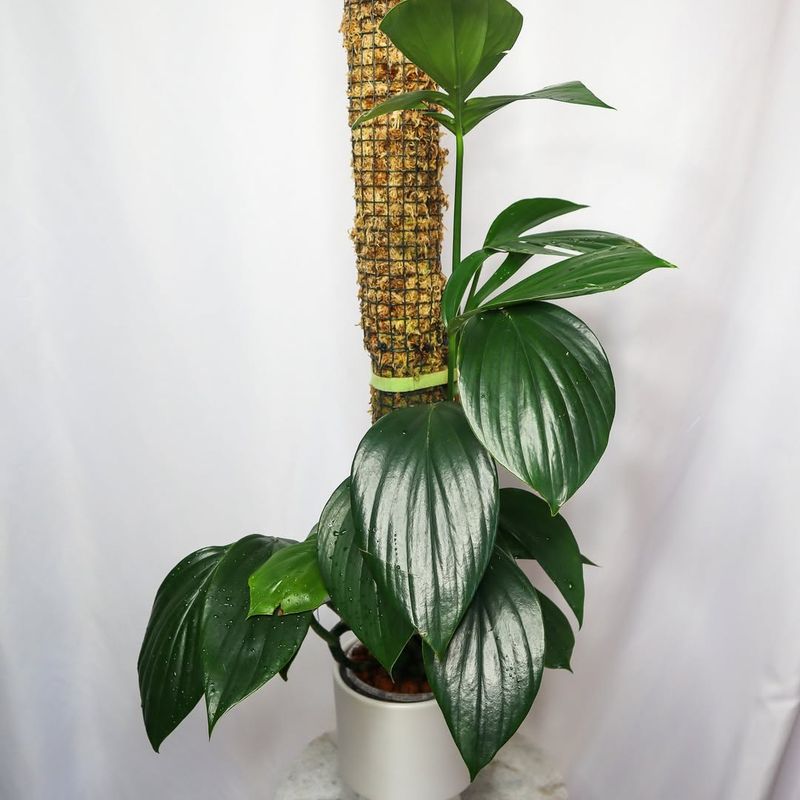
Mature specimens develop dramatically fenestrated leaves that rival monstera in size and tropical impact, surprising those familiar only with juvenile growth.
Young plants start with solid heart-shaped leaves similar to regular pothos before developing the signature splits as they climb.
Providing vertical support triggers the mature leaf form, transforming the plant from ordinary to extraordinary with proper growing conditions.
California’s bright light and warm temperatures create ideal conditions for encouraging this impressive transformation from juvenile to adult foliage.
The glossy leaves can reach impressive sizes when the plant climbs tall supports like moss poles or wooden planks.
This pothos relative shares the same easy-care nature while offering dramatically different aesthetics once it matures.
Bright indirect light promotes faster growth and earlier fenestration development, though the plant tolerates lower light conditions.
Water when the top few inches of soil dry out, maintaining consistent moisture during active growth periods.
The transformation from small-leafed juvenile to large-leafed adult creates an ever-changing display that keeps things interesting.
Patience is required as the mature form takes time to develop, but the spectacular results justify the wait.
This vine brings conversation-starting drama to California homes while maintaining the reliability pothos lovers appreciate.
Perfect for plant enthusiasts ready to graduate from basic vines to more impressive tropical specimens.
14. Senecio Rowleyanus (String Of Pearls)
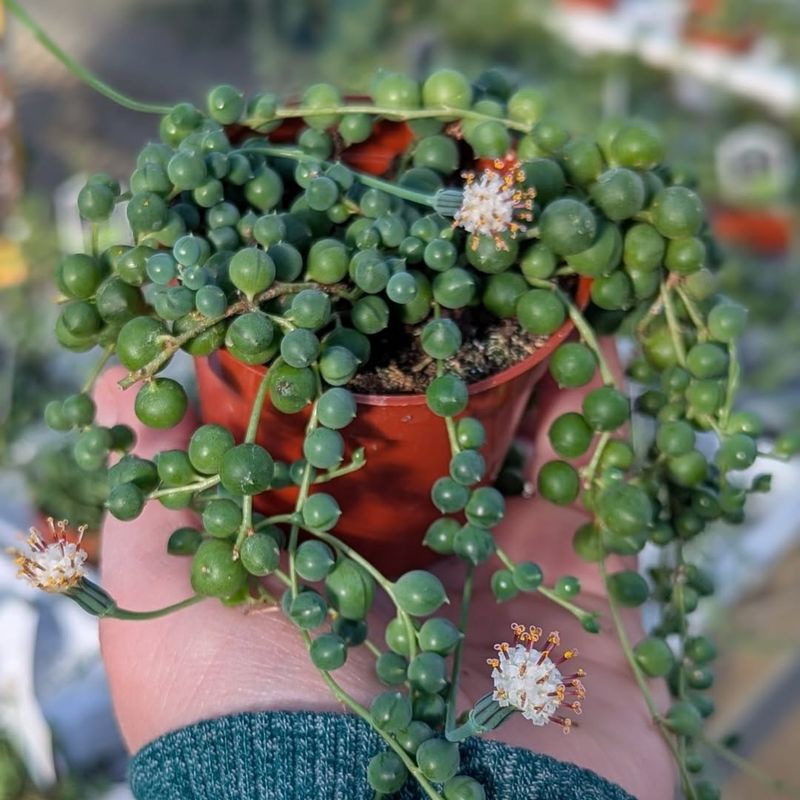
Spherical beads strung along thin stems create an otherworldly appearance that looks almost too perfect to be natural.
Each little pearl serves as a water storage organ, allowing this succulent vine to survive California’s drier indoor conditions easily.
The unique form adds textural contrast to collections filled with flat-leafed plants, creating visual diversity and conversation-starting interest.
Bright light is absolutely essential for this sun-loving succulent, making south-facing California windows ideal placement spots.
The pearls can appear slightly flattened when the plant needs water, plumping back up beautifully after a thorough drink.
Well-draining soil specifically formulated for cacti and succulents prevents the root rot this plant is susceptible to when overwatered.
California’s low humidity suits this African native perfectly, as it naturally grows in arid regions with minimal rainfall.
The delicate stems break easily, so handle with care when watering, moving, or arranging the cascading strands.
Small white flowers with a cinnamon-like fragrance occasionally appear, adding unexpected sensory delight to the visual appeal.
This vine looks spectacular spilling from high shelves or mounted planters where the pearl strands can hang freely.
Propagation works by laying stems on soil where they’ll root at the nodes, creating new plants from a single strand.
The sculptural quality brings modern, minimalist style alongside tropical vibes for a unique aesthetic blend.