How Roadside Salt Can Damage Your Plant Life In Illinois

During an Illinois winter, roadside salt feels like a necessary evil.
It keeps roads safer, sidewalks clearer, and daily life moving forward.
But once the snow melts, that salt doesn’t just vanish. It often ends up soaking into nearby soil, quietly affecting trees, shrubs, lawns, and garden beds.
Many homeowners don’t connect struggling plants with winter road treatments, yet the damage can linger long after the last frost.
Salt can interfere with how plants absorb water and nutrients, leaving them stressed before the growing season even begins.
You may notice browning leaves, bare patches of grass, or weakened growth without realizing the cause started months earlier.
In Illinois, where freeze and thaw cycles are common, salt can spread farther than expected through runoff and splashing traffic.
Understanding how this happens helps gardeners spot problems early and protect their landscapes.
Once you know what to look for, you can take steps to reduce damage and keep plants healthier year after year.
1. Salt Dehydrates Plant Roots And Prevents Water Absorption
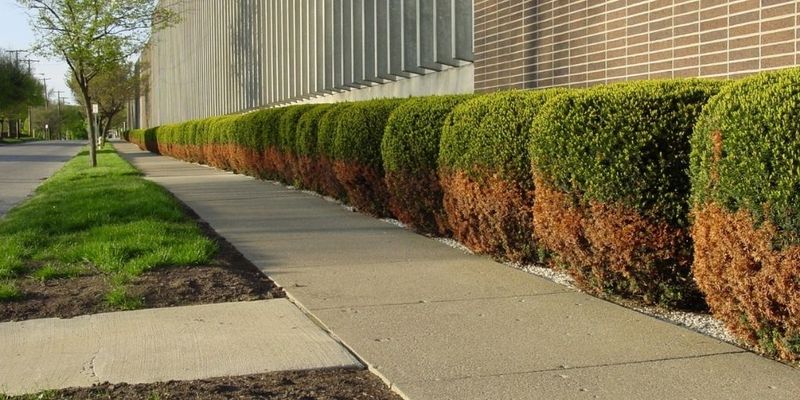
When salt accumulates in soil around your Illinois landscape, it creates a chemical imbalance that prevents roots from doing their most important job.
Sodium and chloride ions build up around root systems and change how water moves through the ground.
Instead of flowing naturally into roots where plants need it, water gets pulled away by the concentrated salt.
Think of it like trying to drink through a straw while someone keeps pulling your glass farther away.
Roots normally absorb moisture through a process called osmosis, where water moves from areas of low salt concentration to areas of higher concentration.
But roadside salt reverses this natural flow.
The soil becomes saltier than the inside of root cells, so water actually gets drawn out of the roots instead of moving in.
Plants literally become dehydrated even when surrounded by moist soil.
This problem hits evergreens especially hard during Illinois winters.
Pine trees, spruces, and junipers need water year-round to keep their needles healthy.
When salt prevents proper absorption, these trees show brown, crispy needles by late winter.
Deciduous trees and shrubs suffer too, though their symptoms might not appear until spring when they try to leaf out.
The dehydration stress weakens entire plant systems over time.
Roots that cannot access water stop growing and become more vulnerable to other problems.
Young plants and newly installed landscaping near roads face the highest risk because their root systems have not developed enough strength to withstand this kind of chemical stress.
Even established plants struggle when salt concentration gets too high in the soil around Illinois roadways and sidewalks.
2. Salt Buildup Changes Soil Structure And Reduces Drainage
Healthy garden soil has a crumbly texture that allows air and water to move freely between particles.
Soil contains tiny clay and organic matter pieces that naturally clump together in loose aggregates.
But sodium from roadside salt breaks these clusters apart through a process that changes the physical properties of earth itself.
Illinois clay soils already struggle with drainage issues, and salt makes this situation considerably worse.
Your Illinois Garden Changes Every Week. Your Plan Should Too.
Gardening in Illinois changes quickly throughout the season. Every Friday you’ll receive a simple weekly plan showing exactly what to plant, prune, fertilize, harvest, and protect so you never miss the right timing.
Sodium ions attach to clay particles and cause them to spread out rather than clump together.
This creates a dense, compacted layer that water cannot penetrate easily.
After snow melts and salt washes into planting beds, the ground becomes hard and cement-like.
Gardeners notice their soil turns sticky when wet and rock-hard when dry.
Roots cannot push through this compacted material to spread and anchor properly.
Poor drainage caused by salt-damaged soil creates a cycle of problems.
Water pools on the surface instead of soaking in, which means roots sit in soggy conditions that encourage rot.
During dry periods, the compacted soil cracks deeply and pulls away from root balls.
Plants experience alternating extremes of too much and too little moisture, both of which create stress.
Beneficial soil organisms also suffer when salt changes soil structure.
Earthworms, helpful bacteria, and fungi that normally improve soil health cannot thrive in salty, compacted conditions.
Without these organisms breaking down organic matter and creating channels for air and water, soil quality continues to decline.
Properties along busy Illinois roads often show this deterioration in planting strips between sidewalks and streets, where salt concentration stays highest throughout winter and spring.
3. Direct Salt Contact Burns Leaves And Stems
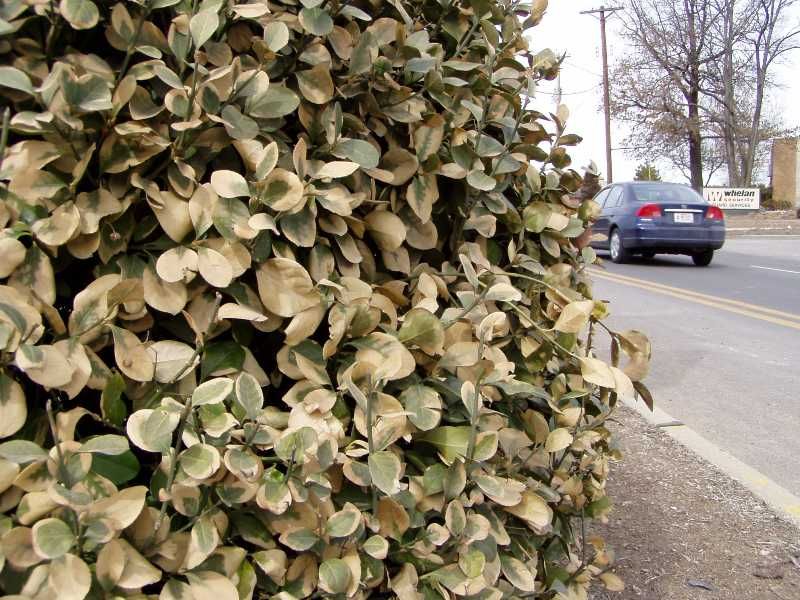
Picture what happens when salty slush sprays off passing cars during Illinois winter storms.
That wet mixture hits everything in its path, coating branches, bark, evergreen needles, and any stems poking above snow level.
The salt in this spray directly contacts plant tissue and causes chemical burns that look similar to fire damage.
Unlike gradual soil problems, this type of harm happens quickly and shows up within days or weeks.
Salt draws moisture out of leaf and stem cells on contact.
Needles on evergreens turn brown starting from the tips and edges where spray hits hardest.
Deciduous shrubs develop dark, dried patches on bark facing the road.
The damage typically appears worse on the side of plants closest to traffic.
If you walk around affected shrubs and trees, you will notice the street-facing side looks much worse than the protected side.
Buds that should open into spring flowers or new leaves often fail to develop after salt burn.
The tissue damage disrupts normal growth cycles.
Forsythia, lilacs, and other flowering shrubs planted near Illinois driveways may bloom sparsely or not at all following a winter with heavy salt spray.
The plants put energy into repairing damaged tissue instead of producing flowers.
Repeated exposure year after year causes permanent changes to plant shape and health.
Branches on the road side stop growing while protected branches continue developing normally.
This creates lopsided, unhealthy-looking specimens.
Bark damaged by salt becomes entry points for diseases and insects that would normally not affect vigorous plants.
Homeowners often wonder why their roadside landscaping looks so much worse than plants in their backyard, and salt spray explains much of this difference.
4. Salt Interferes With Essential Nutrient Uptake
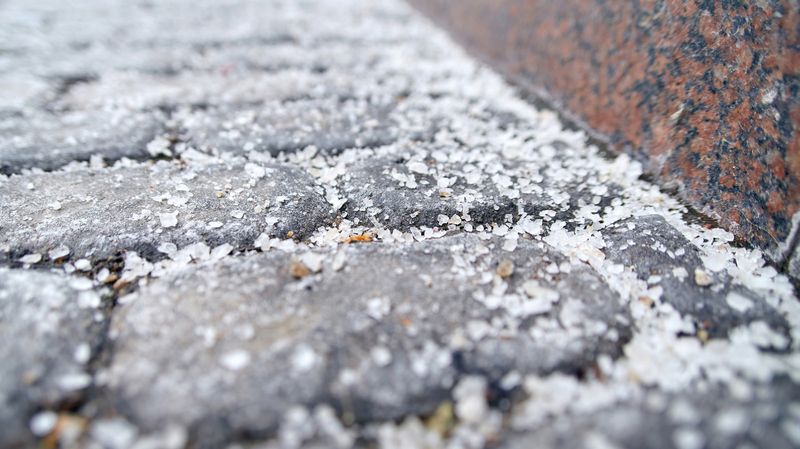
Plants need a balanced diet of nutrients from soil to stay healthy and grow properly.
Nitrogen, phosphorus, potassium, calcium, magnesium, and several trace minerals all play specific roles in plant health.
But when salt floods into soil around Illinois roadways, it blocks plants from accessing these vital nutrients even when they exist in adequate amounts.
The problem is not that nutrients disappear, but rather that salt prevents roots from absorbing them.
Sodium and chloride ions compete with beneficial nutrients for absorption sites on root surfaces.
Roots have limited capacity to take in dissolved minerals, and salt ions crowd out the nutrients plants actually need.
High sodium levels specifically interfere with calcium and magnesium uptake.
Without enough calcium, new growth becomes weak and distorted.
Magnesium deficiency causes yellowing between leaf veins, a condition called chlorosis that makes plants look pale and sickly.
Potassium absorption also decreases in salty soil conditions.
This nutrient helps plants regulate water use and strengthens cell walls.
When salt blocks potassium uptake, plants become less able to handle drought stress and temperature extremes.
Illinois landscapes already face challenging weather swings, and nutrient-starved plants struggle even more during heat waves and cold snaps.
The visible symptoms of nutrient deficiency often get mistaken for other problems.
Homeowners might add fertilizer thinking their plants need feeding, but extra nutrients will not help if salt prevents absorption.
Yellow leaves, stunted new growth, and poor flowering all indicate possible nutrient problems linked to salt exposure.
Soil testing near roadways in Illinois frequently shows adequate nutrient levels but high salt readings, confirming that access rather than availability creates the real problem for struggling landscape plants.
5. Salt Accumulation Damages Beneficial Soil Microorganisms
Underneath every healthy garden in Illinois lives an invisible community of helpful organisms.
Bacteria, fungi, protozoa, and other microscopic life forms work constantly to break down organic matter, fix nitrogen from air, and make nutrients available to plant roots.
These beneficial microorganisms create the difference between lifeless dirt and living soil.
But salt concentration from roadside applications disrupts this delicate ecosystem in ways that affect plant health for months or even years.
Most beneficial soil bacteria and fungi evolved in environments with low salt levels.
When sodium and chloride concentrations spike, these organisms cannot maintain proper cell function.
Their populations decline sharply in heavily salted areas.
Mycorrhizal fungi, which form partnerships with plant roots and dramatically increase their ability to absorb water and nutrients, are particularly sensitive to salt damage.
Once these fungal networks collapse, plants lose a crucial support system.
Nitrogen-fixing bacteria that convert atmospheric nitrogen into forms plants can use also suffer in salty conditions.
Legumes like clover and certain ornamental plants depend on these bacteria.
Without active nitrogen fixation, plants show symptoms of nitrogen deficiency including pale leaves and weak growth.
The problem compounds because salt already interferes with nutrient uptake through other mechanisms.
Rebuilding healthy soil biology takes considerable time after salt damage occurs.
Even when salt levels decrease through rainfall and irrigation, microbial populations recover slowly.
Illinois properties near heavily salted roads may need several growing seasons before soil life returns to normal levels.
Adding compost and avoiding further salt exposure helps speed recovery.
Understanding that salt harms the living soil ecosystem, not just plants directly, explains why roadside damage can persist long after winter ends and salt applications stop.
6. Salt Creates Long-Term Toxicity That Persists Through Growing Seasons
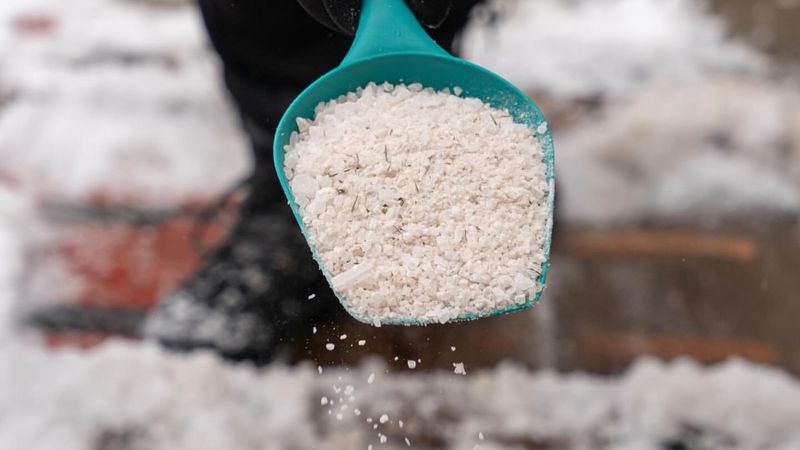
Unlike fertilizers that plants use up or organic matter that breaks down quickly, salt does not disappear easily from soil.
Sodium and chloride ions remain chemically stable and continue affecting plant health long after winter snow melts away.
A single season of heavy salt application along Illinois roads can create problems that last through summer and into the following year.
This persistence makes salt damage particularly frustrating for gardeners and property owners.
Rain and irrigation water gradually wash salt deeper into soil or carry it away through drainage.
But this leaching process happens slowly, especially in clay soils common throughout Illinois.
During dry spring and summer months, salt can actually move upward through soil as water evaporates from the surface.
This brings stored salt back into the root zone just when plants need to grow most actively.
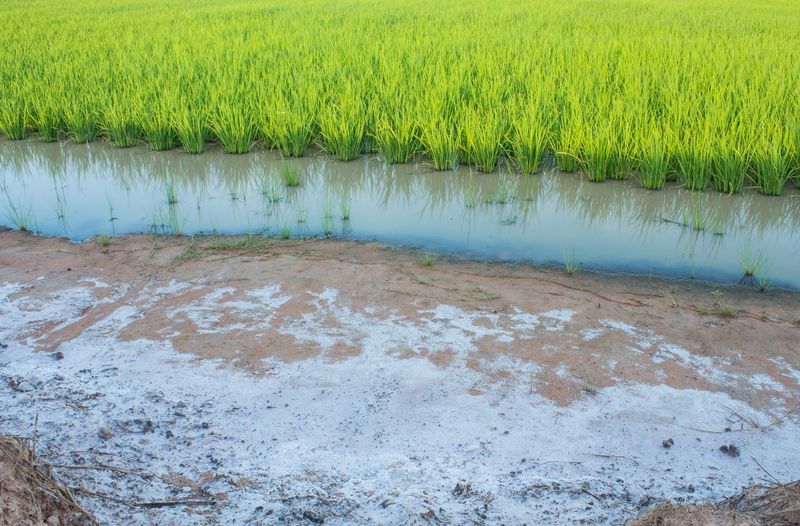
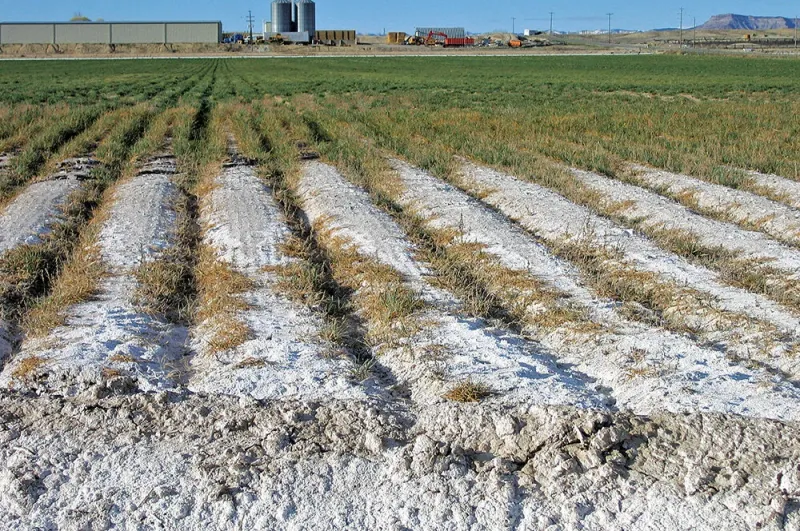
White crusty deposits sometimes appear on soil surface in heavily affected areas.
Plants trying to leaf out in spring face salt stress right when they need maximum energy for growth.
New shoots emerge weak and stunted.
Leaves may develop brown edges or yellow patches.
Flowering shrubs produce fewer blooms.
Lawns near streets show thin, patchy growth.
These symptoms appear months after the last salt application, which confuses homeowners who do not connect winter road treatment with summer plant problems.
Repeated salt exposure over multiple winters creates cumulative damage that eventually overwhelms even tough, salt-tolerant species.
Trees and shrubs that survived previous years suddenly decline rapidly.
The toxic buildup reaches levels that roots cannot avoid no matter how deeply they grow.
Illinois landscapes near busy roads, highway ramps, and heavily salted sidewalks face this ongoing challenge.
Choosing salt-tolerant plants helps, but even these species have limits when salt concentration stays elevated year after year in contaminated soil.