Why Are You Still Buying Strawberries In NYC When You Can Grow Them Indoors With 9 Proven Tips
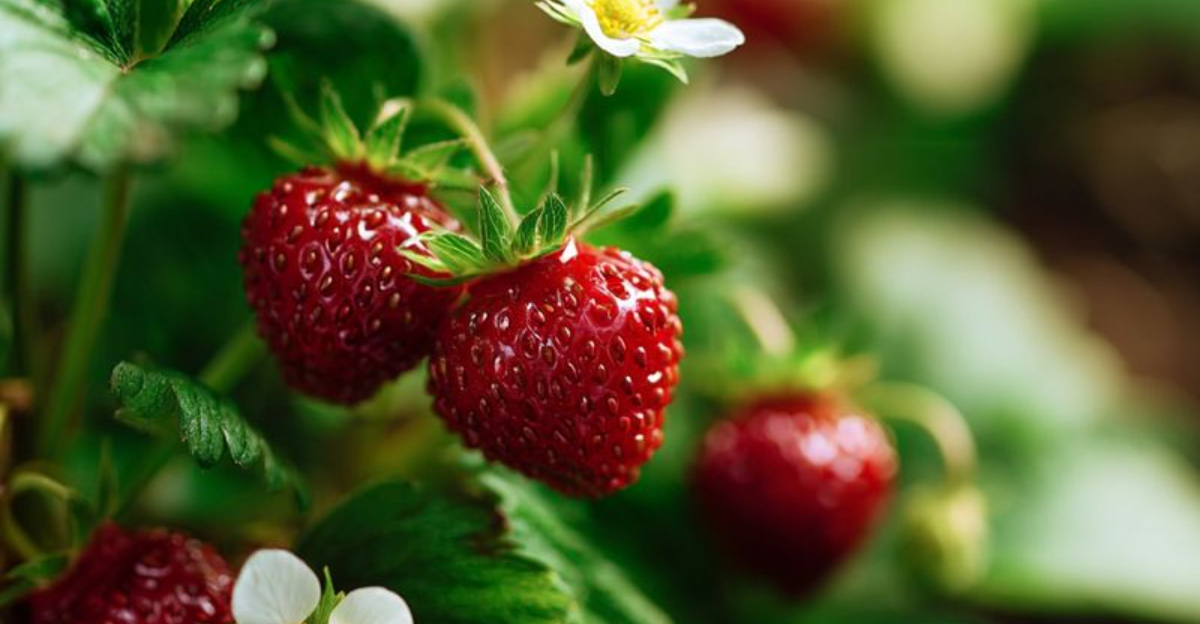
Fresh strawberries in January don’t come cheap in New York City, and let’s be honest—they rarely taste like summer.
But what if you could skip the store, skip the disappointment, and grow juicy, sweet berries right in your apartment?
Indoor strawberry growing isn’t just a dream—it’s entirely doable with a few smart techniques.
Stop paying for bland berries—grow your own juicy harvest indoors! NYC apartments may not scream “garden,” but strawberries are surprisingly adaptable.
With the right containers, light, water, and care, you can enjoy fresh, homegrown strawberries year-round—even in the dead of winter.
No backyard? No problem.
A windowsill, balcony, or small indoor garden is all you need to start harvesting sweet results.
Your kitchen can be the sweetest garden in the city.
These proven tips walk you through everything from selecting the right variety to keeping plants healthy and productive indoors.
They’re practical, space-smart, and designed for real city living.
By following them, you can go from store-bought frustration to apartment-grown abundance in no time.
Because fresh strawberries shouldn’t be a seasonal luxury—they can be your everyday treat.
1. Indoor Strawberries Actually Thrive In Small NYC Apartments
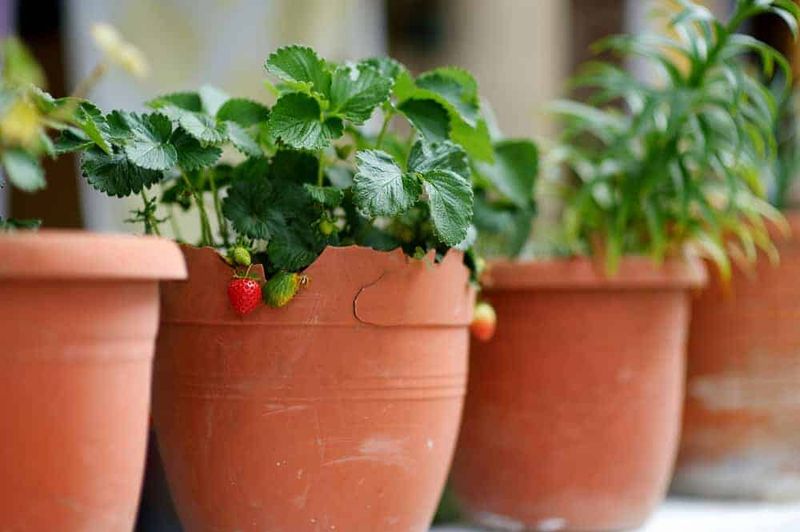
Most New Yorkers assume strawberries need sprawling gardens and perfect weather to flourish, but that couldn’t be further from the truth.
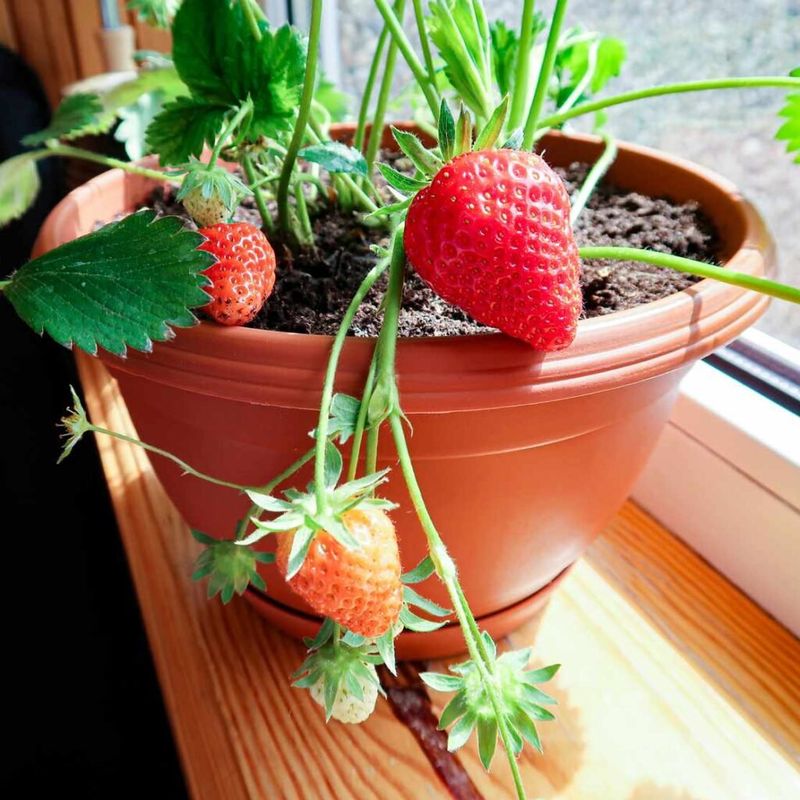
Strawberry plants adapt remarkably well to container life and actually prefer the controlled conditions found inside apartments.
Their compact root systems make them ideal candidates for pots, hanging baskets, and even vertical planters that save precious floor space.
Unlike outdoor plants that battle unpredictable weather, pests, and temperature swings, indoor strawberries enjoy consistent conditions that promote steady growth.
New York apartments offer protection from harsh winds, heavy rains, and extreme temperature changes that can damage delicate berries.
The stable environment inside your home allows plants to focus energy on producing fruit rather than surviving harsh conditions.
Many apartment dwellers successfully grow strawberries on kitchen counters, shelves near windows, or even in bathrooms with bright light.
The key advantage is control—you decide when to water, how much light they receive, and what nutrients they get.
Starting your indoor strawberry garden requires minimal investment and even less space than you might imagine.
Once you see those first white blossoms transform into plump red berries, you’ll wonder why you ever doubted this was possible in your tiny NYC apartment.
2. Choose Day-Neutral Strawberry Varieties For Indoor Success
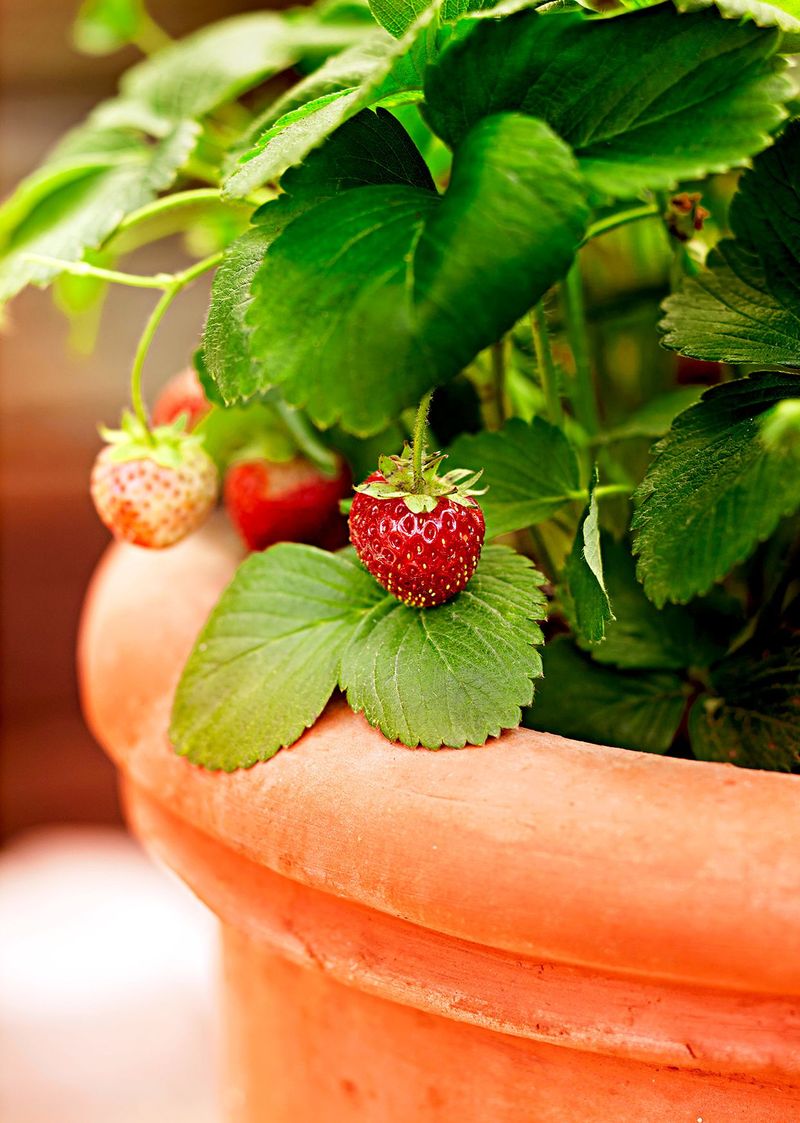
Not all strawberry varieties perform equally well indoors, and choosing the right type makes the difference between frustration and abundant harvests.
Day-neutral strawberries are specifically bred to produce fruit regardless of day length, unlike their June-bearing cousins that need specific light cycles.
This characteristic makes them absolutely perfect for indoor growing in New York apartments where natural light varies dramatically throughout the year.
Popular day-neutral varieties like Seascape, Albion, and Tristar produce berries continuously from spring through fall, and even into winter with proper care.
These plants don’t wait for a specific season to flower and fruit, so you can enjoy fresh strawberries multiple times throughout the year.
Your New York Garden Changes Every Week. Your Plan Should Too.
Gardening in New York changes quickly throughout the season. Every Friday you’ll receive a simple weekly plan showing exactly what to plant, prune, fertilize, harvest, and protect so you never miss the right timing.
June-bearing varieties, while delicious, produce one large crop annually and then go dormant, which wastes valuable indoor growing space for months.
Everbearing types fall somewhere in between, offering two smaller harvests per year, but still can’t match the consistent production of day-neutral plants.
When shopping for strawberry starts or seeds, always check the variety description to confirm it’s labeled as day-neutral.
Many garden centers and online retailers now carry these varieties specifically marketed for container and indoor growing.
Investing in the right variety from the start saves time, space, and disappointment while maximizing your berry production in your cozy New York home.
3. Use Containers That Support Healthy Roots And Drainage
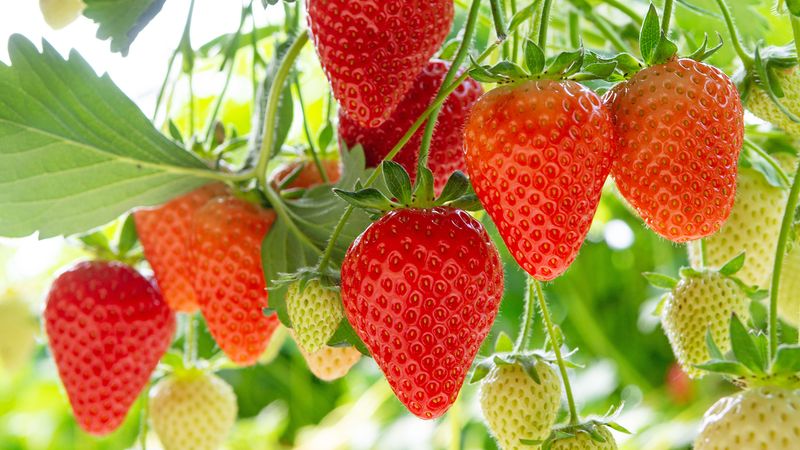
Container selection might seem like a minor detail, but it profoundly impacts whether your strawberry plants flourish or struggle.
Strawberries need pots that are at least six to eight inches deep to accommodate their root systems, though deeper is always better.
Drainage holes are absolutely non-negotiable because strawberries hate sitting in waterlogged soil, which quickly leads to root rot and plant failure.
Terracotta pots work beautifully because they’re porous and allow excess moisture to evaporate through the sides, preventing soggy conditions.
Plastic containers are lighter and retain moisture longer, which can be helpful in dry apartments but requires more careful watering attention.
Hanging baskets create stunning displays and save valuable floor space in cramped New York apartments while allowing berries to cascade beautifully.
Vertical tower planters and strawberry pots with side pockets maximize production in minimal square footage, perfect for studio apartments.
Whatever container you choose, place a saucer underneath to catch excess water and protect your floors and furniture from damage.
Adding a layer of small stones or broken pottery pieces at the bottom improves drainage even further, though it’s not strictly necessary with proper holes.
Choosing the right container sets your strawberry plants up for success from day one and makes ongoing care much simpler throughout the growing season.
4. A Sunny Windowsill Or Grow Light Makes All The Difference
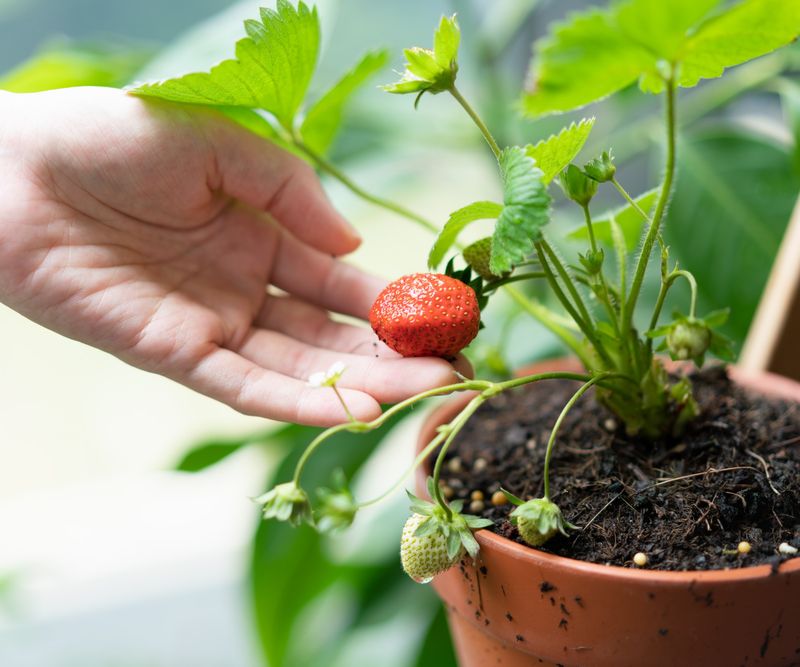
Light is the most critical factor determining whether your indoor strawberries produce abundant fruit or just grow leaves without berries.
Strawberry plants need at least six to eight hours of bright light daily to trigger flowering and fruit production.
South-facing windows provide the most intense and longest-lasting natural light throughout the day in New York apartments.
East-facing windows offer gentler morning sun that works well, though you might see slightly reduced berry production compared to southern exposure.
West-facing windows can work during summer months but may not provide enough light during New York’s darker winter season.
North-facing windows rarely provide sufficient light for strawberries to thrive, and supplemental lighting becomes essential in this situation.
During fall and winter, even the best windowsills may not deliver enough light, which is when affordable LED grow lights become your best friend.
Modern LED grow lights consume minimal electricity, produce little heat, and can be positioned just inches above your plants without causing damage.
Position grow lights about six to twelve inches above the plants and run them for twelve to sixteen hours daily to simulate ideal growing conditions.
Combining natural window light with supplemental grow lights during darker months ensures consistent berry production year-round in your NYC home.
5. Indoor Temperature Control Works In Your Favor
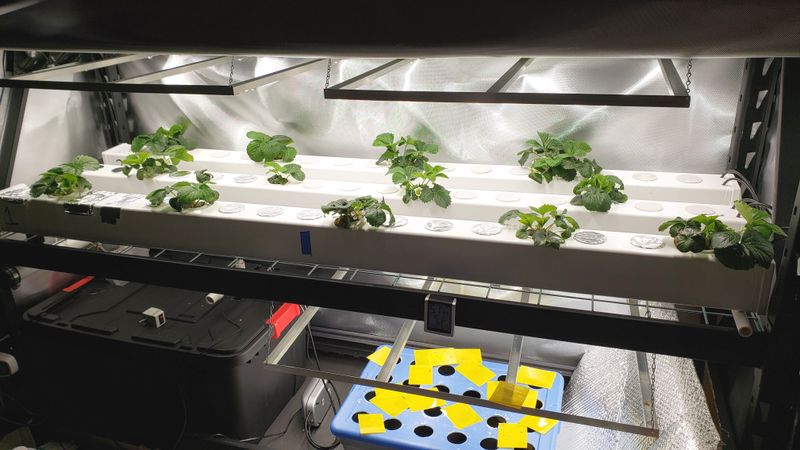
Temperature consistency is one area where indoor growing dramatically outperforms outdoor gardening, especially in New York’s extreme climate.
Strawberries prefer temperatures between 60 and 75 degrees Fahrenheit, which happens to be the exact range most people maintain in their apartments.
Outdoor strawberry growers constantly battle temperature fluctuations, late frosts, heat waves, and unpredictable weather that stresses plants.
Your apartment provides a stable environment where plants never experience shocking temperature changes that halt growth or damage delicate flowers.
This consistency allows strawberries to grow steadily without the stress-induced dormancy periods that outdoor plants experience.
Avoid placing your strawberry containers directly next to heating vents, radiators, or air conditioning units that create localized hot or cold spots.
Drafty windows during winter can expose plants to cold air that slows growth, so consider moving containers slightly away from glass during extreme cold snaps.
Most New York apartments naturally maintain perfect strawberry-growing temperatures throughout the year without any special adjustments needed.
If your apartment runs warmer than 75 degrees during summer, increasing air circulation with a small fan helps prevent heat stress.
The temperature advantage alone makes indoor strawberry growing more reliable and productive than outdoor gardening in New York’s challenging climate.
6. Hand-Pollination Is Easy—And Boosts Your Harvest
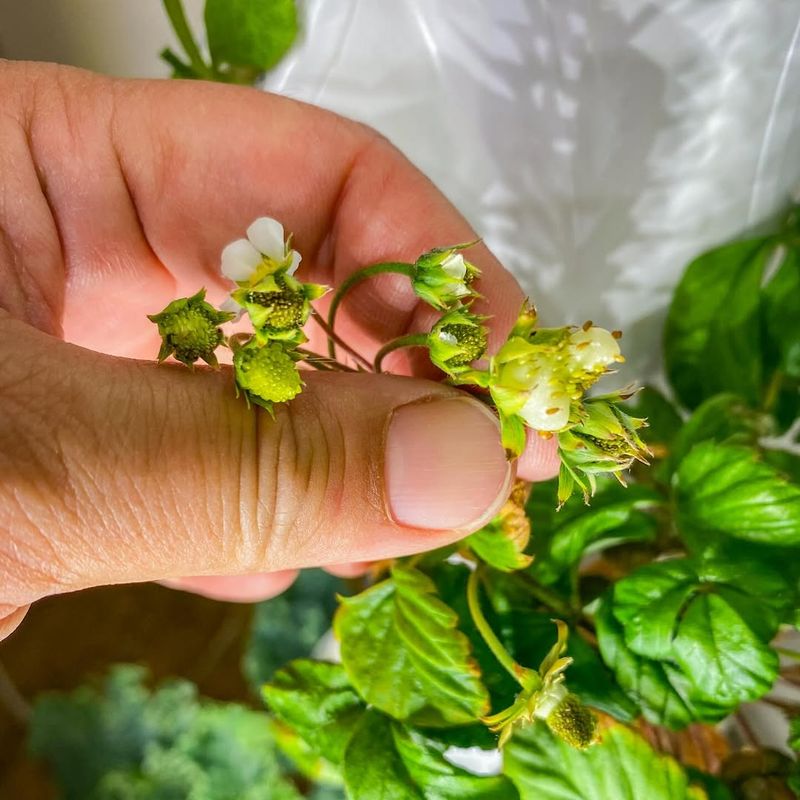
Outdoor strawberries rely on bees, butterflies, and wind to transfer pollen between flowers, but indoor plants need your help with this crucial step.
Without pollination, strawberry flowers simply wither and drop off without ever forming fruit, leaving you disappointed and berry-less.
Hand-pollination sounds complicated, but it’s actually one of the easiest gardening tasks you’ll ever perform, taking just seconds per plant.
Grab a small, soft paintbrush, cotton swab, or even your fingertip to gently brush the center of each open flower.
Move from flower to flower, transferring the yellow pollen that collects on your tool to ensure each blossom receives what it needs.
Performing this simple task every few days when flowers are open dramatically increases the number of berries your plants produce.
Some growers gently shake their strawberry plants or use a small fan to mimic wind pollination, though hand-pollination tends to be more effective.
You’ll know pollination succeeded when the flower petals drop and a tiny green berry begins forming at the base of where the blossom was.
This quick routine becomes almost meditative and helps you stay connected to your plants while ensuring maximum fruit production.
Hand-pollination gives you complete control over your harvest and often results in better fruit set than outdoor plants relying on unpredictable pollinators.
7. Water Carefully To Avoid Mold And Root Problems
Overwatering causes more indoor strawberry failures than any other factor, yet it’s completely preventable with a little knowledge and attention.
Strawberries prefer consistently moist soil that’s never soggy or completely dried out, which requires finding the right balance for your specific conditions.
Stick your finger about an inch into the soil before watering—if it feels dry at that depth, it’s time to water.
New York apartments often have lower humidity and good air circulation, which means soil dries faster than you might expect.
Water thoroughly until you see excess draining from the bottom holes, then empty the saucer so plants don’t sit in standing water.
Always water at the soil level rather than from above to keep leaves and developing berries dry, which prevents mold and fungal problems.
Morning watering is ideal because it gives excess moisture time to evaporate throughout the day, reducing nighttime humidity around plants.
During winter when apartments are heated and air is dry, you might need to water more frequently than during humid summer months.
Self-watering containers can help maintain consistent moisture levels, though they still require monitoring to prevent overfilling the reservoir.
Learning your plants’ specific watering needs takes a few weeks of observation but becomes second nature once you establish a routine.
8. Regular Harvesting Encourages More Berries
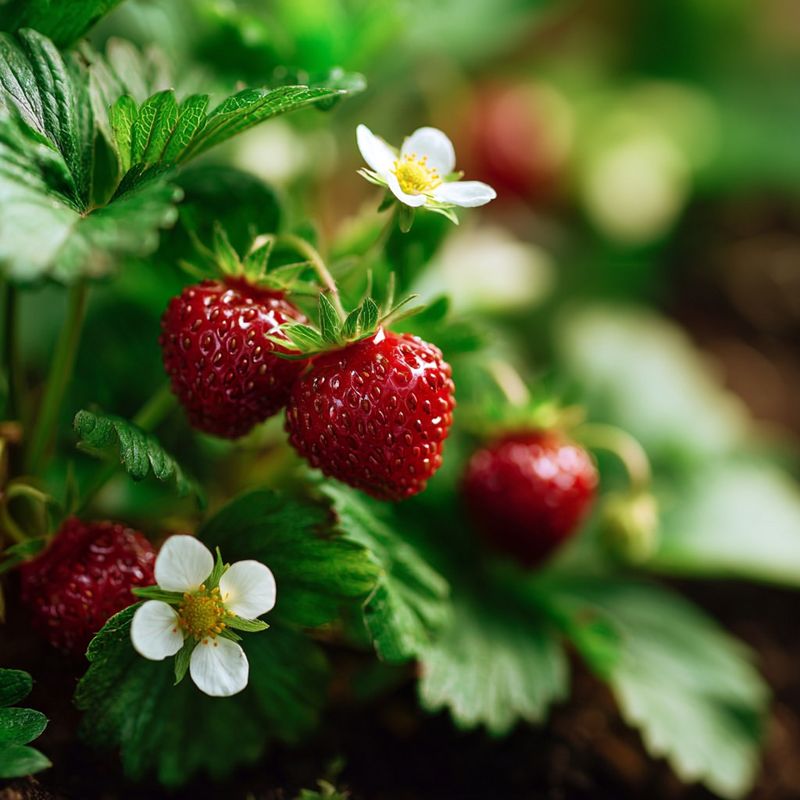
Strawberry plants respond to harvesting by producing more flowers and berries, making frequent picking beneficial rather than something to delay.
When you remove ripe berries, the plant interprets this as successful reproduction and redirects energy into creating more fruit.
Allowing overripe berries to remain on the plant signals that reproduction is complete, which slows down new flower and fruit production.
Harvest strawberries when they’re fully red with no white or green areas remaining near the stem attachment point.
Ripe berries should feel slightly soft when gently squeezed and release easily from the plant with a gentle twist and pull.
Indoor berries often ripen more uniformly than outdoor ones because they receive consistent light and temperature conditions.
Check your plants every two to three days during peak production periods to catch berries at their perfect ripeness.
Removing any berries that show signs of mold or damage prevents problems from spreading to healthy fruit and leaves.
Fresh-picked strawberries taste dramatically better than store-bought ones because sugars haven’t had time to convert to starches during transport and storage.
Frequent harvesting also keeps you engaged with your plants, allowing you to spot potential problems early before they become serious issues affecting overall plant health.
9. Indoor Strawberries Save Money And Taste Better

A single container of organic strawberries in New York City grocery stores often costs six to eight dollars, and those berries rarely deliver on flavor.
Store-bought strawberries are typically picked unripe to survive shipping, which means they never develop the full sweetness and complex flavor of vine-ripened fruit.
Growing your own strawberries indoors costs just a few dollars for plants or seeds and minimal ongoing expenses for soil and occasional fertilizer.
One healthy strawberry plant can produce dozens of berries over several months, quickly paying for itself while delivering superior taste.
Homegrown berries picked at peak ripeness burst with intense sweetness and flavor that makes store-bought versions taste bland by comparison.
You’ll also avoid the pesticide residues that conventional strawberries are notorious for, since your indoor plants grow in a controlled, pest-free environment.
The satisfaction of growing your own food in a tiny New York apartment adds immeasurable value beyond simple cost savings.
Sharing your homegrown strawberries with friends and family creates memorable moments that no store-bought fruit can replicate.
Indoor strawberry growing transforms your relationship with food, connecting you to the growing process in ways that shopping never could.
Once you taste your first sun-warmed berry picked fresh from your own plant, you’ll understand why growing indoors beats buying every single time.