That Ball Of Leaves In Your Louisiana Tree Looks Like A Nest, But It Isn’t
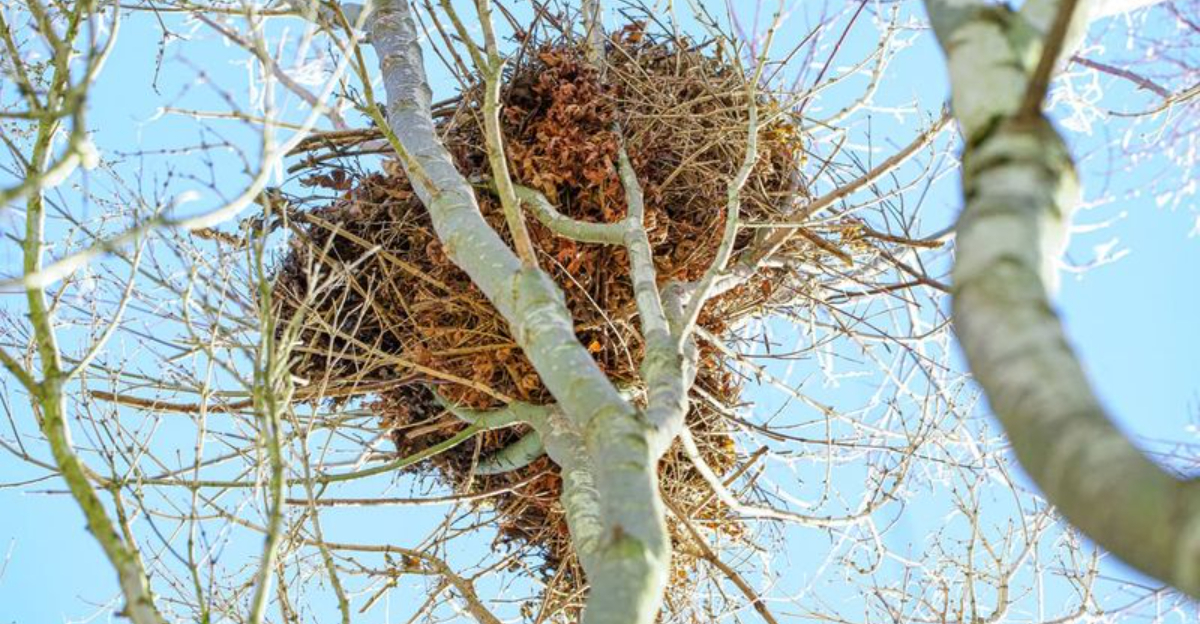
If you’ve spotted a dense, leafy ball hanging in your Louisiana trees, your first thought might be a bird’s nest.
But don’t be fooled—what looks cozy and natural is often something far more surprising.
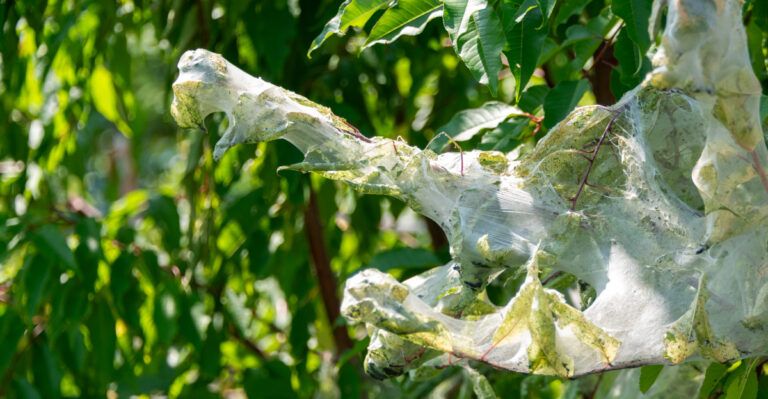
These mysterious leaf clusters aren’t homes for birds; they’re actually a sign of plant pests, most commonly insects like leafrollers or webworms.
It looks like a nest—but it’s nature’s trick, not a home for birds!
While these leafy spheres might not be dangerous to humans, they can stress your tree, block sunlight, and create a perfect environment for pests or disease.
Understanding what’s really inside helps you take the right action to protect your trees without harming wildlife or overreacting.
Not every leafy ball is harmless—some can affect your tree’s health.
Louisiana gardeners who recognize these “fake nests” can inspect, manage, and treat their trees effectively, keeping them healthy and strong for years to come.
A little knowledge goes a long way in protecting your landscape while appreciating the quirks of nature.
Your tree may look inhabited—but it’s telling a different story.
It’s Called A Squirrel Drey, Not A Bird Nest
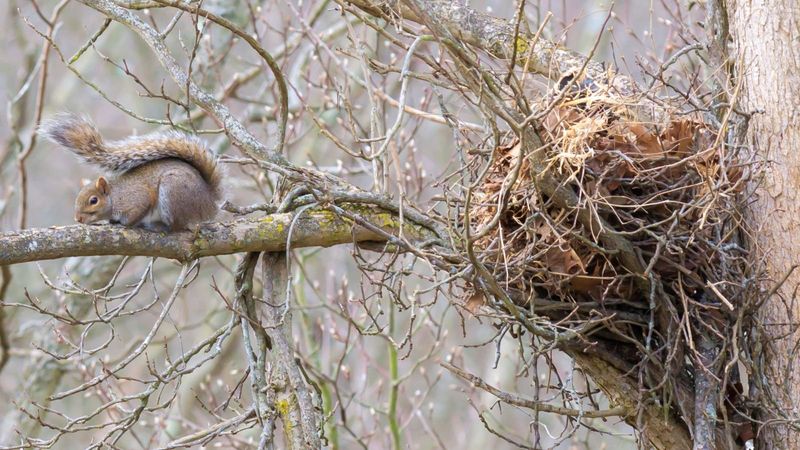
Squirrels are master architects, and the leafy ball you see wedged between branches is their handiwork, known as a drey.
While it might look like a messy bird nest from the ground, dreys are actually quite sophisticated structures designed specifically for squirrel comfort and safety.
Louisiana’s abundant oak, pecan, and pine trees provide perfect building sites for these furry engineers.
Bird nests tend to be cup-shaped and woven tightly with grasses, while dreys are larger, rounder, and built with layers of twigs, leaves, and bark.
Squirrels prefer to build their dreys in the fork of branches, usually at least twenty feet off the ground.
This height keeps them safe from ground predators like cats and dogs.
Gray squirrels and fox squirrels, both common in Louisiana, are the primary drey builders in the state.
Each species has slightly different construction styles, but the result is always a waterproof, insulated shelter.
Dreys can last for years if maintained properly, and squirrels often renovate and reuse them season after season.
Understanding what a drey is helps you appreciate the wildlife thriving right in your backyard.
Louisiana Squirrels Build These For Shelter, Not Breeding
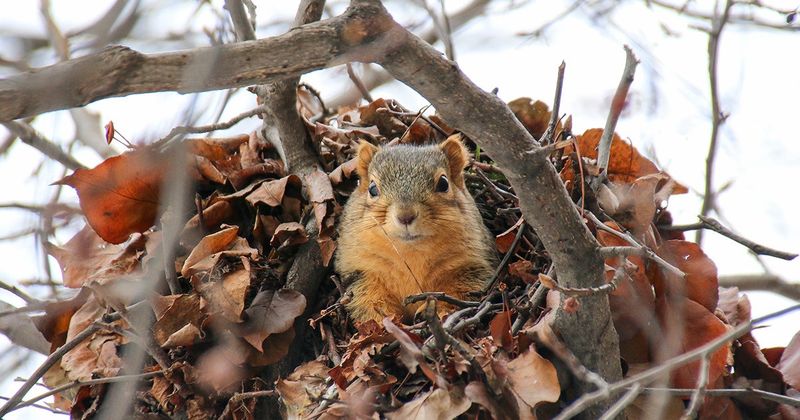
Unlike bird nests that are primarily built for raising young, squirrel dreys serve multiple purposes throughout the year.
Squirrels use them as sleeping quarters, storm shelters, and safe spaces to escape from hawks, owls, and other predators.
During Louisiana’s unpredictable weather patterns, having a solid drey can mean the difference between comfort and misery for a squirrel.
When heavy rainstorms roll through, squirrels retreat to their dreys and stay dry thanks to the layered construction that sheds water like a roof.
The thick walls also provide insulation during cold snaps, which can occasionally dip into the twenties in Louisiana.
Even on scorching summer days, the shade and ventilation of a well-built drey offer relief from the heat.
Your Louisiana Garden Changes Every Week. Your Plan Should Too.
Gardening in Louisiana changes quickly throughout the season. Every Friday you’ll receive a simple weekly plan showing exactly what to plant, prune, fertilize, harvest, and protect so you never miss the right timing.
Squirrels do sometimes give birth in dreys, but they often prefer tree cavities or hollow trunks for nurseries because they offer better protection.
A drey is more like a squirrel’s everyday home base rather than a maternity ward.
Multiple squirrels might share a drey during winter for warmth, making these structures social hubs as well as personal retreats.
Why They’re Most Visible In Fall And Winter
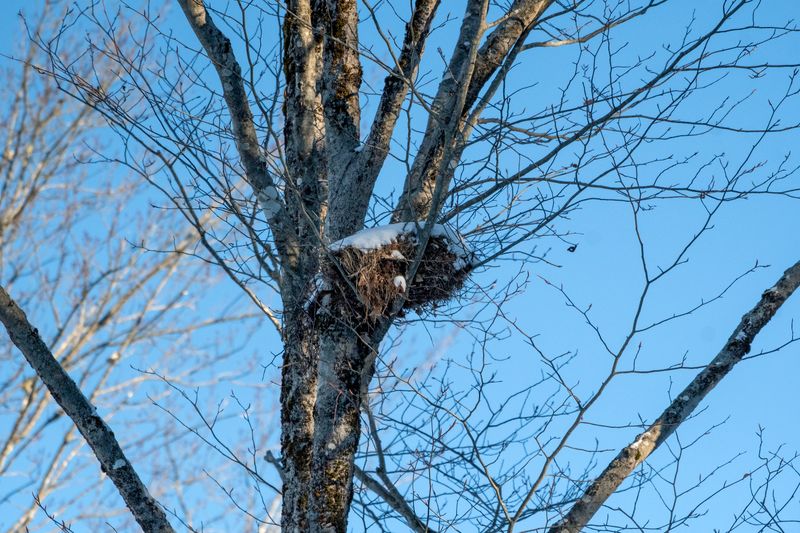
Dreys are present in trees year-round, but you’re much more likely to notice them when autumn arrives and leaves begin to fall.
During spring and summer, the thick canopy of Louisiana’s hardwood trees conceals these structures perfectly.
Green leaves blend with the fresh materials squirrels use, making dreys nearly invisible to casual observers walking below.
As temperatures cool and trees shed their foliage, dreys suddenly stand out like ornaments hanging in bare branches.
November through February is prime drey-spotting season in Louisiana, when even the most hidden structures become obvious.
This visibility often surprises homeowners who had no idea squirrels were living so close by all year long.
Interestingly, squirrels also tend to reinforce and expand their dreys in preparation for winter, making them larger and more noticeable during this time.
They’ll gather extra leaves and twigs to beef up the insulation before cold weather settles in.
So that ball of leaves you’re seeing might actually be bigger now than it was six months ago, even though the same squirrel built it back in spring.
How A Drey Is Built From Twigs, Leaves, And Bark
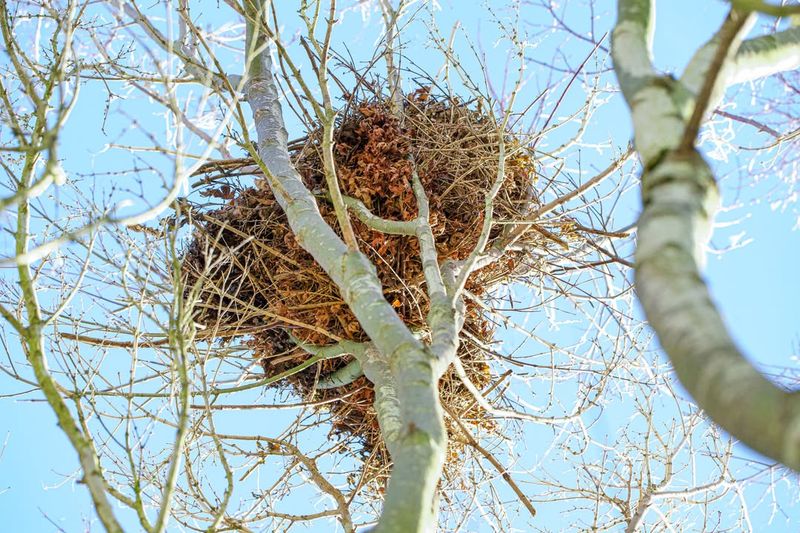
Building a drey is no simple task, and squirrels approach it with surprising care and precision.
They start by creating a sturdy foundation using strong twigs and small branches woven together in a platform shape.
This base needs to support the entire structure and withstand wind, rain, and the weight of the squirrel itself, so they choose materials carefully.
Once the foundation is secure, squirrels build up the walls in a dome shape, layering more twigs and weaving them together like a basket.
They leave a small entrance hole on one side, usually facing the trunk for extra protection from wind.
The outer layer is made from fresh leaves, bark strips, and sometimes even moss, all arranged to shed water effectively.
The interior is where squirrels really show their homemaking skills.
They line the inside with soft materials like shredded bark, dried grass, and sometimes even bits of fabric or paper they find around neighborhoods.
This cozy lining provides insulation and comfort for sleeping.
The whole construction process can take several days, and squirrels constantly maintain their dreys by replacing worn materials and patching holes.
Why Birds Rarely Use These Leafy Balls
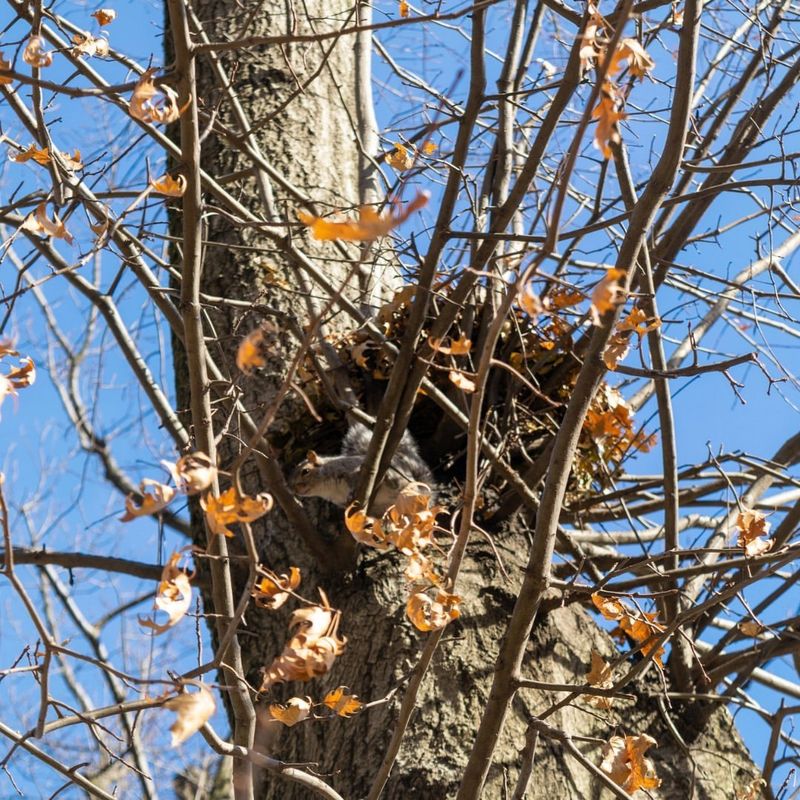
Birds and squirrels have completely different architectural needs, which is why you’ll almost never find a bird setting up house in a squirrel drey.
Bird nests are typically compact, cup-shaped structures designed to hold eggs securely and keep nestlings from rolling out.
They’re woven tightly with fine materials like grass, hair, and feathers, creating a snug cradle for fragile eggs.
Dreys, on the other hand, are much larger and have a different shape altogether.
The entrance hole that squirrels use for coming and going would be far too big for most birds to feel secure.
Birds also prefer nests that are open at the top so parents can easily see and feed their chicks, while dreys are enclosed spheres with only one small opening.
The placement is another factor—dreys are usually built in the main fork of large branches, while many birds prefer smaller, more concealed spots closer to the trunk or in dense foliage.
Some larger birds like crows or hawks might occasionally investigate an abandoned drey, but they typically end up building their own nests nearby instead.
The materials and construction simply don’t meet avian housing standards.
Why Louisiana Trees Often Have Several Of Them
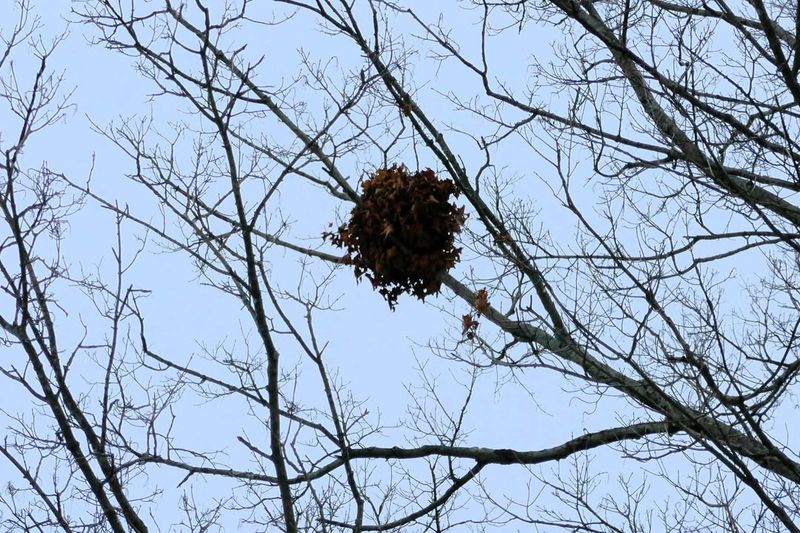
If you start counting dreys in your yard, you might be surprised to find three, four, or even more in a single tree or nearby cluster of trees.
This isn’t because your property has become a squirrel apartment complex—it’s actually the work of just one or two squirrels practicing smart survival strategies.
Squirrels are naturally cautious creatures, and having backup homes is part of their safety plan.
A single squirrel might build and maintain multiple dreys within its territory, rotating between them regularly.
This behavior helps them avoid predators who might learn the location of a frequently used drey.
If a hawk or owl discovers one drey, the squirrel simply moves to another for a while until the danger passes.
Multiple dreys also serve as emergency shelters scattered throughout a squirrel’s range.
If a sudden storm strikes while a squirrel is out foraging far from its main drey, having a backup nearby means it doesn’t have to travel through dangerous conditions.
Louisiana’s unpredictable weather makes this strategy especially valuable.
Additionally, some dreys might be older structures that are no longer used but haven’t fallen apart yet, so not every drey you see is currently occupied.
What It Means If You See One Near Your Home
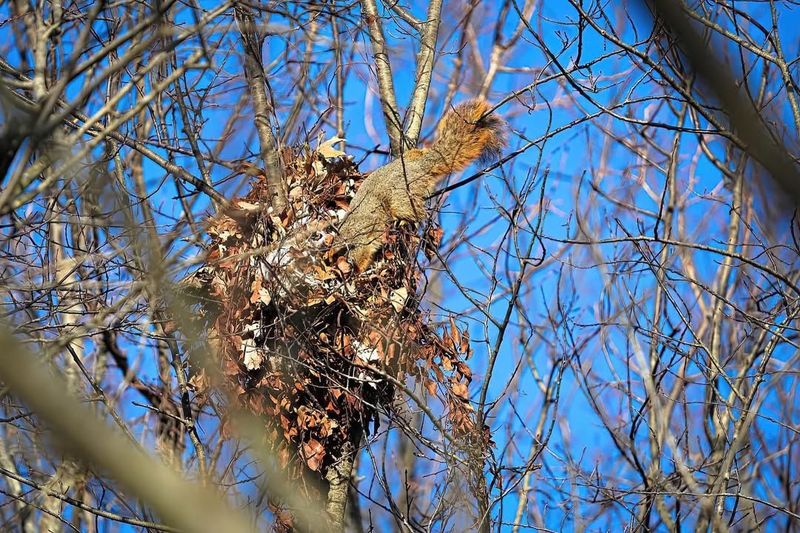
Spotting a drey in your yard is actually a positive sign about your property’s ecosystem health.
Squirrels choose locations that provide abundant food sources, safe nesting sites, and protection from predators.
If they’ve decided to build near your home, it means your trees are mature and healthy enough to support their lifestyle, and there’s likely plenty of food available in the form of nuts, seeds, and fruits.
Louisiana yards with oak, pecan, or hickory trees are especially attractive to squirrels because these species produce the nuts that make up a large part of their diet.
The presence of dreys also indicates active wildlife corridors in your neighborhood, which benefits other animals like birds, butterflies, and beneficial insects.
Squirrels are part of a healthy food chain, serving as prey for hawks and owls while also helping plant new trees by burying and forgetting nuts.
Having squirrels nearby does mean you should take some precautions, like securing garbage cans and protecting bird feeders if you don’t want to share.
But overall, a drey in your tree is nature’s stamp of approval on your yard’s habitat quality and biodiversity.
Why You Should Not Remove It
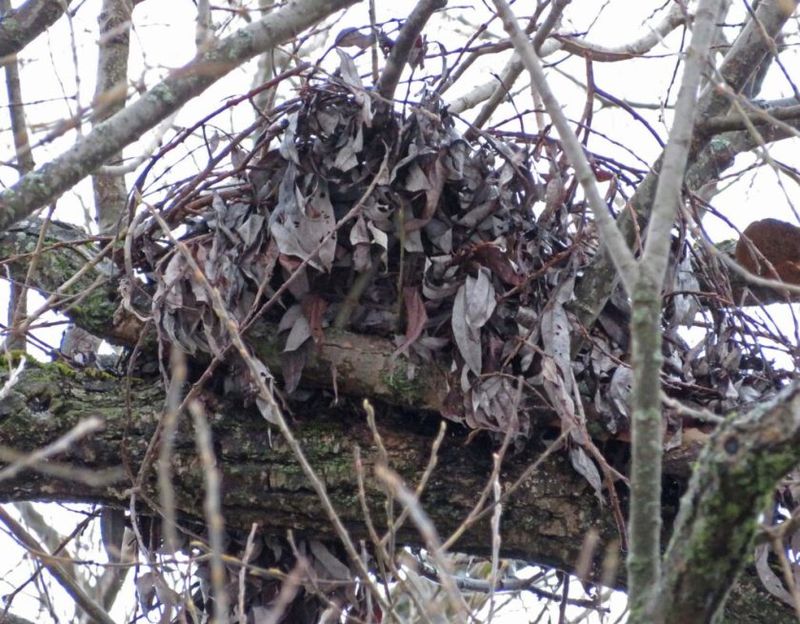
Before you grab a ladder and start pulling down that leafy ball, there are several important reasons to leave it alone.
First and foremost, squirrels and their homes are protected by various wildlife regulations in Louisiana, and disturbing an active drey could potentially violate these laws.
Even if the drey appears empty, you can’t be certain without careful observation, and removing an occupied home could leave squirrels vulnerable to weather and predators.
Dreys also play a role in the broader ecosystem beyond just housing squirrels.
Abandoned dreys are sometimes used by other animals like flying squirrels, birds, or even insects that contribute to your yard’s biodiversity.
The structure itself will eventually break down naturally and return nutrients to the soil, so it’s not causing any harm by staying in place.
From a practical standpoint, removing a drey won’t solve any squirrel-related issues you might be experiencing.
If one squirrel’s home is removed, they’ll simply build another one nearby, or another squirrel will move into the territory.
Instead of removal, focus on squirrel-proofing specific areas like attics or gardens if conflicts arise.
Coexisting with wildlife is almost always easier and more effective than trying to eliminate their presence entirely.
How Dreys Help Squirrels Survive Louisiana Weather
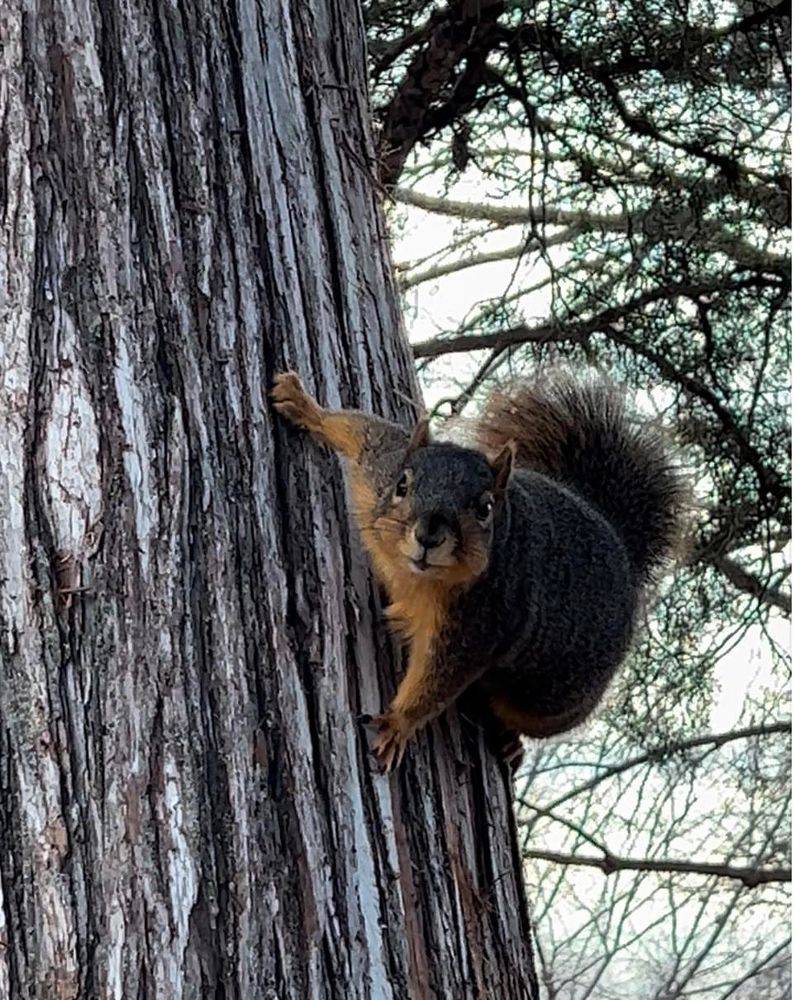
Louisiana’s climate throws everything at wildlife—scorching summer heat, sudden thunderstorms, occasional cold snaps, and high humidity year-round.
Dreys are specifically engineered to handle this challenging weather mix, making them essential survival tools for squirrels.
The layered construction acts like insulation in a house, keeping the interior temperature more stable than the outside air.
During summer, when temperatures soar into the nineties or higher, the drey’s design allows air circulation while providing shade.
Squirrels often rest in their dreys during the hottest part of the day, emerging in early morning and evening to forage when it’s cooler.
The leaves and bark that form the outer layers reflect some of the sun’s heat, while the entrance hole allows warm air to escape.
When winter brings those occasional freezing nights, the same insulation that blocked summer heat now traps the squirrel’s body warmth inside.
The soft interior lining creates a cozy sleeping bag effect.
During Louisiana’s famous thunderstorms and tropical weather systems, the waterproof outer layers shed rain effectively, keeping the interior dry.
Squirrels have perfected these structures over thousands of years to match the specific challenges of their environment.
How To Tell If It’s Active Or Abandoned
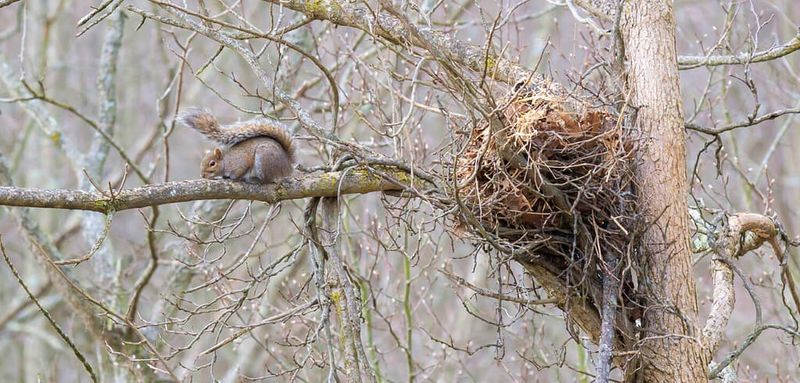
Curiosity about whether a drey is currently occupied is natural, and there are several clues you can look for without disturbing the structure.
Active dreys typically look fresher and more maintained, with newer leaves and materials visible on the outside.
Squirrels constantly add to and repair their homes, so a well-kept appearance suggests someone’s living there.
You might also notice a clear entrance hole that looks recently used rather than overgrown or blocked.
Watching the tree during early morning or late afternoon increases your chances of seeing the resident coming or going.
Squirrels are most active during these times, especially on mild days.
If you see a squirrel repeatedly entering or exiting the same drey, you’ve confirmed it’s occupied.
You might also hear scratching or rustling sounds from inside if you’re nearby during active hours.
Abandoned dreys often look weathered and disheveled, with the structure starting to sag or fall apart.
The entrance might be barely visible or completely closed off by new growth.
However, even abandoned dreys serve purposes in nature, so there’s no need to remove them.
Some squirrels maintain multiple dreys and rotate between them, so what looks abandoned today might be occupied again next week.
The best approach is simply to enjoy knowing these fascinating structures are part of your yard’s wildlife community.