6 Must-Know Crape Myrtle Pruning Tips For Bigger Blooms In North Carolina
Crape myrtles are one of the most beloved flowering trees across North Carolina, lighting up gardens with their vibrant blooms from summer into fall.
These beautiful trees thrive in our warm climate, but many gardeners struggle to get the biggest, most impressive flower displays possible.
The secret to those stunning blooms isn’t just watering and fertilizing, it’s all about how and when you prune.
Proper pruning makes a world of difference in the health and beauty of your crape myrtles.
Unfortunately, many people make common mistakes that can actually reduce flowering or harm the tree’s natural shape.
Some folks cut way too much, while others don’t prune enough, leaving their trees looking messy and producing fewer blooms than they could.
Learning the right techniques will help your crape myrtles reach their full potential.
North Carolina’s climate gives us a great growing season, and with smart pruning practices, you can enjoy bigger, brighter blooms year after year.
Whether you’re new to gardening or have been growing crape myrtles for years, these tips will help you avoid mistakes and get the results you want.
Ready to transform your crape myrtles into showstoppers?
These essential pruning tips will guide you through the process, helping you create healthier trees with more spectacular blooms than ever before.
Wait Until Late Winter Or Early Spring Before You Start Pruning

Timing is absolutely everything when it comes to pruning crape myrtles in North Carolina.
Many gardeners get eager and start cutting in fall or early winter, but this can actually cause problems.
Crape myrtles need to go dormant before you prune them, and cutting too early can encourage new growth that gets damaged by frost.
The best time to prune is late February through early March, right before the growing season begins.
At this point, the tree is still dormant, but you can see the structure clearly without leaves in the way.
This timing also means any cuts you make will heal quickly once warm weather arrives and growth starts up again.
North Carolina’s climate can be tricky because we sometimes get warm spells in January followed by hard freezes.
Wait until the worst of winter is behind us to avoid encouraging tender new shoots that frost could damage.
Watching the weather and local gardening calendars can help you pick the perfect pruning window.
Pruning at the right time also sets your tree up for the best blooming season.
Crape myrtles bloom on new wood, meaning the flowers appear on branches that grow during the current year.
When you prune in late winter, you give the tree plenty of time to produce strong new growth covered in flower buds by summer.
If you miss the late winter window, don’t panic and start cutting in June.
Pruning during the growing season can reduce blooms and stress the tree.
It’s better to wait until the following late winter than to prune at the wrong time and sacrifice your beautiful flowers.
Your North Carolina Garden Changes Every Week. Your Plan Should Too.
Gardening in North Carolina changes quickly throughout the season. Every Friday you’ll receive a simple weekly plan showing exactly what to plant, prune, fertilize, harvest, and protect so you never miss the right timing.
Remove Damaged And Crossing Branches First
Before you start shaping your crape myrtle or worrying about bloom production, focus on the tree’s overall health.
Dry branches don’t contribute anything to the tree and can actually harbor diseases or pests.
Removing them first gives you a clearer picture of what you’re working with and helps the tree direct energy where it matters.
Look carefully at each branch and identify any that are broken, diseased, or clearly no longer living.
Dry wood is usually brittle, lacks buds, and looks different in color from healthy branches.
Cut these back to healthy wood or all the way to the main trunk if necessary, making clean cuts that will heal properly.
Crossing branches are another issue that many North Carolina gardeners overlook.
When branches rub against each other, they create wounds that can become entry points for disease.
They also create a crowded canopy that blocks airflow and sunlight, which can reduce blooming and increase humidity-related problems.
Choose which crossing branch to remove based on the overall shape you want.
Keep the one that grows in a better direction or looks healthier, and remove the other one completely.
This opens up the canopy and gives remaining branches more room to grow strong and produce flowers.
Damaged branches from storms or ice should also come off right away.
Even if they’re still partially attached and have some green wood, they won’t recover fully and will just drain resources.
Removing them helps your crape myrtle in North Carolina bounce back faster and put energy into producing those gorgeous summer blooms you’re after.
Avoid Incorrect Pruning By Not Topping Your Trees
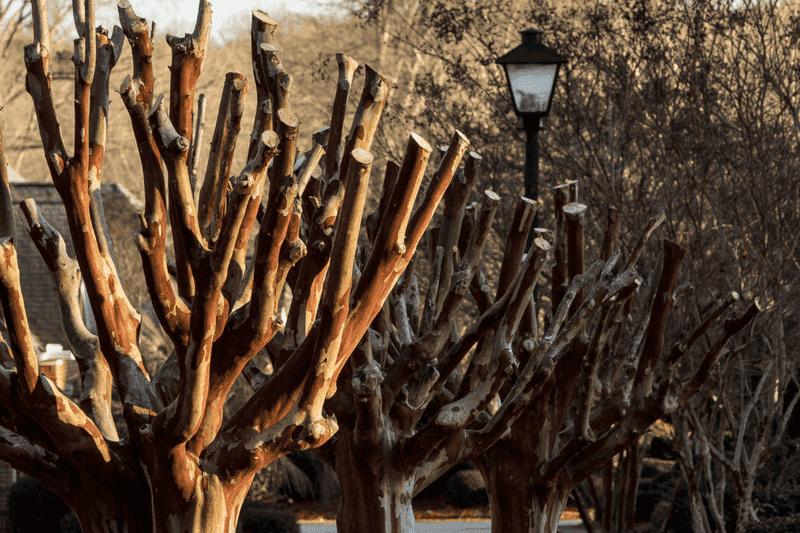
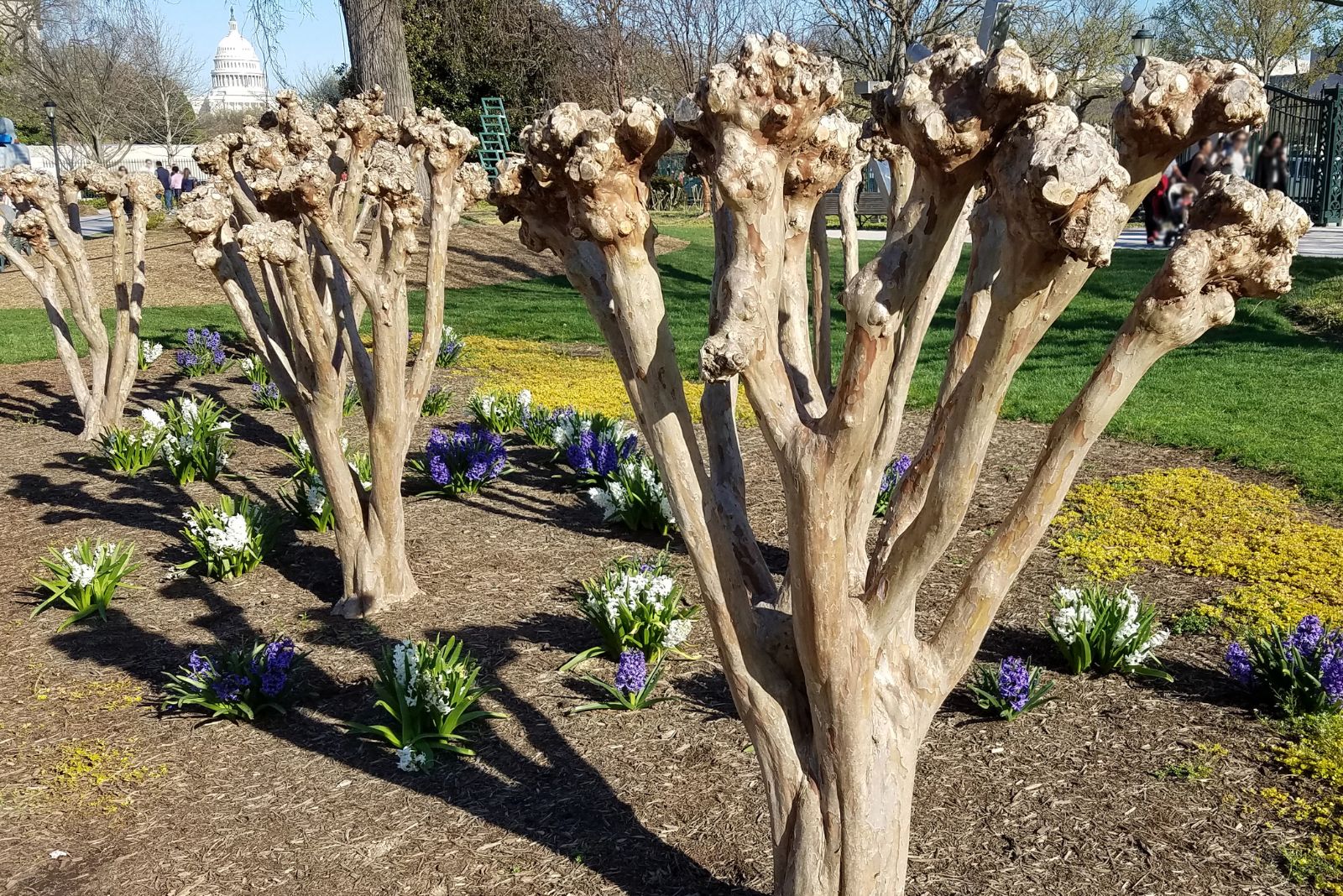
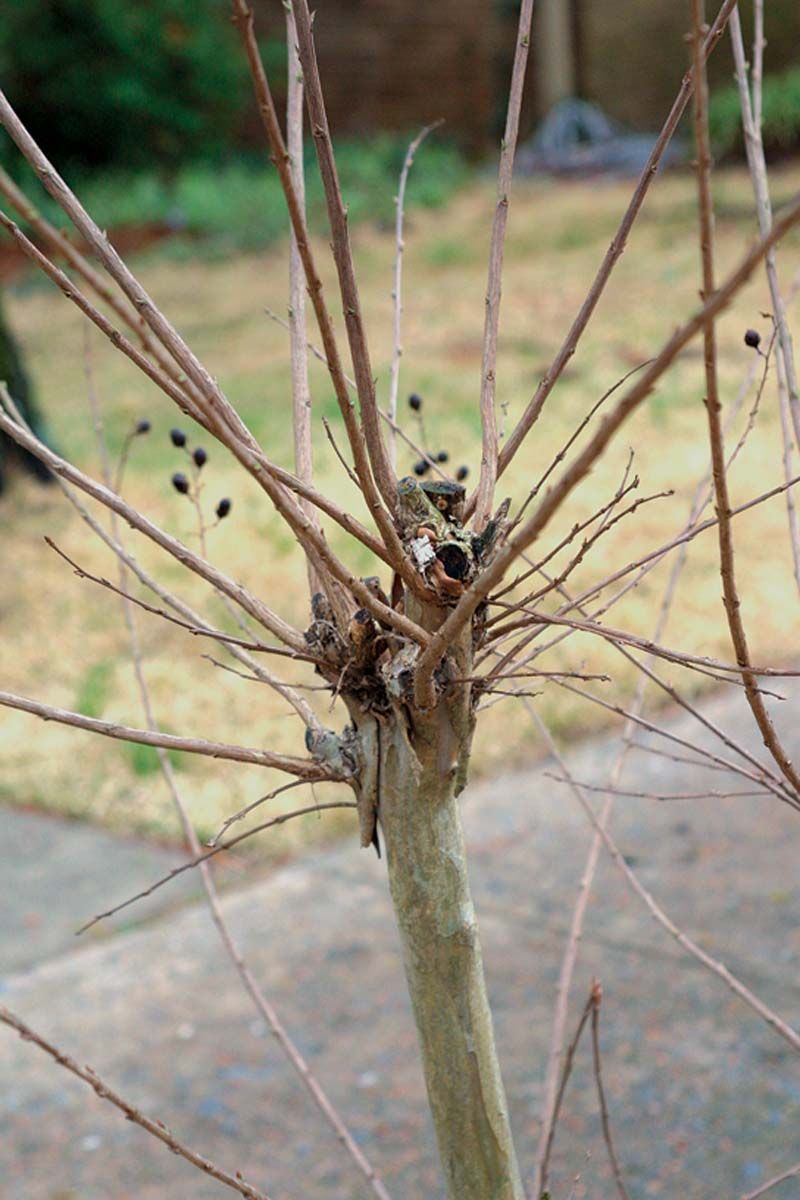
This practice involves cutting off all the top branches of the tree, leaving ugly stubs that look like knuckles.
People think this will create more blooms, but it actually weakens the tree and creates an unnatural, unattractive shape.
When you top a crape myrtle, the tree responds by sending up lots of thin, weak shoots from those cut points.
These shoots grow quickly but aren’t strong enough to support heavy flower clusters properly.
The result is a tree that looks messy, has weaker branches, and doesn’t bloom as beautifully as it could with proper pruning.
Instead of topping, focus on selective pruning that maintains the tree’s natural vase shape.
Crape myrtles have beautiful branching patterns and attractive bark that you should showcase, not hide.
Removing entire branches back to the trunk or a main branch is much better than leaving stubs everywhere.
If your crape myrtle has been topped in the past, you can gradually fix it over several years.
Start by thinning out some of those weak shoots and selecting the strongest ones to become permanent branches.
This takes patience, but your tree will eventually regain a more natural appearance and produce better blooms.
Many people top their trees because they think crape myrtles need severe pruning to bloom well.
The truth is that these trees bloom best with minimal pruning that focuses on health and shape rather than drastic cutting.
North Carolina gardeners who avoid incorrect pruning end up with healthier, more beautiful trees that are the envy of the neighborhood.
Thin Out Suckers And Small Interior Growth Regularly
Crape myrtles are vigorous growers, and they love to send up suckers from the base and small twiggy growth inside the canopy.
These suckers pop up around the trunk or even from the roots, and they steal energy that could be going toward flower production.
Removing them keeps your tree looking clean and directs resources where they’ll do the most good.
Suckers are easy to spot because they grow straight up from the ground or low on the trunk.
They usually have a different appearance from the main branches and can make your tree look messy and overgrown.
Pull or cut them as close to the base as possible, and check throughout the growing season because they can reappear quickly.
Interior growth refers to the small, thin branches that grow inward toward the center of the tree.
These branches don’t get enough light to produce good blooms, and they create a crowded canopy that traps moisture.
In North Carolina’s humid summers, this can lead to fungal problems and reduced air circulation.
Thinning out this interior growth opens up the canopy and allows light and air to reach all parts of the tree.
You don’t need to remove every single small branch, just the ones that are clearly crowding the center or growing in the wrong direction.
This creates a more open, attractive shape and helps prevent disease issues.
Regular maintenance throughout the year makes this job easier.
If you notice suckers or interior growth during summer, go ahead and remove them rather than waiting for the next major pruning session.
This keeps your crape myrtle looking its best and ensures maximum energy goes toward producing those stunning blooms that make these trees so popular in North Carolina landscapes.
Cut Spent Flower Clusters To Encourage A Second Bloom
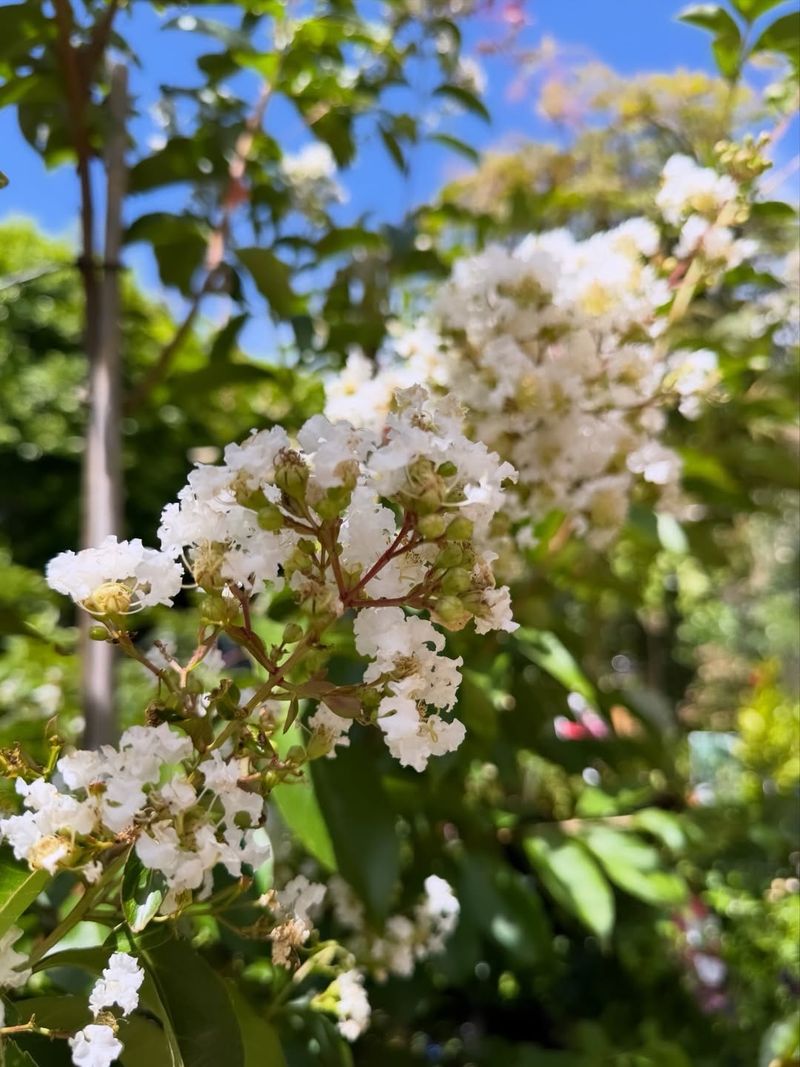
One of the coolest things about crape myrtles is their ability to bloom more than once during the growing season.
After the first big flush of flowers fades in mid-summer, you can encourage a second round of blooms by removing the spent flower clusters.
This technique, called deadheading, tells the tree to put energy into making new flowers instead of producing seeds.
Wait until the flower clusters have clearly finished blooming and started to look brown and dried out.
Then use sharp pruning shears to cut just below the spent cluster, right above the next set of leaves or buds.
Make clean cuts at a slight angle so water doesn’t pool on the cut surface and cause rot.
This type of pruning is different from the major structural pruning you do in late winter.
Deadheading is light maintenance that you can do throughout the summer whenever you notice faded flowers.
It only takes a few minutes and can make a big difference in how long your tree stays colorful and attractive.
Not all gardeners bother with deadheading, and your crape myrtle will survive just fine without it.
However, if you want the absolute best bloom show possible in your North Carolina garden, this extra step is worth the effort.
The second flush of flowers might not be quite as heavy as the first, but it still adds weeks of color to your landscape.
Keep in mind that deadheading works best on younger, smaller trees where you can easily reach the flowers.
If you have a large, mature crape myrtle, it might not be practical to remove every spent cluster.
Focus on the ones you can reach comfortably, and your tree will still benefit from the attention and produce more blooms throughout the season.
Use Clean, Sharp Tools And Make Proper Cuts
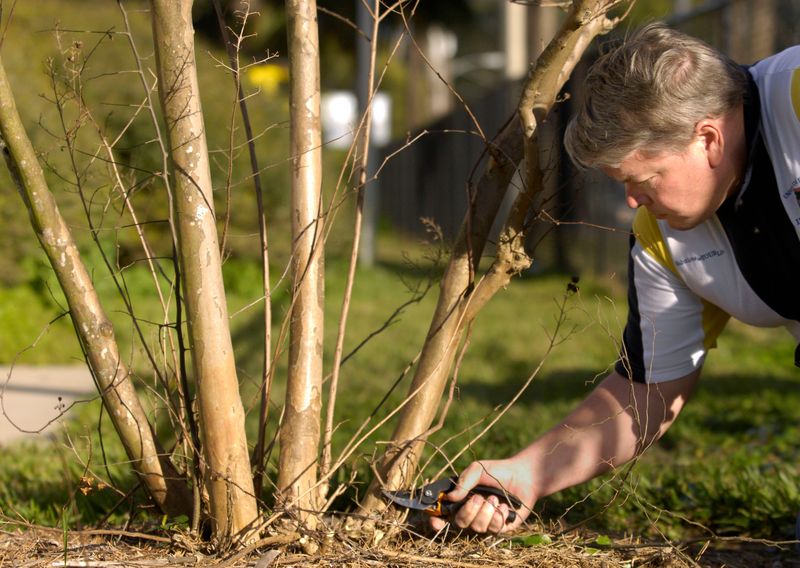
The tools you use and how you make your cuts can mean the difference between a healthy tree and one that struggles with disease or slow healing.
Dull, dirty pruning tools tear and crush plant tissue instead of making clean cuts, which creates larger wounds that take longer to heal.
Investing in quality tools and maintaining them properly is essential for successful crape myrtle pruning.
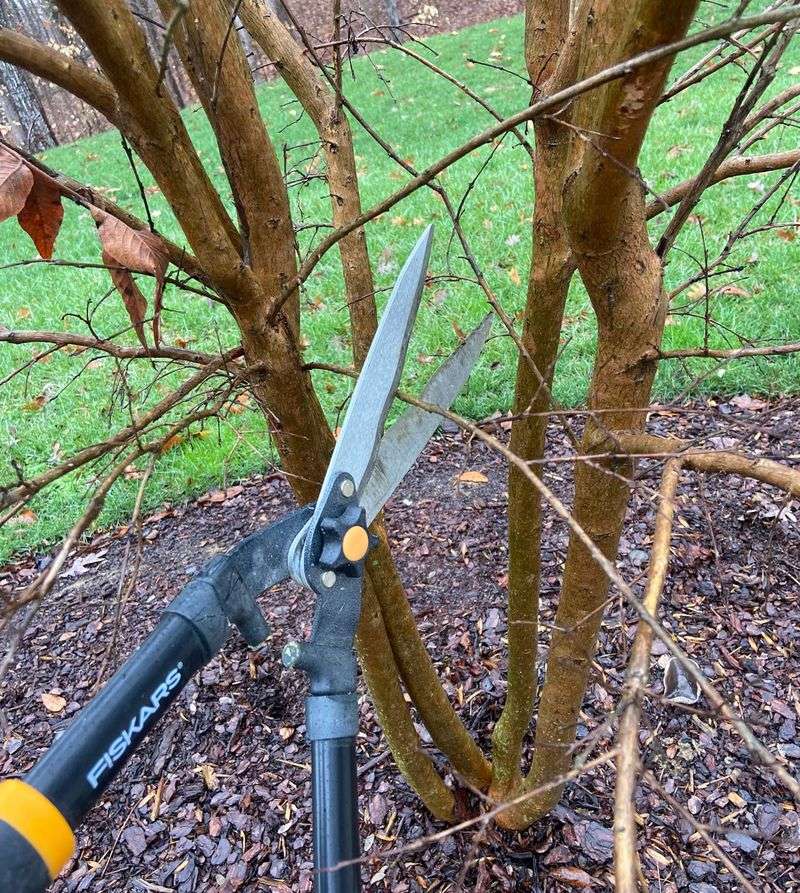
Sharp bypass pruners work best for smaller branches up to about three-quarters of an inch in diameter.
For larger branches, use loppers or a pruning saw to make clean cuts without straining.
Before you start pruning, wipe your tool blades with rubbing alcohol or a bleach solution to eliminate any disease organisms that might be lurking from previous use.
When making cuts, always prune just above a bud or lateral branch at a slight angle.
This angle should slope away from the bud so water runs off instead of pooling near the cut.
Avoid leaving long stubs, which look bad and can become entry points for pests and diseases that are common in North Carolina’s humid climate.
If you’re removing an entire branch, cut it back to the main trunk or a larger branch without leaving a stub.
Look for the branch collar, which is the slightly swollen area where the branch connects, and cut just outside this area.
The branch collar contains special cells that help the wound heal quickly and naturally.
Never use pruning paint or wound sealers on your cuts.
Research has shown that these products don’t help and can actually trap moisture and disease organisms against the wound.
Crape myrtles heal best when cuts are left open to air dry naturally, so just make clean cuts and let the tree do its thing.