New York Yard Things You Cannot Keep Without A Permit
Owning a home in New York comes with many benefits, but it also comes with rules, especially when it comes to what you can keep in your yard.
From large structures to certain recreational items, there are more restrictions than many homeowners realize.
Some objects require specific permits, even if they’re on private property, and skipping that step can result in fines, removal orders, or even legal trouble.
Whether you’re planning to add something new or already have questionable items in your yard, now is the time to make sure you’re in the clear.
Local ordinances vary across cities and counties, but many of the same rules show up statewide.
Things like storage sheds, fences, swimming pools, RVs, large playsets, or even oversized sculptures might need approval before they’re allowed to stay.
If you’re unsure whether something in your yard is permitted, you’re not alone, and you’re smart to check before it becomes a bigger issue.
Learning what’s allowed and what’s restricted can help you avoid surprise penalties and keep your property looking great without breaking any rules.
1. Backyard Chickens
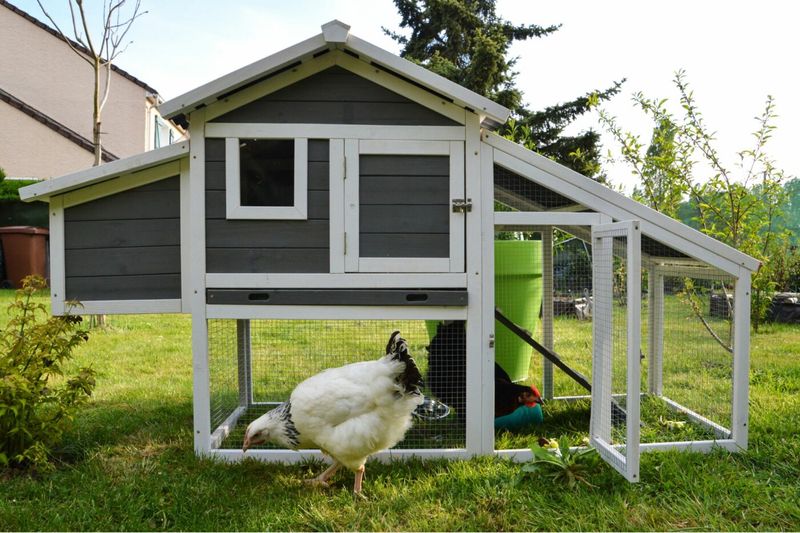
Raising chickens in your New York backyard has become incredibly popular over the past decade.
Fresh eggs, natural pest control, and the joy of caring for these feathered friends make them appealing to many homeowners.
However, most municipalities across New York State require permits before you can legally house chickens on residential property.
Local regulations vary dramatically depending on where you live.
New York City allows chickens in all five boroughs but prohibits roosters due to noise complaints.
Many suburban towns limit the number of birds you can keep, typically between three and six hens.
Your coop must meet specific distance requirements from neighboring properties, usually at least ten feet from property lines and twenty-five feet from nearby homes.
The permit application process involves submitting coop plans, paying fees that range from twenty-five to one hundred dollars, and sometimes getting signatures from adjacent neighbors.
Health departments want to ensure your setup prevents rodent problems and maintains sanitary conditions.
Inspections might occur before approval and periodically afterward to verify compliance.
Beyond permits, you need to consider predator protection, winter heating, and daily care responsibilities.
Chickens require fresh water, quality feed, and secure housing to thrive in New York’s varying climate.
Check with your town clerk or zoning office before purchasing birds.
Operating without proper authorization can result in fines up to five hundred dollars and mandatory removal of your flock, making advance planning absolutely essential for anyone interested in backyard poultry.
2. Swimming Pools
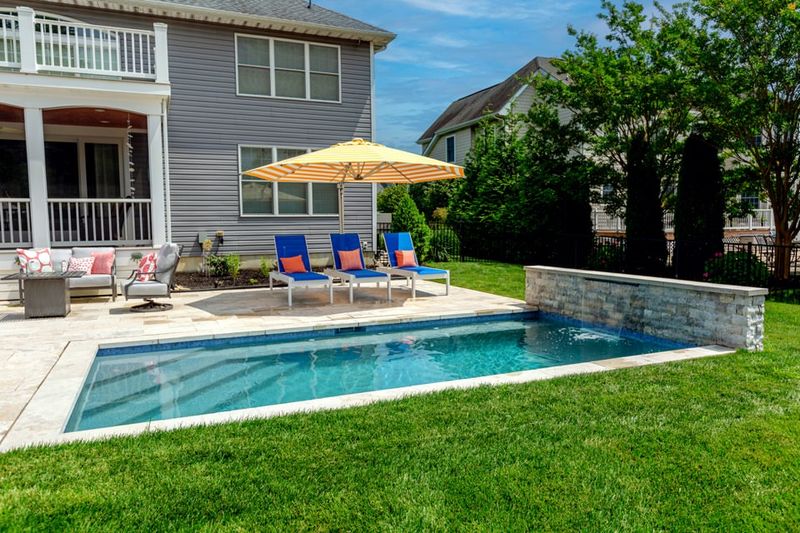
Installing a swimming pool transforms your property into a personal oasis, but New York regulations demand proper permits before construction begins.
Whether you want an in-ground pool, above-ground structure, or even a large inflatable model, building departments require documentation to ensure safety standards are met.
This applies throughout New York State, from Buffalo to Long Island.
In-ground pools face the strictest requirements.
You must submit detailed construction plans showing dimensions, depth, filtration systems, and electrical work.
Your New York Garden Changes Every Week. Your Plan Should Too.
Gardening in New York changes quickly throughout the season. Every Friday you’ll receive a simple weekly plan showing exactly what to plant, prune, fertilize, harvest, and protect so you never miss the right timing.
Licensed contractors typically handle this paperwork, but homeowners remain responsible for securing approval.
Above-ground pools exceeding certain sizes, usually those holding more than five thousand gallons or standing taller than thirty inches, also need permits in most New York jurisdictions.
Safety fencing represents a critical component of pool permits.
New York law mandates barriers at least four feet high surrounding pools, with self-closing and self-latching gates.
These prevent unsupervised access, particularly by young children.
Your permit application must include fencing plans that meet code specifications.
Setback requirements dictate how far pools must sit from property lines, typically at least ten feet.
Electrical permits are separate but equally important since pools require dedicated circuits and ground-fault circuit interrupters.
Plumbing permits may be necessary for water lines.
Permit fees vary widely, ranging from one hundred to over a thousand dollars depending on pool size and municipality.
Building without permits risks forced removal, inability to obtain homeowners insurance coverage, and complications when selling your property down the road.
3. Large Sheds And Outbuildings
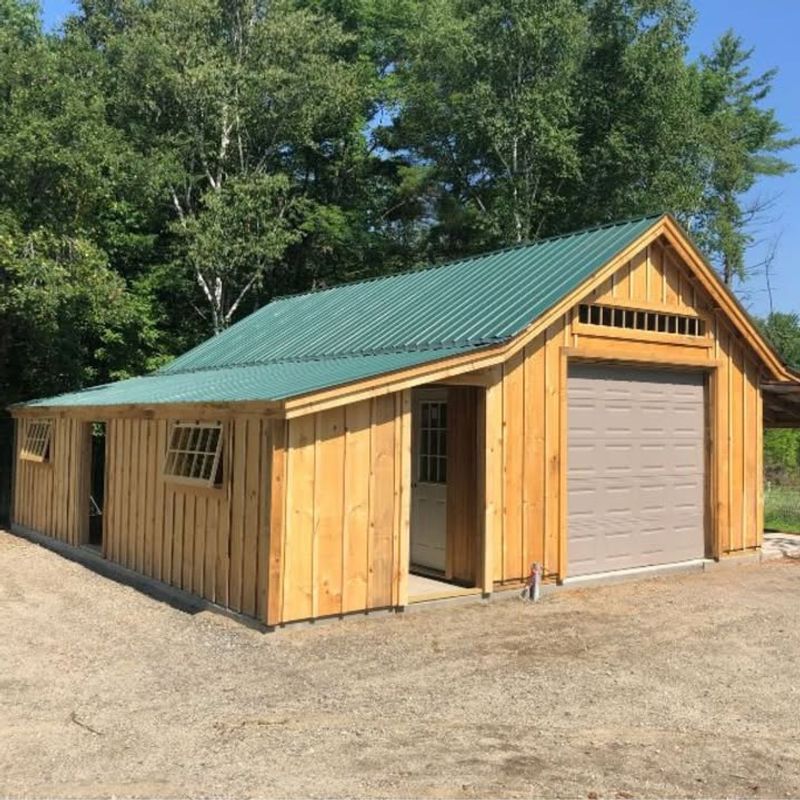
That extra storage space seems like a simple weekend project, but New York municipalities closely regulate sheds and outbuildings on residential property.
Size determines whether you need a permit, and most towns set thresholds around one hundred to two hundred square feet.
Anything larger requires building department approval before construction starts.
Zoning regulations control where you can place structures on your lot.
Setback requirements keep buildings a minimum distance from property boundaries, typically five to ten feet.
Height restrictions prevent sheds from blocking neighbors’ views or sunlight.
Some residential zones prohibit two-story outbuildings entirely.
Historic districts in places like Albany or Rochester impose additional architectural guidelines that your shed must match.
The permit process involves submitting plans showing dimensions, foundation type, and construction materials.
Building inspectors verify structural integrity and code compliance.
Electrical permits become necessary if you plan to run power to the shed.
Foundation requirements vary based on building size, with larger structures needing concrete slabs or frost-protected footings suitable for New York’s freeze-thaw cycles.
Pre-fabricated sheds from home improvement stores still require permits when they exceed size limits.
The manufacturer’s installation instructions and specifications usually satisfy plan requirements.
Permit fees typically range from fifty to three hundred dollars depending on structure size and your municipality.
Starting construction without authorization can result in stop-work orders, fines reaching one thousand dollars, and potential demolition requirements.
Always contact your local building department before purchasing materials or breaking ground on any outbuilding project in New York.
4. Beehives
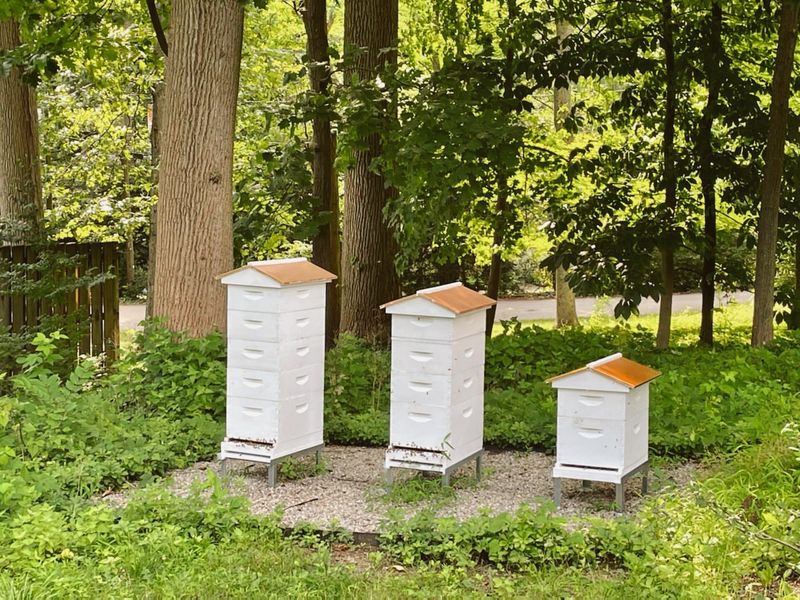
Beekeeping supports local ecosystems while providing delicious honey, making it an attractive hobby for New York residents.
Pollinators face serious challenges, and backyard beekeepers play important roles in conservation efforts.
Despite these benefits, keeping bees requires permits in most New York municipalities due to safety and neighbor relations concerns.
Registration with the New York State Department of Agriculture and Markets is mandatory for all beekeepers, regardless of hive numbers.
This costs a modest fee and helps track bee populations and diseases.
Local permits add another layer of regulation.
New York City legalized beekeeping in 2010 but requires registration and compliance with specific guidelines.
Suburban towns have varying rules, with some allowing bees by-right and others requiring special permits or variances.
Common regulations limit hive numbers, often capping residential properties at two or three colonies.
Placement rules require hives to sit at least ten feet from property lines.
Flyway barriers like fences or hedges at least six feet tall must redirect bee flight paths upward, preventing interactions with neighbors.
Water sources on your property keep bees from congregating at neighborhood pools.
Educational requirements exist in some jurisdictions, mandating beekeeping courses before permit approval.
You must demonstrate knowledge of hive management, swarm prevention, and disease recognition.
Liability concerns drive these rules, as bee stings can cause severe allergic reactions.
Some towns require liability insurance coverage.
Permits typically cost between twenty-five and seventy-five dollars annually.
Operating without proper authorization risks hive confiscation and fines.
Contact your town clerk and county agricultural extension office to understand specific requirements before starting your beekeeping journey in New York.
5. Permanent Gazebos And Pergolas
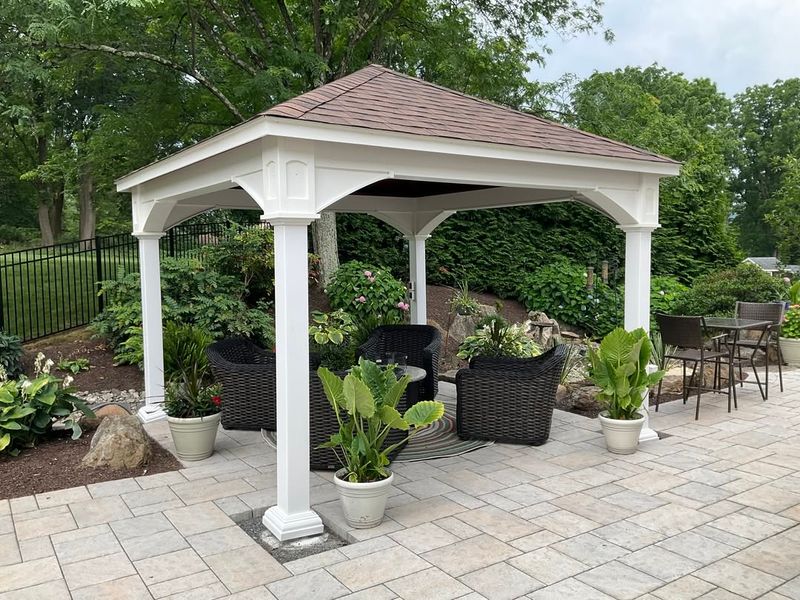
Garden structures like gazebos and pergolas create beautiful outdoor living spaces perfect for New York summers.
These architectural features add value and functionality to your property.
Before building that dream pavilion, understand that permanent structures typically require building permits throughout New York State.
Permit requirements depend primarily on whether the structure attaches to your house or stands independently.
Attached pergolas usually need permits because they impact your home’s structural integrity and roofline.
Freestanding gazebos trigger permit requirements based on size, foundation type, and whether they include roofing.
Most municipalities require permits for any structure exceeding one hundred square feet or ten feet in height.
Temporary structures that you can easily move might avoid permits, but anything anchored with concrete footings counts as permanent.
Building departments evaluate structural plans, ensuring adequate support for New York snow loads that can reach thirty pounds per square foot in some regions.
Wind resistance matters too, especially in exposed locations.
Your plans must show proper anchoring and construction methods.
Setback requirements keep gazebos away from property boundaries, typically requiring at least five feet of clearance.
Lot coverage calculations factor in all structures, and adding a large gazebo might push you over allowable limits.
Historic districts impose design restrictions ensuring new structures complement existing architecture.
Electrical permits become necessary when adding lighting or outlets.
Permit fees vary from seventy-five to several hundred dollars depending on structure size and complexity.
Inspections verify code compliance during and after construction.
Building without permits creates problems when selling your home, as title searches may reveal unpermitted structures.
Buyers might demand removal or price reductions.
Protect your investment by obtaining proper authorization before construction begins on any permanent garden structure in New York.
6. Goats And Livestock

Backyard farming trends have brought livestock into suburban New York neighborhoods, but these animals face strict regulations.
Goats provide milk, help clear brush, and offer companionship.
However, zoning laws in most residential areas prohibit or heavily restrict livestock without special permits.
Agricultural zoning typically allows livestock as a right, but residential zones are different.
Many New York suburbs have created special permit categories for small-scale livestock keeping.
Applications require detailed information about animal numbers, housing, waste management, and property size.
Minimum lot sizes often apply, with some towns requiring at least one acre before considering livestock permits.
Goats specifically need secure fencing since they are notorious escape artists.
Your permit application must show adequate containment and shelter.
Setback requirements keep animal housing far from neighboring properties, often requiring fifty to one hundred feet of separation.
Noise and odor concerns drive these regulations, and officials want assurance that your animals will not create nuisances.
Health department involvement adds complexity.
Manure management plans prevent groundwater contamination and fly problems.
Some jurisdictions limit animal numbers based on lot size, allowing perhaps two goats per acre.
Breeding restrictions might prohibit keeping male goats due to their strong odor.
Regular inspections ensure ongoing compliance with permit conditions.
Permit processes can take months and involve public hearings where neighbors voice opinions.
Fees range from one hundred to five hundred dollars depending on your municipality.
Some towns simply prohibit livestock in residential zones regardless of property size.
Research local regulations thoroughly before acquiring animals.
Keeping livestock without permits can result in impoundment, fines exceeding one thousand dollars, and potential criminal charges for repeat violations in New York.
7. Retaining Walls
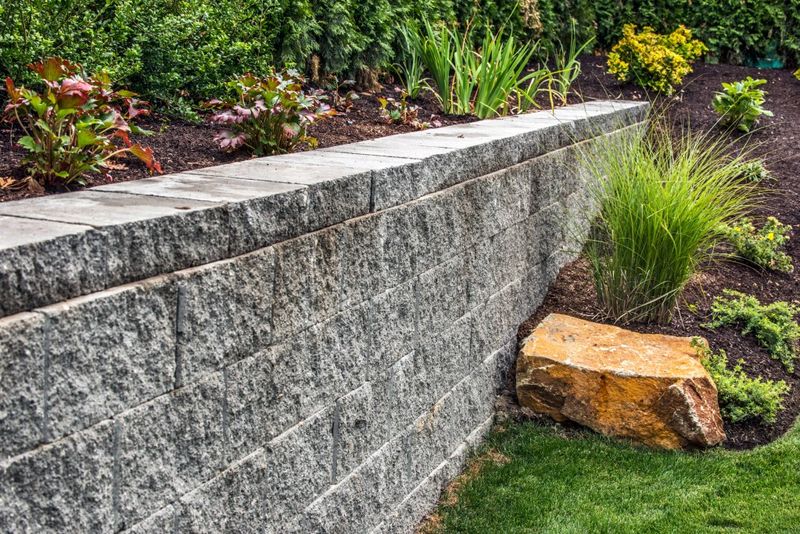
Sloped properties throughout New York often need retaining walls to prevent erosion and create usable yard space.
These structures hold back soil, protect foundations, and enhance landscaping.
While small decorative walls might not require permits, substantial retaining walls definitely do under New York building codes.
Height triggers permit requirements in most jurisdictions.
Walls exceeding four feet tall almost always need building permits and engineered plans.
Some municipalities set lower thresholds at three feet or even two feet when walls support significant loads.
Walls near property lines face stricter scrutiny regardless of height.
The potential for failure and damage to neighboring properties makes officials cautious about approving retaining wall construction.
Engineering requirements increase with wall height and soil conditions.
Clay soils common in parts of New York expand and contract with moisture, creating tremendous pressure on retaining structures.
Sandy soils require different design approaches.
Professional engineers must stamp plans for walls over certain heights, typically four to six feet.
These plans show proper drainage, footing depth, reinforcement, and construction materials suitable for local conditions.
Drainage represents a critical component of retaining wall permits.
Water buildup behind walls causes failures, so plans must include weep holes, drainage pipes, and gravel backfill.
Inspections occur during construction to verify proper installation.
Setback requirements keep walls away from property boundaries, and easement locations might prohibit wall construction entirely.
Permit fees depend on wall size and engineering complexity, ranging from one hundred to over five hundred dollars.
Retaining wall failures can cause catastrophic property damage and liability issues.
Building without permits voids homeowner’s insurance coverage for wall-related damage.
Some municipalities require removal of unpermitted walls regardless of quality.
Protect yourself by obtaining proper authorization before constructing any substantial retaining wall on your New York property.