11 Classic Garden Plants Oregon Gardeners Are Loving Again
Have you ever walked past a garden and noticed a plant that feels familiar, like it’s been there forever?
Maybe it’s a flower you remember from your childhood yard, or a shrub that your neighbor always seems to grow perfectly.
Sometimes those classic plants get overlooked as new trends come and go, but lately, Oregon gardeners are rediscovering them and falling in love all over again.
These are the plants that are easy to grow, dependable, and just make a garden feel… right.
They might not be flashy or trendy, but they have a kind of quiet charm that’s hard to beat.
Have you tried planting any favorites from your own past lately?
You might be surprised at how satisfying it is to see them thriving again.
Here’s a look at classic garden plants that are making a comeback in Oregon gardens plants that are reliable, beautiful, and perfect for adding timeless appeal to your own yard.
1. Lavender
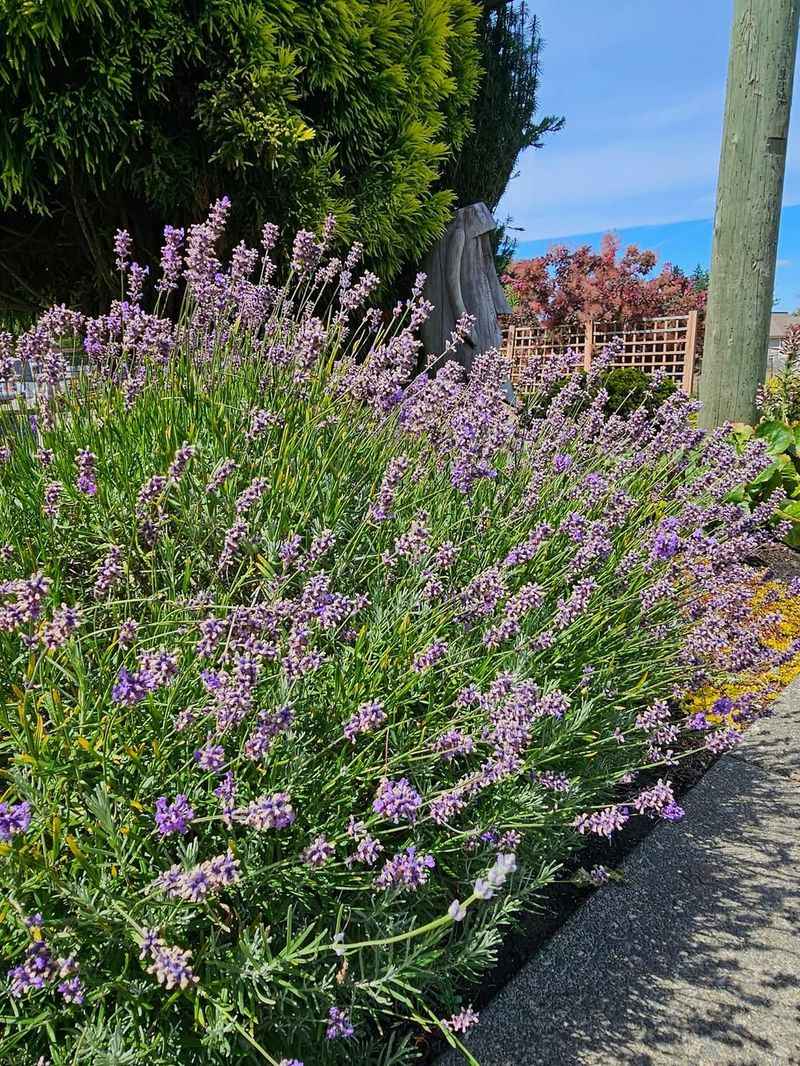
Purple spikes of lavender bring more than just color to your garden.
This Mediterranean herb has been a staple in Oregon gardens for over a century, and its popularity is surging once again.
Gardeners appreciate how it handles our dry summers without constant watering, and pollinators absolutely adore the fragrant blooms that appear from late spring through summer.
Growing lavender in Oregon is surprisingly simple if you pick the right variety.
English lavender (Lavandula angustifolia) works best in most areas because it tolerates our occasional cold snaps better than other types.
Plant it in full sun with well-drained soil, and avoid overwatering.
Too much moisture is the main reason lavender struggles, so raised beds or slopes work wonderfully.
Beyond its beauty, lavender serves multiple purposes around your property.
You can harvest the flowers for sachets, cooking, or homemade products.
The strong scent naturally repels deer and rabbits, which makes it a smart choice for border plantings.
Plus, once established, lavender needs almost no maintenance beyond an annual trim after flowering.
Many Oregon gardeners are now creating entire lavender hedges or mixing different varieties for extended bloom times.
The plant’s silvery foliage looks attractive year-round, and its drought tolerance makes it perfect for water-wise landscaping.
Whether you grow one plant or fifty, lavender brings timeless elegance and practical benefits to any garden space.
2. Rhododendrons
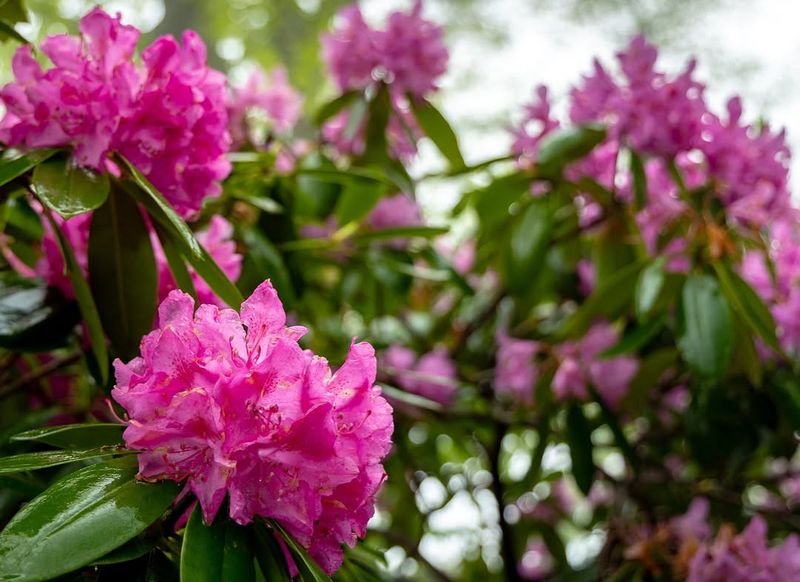
Few plants say “Pacific Northwest” quite like rhododendrons.
These spectacular shrubs have been gracing Oregon gardens since the late 1800s, and their comeback is no surprise.
With thousands of varieties available, you can find rhododendrons in nearly every color except true blue.
Their massive flower clusters create stunning spring displays that neighbors will stop to admire.
Oregon’s climate is practically perfect for rhododendrons.
They love our acidic soil, mild temperatures, and ample rainfall.
Most varieties prefer partial shade, which makes them ideal for planting under tall trees or on the north side of buildings.
The key to success is providing good drainage and avoiding heavy clay that stays soggy.
Your Oregon Garden Changes Every Week. Your Plan Should Too.
Gardening in Oregon changes quickly throughout the season. Every Friday you’ll receive a simple weekly plan showing exactly what to plant, prune, fertilize, harvest, and protect so you never miss the right timing.
Rhododendrons offer more than just spring flowers.
Their evergreen foliage provides year-round structure and privacy screening.
Compact varieties work well in small gardens, while larger types can grow into impressive specimens over time.
Some varieties even have attractive peeling bark or fragrant blooms that add extra interest.
Modern gardeners appreciate how rhododendrons fit into low-maintenance landscapes.
Once established, they need little care beyond occasional watering during dry spells and a light mulch of compost or bark.
Pruning is optional and mainly for shaping.
With proper placement, these classic shrubs can thrive for decades, becoming treasured family heirlooms that mark the changing seasons with reliable beauty.
3. Japanese Maple
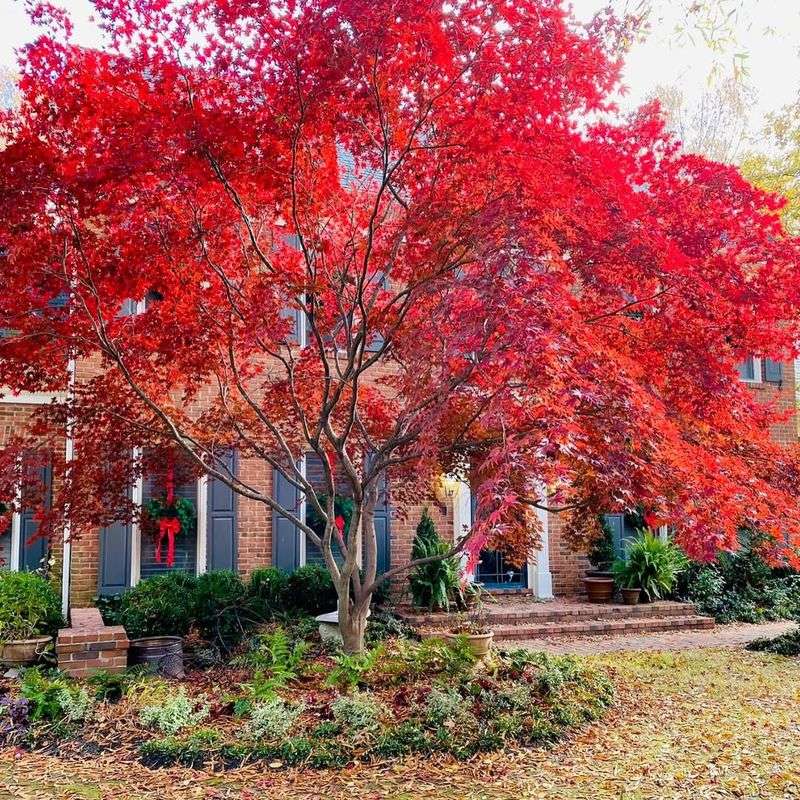
Elegant and refined, Japanese maples have captivated Oregon gardeners for generations.
These small trees bring four-season interest with their delicate leaves, graceful branching, and stunning fall colors.
Recently, they’ve experienced a major resurgence as homeowners seek statement plants that work in smaller yards without overwhelming the space.
Japanese maples thrive in Oregon’s climate, especially in areas with some afternoon shade.
Too much direct sun can scorch the delicate leaves, particularly the red-leafed varieties.
They prefer slightly acidic, well-drained soil and benefit from a layer of mulch to keep roots cool and moist.
Most varieties stay relatively small, ranging from six to twenty feet tall depending on the type.
The variety selection is truly impressive.
You can choose from upright forms, weeping types, or dwarf varieties that work in containers.
Leaf colors range from bright green to deep burgundy, and some cultivars feature leaves that change color throughout the season.
The intricate branching structure looks especially beautiful in winter when covered with frost or snow.
What makes Japanese maples particularly special is how they age.
Unlike many plants that decline over time, these trees become more beautiful and interesting with each passing year.
The bark develops character, the branching becomes more sculptural, and the overall form gains presence.
Many Oregon gardens feature Japanese maples that were planted fifty or more years ago, still thriving and more stunning than ever.
4. Hostas
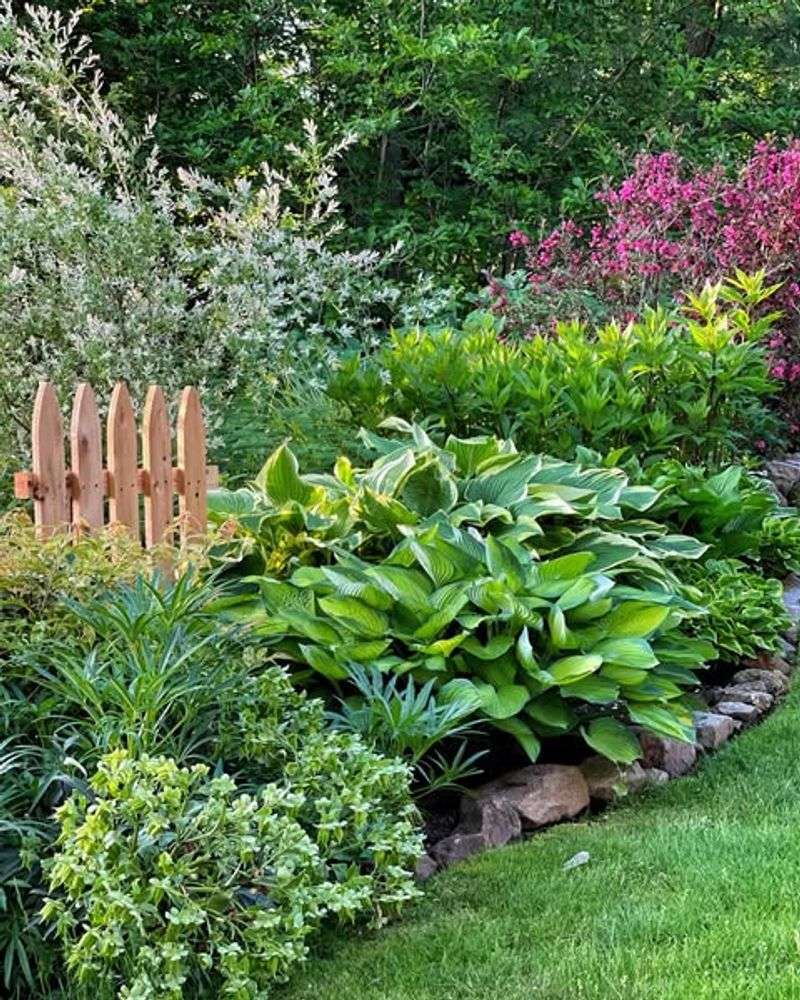
Shade gardens come alive when you add hostas to the mix.
These reliable perennials have been garden favorites since Victorian times, and their current popularity boom shows no signs of slowing.
With hundreds of varieties available, hostas offer an incredible range of sizes, colors, and leaf patterns that transform dark corners into lush, tropical-looking spaces.
Oregon’s climate suits hostas perfectly.
They appreciate our cool, moist springs and don’t mind our cloudy days.
Plant them in partial to full shade with rich, well-drained soil that holds moisture without becoming waterlogged.
Morning sun is fine for most varieties, but intense afternoon heat can damage the foliage.
The diversity among hosta varieties is remarkable.
Miniature types work beautifully in containers or along path edges, while giant varieties can grow leaves the size of dinner plates.
Colors range from deep blue-green to bright gold, with many featuring variegated patterns of white, cream, or yellow.
Some varieties even produce fragrant white or lavender flowers in summer.
Gardeners love how hostas solve common landscaping challenges.
They fill difficult shady areas where grass won’t grow, provide excellent ground cover under trees, and create bold textural contrasts with ferns and other shade plants.
Slugs can be a problem in wet Oregon springs, but a ring of crushed eggshells or copper tape around plants provides protection.
Once established, hostas return faithfully each year, growing larger and more impressive with age.
5. Peonies
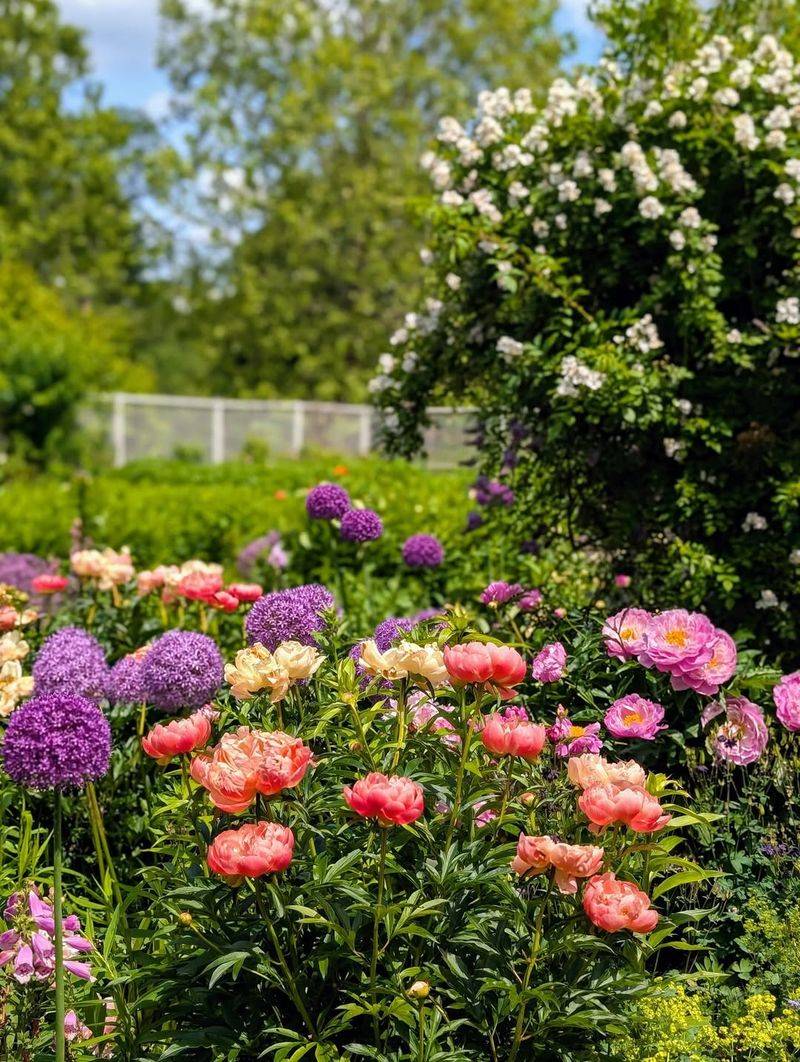
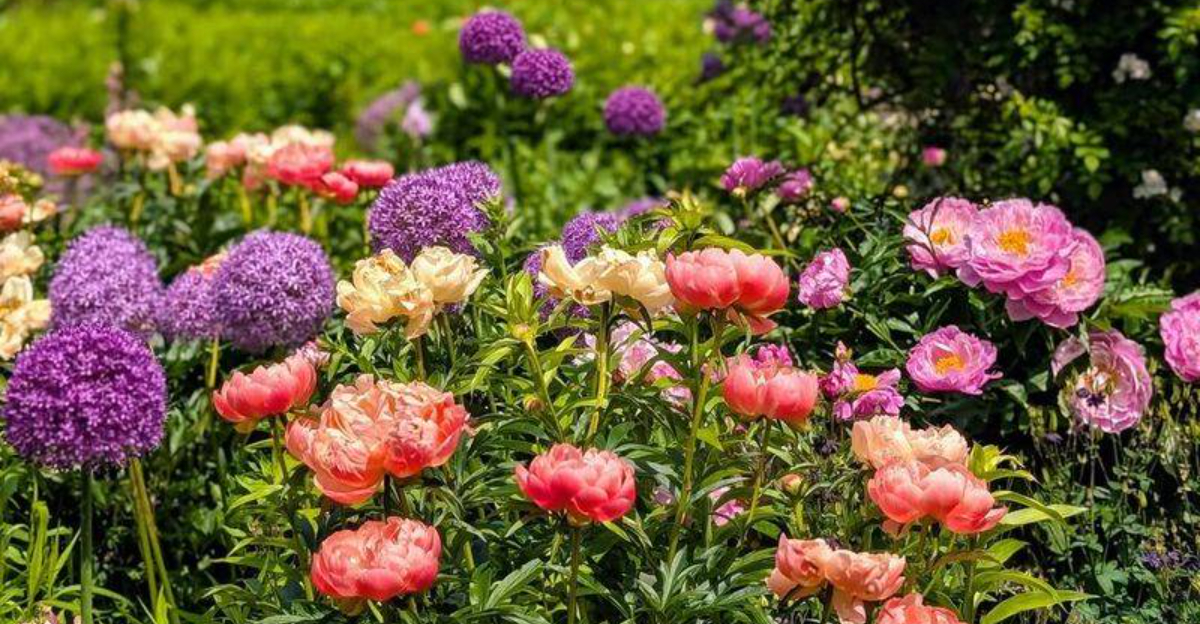
When peonies bloom in late spring, Oregon gardeners stop and take notice.
These spectacular perennials have been cherished since ancient times, and their current revival reflects a growing appreciation for plants that deliver big impact with minimal fuss.
A single peony plant can produce dozens of enormous, often fragrant flowers that make stunning cut arrangements and garden displays.
Peonies are remarkably long-lived plants that can thrive for fifty years or more in the same spot.
They prefer full sun and well-drained soil with good air circulation.
Oregon’s climate works well for peonies, though they need a period of winter cold to bloom properly, which our region provides naturally.
Plant them in fall with the eyes (growing buds) no more than two inches below the soil surface.
The variety selection includes herbaceous types that grow back from the ground each year, tree peonies with woody stems, and intersectional hybrids that combine the best traits of both.
Flower forms range from simple single blooms to elaborate doubles with hundreds of petals.
Colors span white, pink, red, coral, and even yellow in some tree peony varieties.
What makes peonies particularly valuable is their reliability.
Once established, they bloom faithfully each spring without demanding much attention.
They rarely need dividing, resist most pests and diseases, and actually improve with age.
Many Oregon gardens feature peony plants that were originally planted by grandparents or great-grandparents, still producing magnificent blooms generation after generation.
6. Daylilies
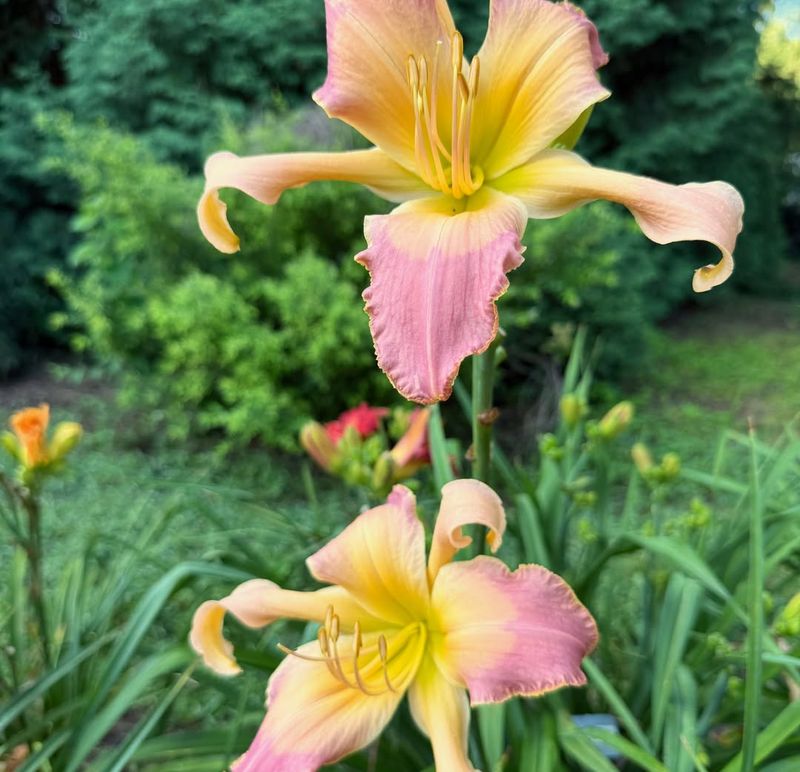
Tough, colorful, and nearly indestructible, daylilies have earned their place in countless Oregon gardens.
These perennials have been popular since the 1930s, and modern breeding has created thousands of varieties in almost every color imaginable.
Each flower lasts just one day, but established clumps produce so many buds that the show continues for weeks or even months.
Daylilies adapt to almost any growing condition Oregon offers.
They tolerate full sun to partial shade, wet springs and dry summers, and a wide range of soil types.
This flexibility makes them perfect for beginning gardeners or anyone who wants beautiful flowers without constant maintenance.
Plant them in spring or fall, spacing them about two feet apart to allow for growth.
The color and form options are truly astounding.
You can find daylilies in shades of yellow, orange, red, pink, purple, and near-white, with many featuring multiple colors or patterns.
Flower sizes range from miniature two-inch blooms to giants spanning eight inches across.
Some varieties bloom early in the season, others late, and a few are repeat bloomers that flower multiple times.
Beyond their flowers, daylilies provide attractive grassy foliage that looks good all season.
They work beautifully as ground covers on slopes, in mixed perennial borders, or massed for dramatic effect.
Deer occasionally nibble the flowers, but the plants bounce back quickly.
Dividing clumps every few years keeps them blooming vigorously and gives you extras to share with friends or plant elsewhere in your garden.
7. Bleeding Heart (Dicentra)
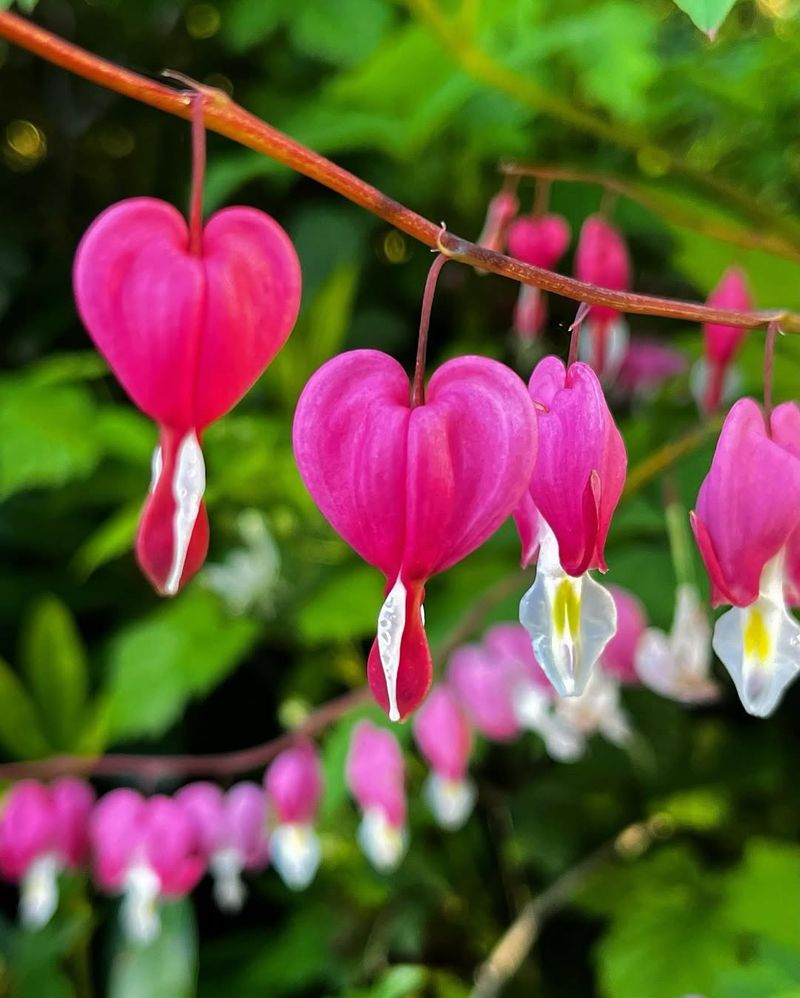
Whimsical heart-shaped flowers dangle from arching stems, creating one of spring’s most romantic displays.
Bleeding heart has charmed gardeners since the 1800s, and its recent rediscovery by a new generation proves that some classics never go out of style.
The delicate-looking flowers belie a tough plant that thrives in Oregon’s shady gardens with minimal care.
Two main types grow well in Oregon.
The traditional old-fashioned bleeding heart (Dicentra spectabilis) produces large pink or white hearts on stems up to three feet tall, blooming in late spring before going dormant in summer.
Fringed bleeding heart (Dicentra eximia) stays smaller, blooms longer, and keeps its ferny foliage all season.
Both prefer partial to full shade and rich, moist soil.
Bleeding heart works beautifully in woodland gardens, shade borders, or alongside streams and ponds.
The foliage emerges early in spring, sometimes pushing through late snow, and the flowers appear soon after.
Pair them with hostas, ferns, and other shade lovers that will fill in after the old-fashioned types go dormant in summer heat.
These plants are surprisingly low-maintenance once established.
They rarely need dividing, resist most pests, and spread slowly into attractive clumps.
The roots contain compounds that deer and rabbits avoid, making them excellent choices for rural gardens.
Many Oregon gardeners treasure bleeding hearts that have been passed down through families, with divisions from grandmother’s original plant now blooming in children’s and grandchildren’s gardens across the state.
8. Hydrangeas
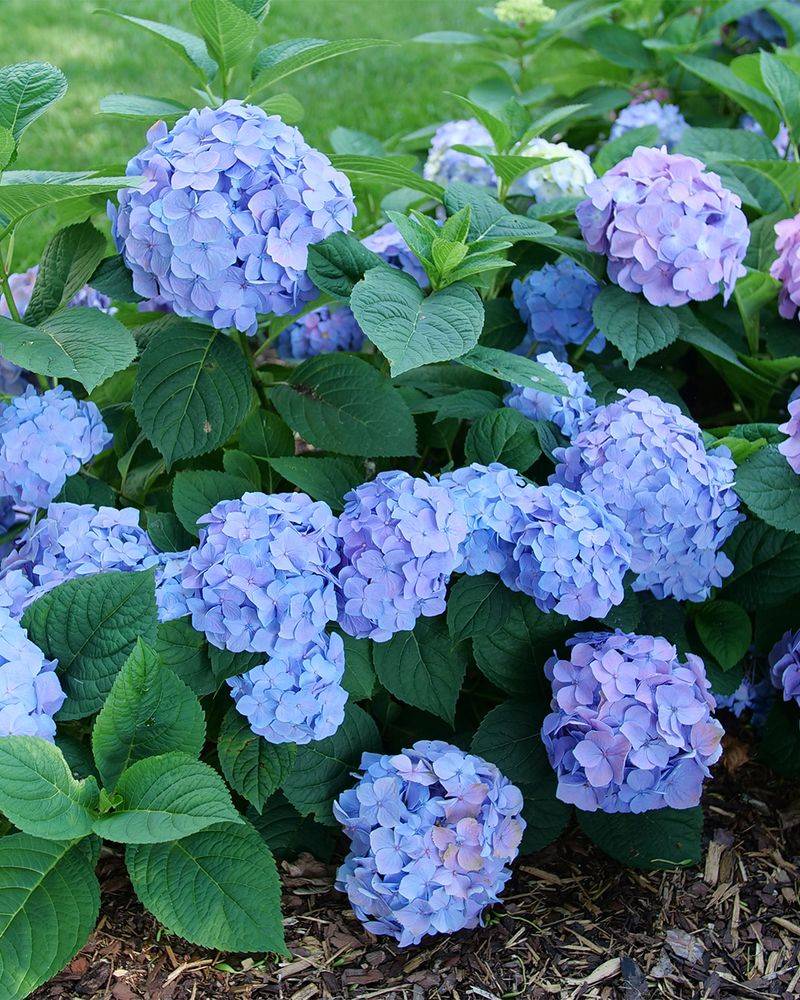
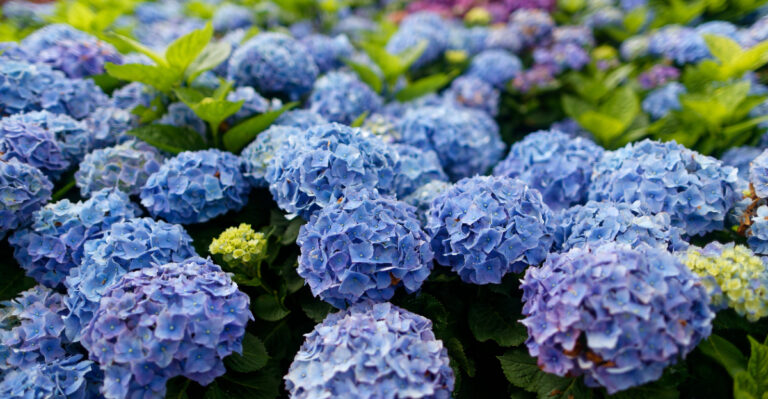
Big, bold, and beautiful, hydrangeas create some of summer’s most impressive flower displays.
These deciduous shrubs have been garden staples for over a century, and their current popularity reflects both nostalgia and the introduction of exciting new varieties.
From classic mopheads to elegant lacecaps, hydrangeas offer something for every Oregon garden style.
Oregon’s climate is ideal for most hydrangea types.
They appreciate our mild temperatures, ample spring moisture, and relatively cool summers.
Plant them in morning sun with afternoon shade, or in bright filtered light all day.
The soil should be rich and moisture-retentive but not waterlogged.
Mophead and lacecap types (Hydrangea macrophylla) can change color based on soil pH, with acidic soil producing blue flowers and alkaline soil creating pink blooms.
Beyond the popular mopheads, consider other hydrangea types for variety.
Panicle hydrangeas produce cone-shaped flower clusters that start white and age to pink.
Oakleaf hydrangeas offer beautiful fall foliage and exfoliating bark for winter interest.
Climbing hydrangeas can cover walls or fences with lacy white flowers and attractive foliage.
Hydrangeas need consistent moisture during their first year but become more drought-tolerant once established.
Prune them carefully, as different types bloom on old wood, new wood, or both, and improper pruning can eliminate flowers for a season.
The large flower heads dry beautifully for arrangements, adding another dimension to their appeal.
Many Oregon homes feature hydrangeas that have bloomed faithfully for decades, becoming treasured landmarks in neighborhood gardens.
9. Boxwood
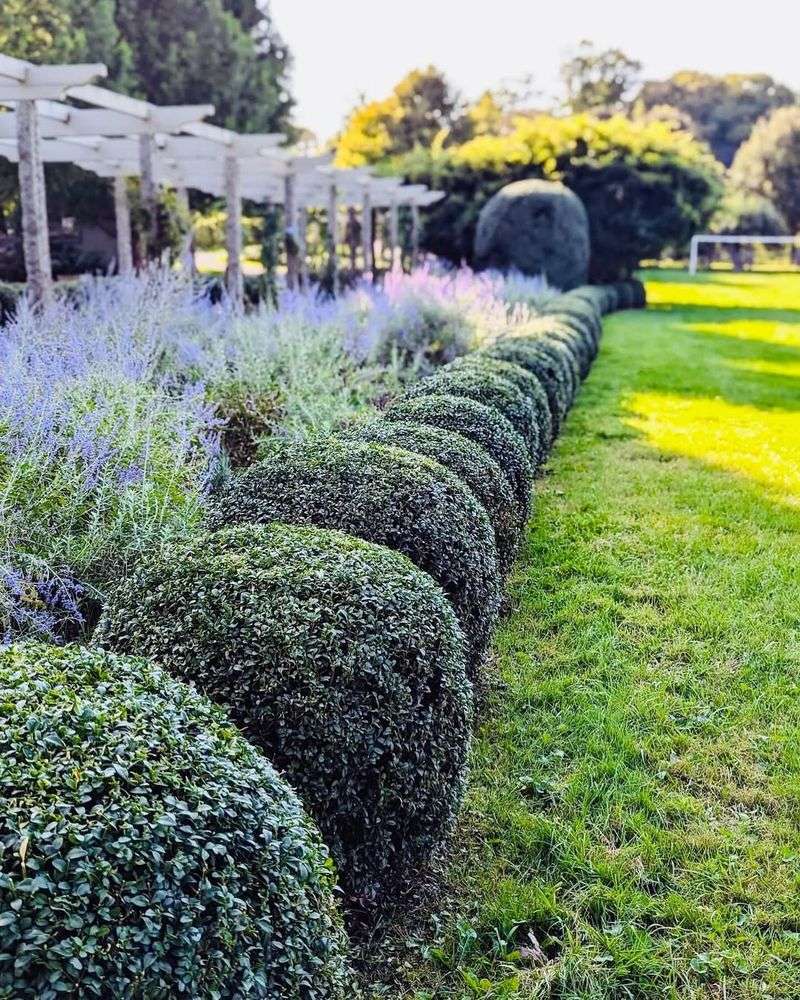
Formal, structured, and timelessly elegant, boxwood has shaped gardens for centuries.
These evergreen shrubs are experiencing a major comeback as Oregon gardeners rediscover the beauty of traditional landscape design.
Boxwood’s dense foliage and slow growth make it perfect for hedges, topiaries, or specimen plantings that provide year-round structure and greenery.
Several boxwood varieties thrive in Oregon.
English boxwood (Buxus sempervirens) grows slowly into rounded shapes, while Korean boxwood (Buxus sinica var. insularis) offers better cold hardiness and disease resistance.
Plant them in well-drained soil with morning sun and afternoon shade, or in bright filtered light.
Good air circulation helps prevent fungal issues that can affect boxwood in our damp climate.
Boxwood works beautifully in many garden roles.
Use it to create low hedges that define garden rooms or border pathways.
Shape it into formal geometric forms for traditional gardens, or let it grow naturally for a softer cottage look.
Boxwood also grows well in containers, making it useful for framing doorways or adding structure to patios and decks.
Maintenance is relatively simple.
Prune boxwood in late spring or early summer after new growth hardens.
Feed lightly in spring with a balanced fertilizer, and water during extended dry periods.
Watch for boxwood blight, a fungal disease that has appeared in some Oregon areas, and buy plants from reputable sources that test for the disease.
With proper care, boxwood can live for many decades, becoming more valuable and beautiful as it matures into a classic garden feature.
10. Holly
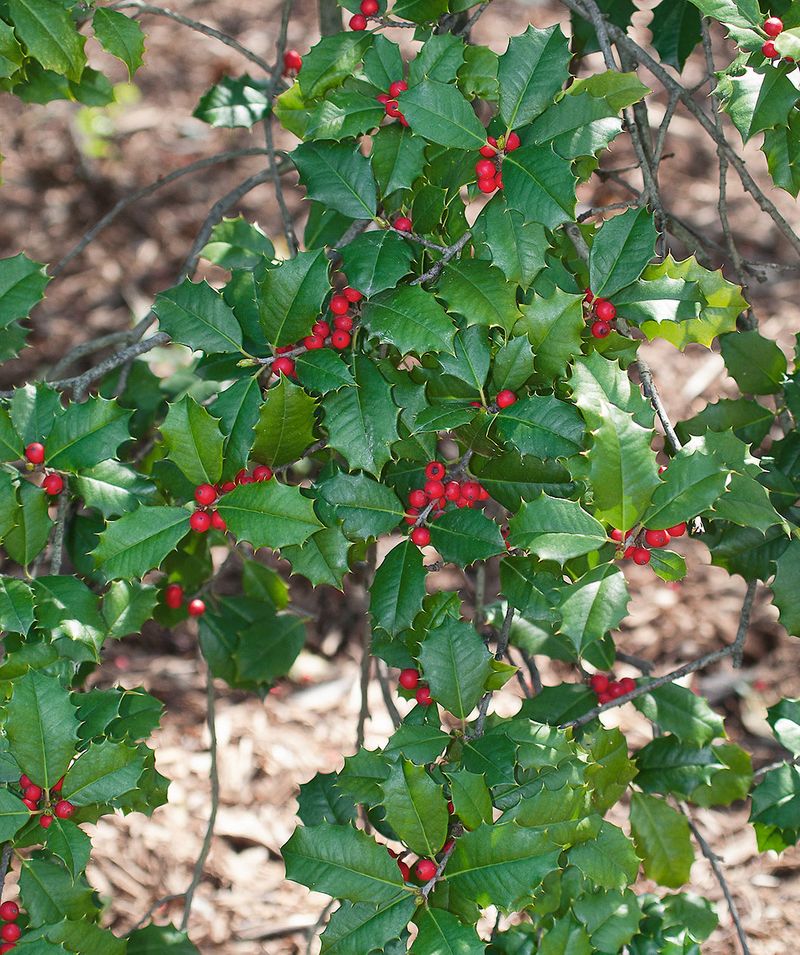
Glossy evergreen leaves and bright red berries make holly a symbol of the holiday season, but this classic plant offers beauty all year long.
Oregon gardeners have grown holly for generations, and its current resurgence reflects appreciation for native and adapted evergreens that support local wildlife.
Both native Oregon grape holly and traditional English holly varieties thrive in our climate.
English holly (Ilex aquifolium) grows into substantial shrubs or small trees with spiny leaves and vibrant berries that birds love.
Oregon grape (Mahonia aquifolium), our state flower, is actually a type of holly that produces clusters of yellow flowers in spring followed by blue-black berries.
Both prefer partial shade and well-drained soil, though they tolerate a range of conditions once established.
Holly plants are either male or female, and you need both to get berries.
One male plant can pollinate several females, so plan accordingly when planting.
The berries provide important winter food for birds, and the dense evergreen foliage offers shelter and nesting sites.
Deer generally avoid holly because of the spiny leaves, making it a smart choice for rural properties.
Beyond its wildlife benefits, holly provides excellent structure in the garden.
Use it as a hedge for privacy, a specimen plant for focal interest, or an evergreen backdrop for seasonal flowers.
Variegated varieties with gold or white leaf edges add extra visual interest.
Holly grows slowly but steadily, requiring little maintenance beyond occasional shaping.
Many Oregon properties feature holly trees that have stood for fifty years or more, still producing abundant berries each winter.
11. Ornamental Grasses
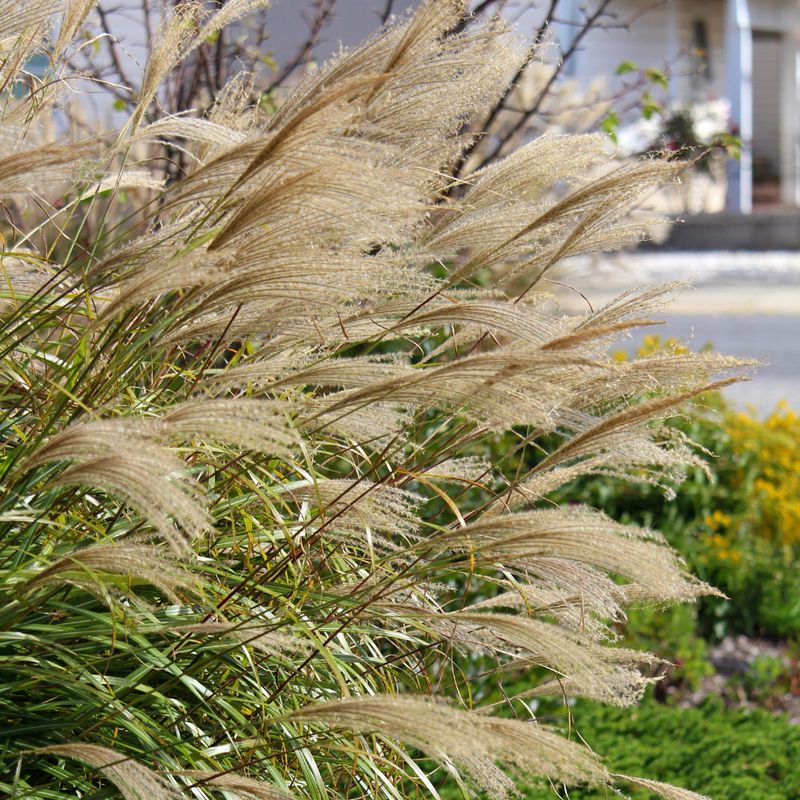
Movement, texture, and year-round interest come together in ornamental grasses.
While not all grasses are true classics, varieties like miscanthus, fountain grass, and blue fescue have been garden favorites for decades.
Their current popularity surge reflects a shift toward naturalistic, low-maintenance landscapes that look beautiful in all seasons, including winter when many other plants fade.
Oregon’s climate suits many ornamental grasses perfectly.
They handle our wet winters and dry summers, require minimal fertilizer, and rarely suffer from pests or diseases.
Most prefer full sun and well-drained soil, though some varieties tolerate partial shade.
Plant them in spring so they establish before winter, spacing according to their mature size.
The diversity among ornamental grasses is impressive.
Compact types like blue fescue stay under a foot tall and work well as edging or ground covers.
Medium grasses like fountain grass create attractive clumps three to four feet tall with showy flower plumes.
Tall varieties like miscanthus can reach six to eight feet, making dramatic screens or specimen plants.
Grasses shine in fall and winter when their foliage turns shades of gold, bronze, or burgundy, and their seed heads catch frost and snow.
They sway gracefully in breezes, adding movement and sound to the garden.
Maintenance is easy: just cut them back to a few inches in late winter before new growth emerges.
Many Oregon gardeners are now replacing water-hungry lawns with sweeping meadows of mixed grasses, creating beautiful, sustainable landscapes that celebrate our region’s natural beauty.