Follow These Tips For Growing A Perfect Rhubarb In Your Minnesota Garden
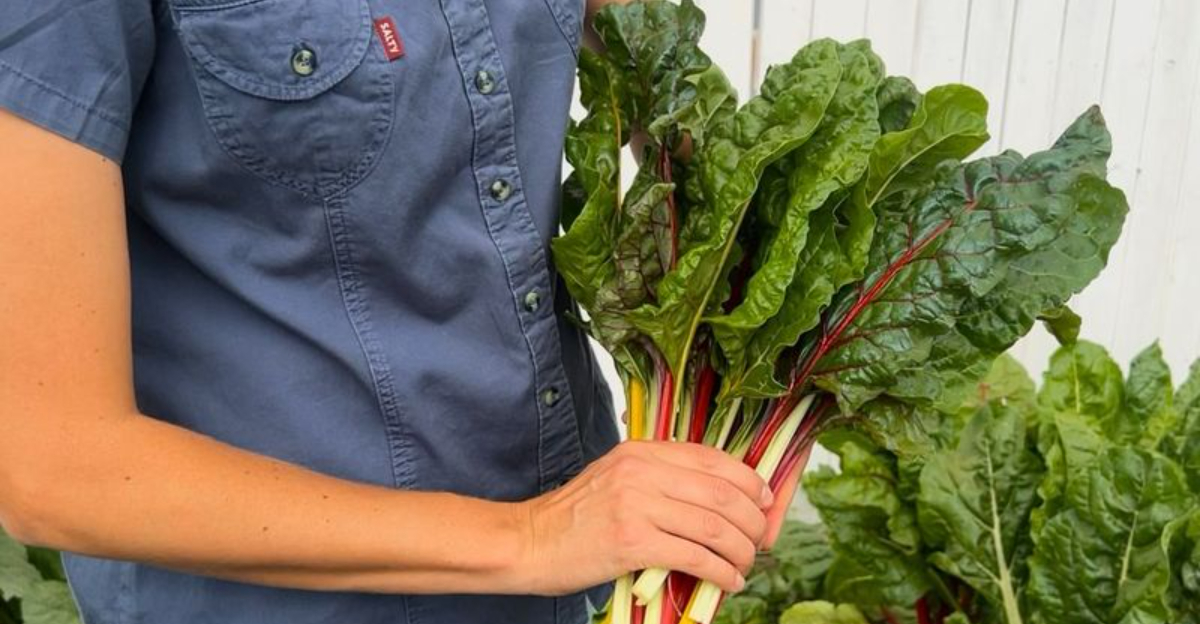
Rhubarb is one of those plants Minnesota gardeners love because it comes back year after year and thrives in cool weather. Still, growing perfect rhubarb doesn’t happen by accident.
Soil, timing, and patience all play a role in whether you get thin stalks or thick, flavorful harvests. Perfect rhubarb starts with understanding what it needs most.
Cold winters actually help rhubarb grow better, and Minnesota has exactly what it likes. A little attention early in the season makes a big difference later.
Sometimes the best harvests come from plants you leave alone more than you fuss over. Minnesota gardeners swear by rhubarb for good reason.
Healthy rhubarb plants reward patience with years of harvests. When grown right, rhubarb almost takes care of itself.
Follow these tips for growing perfect rhubarb in your Minnesota garden, and you’ll quickly see why this plant has such a loyal following.
1. Choose The Right Location With Full Sun Exposure
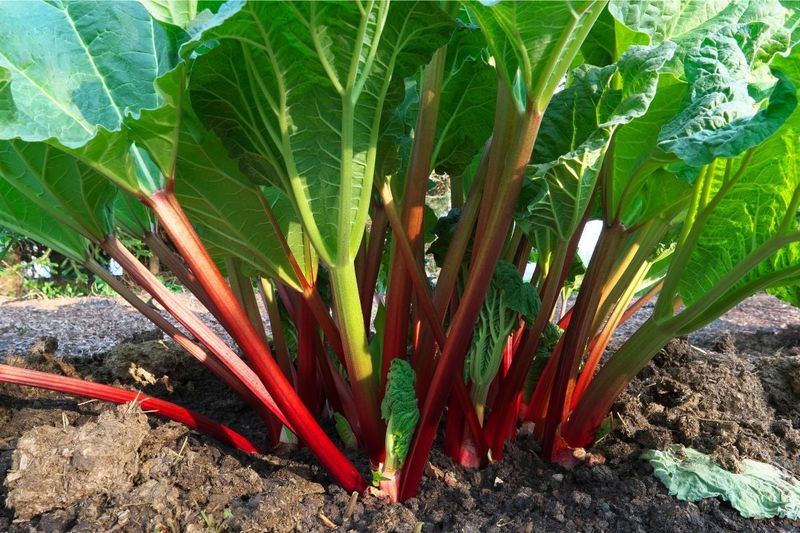
Sunlight makes all the difference when it comes to growing strong, productive rhubarb plants in Minnesota. Your rhubarb needs at least six to eight hours of direct sunlight each day to develop thick, robust stalks that are perfect for cooking.
While rhubarb can tolerate some shade, plants grown in shadier spots tend to produce thinner, weaker stalks that lack the vibrant color and tartness that make rhubarb so delicious.
Look for a spot in your garden that gets morning sun, which helps dry dew from the leaves and reduces disease problems. Afternoon sun is equally important for photosynthesis, which fuels the plant’s growth throughout the season.
Minnesota gardeners should avoid planting rhubarb near large trees or buildings that cast shadows during peak daylight hours.
Consider the long-term placement of your rhubarb, since these plants can live and produce for fifteen to twenty years in the same location.
Choose an area where the plant won’t be disturbed by annual tilling or garden renovations. A permanent bed along a fence line or in a dedicated perennial section works wonderfully.
Good air circulation around your rhubarb plants helps prevent fungal diseases that can sometimes affect Minnesota gardens during humid spring weather.
Space plants at least three to four feet apart to allow air to move freely between them. This spacing also gives each plant enough room to spread its large leaves without crowding neighbors.
Remember that rhubarb planted in optimal sunlight will establish faster and begin producing harvestable stalks sooner than plants in less ideal locations. Taking time to select the perfect sunny spot in your Minnesota garden sets the foundation for years of successful rhubarb harvests.
2. Prepare Rich, Well-Draining Soil Before Planting
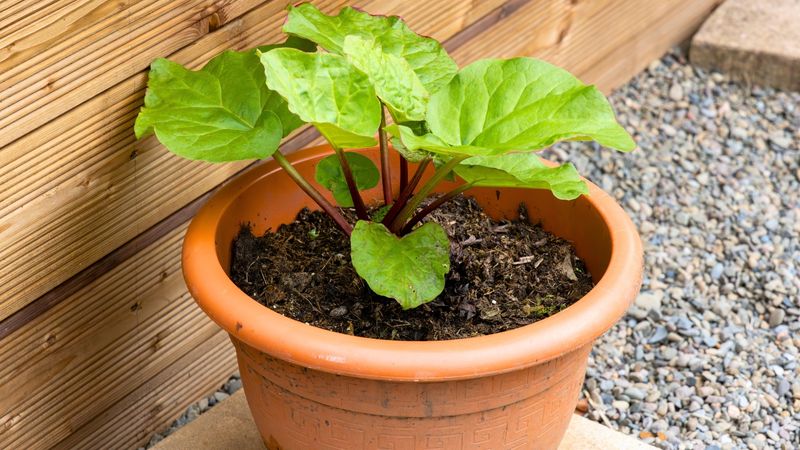
Soil preparation is absolutely critical for rhubarb success, especially in Minnesota where soil types vary widely across the state. Rhubarb plants are heavy feeders that need nutrient-rich soil to support their large leaves and thick stalks throughout the growing season.
Before planting, work plenty of organic matter into your garden bed to create the ideal growing environment.
Your Minnesota Garden Changes Every Week. Your Plan Should Too.
Gardening in Minnesota changes quickly throughout the season. Every Friday you’ll receive a simple weekly plan showing exactly what to plant, prune, fertilize, harvest, and protect so you never miss the right timing.
Compost is your best friend when preparing soil for rhubarb in Minnesota gardens. Mix in at least three to four inches of well-aged compost or rotted manure into the top twelve inches of soil.
This organic material improves soil structure, adds essential nutrients, and helps with moisture retention during dry spells.
Minnesota soils often tend toward clay, which can hold too much water and cause root problems for rhubarb. If your soil is heavy clay, add coarse sand or perlite along with the compost to improve drainage.
Rhubarb roots need oxygen and will struggle in waterlogged conditions, so proper drainage is non-negotiable.
Test your soil pH before planting, aiming for a slightly acidic to neutral range between 6.0 and 6.8. Minnesota garden centers and county extension offices offer affordable soil testing services that provide valuable information about your soil’s nutrient levels and pH. Adjust pH if needed using lime to raise it or sulfur to lower it.
Create a raised bed if your Minnesota garden has particularly poor drainage or heavy clay soil. Raised beds warm up faster in spring, drain better after heavy rains, and make it easier to control soil quality.
Even a bed raised just six to eight inches can make a significant difference in how well your rhubarb performs over the years.
3. Plant Crowns In Early Spring For Best Results
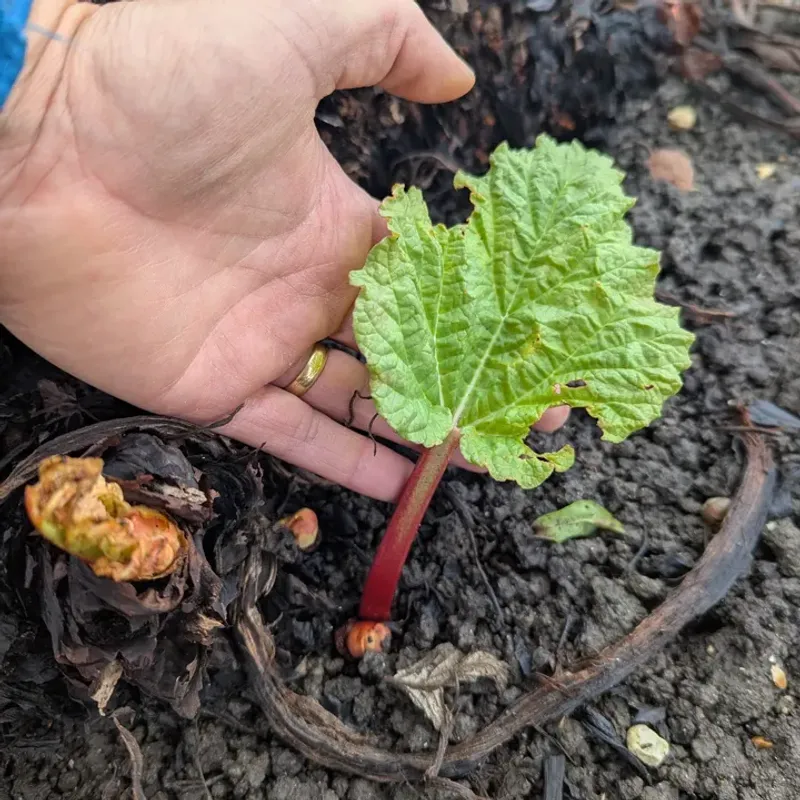
Timing your rhubarb planting correctly gives your plants the best chance to establish strong root systems before summer heat arrives.
In Minnesota, early spring is the ideal time to plant rhubarb crowns, typically as soon as the ground can be worked in late March or April. Planting at this time allows roots to settle in while temperatures are still cool and moisture is abundant.
Purchase healthy rhubarb crowns from local Minnesota nurseries or garden centers rather than starting from seed.
Crowns are divisions from mature plants that include roots and buds, giving you a head start of one to two years compared to seeds. Look for crowns with at least one or two strong buds and healthy, firm roots without soft spots or mold.
Dig planting holes that are about twelve inches deep and twelve inches wide, spacing multiple plants three to four feet apart. Place each crown in its hole so the buds are just below the soil surface, about one to two inches deep.
Planting too deep can delay emergence and weaken the plant, while planting too shallow may expose roots to temperature fluctuations.
Water thoroughly after planting to settle the soil around the roots and eliminate air pockets. Minnesota’s spring rains usually provide adequate moisture, but check your newly planted rhubarb weekly and water if the top few inches of soil become dry. Consistent moisture during the establishment period helps roots spread quickly.
Resist the temptation to harvest any stalks during the first growing season after planting. Your rhubarb needs this entire first year to focus energy on developing a strong root system that will support many years of production in your Minnesota garden.
Patience during this establishment phase pays off with healthier, more productive plants in subsequent years.
4. Water Consistently Throughout The Growing Season
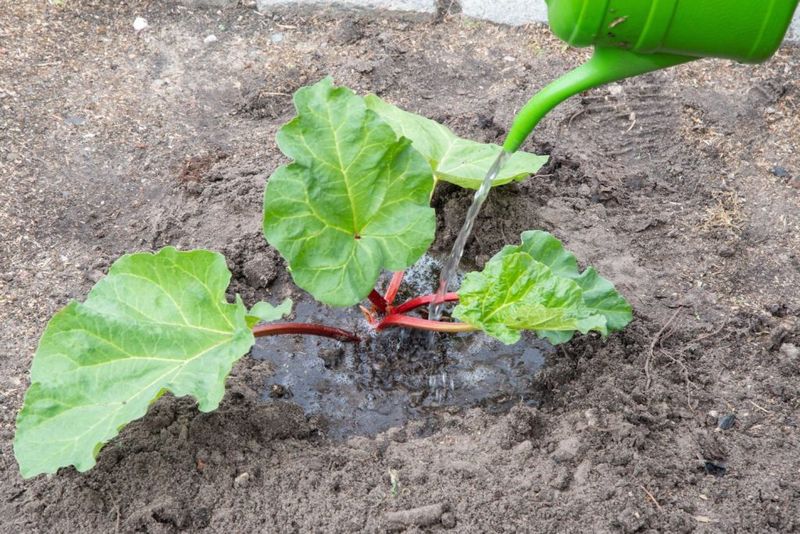
Proper watering keeps your Minnesota rhubarb plants healthy and productive from spring through fall. Rhubarb needs consistent moisture to produce those thick, juicy stalks that make the plant so valuable in the kitchen.
During the active growing season from April through June, aim to provide about one to two inches of water per week, either from rainfall or supplemental irrigation.
Check soil moisture regularly by sticking your finger two to three inches into the ground near your rhubarb plants. If the soil feels dry at this depth, it’s time to water deeply.
Shallow, frequent watering encourages shallow root growth, while deep, less frequent watering promotes strong, deep root systems that can better withstand Minnesota’s occasional dry spells.
Morning watering is best for rhubarb in Minnesota because it allows foliage to dry before evening, reducing the risk of fungal diseases. Use a soaker hose or drip irrigation to deliver water directly to the soil rather than wetting the leaves.
This method conserves water and keeps foliage dry, which is especially important during humid Minnesota summers.
Pay extra attention to watering during hot, dry periods in July and August when rhubarb plants can become stressed. Even though the harvest season has ended by midsummer, the plant continues to build energy reserves in its roots for next year’s growth.
Adequate water during this time ensures your rhubarb will come back strong the following spring.
Mulching around your rhubarb plants with two to three inches of organic material helps retain soil moisture and reduces watering frequency.
Shredded leaves, straw, or wood chips work well in Minnesota gardens and break down over time to add nutrients to the soil. Keep mulch a few inches away from the crown to prevent rot issues.
5. Fertilize Regularly To Encourage Strong Growth
Feeding your rhubarb plants properly ensures they have the nutrients needed to produce abundant, healthy stalks year after year in your Minnesota garden.
Rhubarb is a hungry plant that depletes soil nutrients quickly, so regular fertilization is essential for maintaining vigor and productivity.
A balanced approach to feeding will keep your plants strong without encouraging excessive leaf growth at the expense of stalk quality.
Apply a balanced fertilizer in early spring just as new growth emerges from the ground in Minnesota, typically in April.
Use a granular fertilizer with a ratio like 10-10-10 or a similar balanced formula, spreading it in a circle around each plant about six inches from the crown. Work the fertilizer lightly into the soil surface and water thoroughly to help nutrients reach the root zone.
Side-dress your rhubarb with additional fertilizer after the harvest period ends in early summer. This second feeding helps the plant rebuild energy reserves in its roots for the following year’s growth.
Organic options like well-composted manure or fish emulsion work wonderfully for this mid-season boost and improve soil health over time.
Minnesota gardeners can also use slow-release fertilizers that feed plants gradually throughout the growing season. These products reduce the risk of over-fertilizing and provide a steady supply of nutrients that matches the plant’s uptake patterns.
Follow package directions carefully, as rhubarb doesn’t need excessive nitrogen, which can lead to weak, floppy stalks.
Watch your plants for signs of nutrient deficiency, such as yellowing leaves or thin stalks, which indicate they need more food. Conversely, if your rhubarb produces enormous leaves but thin stalks, you may be over-fertilizing with nitrogen.
Adjust your feeding program based on how your plants respond, keeping in mind that Minnesota soil conditions vary and may require customized approaches for best results.
6. Remove Flower Stalks As Soon As They Appear
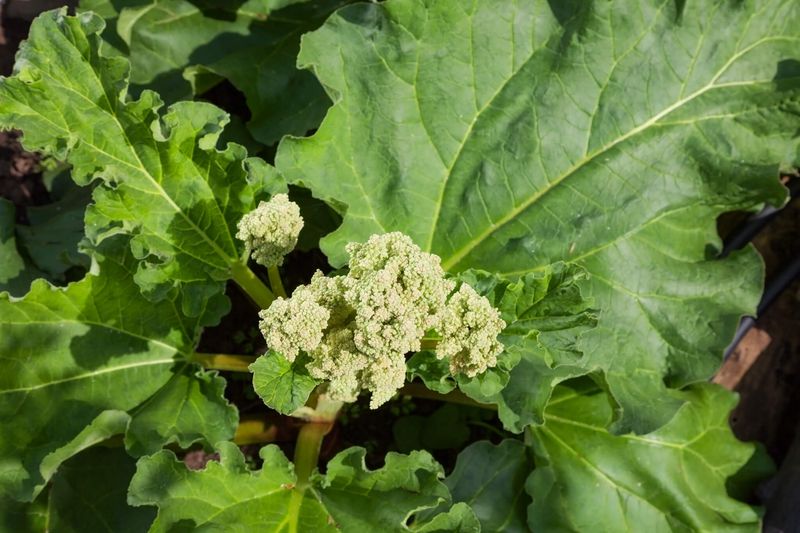
Flower stalk removal is one of those tasks that seems small but makes a huge difference in rhubarb productivity.
When your Minnesota rhubarb sends up thick, rounded flower stalks from the center of the plant, it’s diverting valuable energy away from producing the edible leaf stalks you want.
These flower stalks, which appear in late spring or early summer, should be removed immediately to keep your plant focused on stalk production.
Watch for flower stalks starting in May or June in Minnesota gardens, especially on older, well-established plants. The flower stalks look different from leaf stalks, being rounder, thicker, and topped with clusters of small white or greenish flowers.
Some gardeners find them attractive, but leaving them in place significantly reduces the quality and quantity of edible stalks.
Remove flower stalks by grasping them firmly at the base and pulling with a quick, twisting motion, just as you would harvest a leaf stalk.
Cut them off with a sharp knife if pulling seems difficult, making the cut as close to the base as possible. Don’t leave stubs that can rot and potentially introduce disease into your plant.
Some rhubarb varieties flower more readily than others, and environmental stress can trigger flowering as well. Hot weather, drought, or poor soil conditions may cause Minnesota rhubarb plants to bolt and send up flower stalks.
Addressing these underlying stressors while removing flower stalks helps keep your plants productive throughout the season.
Check your rhubarb plants weekly during the flowering period to catch and remove new flower stalks promptly. Even older plants that have been in your Minnesota garden for many years benefit from this attention.
Consistent flower stalk removal helps extend the harvest period and ensures your rhubarb puts maximum energy into producing the thick, tart stalks perfect for your favorite recipes.
7. Harvest Properly And Know When To Stop Picking
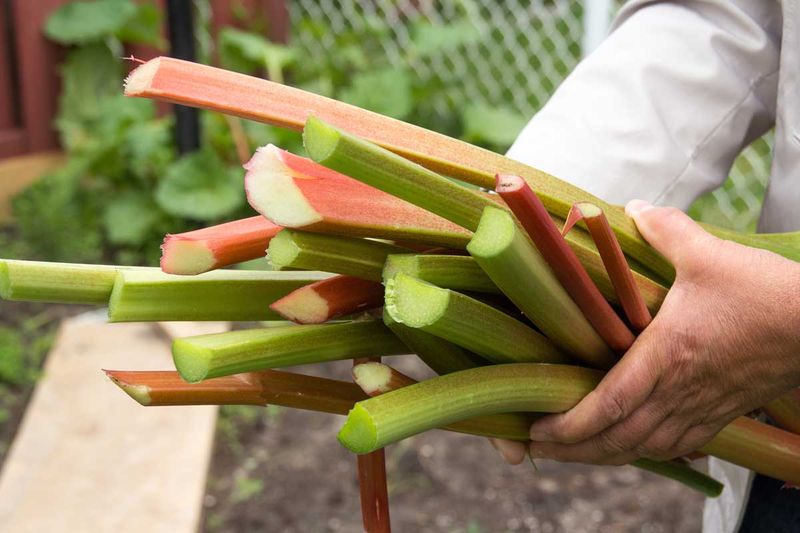
Knowing how and when to harvest rhubarb makes the difference between a plant that thrives for decades and one that weakens over time.
Minnesota gardeners can typically begin harvesting rhubarb in the second year after planting, once plants have had time to establish strong root systems.
Proper harvesting technique protects the crown and ensures continued production year after year.
Harvest rhubarb stalks by grasping them near the base and pulling firmly while twisting slightly, rather than cutting with a knife. This pulling method removes the entire stalk cleanly and prevents stub rot that can occur when stalks are cut.
Select stalks that are at least ten to twelve inches long and about one inch thick for the best quality and flavor.
The main harvest season in Minnesota runs from late April through June, when stalks are tender and at their peak quality.
Take only one-third to one-half of the stalks from each plant during any harvest session, always leaving several stalks to continue photosynthesis and feed the roots. Never strip a plant completely bare, as this weakens it significantly.
Stop harvesting by early July in Minnesota to give plants time to rebuild energy reserves before winter. Stalks that grow later in summer tend to be tougher and less flavorful anyway.
Allowing your rhubarb to grow undisturbed during late summer and fall helps it store carbohydrates in the roots that fuel next spring’s growth.
Remove and compost the leafy portions immediately after harvest, as rhubarb leaves contain oxalic acid and should never be eaten. Only the stalks are edible and safe for cooking.
Store freshly harvested stalks in the refrigerator for up to two weeks, or cut them into pieces and freeze for longer storage. Following these harvesting guidelines ensures your Minnesota rhubarb remains healthy and productive for many years to come.