Californians Should Never Plant These Trees Too Close To Their Homes
Planting a tree near your home can seem like a great idea, especially in California where shade and curb appeal matter so much. But not every tree is a good neighbor.
Some trees grow larger, spread wider, or develop aggressive roots that can quietly cause serious damage over time. Californians should never plant certain trees too close to their homes, and learning why can save thousands in future repairs.
A tree that looks harmless today can become a costly problem tomorrow. Not all trees belong close to a house, no matter how beautiful they look.
The wrong tree in the wrong place can turn into a long-term headache. Smart planting decisions protect both your home and your landscape.
Understanding which trees to keep at a safe distance helps homeowners plan better and avoid regret later. With the right knowledge, you can still enjoy trees while keeping your home safe, stable, and stress free for years to come.
1. Eucalyptus Trees
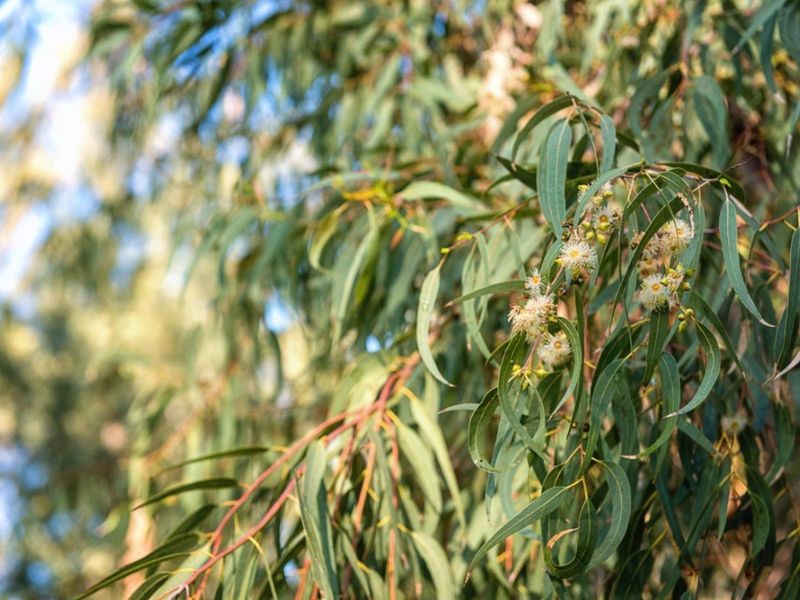
Towering over California neighborhoods, eucalyptus trees seem like a natural fit for the Golden State’s landscape. These Australian natives were introduced over a century ago and quickly spread throughout the region.
However, their rapid growth and massive size make them dangerous neighbors for residential structures. A mature eucalyptus can reach heights exceeding 100 feet, with root systems that spread just as aggressively underground.
The shallow root structure of eucalyptus trees creates multiple problems for California homeowners. These roots travel horizontally rather than deep into the soil, searching for water and nutrients.
They often invade sewer lines, crack foundations, and lift sidewalks and driveways. During California’s dry seasons, these thirsty trees can absorb hundreds of gallons of water daily, potentially destabilizing the soil around your home.
Another serious concern involves the tree’s tendency to shed bark and branches without warning. Eucalyptus trees drop large limbs even on calm days, a phenomenon arborists call sudden limb drop.
This unpredictable behavior puts roofs, vehicles, and people at risk. The oily leaves and bark also create significant fire hazards, particularly during California’s wildfire season.
Property insurance companies in California often raise premiums or deny coverage when eucalyptus trees stand too close to structures. The trees’ brittle wood breaks easily during windstorms, and their height makes them lightning attractors.
If you already have eucalyptus trees on your property, consult with a certified arborist about safe removal or maintenance practices. For new plantings, keep these giants at least 50 to 75 feet away from any building.
2. Weeping Willow Trees
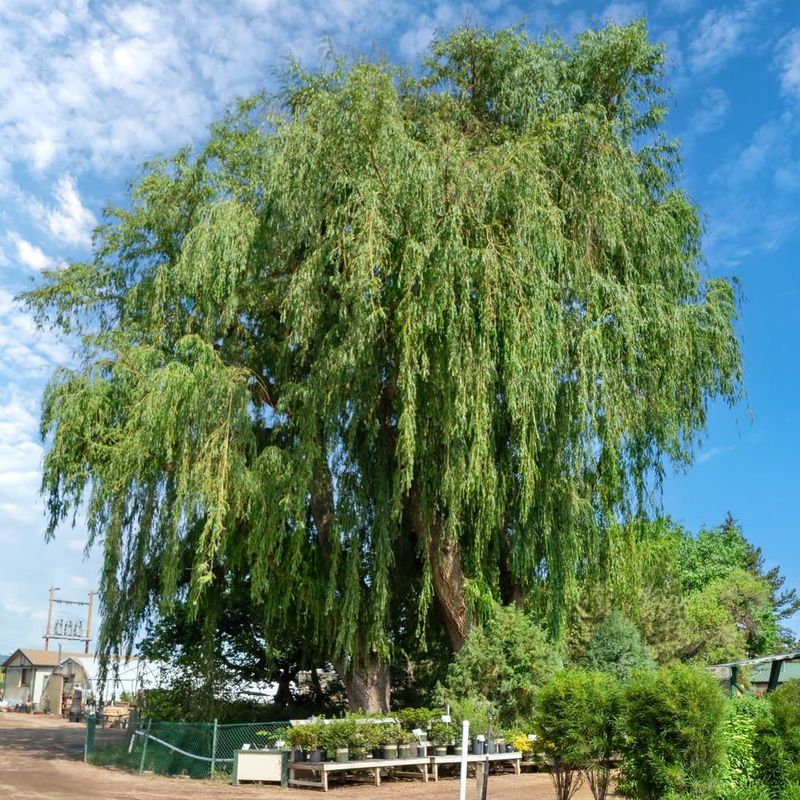
Graceful branches sweeping toward the ground give weeping willows their romantic appearance and poetic name. Many California homeowners fall in love with these beautiful trees at garden centers, imagining them adding elegance to their yards.
Unfortunately, that beauty comes with a hefty price tag when planted anywhere near homes or underground utilities.
Weeping willows possess some of the most aggressive root systems in the tree world. Their roots actively seek out water sources, making sewer lines, septic systems, and water pipes their primary targets.
Your California Garden Changes Every Week. Your Plan Should Too.
Gardening in California changes quickly throughout the season. Every Friday you’ll receive a simple weekly plan showing exactly what to plant, prune, fertilize, harvest, and protect so you never miss the right timing.
Once willow roots penetrate a pipe through even the tiniest crack, they rapidly multiply inside, creating massive blockages that require expensive repairs. California plumbers report that willow roots cause more pipe damage than almost any other tree species.
The water demands of weeping willows create additional concerns for California properties. A single mature tree can consume 200 gallons of water per day during hot weather.
This excessive thirst means the tree constantly sends roots searching in all directions, often extending two to three times beyond the canopy spread. Foundation walls, basement floors, and underground utilities all face potential invasion.
Weeping willows also grow incredibly fast, which sounds appealing until you realize this means weak wood that breaks easily. California’s occasional strong winds snap branches regularly, sending them crashing onto whatever sits below.
The trees have relatively short lifespans too, often declining after just 30 years. Professional landscapers recommend planting weeping willows at least 50 feet from structures, though even that distance might not provide complete protection from their wandering roots.
3. Silver Maple Trees
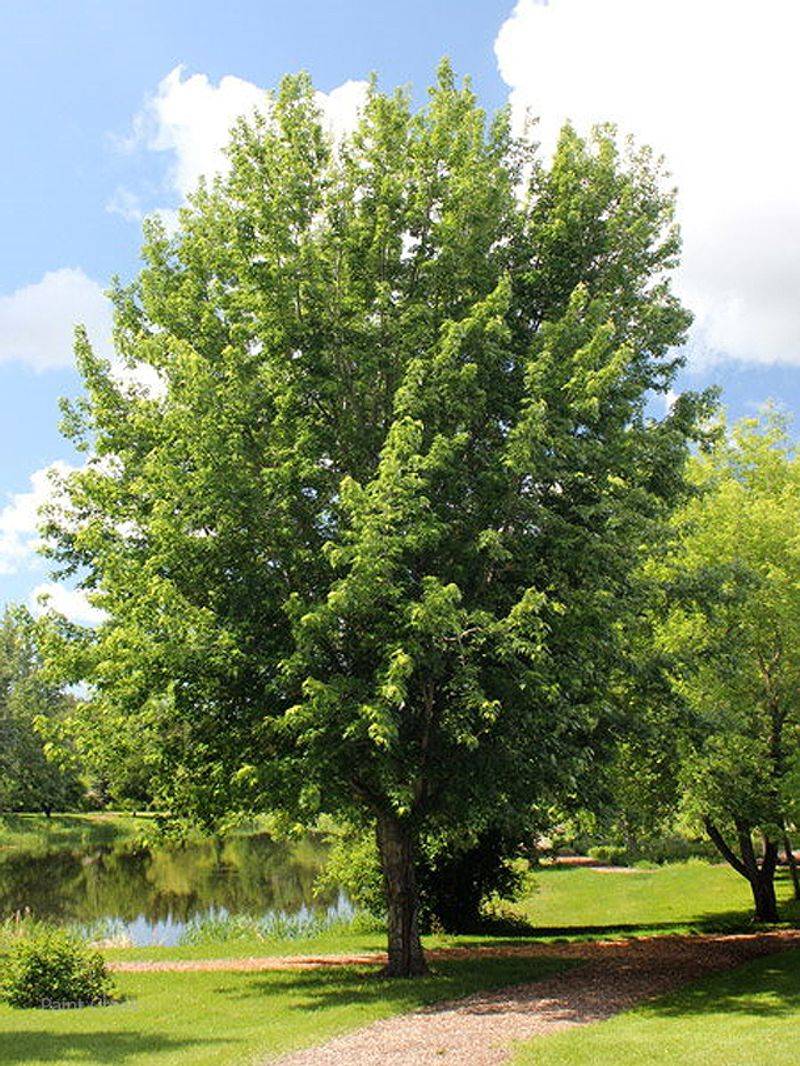
Fast-growing shade trees attract California homeowners looking for quick results in their landscapes. Silver maples deliver that rapid growth, often adding several feet of height each year.
Garden centers throughout California stock these popular trees because customers love their speedy development and attractive silvery leaf undersides. However, that quick growth creates wood so soft and weak that it becomes a liability rather than an asset.
The root system of silver maples grows just as aggressively as their branches, but unfortunately stays close to the surface. These shallow roots buckle sidewalks, crack driveways, and create tripping hazards across California yards.
They also compete directly with grass and other plants for water and nutrients, making it nearly impossible to maintain a healthy lawn beneath the canopy.
During California’s dry periods, these surface roots become even more visible as they push upward searching for moisture.
Structural weakness represents the biggest problem with silver maples planted near California homes. The soft wood splits easily, especially where branches attach to the main trunk.
Strong winds, heavy rain, or even the weight of the tree’s own limbs can cause major sections to break off without warning. These falling branches damage roofs, puncture siding, break windows, and destroy outdoor structures.
Silver maples also create maintenance headaches throughout the year. Their helicopter seeds cover everything in spring, while fallen leaves clog gutters in autumn.
The trees often develop multiple trunks that create weak points vulnerable to splitting. California arborists recommend keeping silver maples at least 40 feet from buildings, though many suggest avoiding them entirely in favor of stronger, more suitable species.
4. Bradford Pear Trees
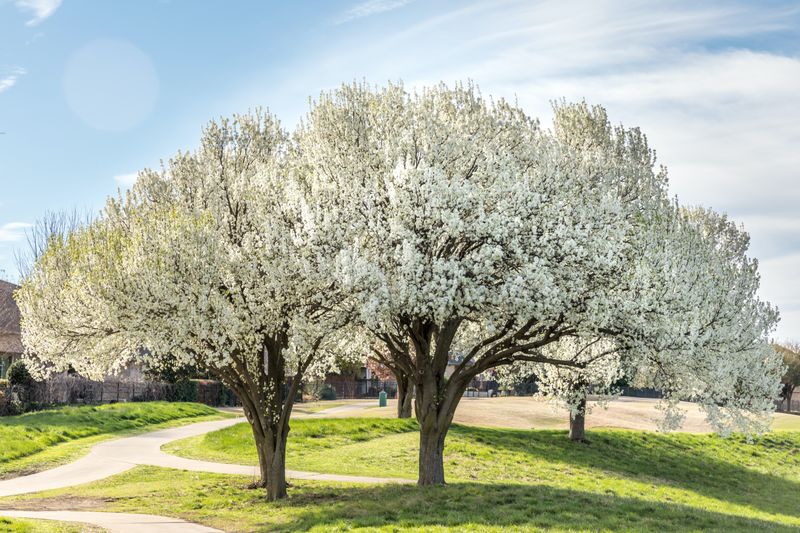
Spring brings clouds of white blossoms to Bradford pear trees, creating stunning displays that have made them landscaping favorites across California.
Developers and homeowners planted millions of these ornamental trees over the past few decades, drawn by their showy flowers and symmetrical shape.
Unfortunately, this tree’s popularity came before people understood its serious structural flaws and tendency toward catastrophic failure.
Every Bradford pear tree contains a built-in design flaw that eventually leads to disaster. The branches grow at narrow angles from the trunk, creating weak attachment points that cannot support the weight as the tree matures.
By the time a Bradford pear reaches 15 to 20 years old, major limbs start splitting from the trunk. California homeowners often discover this problem when half their tree suddenly crashes down during a storm or even on a calm day.
The tree’s rapid growth contributes to its structural problems. Bradford pears shoot upward quickly, developing dense canopies that catch wind like sails.
This combination of weak branch attachments and heavy canopies makes them extremely dangerous near California homes. When these trees fail, they often take down power lines, crush cars, and damage structures.
Insurance claims related to Bradford pear damage have become so common that some companies specifically ask about them.
Beyond structural concerns, Bradford pears have become invasive in many California areas. The trees cross-pollinate with other varieties, producing thorny offspring that spread aggressively.
Many California cities have stopped planting them in public spaces and encourage homeowners to remove existing specimens. If you must have this tree, plant it far from any structure, though most experts suggest choosing a different species entirely.
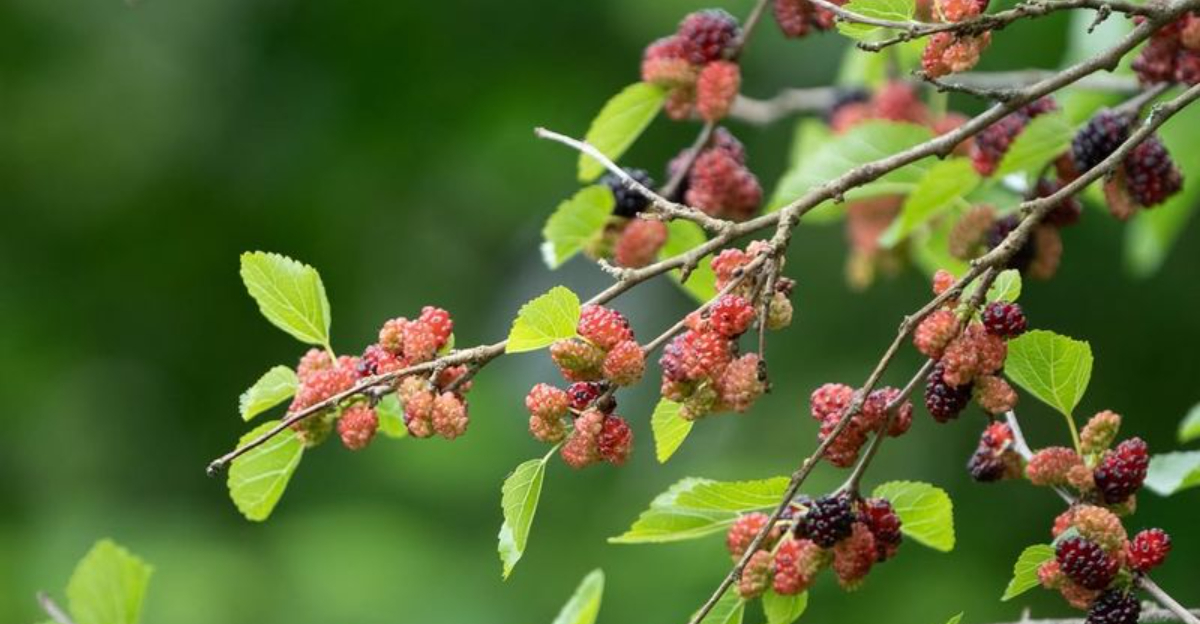
5. Mulberry Trees
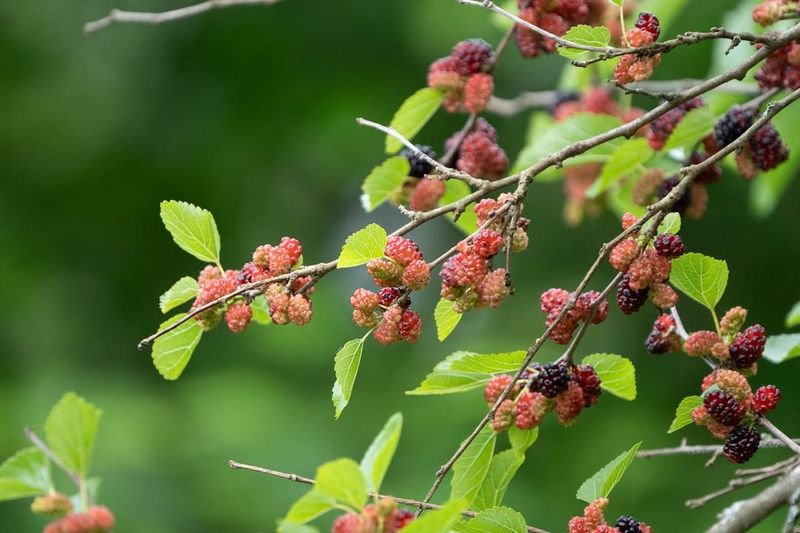
Sweet berries and fast-growing shade make mulberry trees tempting additions to California yards. Kids love climbing their sturdy branches and snacking on the fruit, while adults appreciate the quick shade these trees provide.
However, the same qualities that make mulberries attractive also make them problematic when planted too close to homes and structures.
Mulberry trees produce aggressive root systems that spread far beyond their canopies. These roots seek out water sources with determination, frequently invading irrigation lines, sewer pipes, and septic systems throughout California.
Once inside pipes, mulberry roots multiply rapidly, creating dense mats that block water flow and require expensive professional removal. The roots also lift concrete surfaces, crack foundations, and damage underground utilities.
The fruit that makes mulberries so appealing becomes a major nuisance near California homes. Ripe berries drop constantly throughout the summer, staining everything they touch.
Sidewalks, driveways, patios, and siding all end up covered with purple juice that attracts insects and creates slippery surfaces.
The mess extends beyond your property too, as birds eat the berries and then deposit the seeds everywhere, spreading purple stains across cars, outdoor furniture, and neighboring yards.
Mulberry trees also trigger allergies in many California residents. Their pollen ranks among the most allergenic of any tree species, causing severe reactions during spring.
Some California cities have actually banned planting male mulberry trees because of their pollen production. The trees grow quickly but often develop uneven shapes that require constant pruning.
Professional landscapers suggest keeping mulberries at least 35 feet from structures, though the mess and allergies might make other tree choices more practical for residential properties.
6. Monterey Pine Trees

Native to a small stretch of California’s central coast, Monterey pines grow naturally in just a few locations around Monterey Bay.
Despite their limited natural range, these fast-growing evergreens became popular throughout California for their quick growth and attractive appearance.
Homeowners plant them hoping for privacy screens and windbreaks, but these trees bring significant problems when placed too close to structures.
Monterey pines grow remarkably fast in California’s climate, sometimes adding three feet or more each year. This rapid growth produces weak wood that breaks easily under stress.
The trees commonly reach heights of 80 to 100 feet, creating massive targets for California’s winds. Their shallow root systems cannot adequately anchor such tall, heavy trees, making them prone to toppling during storms.
When a Monterey pine falls, its size ensures major damage to anything in its path.
Several diseases plague Monterey pines throughout California, particularly pitch canker fungus. This devastating disease causes branches to ooze sticky resin before withering and breaking off.
Infected trees become hazards as dry branches fall unpredictably. The disease spreads easily between trees, so one infected Monterey pine often leads to problems throughout the neighborhood.
California’s periodic droughts stress these trees further, making them more susceptible to diseases and pest infestations.
The trees also drop enormous quantities of needles, cones, and branches year-round. This constant debris clogs gutters, damages roofs, and creates fire hazards during California’s dry seasons.
Their dense canopies block sunlight completely, preventing grass and other plants from growing beneath them.
Many California communities have recognized the problems with Monterey pines and now discourage planting them. Keep these trees at least 60 feet from structures if you must have them.
7. Ash Trees
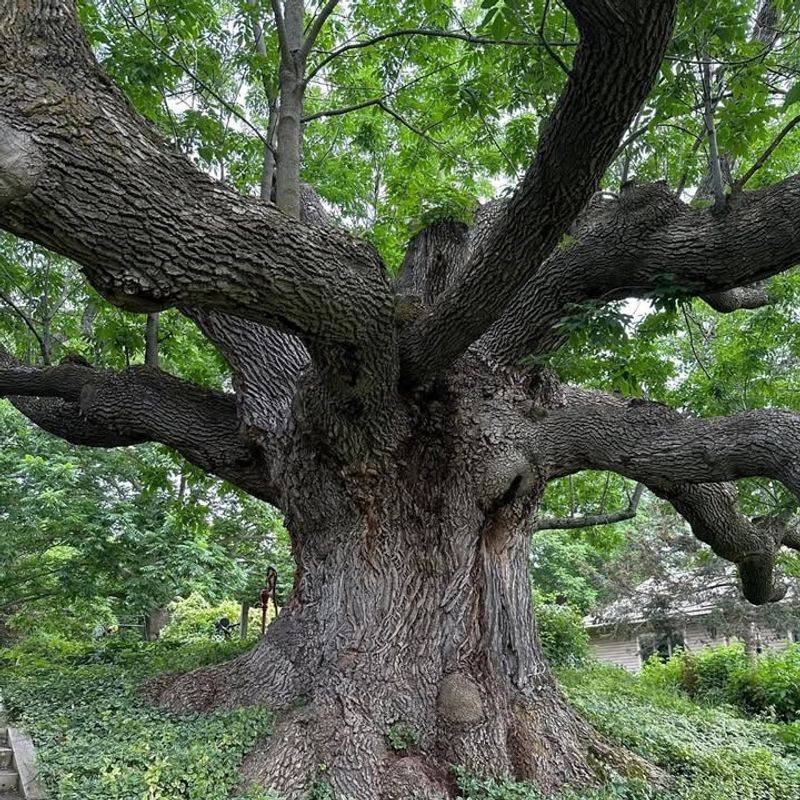
Ash trees once lined streets throughout California, prized for their graceful form and reliable shade. These deciduous trees seemed like perfect choices for residential landscapes, growing at moderate rates and developing attractive canopies.
However, several factors have transformed ash trees from desirable specimens into problematic choices for planting near California homes.
Root problems top the list of concerns with ash trees in California landscapes. Their roots grow aggressively in search of water, particularly during the state’s frequent dry periods.
These searching roots invade sewer lines, crack foundations, and damage underground utilities with surprising frequency. The roots also surface near the trunk, creating uneven ground that damages lawn equipment and creates tripping hazards.
California plumbers and foundation repair specialists regularly deal with damage caused by ash tree roots.
The emerald ash borer, a destructive invasive beetle, has devastated ash tree populations across North America. While California has implemented quarantines to slow its spread, the pest continues expanding its range.
Infested ash trees decline rapidly, developing dry branches that fall without warning. Property owners face difficult decisions about removing ash trees before they become hazards, especially when the trees stand close to homes where falling branches could cause serious damage.
Ash trees also suffer from various diseases common in California, including ash decline and verticillium wilt. Stressed trees drop branches unexpectedly and can fail catastrophically during storms.
Their wood, while harder than some species, still breaks under extreme conditions. The trees produce abundant seeds that sprout everywhere, creating maintenance issues throughout California yards.
Modern landscaping practices recommend keeping ash trees at least 40 feet from structures, though many experts suggest choosing more resilient species better suited to California’s changing climate and pest pressures.
8. Black Walnut Trees

Majestic and long-lived, black walnut trees produce valuable lumber and tasty nuts that make them seem like worthwhile additions to California properties. These impressive trees can live for centuries, developing massive trunks and spreading canopies that dominate landscapes.
However, their size and unique chemical defenses create serious problems when planted anywhere near homes or gardens.
Black walnut trees release a chemical called juglone through their roots, leaves, and nuts. This substance acts as a natural herbicide, preventing many other plants from growing beneath or near the tree.
California gardeners discover this problem when their flowers, vegetables, and shrubs start declining for no apparent reason. Tomatoes, peppers, azaleas, and dozens of other popular plants cannot tolerate juglone exposure.
The chemical remains in the soil for years even after the tree gets removed, limiting future landscaping options.
The root system of black walnuts spreads extensively, often reaching twice as far as the canopy width. These strong roots crack foundations, lift sidewalks, and invade underground utilities throughout California neighborhoods.
The nuts themselves become hazardous projectiles when they fall from heights of 50 feet or more, denting cars and injuring anyone unfortunate enough to be beneath the tree.
The hard shells persist in yards for months, creating ankle-twisting hazards and damaging lawn mower blades.
Black walnut trees also attract pests and develop fungal diseases common in California’s climate. Their large leaves create enormous cleanup tasks each autumn, while the staining husks around the nuts mark everything they touch.
The trees grow slowly at first but eventually reach heights exceeding 75 feet, with trunks several feet in diameter.
California arborists recommend planting black walnuts at least 50 to 80 feet from structures, though their juglone production makes them poor choices for most residential properties.