This Winter Disease Is Quietly Spreading Through Western Oregon Landscapes
Winter has a way of sneaking up on Oregon landscapes. One week everything looks fine, and the next, a favorite tree or shrub just seems… off.
A branch isn’t leafing out, bark looks a little sunken, or a section of the plant appears weaker than the rest. It’s easy to brush it off and assume the plant is still waking up, especially after a long, wet season.
But while we’re waiting for spring, something else can be quietly at work. Canker disease doesn’t announce itself with dramatic changes.
It moves slowly, often hiding in plain sight on trees and shrubs throughout Western Oregon. Our cool temperatures and constant moisture give it the kind of conditions it likes best, making winter the perfect time for it to spread without much attention.
That’s what makes canker tricky. By the time the weather warms up, the damage may already be done.
Branches struggle, growth becomes uneven, and plants that once seemed sturdy start to decline for no obvious reason.
If you’ve noticed odd patches, dead tips, or sections that just don’t recover, you’re not imagining things. Learning what canker looks like and why it shows up now can help you protect your landscape before small issues turn into lasting problems.
What Is Canker And Why It Matters In Western Oregon
Canker sounds mysterious, but it’s really just a wound on a tree or shrub that never quite heals properly. Picture a scrape on your knee that keeps getting infected instead of scabbing over.
Bacteria or fungi get into bark through tiny injuries, then start killing tissue underneath.
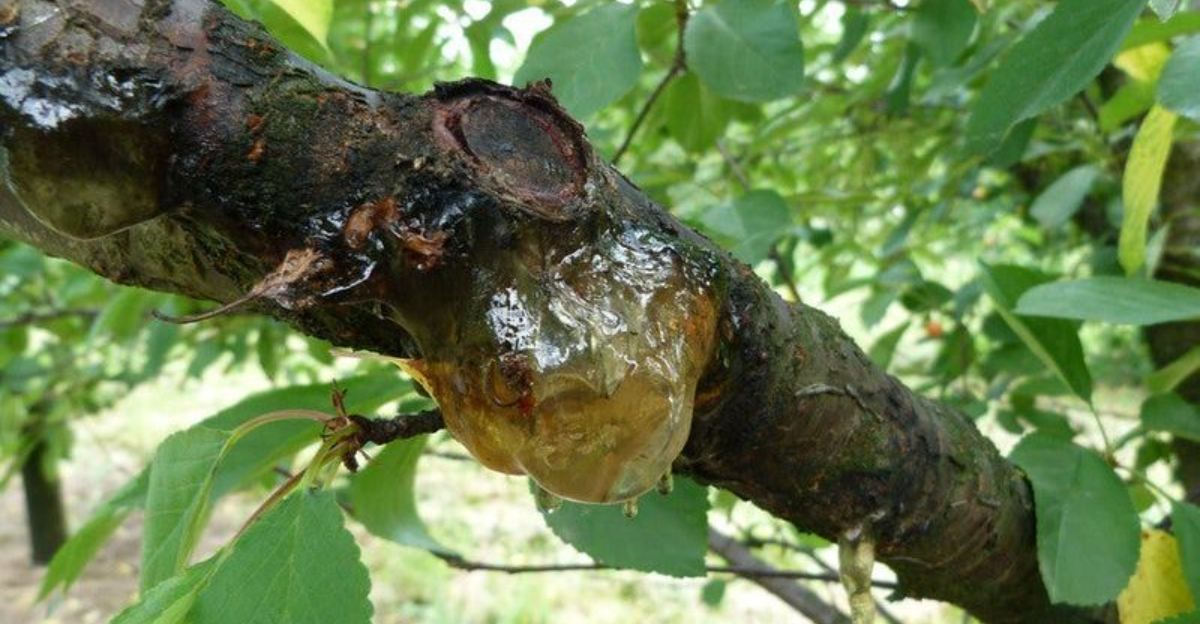
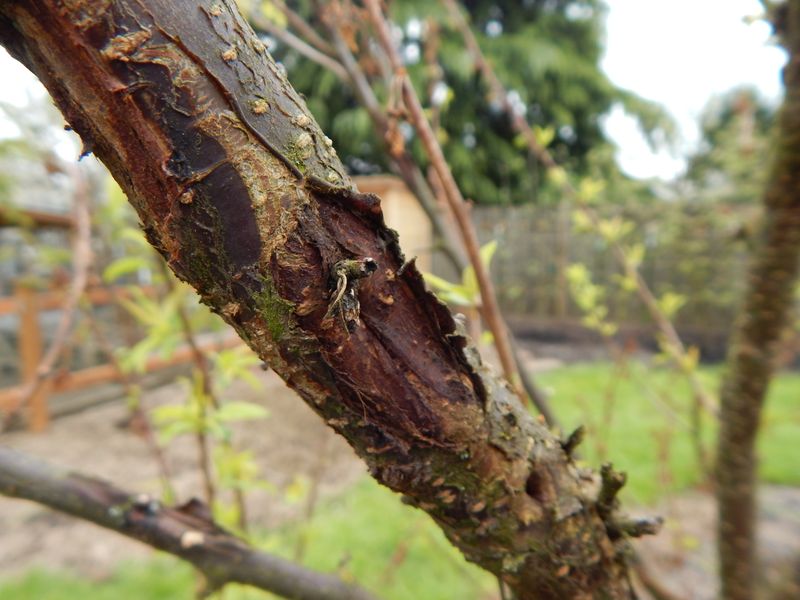
Your landscape plants face this all winter long here in Western Oregon. When branches develop sunken, discolored areas that ooze sticky sap, you’re looking at canker at work.
The damaged bark can’t transport water and nutrients properly anymore, which weakens everything above that spot.
Oregon’s mild, wet winters create perfect conditions for canker pathogens to spread and multiply. Unlike eastern states where hard freezes knock back many diseases, our temperatures hover in that sweet spot where bacteria stay active.
Rain splashes spores from infected branches to healthy ones, moving the problem around your yard.
Ignoring canker means watching branches die back slowly, year after year. Eventually, whole trees can decline or become so structurally unsound they’re dangerous.
Catching it early and understanding how it works gives you real power to protect your investment in your landscape.
How Bacterial Canker Spreads In Rainy, Cool Climates
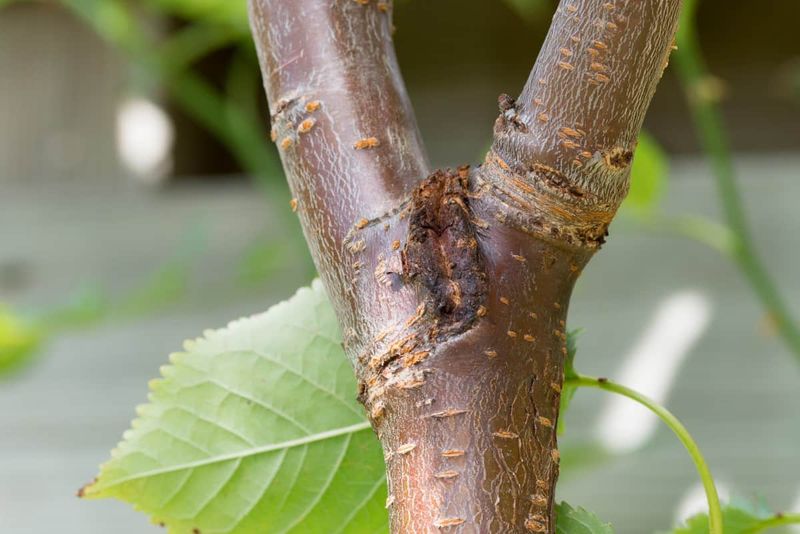
Bacterial canker loves our weather here. Every rainstorm becomes a delivery system, carrying millions of bacteria from sick branches to healthy ones throughout your garden.
Wind-driven rain hits infected areas, picks up bacterial cells, then deposits them on fresh wounds elsewhere.
Pruning cuts, frost cracks, leaf scars where leaves dropped in fall, even tiny insect feeding damage all serve as entry points. Once inside, bacteria multiply rapidly in temperatures between 40 and 60 degrees Fahrenheit.
Your Oregon Garden Changes Every Week. Your Plan Should Too.
Gardening in Oregon changes quickly throughout the season. Every Friday you’ll receive a simple weekly plan showing exactly what to plant, prune, fertilize, harvest, and protect so you never miss the right timing.
That’s basically November through March in the Willamette Valley and coastal areas.
Your pruning tools can spread it too. Cut through an infected branch, then move to a healthy tree without cleaning your shears, and you’ve just hand-delivered the problem.
Rain keeps surfaces wet for hours or days, giving bacteria plenty of time to swim into openings and establish infections.
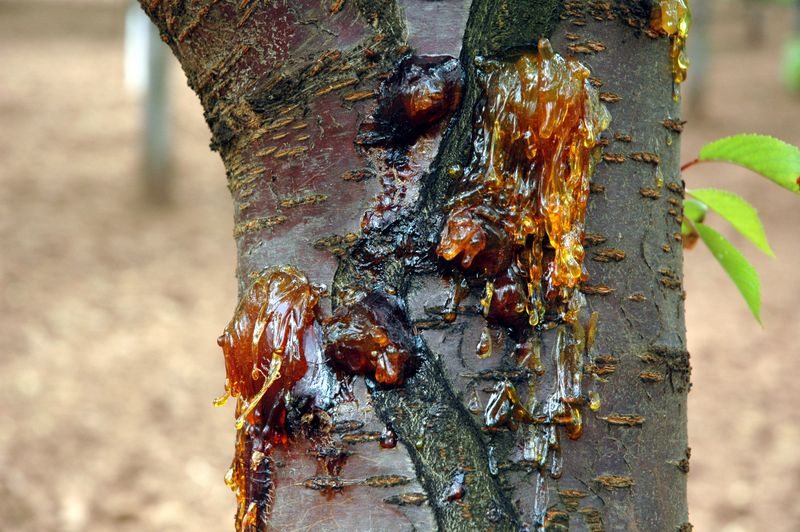
Stone fruits like flowering cherries and plums are especially vulnerable, but bacterial canker also attacks poplars, willows, and birches throughout Western Oregon. Once established, infected trees keep producing bacteria that ooze out in spring, creating sticky, amber droplets that look almost like tree sap but are actually teeming with pathogens ready to spread further.
Common Trees And Shrubs Hit Hardest By Canker

Flowering cherry trees are probably the biggest victims in Western Oregon landscapes. Drive through any older Portland neighborhood in winter and you’ll spot them: beautiful trees with dead branches and dark, sunken areas on their trunks.
Bacterial canker absolutely loves ornamental cherries, especially cultivars like ‘Kwanzan’ and ‘Yoshino.’
Plum trees, both fruiting and ornamental varieties, face similar struggles. If you’ve planted a purple-leaf plum for its gorgeous foliage, watch it carefully during winter months.
Stone fruits as a group share vulnerability to the same bacterial canker strains.
Dogwoods, both native and ornamental types, develop their own canker problems here. Fungal cankers attack these beloved understory trees, causing branch dieback that gardeners often mistake for drought stress or winter burn.
Willows and poplars growing near streams or in wet areas get hit hard too, with Cytospora canker being particularly common.
Even tough landscape plants aren’t immune. Rhododendrons can develop Phytophthora canker in our soggy soils, while roses sometimes show canker at the base of canes.
Fruit trees including apples, pears, and cherries all face canker threats. Knowing which plants in your yard are most at risk helps you watch them more carefully and catch problems early.
Early Signs: What to Watch For Before Symptoms Worsen
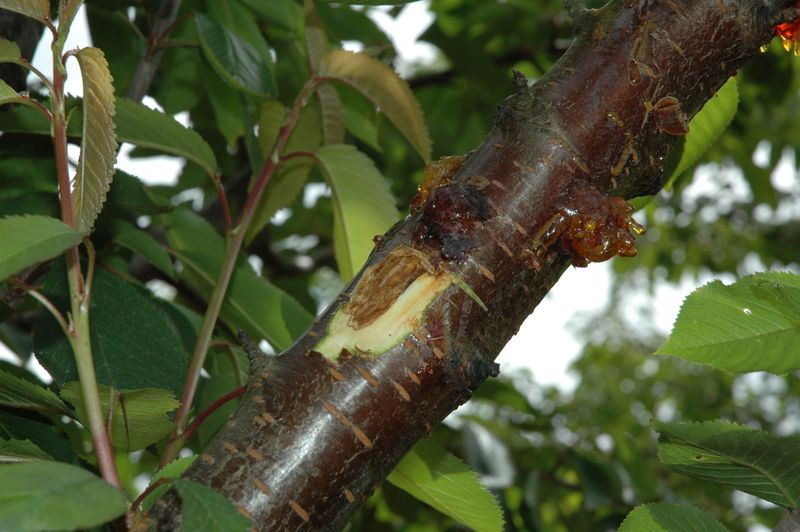
Sunken, darker patches on bark are your first clue something’s wrong. Walk around your trees on a dry winter day and run your hand gently along branches and trunks.
Healthy bark feels relatively smooth and uniform, but canker creates depressions that your fingers can detect before your eyes notice the discoloration.
Gumming or oozing is another telltale sign, especially on stone fruits. You’ll see amber, reddish, or dark sticky substances seeping from cracks in the bark.
This gum might harden into crusty deposits that look almost like caramel stuck to the tree.
Branch dieback often starts at the tips and works backward. Twigs that should be supple and alive instead snap off easily and show brown, dead tissue inside when you break them open.
Dead branches on an otherwise living tree strongly suggest canker somewhere along that branch’s pathway.
Leaves that emerge smaller, yellower, or sparser than normal in spring often indicate canker damage from the previous winter. The infection disrupts nutrient and water flow, so foliage above the canker struggles.
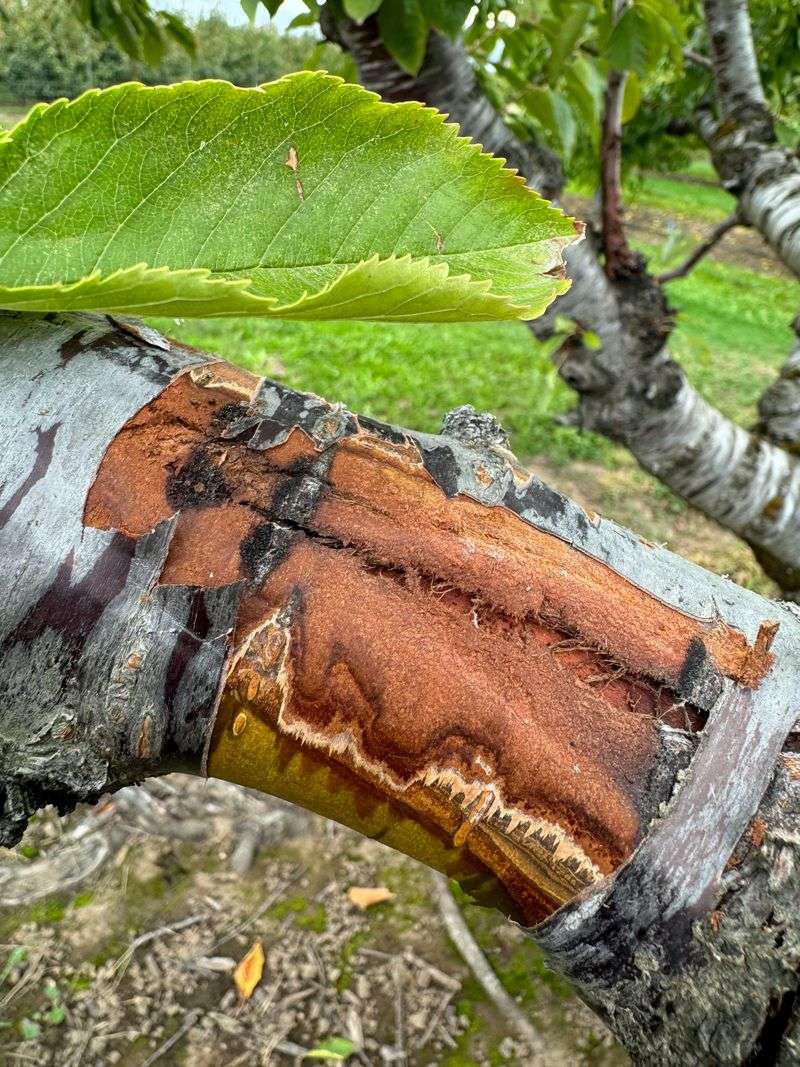
Cracks in bark, especially vertical splits, can signal that tissue underneath is dying and pulling apart. Catching any of these early signs means you can prune out problems before they spread further down the branch or into the trunk.
Why Western Oregon Weather Makes It Worse
Our climate is basically a canker incubator. Western Oregon doesn’t get the deep freezes that kill off bacteria and fungal spores in colder regions.
Instead, we hover in that 35 to 55 degree range all winter, which keeps pathogens active and ready to infect.
Rain is the other major factor. We don’t just get occasional showers; we get weeks of steady drizzle and periodic heavy downpours from November through April.
Every raindrop that hits an infected area can pick up thousands of bacterial cells or fungal spores and carry them to new locations.
High humidity between rain events keeps bark surfaces moist, which bacteria need to move and enter wounds. Even on days without rain, morning fog and mist provide enough moisture for infection.
Trees never really dry out during our winters, so pathogens always have the wet conditions they require.
Wind compounds the problem by creating small wounds in bark and branches. Storm systems coming off the Pacific Ocean bring strong winds that cause branches to rub together, crack, or break partially.
Each injury is a potential infection site. Our weather also stresses trees through waterlogged soils and limited sunlight, weakening their natural defenses right when they need them most to fight off canker diseases.
Simple Garden Habits That Can Help Slow The Spread
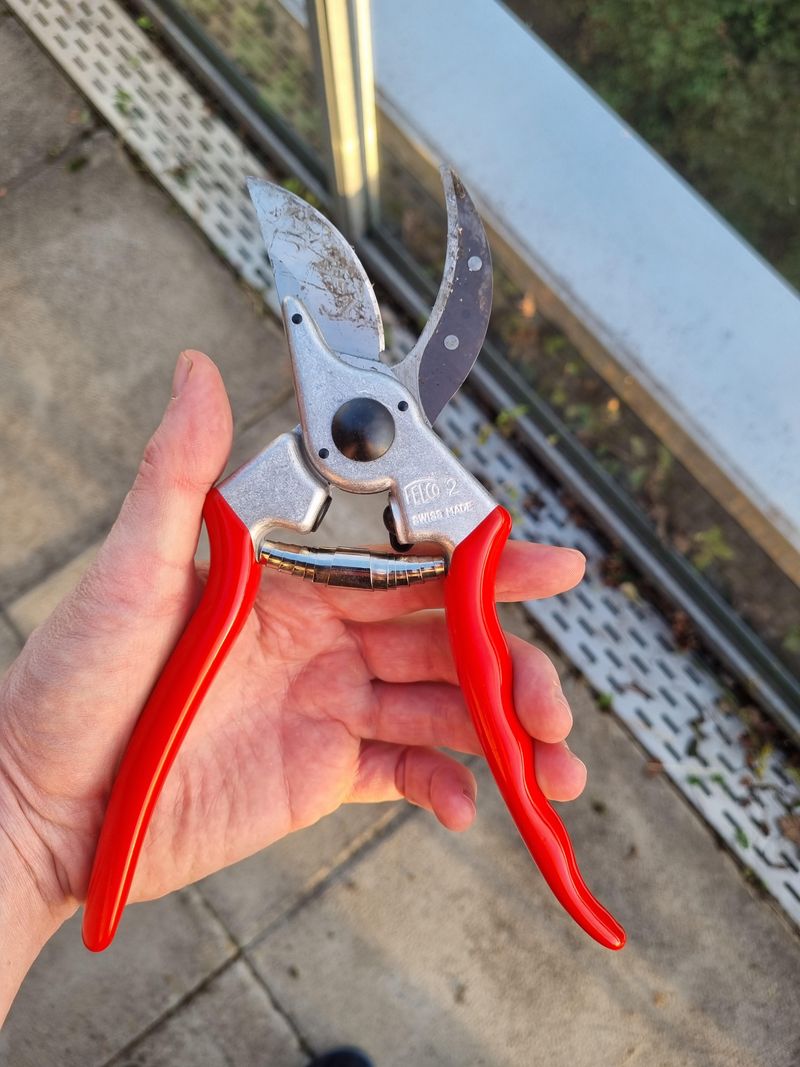
Sanitizing your pruning tools between cuts is the single most effective thing you can do. Keep a small container of 70% rubbing alcohol or a 10% bleach solution near you when pruning.
Dip or wipe your shear blades after every cut on a suspect branch, and always between different trees.
Timing your pruning correctly matters tremendously here. Avoid pruning susceptible trees like cherries and plums during our wet season if possible.
Late summer, when conditions are dry and trees are actively growing, allows wounds to seal faster. If you must remove dead or damaged branches in winter, do it during a dry spell and make clean cuts just outside the branch collar.
Improving air circulation around trees helps bark dry out faster after rain. Thin out crossing branches and remove lower limbs that trap moisture.
Rake up and dispose of fallen leaves and twigs from around infected trees, since these can harbor pathogens that splash back up during rain.
Avoid overhead watering if you irrigate in winter, and don’t work around trees when foliage and bark are wet. Walking through wet gardens spreads diseases on your boots and tools.
Feed your trees appropriately so they’re vigorous but not overly lush, since soft, fast growth is more susceptible to infection. Mulch properly to prevent soil splash but keep mulch away from trunks to allow bark to breathe.
When To Call A Professional Or County Extension
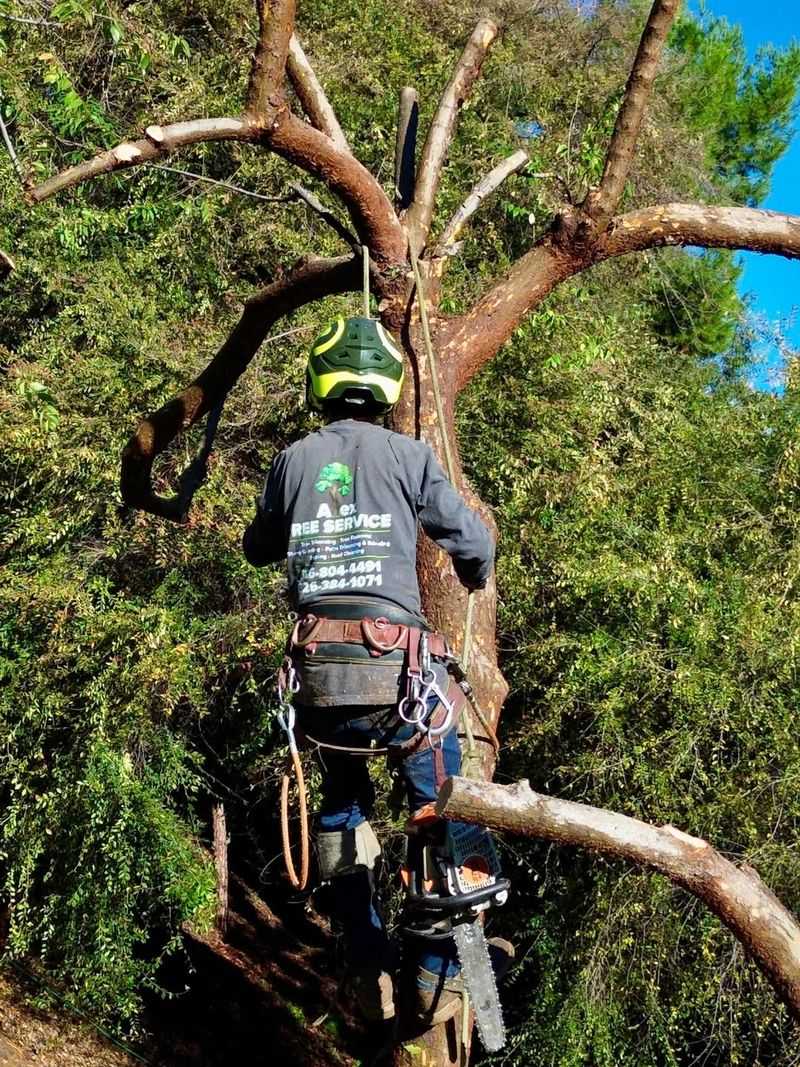
Some situations are beyond typical homeowner skills or comfort levels. If canker appears on the main trunk of a large tree, especially below the first branches, you’re dealing with a structural threat.
Trunk cankers can girdle the entire tree or create weak points that fail during windstorms, potentially causing property damage or injury.
Large trees near houses, power lines, or play areas need professional assessment when showing canker symptoms. Certified arborists have training to evaluate structural integrity and can determine whether a tree is salvageable or has become hazardous.
They also have equipment to safely remove large branches or entire trees if necessary.
Your local OSU Extension office is an incredible free resource that many Oregon gardeners underutilize. Extension Master Gardeners can help you identify diseases, recommend management strategies specific to your area, and connect you with research-based information.
They offer plant clinics where you can bring samples for diagnosis.
If you’re seeing canker spread rapidly through multiple trees or you’re unsure what’s causing dieback, Extension can provide answers. When you’ve tried management techniques but problems persist, professional help can identify whether you’re dealing with canker, root disease, or environmental stress.
Some situations, like treating high-value specimen trees, might warrant fungicide applications that require professional licensing. Don’t hesitate to reach out when you’re in over your head or just want expert confirmation before taking action.
Preparing Your Trees And Shrubs For A Healthier Spring
As winter transitions toward spring, shift your focus toward helping your landscape recover and resist future infections. Start by doing a thorough inspection of all your trees and shrubs on a dry day in late February or early March.
Look for any branches that died over winter and mark them with bright flagging tape so you remember to prune them out once conditions dry up.
Plan your spring pruning carefully. Wait until your area has had several days without rain and the forecast looks dry for at least a few days afterward.
Make clean cuts with sharp, sanitized tools, and prune back to healthy wood where the interior tissue is white or green, not brown.
Feed your trees appropriately as growth begins. A balanced, slow-release fertilizer helps them put energy into sealing wounds and producing vigorous new growth.
Avoid high-nitrogen fertilizers that push excessive soft growth, which is more disease-prone. Check soil moisture regularly as spring rains taper off, ensuring trees aren’t stressed by sudden dry spells.
Consider your landscape design going forward. If you’ve lost trees to canker repeatedly, think about replacing them with more resistant species.
Native trees like Oregon white oak, bigleaf maple, and Douglas fir generally handle our climate better than many ornamental imports. Building long-term landscape health means choosing plants suited to our wet winters and learning to work with Oregon’s unique conditions rather than against them.