These Designer-Approved Trees And Shrub Bring Year-Round Beauty In North Carolina
If you live in North Carolina, you don’t have to settle for a yard that only looks good in spring and summer. With the right trees and shrubs, your landscape can stay beautiful all year long.
Some plants never take a season off. Your yard can look professionally designed every month of the year.
Imagine stepping outside and always seeing color, texture, or structure, even in winter. No more dull seasons. No more bare-looking spaces. Year-round beauty is closer than you think.
Designer-approved trees and shrubs are chosen for more than just short blooms. They offer strong shape, lasting color, and interest through changing seasons.
From evergreen backdrops to bold bark and fall foliage, these plants keep your garden looking fresh and inviting. Once you add them to your landscape, you’ll enjoy curb appeal that doesn’t fade when the weather changes.
1. Southern Magnolia
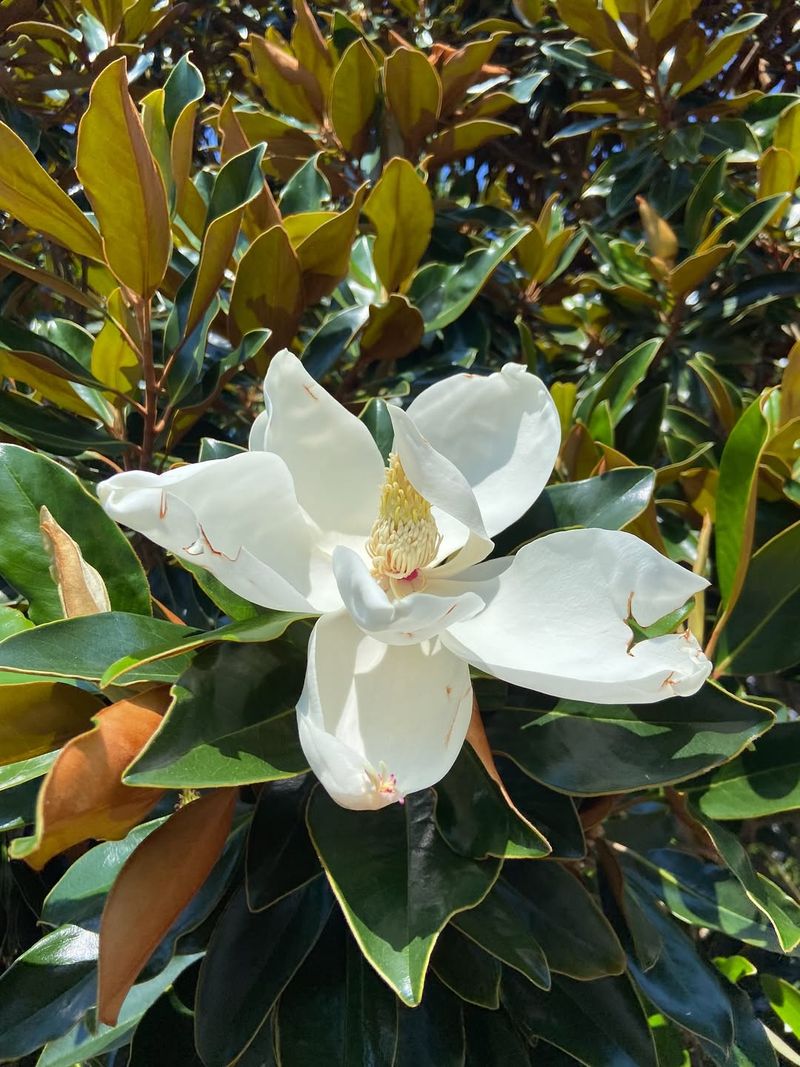
Glossy evergreen leaves and fragrant white blooms make this tree a signature element in North Carolina landscapes. Southern Magnolia stands as a living monument to classic Southern charm, offering dense foliage that stays green even during winter months.
The large, creamy flowers appear in late spring and early summer, filling the air with a sweet, lemony scent that draws admirers from across the yard.
This tree grows steadily, eventually reaching impressive heights that provide excellent shade and privacy screening. The leaves themselves are a work of art, with dark green tops and rusty-brown undersides that rustle beautifully in the breeze.
Landscape designers love how this magnolia creates a formal, elegant backdrop for other plantings while standing strong as a focal point on its own.
North Carolina’s climate suits this tree perfectly, as it thrives in the state’s humid summers and mild winters. Once established, it tolerates drought reasonably well and resists most pests and diseases.
The thick canopy offers shelter for birds, while the fallen leaves create a natural mulch that suppresses weeds.
Homeowners appreciate that this tree requires little maintenance beyond occasional pruning to shape its form. The flowers give way to cone-like seed pods that add winter interest, and wildlife often visits to feed on the seeds inside.
Whether planted as a single specimen or in rows along a driveway, Southern Magnolia brings timeless beauty that enhances property value and curb appeal throughout every season in North Carolina gardens.
2. American Holly
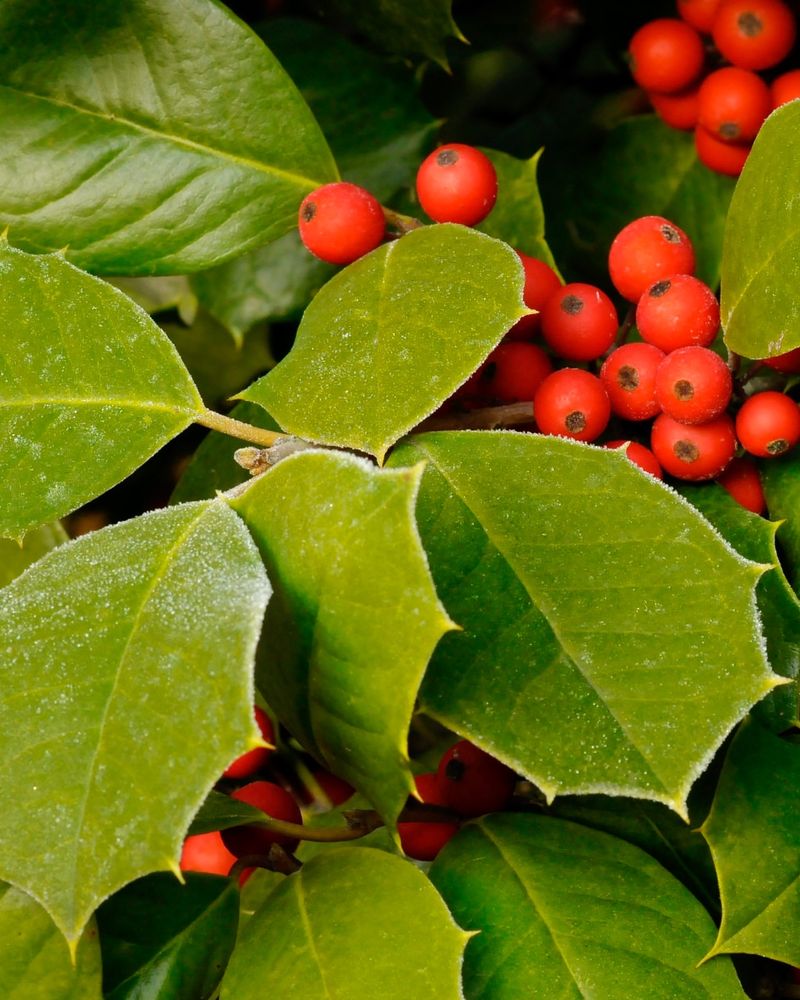
Bright red berries against spiny evergreen foliage create a holiday-card scene that lasts well beyond December. American Holly delivers that festive look naturally, without any decorating required.
This native tree adapts beautifully to North Carolina conditions, thriving in both coastal and piedmont regions with equal success.
The dense, pyramidal shape makes it ideal for privacy hedges or as a striking standalone specimen. Female trees produce the famous red berries that birds adore, providing food when other sources become scarce during colder months.
Male trees must be planted nearby for pollination, but the reward is a spectacular berry display that brightens gray winter days.
Designers value American Holly for its versatility and toughness. It handles pruning well, allowing for formal shaping or natural growth depending on your landscape style.
Your North Carolina Garden Changes Every Week. Your Plan Should Too.
Gardening in North Carolina changes quickly throughout the season. Every Friday you’ll receive a simple weekly plan showing exactly what to plant, prune, fertilize, harvest, and protect so you never miss the right timing.
The glossy leaves reflect sunlight beautifully, adding sparkle to shaded areas where other plants might look dull.
This tree grows at a moderate pace, giving you time to watch it develop character and presence in your garden.
North Carolina gardeners find it remarkably low-maintenance once roots are established. It tolerates a range of soil types and stands up to wind and salt spray near coastal areas.
The wildlife benefits extend beyond birds, as the dense branches offer nesting sites and shelter from predators.
American Holly connects your garden to the natural ecosystem while maintaining a polished, designed appearance that looks intentional and refined throughout the year.
3. Camellia
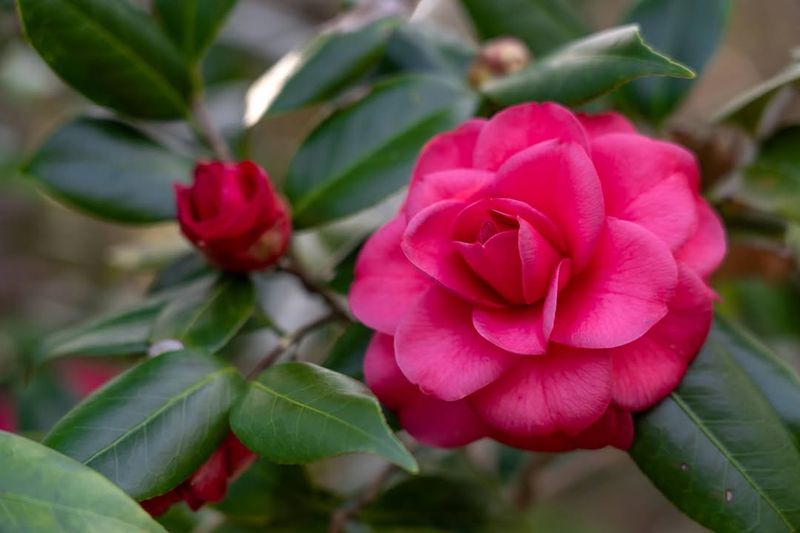
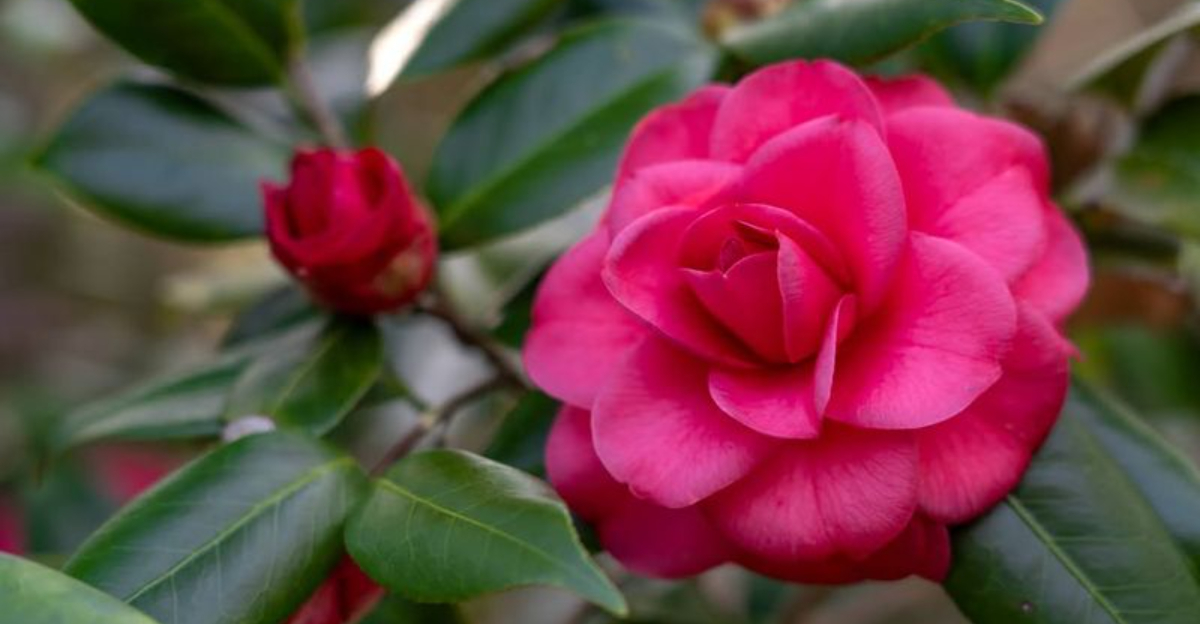
When winter strips most gardens bare, Camellia bursts into bloom with flowers that rival roses in beauty and complexity.
These shrubs defy the cold, producing stunning blossoms in shades of pink, red, white, and even variegated patterns during the months when color is most precious.
North Carolina’s climate provides the perfect conditions for these Asian beauties to thrive and show off their best qualities.
The dark, glossy foliage remains attractive throughout summer and fall, serving as a lush backdrop for other seasonal plants. Come winter, the flower show begins, with some varieties blooming as early as November and others continuing into April.
Each blossom unfolds with layers of petals arranged in perfect symmetry, creating living sculptures that transform bare winter branches.
Landscape designers position Camellias in partially shaded spots where their blooms won’t get damaged by harsh afternoon sun. They work beautifully under tall pines or along the north side of buildings, filling spaces that challenge other flowering shrubs.
The plants grow slowly but steadily, forming dense mounds that need little pruning to maintain their shape.
North Carolina gardeners treasure Camellias for their reliability and long lifespan. Established plants can bloom for decades, becoming family heirlooms that mark the passage of years.
They prefer acidic soil, which is naturally abundant in many parts of the state, making them easier to grow than in regions with alkaline conditions.
The combination of evergreen foliage and winter flowers makes Camellia an essential element in any year-round garden design across North Carolina.
4. Oakleaf Hydrangea
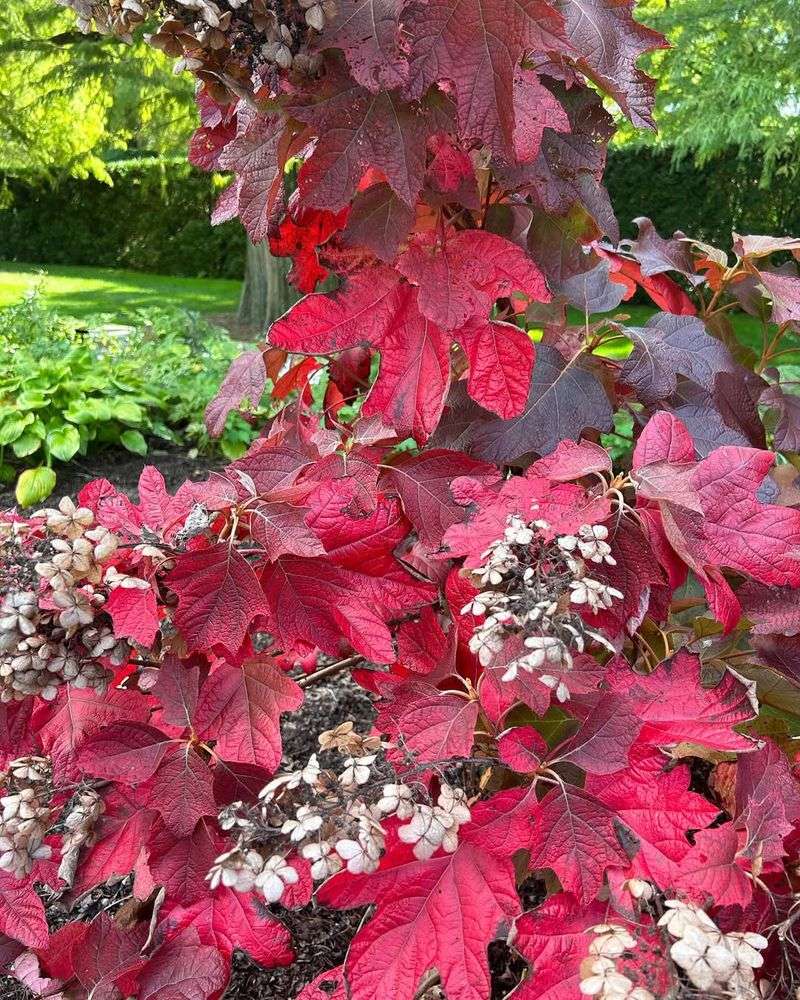
Four-season interest packed into one native shrub makes Oakleaf Hydrangea a designer favorite across North Carolina landscapes. The large, oak-shaped leaves emerge bright green in spring, creating a bold texture that contrasts beautifully with finer-leaved plants.
Summer brings cone-shaped white flower clusters that age to shades of pink and burgundy, offering a changing color palette over several weeks.
Fall transforms this shrub into a showstopper as the foliage turns rich shades of red, orange, and purple. The color display rivals any tree, with some plants showing multiple hues simultaneously.
Even after leaves drop, the winter structure remains attractive, with peeling cinnamon-colored bark that adds warmth to the cold-season garden.
North Carolina’s native plant enthusiasts appreciate that Oakleaf Hydrangea originated in the southeastern United States, making it perfectly adapted to local conditions. It tolerates both sun and shade, though afternoon shade helps prevent leaf scorch during hot summers.
The shrub grows to a manageable size, typically reaching four to six feet tall and wide, fitting well into foundation plantings or mixed borders.
Designers use this hydrangea to anchor garden beds, providing consistent structure while surrounding plants change with the seasons. It requires minimal care beyond occasional pruning to remove old stems and maintain shape.
The flowers dry beautifully on the plant, extending their ornamental value into winter months.
Wildlife benefits include shelter for small birds and insects that overwinter in the peeling bark. This versatile shrub proves that native plants can compete with any exotic import when it comes to delivering beauty throughout every season in North Carolina gardens.
5. Japanese Maple
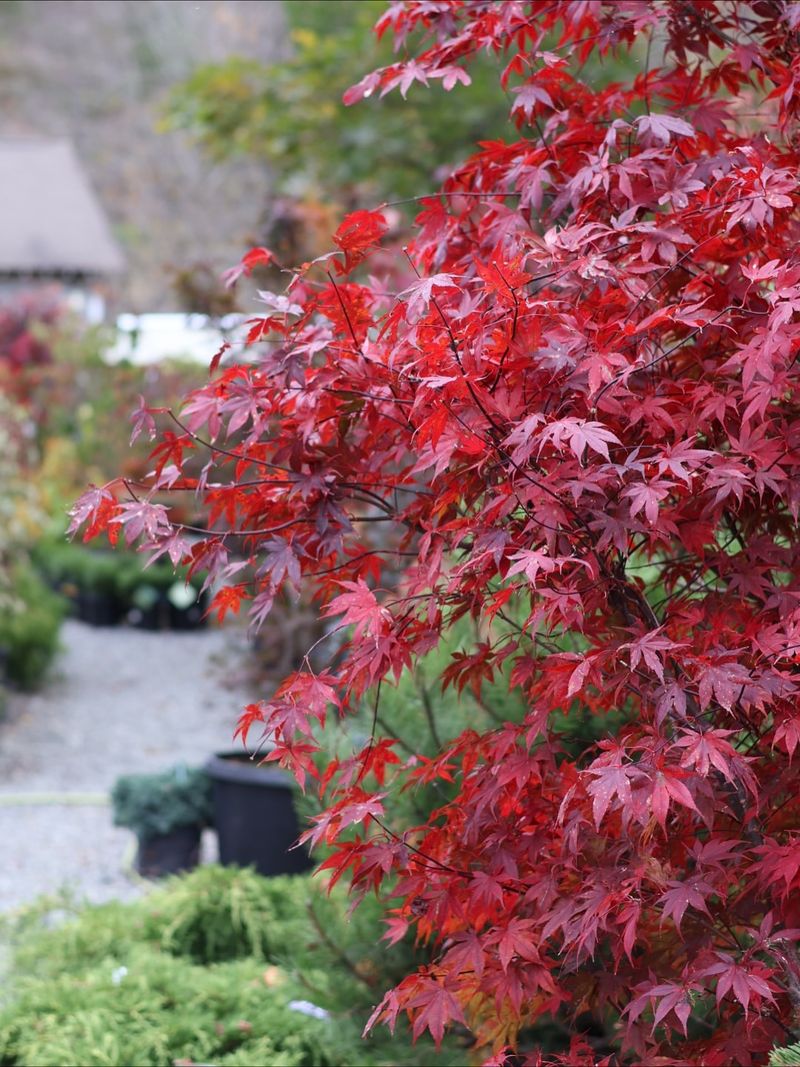
Graceful branching and stunning foliage colors make Japanese Maple the jewel of any North Carolina garden.
These small trees offer an incredible range of leaf shapes and colors, from delicate lacy cutleaf varieties to broader-leaved selections in shades of red, purple, orange, and green.
Spring growth emerges in brilliant colors that often differ from the summer tones, creating a dynamic display that keeps the garden fresh and interesting.
The architectural branching pattern becomes especially prominent in winter when leaves drop, revealing elegant lines that look like living sculpture.
Designers use Japanese Maples as focal points, positioning them where their form can be appreciated from multiple angles.
They work beautifully in containers on patios, as understory trees beneath taller canopies, or as standalone specimens in small yards.
North Carolina’s climate suits most Japanese Maple varieties, though they appreciate some afternoon shade to prevent leaf scorch during the hottest months.
They grow slowly, which gardeners view as an advantage since it means less pruning and more years enjoying each stage of development.
The trees rarely outgrow their space, making them ideal for residential landscapes where size control matters.
Fall color rivals spring for sheer brilliance, with many varieties turning shades of scarlet, gold, and orange that light up the garden. The compact size and refined appearance give properties an upscale, curated look that suggests careful attention to design.
These trees adapt to various soil types as long as drainage is good, and they handle North Carolina’s occasional dry spells once established, making them both beautiful and practical for year-round garden interest.
6. Leatherleaf Mahonia
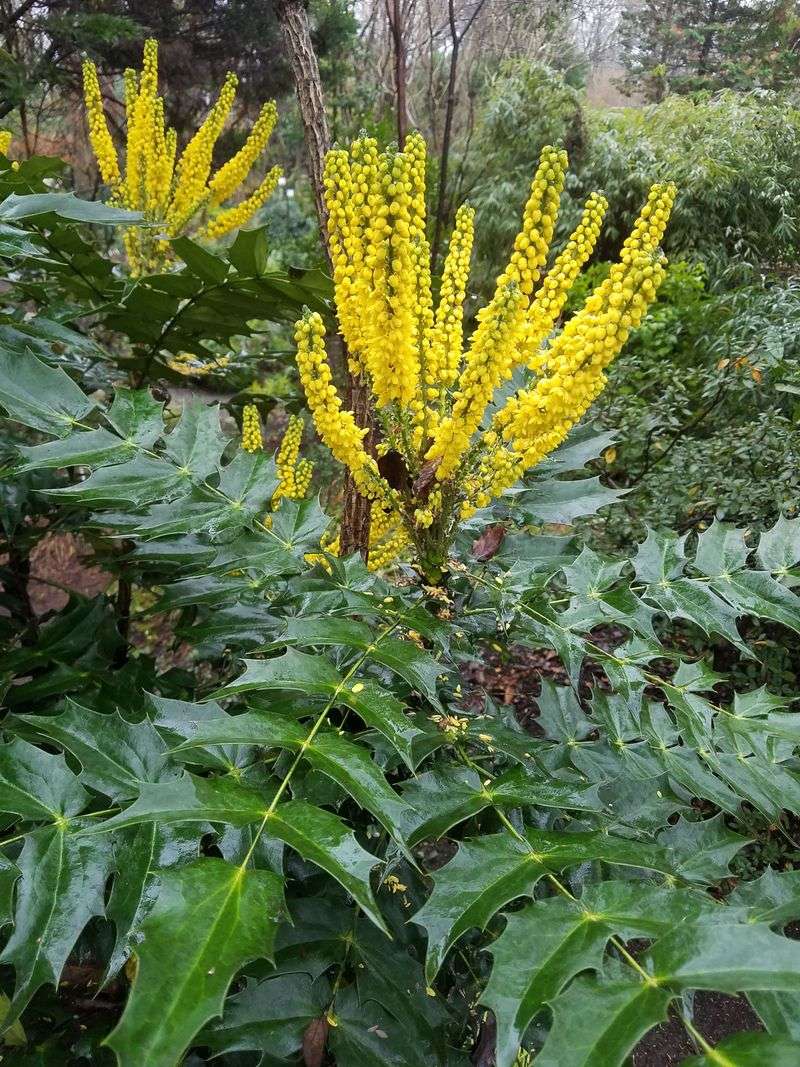
Bold evergreen foliage and bright yellow winter flowers make Leatherleaf Mahonia a standout choice for North Carolina landscapes seeking year-round drama. The compound leaves look almost tropical, with spiny leaflets that create interesting texture and movement.
New growth often emerges in bronze or burgundy tones before maturing to deep green, adding another layer of color variation throughout the growing season.
Clusters of fragrant yellow flowers appear in late winter, often blooming when snow is still possible in the North Carolina mountains. The sweet scent attracts early pollinators, providing crucial nectar when few other plants are flowering.
By summer, the flowers transform into blue-black berries that birds eagerly consume, creating wildlife value that extends beyond the bloom period.
Designers appreciate how this shrub tolerates deep shade, thriving in spots where most flowering plants would languish. It works beautifully under tree canopies or along the north side of buildings, bringing life to challenging areas.
The upright, architectural form adds structure to informal gardens and complements more formal designs equally well.
North Carolina gardeners find Leatherleaf Mahonia remarkably tough once established, handling drought, poor soil, and neglect with grace.
The plant grows slowly, reaching four to six feet tall over several years, and requires virtually no maintenance beyond occasional removal of damaged stems.
The spiny leaves deter deer browsing, making it valuable in areas where wildlife pressure is high.
The combination of evergreen foliage, winter flowers, summer berries, and shade tolerance makes this shrub a workhorse in North Carolina landscapes, delivering beauty and function throughout every season with minimal effort required.
7. Crape Myrtle
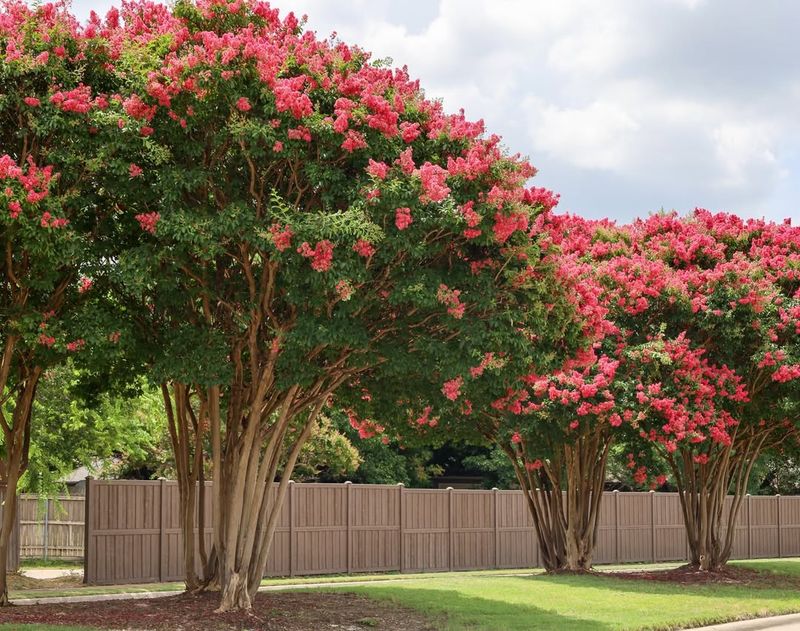
Summer blooms that last for months and stunning exfoliating bark make Crape Myrtle a must-have tree for North Carolina landscapes.
The flower clusters come in shades ranging from pure white to deep red, with pinks and purples in between, offering options to match any color scheme.
Blooms appear in mid-summer and often continue until frost, providing color during the hottest months when many other plants take a break.
The smooth, peeling bark reveals patches of cream, gray, and cinnamon underneath, creating a mottled pattern that becomes increasingly attractive as trees mature. This winter feature ensures the tree remains interesting even when bare of leaves.
Fall foliage adds another show, with leaves turning shades of yellow, orange, and red before dropping.
North Carolina’s warm summers and mild winters create ideal conditions for Crape Myrtle to thrive and reach its full potential. Designers use these trees as street plantings, in mass groupings, or as single specimens depending on the available space and desired effect.
They tolerate urban conditions well, handling pollution, reflected heat, and compacted soil better than many alternatives.
The trees grow at a moderate pace, quickly establishing themselves and beginning to bloom within the first few years. They prefer full sun and good drainage, conditions common throughout much of North Carolina.
Proper pruning maintains attractive form and maximizes flowering, though heavy-handed cutting ruins the natural shape and should be avoided.
Crape Myrtle connects summer abundance with winter structure, proving that one tree can truly deliver beauty across all seasons in North Carolina gardens while requiring relatively little care once established in the right location.