That Strange Shape On Your New York Tree Looks Like Damage, But It’s Actually A Natural Defense
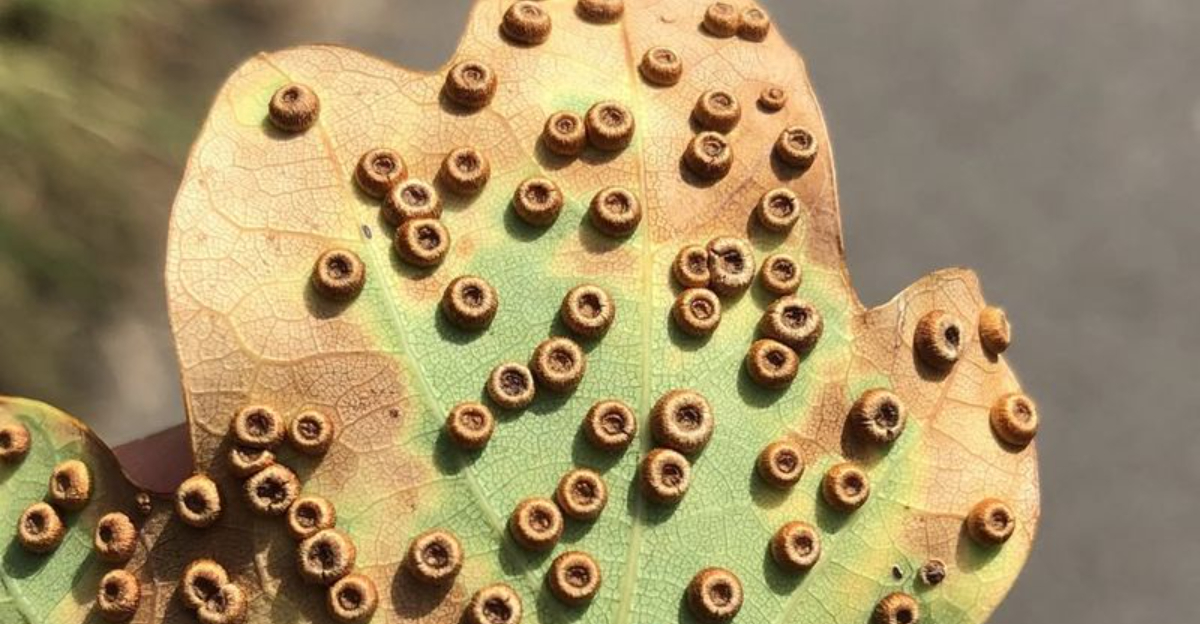
New York gardeners often spot unusual bumps, twists, or bulges on tree trunks and panic, thinking their tree has been damaged by pests, disease, or harsh weather.
Surprisingly, many of these odd formations aren’t signs of trouble at all, they’re natural defenses trees develop to protect themselves. What looks like damage might actually be your tree’s clever survival strategy!
Trees can grow protective knots, swellings, or twisted bark to ward off insects, prevent disease spread, or strengthen weak spots.
While the shapes may seem alarming, they are often harmless and indicate that your tree is actively defending itself against environmental stress.
Understanding this helps homeowners differentiate between a real problem and a natural process. Trees are more resilient than they look, and sometimes, those odd shapes are proof!
It’s Called A Tree Gall
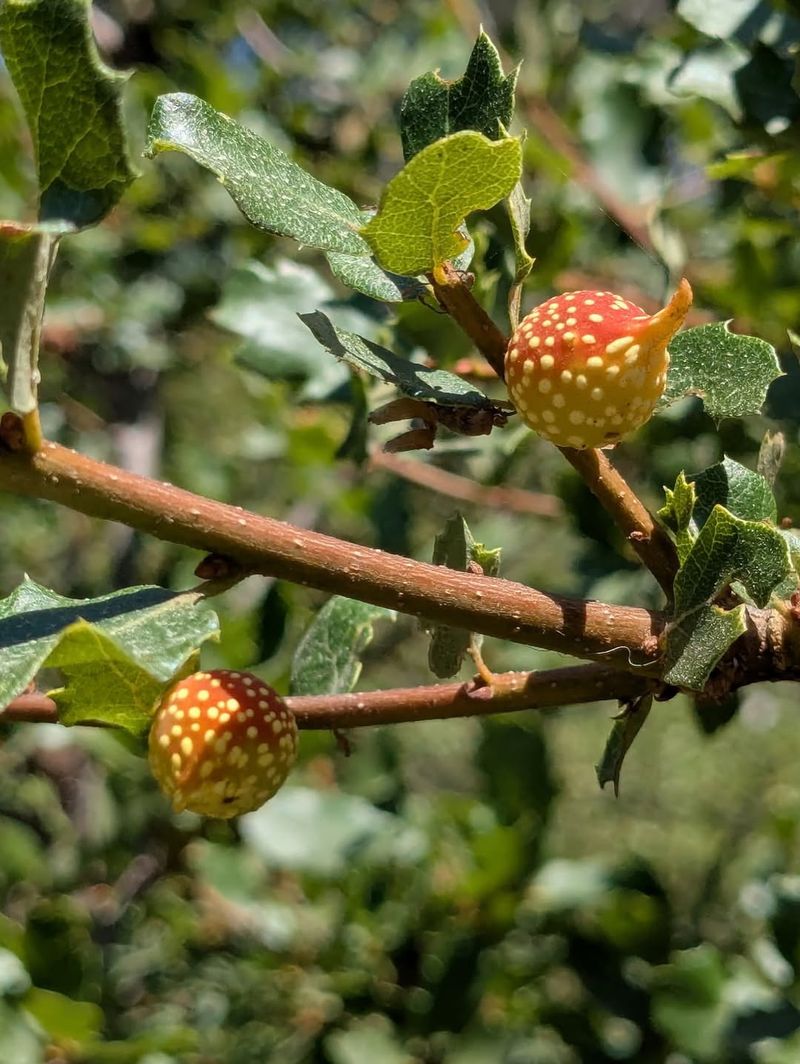
When you notice an unusual growth on your tree, you’re looking at something called a gall, and it’s one of nature’s most misunderstood phenomena. A tree gall forms when your tree responds defensively to unwanted visitors like insects, mites, fungi, or bacteria.
Rather than allowing these invaders to roam freely and cause widespread harm, the tree creates an abnormal growth that essentially traps the irritant in one spot.
This reaction is similar to how your body forms a blister when you wear uncomfortable shoes. The tree’s tissues swell and grow around the invader, creating a protective chamber.
This chamber provides shelter and food for the creature that triggered it, but it also keeps the problem contained.
Galls can appear on leaves, branches, twigs, and even roots, depending on what caused them. The process begins at the cellular level when the invader injects chemicals or lays eggs that hijack the tree’s natural growth patterns.
What results is a structure that looks alarming but is actually a sign of biological sophistication.
Understanding that galls are named defensive structures rather than signs of disease can help you feel much calmer when you spot one on your property.
In New York, Galls Are Most Common On Oak, Maple, And Cherry Trees

If you live in New York and have oak trees in your yard, you’ve probably noticed galls more than your neighbors with other tree species.
Oak trees are especially prone to these growths because of native gall wasps and midges that have evolved alongside them for thousands of years.
These tiny insects have a special relationship with oaks, triggering gall formation as part of their life cycle.
Maple trees also host their share of galls, often caused by mites or aphids that feed on leaf tissue. Cherry trees can develop galls from fungal infections or certain fly species.
Each tree species tends to attract specific gall-forming organisms, which is why the galls you see on an oak will look different from those on a maple.
The prevalence of galls in New York is partly due to the state’s diverse forests and the abundance of native insect species. Our climate provides ideal conditions for both trees and the organisms that interact with them.
Your New York Garden Changes Every Week. Your Plan Should Too.
Gardening in New York changes quickly throughout the season. Every Friday you’ll receive a simple weekly plan showing exactly what to plant, prune, fertilize, harvest, and protect so you never miss the right timing.
If you walk through any wooded area in the Hudson Valley or the Adirondacks, you’ll likely spot dozens of galls without even trying.
Recognizing which trees are most susceptible can help you understand what you’re seeing and prepare you to respond appropriately when galls appear on your property.
Galls Form When Insects Trigger The Tree’s Growth Hormones
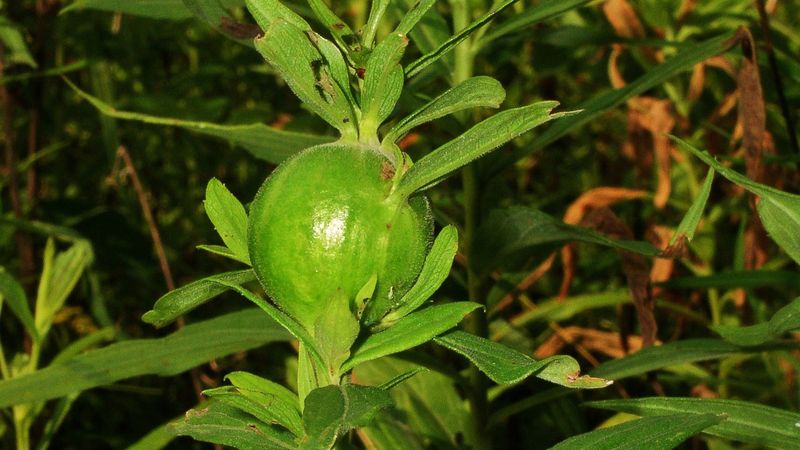
The science behind gall formation is absolutely remarkable and showcases the complex relationship between trees and insects. When a gall-forming insect lands on a tree and begins to feed or lay eggs, it releases specific chemicals that manipulate the tree’s growth hormones.
These chemicals essentially reprogram the tree’s cells to grow in unusual ways, creating the swelling, ball, knot, or spike that we recognize as a gall.
Instead of letting damage spread throughout the tree, the plant redirects its growth to isolate the irritant in one controlled area. This is an incredibly smart survival strategy.
The tree sacrifices a small amount of tissue to protect the rest of its structure from potential harm.
Different insects trigger different types of galls because each species produces unique chemical signals. Some create round, apple-like galls, while others produce spiky or warty formations.
The shape and size of the gall depend entirely on the insect species involved and the specific hormones they release.
This hormonal hijacking might sound sinister, but it’s actually a balanced relationship that has existed for millions of years. Both the tree and the insect benefit in their own ways, making galls a fascinating example of coevolution in action.
Galls Are A Sign The Tree’s Defense System Is Working

When you spot a gall on your tree, your first instinct might be to worry, but you should actually feel reassured. Rather than indicating failure, the presence of a gall shows that your tree’s defense system is functioning exactly as nature intended.
The tree is actively containing a threat in one controlled area instead of allowing it to spread and cause more serious problems.
Think of it like your immune system creating inflammation around a splinter. Your body isn’t broken, it’s working hard to protect you. Trees operate on the same principle, using their biological resources to isolate and manage threats.
A tree that can form galls is a tree with enough energy and vitality to mount a defense. Weak or severely stressed trees may not even be able to produce this response.
So in many ways, seeing a gall means your tree has the strength to fight back against invaders.
This perspective shift can help you move from panic to appreciation. Instead of viewing galls as ugly blemishes, you can see them as badges of resilience.
Your tree is doing its job, protecting itself with ancient wisdom encoded in its DNA, and that’s something worth celebrating rather than fearing.
Most Galls Do NOT Harm Mature, Healthy Trees
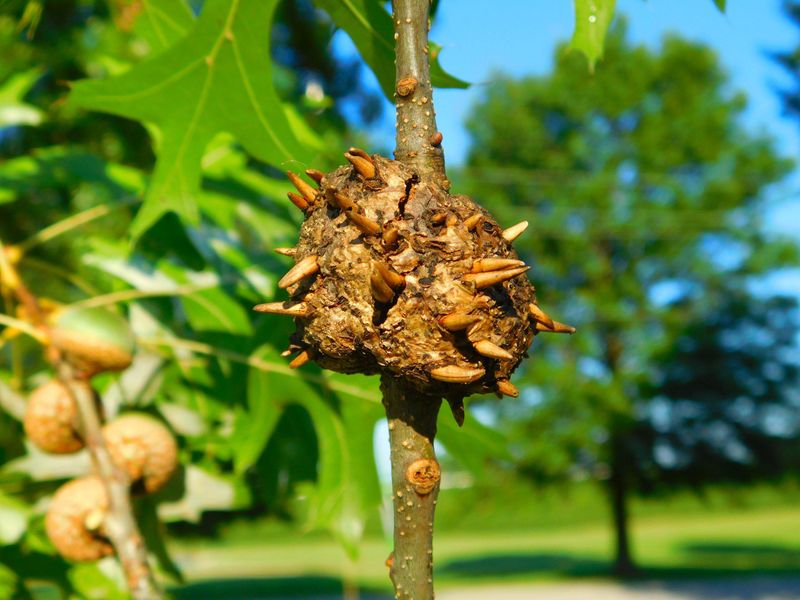
One of the most comforting facts about galls is that they rarely affect a tree’s overall health, growth, or lifespan, especially when the tree is mature and otherwise healthy. While they certainly look alarming—sometimes even grotesque—galls are usually cosmetic issues rather than serious health threats.
The tree has already accounted for the energy loss involved in creating the gall and continues its normal functions without major disruption.
Mature trees have extensive root systems and large reserves of nutrients that allow them to handle the stress of gall formation without breaking stride. A few galls on a large oak or maple won’t slow down photosynthesis, water transport, or nutrient absorption in any meaningful way.
Young or newly planted trees are a different story because they have fewer resources to spare. Heavy gall infestations on saplings can sometimes slow growth or cause branch dieback.
However, even in these cases, the tree usually recovers once it gains size and strength. For most New York homeowners, galls are simply part of having trees on your property. They come and go with the seasons, and your trees continue to thrive despite them.
Focus on overall tree health through proper watering, mulching, and pruning, and don’t let galls cause unnecessary stress.
The Strange Shapes Vary Widely
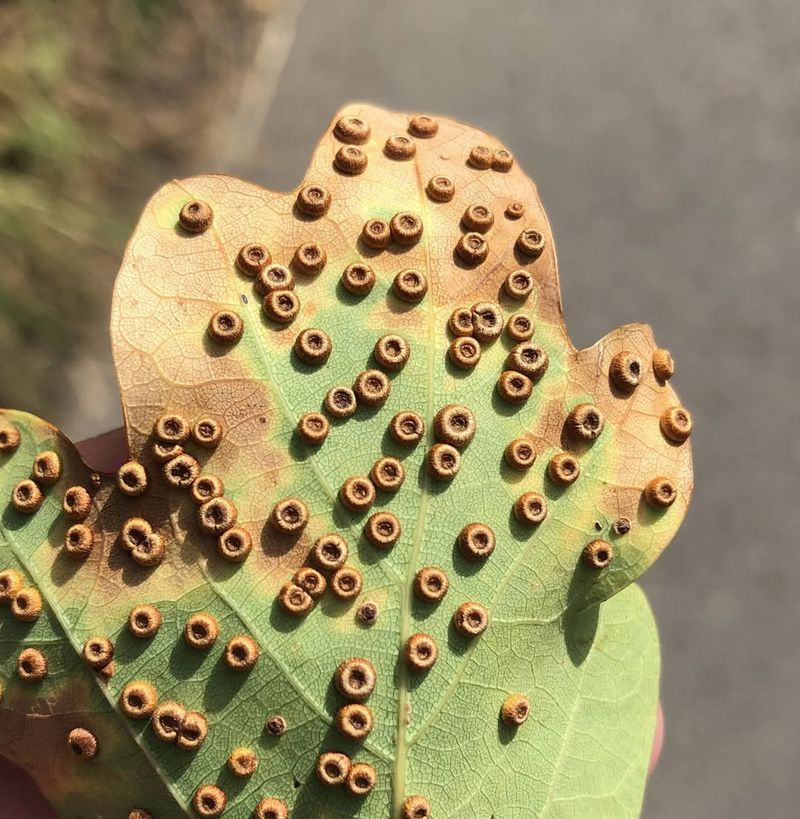
Galls come in an astonishing variety of shapes, sizes, and textures, each one reflecting the specific organism that caused it. Some galls look like round balls and are commonly called oak apples because of their size and shape.
Others resemble warty bumps that cluster together on leaves or twigs, creating a textured, almost alien appearance.
You might also encounter galls that look like spikes or horns jutting out from branches or leaf surfaces. These can be particularly startling because they seem so sharp and unnatural.
Swollen knots on branches or leaves are another common form, appearing as if the tree developed a tumor or growth.
Despite their varied appearances, all these forms are normal responses to different gall-forming organisms. The shape is determined by the species of insect, mite, or fungus involved and the specific location on the tree where the gall forms.
Leaf galls tend to be smaller and more numerous, while branch galls can grow quite large over time.
Learning to recognize different gall types can become a fun backyard activity. Each one tells a story about the invisible interactions happening between your trees and the tiny creatures that depend on them.
Rather than viewing them as problems, you can appreciate them as evidence of a thriving ecosystem right in your own yard.
Cutting Galls Off Usually Doesn’t Help
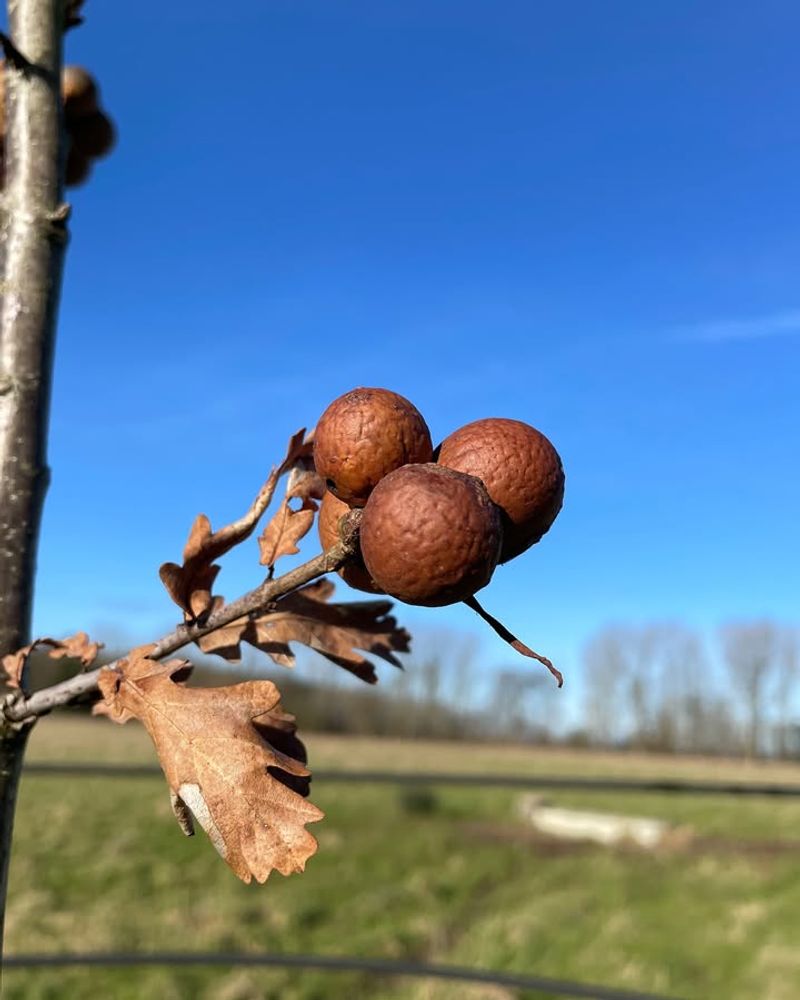
Many well-meaning homeowners reach for pruning shears the moment they spot a gall, thinking they’re solving the problem.
Unfortunately, once a gall has formed, removing it won’t stop future galls from appearing and can actually create real wounds that leave your tree vulnerable to other issues.
The insect or organism that caused the gall has likely already completed its life cycle or moved on, so cutting away the gall is essentially closing the barn door after the horse has escaped.
Pruning galls can also remove healthy tissue along with the abnormal growth, creating entry points for diseases and pests that might not have been a problem otherwise.
Your tree will need to expend energy healing the wound you created, which can be more stressful than simply living with the gall.
There are exceptions to this rule. If a gall is on a small branch that’s already compromised or if the gall is causing a branch to break under its weight, strategic pruning might make sense. However, these situations are relatively rare, and most galls are best left alone.
Instead of focusing on removal, channel your energy into supporting your tree’s overall health. Proper watering, appropriate fertilization, and good cultural practices will help your tree tolerate galls without any intervention.
Nature has been managing this relationship for millions of years, and your tree knows what to do.
Galls Often Appear Suddenly In Spring Or Early Summer
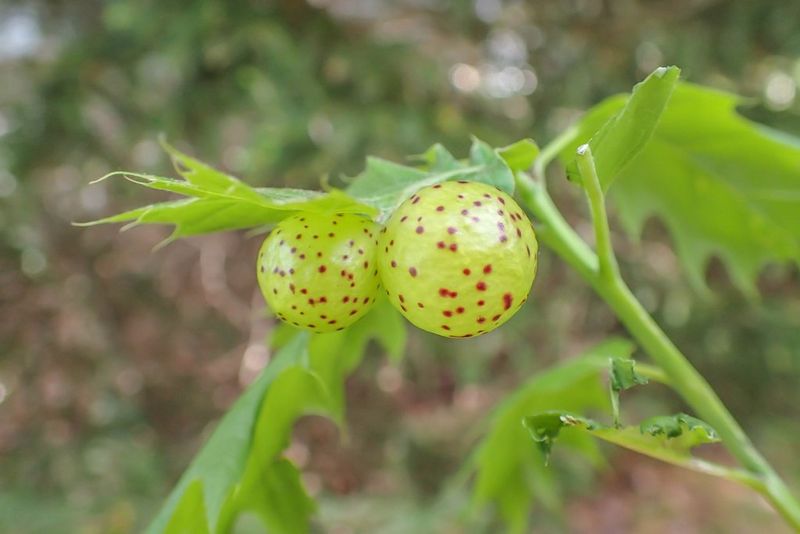
Have you ever sworn that a strange growth appeared on your tree overnight? You’re not imagining things.
Galls grow remarkably fast during active growth seasons, which in New York typically means spring and early summer. During these periods, trees are producing new leaves and shoots, and their growth hormones are flowing abundantly, which is exactly what gall-forming insects need to trigger their characteristic growths.
Many gall-causing insects time their life cycles to coincide with this burst of tree growth. They emerge from overwintering sites and immediately begin laying eggs or feeding on tender new tissue.
Within days or weeks, galls can swell from barely noticeable bumps to prominent structures that catch your eye every time you walk past.
This rapid development explains why so many New York homeowners notice galls seemingly out of nowhere. One weekend your tree looks perfectly normal, and the next weekend it’s covered in strange bumps or balls.
The speed of gall formation is actually a testament to how efficiently these organisms can manipulate plant growth.
Understanding the seasonal timing can help you anticipate when galls might appear and recognize that their sudden appearance is completely normal. Rather than panicking when you spot them in May or June, you can simply note their presence and continue enjoying your trees as the season progresses.
Treatment Is Rarely Needed, Observation Is Best
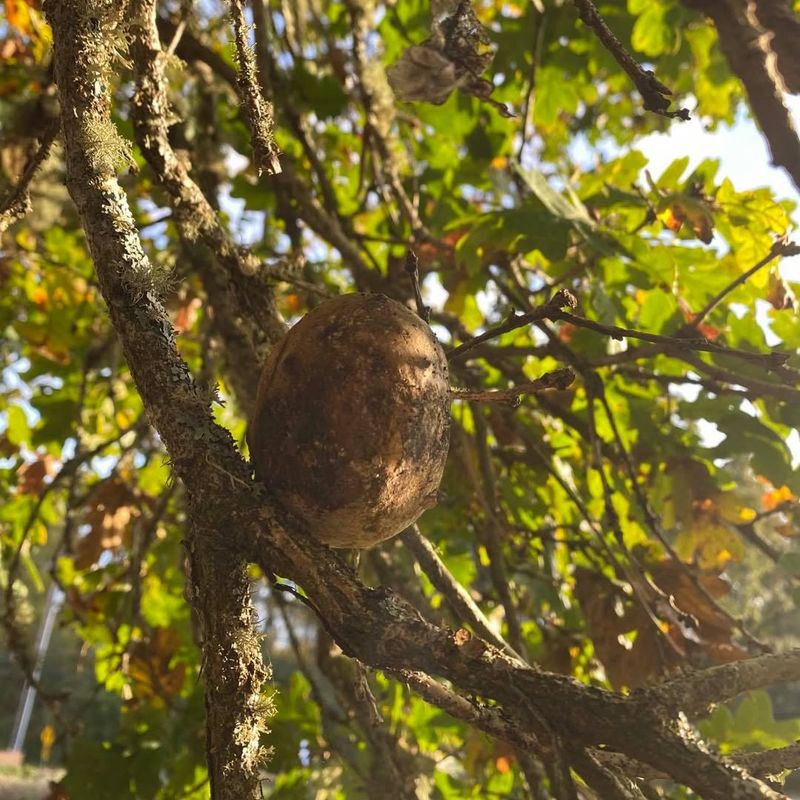
Unless your tree is already stressed or very young, forestry experts and arborists recommend leaving galls alone and focusing on overall tree health instead of targeting the galls themselves.
Treatment options for galls are limited and often ineffective because by the time you notice the gall, the damage is already done and contained.
Insecticides won’t reverse gall formation, and fungicides only work on specific fungal galls when applied preventatively, which is impractical for most homeowners.
The best approach is simple observation. Monitor your tree throughout the growing season and note whether galls are increasing, staying the same, or decreasing.
Watch for other signs of stress like wilting leaves, branch dieback, or unusual leaf drop. If your tree continues to leaf out normally and maintains good color and vigor, the galls are not a concern.
Focus your efforts on proven tree care practices: water during dry periods, mulch around the base to retain moisture and regulate soil temperature, and avoid wounding the trunk with lawn equipment.
These actions strengthen your tree’s natural defenses far more effectively than any gall-specific treatment.
If you’re genuinely concerned about your tree’s health, consult a certified arborist who can assess the overall condition and recommend appropriate care. In most cases, they’ll confirm what you’ve learned here: galls are fascinating, harmless, and best left to nature’s wisdom.