These 9 Birds Refuse To Leave Eastern Oregon For Winter
Most birds head south when the weather turns cold, but some stubborn feathered friends refuse to leave Eastern Oregon, even when the temperatures drop. Watching them go about their winter routines can be surprisingly entertaining.
Juncos hop through the snow like they don’t have a care, and woodpeckers tap away on bare branches as if winter were just another day.
It’s fascinating to see which birds adapt to the cold and which find clever ways to keep their bellies full when insects are scarce.
Some stick around because food is available, some because they’re built for the chill, and some just seem to enjoy showing off their bright colors against the snowy backdrop.
If you’ve ever wanted to spot wildlife without traveling far, winter is actually a great time to watch these birds.
Keeping a feeder stocked or planting berry-producing shrubs can make your yard a hotspot for these hardy residents.
Here’s a look at birds that stick around Eastern Oregon in winter and how they manage to thrive when most of their friends have flown south.
1. American Robin
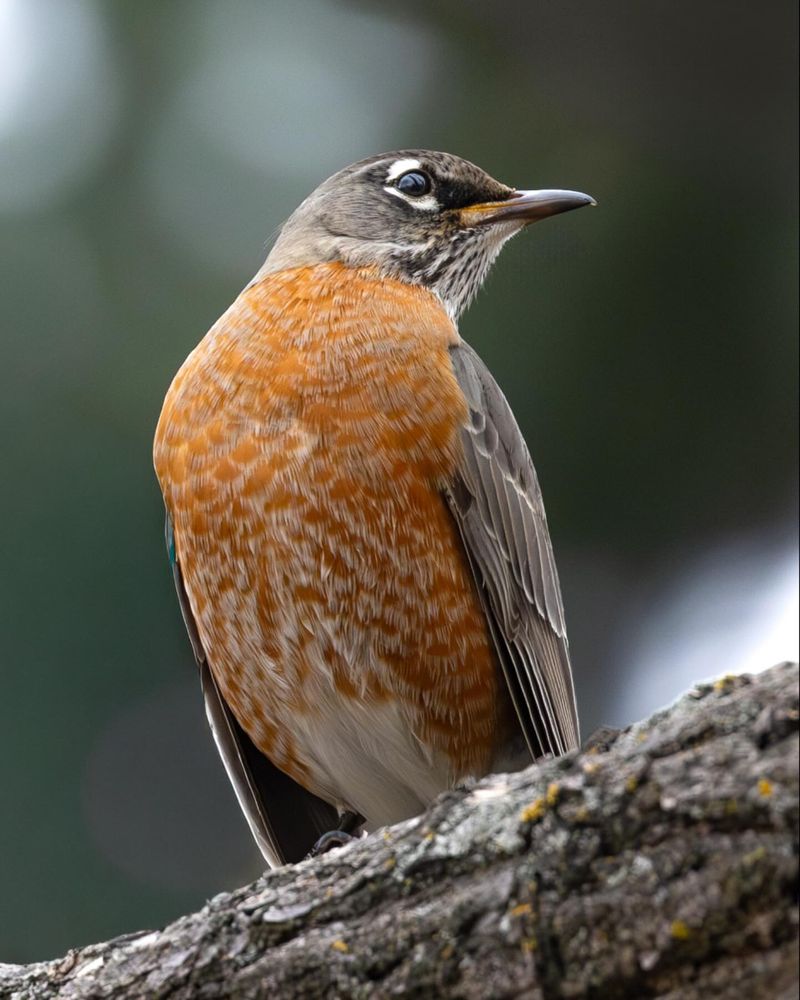
You might think robins pack up and head south when the first frost hits, but plenty of them stick around Eastern Oregon all winter.
Instead of hopping across your lawn hunting worms like they do in spring, winter robins gather in noisy flocks and move through snowy fields and orchards looking for berries.
They love juniper berries, mountain ash, and any ornamental shrubs still holding fruit when the ground freezes over.
Robins stay because food is still available if they know where to look. They shift their diet completely, trading earthworms for frozen fruit and whatever insects they can find hiding in bark crevices.
You’ll often see them in large groups, sometimes dozens at a time, moving together through open areas or perching in bare trees.
On cold mornings, they puff up their feathers to trap warm air close to their bodies, making them look round and fluffy.
If you keep a heated birdbath running through winter, robins will visit regularly to drink and bathe, even when snow covers everything else.
They’re tough, adaptable, and surprisingly comfortable in freezing conditions as long as berry-bearing plants are nearby.
Watching a flock of robins strip a juniper tree clean in the middle of winter is a reminder that survival here isn’t about escaping the cold—it’s about knowing how to use what’s left behind.
2. House Finch
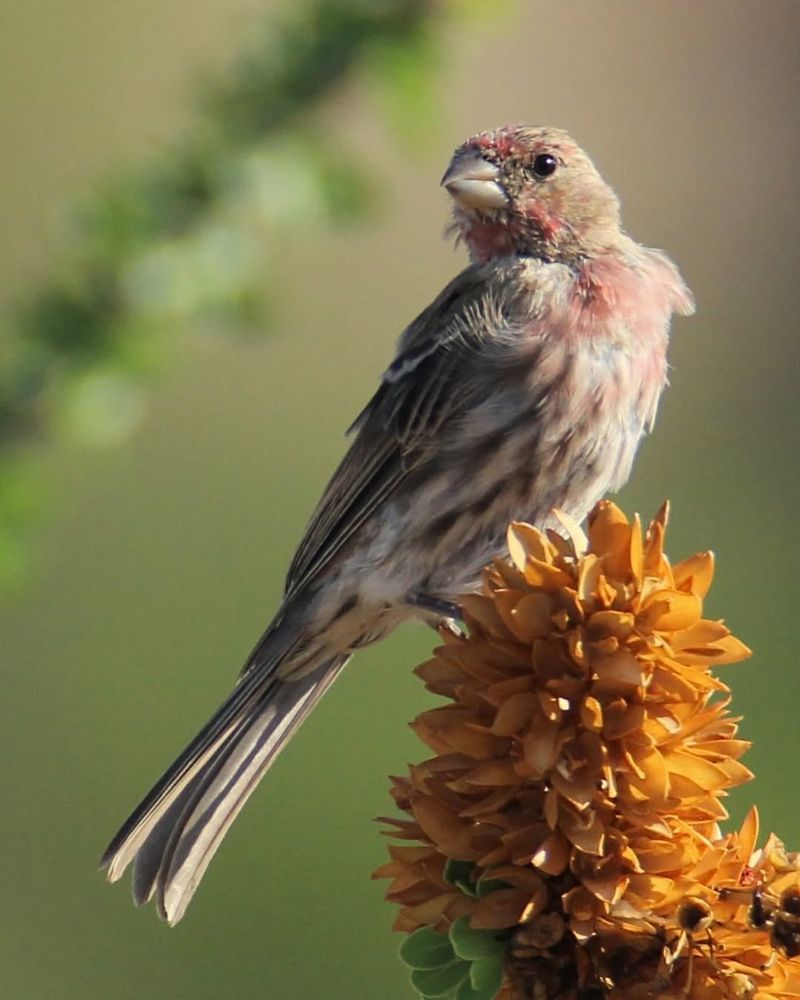
House Finches are one of the most reliable birds you’ll see at your feeder all winter long. Males with their rosy red heads and breasts bring a splash of color to gray winter days, while the brown-streaked females blend quietly into the background.
These small, cheerful birds gather in flocks and chatter constantly, filling your yard with soft warbles and chirps even when snow is falling.
They stay in Eastern Oregon because they’ve adapted incredibly well to living near people. Your feeders, eaves, shrubs, and porches provide everything they need to survive freezing nights and short winter days.
Your Oregon Garden Changes Every Week. Your Plan Should Too.
Gardening in Oregon changes quickly throughout the season. Every Friday you’ll receive a simple weekly plan showing exactly what to plant, prune, fertilize, harvest, and protect so you never miss the right timing.
House Finches love sunflower seeds, and they’ll visit feeders multiple times a day, often in groups of ten or more.
When temperatures drop, they roost together in dense shrubs or under building overhangs, huddling close to share body heat.
You might notice them fluffing their feathers and tucking their heads down on especially cold mornings, conserving energy while they wait for the sun to warm things up a bit.
House Finches don’t migrate because they don’t need to. As long as food and shelter are available, they’re perfectly content to ride out the winter right where they are, singing softly and brightening up your backyard with their presence and persistent good cheer.
3. Anna’s Hummingbird
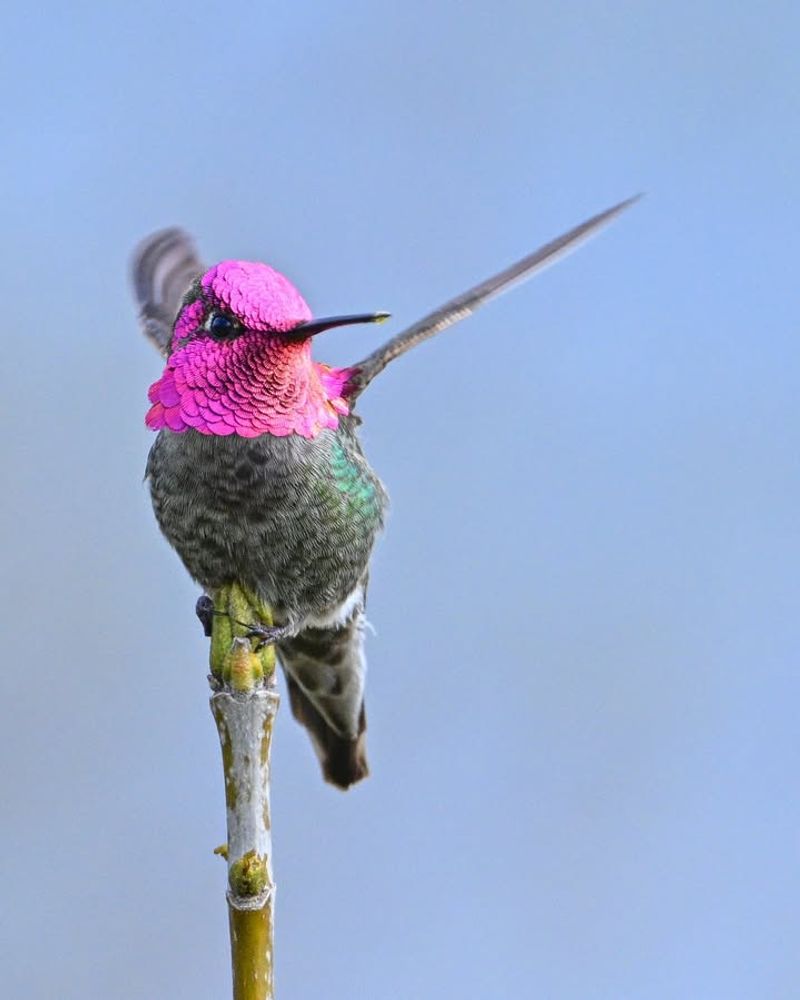
It’s startling to see a hummingbird hovering near your window in January, but Anna’s Hummingbirds are expanding their range and now spend winters in parts of Eastern Oregon where mild microclimates and reliable food sources exist.
Males flash iridescent magenta throats even in freezing temperatures, and their high-pitched chips cut through the quiet of snowy mornings.
These tiny birds survive winter by entering a state called torpor at night, dropping their body temperature and metabolic rate to conserve energy.
During the day, they search for any remaining flowers, sip from feeders, and catch small insects hiding in bark or under eaves.
If you keep a hummingbird feeder out and prevent it from freezing, Anna’s Hummingbirds will visit it regularly, even when snow covers the ground.
They stay because they can—thanks to people maintaining feeders and the presence of winter-blooming plants in protected areas.
You’ll often see them perched on bare branches between feeding bouts, fluffing their feathers and soaking up any available sunlight to stay warm.
Watching an Anna’s Hummingbird zip through falling snow feels almost magical. It’s a reminder that survival strategies come in all sizes, and that even the smallest creatures can be incredibly tough when conditions demand it.
4. Dark-eyed Junco
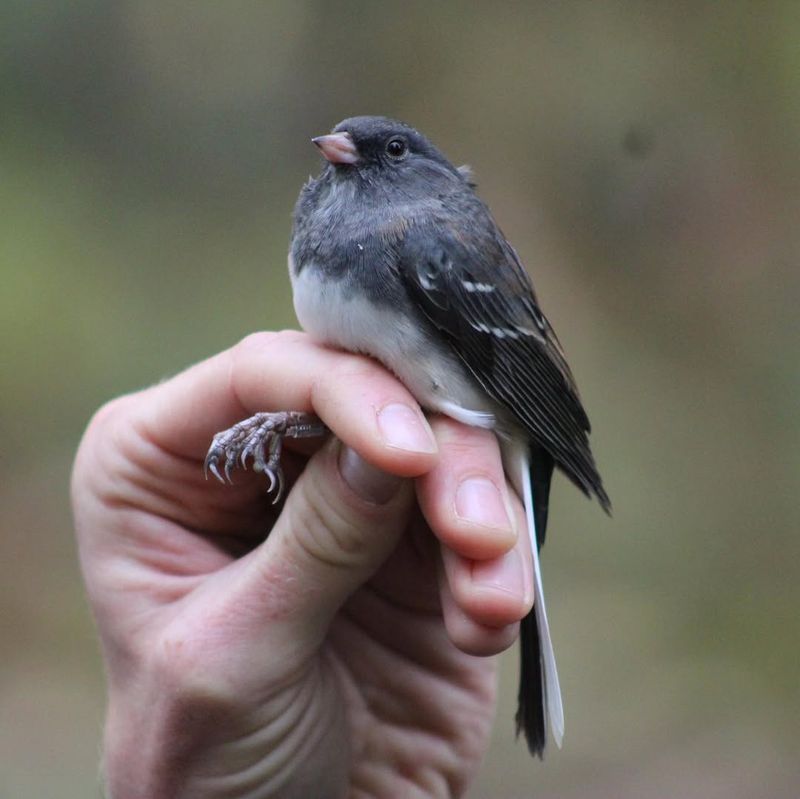
These birds show up in Eastern Oregon backyards like clockwork when winter arrives, hopping across snowy ground and scratching beneath feeders for fallen seeds.
Their slate-gray backs and white bellies make them easy to identify, and their soft trilling calls add a gentle soundtrack to cold mornings.
Locals often call them snowbirds, and for good reason—they seem to appear the moment the first snow falls.
Juncos stay through winter because they’re built for it. They breed in higher elevations during summer, then move downslope to spend the cold months in valleys, towns, and backyards where food is easier to find.
They prefer feeding on the ground, picking up millet, cracked corn, and sunflower seeds that other birds knock down from hanging feeders.
You’ll often see them in small flocks, moving together through brush piles, fence lines, and the edges of your property. They’re not flashy or loud, but they’re steady and reliable, showing up every single day no matter how cold it gets.
On especially harsh mornings, juncos puff up their feathers and tuck into sheltered spots under shrubs or against buildings, waiting for the sun to take the edge off the chill.
They’re quiet survivors, perfectly at home in the cold, and a comforting presence in your winter yard.
5. Northern Flicker
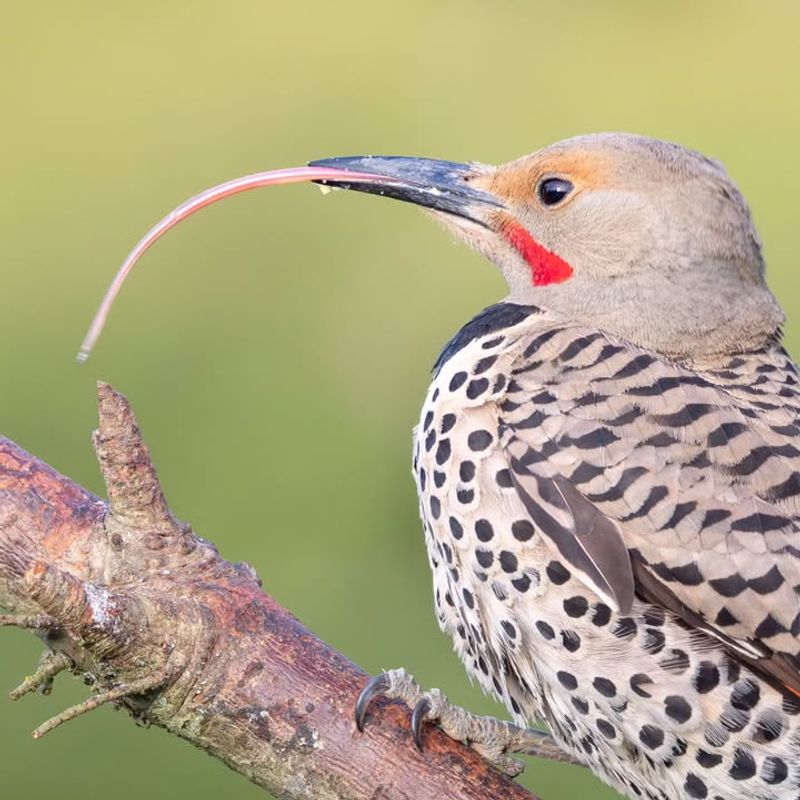
Northern Flickers are large, handsome woodpeckers that stay active in Eastern Oregon all winter, drumming on fence posts and probing the ground for ants even when everything is frozen.
You’ll recognize them by their spotted bellies, barred backs, and the flash of salmon-pink or yellow under their wings when they fly.
Unlike other woodpeckers, flickers spend a lot of time on the ground, which makes them easier to spot in your yard.
They stay because ants and other insects remain available in bark, dead wood, and soil even during winter. Flickers use their long, barbed tongues to extract insects from crevices, and they’ll also eat berries and seeds when protein is scarce.
You might see them clinging to the side of a tree, hammering away, or hopping awkwardly across your lawn looking for food.
On cold days, flickers roost inside tree cavities or old nest holes, tucking themselves away from the wind and snow.
They’re surprisingly vocal in winter, calling out with loud, ringing notes that carry across open fields and through quiet neighborhoods.
Watching a flicker work over a juniper snag or poke around the base of a fence post reminds you that winter isn’t empty—it’s just quieter, and the birds that stay know exactly where to look for what they need.
6. Woodhouse’s Scrub-Jay
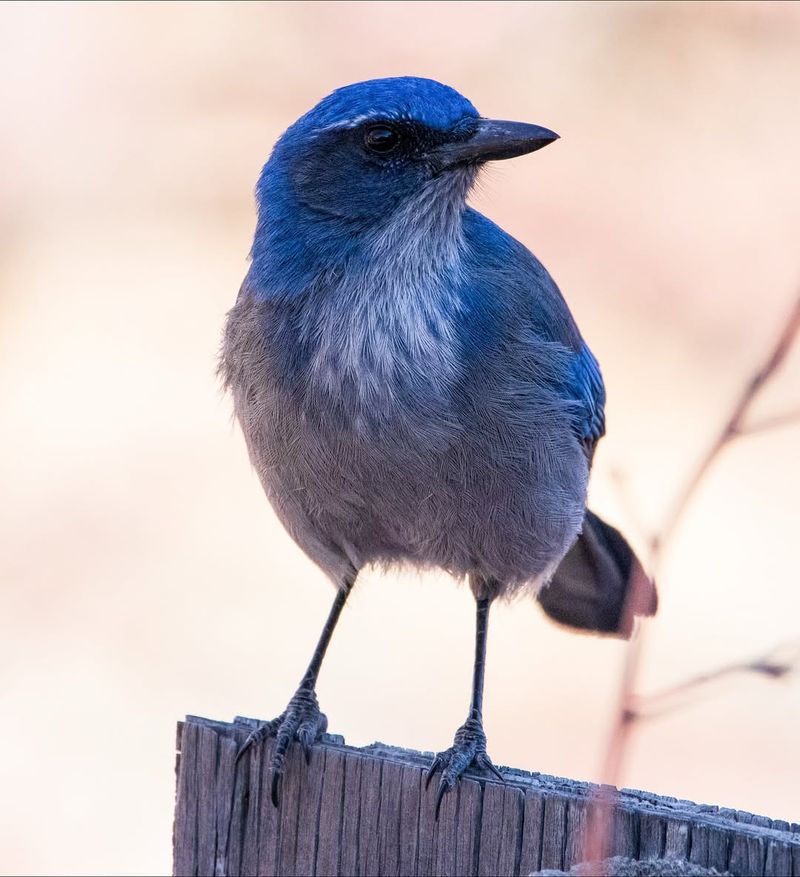
They are bold, noisy, and impossible to miss in your winter yard. With their bright blue backs, gray bellies, and loud, scolding calls, they dominate feeders and let you know when they’re around.
These intelligent birds stay in Eastern Oregon year-round, and winter doesn’t slow them down one bit—they’re just as active and assertive as they are in summer.
Scrub-Jays stay because they’re opportunistic and resourceful. They eat seeds, nuts, berries, insects, and just about anything else they can find, including food they stashed away during fall.
Jays are known for caching food, hiding acorns and seeds in hundreds of different spots, then remembering where they put them months later when food gets scarce.
You’ll often see them swooping into your yard, grabbing a peanut or sunflower seed, then flying off to hide it somewhere safe.
They’re loud, curious, and unafraid of people, often landing on fence posts or porch rails to size you up before making their move.
On freezing mornings, scrub-jays fluff up and perch in dense shrubs or conifers, waiting for the day to warm up before resuming their constant search for food.
They bring energy and personality to the winter landscape, and their presence is a reminder that survival sometimes requires a little boldness and a lot of brains.
7. Spotted Towhee
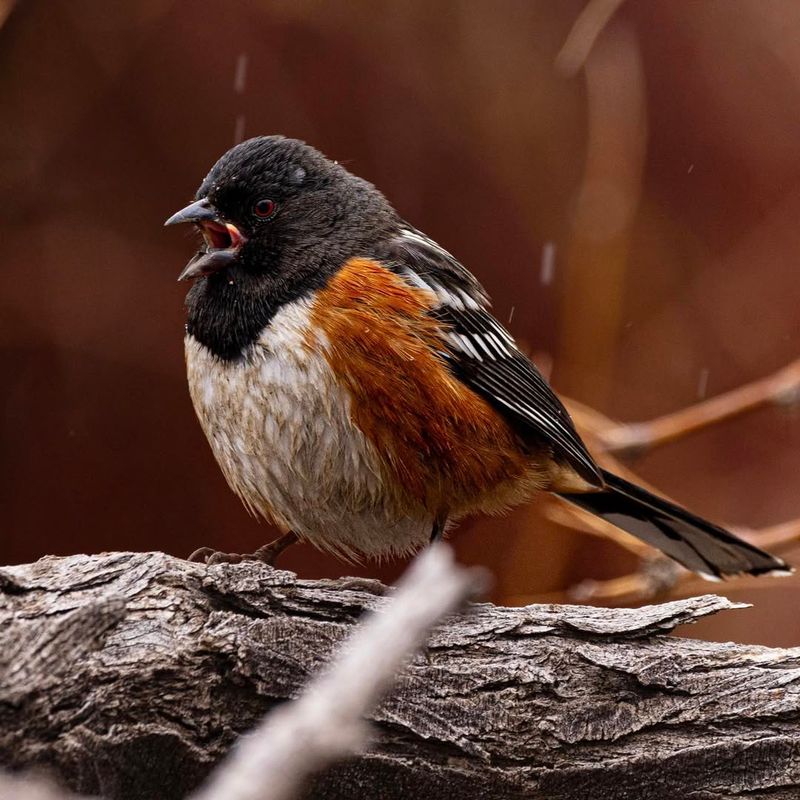
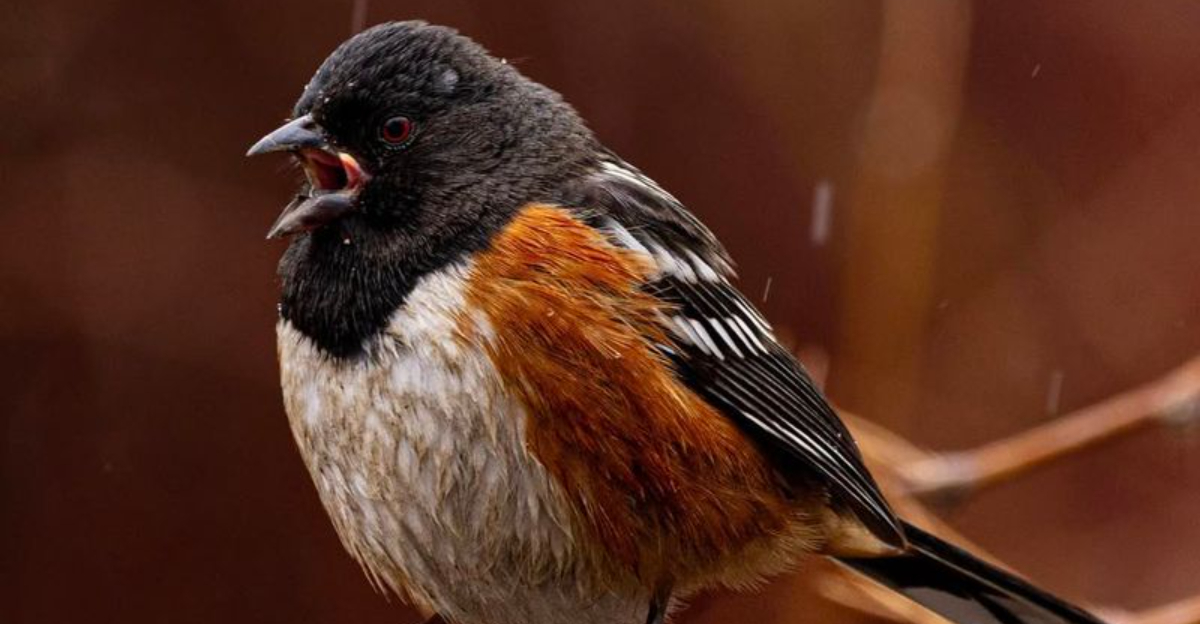
Spotted Towhees are secretive, ground-loving birds that scratch loudly through leaf litter and brush piles all winter long.
Males are striking with jet-black heads, rufous sides, and white-spotted wings, while females wear softer brown tones.
You’ll hear them before you see them—their double-footed scratching sounds like someone raking leaves under your shrubs, even when snow covers the ground.
Towhees stay in Eastern Oregon because they find plenty of food and cover in dense vegetation, thickets, and backyard brush piles.
They eat seeds, berries, and insects, kicking aside debris with both feet at once to uncover hidden meals.
They’re not feeder birds, but they’ll happily work the ground beneath your feeders, cleaning up what other birds drop.
You’ll often see them darting into cover when startled, flashing their white tail corners as they disappear into the underbrush. They prefer staying low and hidden, but their loud calls—a sharp, rising “chewee”—give away their presence even when you can’t see them.
On cold mornings, towhees hunker down in thick shrubs or brambles, sheltered from wind and predators.
They’re quiet survivors, perfectly adapted to life in the tangled, overgrown edges of your property, and their scratching sounds are a steady reminder that life continues even in the coldest months.
8. Mountain Chickadee
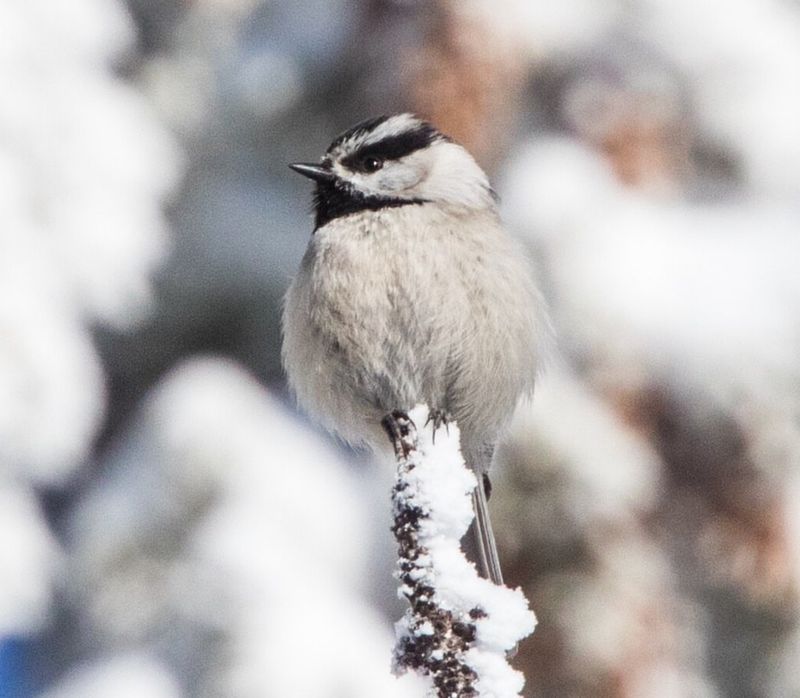
They’re common in Eastern Oregon’s pine and juniper forests, and they stay active all winter, flitting through trees, hanging upside down on branches, and calling out their cheerful “chick-a-dee-dee-dee” even when temperatures drop below zero.
Mountain Chickadees are small, energetic birds with white eyebrow stripes that make them easy to tell apart from their Black-capped cousins.
These chickadees stay because they’re incredibly efficient at finding food and staying warm.
They cache seeds and insects throughout the fall, hiding them in bark crevices and under lichen, then retrieving them later when fresh food is hard to find.
They also join mixed flocks with nuthatches, juncos, and other small birds, working together to locate food and watch for predators.
You’ll often see them at feeders, grabbing a single sunflower seed, flying off to a branch, holding it with their feet, and hammering it open with their tiny beaks. They’re fast, fearless, and constantly in motion, never staying still for more than a few seconds.
On the coldest nights, chickadees lower their body temperature slightly and enter a light torpor to conserve energy.
Watching them zip through snow-covered branches, calling to each other and staying upbeat no matter the weather, is a lesson in resilience and the power of staying positive when things get tough.
9. American Crow
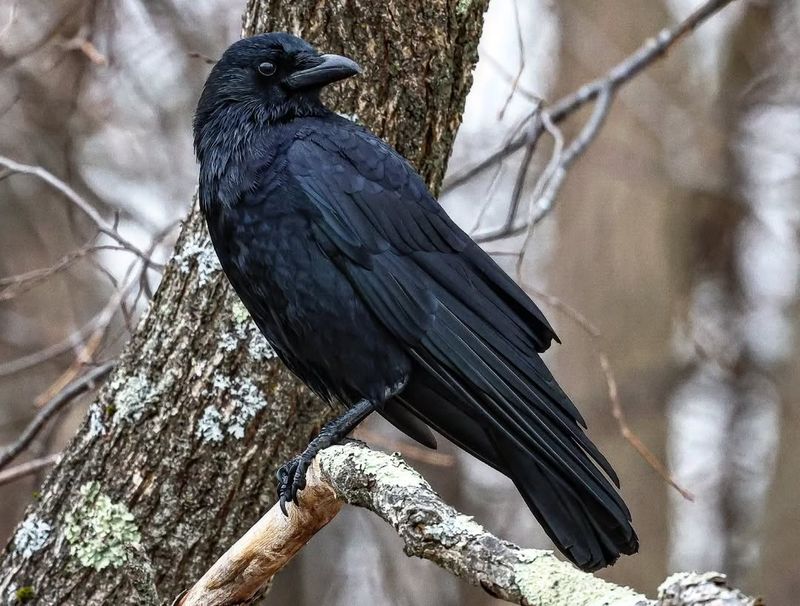
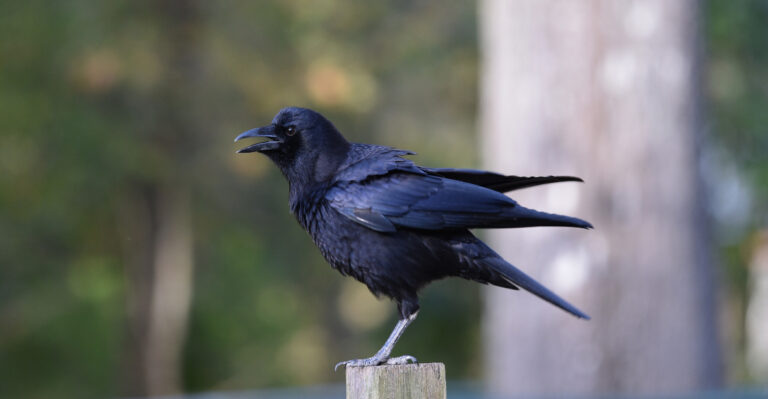
American Crows are big, bold, and impossible to ignore in Eastern Oregon’s winter landscape.
Their loud caws echo across frozen fields and snowy parking lots, and they move in groups, walking confidently across the ground or perched high in bare trees watching everything that happens below.
Crows are smart, adaptable, and tough, and winter doesn’t faze them in the slightest.
They stay because they’re generalists who can eat just about anything—seeds, carrion, insects, garbage, pet food, and whatever else they come across.
Crows are opportunistic scavengers, and they’ve learned to thrive near people, raiding dumpsters, following farm equipment, and picking through roadkill along highways.
They also cache food, hiding it in clever spots and remembering where they put it weeks later.
You’ll often see them in large flocks, especially near dusk when they gather to roost together in sheltered groves or along rivers.
Roosting in groups helps them stay warm and provides safety in numbers from predators like Great Horned Owls.
Crows are vocal, social, and endlessly curious, and they remember faces and locations with remarkable accuracy.
Watching a crow strut across a snowy field or call out to its flock from a power line is a reminder that intelligence and adaptability are powerful survival tools, especially when the world turns cold and unforgiving.