Bring Birds And Pollinators To Your Tennessee Garden With These 5 Native Honeysuckles
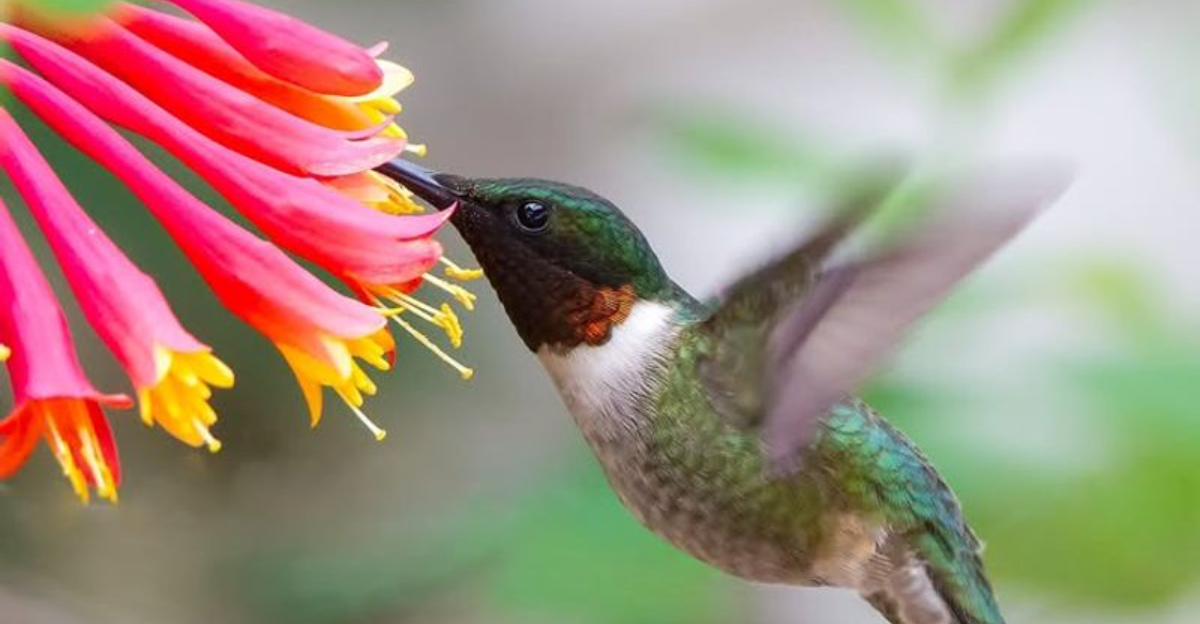
Tennessee gardens can become buzzing, fluttering spaces when the right plants are in the ground. Native honeysuckles are one of the easiest ways to attract birds, bees, and butterflies at the same time.
More wildlife, more beauty, more life. These vines and shrubs offer nectar, shelter, and natural color that local pollinators love.
Instead of planting decorative plants that do little for nature, native honeysuckles actually give something back.
Your garden can feed pollinators while looking amazing. That’s a win for you and the environment. And the best part?
These plants are built for Tennessee’s climate, so they grow stronger with less effort. From climbing vines that cover fences to compact varieties for smaller spaces, native honeysuckles fit almost any yard.
With the right choices, your outdoor space can turn into a wildlife-friendly retreat that stays active all season long. Get ready to enjoy more movement, more sound, and more natural beauty right outside your door.
1. Trumpet Honeysuckle (Lonicera Sempervirens Variants)
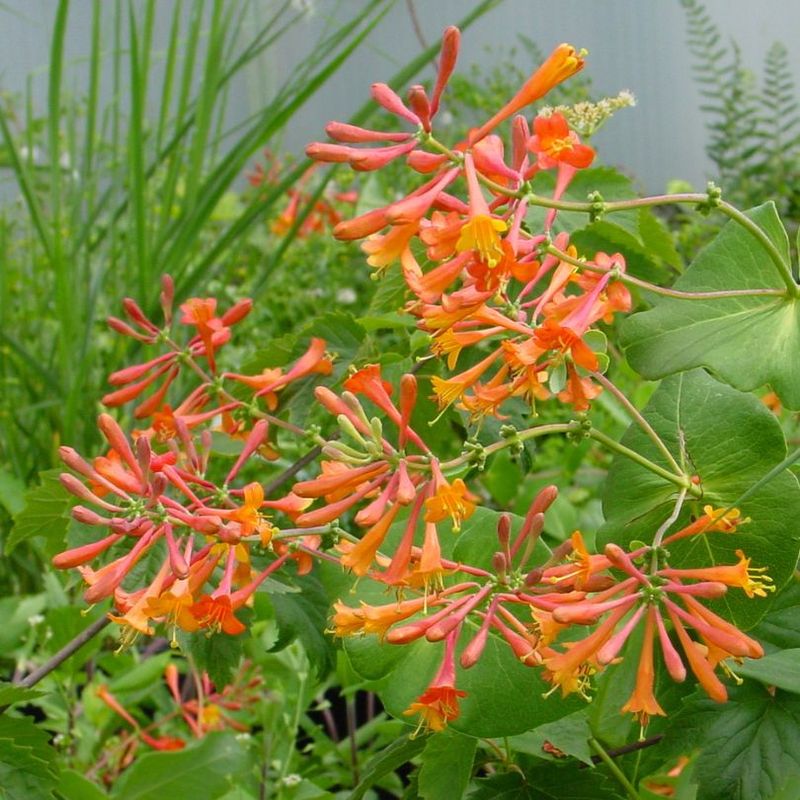
Gardeners often confuse trumpet honeysuckle with coral honeysuckle since they share the same species name, but cultivated variants offer exciting color options beyond the classic red.
Named varieties like ‘John Clayton’ produce pure yellow flowers, while ‘Blanche Sandman’ blooms in deep orange-red, and ‘Alabama Crimson’ displays rich burgundy tubes.
These selections maintain all the wildlife benefits of the straight species while letting you customize your garden’s color palette. Tennessee pollinators show no preference between colors, visiting yellow blooms just as eagerly as red ones.
The trumpet-shaped flowers measure about two inches long, and their tubular form prevents most insects from reaching nectar while welcoming hummingbirds with long tongues.
This evolutionary relationship means planting trumpet honeysuckle directly supports specialized pollinators that depend on native plants for survival.
The vines bloom heaviest in late spring, then continue producing scattered flowers through summer and into fall, especially if you deadhead spent blooms regularly.
This extended flowering period proves critical for migrating hummingbirds that time their journeys to coincide with native nectar sources.
Trumpet honeysuckle grows vigorously but not aggressively throughout Tennessee, handling everything from the cool mountains of East Tennessee to the humid conditions near Memphis. Plant it where it receives at least six hours of sunlight daily for best flowering, though it tolerates light shade reasonably well.
The vine climbs by twining around supports, so provide a trellis, fence, or arbor for it to scramble up. Mature vines create dense coverage perfect for screening unsightly views or creating privacy barriers that also happen to feed wildlife.
One often overlooked benefit is the attractive blue-green foliage that serves as a perfect backdrop for the vibrant flowers. The leaves stay semi-evergreen in Tennessee’s milder regions, providing winter interest when many plants look dormant and dreary.
Established plants handle summer heat and occasional drought without wilting or looking stressed, making them reliable performers even during challenging growing seasons.
2. Coral Honeysuckle (Lonicera Sempervirens)
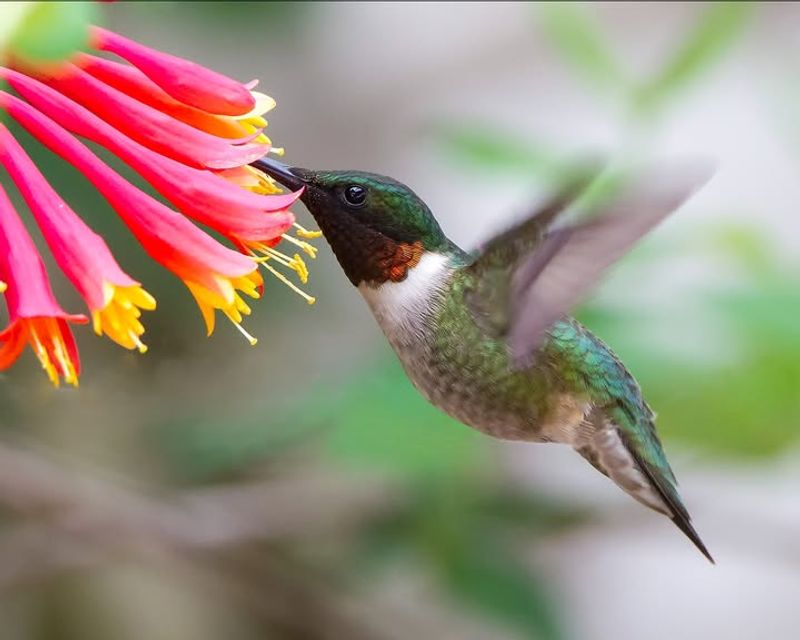
Hummingbirds cannot resist the brilliant red tubular flowers that cover this vigorous vine from spring through fall. Coral honeysuckle grows wild across Tennessee woodlands and forest edges, making it supremely adapted to local growing conditions without any pampering.
Your Tennessee Garden Changes Every Week. Your Plan Should Too.
Gardening in Tennessee changes quickly throughout the season. Every Friday you’ll receive a simple weekly plan showing exactly what to plant, prune, fertilize, harvest, and protect so you never miss the right timing.
The vine climbs enthusiastically up fences, mailboxes, lamp posts, and trellises, reaching 10 to 20 feet with twining stems that need no tying or special support systems.
Unlike Japanese honeysuckle that smothers everything in sight, coral honeysuckle behaves politely and never becomes a nuisance.
The flowers appear in clusters at branch tips, creating stunning displays of coral-red tubes tipped with yellow or orange interiors.
Ruby-throated hummingbirds visit these blooms constantly throughout their breeding season, and the long flowering period means your garden becomes a reliable fuel station during spring and fall migrations.
Butterflies also appreciate the nectar, though the flower shape clearly evolved to accommodate hummingbird beaks perfectly. By late summer, small red berries replace spent flowers, providing food for songbirds like thrashers, waxwings, and mockingbirds.
Growing coral honeysuckle in Tennessee gardens could not be simpler. Plant it in full sun to partial shade, and it adapts to clay, loam, or sandy soils without complaint.
Once established, the vine tolerates drought remarkably well, though occasional watering during extended dry spells keeps blooms coming strong. Deer generally leave it alone, which makes it valuable for rural properties where browsing pressure limits plant choices.
The semi-evergreen foliage stays attractive through mild winters, providing year-round interest beyond the spectacular bloom show.
This honeysuckle works beautifully on arbors, pergolas, or allowed to scramble through shrubs for a naturalistic look. Gardeners appreciate that it rarely needs pruning beyond shaping, and it has no serious pest or disease problems.
For Tennessee gardeners wanting maximum wildlife value with minimum maintenance, coral honeysuckle delivers every single time.
3. Yellow Honeysuckle (Lonicera Flava)
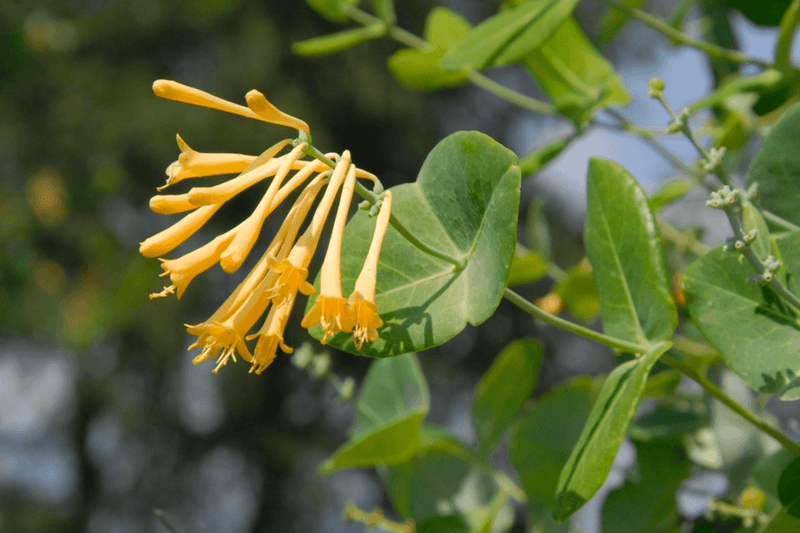
Walking through Tennessee woods in April or May, you might catch the sweet fragrance of yellow honeysuckle before you spot its pale golden blooms. This native vine grows naturally in rocky areas and woodland edges across the state, particularly in Middle and East Tennessee regions.
The flowers appear in whorled clusters at branch tips, and unlike some honeysuckles, they produce a delightful fragrance that attracts both pollinators and human admirers.
The soft yellow color stands out beautifully against the blue-green foliage, creating an understated elegance that fits cottage gardens and naturalistic landscapes equally well.
Yellow honeysuckle typically grows more modestly than its coral cousin, reaching 8 to 12 feet rather than stretching to 20. This smaller size makes it ideal for gardeners with limited space or those who want honeysuckle benefits without overwhelming structures.
The vine climbs by twining, but its less aggressive growth habit means it works well on smaller trellises, mailbox posts, or even allowed to sprawl as a groundcover on slopes where erosion control matters.
Hummingbirds visit the flowers regularly, though the blooming period concentrates in late spring rather than extending through multiple seasons.
Growing yellow honeysuckle successfully in Tennessee requires understanding its preference for well-drained soils and partial shade. While it tolerates full sun, it performs best with afternoon shade, especially in hotter regions of the state.
The vine naturally grows in rocky, somewhat lean soils, so avoid over-fertilizing, which produces excessive foliage at the expense of flowers. Once established, it handles dry conditions well, making it suitable for gardens where irrigation is limited or impractical.
The orange-red berries that follow flowering provide food for songbirds in late summer and fall. Gardeners appreciate that yellow honeysuckle rarely suffers from pest problems and never becomes invasive like exotic honeysuckle species.
For Tennessee gardens seeking a fragrant, well-behaved native vine that supports local wildlife, yellow honeysuckle checks all the boxes without demanding constant attention or maintenance.
4. American Fly Honeysuckle (Lonicera Canadensis)
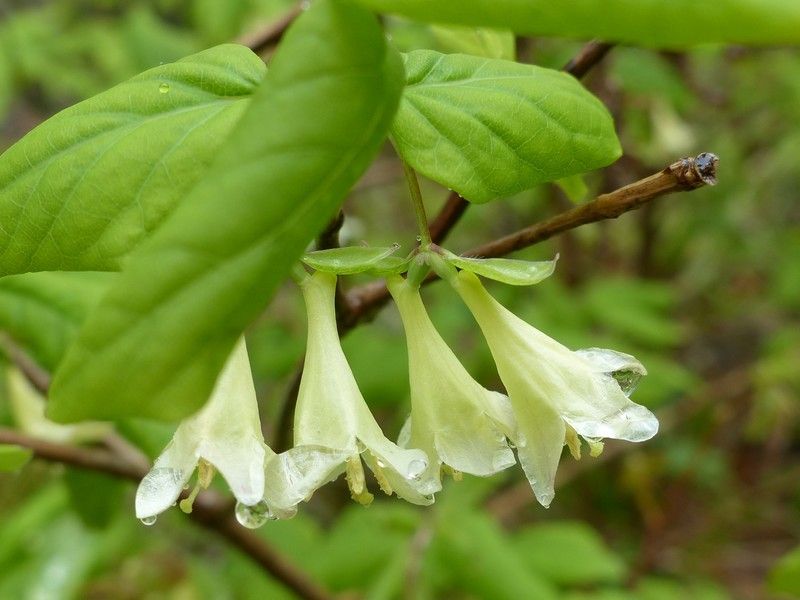
Most gardeners think of honeysuckles as vines, but American fly honeysuckle breaks that mold as a deciduous shrub reaching 3 to 5 feet tall. This Tennessee native grows naturally in cool, moist forests of the eastern mountains, where it thrives in shaded conditions that would leave sun-loving vines struggling.
The shrubby growth habit makes it perfect for woodland gardens, shaded borders, or naturalistic plantings under tree canopies where traditional honeysuckle vines cannot perform.
Small, paired yellow flowers appear in spring, dangling beneath branches in a modest display that attracts early-season pollinators.
The flowers may look understated compared to the showy tubes of coral honeysuckle, but they serve an important ecological role. Native bees and early butterflies visit the blooms when few other nectar sources have emerged from winter dormancy.
By early summer, paired red berries replace the flowers, and these fruits provide critical food for migrating songbirds passing through Tennessee during spring and fall.
Thrushes, vireos, and warblers particularly appreciate these berries, which offer high-energy nutrition exactly when traveling birds need it most.
American fly honeysuckle prefers the cooler, moister conditions found in Tennessee’s higher elevations and north-facing slopes. Plant it in partial to full shade with consistently moist, well-drained soil rich in organic matter.
The shrub tolerates more moisture than most honeysuckles, making it suitable for rain gardens or areas with naturally damp soil.
Once established in appropriate conditions, it requires virtually no maintenance beyond occasional shaping if desired. Deer browse it lightly but rarely cause significant damage.
This honeysuckle works beautifully in native plant gardens designed to support wildlife throughout the seasons. The shrubby form provides nesting sites and shelter for ground-feeding birds, while the berries and flowers support pollinators and fruit-eaters.
Gardeners in mountainous areas of East Tennessee will find American fly honeysuckle perfectly adapted to local conditions, thriving where heat-loving species struggle.
For shaded Tennessee gardens needing a well-behaved native shrub with genuine wildlife value, this overlooked honeysuckle deserves serious consideration.
5. Limber Honeysuckle (Lonicera Dioica)
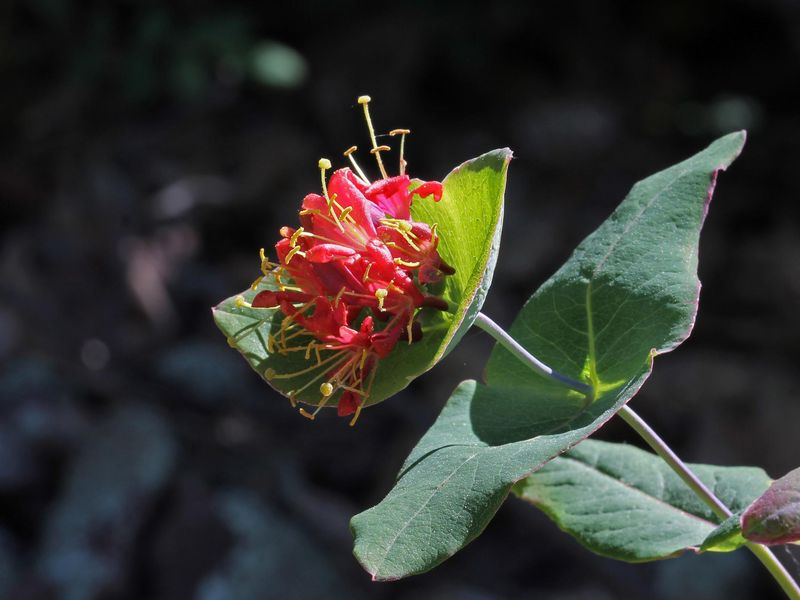
Limber honeysuckle earns its name from flexible stems that bend easily without breaking, allowing the vine to weave through shrubs and small trees in Tennessee woodlands.
This native grows wild across the state, particularly in rocky areas and forest edges where it scrambles over boulders and through vegetation in a relaxed, naturalistic manner.
The flowers appear in late spring, displaying unique coloring with yellow tubes often flushed with purple or red on the outside.
These blooms cluster at stem tips surrounded by distinctive perfoliate leaves where the stem appears to pierce through joined leaf pairs, creating an architectural detail that sets this species apart.
Pollinators find limber honeysuckle just as attractive as its showier cousins, with hummingbirds, native bees, and butterflies all visiting regularly. The vine typically grows 6 to 10 feet long, making it manageable for smaller gardens or situations where massive growth would overwhelm the space.
Unlike aggressive exotic honeysuckles, limber honeysuckle grows at a moderate pace and never threatens to take over your yard or escape into natural areas.
The red berries that follow flowering provide food for songbirds, completing the wildlife support cycle that makes native plants so valuable.
Growing limber honeysuckle in Tennessee gardens works best when you mimic its natural habitat preferences. Plant it in partial shade with well-drained soil, particularly on rocky slopes or areas with lean, unamended soil.
The vine tolerates more shade than coral honeysuckle, making it suitable for woodland edges or gardens with mature trees. Once established, it handles dry periods well, though occasional watering during extreme drought keeps it looking fresh.
The vine climbs by twining but also works as a groundcover if no vertical support is available.
Gardeners appreciate limber honeysuckle’s resistance to pests and diseases, along with its low-maintenance nature.
The unique leaf arrangement and bicolored flowers add visual interest beyond simple bloom color, making it appealing even to those focused more on aesthetics than wildlife support.
For Tennessee gardens wanting a well-behaved native vine that handles shade and rocky soils while supporting pollinators, limber honeysuckle offers a perfect solution that looks beautiful and functions ecologically.