Plant These Native Honeysuckles If You Want To Attract More Birds And Bees In Missouri Gardens

Missouri gardens can become full of movement and sound when the right plants are growing.
Native honeysuckles are one of the easiest ways to attract more birds, bees, and butterflies at the same time. More blooms mean more visitors, and more visitors mean a more alive garden.
These native plants don’t just look good, they provide food, shelter, and nesting support for local wildlife. That makes them a smart choice for gardeners who want beauty with purpose.
Your garden can work with nature instead of against it. And the bonus?
Native honeysuckles are well adapted to Missouri’s climate, so they need less care once established. From climbing vines that cover fences to compact shrubs for smaller spaces, there’s a honeysuckle for every yard size.
When planted in the right spot, these plants reward you with colorful flowers and nonstop activity. If you want a garden that buzzes with life and stays vibrant all season, native honeysuckles are a powerful place to start.
1. American Fly Honeysuckle (Lonicera Canadensis)
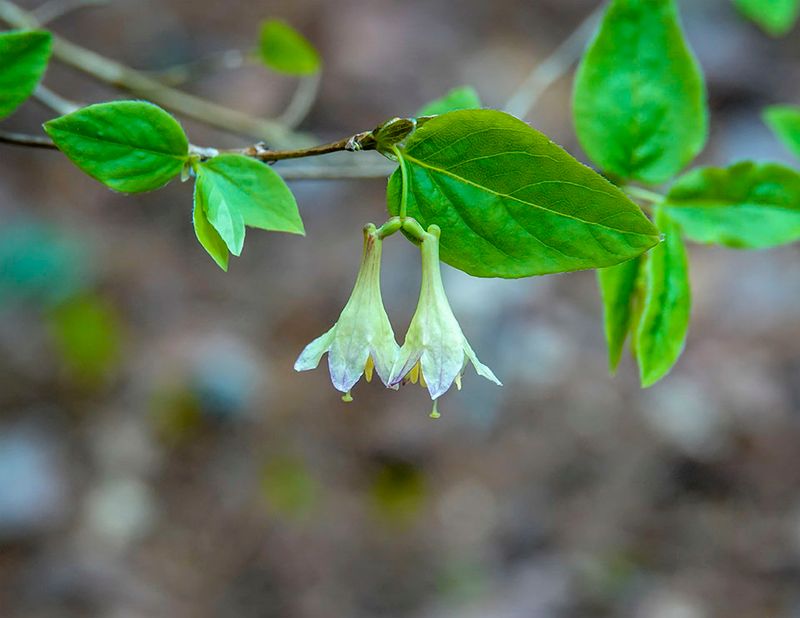
Woodland gardens in Missouri benefit tremendously from American fly honeysuckle, a shrubby species that prefers shady spots under tree canopies.
Unlike climbing honeysuckles, this one forms a rounded bush reaching 3 to 5 feet tall and wide, making it perfect for layering beneath taller trees.
The delicate yellow-green flowers appear in paired sets during early spring, providing nectar when few other plants are blooming.
Bumblebees emerge from winter dormancy hungry for energy, and American fly honeysuckle delivers exactly what they need.
The modest flowers might not create dramatic garden displays, but their early timing makes them invaluable for pollinators awakening in March and April.
By summer, paired red berries dangle from branches like tiny ornaments, attracting wood thrushes, veeries, and other forest-dwelling birds that appreciate the shrub’s sheltered setting.
This honeysuckle naturally occurs in Missouri’s wooded areas, particularly in the northern and eastern regions of the state. It tolerates deep shade better than most honeysuckles, making it ideal for those difficult spots where little else will grow.
The foliage remains clean and attractive throughout the growing season, turning subtle shades before dropping in autumn.
Missouri gardeners creating native woodland gardens should consider American fly honeysuckle essential. It pairs beautifully with native ferns, wild ginger, and spring wildflowers that share similar habitat preferences.
The shrub spreads slowly and never becomes aggressive, maintaining a civilized presence in cultivated landscapes. While not showy by conventional standards, it provides crucial ecosystem services by feeding pollinators and birds during critical seasonal transitions.
Plant it in groups of three or five for better berry production and increased wildlife appeal.
2. Trumpet Honeysuckle (Lonicera Sempervirens)
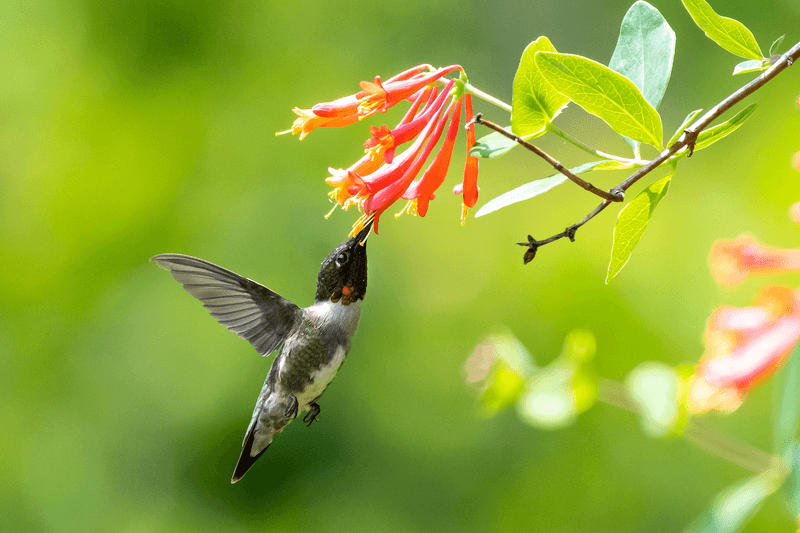
Ruby-red tubular flowers make trumpet honeysuckle an absolute hummingbird magnet throughout spring and summer. This vigorous vine climbs fences, trellises, and arbors with ease, creating stunning vertical displays that transform ordinary structures into wildlife feeding stations.
Missouri gardeners appreciate how this native climber stays well-behaved compared to its invasive cousins, growing with purpose rather than overwhelming everything in sight.
Your Missouri Garden Changes Every Week. Your Plan Should Too.
Gardening in Missouri changes quickly throughout the season. Every Friday you’ll receive a simple weekly plan showing exactly what to plant, prune, fertilize, harvest, and protect so you never miss the right timing.
Hummingbirds cannot resist the long, tubular blooms that seem custom-designed for their needle-like beaks. The flowers appear in clusters at branch tips, creating explosive bursts of coral, red, or sometimes yellow color depending on the variety.
After pollination, bright red berries develop and attract cedar waxwings, robins, and other fruit-loving birds during fall and winter months when food becomes scarce.
This honeysuckle thrives in Missouri’s variable climate, tolerating both summer heat and winter cold without complaint. Plant it in full sun to partial shade for best flowering results.
The vine grows 10 to 20 feet long, so give it sturdy support to climb. Unlike some honeysuckles, trumpet honeysuckle produces little to no fragrance, but what it lacks in scent it more than makes up for in visual appeal and wildlife value.
Bumblebees and other native bees visit the flowers regularly, though the long tubes make nectar access challenging for shorter-tongued insects. Butterflies occasionally stop by as well.
Missouri gardeners should plant trumpet honeysuckle near windows or patios where they can easily observe hummingbird acrobatics. This vine requires minimal maintenance once established, needing only occasional pruning to control size and shape.
Deer tend to leave it alone, making it perfect for rural properties where browsing pressure challenges other plants.
3. Yellow Honeysuckle (Lonicera Flava)
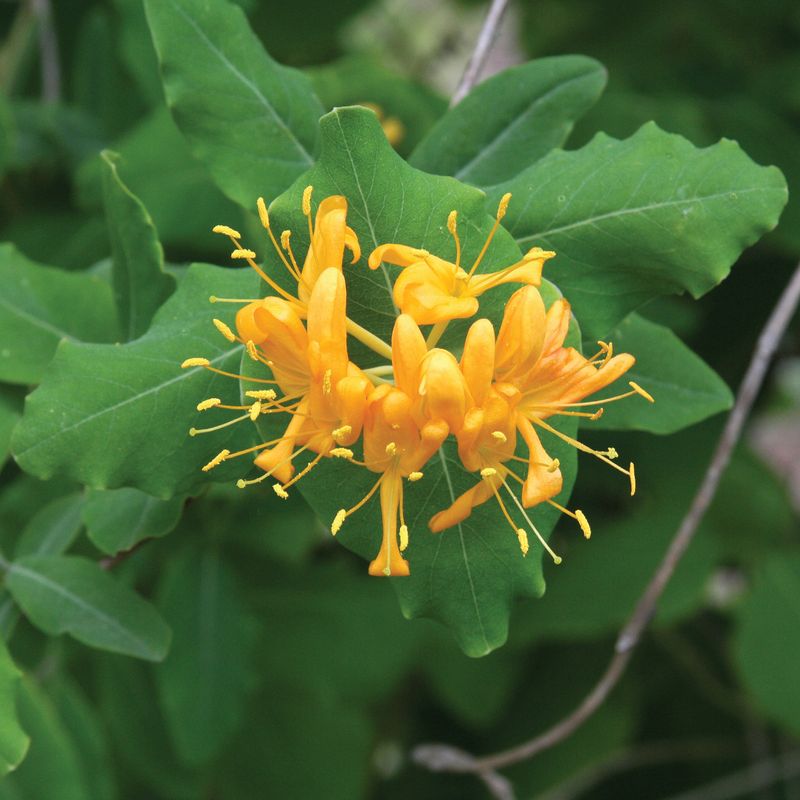
Sunshine seems to radiate from the bright golden-yellow flowers of this Missouri native vine. Yellow honeysuckle blooms during late spring, covering itself with clusters of fragrant tubular flowers that smell sweetly of honey on warm evenings.
The blooms emerge from distinctive blue-green leaves that clasp around stems, creating attractive circular discs that make this species easy to identify even when not flowering.
Hummingbirds show strong preference for yellow honeysuckle, visiting repeatedly throughout the day to drain nectar from the abundant blossoms. Bumblebees and other long-tongued bees also work the flowers efficiently.
The fragrance intensifies at dusk, suggesting moth pollination as well, though hummingbirds handle most of the daytime pollination duties. After flowering finishes, clusters of red-orange berries provide food for catbirds, mockingbirds, and thrashers.
In Missouri landscapes, yellow honeysuckle grows best in full sun to light shade, climbing 8 to 12 feet on fences, pergolas, or large shrubs. It naturally occurs in rocky, open woodlands and along bluff edges throughout much of the state.
The vine maintains moderate growth rates, expanding steadily without becoming invasive or overwhelming nearby plants. Its drought tolerance once established makes it suitable for drier garden sites where other vines might struggle.
The blue-green foliage creates striking contrast against the golden flowers, making this honeysuckle a standout ornamental choice. Missouri gardeners appreciate how it attracts wildlife without requiring constant attention.
Pruning needs are minimal, though you can trim after flowering to control size. Deer occasionally browse the foliage but rarely cause serious damage.
Plant yellow honeysuckle where its evening fragrance can be enjoyed from outdoor living spaces, and where morning sun illuminates the golden blooms for maximum visual impact.
4. Limber Honeysuckle (Lonicera Dioica)
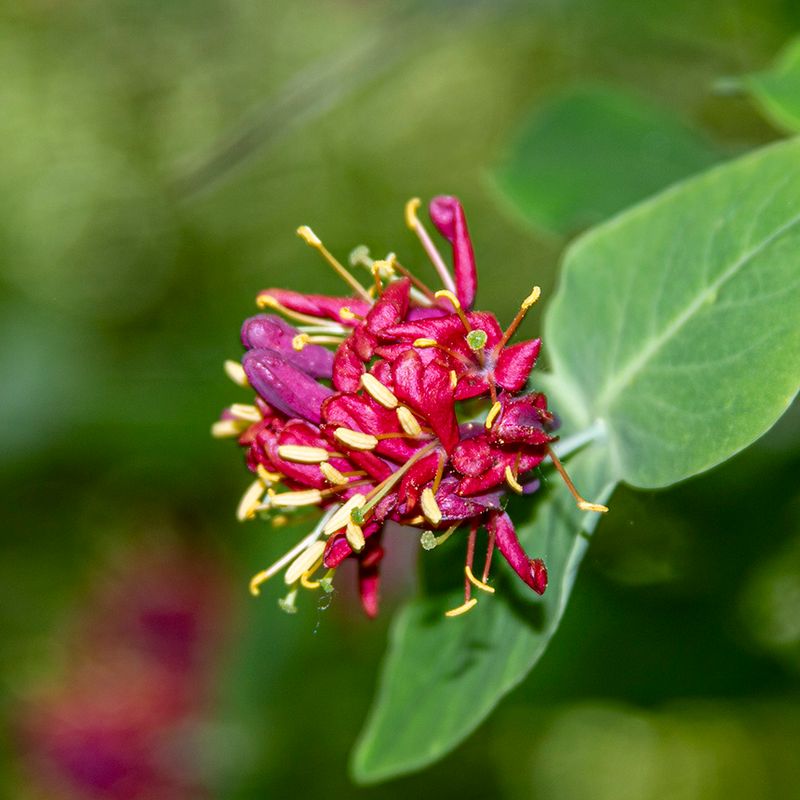
Adaptability defines limber honeysuckle, a twining vine equally comfortable in sun or shade across Missouri landscapes. The flowers present an unusual color combination, starting yellow and aging to orange-red, creating a multicolored display on mature vines.
Blooming occurs during late spring and early summer, with tubular flowers arranged in circular clusters that emerge from fused leaf discs similar to yellow honeysuckle.
Pollinators appreciate the extended bloom period and color variety. Hummingbirds visit throughout flowering, while various bee species work the blooms for nectar and pollen.
The color change from yellow to reddish-orange may signal to pollinators which flowers offer the best nectar rewards, improving pollination efficiency. By late summer, glossy red berries develop and persist into fall, feeding robins, bluebirds, and waxwings during migration season.
Missouri’s varied habitats suit limber honeysuckle perfectly. It grows naturally in open woods, thickets, and along woodland edges throughout the state.
The vine reaches 6 to 10 feet in length, making it suitable for smaller gardens where larger honeysuckles might overwhelm the space. Its tolerance for both sun and shade gives gardeners flexibility in placement, though flowering tends to be heavier with more sunlight.
Establishing limber honeysuckle requires little effort in Missouri gardens. It adapts to various soil types and moisture levels, though it prefers well-drained sites.
The vine climbs by twining around supports rather than clinging with aerial roots or tendrils, so provide appropriate structures like trellises, fences, or sturdy shrubs. Maintenance remains minimal once plants settle in.
The foliage stays attractive and pest-free throughout summer. Missouri gardeners seeking a versatile native vine that supports wildlife without demanding constant care will find limber honeysuckle an excellent choice for vertical interest and ecological value in diverse garden settings.
5. Hairy Honeysuckle (Lonicera Hirsuta)
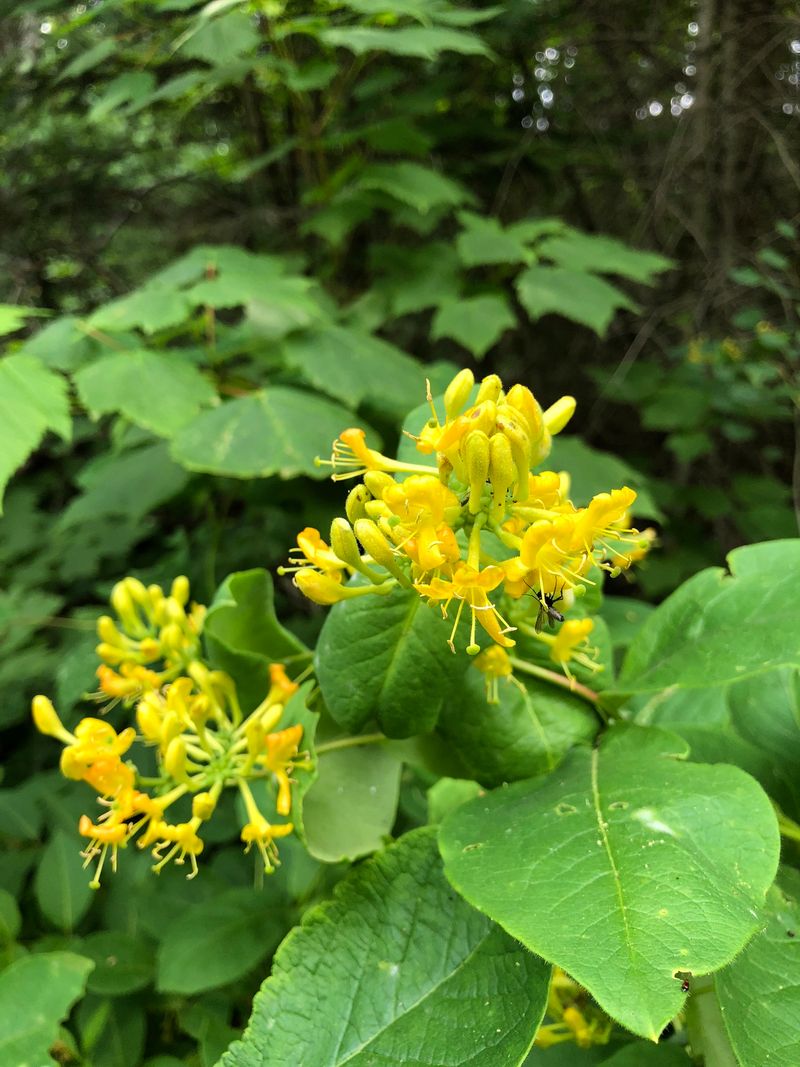
Fuzzy stems and leaf undersides give hairy honeysuckle its common name and distinctive texture in Missouri gardens. This climbing vine produces some of the showiest flowers among native honeysuckles, with large orange-yellow blooms arranged in spectacular whorled clusters.
The flowers appear during early to midsummer, creating weeks of continuous color that draws pollinators from across the neighborhood.
Hummingbirds absolutely love hairy honeysuckle, often defending favorite vines from competitors during peak blooming. The large flowers produce abundant nectar, making them high-value food sources worth protecting.
Bumblebees and other robust bees also visit regularly, squeezing into the tubular blooms to reach nectar and pollen.
After pollination, bright orange-red berries develop in eye-catching clusters that persist into autumn, providing critical food for migrating birds passing through Missouri.
In natural settings, hairy honeysuckle grows along stream banks, in moist woodlands, and at forest edges throughout much of Missouri.
Garden specimens perform best with consistent moisture and partial shade, though they tolerate full sun if watered during dry spells. The vine climbs 10 to 15 feet, twining around any available support with vigor and purpose.
The hairy texture of leaves and stems makes this honeysuckle interesting to touch and easy to identify. Missouri gardeners should provide sturdy support structures because the vine becomes quite substantial with age.
Pruning after flowering helps maintain desired size and encourages bushier growth. The plant rarely suffers from serious pest or disease problems.
Its preference for moister sites makes hairy honeysuckle perfect for rain garden edges or near downspouts where other plants might struggle with occasional wetness.
Plant it where you can watch hummingbird territorial displays during summer mornings, and where fall berry clusters will be visible to appreciate the wildlife feast.
6. Grape Honeysuckle (Lonicera Prolifera)
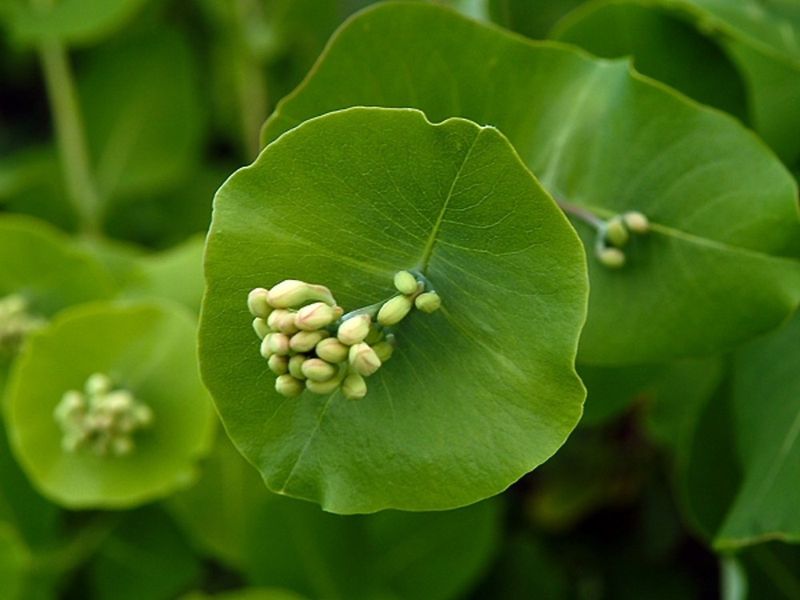
Creamy yellow flowers with subtle purple tinges make grape honeysuckle a softer alternative to bolder-colored species.
This Missouri native vine blooms during late spring, producing circular clusters of tubular flowers that emerge from distinctive fused leaves forming complete circles around stems.
The overall effect resembles decorative collars supporting floral crowns, creating architectural interest even before flowers open.
Pollinators find grape honeysuckle just as appealing as showier species. Hummingbirds visit throughout the blooming period, while various native bees gather nectar and pollen from the accessible flowers.
The lighter color may be easier for pollinators to locate in shaded woodland settings where this honeysuckle naturally thrives.
By midsummer, clusters of red berries develop, attracting catbirds, thrashers, and other fruit-eating birds that appreciate the vine’s sheltered growing locations.
Missouri’s woodlands and forest edges provide ideal habitat for grape honeysuckle. It grows naturally in dappled shade beneath tree canopies, climbing 6 to 12 feet on shrubs and small trees.
Garden specimens adapt to various light conditions but flower most abundantly with morning sun and afternoon shade. The vine maintains moderate growth rates, expanding steadily without aggressive tendencies that characterize invasive honeysuckles.
Establishing grape honeysuckle in Missouri gardens creates layered wildlife habitat. Plant it where it can climb into shrubs or on fences bordering wooded areas for the most natural appearance.
The fused leaves remain ornamental throughout summer, providing textural interest even after flowers fade.
Maintenance requirements are minimal, with occasional pruning sufficient to control size. Deer sometimes browse the foliage but rarely cause lasting damage.
Missouri gardeners creating native plant communities will find grape honeysuckle integrates beautifully with woodland wildflowers, ferns, and shade-tolerant shrubs, building diverse habitat that supports birds, bees, and butterflies through multiple seasons.