Why Nevada Homeowners Are Planting Rosemary By Their Front Doors
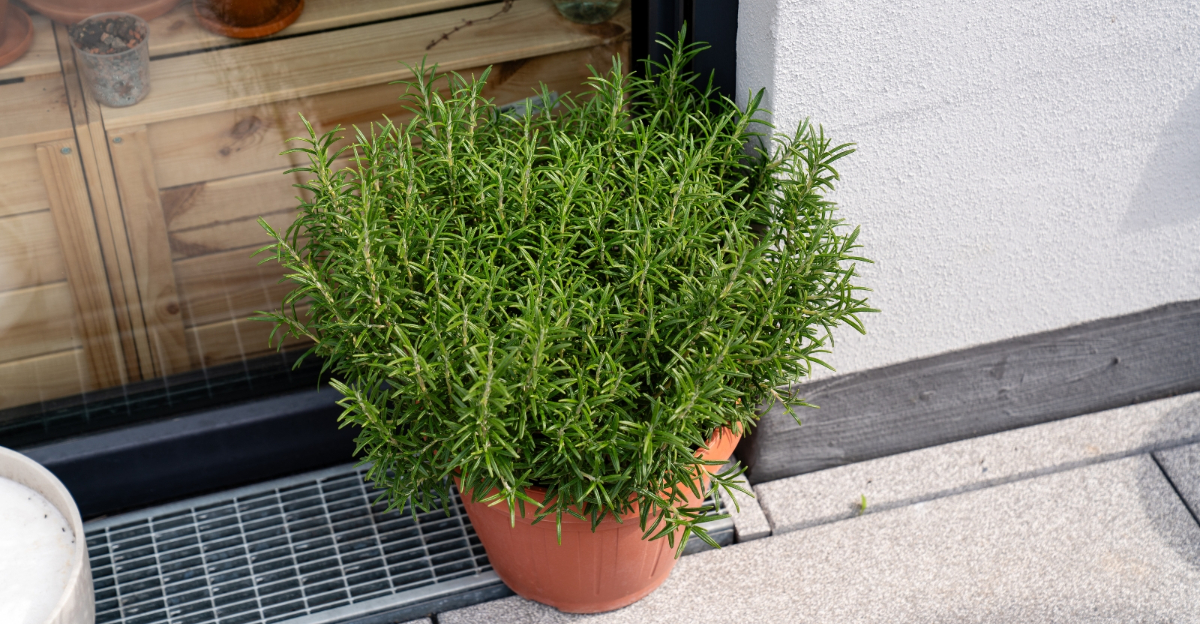
Nevada homeowners are making a subtle front-yard change that’s drawing attention the moment someone walks up to the door.
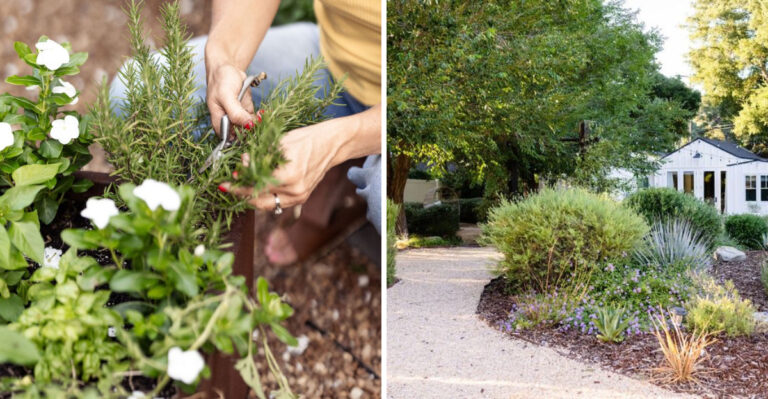
Rosemary is suddenly appearing beside entryways across the state, and it’s not just for cooking anymore.
This herb fits Nevada’s dry heat better than many decorative plants people usually try first. It thrives where others struggle.
Front entrances need plants that look good year-round without constant watering or fuss.
That’s where rosemary quietly stands out for Nevada homes.
Its scent adds a welcoming touch as soon as someone steps near the door, which changes how the whole entrance feels.
Homeowners also notice fewer problems with stressed plants once rosemary is established.
What seems like a small planting choice ends up doing a lot of work.
That balance of beauty and practicality is exactly why rosemary keeps showing up at Nevada front doors.
1. A Front-Yard Plant That Actually Handles Nevada Heat

Most plants you see at the garden center wilt fast once they face the full blast of a Nevada summer. Rosemary, though, seems to shrug off the heat like it’s no big deal.
This Mediterranean native evolved in climates that mirror the dry, intense conditions found across the Silver State, so it doesn’t panic when temperatures climb past 100 degrees.
Homeowners in Las Vegas, Reno, and Henderson have noticed that rosemary stays vibrant even during the hottest weeks of July and August. The leaves don’t turn brown or crispy at the edges like so many other plants do.
Instead, they keep their deep green color and continue growing steadily.
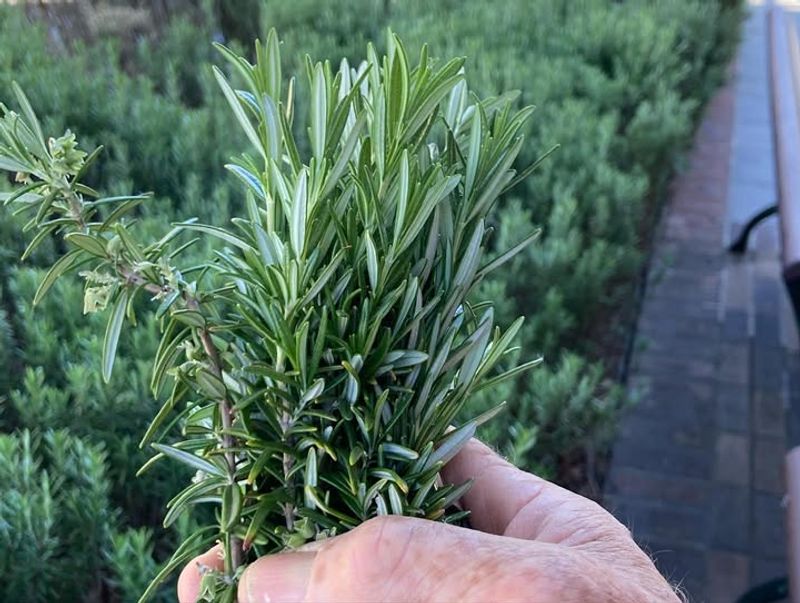
Part of the secret lies in rosemary’s needle-like foliage, which reduces water loss through evaporation. Those tiny leaves are built to conserve moisture, making the plant incredibly efficient in arid environments.
You won’t see drooping branches or stressed-out stems even when the sun beats down relentlessly.
Front doors in Nevada often face south or west, which means they get the harshest sunlight all afternoon. Rosemary thrives in these spots where other plants struggle or fail entirely.
It actually prefers full sun and doesn’t require any shade cloth or special protection.
Gardeners in Nevada also appreciate that rosemary doesn’t need babying during heat waves. You can skip the extra watering sessions that other plants demand when temperatures spike.
This resilience makes it a practical choice for busy homeowners who want their landscaping to look good without constant intervention.
2. The Herb That Keeps Looking Good Near Busy Entryways
Front doors see a lot of action, from kids running in and out to guests arriving and delivery drivers dropping off packages. Plants near these high-traffic zones often get bumped, brushed against, or accidentally stepped on.
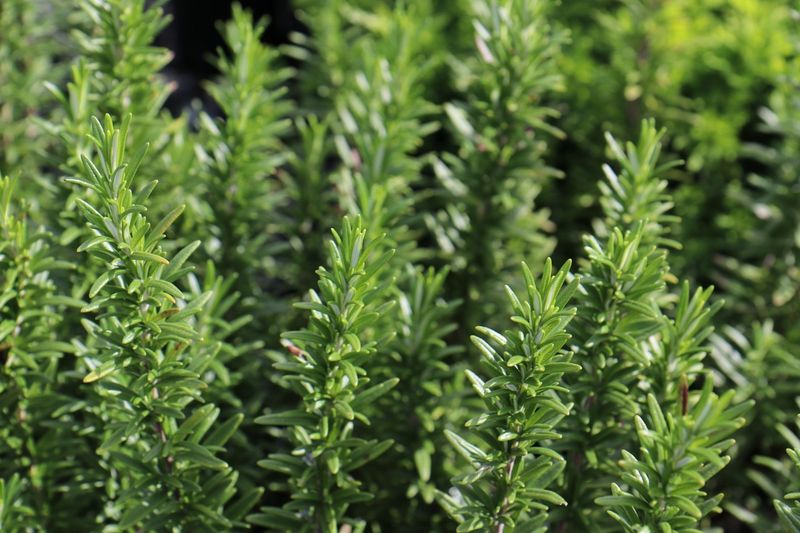
Rosemary handles this kind of wear and tear better than most ornamental plants because its woody stems are surprisingly tough.
Homeowners in Nevada have found that rosemary doesn’t fall apart when it gets jostled. The branches bend slightly but spring back into place without breaking.
This flexibility means the plant maintains its shape and appearance even in spots where people are constantly moving around.
Your Nevada Garden Changes Every Week. Your Plan Should Too.
Gardening in Nevada changes quickly throughout the season. Every Friday you’ll receive a simple weekly plan showing exactly what to plant, prune, fertilize, harvest, and protect so you never miss the right timing.
Soft, delicate plants like petunias or impatiens get crushed easily near busy entryways. Rosemary’s sturdy structure makes it a better fit for these active areas.
You won’t find broken stems or flattened sections after a busy weekend.
The plant’s natural form also helps it look intentional rather than messy. Even if a branch gets bent or slightly damaged, the overall shape of the rosemary bush stays attractive.
It doesn’t look ragged or unkempt the way some plants do after they’ve been disturbed.
Families with pets appreciate that rosemary stands up to curious dogs and cats. Animals might sniff around it or brush past it, but the plant doesn’t show signs of stress.
It just keeps growing and looking good.
Another advantage is that rosemary doesn’t drop a lot of leaves or flowers that need constant cleanup. Busy entryways in Nevada benefit from this low-maintenance quality because you’re not sweeping up petals or dead foliage all the time.
3. Rosemary’s Surprise Fit For Harsh Front-Door Conditions
Front-door areas in Nevada often create microclimates that are tougher than the rest of the yard. Heat radiates off concrete walkways, walls reflect intense sunlight, and there’s often limited airflow.
These conditions can cook most plants alive, but rosemary seems almost designed for these harsh pockets.
The reflected heat from stucco walls or brick facades doesn’t faze this herb. Homeowners in Nevada have planted rosemary right up against walls where temperatures can climb even higher than the surrounding air.
The plant doesn’t show any signs of heat stress in these spots.
Concrete driveways and pathways also absorb and release heat throughout the day and night. This constant thermal stress is too much for many plants, but rosemary adapts easily.
Its roots tolerate the warm soil temperatures that develop near paved surfaces.
Limited soil volume is another challenge near front doors, especially if you’re planting in containers or narrow beds. Rosemary’s root system is efficient and doesn’t require a huge amount of space to thrive.
It can grow well in relatively confined areas where other plants would struggle.
Poor drainage is common near entryways because of compacted soil or hardscaping that channels water away. Rosemary actually prefers well-drained soil and won’t tolerate soggy roots, which makes it a good match for these drier, fast-draining spots.
It thrives where water runs off quickly.
4. A Low-Water Choice That Doesn’t Look Sparse Or Dry
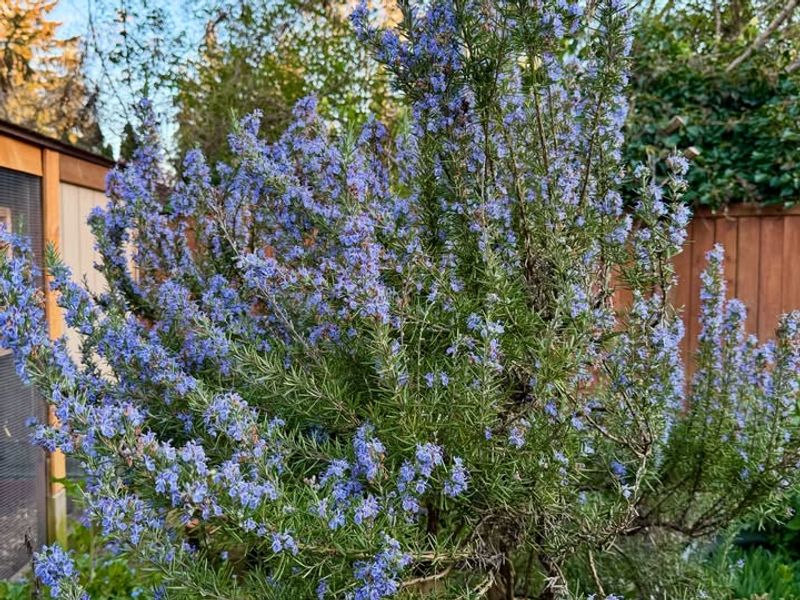
Water-wise landscaping in Nevada often brings to mind sparse, desert-style plantings with lots of rock and minimal greenery. Rosemary breaks that stereotype by offering lush, dense foliage while still being incredibly water-efficient.
It’s one of those rare plants that gives you the best of both worlds.
Once established, rosemary needs very little supplemental watering in Nevada. Homeowners can cut back to watering just once or twice a month during the hottest part of summer, and the plant continues to thrive.
This makes it ideal for anyone trying to reduce water use without sacrificing curb appeal.
The plant’s appearance doesn’t suffer from this minimal watering schedule. The foliage stays full and vibrant, creating a lush look that belies how little water it actually receives.
Visitors to your home would never guess this is a drought-tolerant plant based on its appearance.
Rosemary’s needle-like leaves are key to this efficiency. Their small surface area reduces water loss, and their waxy coating helps seal in moisture.
This natural design allows the plant to look healthy and green even when water is scarce.
Many Nevada homeowners have replaced thirsty lawn areas near their front doors with rosemary. The result is a space that looks intentionally landscaped and polished, not like a water-saving compromise.
You get the visual impact of a well-maintained entrance without the high water bill.
5. Why Entryway Heat Isn’t Phasing This Plant
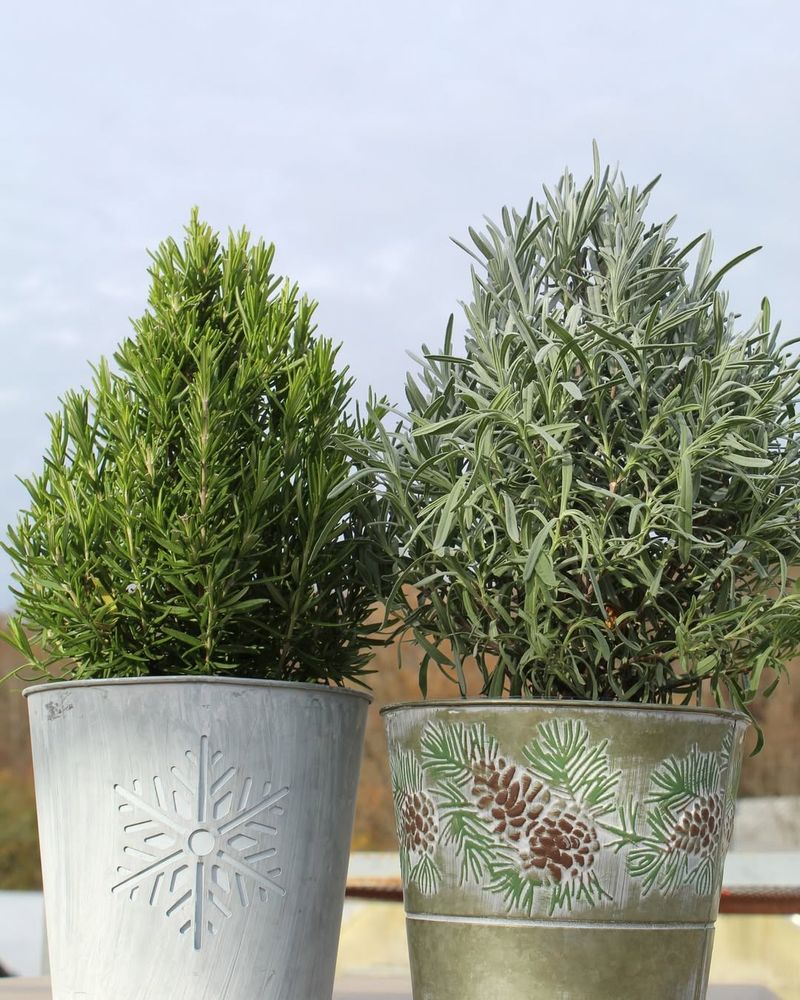
Entryways in Nevada can feel like ovens during summer afternoons, especially when the sun hits at just the right angle. The combination of direct sunlight, reflected heat, and trapped warm air creates one of the most challenging spots in your yard.
Rosemary, however, seems to actually enjoy these conditions rather than just tolerate them.
The plant’s Mediterranean origins mean it evolved in similar hot, sunny environments. Those ancestral growing conditions prepared rosemary for exactly the kind of heat that Nevada front doors dish out.
It’s like the plant was custom-made for these tough spots.
Homeowners in places like Summerlin and Sparks have noticed that rosemary near their front doors often grows more vigorously than plants in cooler, shadier parts of the yard. The heat seems to energize it rather than slow it down.
This counterintuitive response makes it perfect for entryway planting.
The plant’s internal mechanisms for handling heat are remarkably efficient. Rosemary can close its stomata during the hottest part of the day to prevent water loss, then open them again when conditions are more favorable.
This adaptive behavior keeps it healthy even when temperatures soar.
Front door plantings in Nevada also benefit from rosemary’s ability to photosynthesize efficiently in intense light. While some plants get overwhelmed by too much sun, rosemary uses that energy productively.
6. The Subtle Upgrade Homeowners Are Making To Front Landscaping
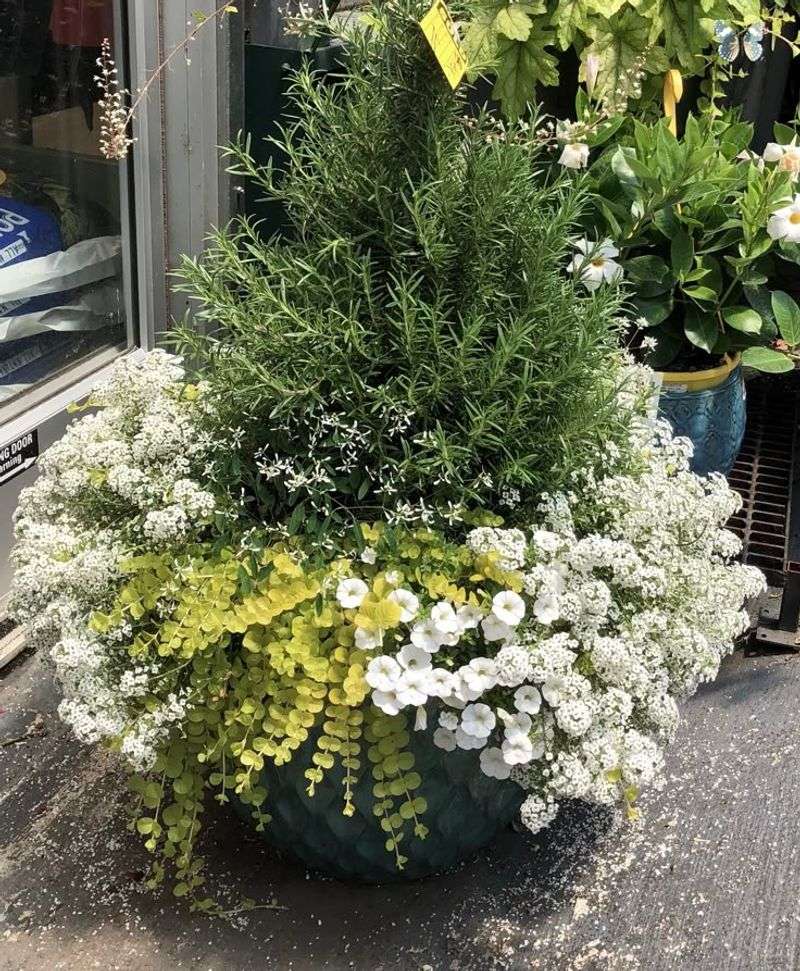
Curb appeal matters in Nevada neighborhoods, but not everyone wants flashy, high-maintenance landscaping near their front door. Rosemary offers a subtle, sophisticated upgrade that enhances your home’s appearance without looking overdone or trying too hard.
It’s the kind of improvement that makes a quiet, positive impression.
The plant’s natural form has an elegant, almost architectural quality. Upright varieties grow into neat, columnar shapes, while spreading types create soft, rounded mounds.
Either way, the structure adds visual interest without being loud or demanding attention.
Homeowners in Nevada appreciate that rosemary looks intentional and curated rather than random. It gives the impression that thought went into the landscaping choices, which elevates the overall look of the property.
This polished appearance can even boost perceived home value.
The evergreen foliage provides year-round color and texture, which is a significant upgrade from seasonal plantings that leave gaps or dead spots. Your front door looks finished and well-maintained in January just as much as in July.
This consistency is part of the subtle upgrade rosemary provides.
Another aspect of the upgrade is the sensory experience rosemary adds. The pleasant, herbal scent that greets visitors as they approach your door creates a memorable first impression.
It’s a small detail that makes your home feel more welcoming and thoughtfully designed.
7. An Evergreen Look Without Constant Trimming
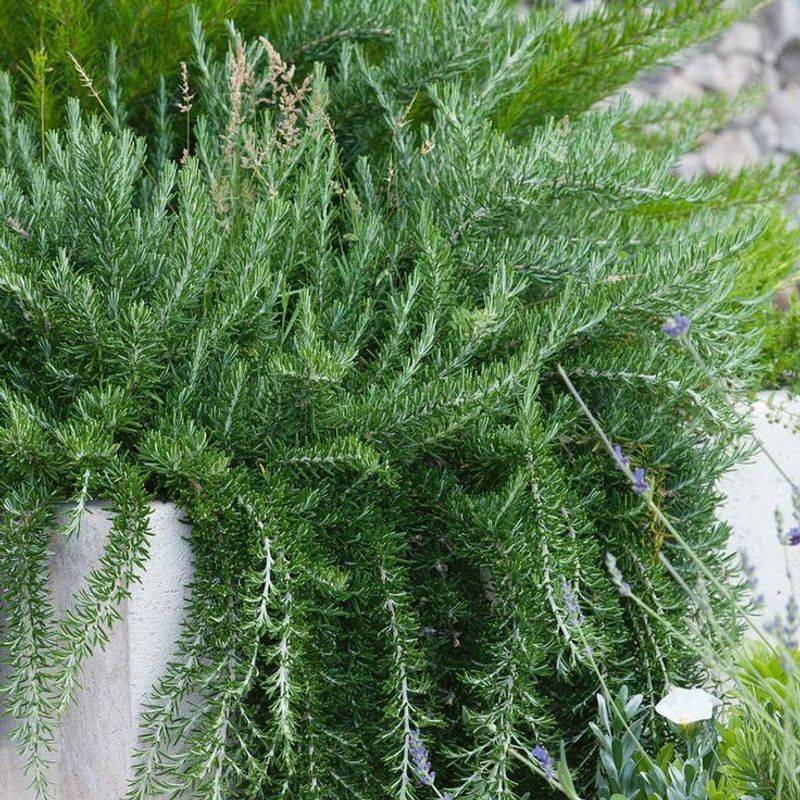
Keeping shrubs and plants near your front door looking neat usually means regular trimming, shaping, and pruning. Rosemary, though, naturally grows into attractive shapes that need very little intervention.
This low-maintenance quality is a major reason Nevada homeowners are choosing it for their entryways.
The plant’s growth habit is naturally tidy and controlled. It doesn’t send out wild, unruly branches that ruin its shape.
Instead, rosemary develops a balanced form on its own, with minimal guidance from you. This saves hours of trimming time throughout the year.
Homeowners in Nevada also appreciate that rosemary doesn’t grow so fast that it quickly outgrows its space. The growth rate is moderate and predictable, which means you’re not constantly cutting it back to keep it from blocking the walkway or door.
It stays manageable with very little effort.
When you do need to trim rosemary, the task is simple and quick. A light shaping once or twice a year is usually enough to keep it looking its best.
This is far less work than many ornamental shrubs that require monthly attention to maintain their appearance.
The plant also responds well to pruning, which means you can shape it to fit your specific space and style preferences. Whether you want a tight, formal look or a more relaxed, natural appearance, rosemary cooperates.
It doesn’t fight back or grow in stubborn, unwanted directions.
Another benefit is that rosemary doesn’t drop a lot of dead foliage or create a mess that needs constant cleanup.
8. A Plant That Holds Shape Even Through Nevada Summers
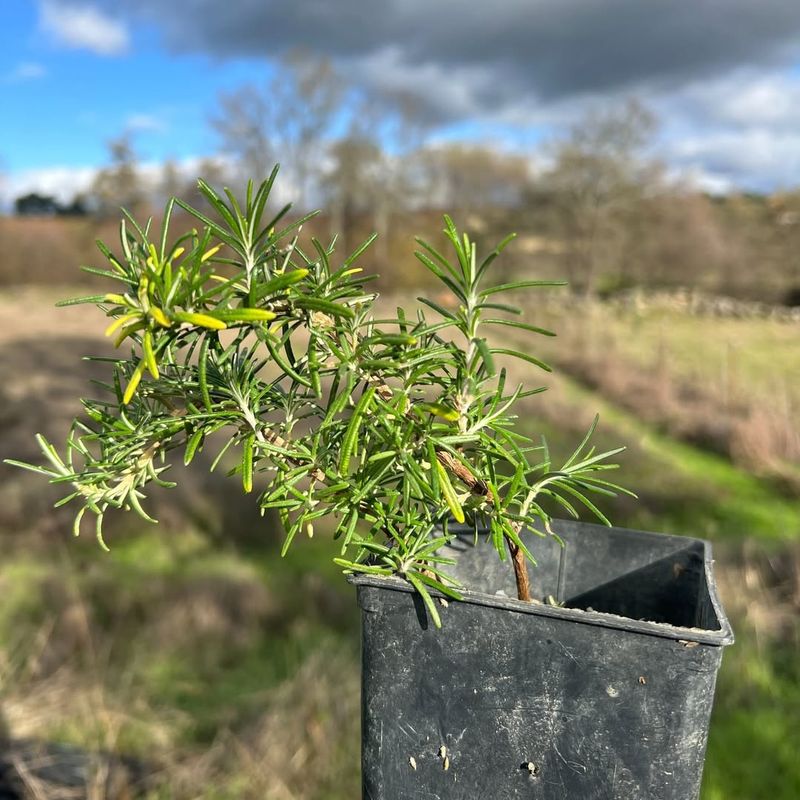
Summer heat in Nevada can cause many plants to stretch, sag, or lose their shape entirely. Leaves wilt, branches droop, and the overall form falls apart.
Rosemary, in contrast, maintains its structure and appearance even during the most intense summer months. This resilience makes it ideal for front door plantings that need to look good all season long.
The woody stems of rosemary provide structural integrity that herbaceous plants simply can’t match. These sturdy branches don’t bend or collapse under heat stress.
They stay upright and firm, keeping the plant’s shape intact no matter how high temperatures climb.
Homeowners across Nevada have noticed that rosemary near their front doors looks just as good in late August as it did in early June. There’s no mid-summer slump or deterioration in appearance.
The plant holds its form consistently, which is exactly what you want in a prominent location.
The plant’s foliage density also remains stable through summer. Many plants thin out or develop bare spots when stressed by heat, but rosemary keeps its full, bushy appearance.
This consistent density means your front door landscaping doesn’t develop embarrassing gaps or sparse areas.
Another factor is that rosemary doesn’t experience the rapid growth spurts that can make some plants look leggy or unbalanced during summer. Its growth remains steady and controlled, which helps it maintain an attractive shape.
You won’t find weird, stretched-out branches ruining the look.
The plant’s color also stays true through Nevada summers. While some evergreens fade or turn yellowish in intense heat, rosemary holds its deep green color.
9. The Front-Door Trend That’s Quietly Spreading Across Nevada
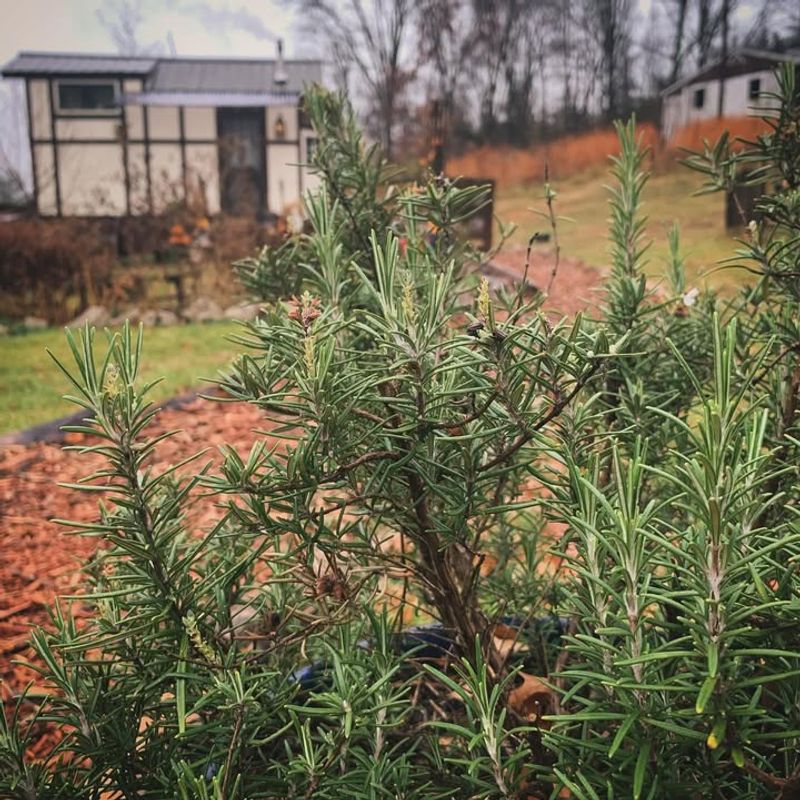
Walk through neighborhoods in Las Vegas, Reno, Henderson, or Sparks, and you’ll start noticing rosemary plants flanking front doors more and more often. This trend isn’t driven by flashy marketing or celebrity endorsements.
Instead, it’s spreading organically as homeowners see how well it works and decide to try it themselves.
The trend started with gardeners and landscaping enthusiasts who understood rosemary’s advantages in Nevada’s climate. They planted it near their front doors, and neighbors took notice.
Word spread through community gardening groups, social media posts, and simple backyard-fence conversations.
Part of what’s driving the trend is the visible success people see at their neighbors’ homes. When you can clearly observe a plant thriving in conditions where others struggle, it’s compelling.
Rosemary’s performance speaks for itself, which makes it an easy recommendation to pass along.
Homeowners also appreciate that this trend aligns with broader movements toward water conservation and sustainable landscaping. Choosing rosemary for your front door feels like a smart, responsible decision that benefits both your home and the environment.
This dual appeal makes the trend feel meaningful rather than superficial.
The trend has also been picked up by local landscapers and garden centers across Nevada. Professionals are recommending rosemary more frequently for front door plantings, and retailers are stocking more varieties.