These Plants Look Stunning In Arizona Yards Even When They Aren’t Blooming
Arizona yards don’t have to rely on colorful flowers to look amazing. Some plants stay beautiful all year long, even when they’re not in bloom.
Great landscaping isn’t just about flowers, it’s about texture, shape, and color. With the intense sun and dry climate, choosing the right plants can make your yard look vibrant without constant watering or maintenance.
Want a yard that looks good every single season? From bold leaves to eye-catching forms, these plants bring style and structure to any outdoor space.
Low water and high impact, that’s the Arizona dream garden. Whether you’re updating your landscape or starting fresh, the right choices can save you time and money.
Your yard can turn heads without needing nonstop blooms. Let’s explore the plants that look stunning in Arizona yards all year long.
1. Blue Agave
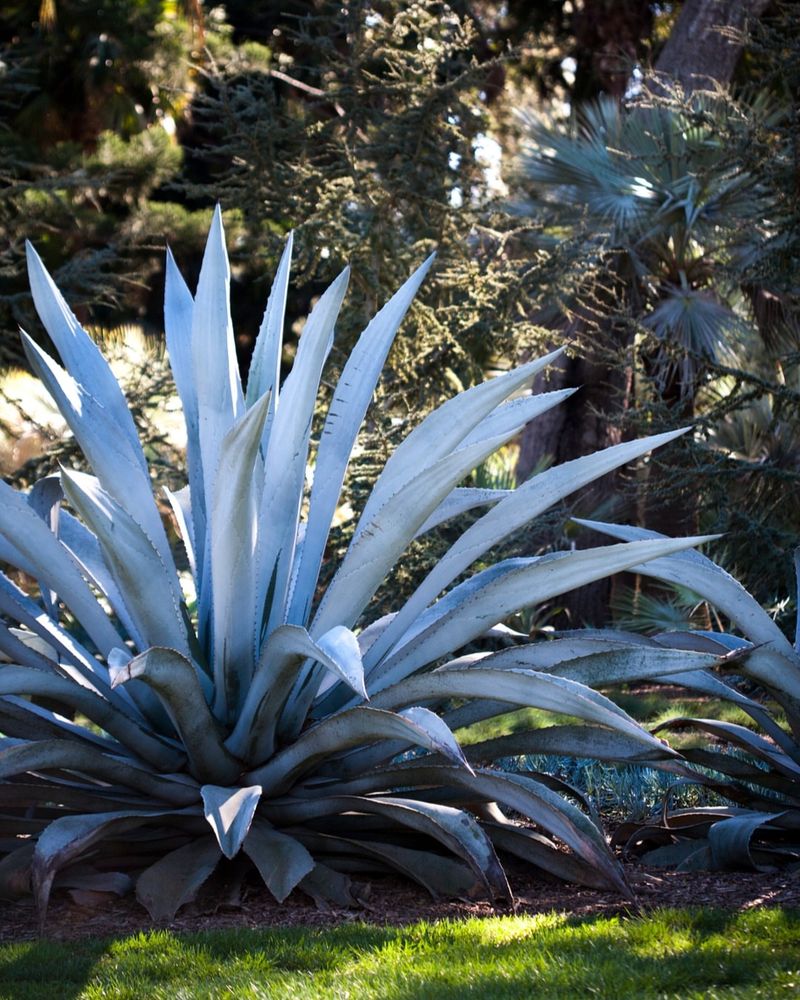
Sculptural beauty defines this iconic succulent that commands attention in any Arizona landscape. Blue agave features thick, fleshy leaves arranged in perfect rosettes that can span several feet wide, creating dramatic focal points in xeriscapes and desert gardens.
The powdery blue-gray color stays vibrant throughout the year, providing a cooling visual contrast against warm-toned rocks and soil common in Arizona yards.
Sharp spines edge each leaf, adding an element of texture and protection that makes this plant both beautiful and functional. Homeowners appreciate how little water blue agave needs once established, making it perfectly suited for the dry conditions throughout Arizona.
The plant grows slowly but steadily, developing into an impressive specimen over several years.
Landscape designers frequently use blue agave as anchor plants in modern desert gardens because their geometric form creates instant visual impact.
The architectural quality works beautifully alongside boulders, gravel pathways, and contemporary home designs popular across Phoenix, Tucson, and other Arizona communities.
Even without its tall flowering stalk, which appears only once in the plant’s lifetime, blue agave remains a showstopper that elevates any outdoor space with its bold presence and striking coloration.
2. Desert Spoon
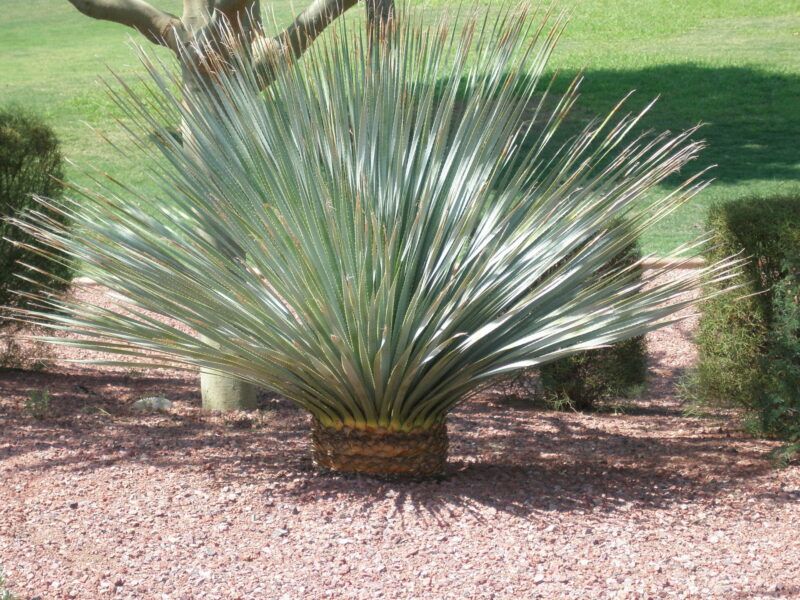
Hundreds of silvery-green leaves radiate from the center of this remarkable plant, creating a fountain-like effect that catches sunlight beautifully.
Desert spoon gets its common name from the spoon-shaped leaf bases that remain after the foliage naturally sheds, forming an interesting textured trunk over time.
This Arizona native thrives in the intense heat and bright sun that would stress many other landscape plants.
Gardeners love how desert spoon maintains its attractive appearance year-round without requiring deadheading or constant pruning. The narrow leaves have small teeth along their edges, adding fine texture that contrasts nicely with smoother-leaved companions.
Male and female plants exist separately, though both offer the same ornamental value when not producing their cream-colored flower stalks.
Placement near entryways or along property borders showcases desert spoon’s symmetrical form to maximum effect.
The plant tolerates reflected heat from walls and pavement, making it ideal for challenging spots in Arizona yards where other plants struggle.
Mature specimens develop a distinctive trunk covered with those spoon-shaped leaf bases, adding another layer of visual interest. Whether planted singly as specimens or grouped for impact, desert spoon delivers reliable beauty through scorching summers and cool winters alike.
Your Arizona Garden Changes Every Week. Your Plan Should Too.
Gardening in Arizona changes quickly throughout the season. Every Friday you’ll receive a simple weekly plan showing exactly what to plant, prune, fertilize, harvest, and protect so you never miss the right timing.
3. Foxtail Agave
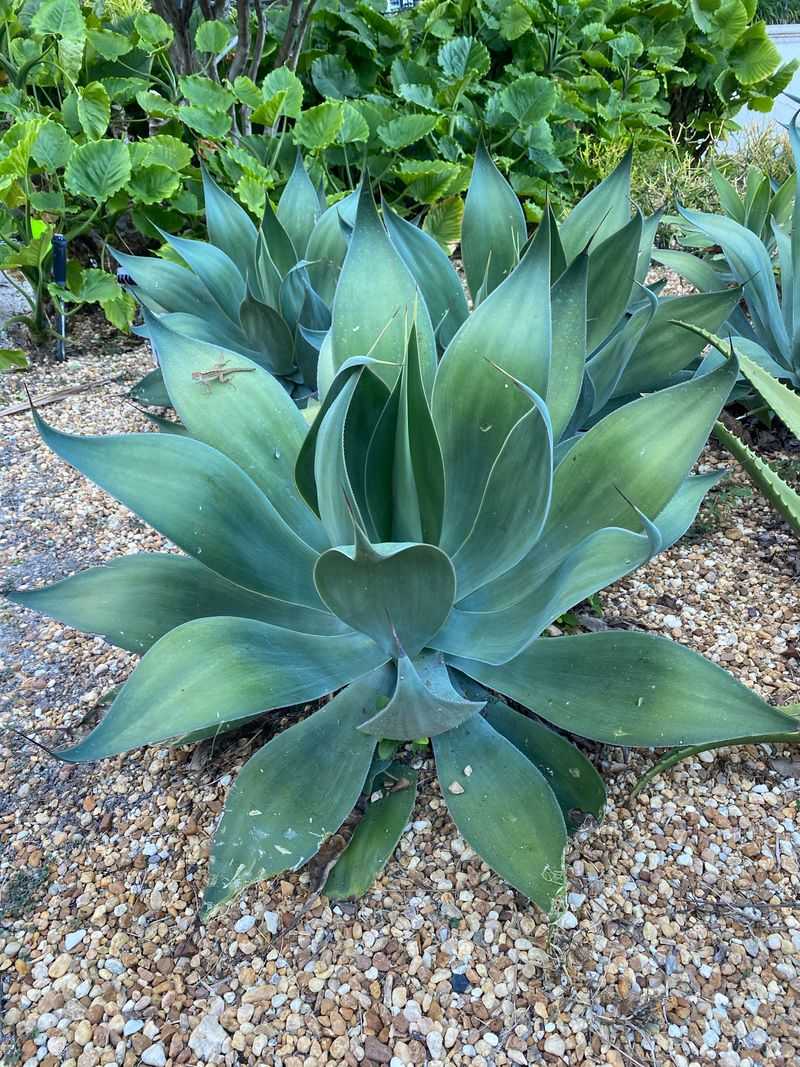
Soft to the eye yet tough as nails, foxtail agave breaks the stereotype that all agaves must be spiny and dangerous.
This variety features smooth leaf edges without the sharp terminal spines found on many relatives, making it more suitable for gardens where children and pets play.
The pale green to blue-green foliage forms dense rosettes that look almost velvety from a distance, creating a gentler aesthetic than typical desert plants.
What really sets foxtail agave apart is how its leaves curve gracefully inward, giving the plant a softer, more refined appearance. Arizona homeowners appreciate this cultivated look that still requires minimal water and care.
The plant grows moderately fast for an agave, filling in landscape spaces within a few years rather than decades.
Container planting works wonderfully with foxtail agave since it stays relatively compact compared to giants like blue agave. Patios and courtyards throughout Arizona benefit from having these attractive succulents in decorative pots that can be repositioned as needed.
The smooth texture invites closer inspection, and the plant’s form remains consistently beautiful whether temperatures soar or drop.
Foxtail agave proves that desert-adapted plants can offer both toughness and elegance, making it a favorite among Arizona gardeners seeking low-maintenance beauty.
4. Golden Barrel Cactus
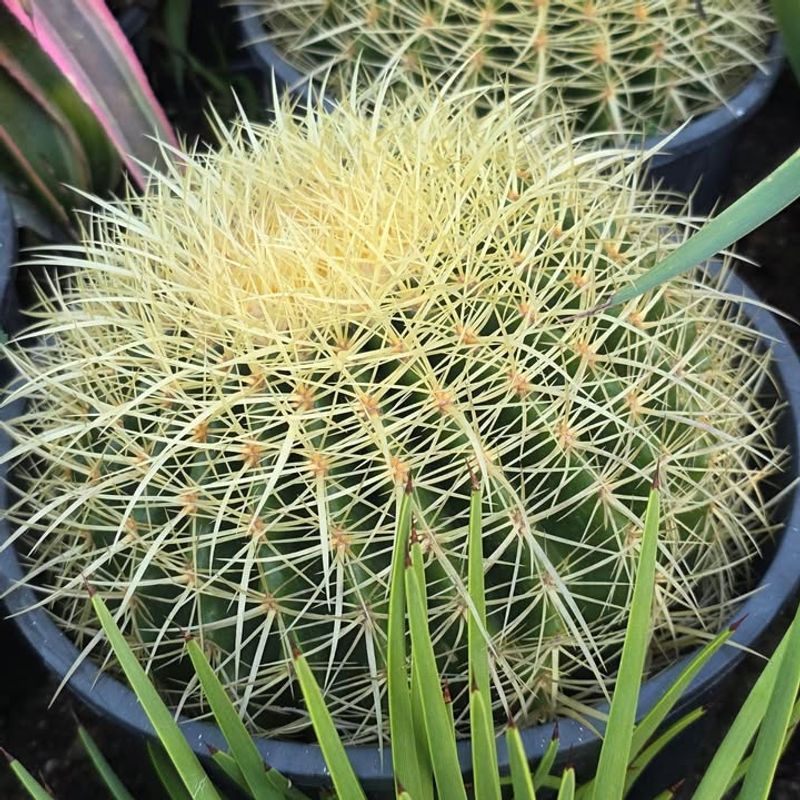
Round as a beach ball and covered in bright golden spines, this cactus brings sunny charm to Arizona landscapes every single day.
Golden barrel cactus grows in a perfectly spherical shape when young, gradually becoming more cylindrical with age but always maintaining that satisfying geometric form.
The dense covering of yellow spines creates an almost glowing effect when backlit by Arizona’s abundant sunshine.
Slow growth means this cactus maintains manageable proportions for many years, making it perfect for smaller yards and rock gardens.
Each spine emerges from woolly areoles arranged in neat vertical rows, creating patterns that fascinate anyone who takes time to observe closely.
The plant’s bright coloration provides a cheerful accent that lifts the spirit even on the hottest summer days.
Clustering several golden barrel cacti together creates an eye-catching display that mimics how they sometimes grow in their native habitat. Arizona gardeners often pair them with darker rocks or ground covers to make the golden spines pop even more dramatically.
These cacti need virtually no supplemental water once established and actually prefer the neglect that would harm thirstier plants.
Whether planted alone as a specimen or grouped with other desert beauties, golden barrel cactus delivers consistent visual appeal that never relies on temporary blooms.
5. Red Yucca
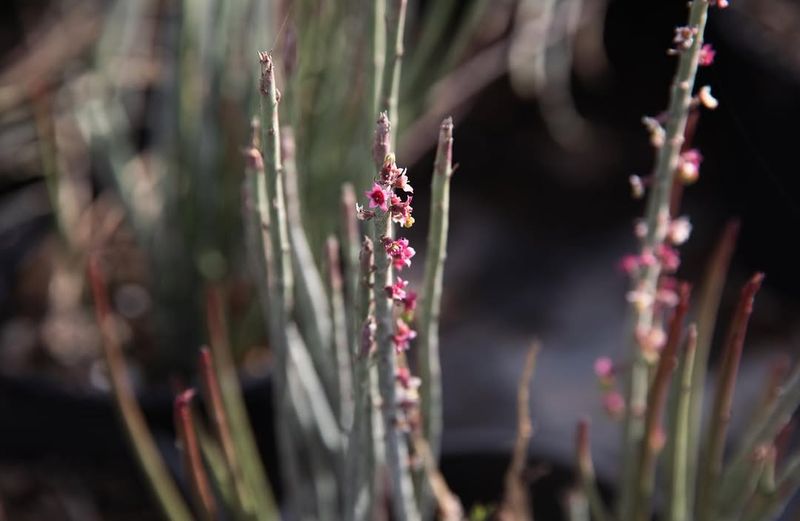
Graceful arching leaves create a fountain of green that softens harsh desert landscapes beautifully. Red yucca isn’t actually a true yucca but rather belongs to a related genus, though that botanical detail matters less than its outstanding ornamental qualities.
The narrow, flexible leaves bend gently in breezes, adding movement to Arizona gardens that might otherwise feel static and still.
Leaf color ranges from deep green to slightly blue-green depending on growing conditions and variety. Fine threads peel from the leaf edges as the plant matures, adding delicate texture without creating maintenance headaches.
Red yucca tolerates a wide range of soil types common across Arizona, from heavy clay to rocky caliche, adapting readily to whatever your yard offers.
Even without its coral-red flower stalks that give the plant its common name, red yucca remains highly attractive throughout the year. The clumping growth habit means it gradually expands to fill space without becoming invasive or unruly.
Arizona landscapers often use red yucca to transition between different garden areas or to soften the edges of hardscapes like patios and walkways. The plant requires almost no care once established, thriving on natural rainfall in many parts of Arizona.
Its evergreen foliage ensures your yard maintains color and life even during cooler months when some desert plants look dormant.
6. Palo Verde Tree
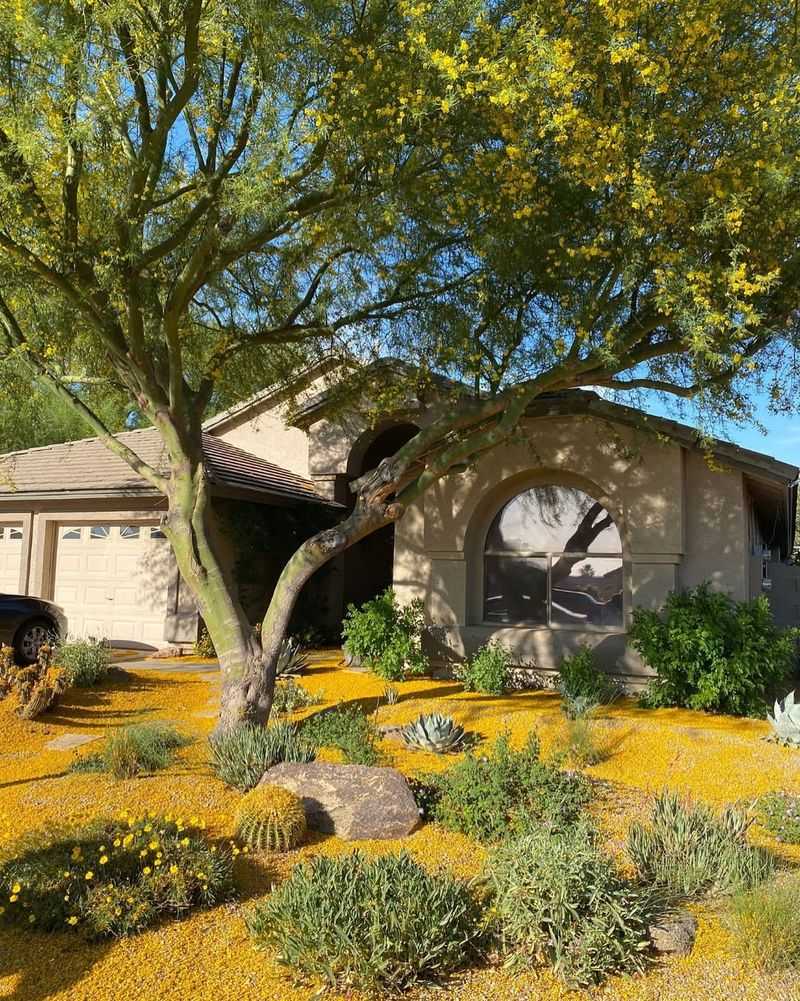
Bright green bark covers the trunk and branches of this Arizona native tree, creating a stunning visual that persists year-round.
Palo verde means green stick in Spanish, a perfectly descriptive name for these trees that photosynthesize through their bark even when leaves drop during drought.
The smooth green trunks and limbs practically glow against Arizona’s blue skies, providing color that most people associate only with foliage.
Small leaflets appear during favorable conditions but often drop during the hottest, driest periods to conserve water. Even completely leafless, palo verde trees remain beautiful thanks to their distinctive bark color and elegant branching structure.
The spreading canopy casts light, filtered shade that allows understory plants to thrive beneath while still providing relief from intense sun.
Several species and hybrids suit different Arizona landscape needs, from compact varieties for smaller yards to large specimens for parks and commercial properties.
The zigzagging branch pattern creates interesting shadows and silhouettes that change throughout the day as the sun moves.
Birds love nesting in palo verde trees, adding another dimension of life and interest to yards throughout Phoenix, Scottsdale, and other Arizona cities.
Whether standing alone as a focal point or planted in groves, palo verde trees offer year-round beauty that goes far beyond their spring blooms.
7. Ocotillo
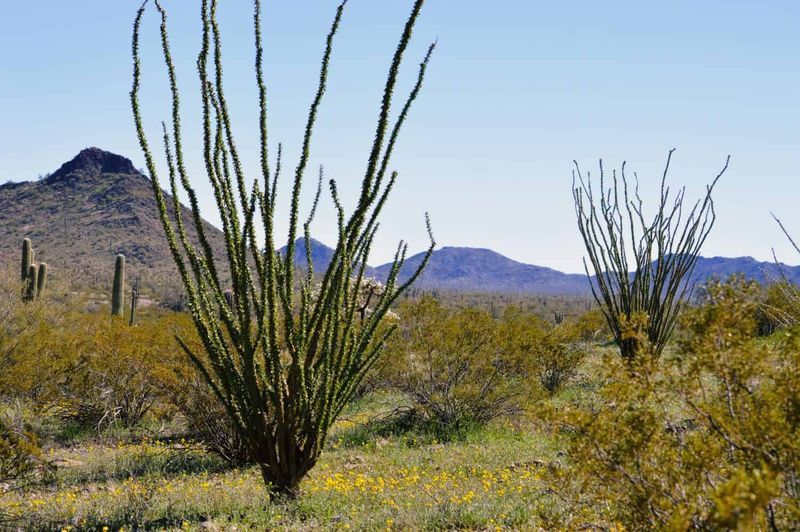
Tall, spiny stems shoot upward like natural sculptures, creating dramatic vertical accents in Arizona landscapes. Ocotillo grows multiple canes from a common base, each one covered in thorns and capable of reaching heights over fifteen feet.
The plant’s architectural form looks almost otherworldly, especially when silhouetted against sunset skies that Arizona is famous for.
Leaves appear quickly after rainfall, covering the thorny canes in bright green that transforms the plant’s appearance almost overnight. During dry periods, ocotillo drops these leaves to conserve moisture, revealing the bare gray-green stems beneath.
This cycle of leafing and leaf-drop happens multiple times throughout the year depending on moisture availability, making ocotillo a living indicator of recent weather patterns.
Even completely leafless, ocotillo commands attention through sheer form and presence. The spiny canes create interesting patterns and textures that change depending on viewing angle and lighting conditions.
Arizona gardeners often plant ocotillo along property boundaries where the tall stems create natural fencing with character. The plant requires excellent drainage and minimal water, thriving in the same conditions that challenge less adapted species.
Ocotillo’s unique growth habit and striking silhouette make it instantly recognizable and endlessly fascinating, proving that desert plants offer beauty far beyond conventional garden standards.
8. Texas Ranger
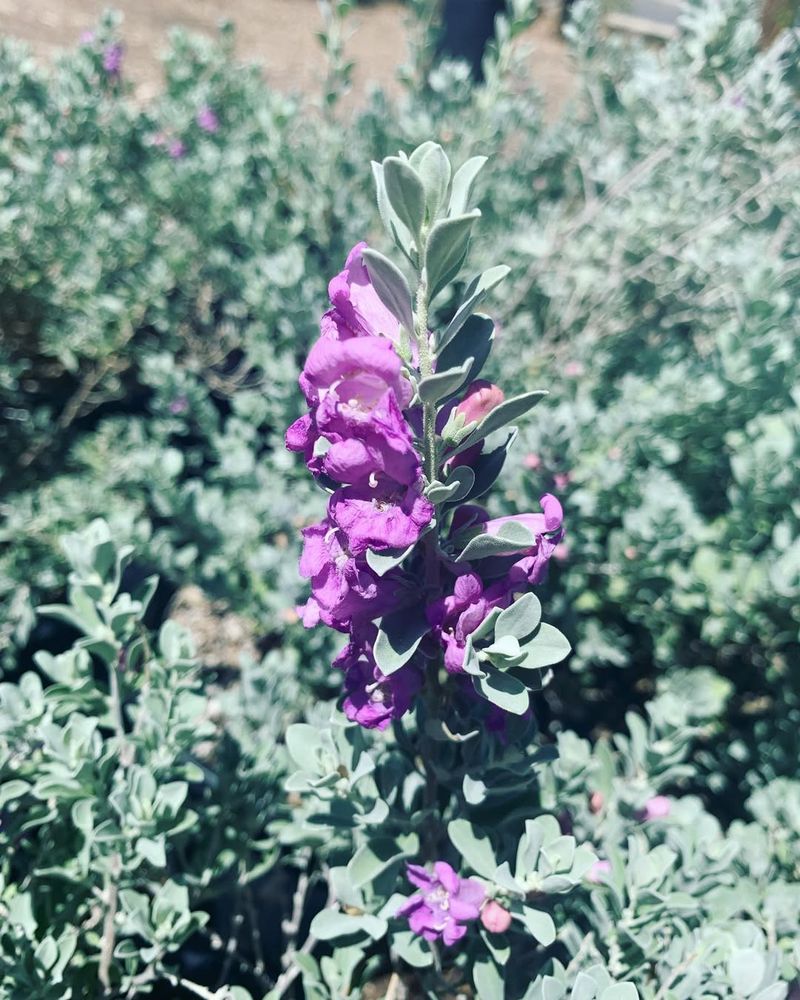
Silvery-gray foliage creates a soft, misty effect that cools down hot Arizona landscapes visually. Texas ranger grows as a rounded shrub with small, fuzzy leaves that feel almost velvety to the touch.
The compact growth habit and neat appearance make it popular for foundation plantings, hedges, and mass plantings throughout residential and commercial properties across Arizona.
Leaf color intensity varies with growing conditions, ranging from nearly white to deeper gray-green depending on sun exposure and water availability. This natural variation adds interest even within a single planting.
The plant tolerates extreme heat and drought once established, asking very little from gardeners while giving back consistent beauty.
Many cultivars exist with slightly different growth habits and foliage colors, allowing Arizona homeowners to select the perfect variety for their specific needs.
The dense branching creates good screening while maintaining an informal, natural appearance rather than looking stiff or formal.
Texas ranger’s silvery foliage provides excellent contrast against darker green plants, red rocks, or earth-toned stucco common in Arizona architecture.
Even without its purple, pink, or white blooms that appear after summer monsoons, this shrub remains highly attractive and valuable in desert landscapes.
The soft texture and cooling color make Texas ranger a go-to choice for creating comfortable, inviting outdoor spaces.
9. Saguaro Cactus
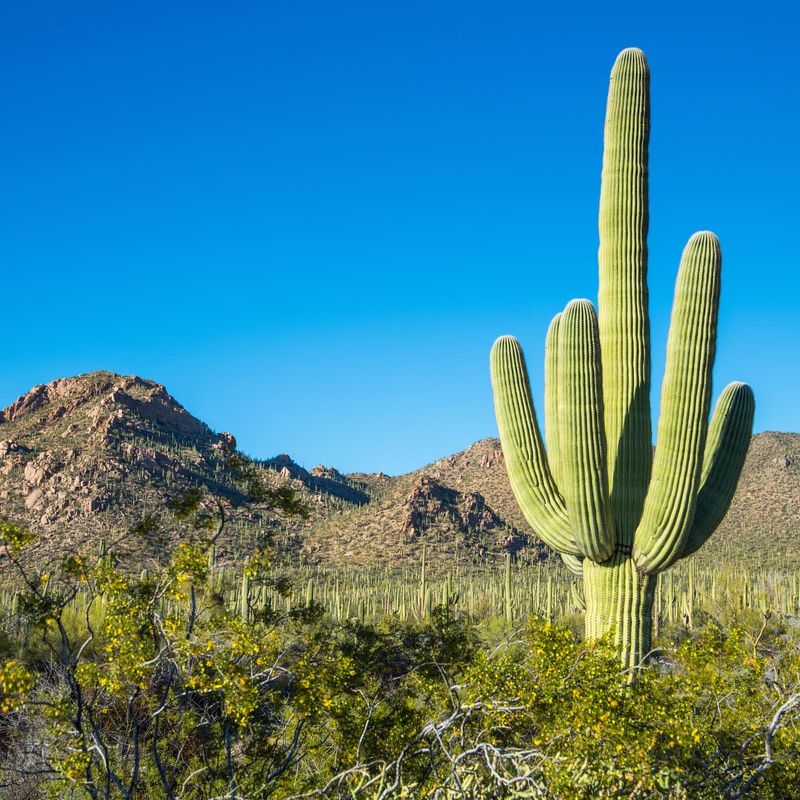
Nothing says Arizona quite like the iconic silhouette of a saguaro cactus standing tall against the horizon. These giants grow incredibly slowly, taking decades to develop the classic arms that make them so recognizable.
Young saguaros appear as simple columns, but even without branches, their strong vertical form creates powerful focal points in landscapes lucky enough to have them.
Pleated ribs run vertically along the trunk and arms, expanding and contracting as the cactus stores and uses water. This accordion-like structure allows saguaros to swell with moisture during wet periods and shrink slightly during drought.
The green skin stays relatively smooth, punctuated by clusters of spines that protect the plant while adding texture and pattern.
Protected by law in Arizona, saguaros cannot be removed or relocated without proper permits, making existing specimens especially valuable. Homeowners with natural saguaros on their property possess living treasures that increase in value and beauty over time.
The cactus provides nesting cavities for birds and serves as an important part of the desert ecosystem. Even a single saguaro transforms an ordinary yard into something distinctly Southwestern.
Whether you inherited one with your property or planted a young specimen to grow with your family, saguaro cacti offer timeless beauty that defines Arizona landscapes like nothing else can.