8 Signs Your Michigan Houseplants Aren’t Getting Enough Light

Houseplants can look healthy one week and start struggling the next, especially during Michigan’s long winters and cloudy days. When plants don’t get enough light, they send out clear warning signs, you just need to know what to look for.
Your plant is trying to tell you something. Slow growth, pale leaves, and weak stems are often the first clues.
Low light can quietly damage your plants. Michigan homes don’t always get strong sunlight, but simple changes can make a big difference.
A brighter spot can save your plant. Whether your plants sit near windows or in darker corners, learning these signs helps you act fast.
Healthy plants start with the right light. Let’s explore the common signs your Michigan houseplants aren’t getting enough light and how to fix the problem.
1. Leggy, Stretched-Out Growth
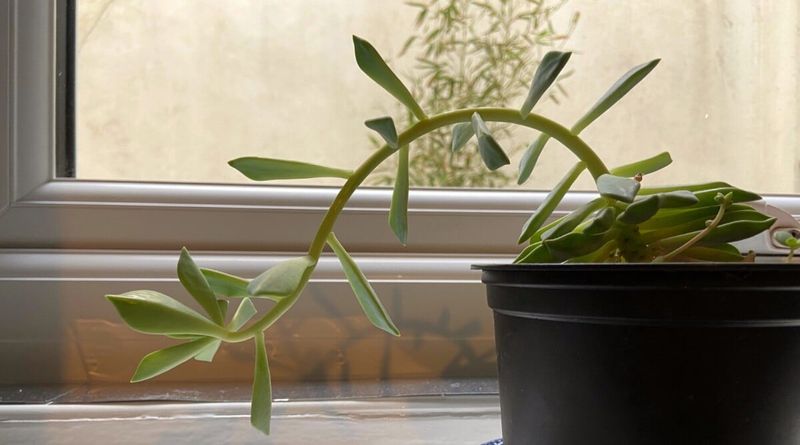
When plants stretch toward the nearest light source, they develop long, thin stems with lots of space between leaves.
This happens because your houseplant is literally reaching for more brightness, sacrificing its natural compact shape in the process. You might notice stems that look weak or floppy, unable to support themselves properly.
In Michigan homes, this problem shows up most often during fall and winter when daylight hours shrink dramatically. Plants that looked full and bushy in summer can become lanky and sparse by January.
The technical term for this stretching is etiolation, and it’s one of the clearest signals that your plant needs more light exposure right away.
Moving the plant closer to a window or adding a grow light can stop this stretching behavior.
South-facing windows provide the strongest natural light in Michigan, especially during shorter days. If you catch the problem early, new growth will come in more compact and healthy-looking.
Pruning back the leggy stems encourages bushier regrowth once you’ve improved the lighting conditions. Many Michigan plant owners find that rotating their collection seasonally helps prevent this issue.
Remember that even shade-loving plants need some indirect light to maintain their proper form and structure throughout the year.
2. Leaves Turning Yellow And Dropping
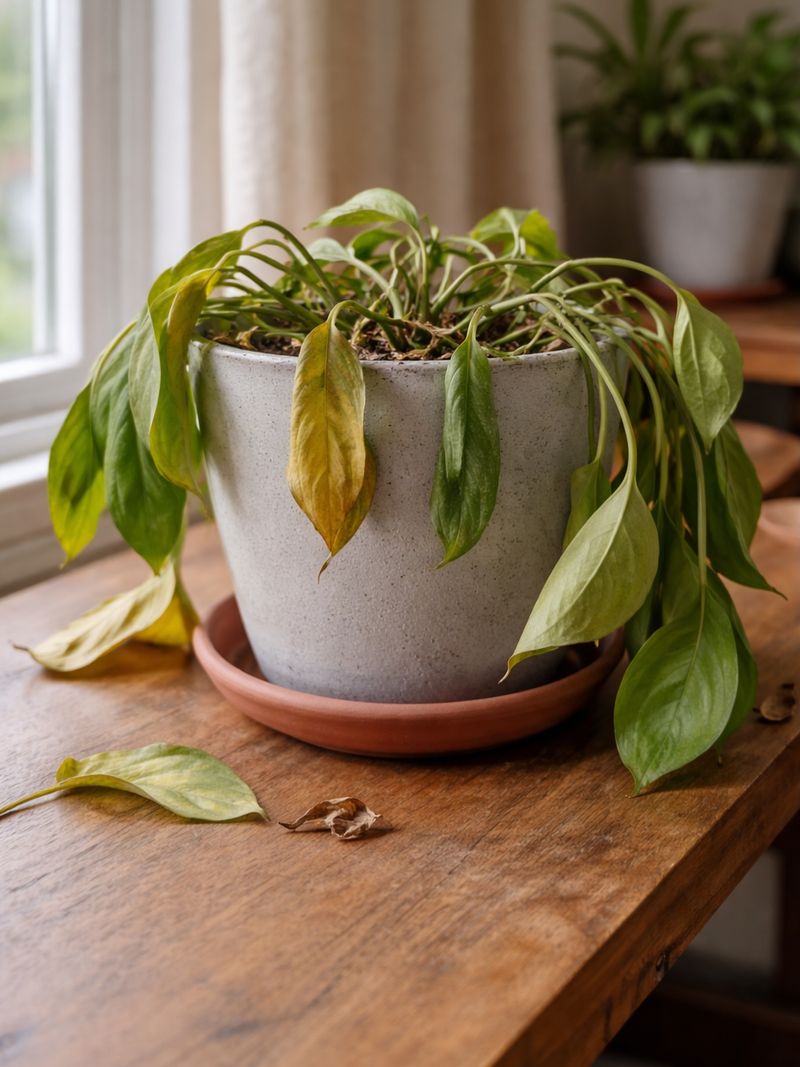
Yellowing leaves that eventually fall off can signal several problems, but light deficiency is a major culprit. Your plant sheds older leaves first because it can’t support all its foliage without adequate energy from photosynthesis.
The yellowing typically starts with lower, older leaves while newer growth stays green initially.
Michigan’s cloudy winter weather makes this symptom particularly common from November through March. Even plants positioned near windows may not receive enough intensity during these darker months.
The yellowing happens gradually, so you might not notice until several leaves have already dropped to the floor around your pot.
Check whether the yellowing appears on just the oldest leaves or spreads to newer growth as well. If it’s mainly older foliage and the plant sits in a dim corner, insufficient light is probably the cause.
Other factors like overwatering can also yellow leaves, so consider your watering habits too.
Your Michigan Garden Changes Every Week. Your Plan Should Too.
Gardening in Michigan changes quickly throughout the season. Every Friday you’ll receive a simple weekly plan showing exactly what to plant, prune, fertilize, harvest, and protect so you never miss the right timing.
Relocating the plant to a brighter spot often stops the leaf drop within a few weeks. In Detroit, Lansing, or other Michigan cities, supplemental grow lights can make a huge difference during winter.
Your plant should start producing healthier green leaves once it gets the brightness it needs for proper food production and energy.
3. Small, Pale New Leaves

Fresh growth should emerge vibrant and full-sized, but light-starved plants produce tiny, washed-out leaves instead.
These new leaves often look lighter in color than they should, lacking the deep green pigmentation that comes from healthy chlorophyll production. The size difference between old and new foliage can be striking and disappointing.
Without sufficient brightness, your plant simply can’t manufacture the resources needed for robust leaf development. Michigan plant lovers often see this during extended cloudy periods when even windowsill plants struggle.
The pale coloring happens because chlorophyll production depends directly on light availability, and weak light means weak pigmentation. Compare new leaves to older, established foliage to spot the difference clearly.
If the new growth looks stunted and faded, your plant is telling you it needs better lighting conditions. This symptom appears across many houseplant varieties, from pothos to fiddle leaf figs.
Improving light exposure helps new leaves develop to their proper size and color. South or west-facing windows work best for most houseplants in Michigan homes.
You should see improvement in the next round of new growth after making lighting adjustments, with leaves that match the size and richness of the plant’s healthy older foliage.
4. Leaning Heavily Toward The Light Source
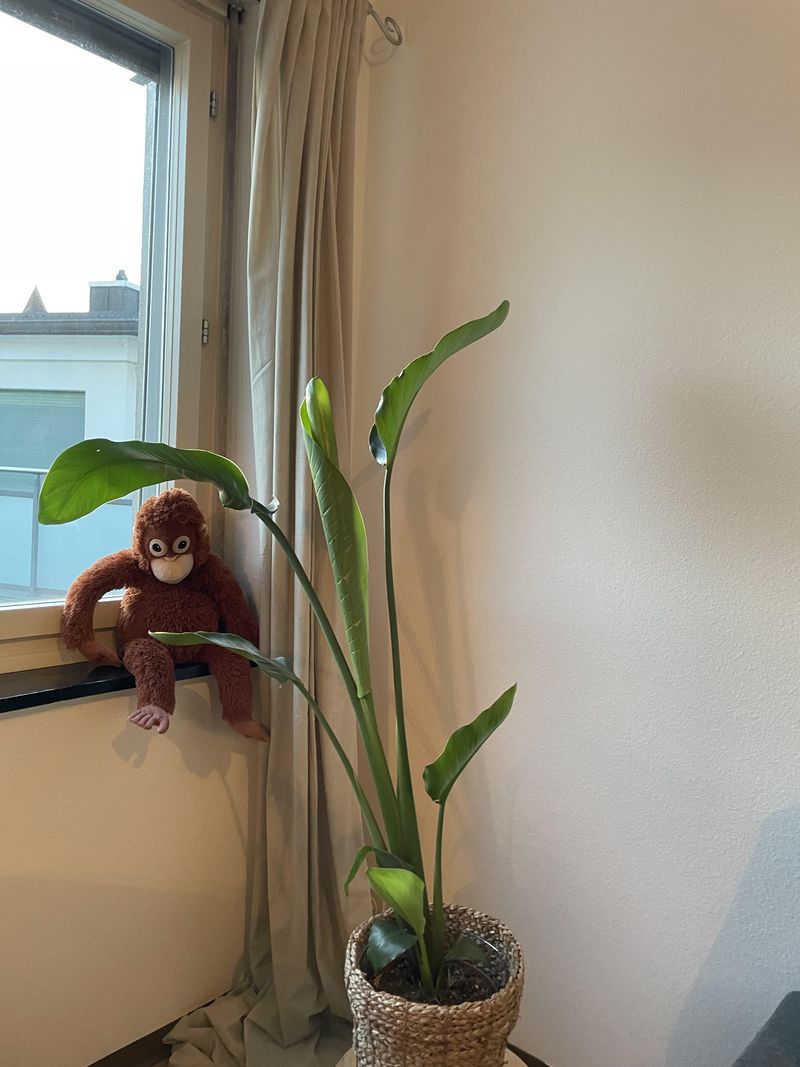
Plants naturally grow toward brightness through a process called phototropism, but extreme leaning indicates they’re not getting enough where they are.
You’ll notice the entire plant tilting dramatically toward the nearest window or lamp, creating an unbalanced, lopsided appearance.
This leaning becomes more pronounced over time as the plant continues chasing available light. In Michigan apartments and homes with limited window access, this behavior is especially noticeable.
Your plant might lean so far that it looks like it’s about to tip over, with all growth directed toward one side. The stems and leaves on the side facing away from light may even stop growing altogether.
Rotating your plant regularly helps it grow more evenly, but rotation alone won’t solve an underlying light shortage. If you’re rotating weekly and the plant still leans aggressively, it needs a brighter location overall.
Many Michigan residents find that even their brightest rooms aren’t bright enough during winter months.
Moving the plant directly in front of a window rather than several feet away often helps tremendously. Consider the direction your windows face, as north-facing windows provide the least direct light.
If relocation isn’t possible, a grow light positioned above the plant encourages upward growth rather than sideways leaning toward natural light sources.
5. Slower Growth Than Expected
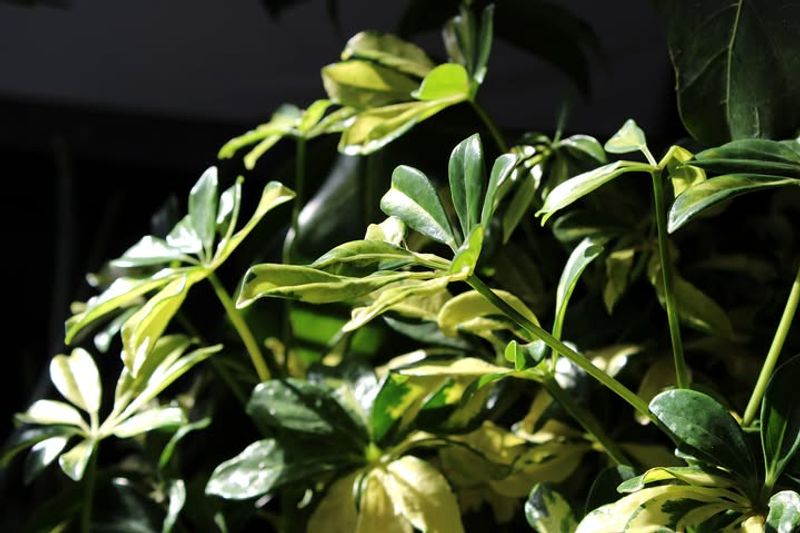
Houseplants have typical growth rates depending on their species and the season, but inadequate light slows everything down noticeably. Your plant might sit unchanged for months, producing little to no new leaves or stems.
Growth that should happen regularly during spring and summer just doesn’t materialize when brightness is insufficient.
Michigan’s long winters naturally slow plant growth even under good conditions, but light-starved plants barely grow at all. You might fertilize and water correctly yet see no response because the plant lacks the light energy to use those resources.
Photosynthesis drives all growth processes, and without enough light, your plant essentially goes into survival mode rather than growth mode.
Track your plant’s progress by taking monthly photos or marking new growth with small tags. If you see no change over several months during the growing season, light is likely the limiting factor.
Different plants have different growth speeds, so research your specific species to know what’s normal.
Brighter conditions jumpstart growth in previously stalled plants, often within just a few weeks. Spring brings longer days to Michigan, which naturally boosts growth rates as light increases.
Supplementing with artificial lighting during darker months keeps growth steady year-round rather than having plants stagnate half the year waiting for better natural light conditions.
6. Loss Of Variegation In Colored Leaves
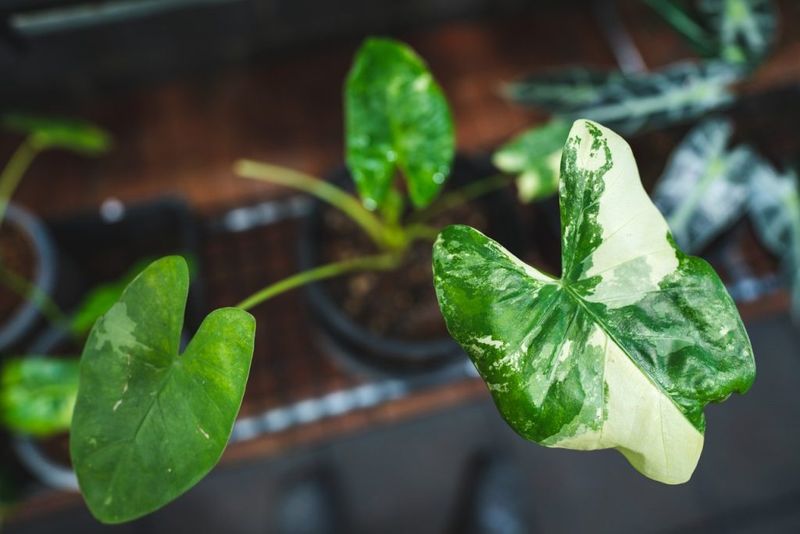
Variegated plants with white, cream, yellow, or pink markings need plenty of light to maintain those beautiful patterns. When brightness drops too low, new growth comes in mostly green as the plant prioritizes chlorophyll production for survival.
The stunning variegation you bought the plant for gradually fades away, replaced by plain green foliage.
This transformation disappoints many Michigan houseplant enthusiasts who love colorful varieties like pothos, prayer plants, or rubber trees.
The plant isn’t damaged, but it’s adapting to low light by making more green pigment to capture whatever brightness is available. Variegated sections have less chlorophyll, making them less efficient in dim conditions.
Once variegation is lost on a particular leaf, it won’t return to that leaf even if you improve lighting. However, new growth will show better patterns when given adequate brightness.
Some plants revert entirely to green if kept in low light long enough, with all new leaves lacking any special coloring.
Variegated plants generally need brighter conditions than their solid-green counterparts to thrive. Place them in the brightest spots in your Michigan home, preferably with some direct morning or evening sun.
If you notice new leaves coming in greener than older ones, increase light exposure immediately to preserve the variegation you love in future growth.
7. Lower Leaves Browning And Shriveling
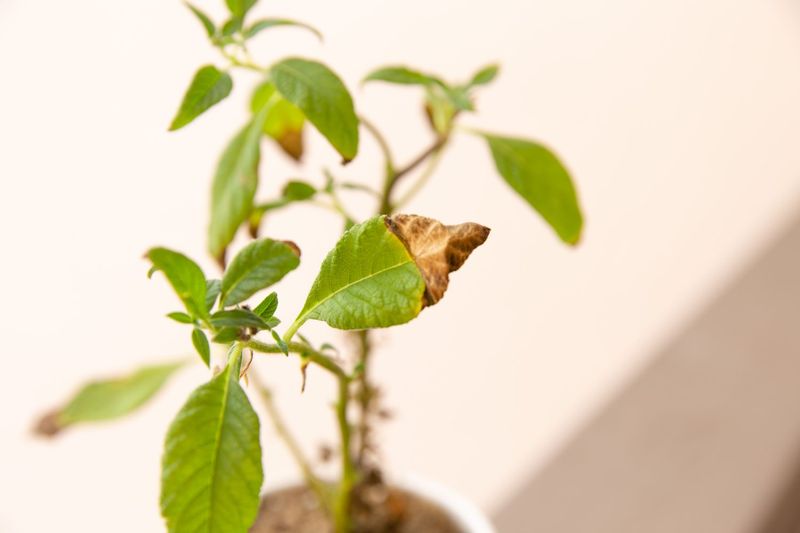
When your plant can’t produce enough energy through photosynthesis, it sacrifices its oldest leaves first to conserve resources.
Lower leaves brown, shrivel, and eventually drop off as the plant redirects limited energy to younger, more efficient foliage. This process accelerates when light levels are too low for the plant to support all its leaves.
Michigan winters create perfect conditions for this problem, especially for tropical plants that need consistent brightness.
You might think the browning means you’re underwatering, but if the soil is moist and lower leaves keep shriveling, insufficient light is more likely the culprit.
The plant is essentially shedding what it can’t afford to maintain. Examine the pattern of leaf loss carefully to identify the true cause.
If only the lowest, oldest leaves are affected while upper leaves stay healthy, and the plant sits in a dim location, light deficiency is probably responsible. Other issues like root rot affect leaves more randomly across the plant.
Providing better lighting stops this progressive leaf loss and helps your plant maintain its full foliage. Moving plants to brighter windows or adding supplemental lighting makes a visible difference within weeks.
In cities across Michigan, from Kalamazoo to Traverse City, houseplant owners find that addressing light problems quickly prevents extensive foliage loss and keeps plants looking their best.
8. Failure To Flower Or Produce Blooms

Flowering houseplants need excellent light conditions to produce blooms, and insufficient brightness prevents flowers from forming entirely. Your plant might look reasonably healthy with decent foliage but never develops buds or flowers despite being mature enough to bloom.
Flowering requires tremendous energy, and plants won’t attempt it unless they have light to spare beyond basic survival needs.
Popular flowering houseplants like African violets, orchids, and Christmas cacti are particularly affected by this issue in Michigan homes. They may grow leaves just fine in moderate light but need much brighter conditions to trigger blooming.
The photoperiod, or length of daylight, also influences flowering in some species, making Michigan’s short winter days doubly challenging.
If your flowering plant hasn’t bloomed in over a year and sits in a dim location, light is almost certainly the problem.
Research your specific plant’s light requirements, as flowering varieties almost always need more brightness than foliage-only plants. Some need direct sun for several hours daily to produce flowers.
Relocating flowering plants to your brightest windows or adding grow lights designed for blooming can trigger flower production. Many Michigan plant owners see their first blooms within months of improving lighting conditions.
Remember that some plants also need specific temperature changes or rest periods to flower, so consider all factors when troubleshooting bloom failure in your houseplant collection.