7 Things To Do If A Deer Shows Up In Your New York Yard And 3 Things You Should Avoid
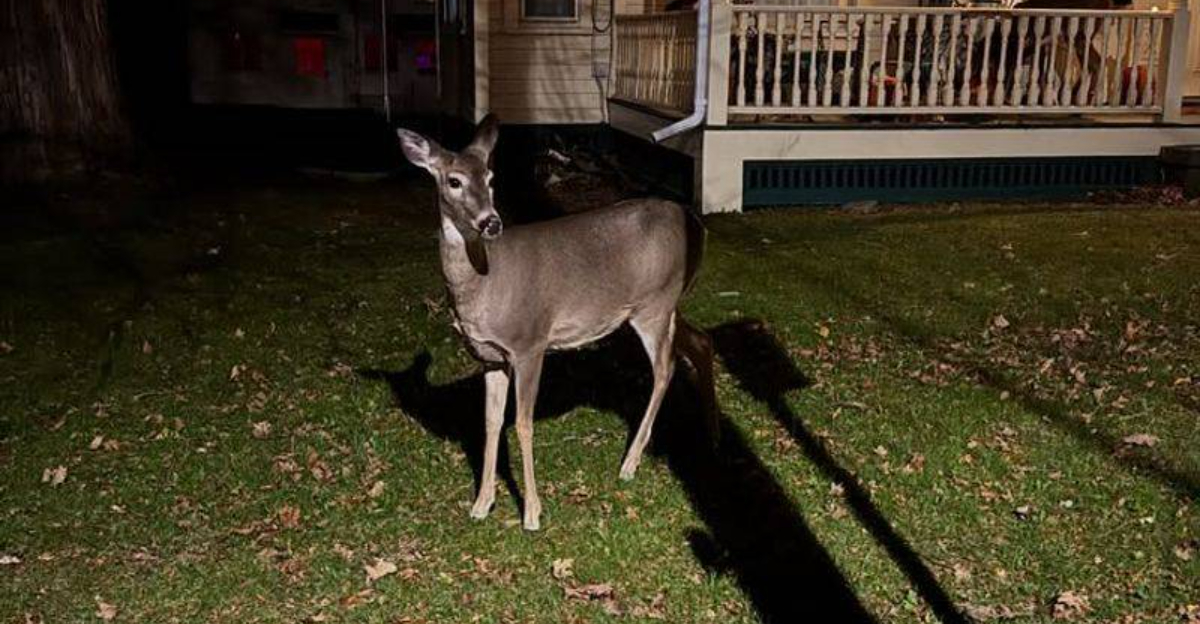
Deer sightings in New York yards are becoming more common, especially in suburban and rural areas. While they can be beautiful to watch, deer can damage plants, gardens, and landscaping if left unchecked.
Knowing how to respond safely helps protect your property while keeping both you and the animals out of harm’s way. Deer in your yard can be enchanting or troublesome, it all depends on how you handle them.
Experts recommend seven effective strategies, including using deer-resistant plants, installing fencing, removing attractants, and using scent or noise deterrents.
At the same time, there are three key mistakes to avoid, such as feeding them, approaching them closely, or relying on untested remedies that may not work.
Following these guidelines protects your garden and ensures the deer remain safe and healthy. Smart precautions allow you to coexist peacefully with wildlife.
New York homeowners who apply these strategies can enjoy seeing deer without suffering property damage. Protect your yard and wildlife by knowing what to do, and what to avoid.
1. Install Deer-Resistant Plants
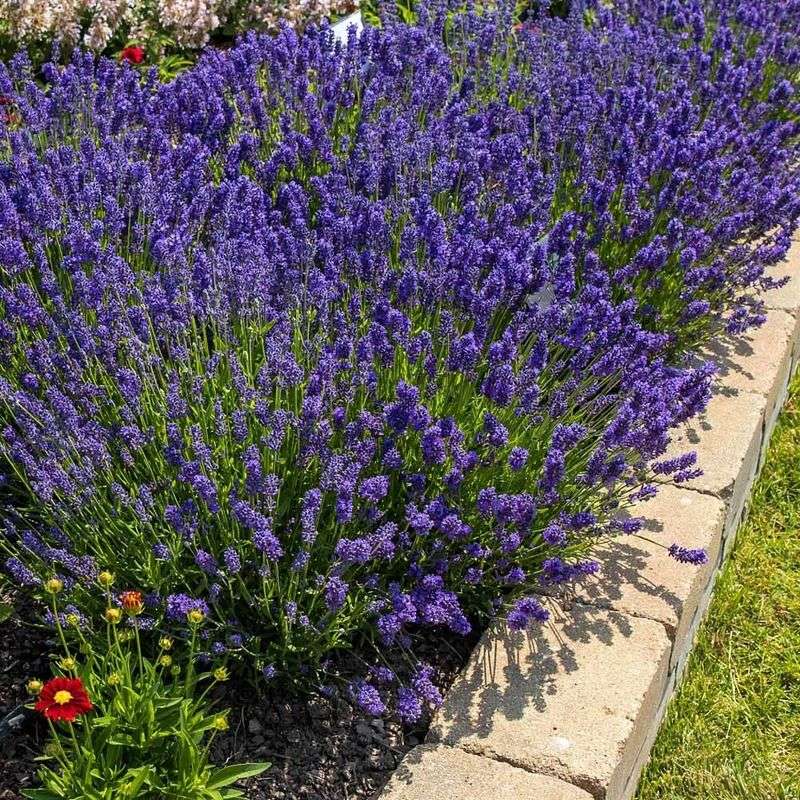
Transforming your garden into a space deer naturally avoid starts with choosing the right greenery.
Many homeowners discover too late that deer view their carefully planted tulips and hostas as an all-you-can-eat buffet, but selecting species these animals find unappetizing creates a powerful first line of defense.
Daffodils, lavender, boxwood, and Russian sage top the list of plants deer typically skip because of their strong scents or bitter tastes. Your landscape doesn’t have to sacrifice beauty for protection either.
Ornamental grasses like switchgrass and fountain grass add texture and movement while remaining unappealing to browsing deer.
Herbs such as rosemary, thyme, and mint serve double duty by enhancing your cooking and naturally repelling unwanted visitors with their aromatic oils.
Planting strategically means positioning your deer-resistant choices around the perimeter of your yard or as borders protecting more vulnerable plants. This creates natural barriers that discourage deer from venturing deeper into your property.
Mix different heights, colors, and textures to maintain visual interest while building an effective deterrent system. Remember that no plant is completely deer-proof when food becomes scarce during harsh winters.
However, establishing a foundation of less palatable options significantly reduces damage and helps your garden thrive even when deer pass through your neighborhood regularly.
2. Use Physical Barriers
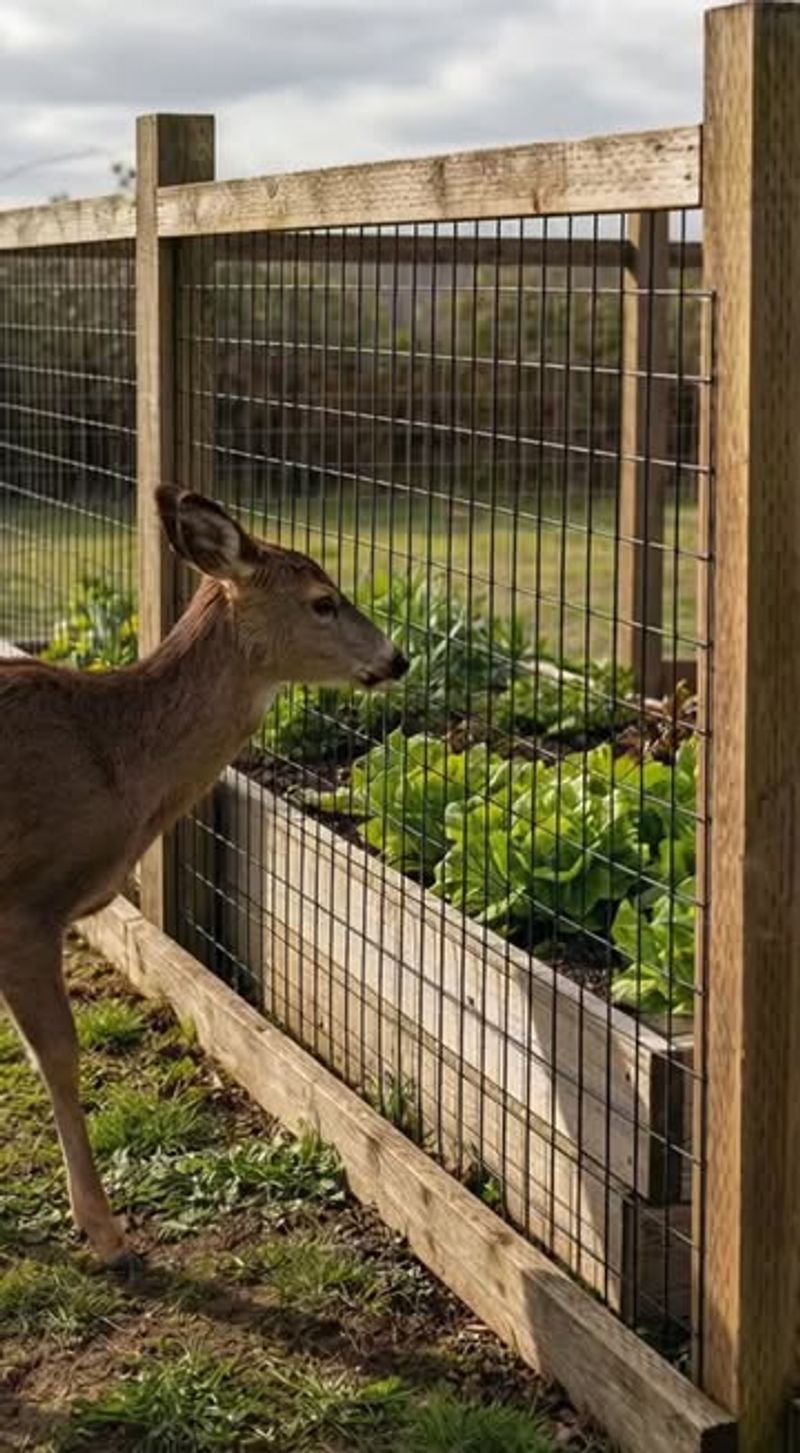
Building the right fence creates an almost foolproof solution when deer become regular visitors to your property.
Adult deer can leap surprisingly high, often clearing six feet without much effort, which means effective fencing needs to reach at least eight feet tall to provide reliable protection.
This height prevents even the most athletic jumpers from accessing your prized vegetables, flowers, and ornamental shrubs. Material choices matter just as much as height when constructing deer barriers.
Woven wire, welded wire, and polypropylene mesh all work well, though your selection depends on budget, aesthetics, and the specific areas you’re protecting.
For smaller garden beds, installing netting or chicken wire around individual plants or sections offers a more affordable alternative to perimeter fencing. Consider combining barriers with strategic landscaping for enhanced effectiveness.
Your New York Garden Changes Every Week. Your Plan Should Too.
Gardening in New York changes quickly throughout the season. Every Friday you’ll receive a simple weekly plan showing exactly what to plant, prune, fertilize, harvest, and protect so you never miss the right timing.
Sloped fencing or double-fence systems spaced a few feet apart confuse deer and make jumping seem too risky. Even a simple four-foot fence paired with dense shrubs creates enough of an obstacle that many deer choose easier targets elsewhere.
Maintenance keeps barriers working year-round, so regularly inspect for gaps, damage, or areas where determined deer might push through.
Secure gates properly and repair any weak spots immediately to maintain the integrity of your protection system and keep your garden flourishing.
3. Employ Motion-Activated Deterrents
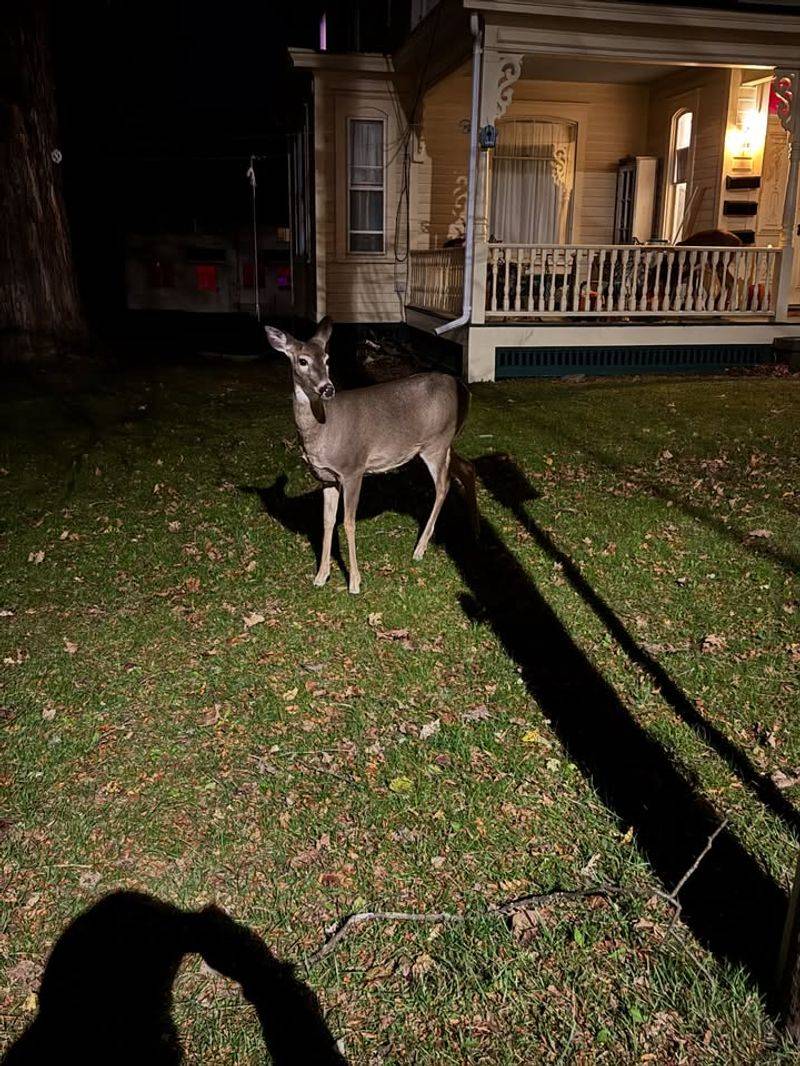
Technology offers humane and highly effective ways to startle deer without causing them any harm.
Motion-activated sprinklers work brilliantly by detecting movement and releasing sudden bursts of water that send deer running while also watering your plants.
These devices operate day and night, providing consistent protection even when you’re asleep or away from home. Light-based deterrents add another layer of defense by triggering bright flashes when deer enter your yard.
Many deer feed during dawn, dusk, and nighttime hours when visibility drops, making unexpected illumination particularly effective at disrupting their comfort zone.
Solar-powered options eliminate the need for electrical wiring and reduce energy costs while maintaining reliable operation. Sound devices that emit ultrasonic frequencies or sudden noises create auditory barriers deer find unsettling.
Some models produce random patterns to prevent deer from becoming accustomed to predictable sounds, which helps maintain long-term effectiveness.
Combining multiple deterrent types, water, light, and sound, creates an unpredictable environment that encourages deer to seek calmer feeding grounds. Placement strategy maximizes your investment in these tools.
Position sensors near known entry points, along deer trails, and around high-value plantings to create overlapping zones of protection.
Regular battery checks and seasonal adjustments ensure your motion-activated systems continue working reliably throughout changing weather conditions and deer behavior patterns.
4. Create A Calm Retreat Zone
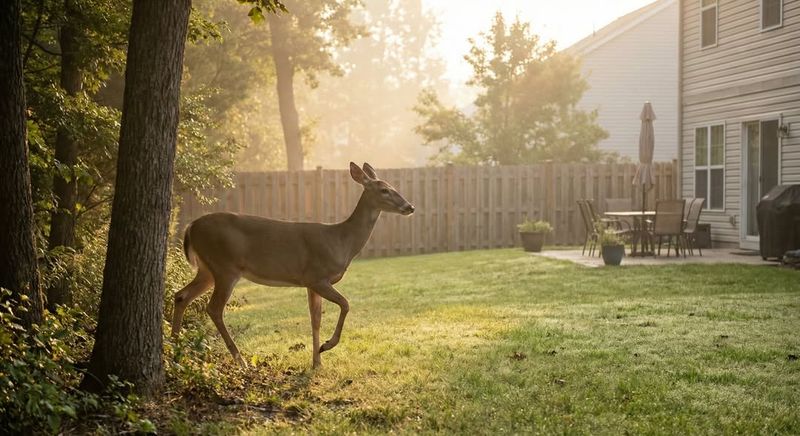
When a deer shows up in your yard, your first goal should be helping it leave safely without panic. Step back, bring children and pets indoors, and avoid loud voices, clapping, or sudden movements.
Deer are prey animals with strong flight instincts, and feeling trapped or threatened can cause them to bolt unpredictably.
Creating a calm retreat zone, such as leaving open space near tall shrubs, hedges, or tree lines, gives the animal a clear direction to exit without stress. Think of this space as a quiet escape route.
When deer sense a low-pressure environment, they are far more likely to walk away calmly instead of sprinting across lawns, fences, driveways, or roads. This reduces the risk of injuries to the deer and damage to your property.
You can also help by keeping exterior lights steady rather than flashing or suddenly switching them on. Stillness and consistency matter.
The less stimulation you create, the faster the deer will decide your yard is not a threat and move on naturally. A calm response often resolves the situation faster than any active intervention.
5. Leash And Secure Pets Immediately
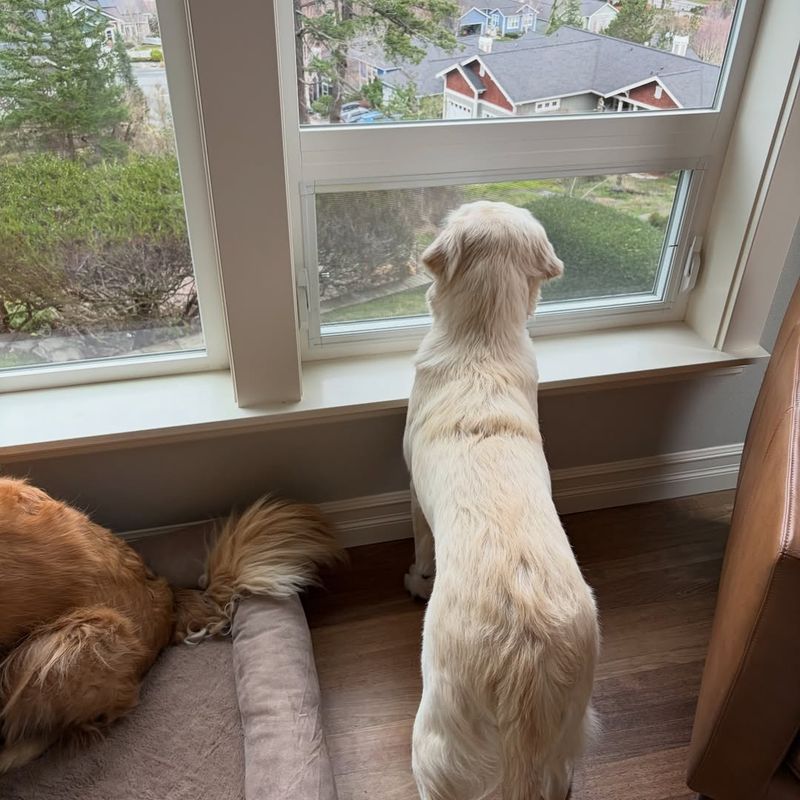
Pets and deer are a dangerous combination, even when your dog is friendly or well-trained. The presence of a chasing animal triggers a powerful flight response in deer that can lead to fence crashes, roadway accidents, or defensive kicks.
As soon as you spot a deer, bring pets indoors or place them on a secure leash away from windows and doors.
Keeping pets contained also reduces excessive barking, which increases stress for wildlife and keeps deer lingering in confusion rather than leaving calmly. Inside the home, offer toys or treats to distract pets and prevent agitation.
This protects both your animal and the deer from unnecessary confrontation. There is also a health concern. Deer commonly carry ticks that can transfer to pets during outdoor encounters.
Reducing contact lowers the risk of tick-borne illnesses and parasite exposure. By controlling your pets, you regain control of the situation.
Calm surroundings encourage deer to leave faster and prevent chaotic interactions that can turn a minor wildlife visit into a dangerous event.
6. Use Natural Deer Repellent Scents
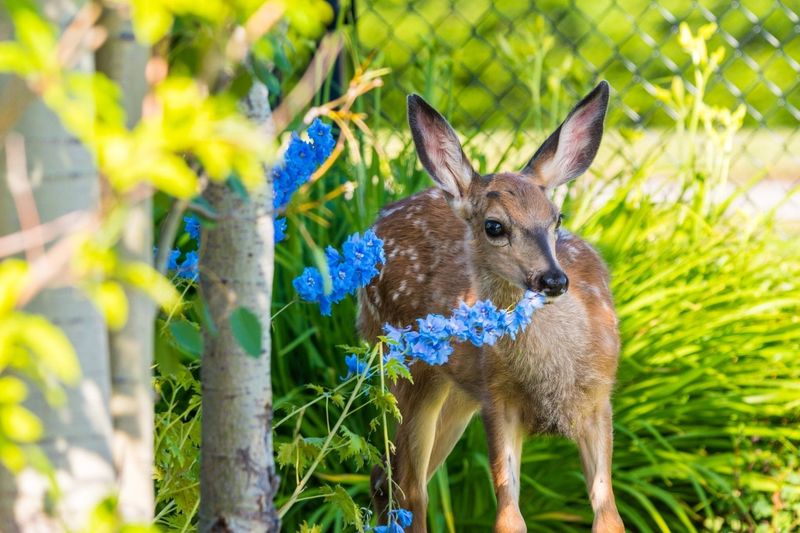
Deer rely heavily on scent when deciding where to feed or travel. Strong, unfamiliar smells can make your yard feel unwelcoming without causing harm.
Natural repellents such as garlic, rosemary, peppermint oil, and commercial scent sprays can be applied around garden borders, fence lines, and common entry points.
Rotating scents every few weeks is important, as deer can become accustomed to a single odor over time. Apply repellents after rain and focus on transition areas like hedgerows, driveways, and openings between properties.
These zones act as gateways where scent barriers are most effective. If you prefer a DIY approach, cotton balls soaked in peppermint oil or garlic spray placed inside mesh bags can provide short-term deterrence.
Keep these away from edible plants and areas accessible to pets. Consistency is the real secret. One application will not solve the problem permanently.
Regular reapplication trains deer to associate your yard with discomfort and inconvenience, encouraging them to seek easier feeding locations elsewhere.
7. Switch To Native, Less Tasty Landscaping

While no plant is completely deer-proof, choosing native species that deer tend to avoid can significantly reduce browsing damage.
Plants such as inkberry holly, bayberry, mountain laurel, native ferns, and switchgrass are less appealing and better adapted to local growing conditions.
These natives develop stronger root systems, tolerate weather extremes, and recover faster from occasional nibbling. Design matters as much as plant choice. Group resistant plants together and layer them to eliminate clear feeding paths.
Dense plantings confuse browsing patterns and make it harder for deer to move comfortably through your yard.
Over time, replacing high-risk ornamentals with sturdier natives can shift deer behavior away from your property altogether. Local nurseries and extension offices often provide county-specific deer resistance lists.
Start small by replacing the most frequently damaged plants first. Even gradual changes create meaningful improvements.
With smart landscaping choices, you reduce maintenance, water needs, and wildlife conflicts at the same time.
8. Do Not Try To Chase Or Scare Deer Away
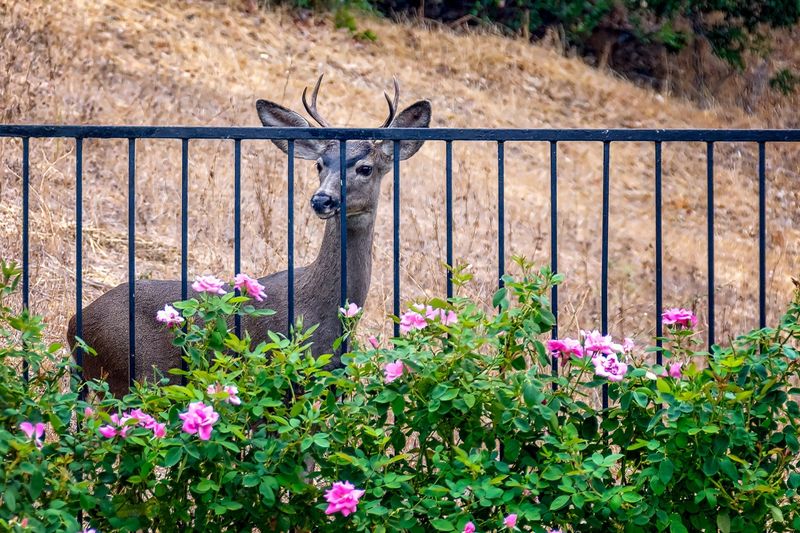
Chasing deer by yelling, clapping, revving vehicles, or waving objects often makes the situation worse instead of better.
Sudden scare tactics trigger panic responses that cause deer to sprint blindly across yards, jump fences, or dart into streets. This puts the animal, your property, and nearby drivers at serious risk.
A frightened deer can easily injure itself on obstacles or collide with windows, vehicles, or garden structures. Repeated scare attempts also condition deer to react defensively rather than calmly leaving.
Over time, this can make animals more unpredictable around people and pets. Instead of forcing movement through fear, allow deer to exit at their own pace by maintaining distance and reducing noise.
If deterrence is needed, rely on passive methods like scent repellents, fencing, or landscape adjustments rather than direct confrontation. Wildlife responds best to consistent environmental signals, not sudden human pressure.
Staying calm and hands-off keeps the situation safer for everyone involved and prevents minor encounters from turning into dangerous incidents.
9. Do Not Feed Deer
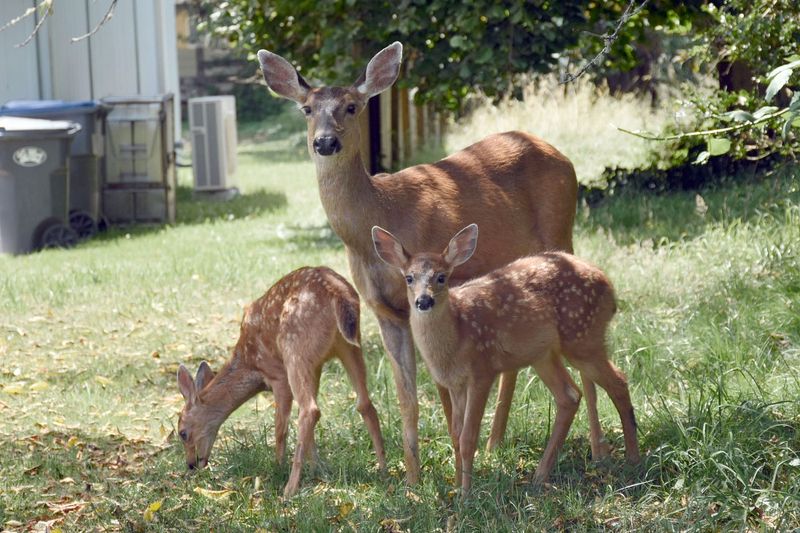
Feeding deer may feel compassionate, but it creates serious long-term problems. Supplemental feeding teaches deer to associate humans with food, encouraging repeated visits and aggressive competition among animals.
Crowding increases the spread of disease and parasites while raising the risk of traffic accidents as deer cross roads more frequently.
In many New York and northeastern communities, feeding wildlife is discouraged or restricted because of these dangers.
Habituated deer also lose natural fear of people, sometimes approaching children, pets, or outdoor seating areas. This creates unpredictable and unsafe situations.
Secure bird feeders, avoid leaving produce scraps outside, and clean fallen seed beneath feeders. Talk with neighbors about maintaining a shared no-feeding approach. When entire blocks stop providing food sources, deer are far less likely to linger.
Allowing wildlife to forage naturally keeps ecosystems balanced and protects both animals and homeowners.
10. Do Not Approach Or Corner Deer
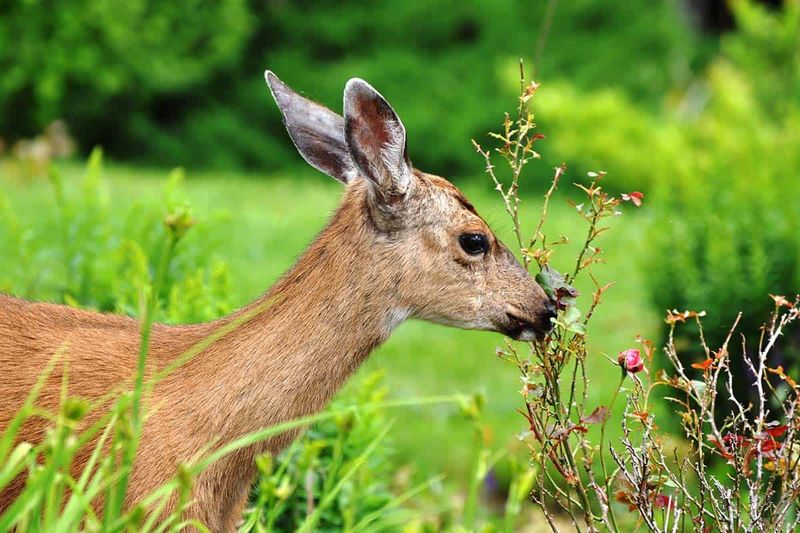
Never attempt to approach, touch, or herd a deer. Even calm-looking animals can react defensively when stressed.
Sharp hooves and antlers can cause serious injuries, and sudden movements often result in unpredictable behavior. Always maintain distance and give the animal a clear escape route.
Avoid driving deer toward fences, garages, or enclosed spaces. Cornered wildlife panics and may crash through barriers or charge to escape. Keep children indoors and observe quietly until the deer leaves on its own.
If you notice a deer that appears injured, tangled in fencing, or unable to move properly, contact local wildlife rehabilitators or non-emergency authorities. Professionals have proper equipment and training to intervene safely.
Your patience and restraint prevent accidents and allow trained responders to handle the situation responsibly.