The Most Favorite Blue Blooms In 2026 Michigan Gardeners Can Grow From Seed
Blue flowers have a special way of standing out in any garden, adding calm, elegance, and a pop of color that draws the eye. Michigan gardeners have plenty of options to grow these stunning blooms from seed, and 2026 brings some favorites that are sure to impress.
Plant now, enjoy color later! From delicate perennials to bold annuals, blue flowers can complement any garden design and thrive in Michigan’s unique climate.
Want a garden that wows all season long? These blooms not only add beauty but are also relatively easy to grow from seed, making them perfect for both new and experienced gardeners.
Small seeds, big impact! Whether you’re filling flower beds, containers, or borders, these blue favorites can transform your yard into a serene, colorful retreat. Your Michigan garden can shine with these 2026 favorites.
1. Bachelor’s Buttons
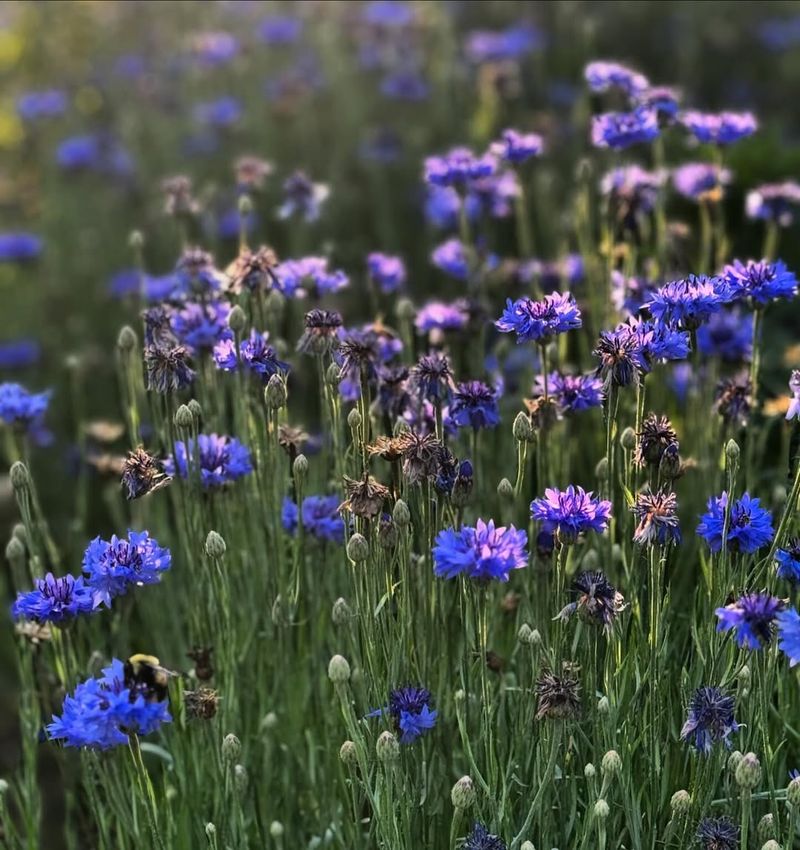
Cornflowers, commonly called Bachelor’s Buttons, are old-fashioned favorites that have been gracing gardens for generations with their cheerful, bright blue petals.
These hardy annuals are incredibly easy to grow from seed, making them perfect for beginners and experienced gardeners alike.
Their frilly, button-like flowers bloom in shades ranging from sky blue to deep cobalt, and they produce blooms continuously throughout the summer when deadheaded regularly.
Michigan gardeners love Bachelor’s Buttons because they tolerate cooler spring temperatures and can be direct sown as soon as the soil can be worked in early spring.
The seeds germinate quickly, usually within seven to ten days, and the plants grow rapidly to reach heights of two to three feet.
These flowers prefer full sun and well-drained soil but are remarkably adaptable to various growing conditions, including less-than-perfect soil.
One of the best features of Bachelor’s Buttons is their ability to reseed themselves year after year, creating naturalized patches of blue throughout your Michigan garden. The flowers are also excellent for cutting and last a long time in vases, bringing their cheerful color indoors.
Pollinators absolutely adore these blooms, and you’ll often see bees and butterflies visiting them throughout the day.
These low-maintenance plants rarely suffer from pest or disease problems and require minimal care once established. Simply provide occasional watering during dry spells and remove spent flowers to encourage more blooms.
Bachelor’s Buttons are drought-tolerant once mature, making them ideal for Michigan’s sometimes unpredictable summer weather patterns.
2. Love-In-A-Mist
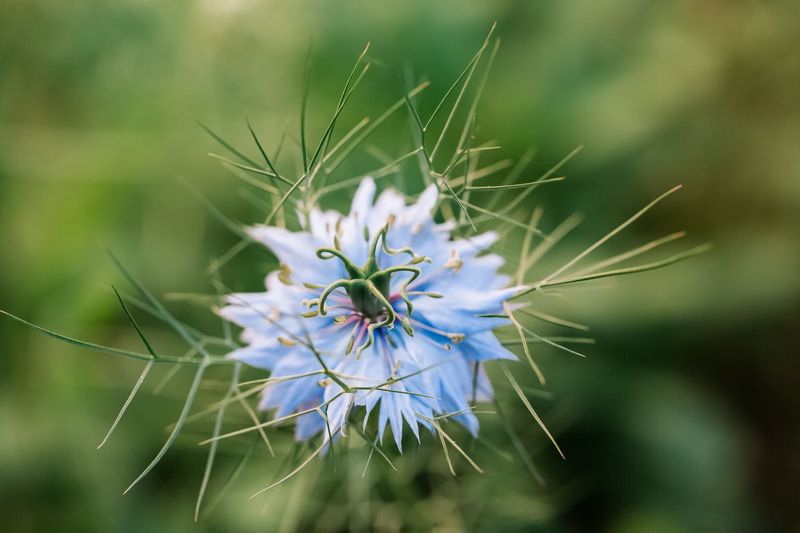
Nigella damascena, better known as Love-in-a-Mist, produces enchanting blue flowers surrounded by feathery, thread-like foliage that creates a misty, ethereal effect in the garden.
The unique blooms feature delicate petals in shades of sky blue to powder blue, with intricate centers that develop into interesting seed pods after flowering.
This cottage garden classic adds a romantic, whimsical touch to any Michigan landscape and looks stunning when planted in groups or drifts.
Growing Love-in-a-Mist from seed is straightforward, and these cool-season annuals actually prefer being direct sown in early spring or even late fall in Michigan. The seeds need a period of cold to germinate properly, which makes them perfectly suited to Michigan’s climate.
Your Michigan Garden Changes Every Week. Your Plan Should Too.
Gardening in Michigan changes quickly throughout the season. Every Friday you’ll receive a simple weekly plan showing exactly what to plant, prune, fertilize, harvest, and protect so you never miss the right timing.
Once established, the plants grow quickly and begin blooming in early summer, providing color when many perennials are between bloom cycles.
The finely divided foliage gives the plant an airy, delicate appearance that contrasts beautifully with bolder garden plants. Love-in-a-Mist typically reaches twelve to eighteen inches tall and prefers full sun to partial shade.
These flowers don’t transplant well due to their delicate root systems, so sowing them directly where you want them to grow is essential for success.
After the flowers fade, the inflated seed pods provide architectural interest and can be dried for indoor arrangements. Michigan gardeners appreciate that Love-in-a-Mist readily self-sows, returning year after year without any effort.
The plants prefer cooler weather and may slow down during the hottest part of summer, but they’ll often produce a second flush of blooms as temperatures cool in late summer.
3. Morning Glories
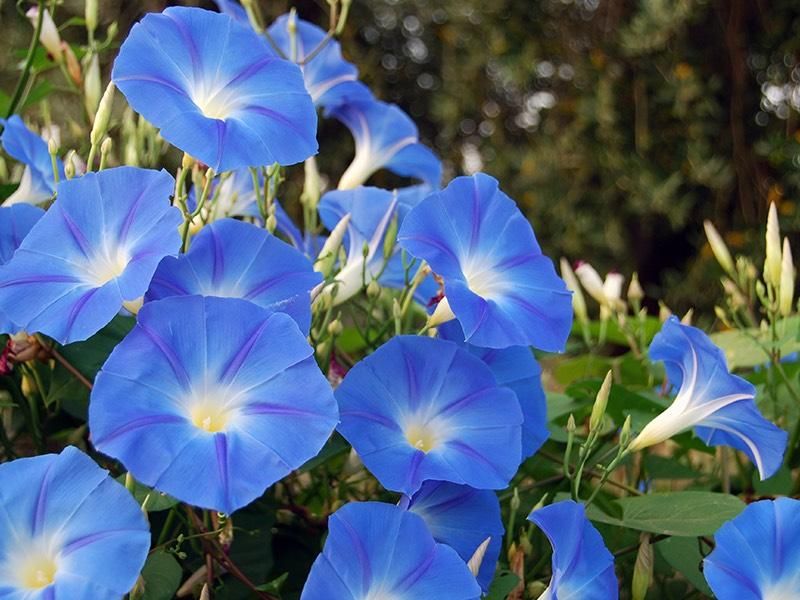
Few flowers can match the pure, vivid blue of Heavenly Blue Morning Glories as they unfurl their trumpet-shaped blooms each morning. These vigorous climbing vines produce an abundance of flowers from midsummer through fall, creating vertical interest and privacy screens in Michigan gardens.
The heart-shaped leaves provide lush greenery, while the flowers open with the sunrise and close by afternoon, putting on a daily show that never gets old.
Morning Glory seeds have a hard outer coating, so nicking them with a file or soaking them overnight before planting helps speed germination.
Michigan gardeners should wait until after the last frost date to sow seeds directly in the garden or start them indoors three to four weeks earlier.
These heat-loving plants need warm soil to germinate and grow best when temperatures consistently stay above sixty degrees.
The vines can quickly reach ten to fifteen feet in a single growing season, making them perfect for covering fences, trellises, or arbors. Morning Glories prefer full sun and well-drained soil but aren’t particularly fussy about soil quality.
In fact, overly rich soil can result in more foliage and fewer flowers, so skip the heavy fertilizing with these beauties.
One thing Michigan gardeners should know is that Morning Glories can self-sow enthusiastically, so deadhead spent flowers if you want to control their spread. The flowers attract hummingbirds and butterflies, adding movement and life to your garden throughout the growing season.
These easy-care vines require minimal maintenance beyond providing support for climbing and occasional watering during extended dry periods.
4. Forget-Me-Nots
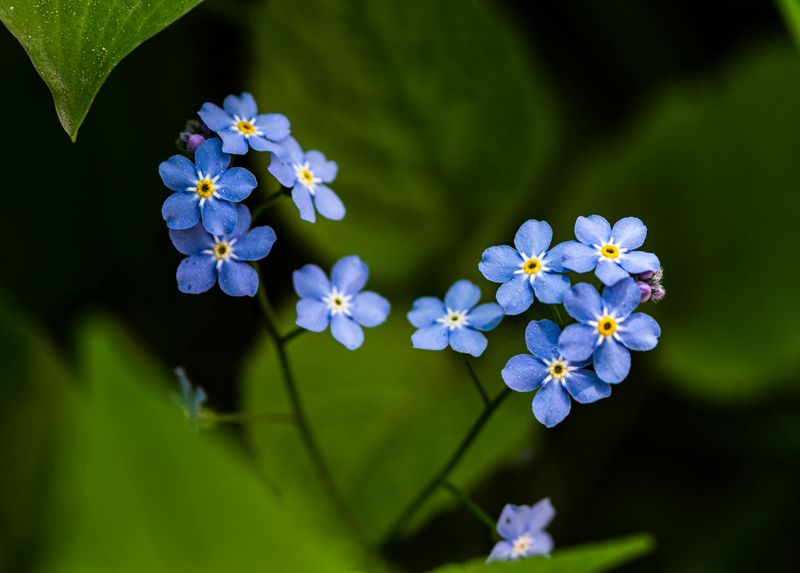
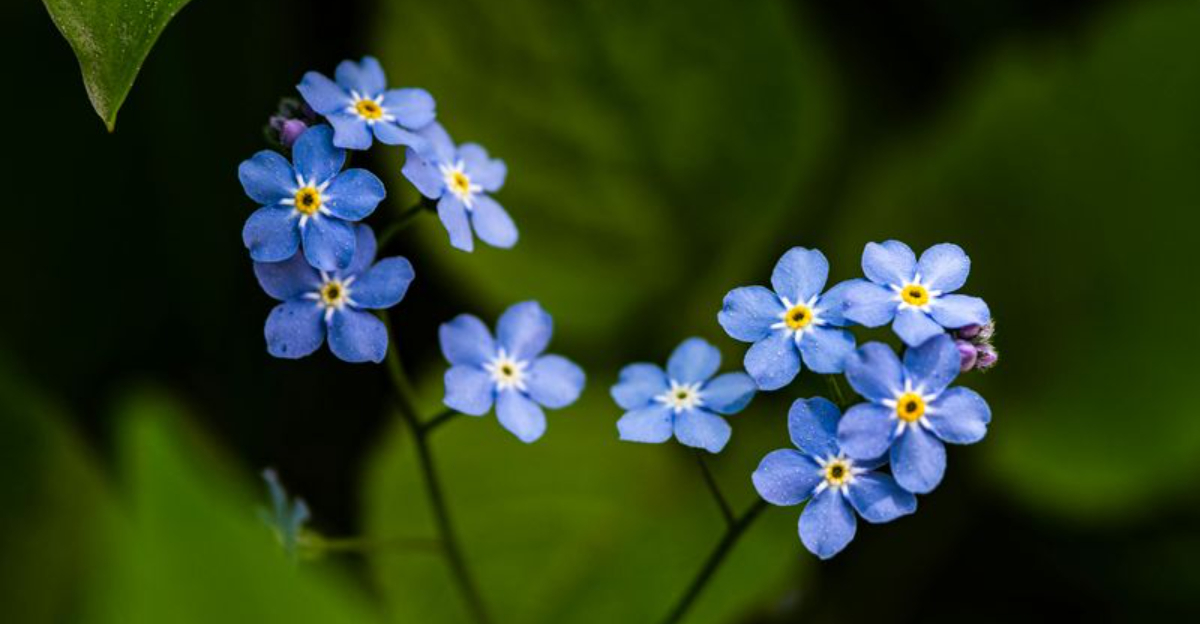
Myosotis sylvatica, commonly called Forget-Me-Nots, produce masses of tiny, sky-blue flowers with yellow centers that create a carpet of color in spring gardens.
These charming biennials or short-lived perennials are beloved by Michigan gardeners for their ability to naturalize in shady or partially shaded areas where many other flowers struggle.
The delicate blooms appear in clusters atop stems that rise above the low-growing foliage, creating a cloud-like effect that’s simply magical.
Forget-Me-Nots are incredibly easy to grow from seed and prefer being sown in late summer or early fall for blooms the following spring. Michigan’s cool, moist conditions are ideal for these plants, which thrive in the state’s woodland gardens and shady borders.
The seeds germinate readily without any special treatment, and the plants establish quickly once sprouted.
These flowers typically reach six to twelve inches tall and spread enthusiastically through self-seeding, creating larger colonies each year. Forget-Me-Nots prefer moist, well-drained soil and partial shade but can tolerate full sun if given adequate moisture.
They’re perfect for planting under spring-flowering bulbs or along stream banks and pond edges where their roots can access consistent moisture.
The blooming period lasts several weeks in spring, providing nectar for early-season pollinators when food sources are limited. After flowering, the plants produce seeds and then often go dormant during hot summer months.
Michigan gardeners appreciate that Forget-Me-Nots require virtually no maintenance and will happily spread throughout the garden, filling in gaps and creating a naturalized woodland appearance that feels effortless and timeless.
5. Larkspur
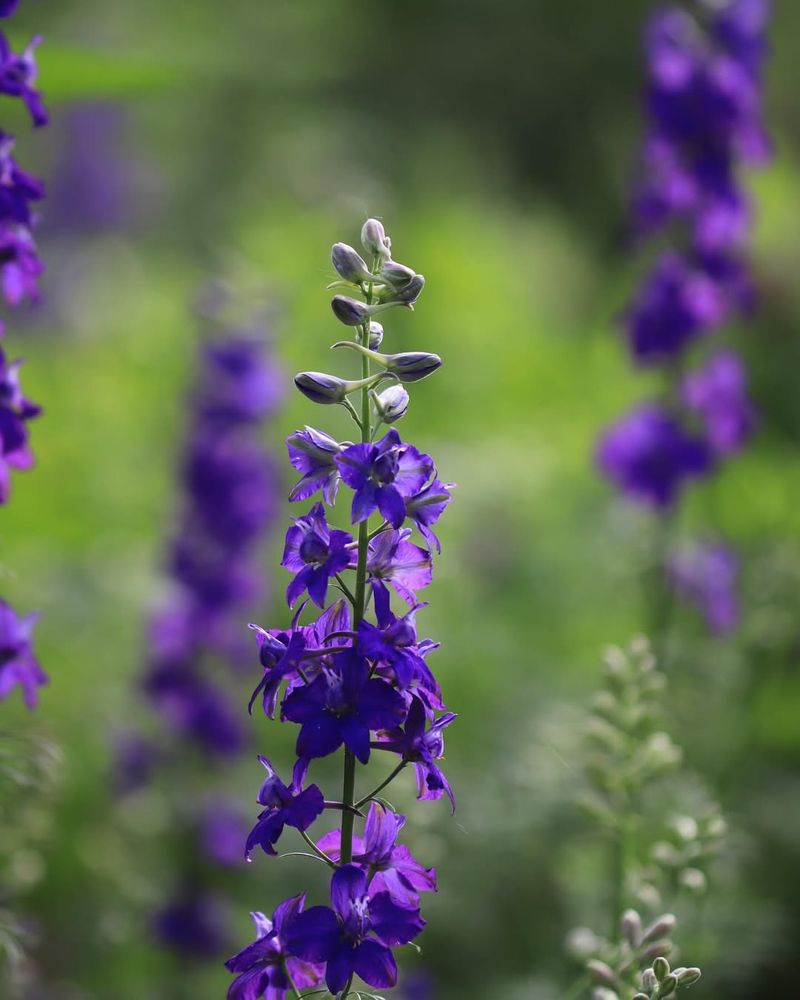
Tall spikes of delicate blue flowers make Larkspur a showstopper in any Michigan garden, with their cottage-garden charm and old-world appeal.
Consolida ajacis produces densely packed flower spikes that can reach three to four feet tall, creating vertical drama and serving as excellent backdrop plants for shorter flowers.
The blooms come in various shades of blue, from pale powder blue to deep royal blue, often with contrasting white centers that add extra visual interest.
Larkspur seeds germinate best with cool temperatures, making them perfect for early spring sowing in Michigan as soon as the ground can be worked.
These cool-season annuals actually need a period of cold to break dormancy, so fall sowing is also an option for Michigan gardeners willing to experiment.
The seeds should be lightly covered with soil and kept consistently moist until germination occurs, usually within two to three weeks.
Once established, Larkspur plants prefer full sun and well-drained soil with moderate moisture. They don’t transplant well due to their tap roots, so direct sowing where you want them to grow is the best approach.
Michigan gardeners should provide support for taller varieties using stakes or grow-through supports to prevent the flower spikes from toppling during summer storms.
The flowers bloom in early to midsummer and make exceptional cut flowers that last up to a week in arrangements. Larkspur attracts beneficial insects and pollinators while adding height and structure to garden beds.
These plants prefer cooler weather and may struggle during hot, humid periods, but they’ll reward Michigan gardeners with stunning blooms during the comfortable temperatures of late spring and early summer.
6. Borage
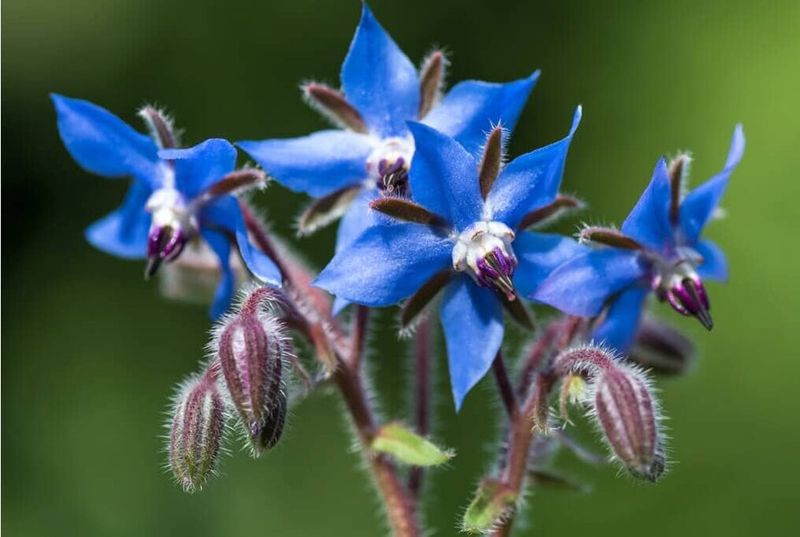
Star-shaped blue flowers dangle gracefully from Borage plants, creating a display that’s both beautiful and edible. Borago officinalis is an herb that produces stunning true-blue flowers with distinctive black anthers, making it a favorite among Michigan gardeners who appreciate plants with multiple purposes.
The flowers have a mild cucumber flavor and are often used to garnish drinks, salads, and desserts, while the fuzzy leaves can be cooked like spinach.
Growing Borage from seed is remarkably easy, as this hardy annual germinates quickly and grows vigorously with minimal care. Michigan gardeners can direct sow seeds after the last frost date, and the plants will begin flowering within six to eight weeks.
Borage prefers full sun but tolerates partial shade and isn’t fussy about soil conditions, though it grows best in well-drained soil with moderate fertility.
The plants typically reach two to three feet tall and have a somewhat sprawling habit, so give them plenty of space to spread.
Borage is an excellent companion plant for tomatoes and squash, as it attracts pollinators and beneficial insects while reportedly improving the growth and flavor of nearby vegetables.
The continuous succession of blue flowers provides nectar for bees throughout the summer, making your Michigan garden a pollinator paradise.
One wonderful characteristic of Borage is its ability to self-sow readily, ensuring you’ll have plants returning year after year without any effort. The flowers are produced continuously from early summer until frost, providing long-lasting color and interest.
Borage is drought-tolerant once established and rarely suffers from pest or disease problems, making it an ideal low-maintenance addition to any Michigan garden focused on beauty and functionality.
7. Chinese Delphinium
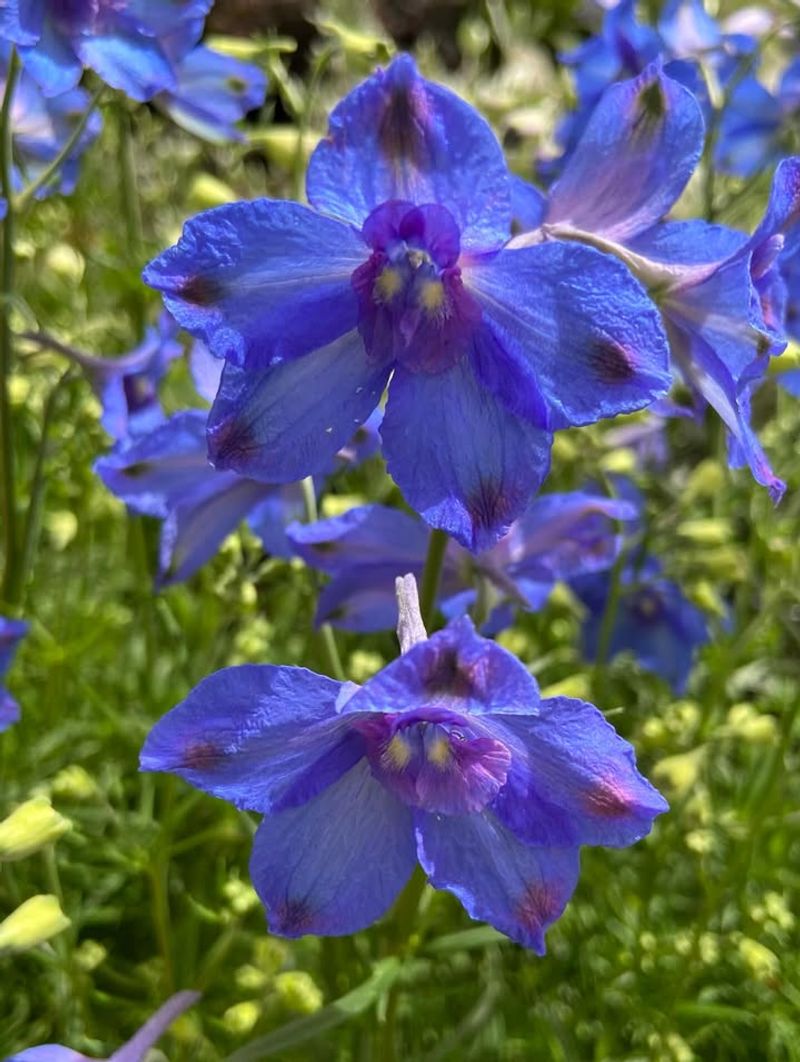
Delphinium grandiflorum, commonly called Chinese Delphinium or Dwarf Delphinium, offers the elegance of traditional delphiniums in a more compact, easier-to-grow package perfect for Michigan gardens.
These perennials produce brilliant blue flowers on sturdy stems that reach only twelve to eighteen inches tall, making them suitable for front-of-border plantings and container gardens.
The deeply lobed foliage provides an attractive backdrop for the showy flowers that appear from early to midsummer.
Starting Chinese Delphinium from seed requires a bit of patience, as the seeds benefit from a cold stratification period to improve germination rates.
Michigan gardeners can sow seeds in late fall for natural stratification over winter, or refrigerate seeds for three to four weeks before sowing indoors in early spring.
Once germinated, the seedlings grow steadily and often bloom in their first year, though flowering improves in subsequent seasons.
These plants prefer full sun to partial shade and well-drained soil enriched with organic matter. Unlike their taller cousins, Chinese Delphiniums rarely need staking and are more tolerant of heat and humidity, making them better suited to Michigan’s variable summer conditions.
The plants benefit from consistent moisture but don’t like wet feet, so ensure good drainage to prevent root problems.
Deadheading spent flowers encourages a second flush of blooms in late summer or early fall, extending the display season considerably.
Chinese Delphiniums are relatively short-lived perennials, typically lasting three to four years, but they’re worth replanting for their incredible blue color and compact habit.
Michigan gardeners appreciate their resistance to common delphinium problems and their ability to thrive without the intensive care that traditional delphiniums often require.