Poisonous Creatures Every California Homeowner Should Watch Out For
California’s diverse landscapes are home to a variety of creatures, but some pose real risks to homeowners and pets. From insects to reptiles and arachnids, knowing which species are poisonous or venomous is essential for safety and prevention.
Awareness is your best defense against bites and stings in your own yard. These creatures, including scorpions, black widow spiders, and certain snakes, can deliver painful or even dangerous encounters.
California homeowners should learn to identify them, understand their habitats, and take precautionary measures such as keeping yards clean, sealing entry points, and supervising pets and children.
Preventing encounters is safer than dealing with the consequences of a bite or sting. By staying informed, Californians can enjoy their homes and gardens while minimizing the risks from poisonous creatures.
Protect your family, pets, and property by knowing what to watch for.
Western Rattlesnake
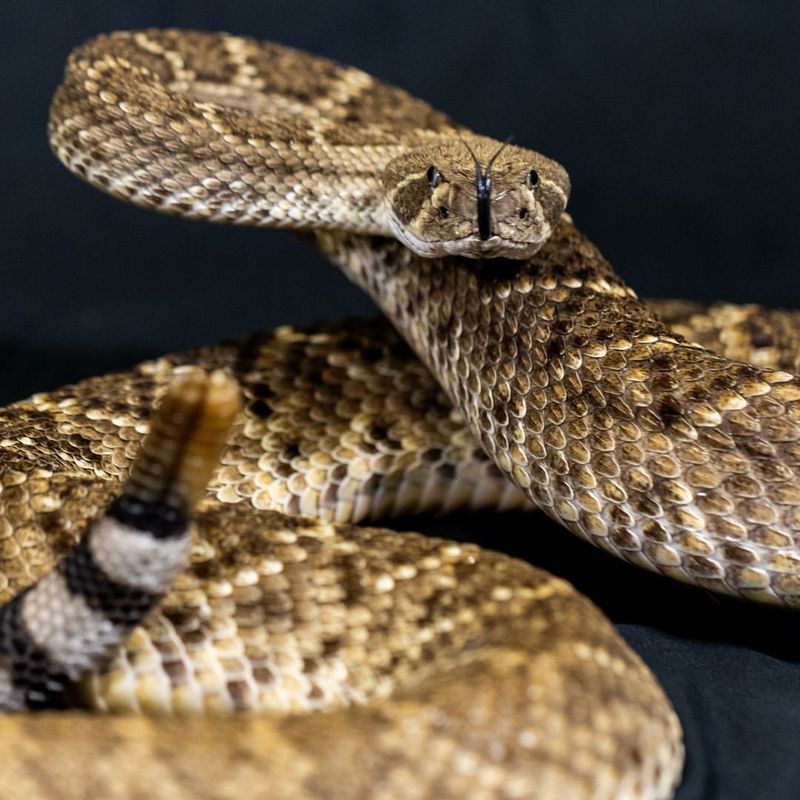
Spotting a rattlesnake coiled near your patio can send chills down your spine, but understanding where these venomous reptiles live helps you stay one step ahead.
Western rattlesnakes thrive throughout California’s foothills, deserts, chaparral regions, and even some rural suburban neighborhoods where natural habitat meets residential development.
They prefer rocky outcrops, dense brush, and areas with plenty of rodent activity since mice and rats make up their primary food source.
Rattlesnakes become most active during warmer months, typically from April through October, when temperatures encourage them to hunt and bask in the sun.
During scorching summer days, they shift to dawn and dusk activity patterns to avoid extreme heat.
Homeowners can reduce encounters by keeping yards well-maintained, removing brush piles, sealing gaps under sheds and decks, and trimming vegetation close to foundations.
If you spot a rattlesnake on your property, maintain a safe distance of at least six feet and never attempt to handle or relocate it yourself. Contact local animal control or a licensed wildlife removal service for safe, professional removal.
Teaching children to recognize the distinctive rattle sound and triangular head shape can prevent dangerous curiosity. Installing snake-proof fencing around play areas and keeping grass short makes your yard less attractive to these venomous visitors.
Black Widow Spider
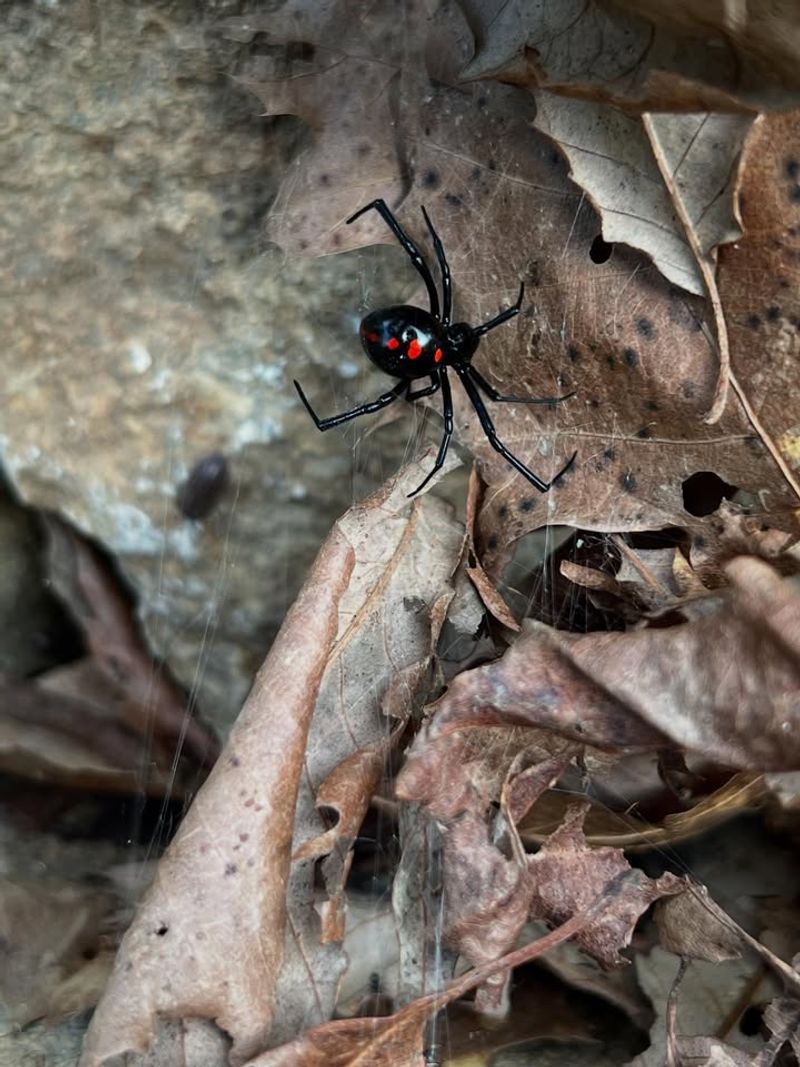
That shiny black spider with the crimson hourglass marking on its belly isn’t just creepy, it’s one of California’s most venomous residents.
Black widows are found throughout the state, preferring dark, undisturbed spaces where they can build their irregular, tangled webs without interruption. Female black widows are the ones to watch for, as males are much smaller and rarely bite.
Common hiding spots around homes include woodpiles, garages, outdoor storage sheds, irrigation valve boxes, beneath patio furniture, and inside rarely-used gardening equipment.
These spiders prefer protected areas away from direct sunlight and foot traffic. When disturbed, they typically try to flee rather than attack, but accidental contact can result in bites.
Black widow venom affects the nervous system, causing muscle pain, cramping, nausea, and difficulty breathing in severe cases.
Bites require immediate medical attention, especially for children, elderly individuals, or those with compromised immune systems.
Your California Garden Changes Every Week. Your Plan Should Too.
Gardening in California changes quickly throughout the season. Every Friday you’ll receive a simple weekly plan showing exactly what to plant, prune, fertilize, harvest, and protect so you never miss the right timing.
Prevention starts with regular cleaning of storage areas, wearing gloves when moving items that have been sitting undisturbed, shaking out shoes and clothing left outside, and using a stick to probe dark spaces before reaching in with bare hands.
Reducing clutter around your property eliminates prime black widow habitat and keeps your family safer.
Brown Widow Spider
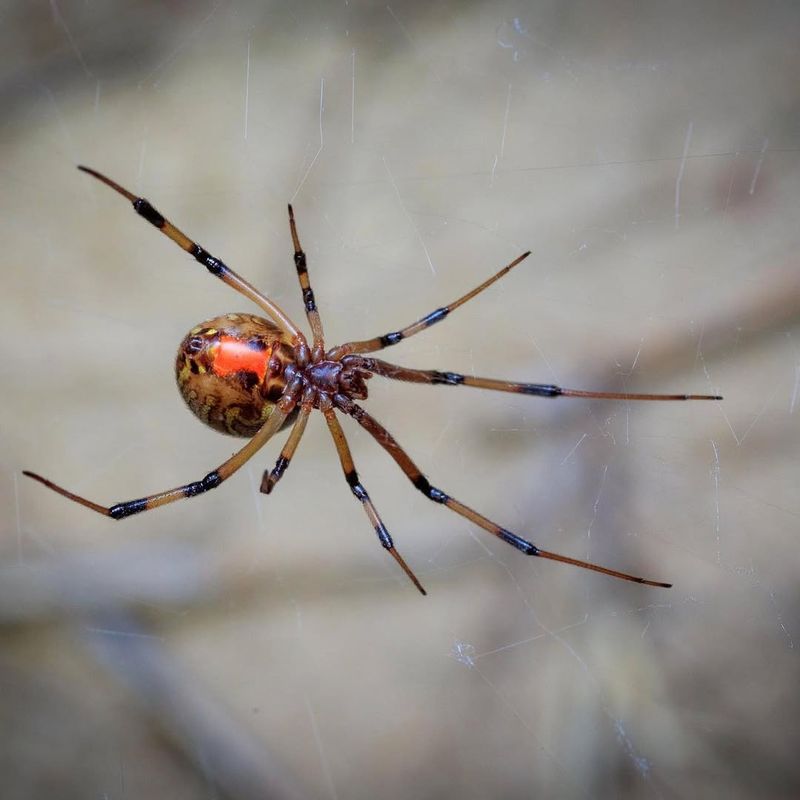
While their black cousins get most of the attention, brown widows have quietly expanded their territory across Southern California over the past two decades.
These spiders display tan to dark brown coloring with variable markings and an orange or yellowish hourglass shape on their undersides.
Brown widows produce distinctive spiky egg sacs that look like tiny sea mines, making identification easier for concerned homeowners.
Brown widows prefer outdoor locations similar to black widows but are often found in more exposed areas like patio furniture, outdoor toys, mailboxes, and plant containers.
They’ve adapted remarkably well to urban environments and seem less shy about building webs in frequently used spaces.
Their venom is actually more potent than black widow venom, but they inject much smaller amounts during defensive bites, resulting in generally milder symptoms.
Most brown widow bites cause localized pain, redness, and minor swelling rather than the systemic reactions associated with black widows. However, medical evaluation is still recommended, particularly if symptoms worsen or spread.
Regular inspection of outdoor furniture, toys, and equipment helps you spot these spiders before accidental contact occurs. Removing egg sacs when discovered prevents population growth around your home.
Wearing gloves when gardening or handling outdoor items provides an extra layer of protection against unexpected encounters with these expanding arachnids.
Arizona Bark Scorpion
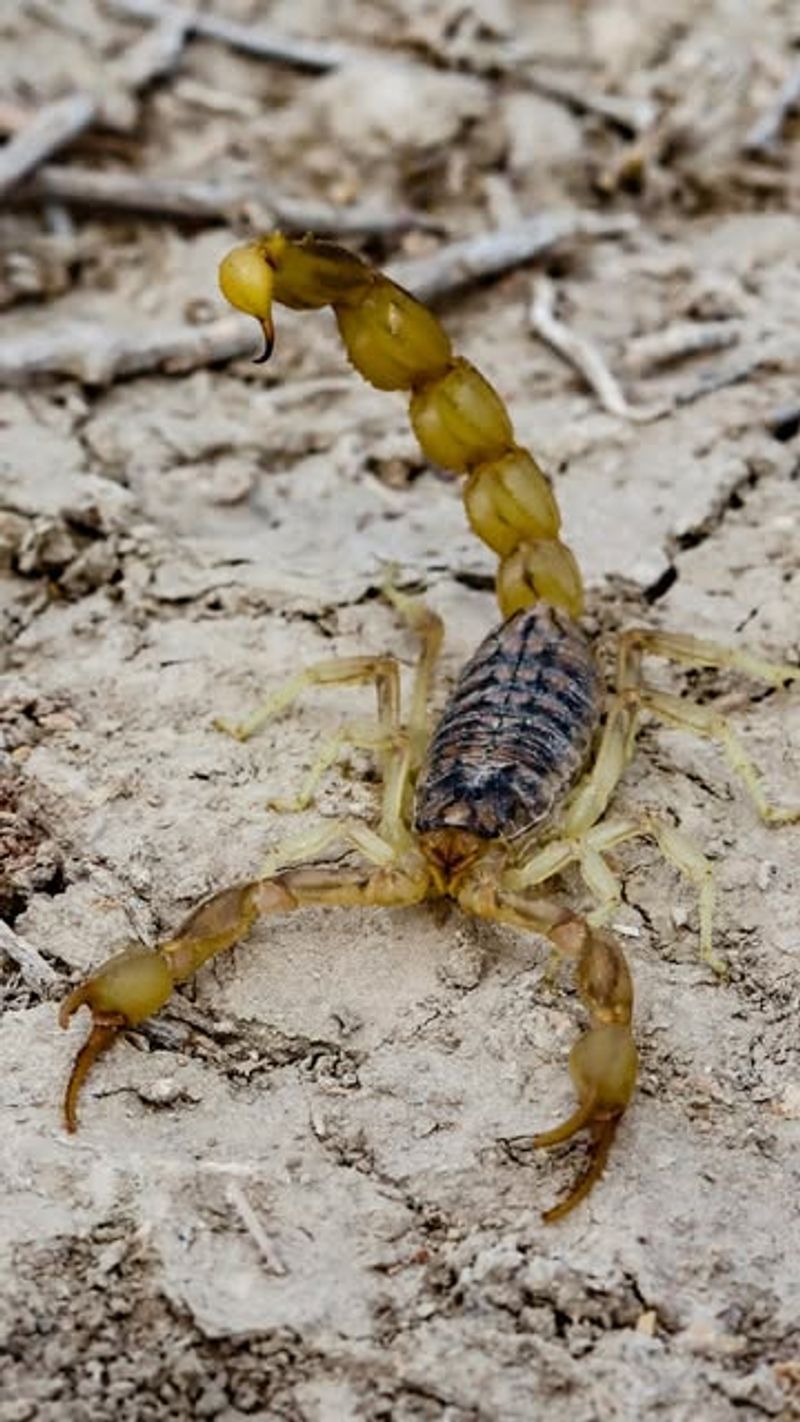
California’s southeastern desert regions, particularly areas bordering Arizona, host the state’s most venomous scorpion species.
Arizona bark scorpions are pale tan or yellowish in color, measuring up to three inches long, and possess a slender tail that curves dramatically over their backs.
Unlike most scorpion species that prefer ground-level habitats, bark scorpions are excellent climbers and can scale walls, trees, and even interior surfaces.
These nocturnal hunters become active after dark, searching for insects, spiders, and other small prey. Homeowners in affected regions sometimes discover them on walls, ceilings, or inside shoes and clothing left on the floor overnight.
Their stings cause intense burning pain, numbness, tingling, and in sensitive individuals, more serious symptoms including difficulty swallowing, blurred vision, and muscle twitching.
Prevention focuses on sealing entry points around your home’s foundation, windows, doors, and utility penetrations. Weather stripping, caulk, and expanding foam work well for closing gaps that scorpions exploit.
Remove debris, woodpiles, and rocks near your foundation that provide daytime hiding spots. Installing yellow or amber outdoor lighting instead of white lights attracts fewer insects, which in turn attracts fewer scorpions.
Shaking out shoes, clothing, and bedding before use becomes second nature for residents in scorpion territory. Using a blacklight flashlight at night makes scorpions glow, helping you spot them before accidental contact occurs.
Tarantula Hawk Wasp
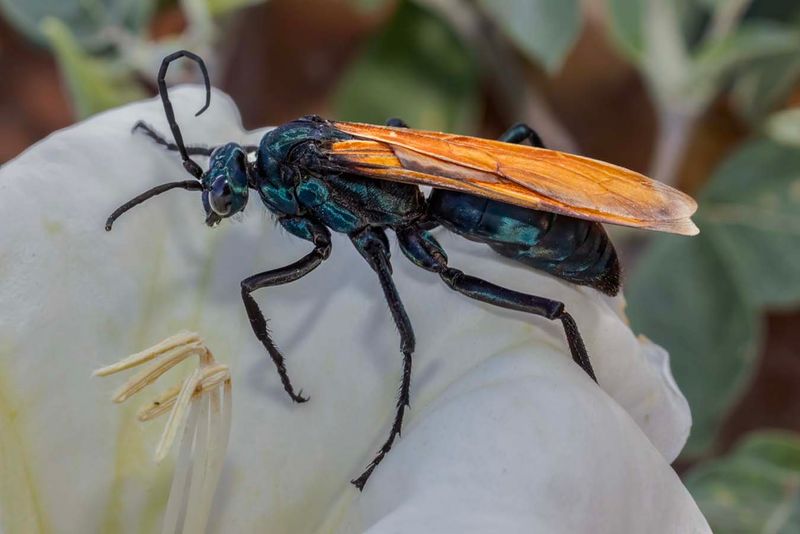
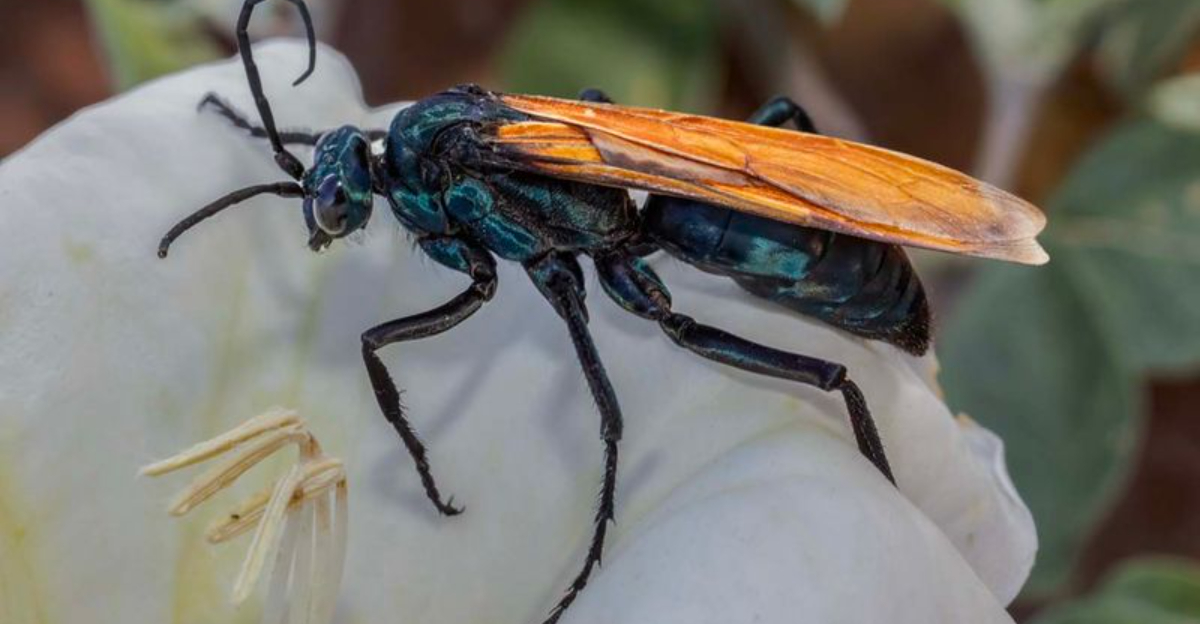
Few insects command respect quite like the tarantula hawk wasp, a spectacular creature with metallic blue-black bodies and brilliant orange wings that can span up to two inches.
Despite their intimidating appearance and reputation for delivering one of the most painful insect stings in North America, these solitary wasps are generally docile and focused on their specialized hunting behavior.
They roam Southern California deserts, inland valleys, and foothill regions searching for tarantulas to paralyze and use as living food sources for their larvae.
Tarantula hawks rarely show aggression toward humans and typically reserve their powerful stings exclusively for tarantulas and situations where they feel directly threatened or handled.
Males lack stingers entirely, and females prefer to fly away from perceived dangers rather than engage. Their sting pain, though legendary in intensity, lasts only a few minutes and causes no lasting tissue damage or serious medical complications for most people.
Homeowners occasionally encounter these wasps visiting flowers for nectar, particularly milkweed, mesquite blooms, and desert wildflowers.
Simply giving them space and avoiding sudden movements or attempts to swat them prevents virtually all sting incidents.
Children should learn to admire these fascinating insects from a respectful distance. If one lands on you, remain calm and allow it to fly away naturally rather than panicking and swatting.
Velvet Ant
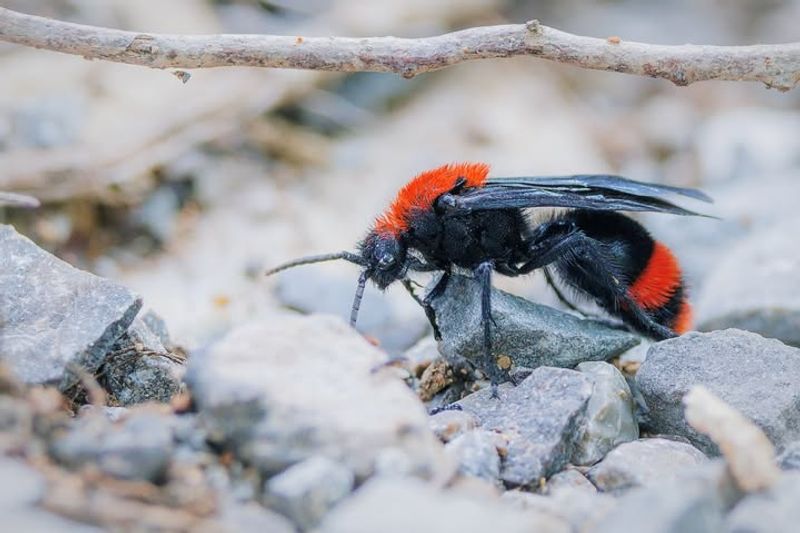
Don’t let the fuzzy, adorable appearance fool you, velvet ants pack a painful punch that earns them the nickname “cow stinger” in some regions.
These insects aren’t actually ants at all but rather wingless female wasps covered in dense, velvety hair that comes in striking color combinations of red, orange, yellow, black, or white.
California’s deserts and dry grasslands provide ideal habitat for numerous velvet ant species that scurry across sandy soil searching for ground-nesting bees and wasps to parasitize.
Their bright warning coloration serves as nature’s danger sign, alerting potential predators that these insects defend themselves vigorously.
Velvet ants possess extremely hard exoskeletons that protect them from most threats, and their stingers can penetrate skin easily, delivering venom that causes immediate, intense burning pain.
The discomfort typically lasts fifteen to thirty minutes but rarely causes serious medical complications beyond localized swelling and redness.
Encounters usually occur when people walk barefoot in sandy areas, work in gardens, or allow curious pets to investigate these colorful insects.
Teaching children to observe velvet ants from a distance without touching protects young explorers from painful lessons.
Wearing closed-toe shoes when walking in areas where velvet ants are common provides simple, effective protection.
If you spot velvet ants frequently in your yard, they’re likely finding host nests nearby, and reducing bare sandy patches or ground bee habitat can make your property less attractive.
Cone Snails
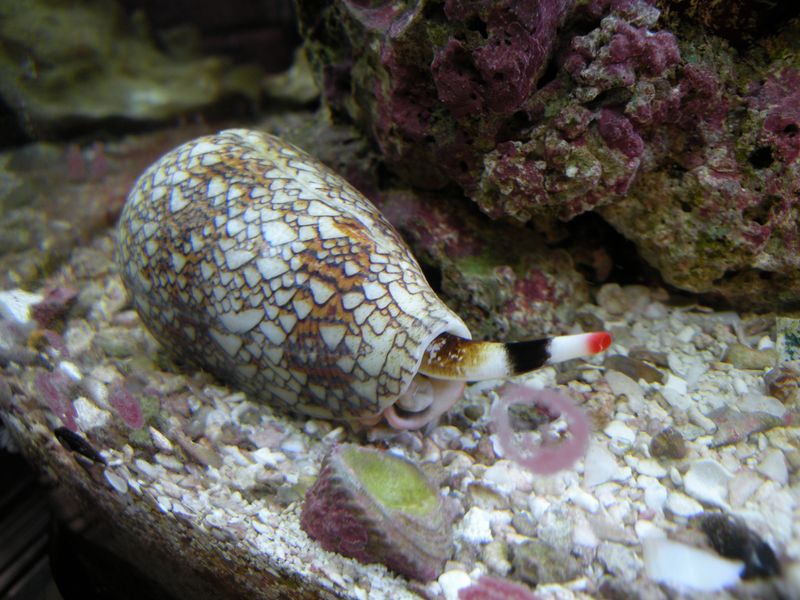
Beautiful patterns and intricate shell designs make cone snails tempting targets for shell collectors exploring California’s tide pools and rocky coastlines, but these small marine snails possess surprisingly potent venom.
Cone snails are predatory creatures that use a modified radular tooth like a harpoon to inject venom into prey, and some tropical species possess venom powerful enough to cause serious harm to humans.
California’s cone snail species are generally less dangerous than their tropical relatives, but caution remains essential.
The venom contains complex neurotoxins that can cause numbness, tingling, localized pain, and in severe cases involving tropical species, paralysis and respiratory failure.
Even California cone snails deserve respectful handling since individual reactions vary and positive identification can be challenging.
The snails extend their proboscis quickly when disturbed, potentially delivering stings to hands holding or examining them.
Shell collectors should observe cone snails in their natural habitat without picking them up, or if collecting is permitted and desired, use gloves and handle only the wide end of the shell, keeping fingers away from the narrow opening where the proboscis emerges.
Never place cone snails in pockets or against skin. Teaching children to appreciate marine life through observation rather than collection protects both the creatures and young explorers.
Photographing beautiful shells provides lasting memories without the risks associated with handling potentially venomous animals. If a sting occurs, seek medical attention immediately, especially if symptoms progress beyond localized discomfort.
Kissing Bugs
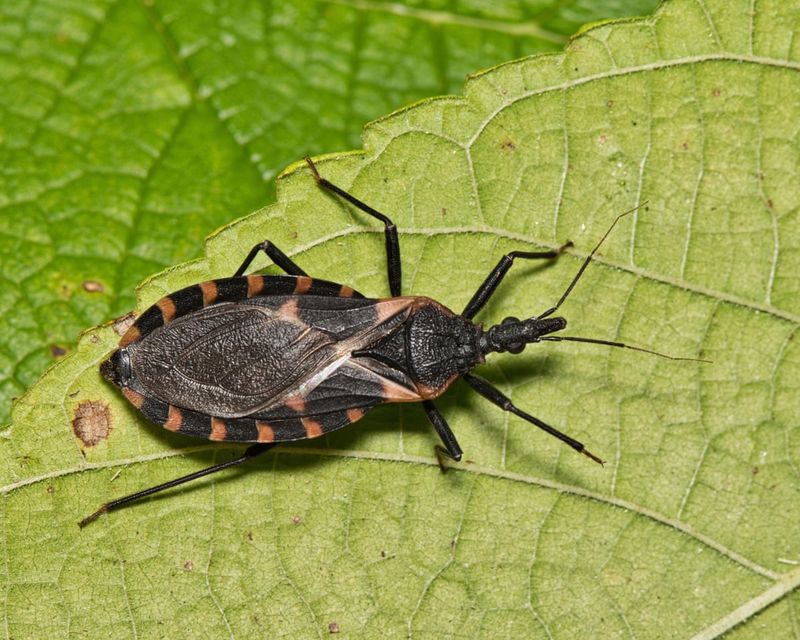
Named for their unfortunate habit of biting people near the mouth while they sleep, kissing bugs present a unique health concern for California homeowners.
These insects, also called conenose bugs, are dark brown to black with distinctive orange or red markings along their abdomens.
Beyond the immediate bite irritation, some kissing bug species can transmit Chagas disease, a potentially serious parasitic infection that affects the heart and digestive system over time.
Kissing bugs hide during daylight hours in cracks, crevices, beneath porches, in woodpiles, and inside animal burrows or nests. They emerge at night to feed on blood from sleeping mammals, including humans, pets, and wildlife.
California has documented several kissing bug species, though disease transmission rates remain relatively low compared to regions further south. However, awareness and prevention remain important for protecting your family.
Pest-proofing strategies include sealing cracks and gaps around windows, doors, and foundations, repairing torn screens, and eliminating outdoor debris piles that provide daytime hiding spots.
Keep outdoor lighting to a minimum since bright lights attract these insects at night. Remove animal nests from around your home’s perimeter and keep firewood stored away from structures.
If you find a kissing bug, capture it carefully in a sealed container without crushing it, crushed bugs can release parasites. Contact your local vector control agency for identification and testing.
Regular home maintenance and awareness of these insects’ appearance helps homeowners recognize and address potential risks before problems develop.
Pacific Coast Tick Species
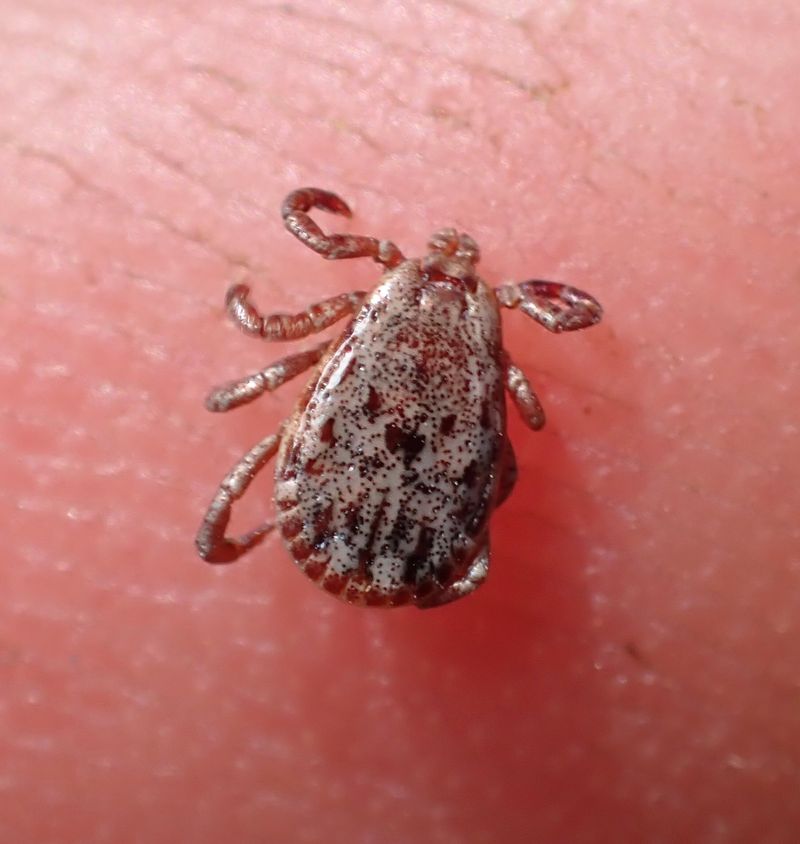
California’s diverse landscapes support numerous tick species that pose disease transmission risks to homeowners, hikers, and outdoor enthusiasts throughout the state.
Western black-legged ticks carry Lyme disease, while other species transmit anaplasmosis, Rocky Mountain spotted fever, and various other illnesses.
These tiny arachnids wait on vegetation along trails, in tall grass, and in brushy areas, transferring to passing hosts when contact occurs. Ticks prefer areas with moisture, shade, and abundant wildlife that serve as blood meal sources.
Residential yards bordering wild lands, properties with deer visitors, and homes near hiking trails face elevated tick exposure.
The insects are most active during spring and fall, though some species remain active year-round in California’s milder climates.
Early detection and removal significantly reduces disease transmission risk since most tick-borne illnesses require attachment periods of twenty-four hours or longer.
Yard management strategies include creating barrier zones between wild areas and recreational spaces, keeping grass mowed short, removing leaf litter and brush piles, and installing deer-resistant fencing where appropriate.
Wearing long pants and light-colored clothing makes tick detection easier during outdoor activities. Using EPA-approved tick repellents on clothing and exposed skin provides additional protection.
After spending time in tick habitat, perform thorough tick checks on yourself, children, and pets, paying special attention to warm, hidden areas like armpits, behind knees, and along the hairline.
Remove attached ticks promptly using fine-tipped tweezers, grasping close to the skin and pulling straight out with steady pressure.
Mojave Rattlesnake (Crotalus scutulatus)
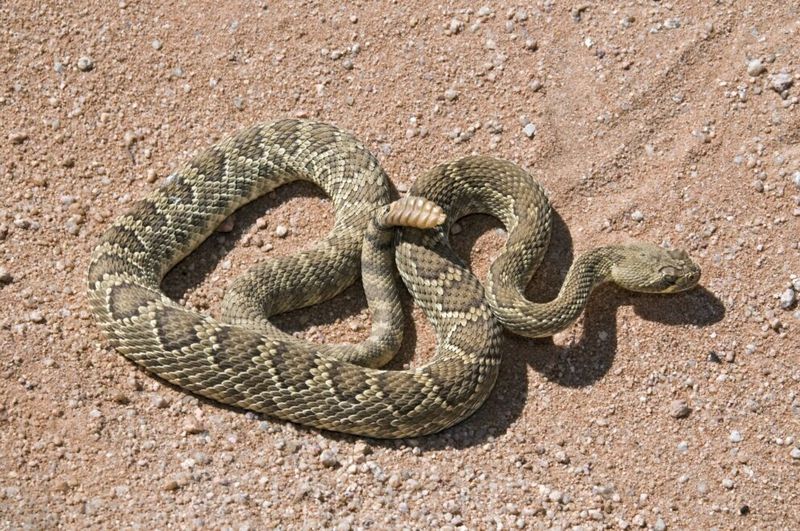
The Mojave rattlesnake is considered one of the most dangerous rattlesnakes in California due to the unique composition of its venom.
Unlike many rattlesnakes that primarily deliver tissue-damaging hemotoxins, the Mojave rattlesnake often carries a powerful neurotoxic component that can interfere with breathing and nervous system function.
This species is commonly found in Southern California deserts, inland valleys, and scrubland areas, especially near rocky terrain and open development zones.
Homeowners living near desert edges, undeveloped land, or hiking corridors are most likely to encounter this snake.
Mojave rattlesnakes are well-camouflaged and often remain motionless when approached, which increases the risk of accidental encounters. They may shelter under porches, in woodpiles, or near irrigation systems where rodents gather.
While they usually avoid humans, defensive strikes occur when they feel cornered or surprised. Keeping yards clear of debris, sealing crawl spaces, and controlling rodent populations can reduce attraction to your property.
Immediate medical attention is critical if a bite occurs, as symptoms can escalate quickly and require antivenom treatment.
Yellow Sac Spider (Cheiracanthium species)
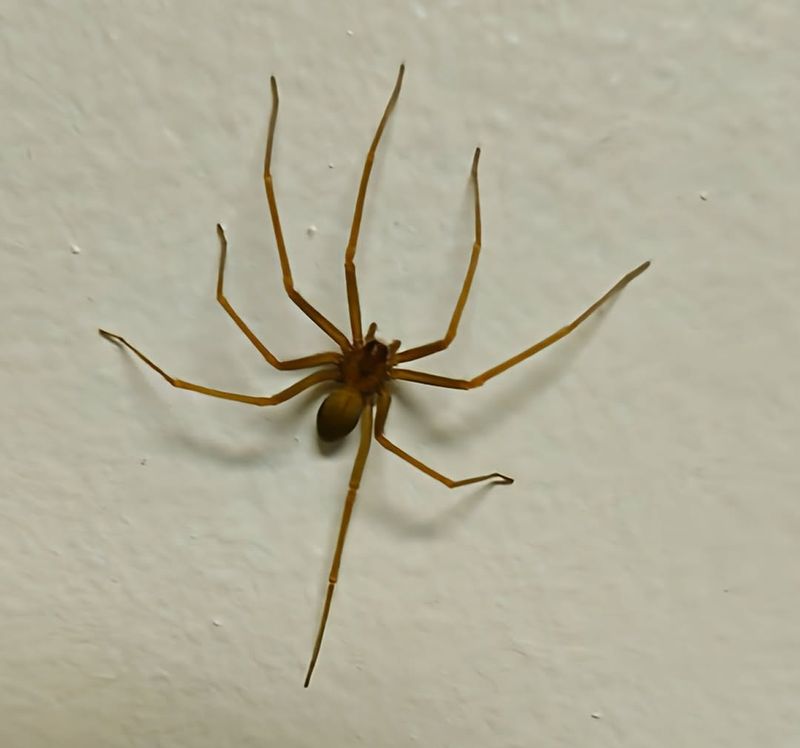
Yellow sac spiders are among the most commonly encountered indoor spiders in California homes, garages, and storage areas.
These small, pale-colored spiders are active hunters rather than web builders, which means they roam walls, ceilings, and furniture in search of prey.
Because of this behavior, they frequently come into contact with humans, especially at night when they are most active. Bites typically occur when the spider becomes trapped in bedding, clothing, or towels.
Although yellow sac spider venom is not considered deadly, bites can be painful and produce redness, swelling, itching, and localized burning sensations.
In some cases, mild tissue irritation or blistering can occur. Symptoms usually resolve within several days, but discomfort may persist longer for sensitive individuals.
Keeping clutter minimized, sealing entry cracks, and reducing indoor insect populations can help limit spider activity. Regular vacuuming of corners and ceiling edges also removes their silk retreats and discourages nesting inside living spaces.
Round Stingray (Urobatis halleri)
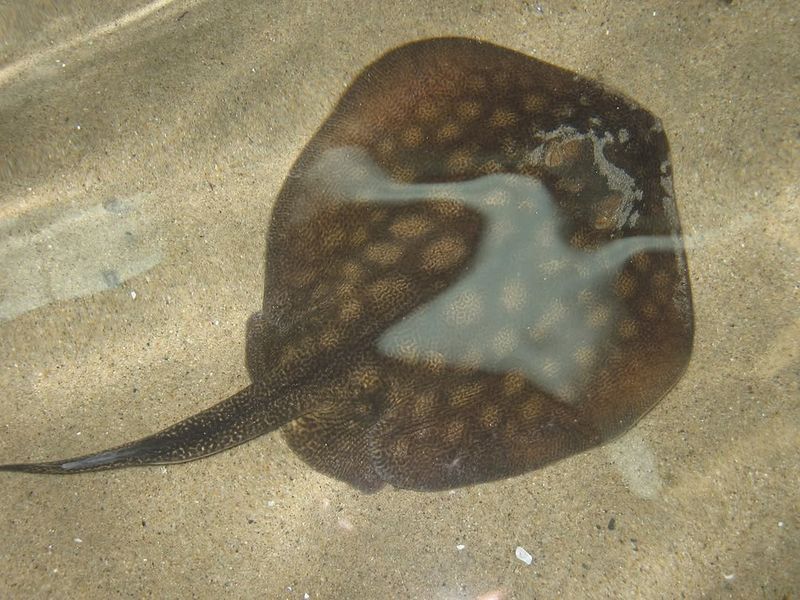
Round stingrays are responsible for thousands of painful injuries each year along California’s coastline, especially in Southern California beach communities.
These stingrays often bury themselves in shallow sandy water where swimmers and waders frequently walk.
When stepped on accidentally, the stingray reflexively lashes its tail upward, embedding a venomous barb into the foot or ankle. The resulting injury causes intense pain, swelling, and tissue irritation that can last for hours or days.
Homeowners living near coastal areas should be aware of this risk when visiting nearby beaches or tidal flats.
Practicing the “stingray shuffle,” where feet slide across the sand instead of stepping down forcefully, helps alert stingrays and gives them time to swim away.
While most stings are not life-threatening, they require immediate first aid, including soaking the wound in hot water to neutralize venom proteins.
Proper wound cleaning is also essential to prevent infection from marine bacteria. Awareness and simple precautions significantly reduce the likelihood of painful encounters.