South Carolina Homeowners Are Spotting A Strange Metallic Bug In Their Yards
Homeowners across South Carolina are noticing a shiny, metallic-looking bug appearing in gardens and lawns.
Its unusual color and fast movements often catch people by surprise, leaving many wondering if it is harmful or invasive. That glittering insect in your yard is attracting attention and curiosity.
Experts explain that these metallic bugs are typically beetles or other harmless insects drawn to light, moisture, or specific plants. While they may look alarming, most are not dangerous to people, pets, or landscaping.
Understanding their habits helps gardeners identify them and determine whether control measures are needed or if they can be left alone. What seems strange is often just a normal part of your garden ecosystem.
South Carolina homeowners who recognize these metallic bugs can enjoy observing them while maintaining a healthy and balanced yard. Learn what these shiny insects are and when to take action.
The Metallic Bug Is Usually The Emerald Ash Borer
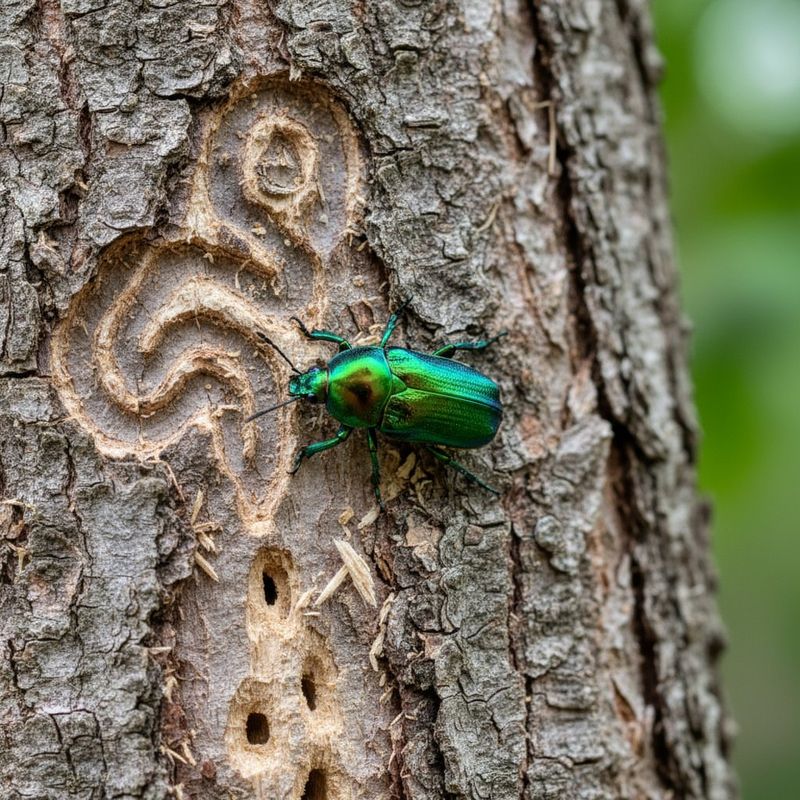
When South Carolina residents describe a shimmering green beetle crawling around their property, they’re most likely looking at an emerald ash borer.
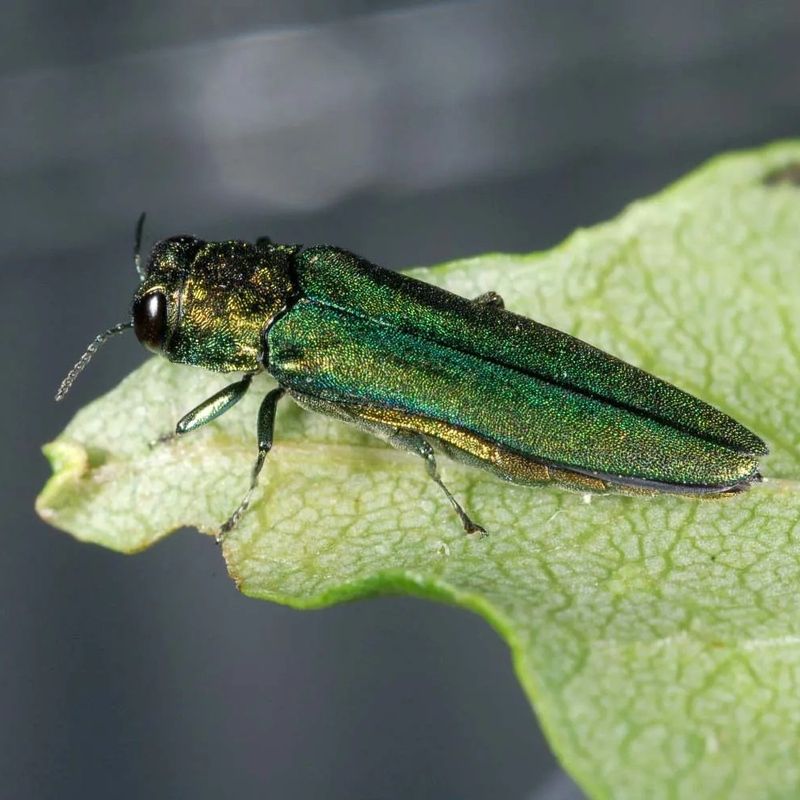
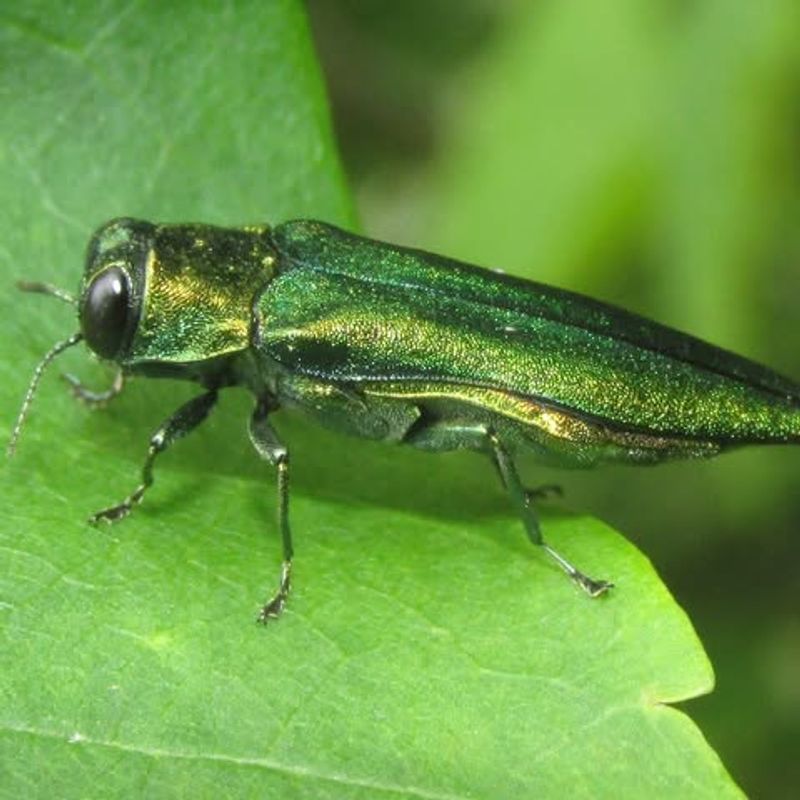
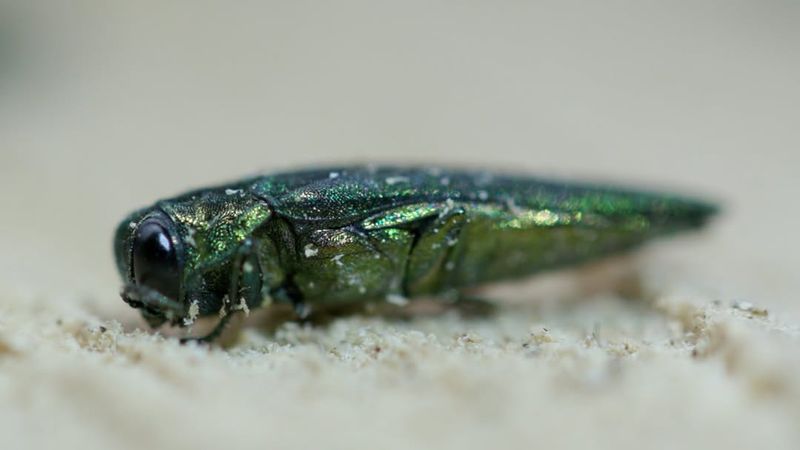
This invasive insect has a striking appearance that makes it stand out from other common yard bugs. Its iridescent green color catches the light beautifully, giving it an almost jewel-like quality that draws attention immediately.
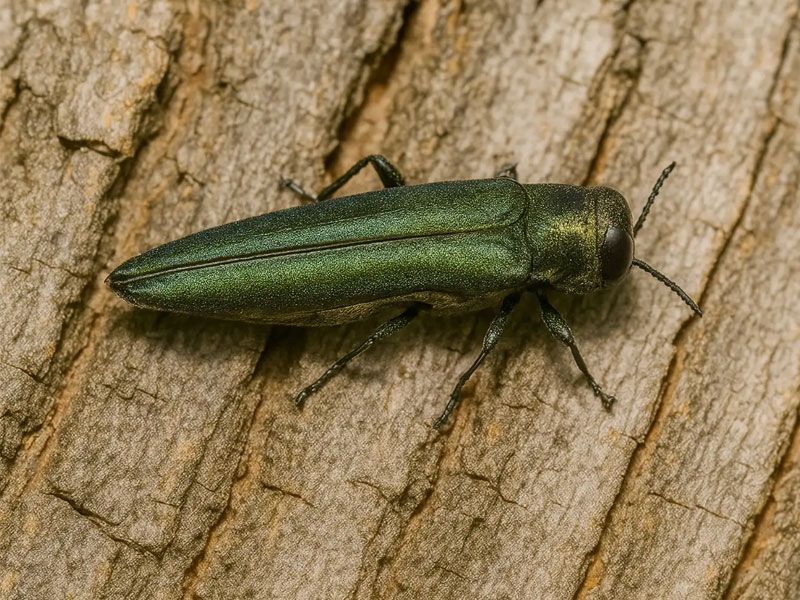
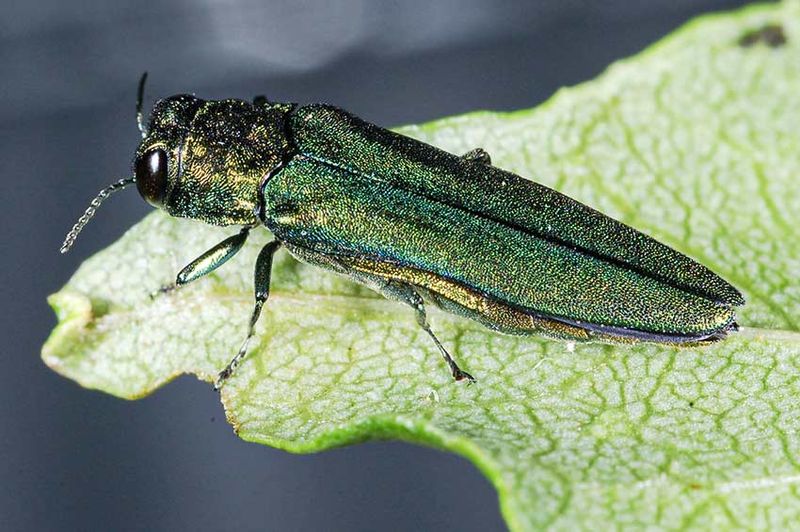
Adult emerald ash borers measure about half an inch in length, making them small but noticeable when they land on light-colored surfaces or tree bark.
Their bodies are slender and elongated, with a distinctly streamlined shape that helps them navigate through tree canopies.
The metallic sheen on their wing covers ranges from bright emerald to darker coppery-green tones depending on the angle of sunlight.
Looking closely, you might notice their segmented antennae and reddish-purple abdominal segments visible beneath the wings. The beetle’s underside shows a more brilliant metallic emerald color compared to the top surface.
These physical characteristics make identification relatively straightforward once you know what to look for, helping homeowners distinguish emerald ash borers from harmless native beetles that might share similar habitats in South Carolina landscapes.
Emerald Ash Borers Are Present Across South Carolina
The emerald ash borer has established populations throughout multiple counties in South Carolina, making it a statewide concern rather than an isolated problem.
Clemson Cooperative Extension has confirmed the presence of these invasive beetles in both urban and rural areas across the state.
Their monitoring programs track the spread and help educate residents about identification and management strategies.
State forestry officials work alongside university researchers to map infested areas and predict future spread patterns based on ash tree density and human activity.
Counties with higher concentrations of ash trees in residential neighborhoods often see more frequent sightings and reports from concerned homeowners.
The beetle’s presence isn’t limited to any particular region, coastal, midlands, and upstate areas have all documented confirmed populations.
Statewide monitoring efforts include trap placement in strategic locations, visual surveys of ash tree health, and citizen reporting programs that encourage homeowners to share their observations.
These coordinated efforts help officials understand population dynamics and provide timely recommendations for tree care professionals and property owners.
Your South Carolina Garden Changes Every Week. Your Plan Should Too.
Gardening in South Carolina changes quickly throughout the season. Every Friday you’ll receive a simple weekly plan showing exactly what to plant, prune, fertilize, harvest, and protect so you never miss the right timing.
Regular updates from Clemson Extension keep South Carolina residents informed about current distribution patterns and emerging hotspots throughout the state.
The Beetle Targets Only Ash Trees
Emerald ash borers demonstrate remarkable host specificity, focusing their attacks exclusively on trees in the Fraxinus genus, commonly known as ash trees.
Oak, pine, maple, hickory, and fruit trees remain completely safe from this particular pest, which provides some relief to homeowners with diverse landscapes.
This selective behavior stems from the beetle’s evolutionary adaptation to ash tree chemistry and bark characteristics.
Residential landscapes often contain ornamental ash varieties planted for their attractive foliage and shade-providing canopies, making suburban neighborhoods particularly vulnerable.
White ash, green ash, and other cultivated species all serve as suitable hosts for emerald ash borer larvae. The beetles locate ash trees through chemical cues released by the foliage, allowing them to find their preferred hosts even among mixed plantings.
Understanding this host specificity helps homeowners assess their personal risk and prioritize which trees need monitoring or protection.
Properties without ash trees face no direct threat from emerald ash borers, though neighbors with infested ash trees might still see adult beetles wandering through yards during flight season.
Knowing your tree species becomes essential for making informed decisions about pest management and landscape planning in South Carolina’s changing environmental conditions.
Adults Are Most Visible From Late Spring Through Summer
South Carolina’s warm climate creates ideal conditions for emerald ash borer adults to emerge and become active during the late spring and summer months.
Peak activity typically occurs from May through August when temperatures consistently stay warm and ash trees are in full leaf.
Homeowners notice these metallic beetles most frequently during this window because adults leave their host trees to feed on foliage and search for mating opportunities.
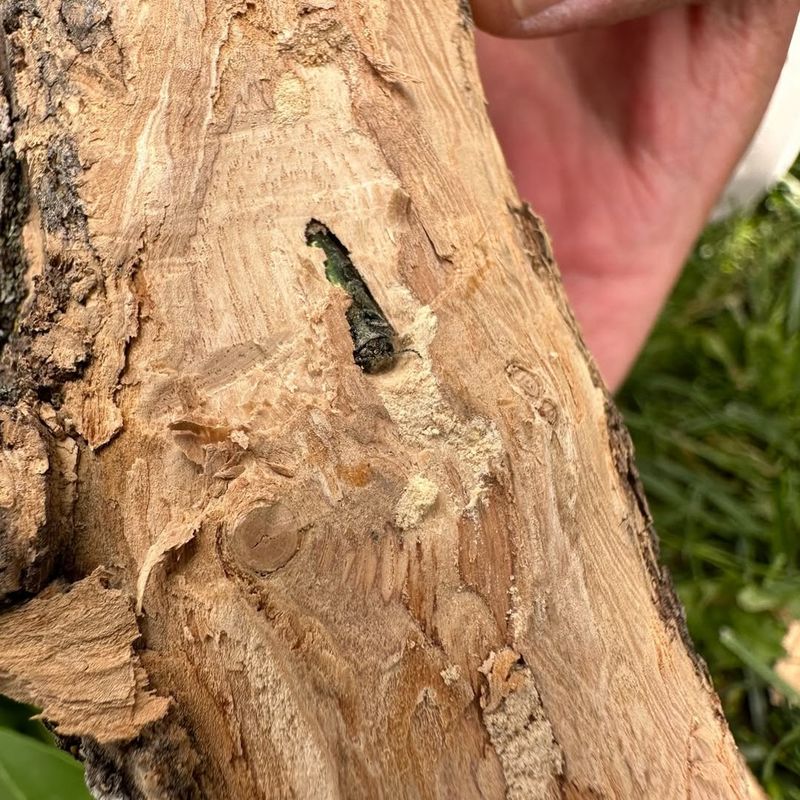
Adult beetles emerge through distinctive D-shaped exit holes in ash tree bark, then spend several weeks feeding on ash leaves before reproducing.
Warm, sunny days bring the highest levels of adult activity as beetles fly between trees and rest on various surfaces throughout residential properties.
This seasonal pattern explains why reports of metallic bug sightings spike during summer months and taper off as cooler autumn weather arrives.
Temperature plays a crucial role in determining exact emergence timing each year, with warmer springs potentially triggering earlier adult activity.
South Carolina’s extended growing season allows for a longer period of beetle visibility compared to northern states where emerald ash borers also occur.
Recognizing these seasonal patterns helps homeowners know when to watch for signs of infestation and when professional treatments might be most effective.
Yard Sightings Often Coincide With Ash Tree Symptoms
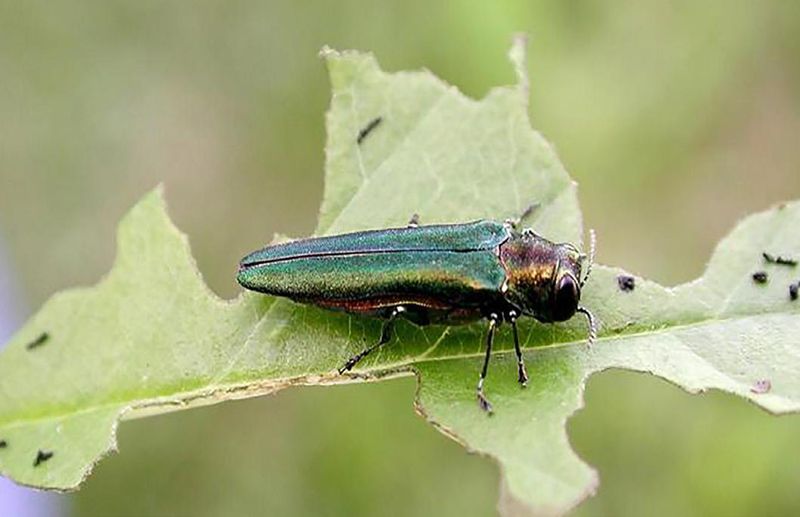
Spotting metallic beetles around your property frequently corresponds with visible decline in nearby ash trees, creating a connection that helps homeowners identify problems early.
Thinning tree canopies represent one of the most noticeable symptoms, as infested ash trees gradually lose their ability to produce healthy foliage.
Upper branches often show damage first, creating a sparse, unhealthy appearance that contrasts with the fuller canopies of unaffected trees.
Branch dieback progresses from the top downward as larval feeding disrupts nutrient and water transport within the tree’s vascular system.
Stressed ash trees sometimes produce epicormic shoots—small, leafy sprouts that emerge directly from the trunk or major branches as the tree attempts to compensate for canopy loss.
These shoots create an unusual appearance that alerts observant homeowners to underlying problems.
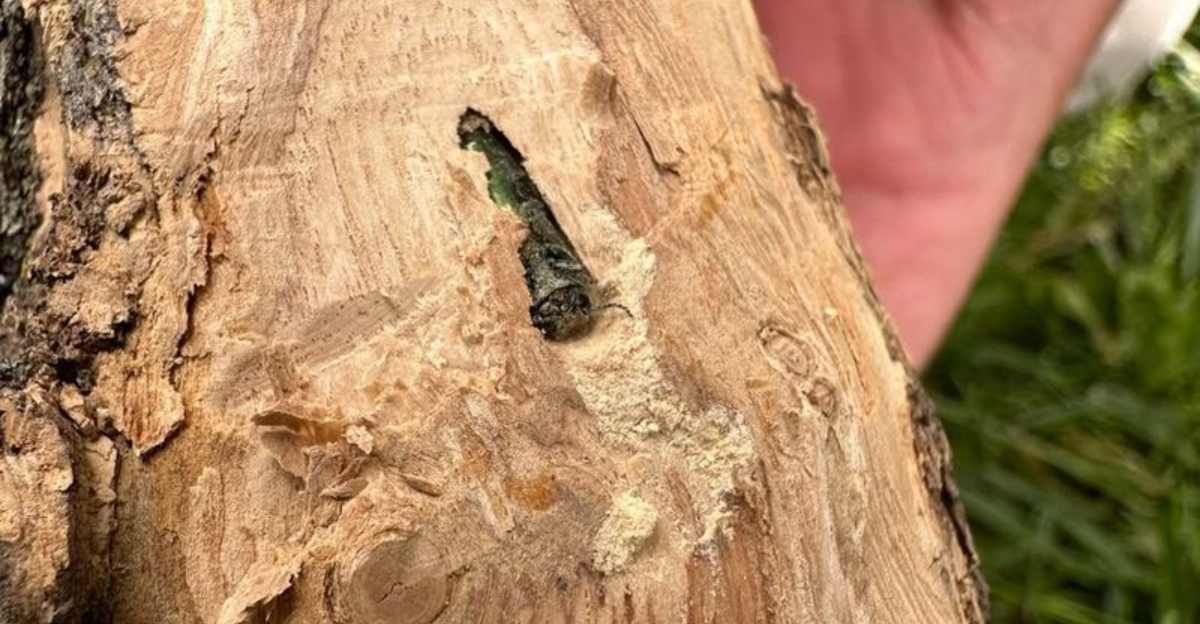
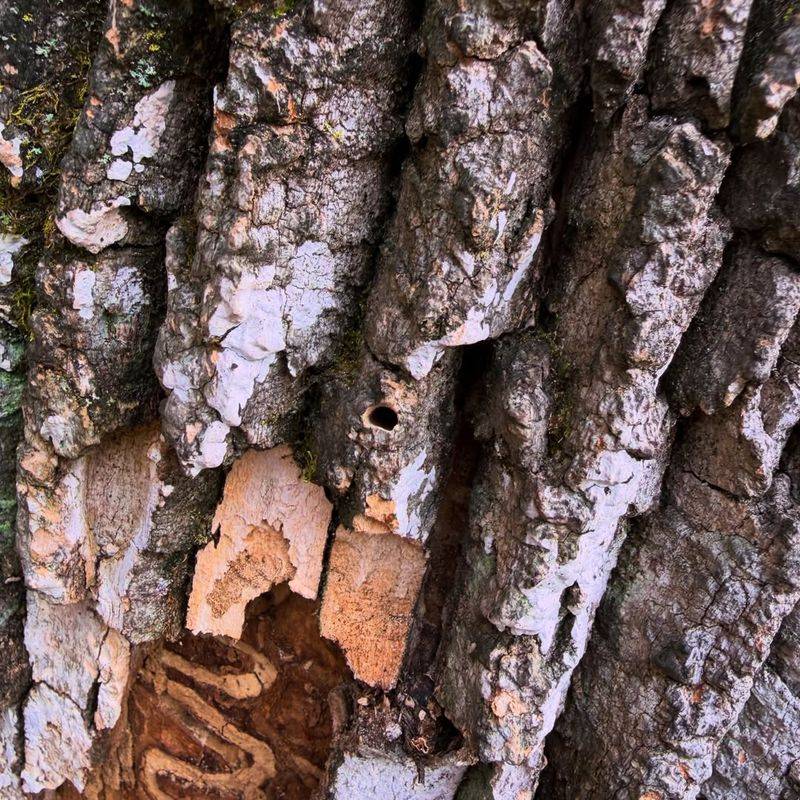
Looking closely at the bark reveals D-shaped exit holes about one-eighth inch wide, which mark where adult beetles emerged after completing their development beneath the bark.
Woodpecker activity often increases on infested trees as birds search for nutritious larvae, sometimes creating larger patches of missing bark.
Recognizing these warning signs alongside beetle sightings allows homeowners to connect the dots and seek professional evaluation before tree health deteriorates beyond recovery.
Firewood Movement Helps Spread This Insect
Transporting untreated firewood represents one of the primary ways emerald ash borers spread to new areas, carrying larvae hidden beneath the bark to previously uninfested locations.
Wood that looks perfectly normal on the outside can harbor developing beetles that emerge months later, establishing new populations far from their origin.
This human-assisted movement allows the pest to jump natural barriers and expand its range much faster than through natural flight alone.
South Carolina Forestry Commission strongly recommends buying firewood locally and burning it where you purchase it to minimize accidental spread.
Bringing firewood from other states or even distant counties within South Carolina can introduce emerald ash borers and other invasive pests to your neighborhood.
Heat treatment or proper seasoning can reduce risk, but purchasing local wood remains the safest approach for protecting community forests.
Campers and outdoor enthusiasts should avoid transporting firewood to state parks, campgrounds, or vacation properties, instead purchasing wood near their destination.
Many recreational areas now post signs reminding visitors about firewood movement restrictions and the ecological consequences of non-compliance.
Following these guidelines helps slow the spread of emerald ash borers and protects South Carolina’s valuable ash tree populations from unnecessary harm.
Birds Are Not Reliable Control Solutions
Woodpeckers and other insect-eating birds do feed on emerald ash borer larvae beneath tree bark, creating visible foraging marks on infested ash trees.
While this natural predation provides some level of control, bird activity alone cannot reduce beetle populations enough to save heavily infested trees or protect entire neighborhoods.
Native predators simply haven’t evolved effective strategies for managing this invasive species, which comes from Asia where different predator-prey relationships exist.
Homeowners sometimes notice increased woodpecker activity and assume the problem is being handled naturally, but research shows that even intensive bird feeding doesn’t prevent tree decline in most cases.
The beetles reproduce rapidly enough to overwhelm natural predation, especially in areas with high ash tree density.
Relying solely on birds for control typically results in continued tree deterioration and eventual loss.
Professional management strategies offer much more reliable protection for valuable landscape trees that homeowners want to preserve.
Certified arborists can assess tree health, recommend appropriate treatment options, and implement control measures that actually reduce beetle populations to manageable levels.
While encouraging natural predators remains beneficial for overall ecosystem health, expecting birds to solve an emerald ash borer infestation sets unrealistic expectations that often lead to disappointment and preventable tree loss.
Treatment Is Possible For High-Value Landscape Trees
Homeowners can protect valuable ash trees through professional treatment options that significantly reduce emerald ash borer populations and prevent further damage.
Trunk injection methods deliver systemic insecticides directly into the tree’s vascular system, where they circulate throughout the canopy and target feeding larvae.
These treatments require specialized equipment and expertise, making certified arborists or tree care professionals the appropriate providers for this service.
Soil-applied systemic products offer another treatment approach, where materials are distributed around the tree’s root zone and absorbed over time.
Both methods work best when applied before heavy infestation occurs, emphasizing the importance of early detection and proactive management.
Trees showing moderate to severe decline may not respond well to treatment, making timing a critical factor in successful protection.
South Carolina’s extended growing season influences treatment timing, with applications typically scheduled during spring or early summer for optimal uptake and effectiveness.
Treatments generally require reapplication every one to two years to maintain protection as the active ingredients break down naturally.
Cost considerations vary based on tree size and treatment method, but many homeowners find the investment worthwhile for preserving mature shade trees that provide significant landscape value and environmental benefits to their property.
Reporting Sightings Helps Track Regional Spread
Homeowners who spot suspected emerald ash borers can contribute valuable information to state monitoring efforts by reporting their observations to Clemson Cooperative Extension or the South Carolina Forestry Commission.
These reports help officials track the beetle’s spread, identify newly infested areas, and allocate resources for management and public education.
Citizen science contributions have become increasingly important for understanding invasive species distribution patterns across large geographic areas.
Taking clear photographs of the suspected beetle greatly improves identification accuracy and helps experts confirm whether the sighting represents an actual emerald ash borer or a similar-looking native species.
Include images showing the insect’s size relative to a common object, its color and body shape, and the location where you found it.
Recording the specific address or GPS coordinates allows researchers to map sightings precisely and analyze spatial patterns.
Submitting reports through official channels ensures the information reaches appropriate agencies that can verify identifications and respond accordingly.
Clemson Extension maintains online reporting forms and contact information for easy submission, while local extension offices can provide guidance on documentation and next steps.
Your observations might help protect neighboring properties and contribute to broader understanding of how emerald ash borers move through South Carolina’s diverse landscapes and communities.