13 Common California Trees You Should Never Plant Near Your House
Trees add beauty and shade to California yards, but some species can cause serious problems if planted too close to your home.
Roots can damage foundations and pipes, overhanging branches can threaten roofs, and certain trees attract pests or drop excessive debris. Not every tree is a safe choice for planting near your house.
These thirteen trees are commonly found in California landscapes but are risky near structures. Homeowners should avoid planting them too close to foundations, driveways, or patios.
Proper placement and careful selection help prevent costly damage and long-term maintenance issues. Knowing which trees to avoid protects both your property and your investment.
Planting smart now saves headaches and repairs later. California homeowners who follow these guidelines can enjoy shade and beauty without compromising their homes. Choose trees wisely and keep your property safe and attractive.
1. Eucalyptus (Eucalyptus Species)
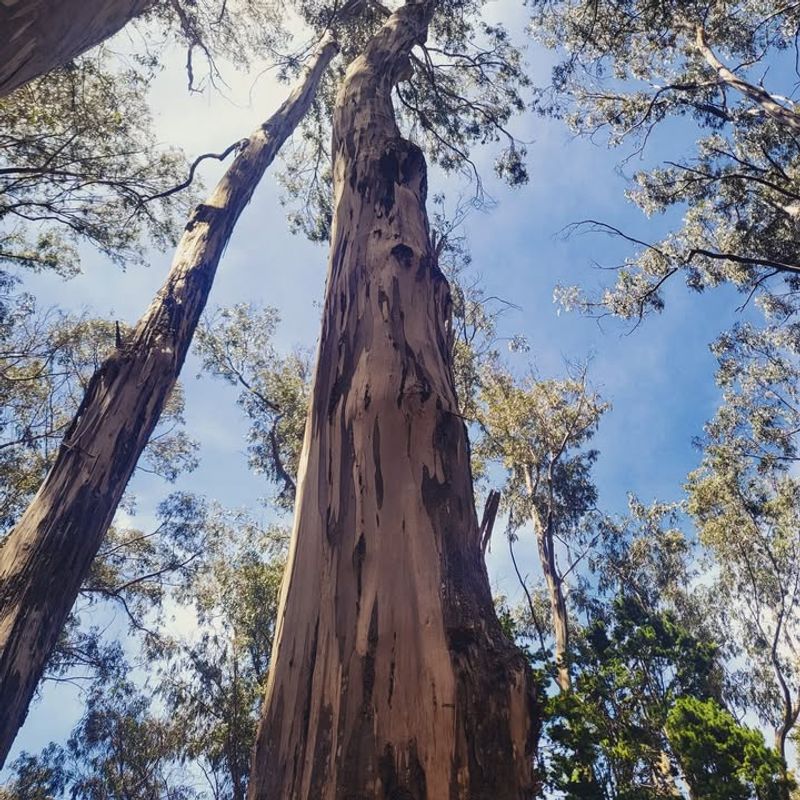
Originally imported from Australia, eucalyptus trees have become a familiar sight across California’s landscape, but their beauty comes with serious risks for homeowners.
These towering giants develop incredibly aggressive root systems that stretch far and wide in search of water, often invading underground pipes, sewer lines, and even cracking foundations with remarkable force.
Their thirsty nature means they constantly compete with your lawn and garden for precious moisture, making them particularly problematic during California’s frequent drought periods.
Beyond the underground concerns, eucalyptus trees pose significant fire hazards in California’s dry climate because their oil-rich bark and leaves burn intensely and spread flames rapidly.
The phenomenon known as limb drop creates another danger, as these trees randomly shed large branches without warning, even on calm days, potentially causing property damage or injury.
Many insurance companies in fire-prone areas actually increase premiums for properties with eucalyptus trees nearby.
If you already have eucalyptus on your property, experts recommend keeping them at least fifty feet away from any structures, though even this distance might not fully protect your foundation and plumbing.
Professional arborists often suggest removing eucalyptus trees planted too close to homes rather than risking the inevitable damage they eventually cause.
Their rapid growth and massive mature size make them better suited for open parklands where their roots and branches have plenty of room to spread without threatening buildings or infrastructure.
2. Willow Trees (Salix Species)
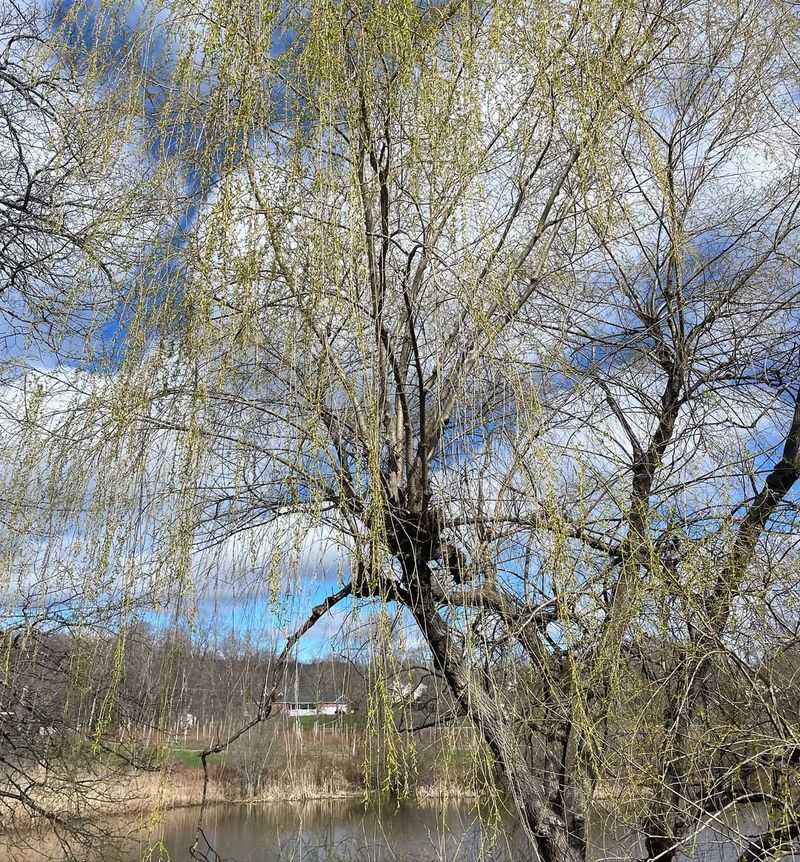
Picture those graceful, weeping branches swaying in the breeze, and you might fall in love with willow trees at first sight.
However, beneath that romantic appearance lies one of the most invasive root systems you could possibly introduce to your property.
Willows have an almost supernatural ability to detect moisture sources, sending their roots on relentless journeys toward water pipes, sewer lines, and septic systems with determination that would impress even the most dedicated treasure hunter.
Once willow roots find your plumbing, they infiltrate through tiny cracks and joints, creating dense tangles inside pipes that cause backups, blockages, and expensive repairs.
Their incredibly fast growth rate means problems develop quickly, sometimes within just a few years of planting.
Homeowners often discover willow root invasions only after experiencing repeated plumbing issues or noticing foundation cracks caused by the constant pressure of expanding roots seeking moisture beneath their homes.
Your California Garden Changes Every Week. Your Plan Should Too.
Gardening in California changes quickly throughout the season. Every Friday you’ll receive a simple weekly plan showing exactly what to plant, prune, fertilize, harvest, and protect so you never miss the right timing.
The shallow root structure of willows also makes them prone to toppling during storms, potentially crashing onto roofs, vehicles, or power lines.
Professional plumbers in California frequently encounter willow roots as the culprit behind residential sewer line failures, with repair bills often reaching several thousand dollars.
If you love the aesthetic of willows, consider planting them far from your house in low-lying areas where their water-loving nature can actually benefit drainage problems without threatening your home’s infrastructure or your wallet.
3. Cottonwood / Poplar (Populus Species)
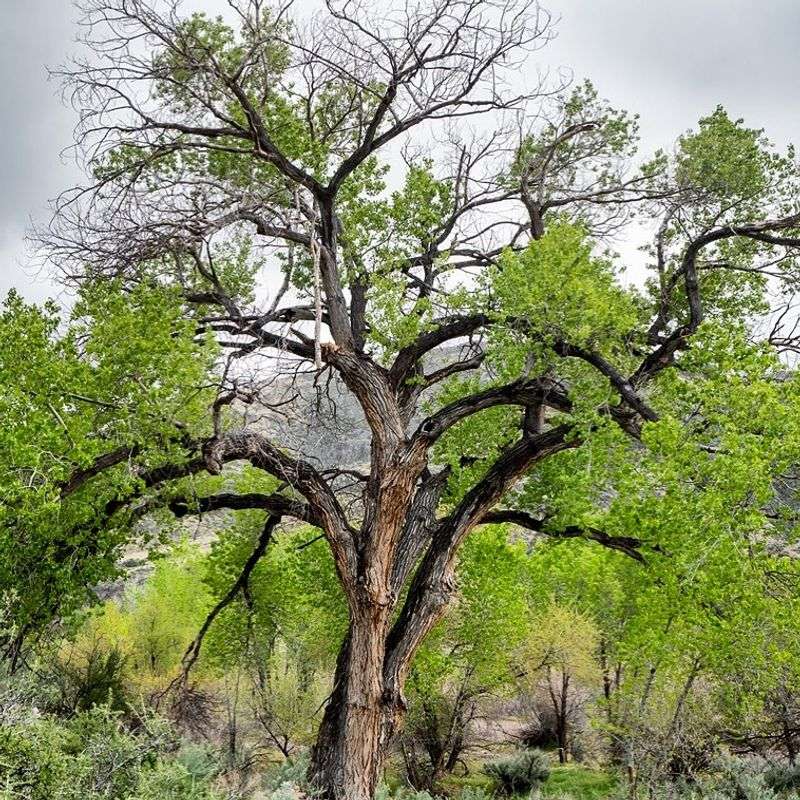
Few trees grow as quickly or as aggressively as cottonwoods and poplars, which might sound appealing if you want instant shade but spells disaster for suburban California properties.
These fast-growing giants develop shallow, spreading root systems that travel horizontally just beneath the surface, lifting sidewalks, cracking driveways, and creating trip hazards throughout your yard.
Neighborhoods built during California’s housing booms often feature cottonwoods planted decades ago that now wreak havoc on infrastructure originally laid out without considering the tree’s eventual root spread.
The rapid growth that makes cottonwoods attractive to impatient gardeners also means their roots quickly invade underground utilities, water lines, and irrigation systems.
Many California municipalities have actually banned planting cottonwoods in residential areas after spending millions repairing sidewalks and streets buckled by their aggressive roots.
Property owners face similar expenses when cottonwood roots penetrate foundations, causing structural cracks that compromise home integrity and value.
Cottonwoods also produce copious amounts of fluffy seeds that blanket yards, clog gutters, and trigger allergies throughout late spring and early summer.
Their weak wood breaks easily during windstorms, dropping branches that damage roofs, vehicles, and anything else beneath their expansive canopies.
Urban foresters recommend keeping cottonwoods at least one hundred feet from any structures, a distance rarely available in typical California suburban lots.
If you need fast-growing shade, consider alternatives with less invasive root systems that provide beauty without threatening your home’s foundation and surrounding hardscapes.
4. Silver Maple (Acer Saccharinum)
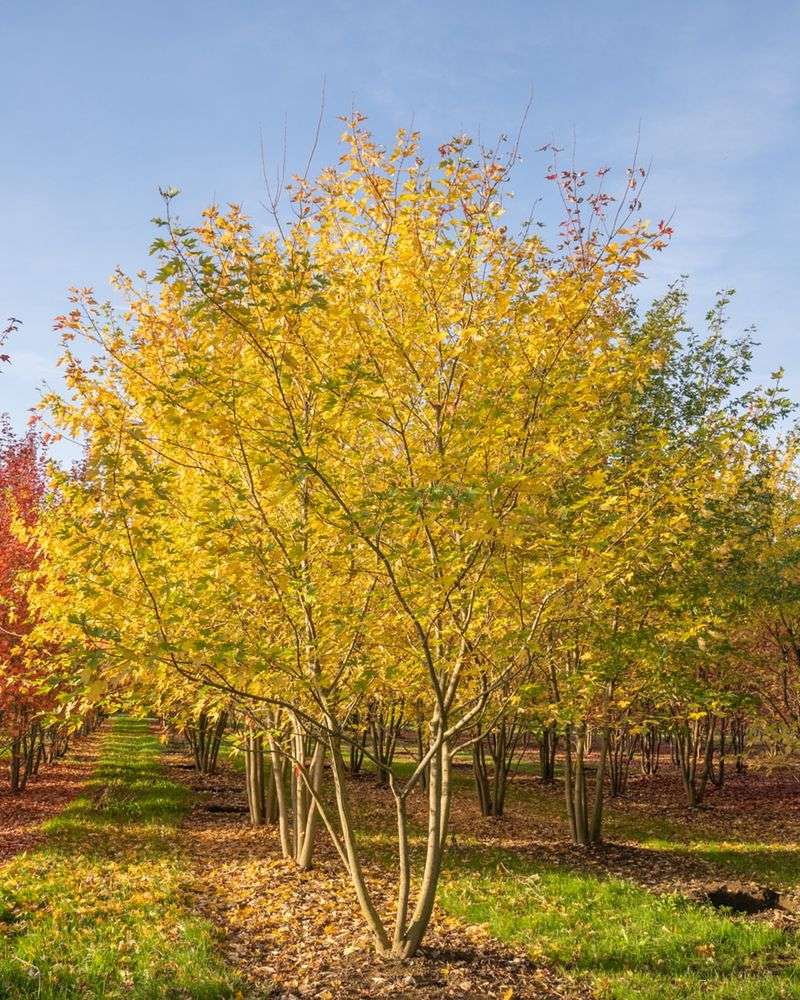
Silver maples might dazzle you with their shimmering leaves that dance in the breeze, but this ornamental appeal masks serious structural problems that make them unsuitable for planting near California homes.
Unlike their sturdier maple cousins, silver maples develop notoriously weak wood that splits and breaks easily, especially during the windstorms that periodically sweep through California’s valleys and coastal areas.
Arborists frequently respond to emergency calls involving silver maple branches that have crashed through roofs or crushed vehicles parked beneath their deceptively fragile canopies.
The aggressive surface roots of silver maples create another layer of problems, pushing upward through lawns and creating unsightly bumps that make mowing difficult and walking hazardous.
These shallow roots also lift pavement with surprising force, cracking driveways, buckling sidewalks, and damaging foundations when planted too close to structures.
California’s urban areas have seen countless lawsuits and insurance claims stemming from silver maple root damage to public walkways and private property.
Silver maples also require abundant water to maintain their lush appearance, making them poor choices for drought-conscious California landscaping.
Their fast growth means they quickly outgrow small yards, and their brittle branches require frequent pruning to minimize storm damage risks.
Many California cities have removed silver maples from their approved street tree lists after decades of dealing with maintenance headaches and liability issues.
Homeowners seeking attractive shade trees should explore more structurally sound alternatives that provide beauty without the constant worry of falling limbs and destructive roots threatening their property and safety.
5. Sweetgum (Liquidambar Styraciflua)
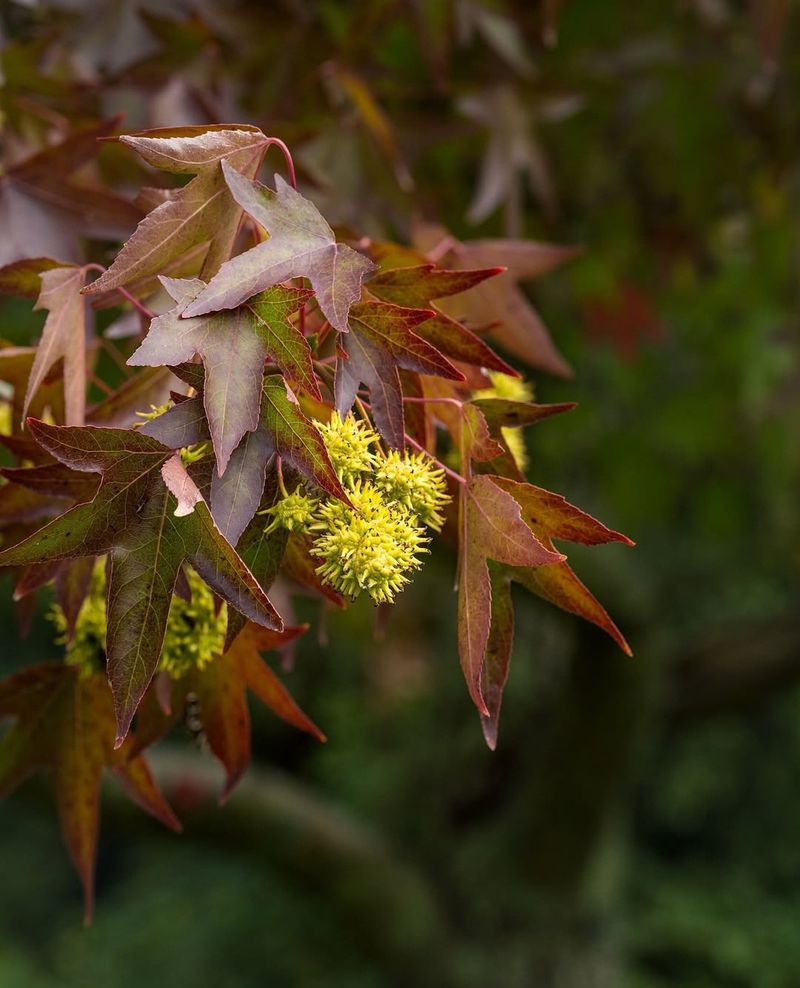
Sweetgum trees earn admiration for their spectacular fall colors that paint California neighborhoods in brilliant reds and purples, but this seasonal beauty conceals year-round maintenance nightmares.
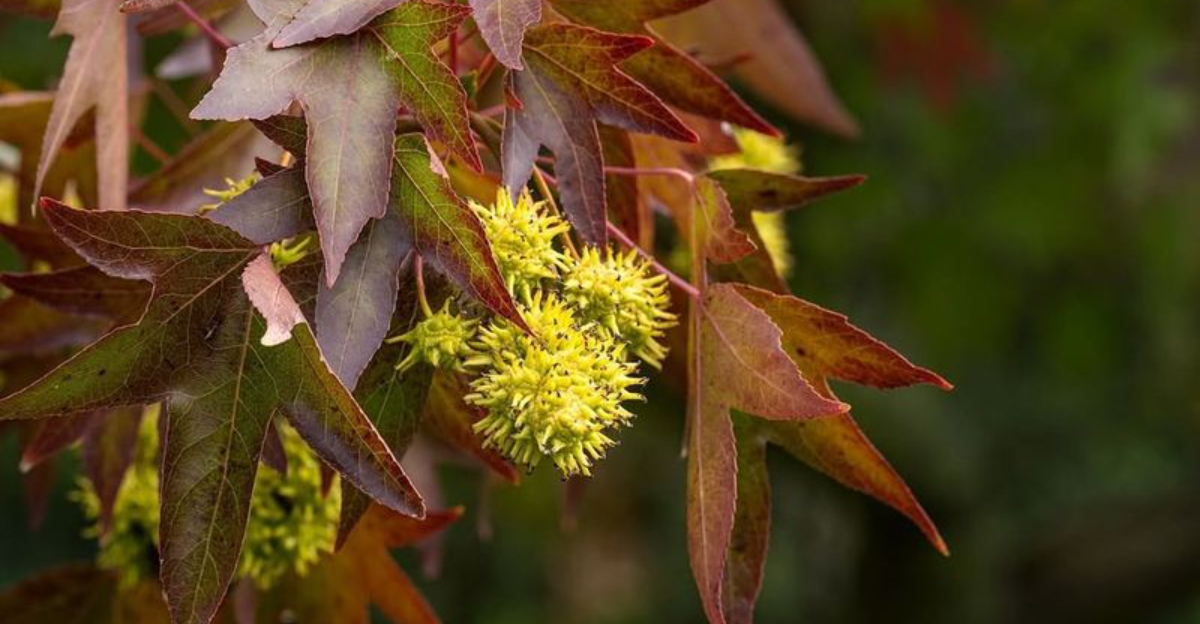
The tree’s most infamous feature involves the spiky seed pods locals call gumballs, which carpet lawns by the thousands each autumn and persist through winter.
These hard, prickly spheres create painful hazards for bare feet, clog lawn mowers, and require endless hours of raking that makes leaf cleanup seem easy by comparison.
Beyond the gumball nuisance, sweetgums develop invasive surface roots that aggressively seek moisture and nutrients, often breaking through lawns and creating networks of exposed roots that trip unsuspecting walkers.
These same roots excel at cracking sidewalks, lifting driveways, and finding their way into foundation perimeters where they cause structural damage over time.
California homeowners frequently discover sweetgum roots invading flower beds, damaging irrigation lines, and competing so successfully for resources that nearby plants struggle to survive.
The combination of surface root aggression and constant gumball litter makes sweetgums particularly problematic near patios, walkways, and driveways where both issues create ongoing frustration.
Many California neighborhoods planted sweetgums decades ago based solely on their autumn beauty, only to spend subsequent years battling the consequences.
Property values can actually decrease when sweetgums dominate landscapes because potential buyers recognize the maintenance burdens these trees impose.
If you desire brilliant fall colors, numerous alternative species offer similar visual rewards without the spiky cleanup headaches and destructive root systems that make sweetgums unwelcome neighbors for California homes.
6. Indian Laurel Fig (Ficus Microcarpa / Ficus Nitida)
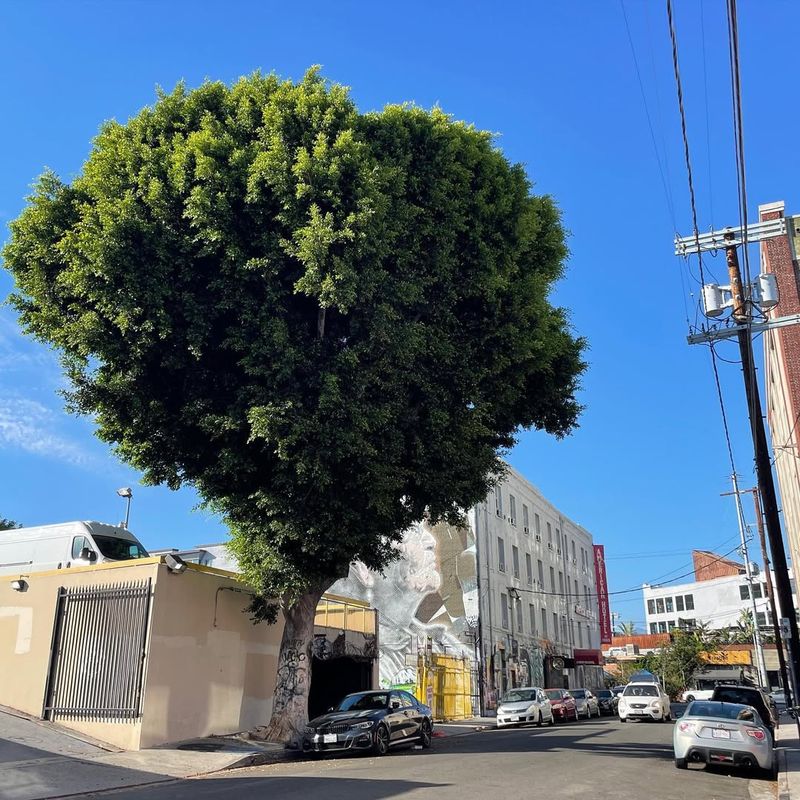
Southern California’s love affair with ficus trees has turned into a costly divorce for countless property owners who discovered too late the destructive power lurking beneath these popular ornamentals.
Indian laurel figs produce some of the most aggressive root systems in the plant kingdom, with thick, powerful roots that crack foundations, buckle sidewalks, and completely destroy sewer lines with an efficiency that amazes even experienced contractors.
Cities throughout Southern California have spent millions removing ficus trees and repairing the infrastructure damage they caused, leading many municipalities to ban new plantings entirely.
The roots of ficus trees don’t just spread wide, they also grow with incredible force that can lift entire sections of pavement, push through concrete walls, and invade plumbing systems where they create impenetrable tangles.
Homeowners often face repair bills exceeding ten thousand dollars after ficus roots infiltrate their sewer lines, requiring complete pipe replacement rather than simple clearing.
The trees also drop leaves constantly throughout the year, creating perpetual cleanup chores that frustrate property owners already dealing with root-related problems.
Despite their reputation for destruction, ficus trees remain common in older California neighborhoods where they were planted before their problematic nature became widely recognized.
Property inspectors now routinely flag ficus trees as potential deal-breakers during real estate transactions because buyers understand the inevitable expenses these trees impose.
Removing mature ficus trees presents its own challenges because their extensive root systems often require professional extraction to prevent regrowth and continued damage.
Anyone considering planting ficus near their California home should think again and choose from the many beautiful alternatives that provide shade and beauty without threatening to literally tear apart your property’s foundation and infrastructure.
7. California Sycamore (Platanus Racemosa)
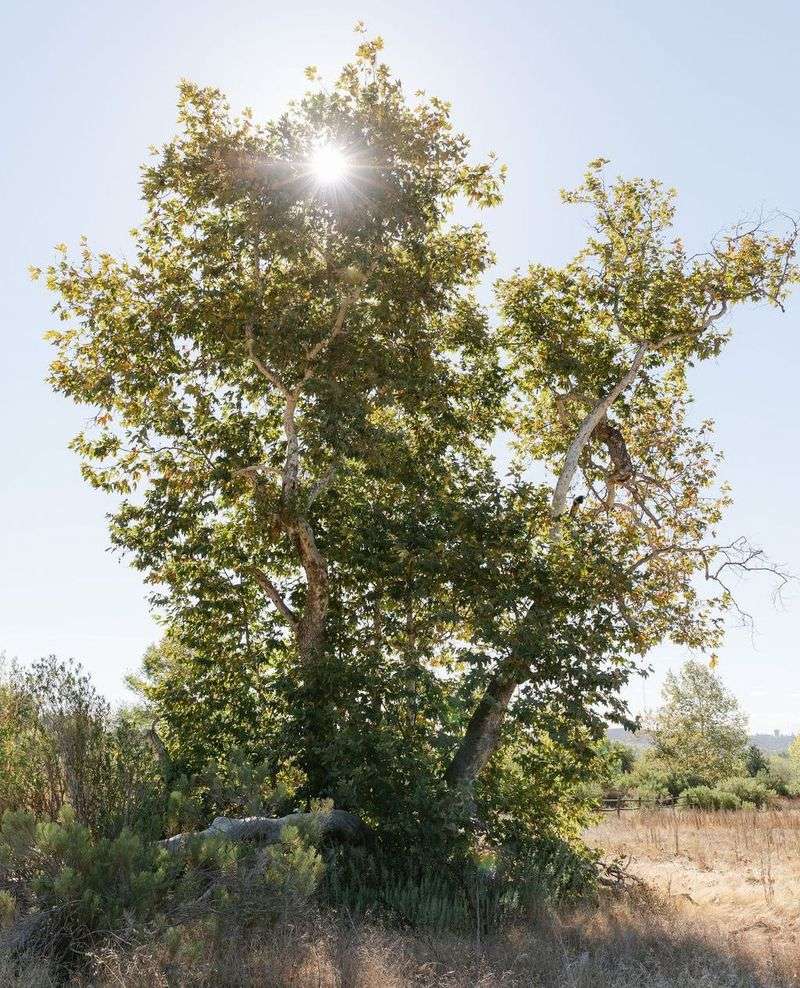
California sycamores stand as magnificent native trees that have graced stream banks and canyons for millennia, but their natural habitat preferences reveal exactly why they make poor choices for residential yards.
These massive trees can reach heights exceeding eighty feet with trunk diameters spanning several feet, creating canopies that dwarf typical suburban homes and shade entire properties.
Their enormous size alone makes them unsuitable for standard residential lots, but their root systems present even greater concerns for homeowners who plant them too close to structures.
Sycamores develop wide-spreading root networks designed to stabilize riverbanks and access groundwater in their native riparian environments.
When confined to suburban settings, these same roots aggressively seek moisture and space, often invading foundations, underground utilities, and neighboring properties.
The roots grow thick and powerful enough to crack concrete, lift pavement, and compromise structural integrity when given enough time to establish themselves near buildings.
California sycamores also shed bark in large patches throughout the year, creating constant cleanup chores that add to their high maintenance requirements.
Their preference for abundant water makes them expensive to irrigate in typical California landscapes, especially during drought conditions when water restrictions limit landscape watering.
Native plant enthusiasts rightfully celebrate California sycamores as ecological treasures, but even these advocates recommend reserving them for parks, greenbelts, and large rural properties where their massive proportions and extensive root systems can spread without threatening homes.
Residential gardeners seeking native California trees should explore smaller species better suited to suburban spaces where beauty and ecological value don’t come at the expense of foundation stability and property infrastructure.
8. Coast Redwood (Sequoia Sempervirens)
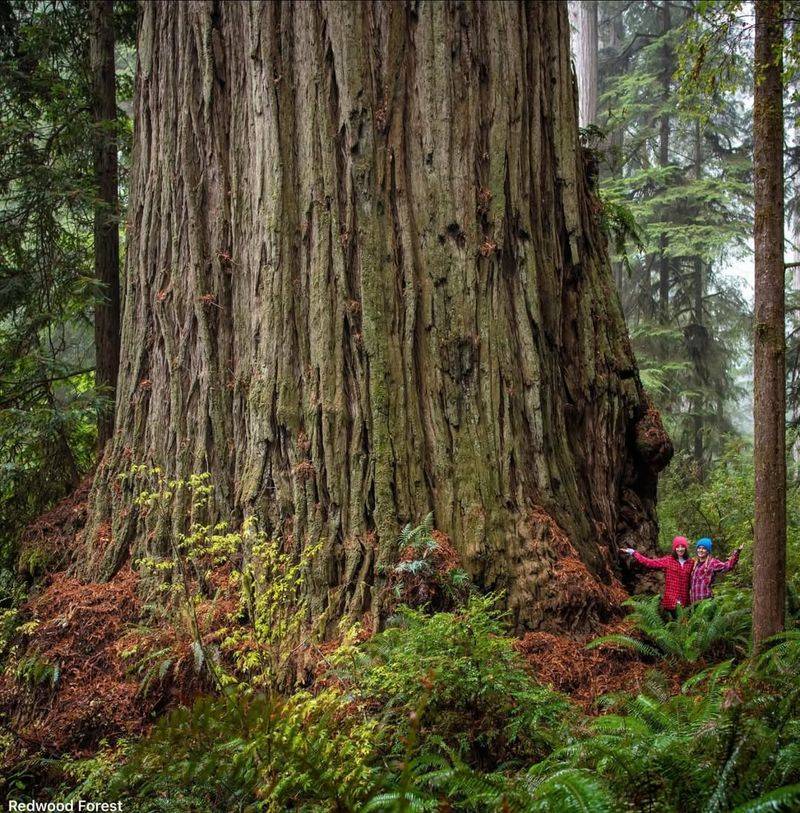
Standing beneath a towering coast redwood inspires awe and reverence, emotions that sometimes tempt homeowners to plant these majestic giants in their yards without considering the long-term consequences.
Coast redwoods rank among Earth’s tallest trees, regularly exceeding two hundred feet in height with trunk diameters that can reach twenty feet or more in their native foggy coastal habitats.
Planting such a massive organism near a typical California home creates inevitable conflicts as the tree matures and its proportions overwhelm residential spaces designed for much smaller vegetation.
The root systems of coast redwoods spread outward rather than downward, creating extensive networks that can extend well beyond the tree’s drip line.
While not as aggressively invasive as some species, redwood roots still pose threats to foundations, underground utilities, and hardscapes when planted too close to structures.
Their enormous water requirements also create challenges in California’s drier inland areas where supplemental irrigation becomes necessary and expensive to maintain these moisture-loving trees.
Young redwoods might seem manageable in residential settings, but their rapid growth quickly transforms them into landscape-dominating features that shade entire properties and dwarf neighboring homes.
The dense shade cast by mature redwoods prevents most other plants from thriving beneath their canopies, limiting landscaping options and creating dark, perpetually damp conditions near foundations.
Coast redwoods truly belong in their native coastal forests or large parks where their magnificent stature can be properly appreciated without threatening homes and infrastructure.
Homeowners drawn to redwoods should visit California’s spectacular redwood parks to experience these natural wonders in appropriate settings rather than attempting to confine them within suburban property boundaries.
9. Peruvian Pepper Tree (Schinus Molle)
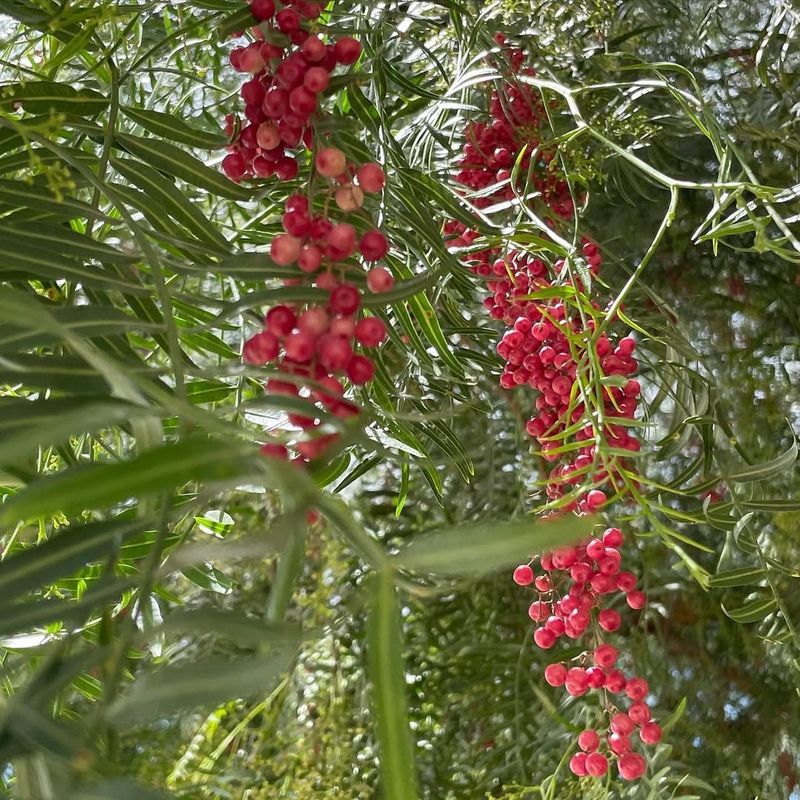
Peruvian pepper trees bring a touch of Mediterranean charm to California landscapes with their graceful weeping branches and delicate foliage, but this Old World appeal masks modern problems that have turned them into nuisances across the state.
Originally imported as ornamentals, these trees have proven far too successful at establishing themselves in California’s climate, spreading aggressively through bird-dispersed seeds and developing into weedy invasions in natural areas.
Many California municipalities now actively discourage planting pepper trees and some have banned them entirely from approved landscape lists.
The brittle wood of Peruvian pepper trees breaks easily during windstorms, dropping branches that damage property and create ongoing cleanup obligations.
Their aggressive root systems seek out water sources with determination, invading irrigation lines, sewer pipes, and foundation perimeters where they cause expensive damage over time.
The shallow roots also compete intensely with lawns and gardens for moisture and nutrients, often winning these underground battles and leaving surrounding plants struggling to survive.
Pepper trees produce abundant berries that create slippery, staining messes on sidewalks, driveways, and patios while attracting birds that leave their own messy deposits beneath the canopy.
The trees also trigger allergies in sensitive individuals and their sap can cause skin irritation in some people.
California’s shift toward water-wise and ecologically responsible landscaping has left Peruvian pepper trees increasingly out of favor as gardeners recognize their invasive tendencies and high maintenance demands.
Homeowners seeking graceful, drought-tolerant trees have numerous better options that provide beauty without the invasive behavior, structural weaknesses, and municipal disapproval that make pepper trees problematic choices for modern California landscapes.
10. Tree Of Heaven (Ailanthus Altissima)
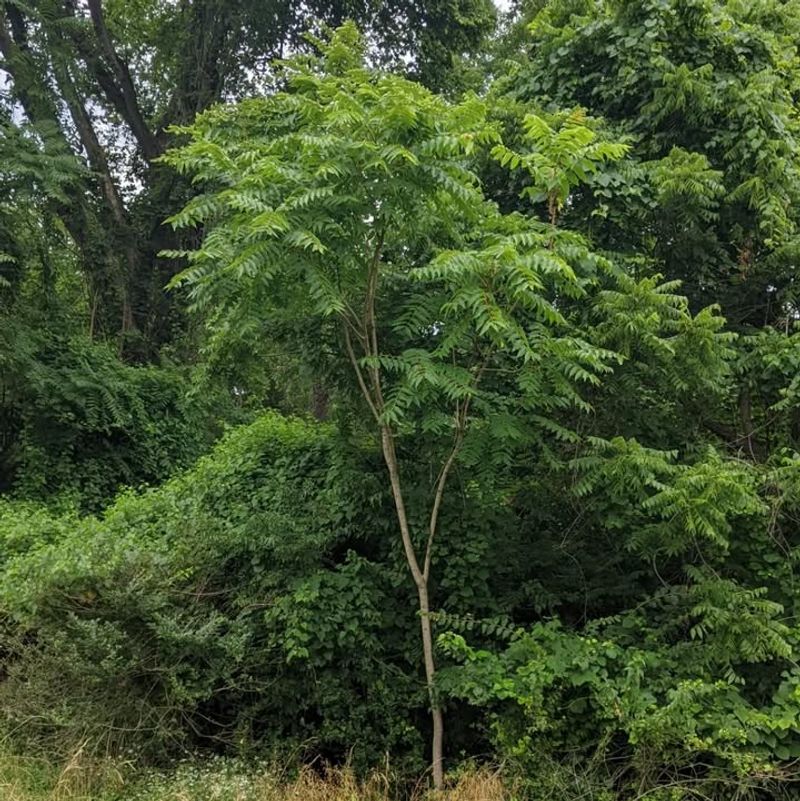
Despite its celestial name, the Tree of Heaven has earned a hellish reputation among California property owners, ecologists, and municipal authorities who battle its aggressive invasive behavior.
This fast-growing import from China spreads with alarming speed through prolific seed production and aggressive root suckering that sends up new shoots throughout yards, gardens, and even emerging through cracks in pavement.
A single Tree of Heaven can spawn dozens of offspring across a property, creating dense thickets that crowd out native vegetation and transform managed landscapes into weedy jungles.
The powerful roots of Tree of Heaven don’t respect property boundaries, foundation walls, or underground utilities, penetrating wherever they find space and moisture.
Their ability to damage foundations rivals that of the most destructive species, with roots that crack concrete and compromise structural integrity over time.
California has officially designated Tree of Heaven as an invasive species because it outcompetes native plants, alters soil chemistry, and creates monocultures that reduce biodiversity in natural areas.
Attempting to remove Tree of Heaven often backfires because cutting down the tree triggers even more vigorous suckering from the remaining root system, potentially creating dozens of new stems where only one existed before.
Professional removal requires careful application of specific herbicides to prevent regrowth, making eradication expensive and time-consuming.
The trees also emit unpleasant odors that some people compare to rancid peanut butter, adding sensory offense to their ecological and structural crimes.
Anyone who discovers Tree of Heaven on their California property should consult with invasive species removal specialists rather than attempting amateur removal that often worsens the infestation and extends the damage to foundations and neighboring properties.
11. Black Walnut (Juglans Nigra)
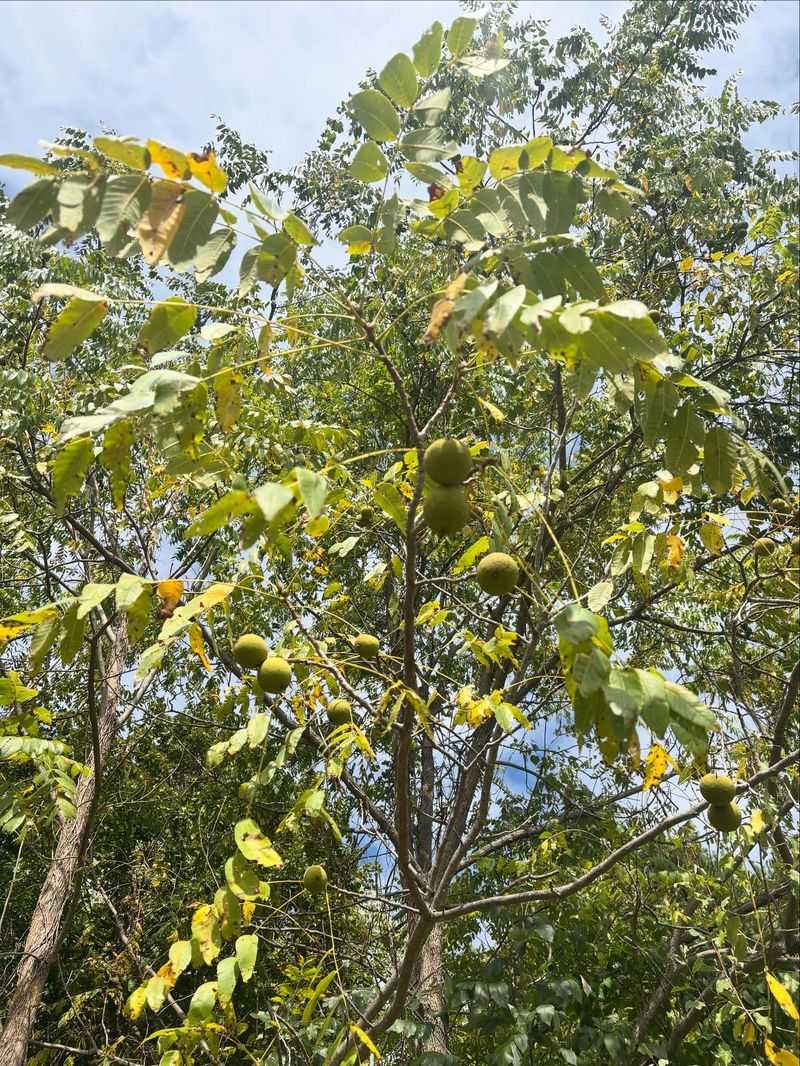
Black walnut trees produce valuable timber and delicious nuts, but these benefits come with significant drawbacks that make them problematic neighbors for California homes and gardens.
The tree’s most notorious characteristic involves producing juglone, a chemical compound that acts as a natural herbicide, suppressing the growth of many common garden plants, vegetables, and ornamentals.
Tomatoes, peppers, azaleas, and numerous other popular landscape plants simply cannot survive within the root zone of black walnut trees, creating barren circles where gardeners struggle unsuccessfully to establish vegetation.
Beyond the chemical warfare waged underground, black walnut trees develop extensive root systems that spread far beyond their canopies, often extending two to three times the width of the visible tree.
These roots compete aggressively for water and nutrients while also posing threats to foundations, sidewalks, and underground utilities when planted too close to structures.
The large size of mature black walnuts, often exceeding seventy feet in height, creates additional concerns about limb drop and storm damage to nearby buildings.
The heavy nuts produced by black walnuts become projectile hazards when they fall from mature trees, potentially denting vehicles, injuring people, and creating ankle-twisting hazards across lawns and patios.
The hard shells persist for months, requiring tedious cleanup before lawn mowing becomes possible.
While black walnuts thrive in parts of California with appropriate climate conditions, they belong in orchards or large rural properties where their allelopathic effects, extensive roots, and nut drop don’t interfere with home landscapes and foundation stability.
Homeowners dreaming of backyard nut harvests should consider less problematic alternatives that provide food without poisoning surrounding plants or threatening structural integrity with aggressive root systems.
12. Acacia (Acacia Species, Especially Sydney Golden Wattle)
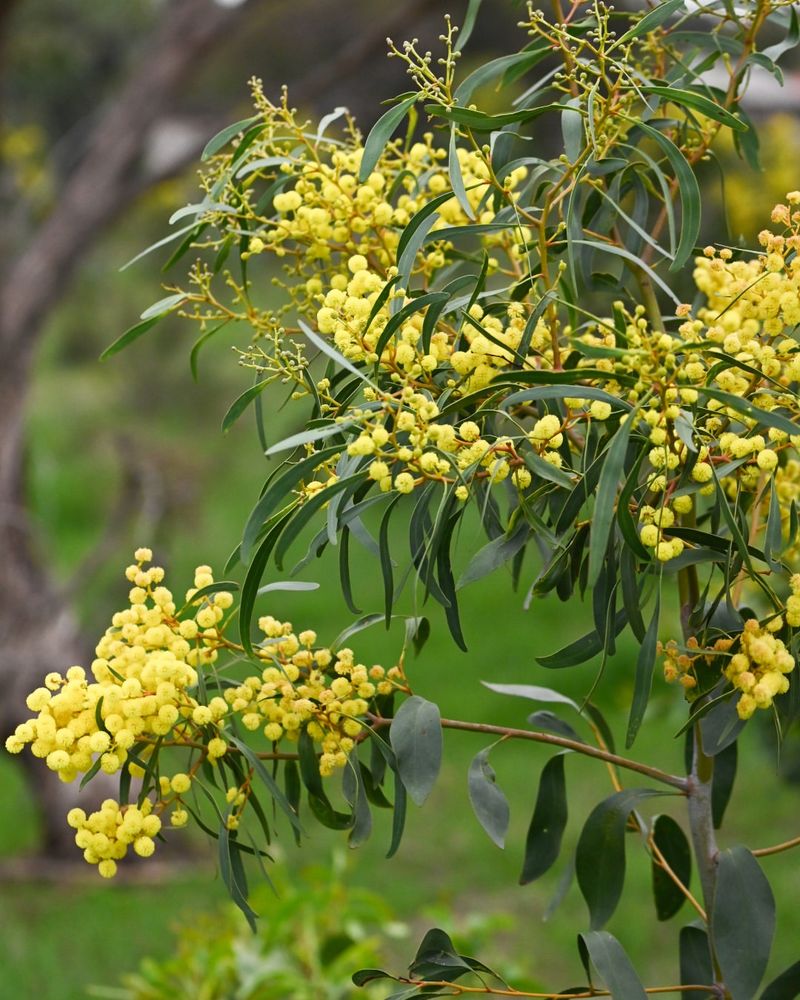
Acacia trees arrived in California promising fast growth, drought tolerance, and cheerful golden blooms that brighten landscapes during late winter and early spring.
These Australian imports delivered on those promises but also brought unwelcome surprises that have made many species problematic in California’s Mediterranean climate.
The same rapid growth that produces quick shade also creates weak wood that breaks easily during storms, dropping branches that damage roofs, vehicles, and power lines with frustrating regularity.
Shallow root systems anchor acacias poorly in soil, making them prone to toppling during high winds or when soil becomes saturated during California’s occasional heavy rains.
The roots spread aggressively across the soil surface, competing intensely with lawns and gardens while also lifting pavement and invading foundation perimeters.
Several acacia species have become invasive in California wildlands, spreading beyond cultivation and displacing native plants in coastal areas and inland valleys.
Acacias also produce copious amounts of seed pods that create litter beneath their canopies and sprout readily wherever they land, potentially turning manicured landscapes into acacia thickets requiring constant management.
The trees attract aphids that produce sticky honeydew, coating everything beneath the canopy and encouraging sooty mold growth on surfaces.
California gardeners initially attracted to acacia’s drought tolerance and rapid growth often regret their choice after experiencing years of storm damage, invasive root problems, and volunteer seedlings sprouting throughout their properties.
Modern California landscaping increasingly favors native alternatives that provide similar drought tolerance and quick growth without the structural weaknesses, invasive tendencies, and maintenance headaches that make many acacia species unsuitable for planting near homes and hardscapes.
13. Monterey Pine (Pinus Radiata)
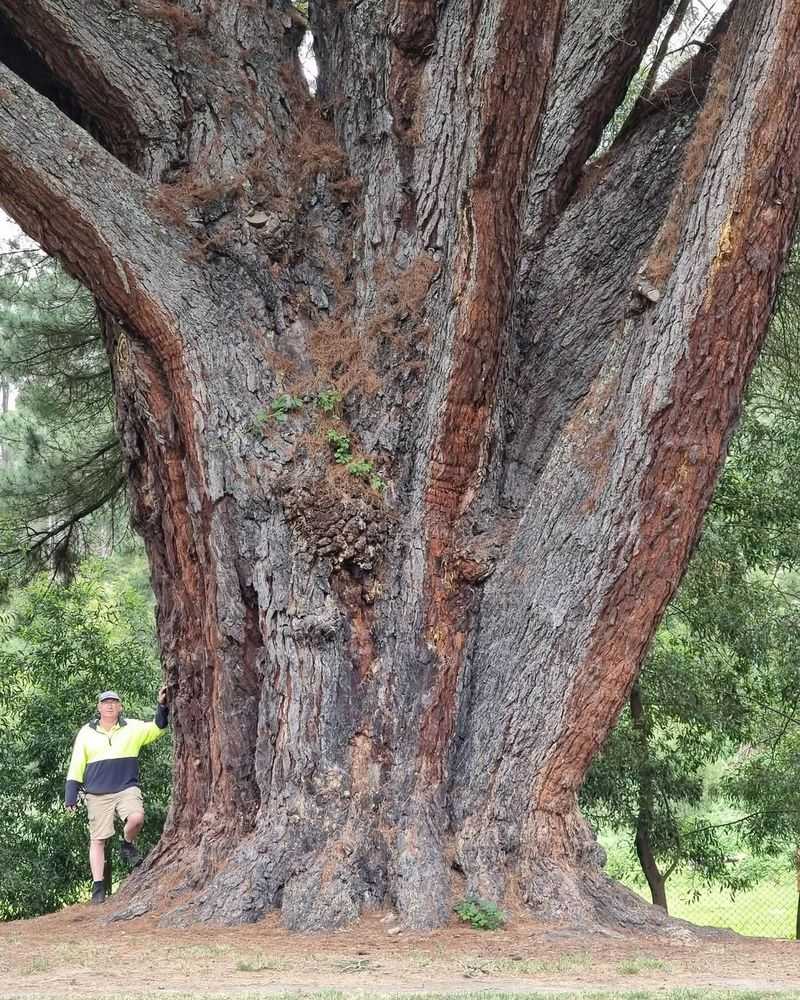
Monterey pines stand as California natives that thrive in their limited natural range along the central coast, but planting them near homes creates risks that outweigh their ornamental value in most residential settings.
These fast-growing evergreens can reach heights exceeding one hundred feet with massive canopies that spread forty feet or more, dimensions that overwhelm typical suburban lots and dwarf neighboring homes.
Their rapid growth appeals to homeowners seeking quick screening and shade, but this same characteristic produces weak wood susceptible to breakage and structural failure.
Disease susceptibility represents another serious concern with Monterey pines, particularly pitch canker fungus that has devastated populations throughout California.
Infected trees decline rapidly, becoming hazardous as branches weaken and entire trees sometimes fail catastrophically.
The large mature size of Monterey pines means falling trees or major limbs can completely destroy homes, vehicles, and other structures in their path, creating liability nightmares for property owners.
Windthrow poses additional risks because Monterey pines develop relatively shallow root systems compared to their massive above-ground proportions, making them vulnerable to toppling during severe weather events.
California’s periodic windstorms have felled countless Monterey pines, many of which crushed homes or blocked roads when they fell.
The trees also require regular maintenance including pruning to remove weak branches and monitoring for disease symptoms, creating ongoing expenses and safety concerns.
While Monterey pines deserve appreciation as beautiful California natives in appropriate settings, residential properties rarely provide the space and safety margins these large trees require.
Homeowners seeking evergreen screening should explore smaller, more structurally sound alternatives that provide year-round beauty without the storm damage risks and disease susceptibility that make Monterey pines hazardous choices near structures and living spaces.