Oregon Gardeners: Here’s How To Grow Bigger, Healthier Hyacinths
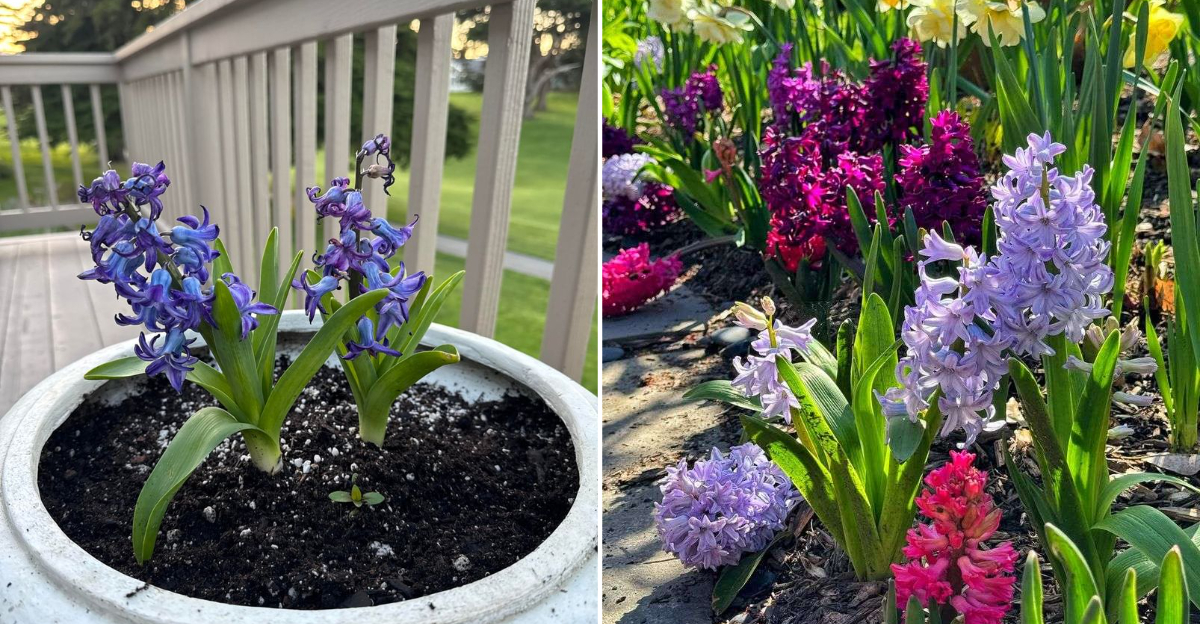
Spring is the perfect time to watch hyacinths bloom, filling the garden with color and fragrance. In Oregon, these flowers can thrive beautifully, but getting them to grow bigger and healthier often takes a little know-how.
Many gardeners notice that some bulbs bloom more vibrantly than others and wonder what makes the difference.
Even a small garden space can produce hyacinths that stand out, and with the right planting, care, and timing, you can enjoy fuller, taller blooms year after year.
Choosing the right soil, giving the bulbs enough sunlight, and paying attention to watering can make a surprisingly big impact.
Whether you are new to gardening or have grown bulbs for years, a few practical tips can help your hyacinths look their best.
From planting the bulbs at the right depth to encouraging strong roots, there are ways to make your flowers more resilient and beautiful.
Let’s explore how to grow bigger, healthier hyacinths that brighten your garden and give you that satisfying feeling of a job well done.
1. Choosing High-Quality Bulbs From The Start
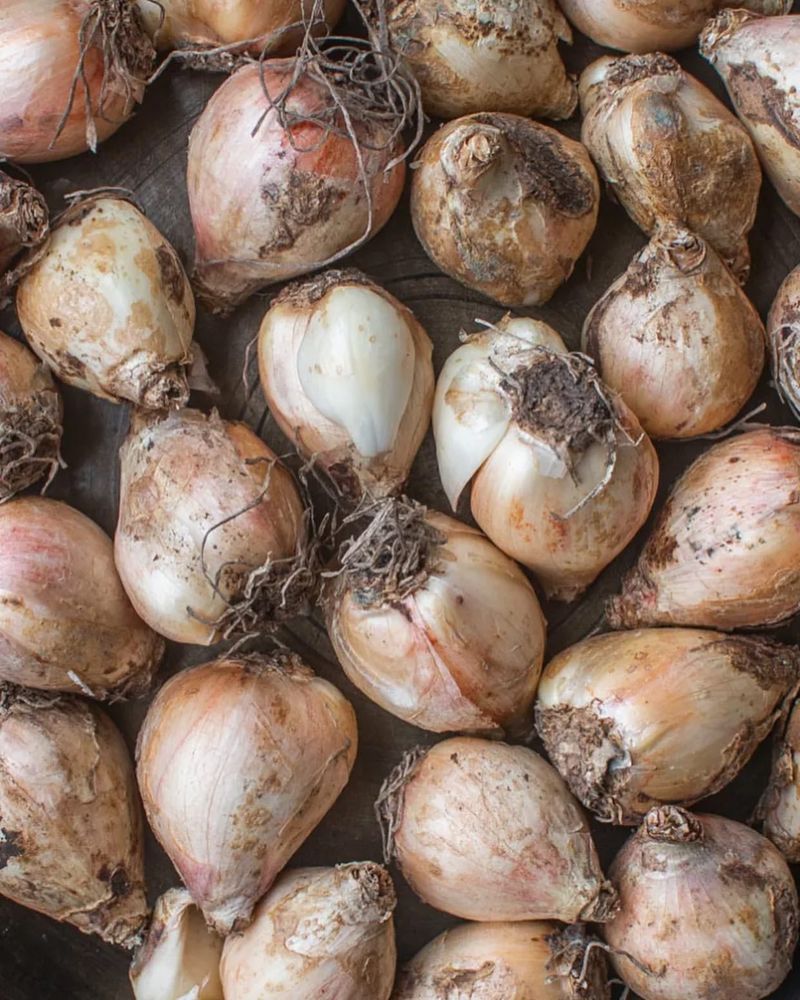
Walk into any garden center in fall and you’ll see bins overflowing with bulbs. Some are firm and heavy, others feel light or have soft spots.
The bulbs you pick now determine what blooms in your garden come March, so it pays to be picky.
Bigger bulbs produce bigger blooms because they store more energy for root and flower development. Look for hyacinth bulbs that are at least 15 to 17 centimeters in circumference, firm to the touch, and free from mold or mushy areas.
Avoid any with visible cuts, bruises, or dried-out papery skins that peel away too easily.
Oregon’s damp fall weather can encourage rot if you plant compromised bulbs. A healthy bulb has a better chance of pushing through our heavy clay soils and wet conditions without rotting underground.
You’re investing in next spring’s color, so choose bulbs that feel dense and look clean.
Buy from reputable nurseries or mail-order suppliers who store bulbs properly. If you’re ordering online, make sure they ship close to planting time so bulbs don’t sit in a warehouse losing moisture.
Quality at purchase equals quality in bloom, and that’s especially true in Oregon’s variable climate.
2. Planting Depth That Supports Strong Roots
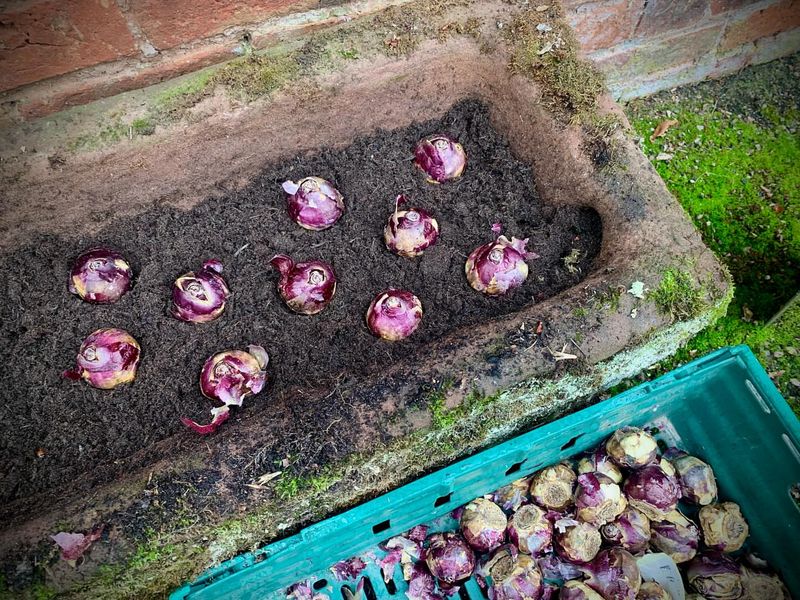
Planting too shallow is one of the most common mistakes gardeners make with hyacinths. Bulbs that sit too close to the surface can heave out of the ground during our freeze-thaw cycles or topple over when they bloom because the roots don’t anchor them properly.
Hyacinth bulbs should be planted about six to eight inches deep, measured from the bottom of the bulb to the soil surface. This depth protects them from temperature swings and gives roots plenty of room to spread and stabilize the plant.
In Oregon, where winter rains can saturate the top few inches of soil, deeper planting also helps prevent rot by keeping bulbs in slightly drier layers.
Use a bulb planter or a trowel to dig individual holes, and place each bulb pointy side up. If you’re planting in a heavy clay area, consider going slightly shallower, around five to six inches, and amending the soil with compost to improve drainage.
Your Oregon Garden Changes Every Week. Your Plan Should Too.
Gardening in Oregon changes quickly throughout the season. Every Friday you’ll receive a simple weekly plan showing exactly what to plant, prune, fertilize, harvest, and protect so you never miss the right timing.
The goal is strong root development before the ground freezes.
Proper depth also means your hyacinths will bloom on sturdier stems that can hold up those heavy, fragrant flower heads without flopping over. It’s a small detail that makes a huge difference in how your garden looks come spring.
3. Timing Your Planting For Oregon Weather
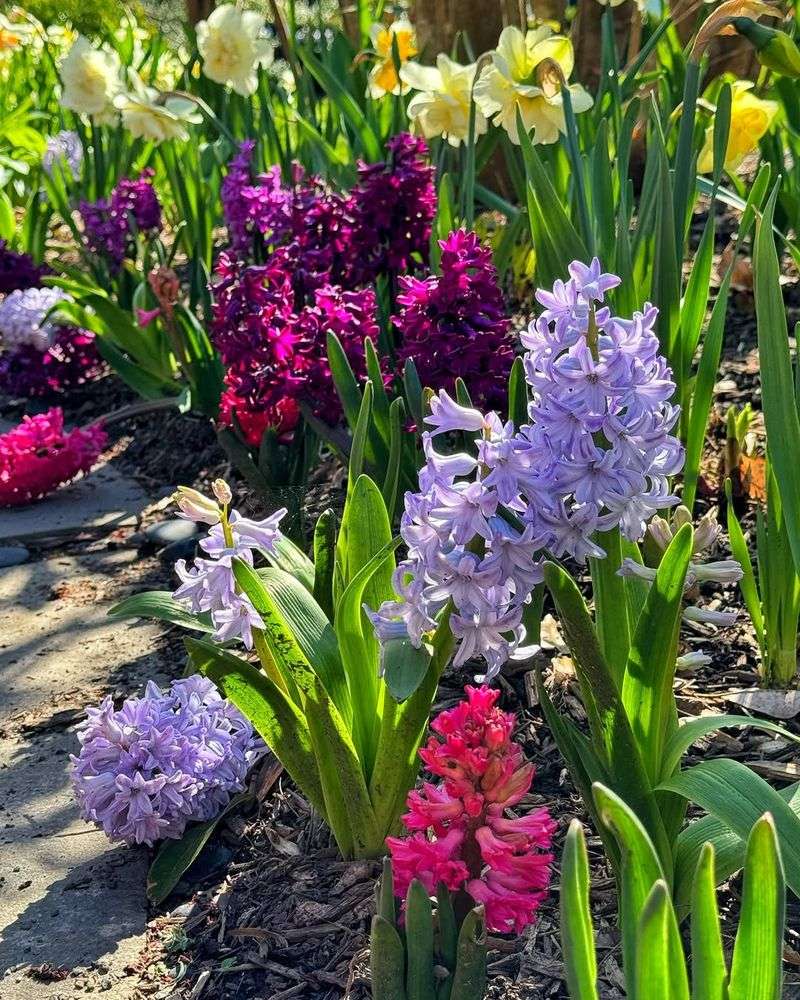
Timing is everything when it comes to hyacinths. Plant too early and warm soil can trigger premature sprouting.
Plant too late and the bulbs won’t have enough time to develop roots before the ground gets too cold.
In Oregon, the sweet spot for planting hyacinth bulbs is mid-October through early November, depending on where you live.
West of the Cascades, you can often wait until early November because our winters are milder.
East of the mountains, aim for mid to late October before the ground freezes hard. The key is to plant when soil temperatures are consistently below 60 degrees Fahrenheit, which signals bulbs to root without sprouting.
Our fall rains usually start by October, which helps settle bulbs into the soil and kickstarts root growth. If you plant during a dry spell, water them in well to encourage rooting.
Hyacinths need about 12 to 14 weeks of cold to bloom properly, and Oregon’s winters provide that naturally without needing refrigeration.
Don’t rush to plant in September just because bulbs are in stores. Patience pays off with stronger root systems and better spring blooms that can handle our unpredictable late-winter weather.
4. Improving Soil Drainage For Bulb Health
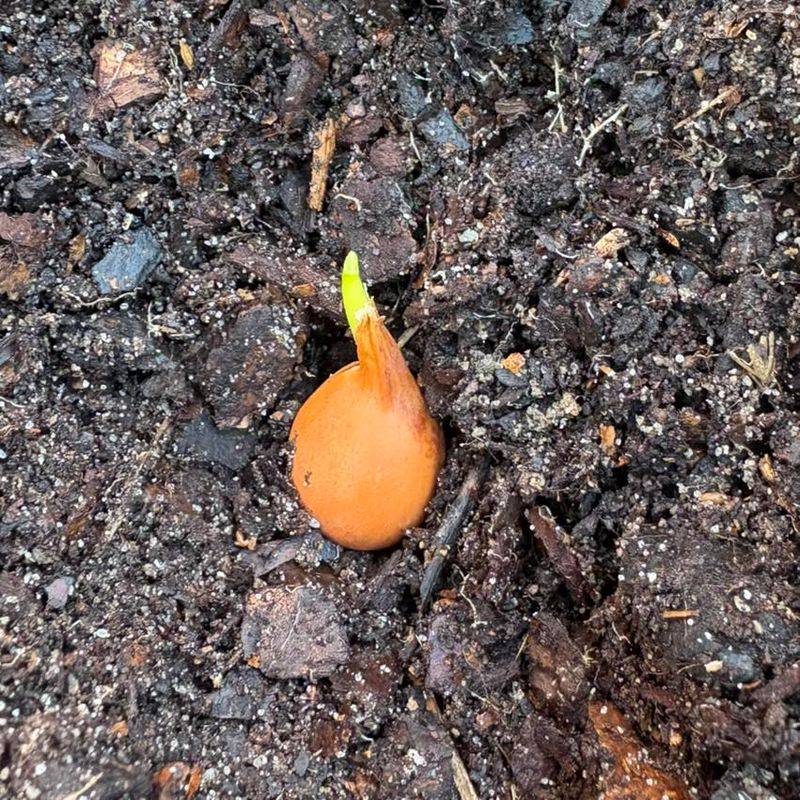
Hyacinths hate wet feet. If your soil stays soggy for days after a rainstorm, your bulbs are at serious risk of rotting before they ever bloom.
Oregon’s heavy clay soils and winter rains make drainage one of the most important factors for bulb success.
Before planting, dig a test hole about eight inches deep and fill it with water. If it drains within a few hours, you’re good to go.
If water sits there for half a day or more, you need to improve drainage. The easiest fix is to mix in compost, aged bark, or perlite to lighten the soil and create air pockets that let water move through.
Raised beds are another great option if you’re dealing with seriously heavy clay or a low spot that collects water. Even a bed raised just six inches can make a huge difference in how well bulbs perform.
You can also plant hyacinths on a slight slope or mound to encourage water to run off rather than pool around the bulbs.
Good drainage doesn’t just prevent rot – it also promotes healthier root growth, which leads to stronger stems and bigger blooms. It’s worth the effort to get this right before you plant.
5. Watering Without Overdoing It
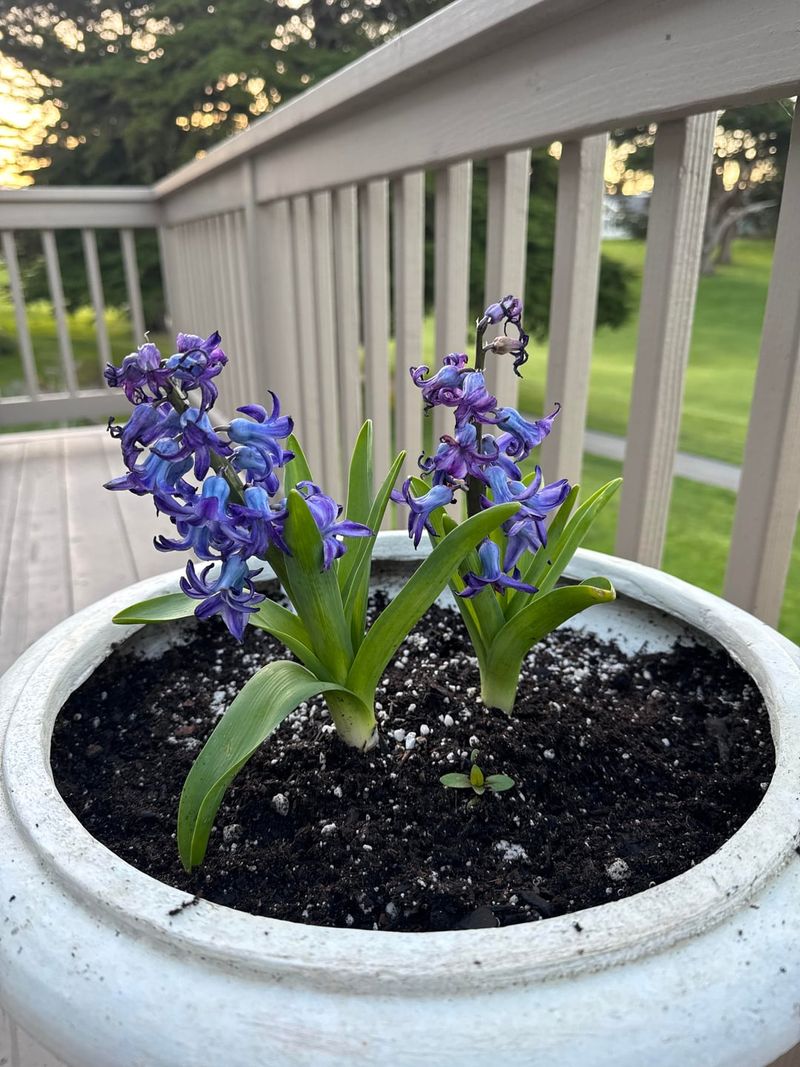
Watering hyacinths in Oregon is mostly about knowing when to back off. Our wet winters mean you rarely need to water bulbs once they’re in the ground, but there are a few key moments when a little extra moisture helps.
Right after planting, give your bulbs a good soak to settle the soil and kickstart root development. After that, let nature take over.
Winter rains usually provide all the moisture hyacinths need to root and prepare for spring. If you have an unusually dry fall or winter, check the soil every couple of weeks and water lightly if the top few inches are bone dry.
Come spring, as shoots emerge and buds form, hyacinths appreciate consistent moisture, but not soggy conditions. If we have a dry March, water once a week to keep the soil evenly moist.
Overwatering at this stage can lead to floppy stems and smaller blooms because the bulbs focus energy on surviving wet conditions instead of flowering.
The goal is moist, not muddy. Stick your finger into the soil near the bulbs.
If it feels damp an inch or two down, skip the watering. Trust Oregon’s rain to do most of the work for you.
6. Feeding Hyacinths The Right Way
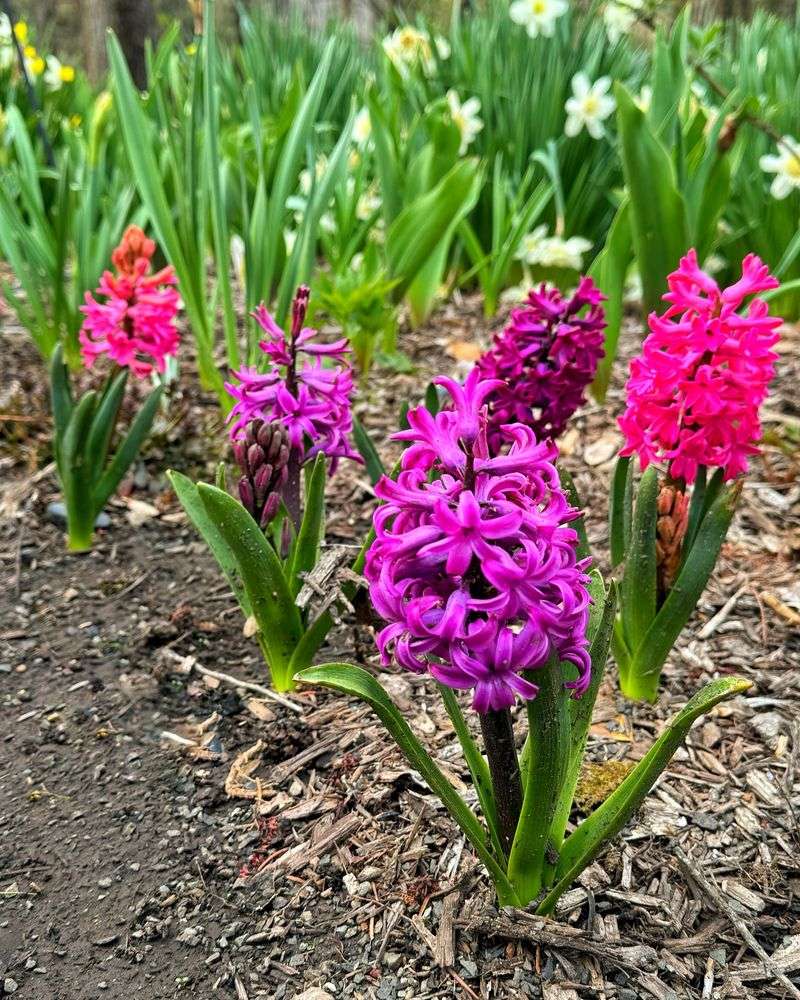
Hyacinths aren’t heavy feeders, but a little nutrition at the right time can make a noticeable difference in bloom size and stem strength. The trick is feeding them when they’re actively growing, not when they’re dormant underground.
In fall, at planting time, mix a slow-release bulb fertilizer or bone meal into the soil at the bottom of each planting hole. This gives roots access to phosphorus, which supports strong root development and future blooms.
Avoid high-nitrogen fertilizers in fall, they encourage leafy growth instead of flowers.
In early spring, as soon as you see green shoots poking through the soil, apply a balanced fertilizer like 10-10-10 or a bulb-specific formula. Scratch it lightly into the soil surface and water it in.
This feeding supports the developing flower stalks and helps bulbs store energy for next year. Don’t fertilize after blooms fade unless you plan to let foliage die back naturally, which we’ll cover later.
Oregon’s rainy springs can leach nutrients from the soil, so that spring feeding is especially helpful here.
You’re not trying to force bigger blooms, you’re just making sure your hyacinths have what they need to reach their full potential in our climate.
7. Sunlight Placement That Boosts Bloom Size
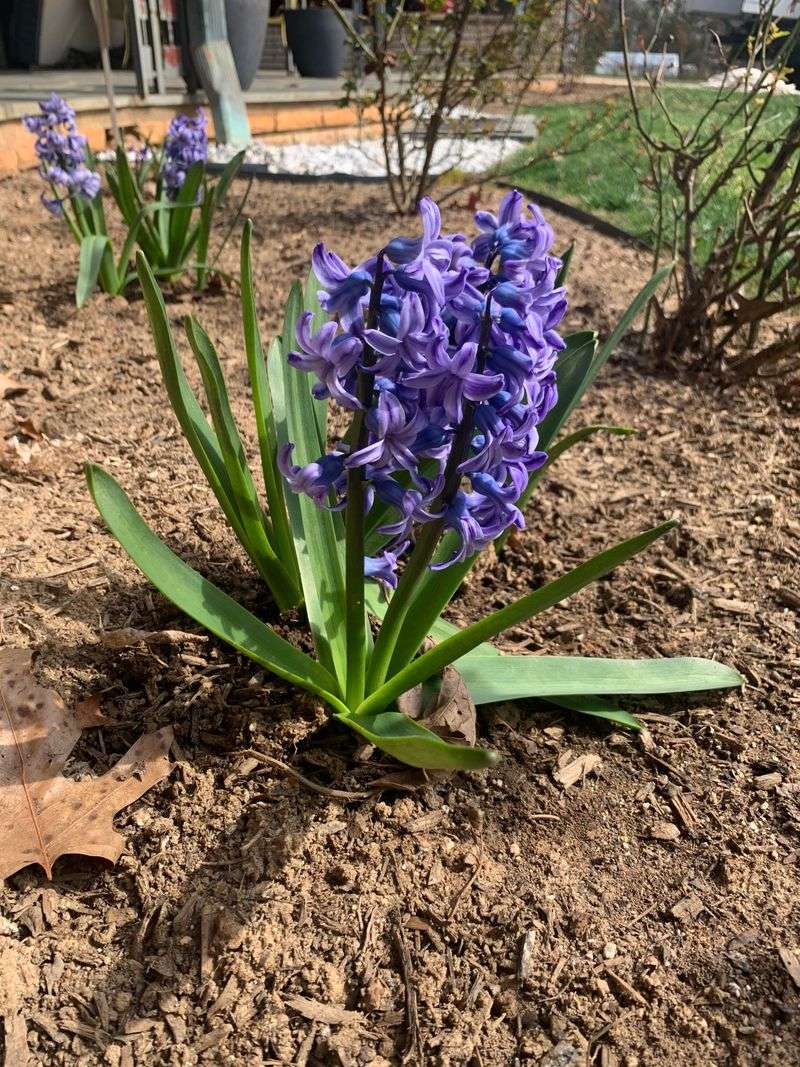
Hyacinths need sunlight to fuel bloom production, but they’re more flexible than you might think. The amount of light they get directly affects how big and vibrant their flowers become, so placement matters.
Ideally, plant hyacinths where they’ll receive at least six hours of direct sunlight per day during their growing season, late winter through spring. Full sun locations produce the biggest, most colorful blooms with sturdy stems that don’t flop over.
In Oregon, south-facing beds or spots that aren’t shaded by evergreens work beautifully.
That said, hyacinths can tolerate partial shade, especially in areas that get hot afternoon sun east of the Cascades. A spot that gets morning sun and dappled afternoon shade can still produce lovely blooms, though they may be slightly smaller.
What hyacinths don’t like is deep, all-day shade—they’ll stretch toward light, producing weak stems and pale flowers.
Before you plant, watch how sunlight moves across your garden in late winter and early spring. Deciduous trees that are bare in March and April won’t shade your bulbs during bloom time, so planting under them is fine.
Just avoid spots under dense conifers or north-facing walls where sunlight is limited year-round.
8. Post-Bloom Care That Builds Next Year’s Flowers
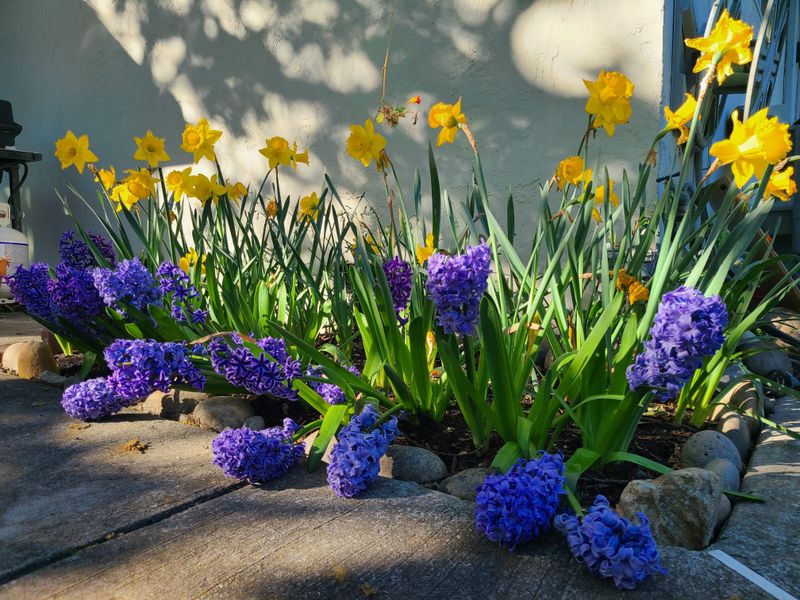
Once your hyacinths finish blooming, it’s tempting to tidy up the garden by cutting everything back. Resist that urge.
What you do after the flowers fade directly impacts whether your bulbs come back strong next year or fizzle out.
Snip off spent flower heads to prevent the plant from putting energy into seed production, but leave the foliage alone. Those green leaves are busy photosynthesizing and sending energy back down into the bulb to fuel next spring’s blooms.
Let the leaves yellow and wither naturally, which usually takes about six weeks. In Oregon, this means leaving foliage in place through May and into early June.
If the dying leaves bother you, plant hyacinths among perennials or groundcovers that will grow up and hide the fading foliage. You can also interplant with annuals that fill in as the bulbs go dormant.
Avoid braiding or bundling the leaves, this reduces their ability to photosynthesize.
Once foliage has completely yellowed, you can remove it or let it pull away easily with a gentle tug. This simple step of patience ensures your hyacinths store enough energy to bloom beautifully again next spring, making your garden even better year after year.