9 Types Of Lilies Every California Gardener Should Know About
Lilies are a favorite in California gardens because of their vibrant colors, elegant shapes, and long-lasting blooms.
Choosing the right type of lily adds beauty, fragrance, and seasonal interest to any landscape. The perfect lily can transform your garden with color and style.
These ten lilies include hardy varieties suited to California’s climate, from trumpet and Asiatic lilies to daylilies and tiger lilies.
Each type has unique bloom times, growth habits, and care requirements, making it important to select varieties that match your garden’s conditions.
Proper soil, sunlight, and watering ensure strong growth and abundant flowering. Knowing your lilies helps you plan a garden that blooms beautifully all season.
California gardeners who incorporate these lilies enjoy vibrant, striking gardens that attract pollinators and stand out in any yard. Plant the right lilies and elevate your landscape with stunning flowers.
1. Asiatic Lilies (Lilium Asiatica Hybrids)
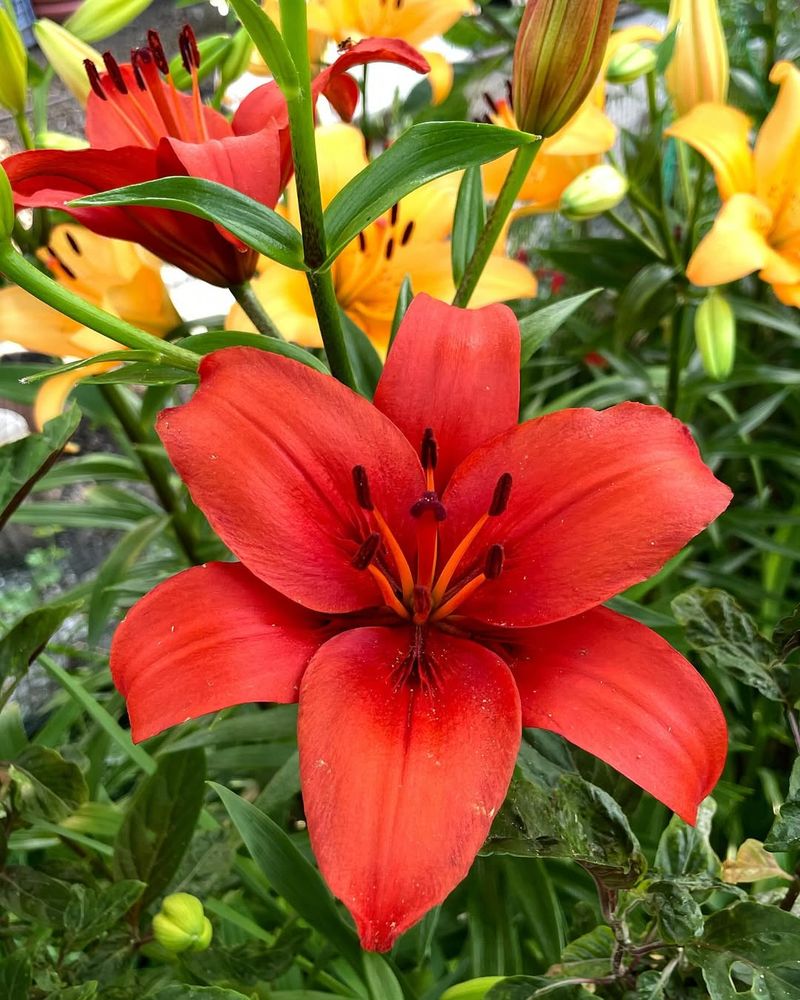
Among the earliest bloomers in the lily family, Asiatic lilies burst into color when spring transitions into early summer, bringing cheerful energy to California gardens.
Their upward-facing flowers come in practically every shade imaginable, from soft pastels to bold, saturated jewel tones that catch the eye from across the yard.
What makes these beauties particularly appealing is their remarkable ability to adapt to various growing conditions throughout the Golden State.
Heat tolerance is one of their strongest qualities, making them excellent choices for inland valleys and warmer microclimates where temperatures soar during summer months.
They handle California’s dry summers remarkably well once established, though they appreciate consistent moisture during their active growing season.
Proper soil drainage is absolutely essential since these bulbs will struggle in waterlogged conditions, so amending heavy clay soils with compost and sand creates the perfect foundation.
Container gardening enthusiasts will find Asiatic lilies to be wonderful companions on patios and balconies where space is limited.
Their compact growth habit compared to other lily types makes them manageable in pots, and you can easily move containers to follow the sun or create stunning seasonal displays.
Plant bulbs about six inches deep in well-draining potting mix, and watch these resilient flowers reward your efforts with weeks of brilliant color that brightens any outdoor space.
2. Oriental Lilies (Lilium Orientalis Hybrids)
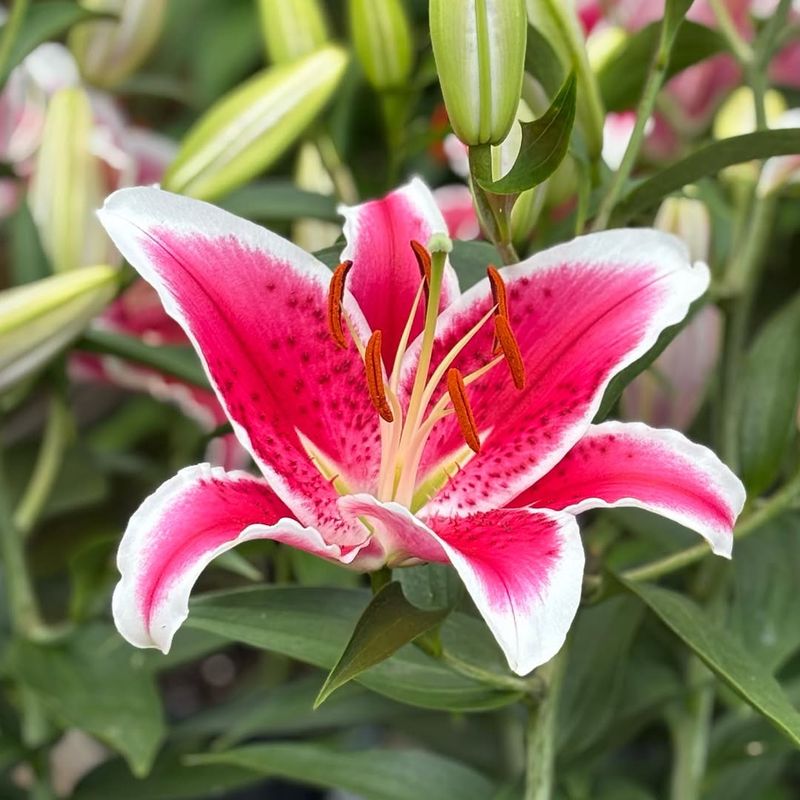
Picture yourself walking through your garden on a warm summer evening, and suddenly a wave of intoxicating perfume stops you in your tracks—that’s the magic of Oriental lilies.
These magnificent flowers produce some of the largest blooms in the lily world, with petals that often stretch six to eight inches across, creating dramatic focal points wherever they’re planted.
Their fragrance is legendary, filling entire garden spaces with a sweet, heady scent that attracts both people and pollinators.
While they adore sunshine, Oriental lilies perform best in California when they receive some protection from the intense afternoon heat, especially in inland areas where temperatures regularly exceed ninety degrees.
Morning sun combined with dappled afternoon shade helps preserve the rich colors of their petals and extends the blooming period significantly.
Your California Garden Changes Every Week. Your Plan Should Too.
Gardening in California changes quickly throughout the season. Every Friday you’ll receive a simple weekly plan showing exactly what to plant, prune, fertilize, harvest, and protect so you never miss the right timing.
This makes them perfect candidates for planting near deciduous trees or on the eastern side of structures where they’ll catch gentle morning rays.
Watering becomes particularly important during California’s long, dry summers when these thirsty plants are actively blooming and setting energy aside for next year’s show.
Consistent moisture without waterlogging is the goal, so consider installing drip irrigation or soaker hoses that deliver water directly to the root zone.
Mulching around the base helps retain soil moisture and keeps roots cool, which Oriental lilies greatly appreciate in our Mediterranean climate.
3. Trumpet Lilies (Lilium Longiflorum And Trumpet Hybrids)
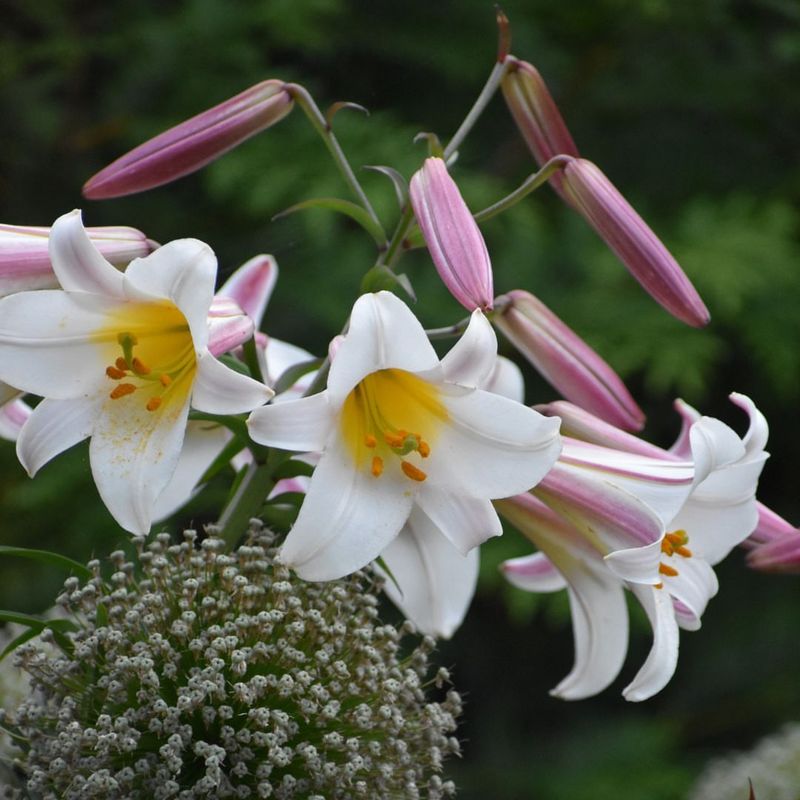
Standing tall like botanical trumpeters announcing summer’s arrival, these commanding lilies can reach heights of five to six feet, creating vertical drama that few other flowers can match.
Their elongated, trumpet-shaped blooms point outward or slightly downward, creating an architectural presence that works beautifully in the back of borders or as stunning specimens surrounded by lower-growing companions.
Each stem produces multiple flowers that open sequentially, extending the display over several weeks.
Full sun exposure is essential for trumpet lilies to achieve their maximum height and produce abundant blooms, though in the hottest inland valleys, a touch of afternoon shade won’t hurt.
These sun-lovers convert all that California sunshine into energy, storing it in their bulbs for increasingly impressive performances year after year.
Position them where they’ll receive at least six hours of direct sunlight daily for optimal growth and flowering.
Coastal gardeners should consider staking these tall beauties, as ocean breezes and afternoon winds can topple their impressive height when laden with heavy blooms.
Bamboo stakes or decorative metal supports installed early in the growing season allow stems to grow naturally through the support structure.
Soil fertility matters tremendously for these vigorous growers, so enriching planting areas with compost and applying balanced fertilizer during the growing season ensures they have the nutrients needed to support their dramatic stature and prolific flowering habit.
4. Easter Lily (Lilium Longiflorum)
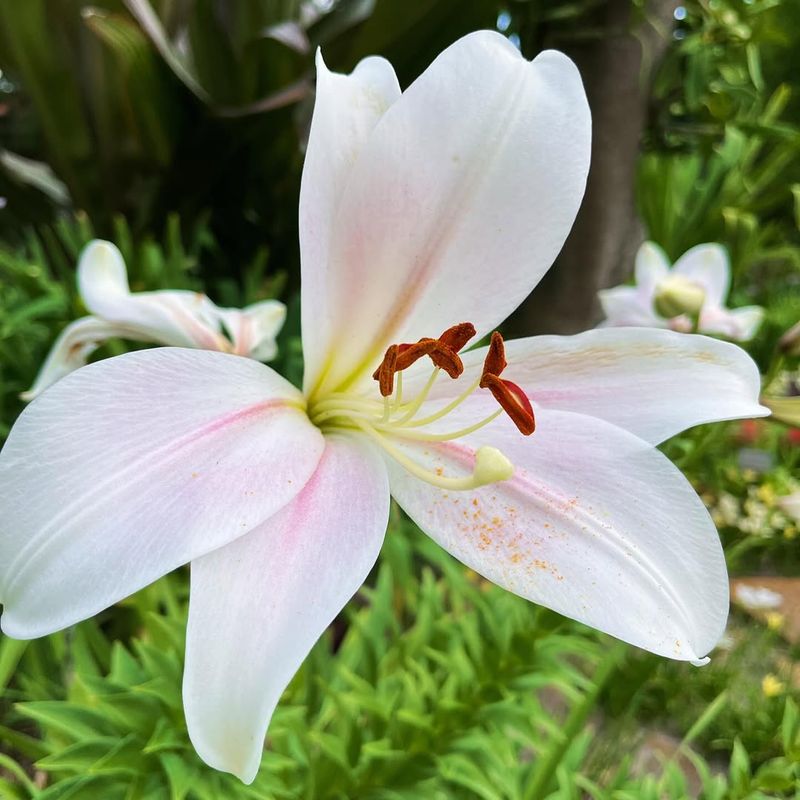
Synonymous with spring celebrations, Easter lilies find a particularly welcoming home in California’s mild coastal regions where temperatures rarely dip to extremes.
Their pure white, trumpet-shaped flowers symbolize renewal and hope, making them beloved additions to gardens that celebrate the changing seasons.
Beyond their symbolic significance, these elegant plants offer practical beauty that extends well beyond a single holiday when given proper care and attention.
Planting depth is crucial for Easter lily success, with bulbs needing to sit about six inches below the soil surface to establish strong root systems and protect them from temperature fluctuations.
This depth also helps support the stems as they grow upward, reducing the need for additional staking in most garden situations.
Choose locations with excellent drainage since these bulbs are particularly sensitive to standing water, which can quickly lead to problems.
Bloom timing naturally occurs in spring, but with thoughtful post-bloom care, you can encourage these plants to become permanent garden residents that return year after year.
After flowers fade, resist the temptation to cut back the foliage immediately; instead, allow leaves to yellow naturally as the plant channels energy back into the bulb.
Continue watering and feeding throughout this period, and your Easter lilies will reward your patience with increasingly robust flowering cycles in subsequent seasons, becoming treasured perennials rather than temporary visitors.
5. Tiger Lily (Lilium Lancifolium)
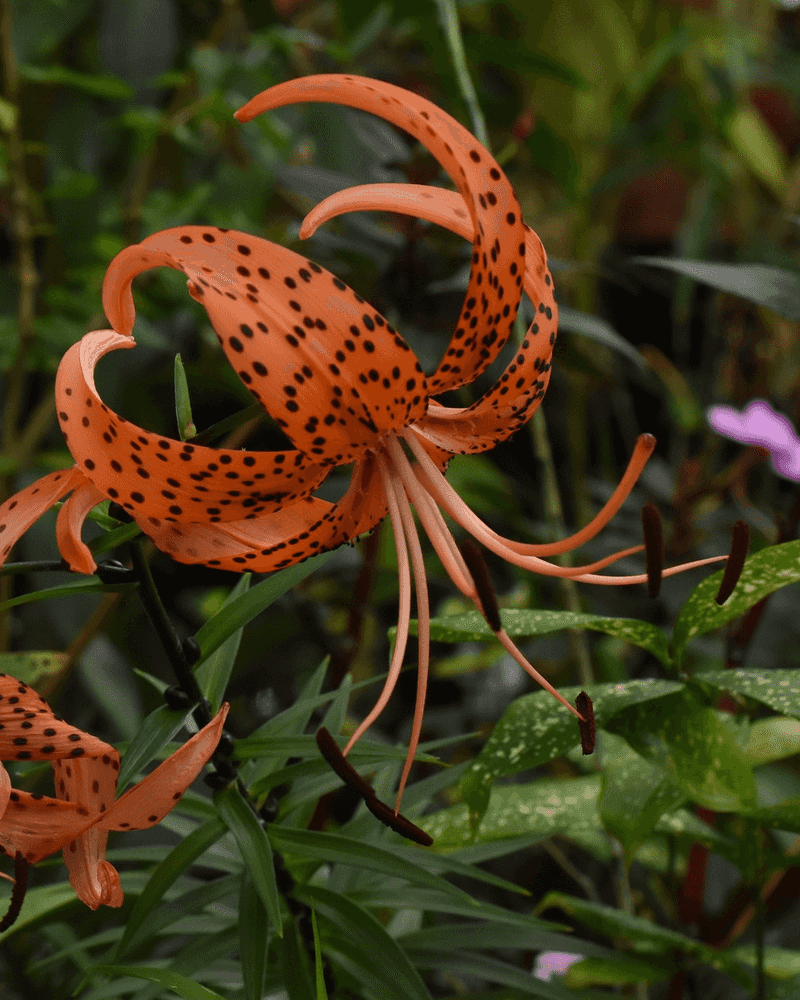
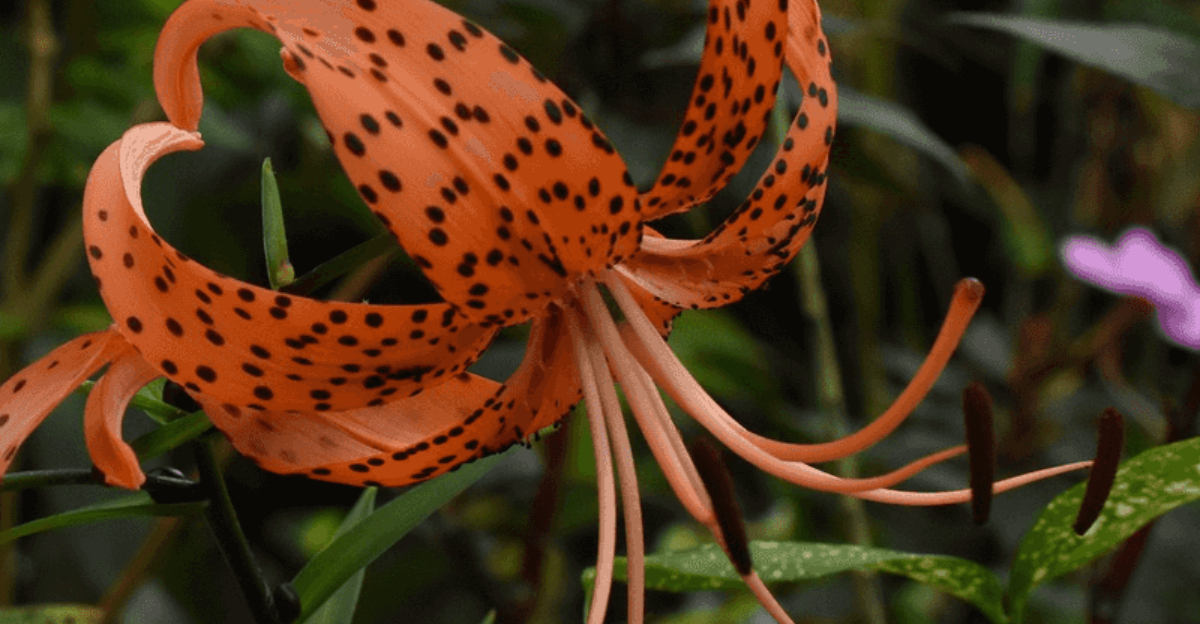
Bold orange petals covered in dramatic dark spots create an unforgettable display that has made tiger lilies garden favorites for generations.
These vigorous growers bring wild beauty to cultivated spaces, with recurved petals that curl backward dramatically, revealing prominent stamens dusted with rust-colored pollen.
Their untamed appearance belies their adaptable nature, making them surprisingly easy to grow throughout California’s diverse climate zones.
One fascinating characteristic sets tiger lilies apart from most other lily varieties—they produce small, dark bulbils along their stems where leaves attach.
These tiny bulbs offer an incredibly easy propagation method that allows you to expand your collection or share with fellow gardening enthusiasts.
Simply collect the bulbils in late summer after they’ve matured and darkened, then plant them about two inches deep in prepared beds or pots where they’ll develop into flowering-size bulbs within a couple of years.
Cold tolerance makes tiger lilies particularly suitable for higher-elevation California gardens in the Sierra Nevada foothills and mountain communities where winter temperatures drop significantly.
They actually benefit from a period of cold dormancy, which triggers their growth cycle when spring warmth returns.
Even in milder coastal and valley locations, they perform admirably, showing remarkable flexibility across California’s varied microclimates.
Their strong growth habit and reliable return year after year make them wonderful choices for low-maintenance gardens where tough, beautiful plants are valued.
6. California Tiger Lily (Lilium Pardalinum — Native Species)
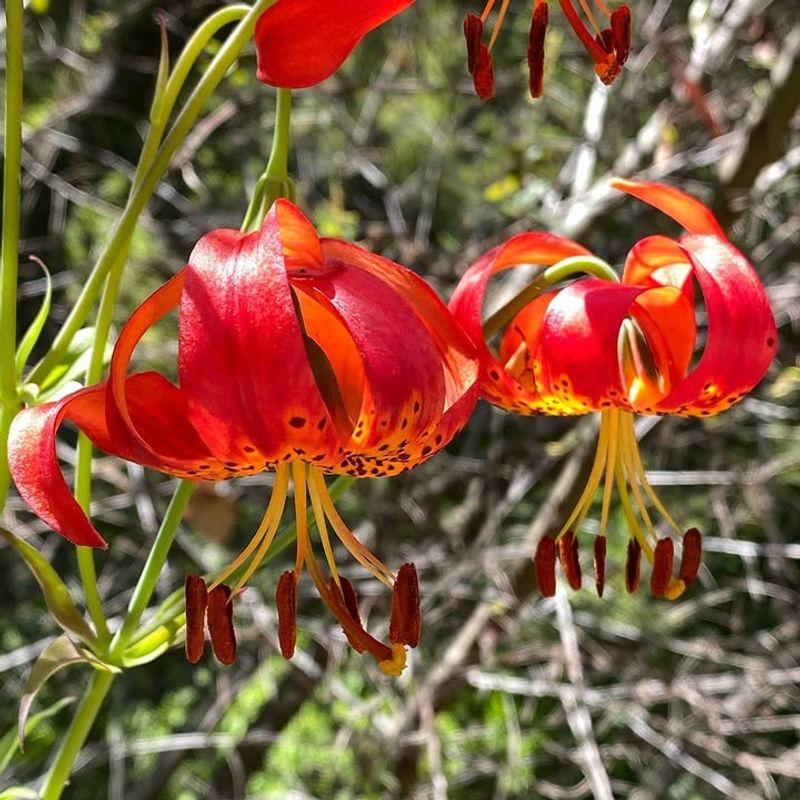
Nothing connects a garden to its regional landscape quite like incorporating native plants, and this stunning California native lily deserves a spotlight in gardens throughout Northern and Central California.
Its nodding orange-red flowers adorned with maroon spots create a wildflower meadow feeling, even in suburban settings.
Growing naturally along stream banks and in moist woodland areas, this species has evolved specifically for California’s unique climate patterns and seasonal rhythms.
Habitat preferences lean strongly toward moisture, making California tiger lilies perfect for those challenging garden spots where soil stays damp longer than in surrounding areas.
Partial shade replicates their natural woodland edge environment, though they’ll tolerate more sun if given adequate water throughout the growing season.
Consider planting them near downspouts, in rain gardens, or along the edges of water features where they can access consistent moisture without sitting in standing water.
Pollinators absolutely adore these native beauties, with hummingbirds, butterflies, and native bees visiting regularly to collect nectar and pollen.
Including California tiger lilies in native plant gardens strengthens local ecosystems by providing food sources that native wildlife species have depended on for thousands of years.
Their presence supports biodiversity and creates connections between your garden and the broader natural landscape.
Beyond their ecological benefits, they’re simply gorgeous additions that bloom reliably throughout summer, bringing authentic California wildflower charm to cultivated spaces while requiring less fuss than many non-native alternatives.
7. Martagon Lilies (Lilium Martagon Hybrids)
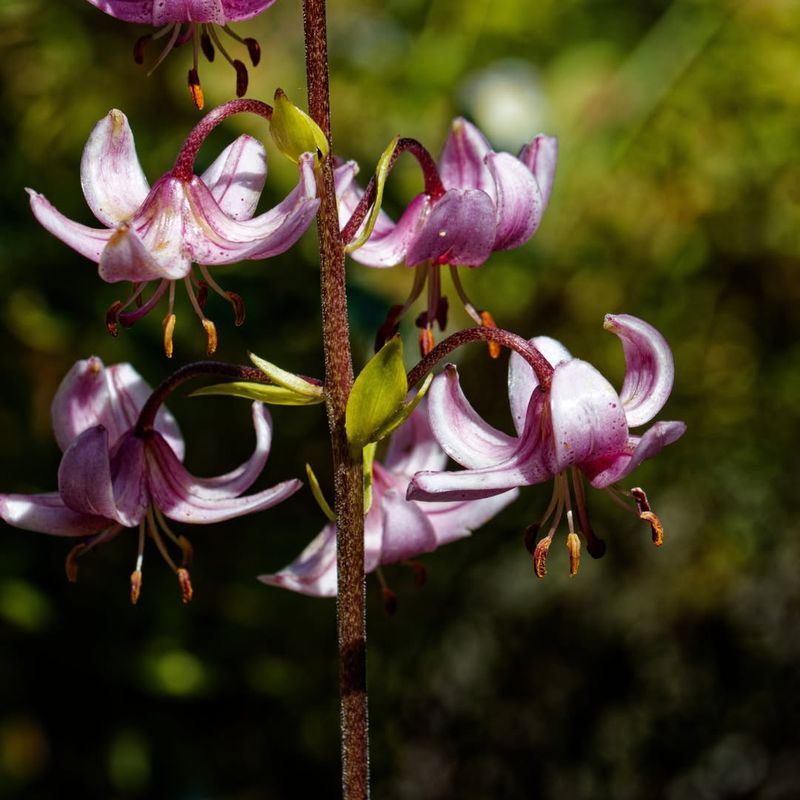
Shade-loving gardeners rejoice because martagon lilies thrive in conditions where many other flowering plants struggle to perform.
Their distinctive turk’s cap flowers feature petals that curl backward completely, creating elegant, nodding blooms that dance along arching stems.
Colors range from soft pastels to deep burgundy, often with delicate spotting that adds intricate detail when viewed up close.
These woodland natives bring refined beauty to shaded garden areas that often lack colorful flowering options.
Early spring growth characterizes martagon lilies, with foliage emerging when winter rains have thoroughly moistened the soil and temperatures begin warming.
This early start allows them to complete much of their growth cycle before summer heat arrives, making them well-adapted to California’s Mediterranean climate pattern of wet winters and dry summers.
Their growth habit fits perfectly into the seasonal rhythm of woodland gardens where spring bulbs and perennials create successive waves of bloom.
Ideal placement is beneath deciduous trees or in woodland garden settings where dappled sunlight filters through overhead canopy throughout the day.
Soil rich in organic matter is essential for martagon success, so incorporating generous amounts of compost, leaf mold, or well-aged wood chips at planting time creates the humus-rich conditions they prefer.
These amendments also improve moisture retention, which benefits the bulbs during their active growing period.
Once established in suitable conditions, martagon lilies become long-lived garden residents that increase slowly but steadily, eventually forming impressive clumps that produce dozens of charming nodding flowers each spring.
8. LA Hybrid Lilies (Longiflorum × Asiatic Hybrids)
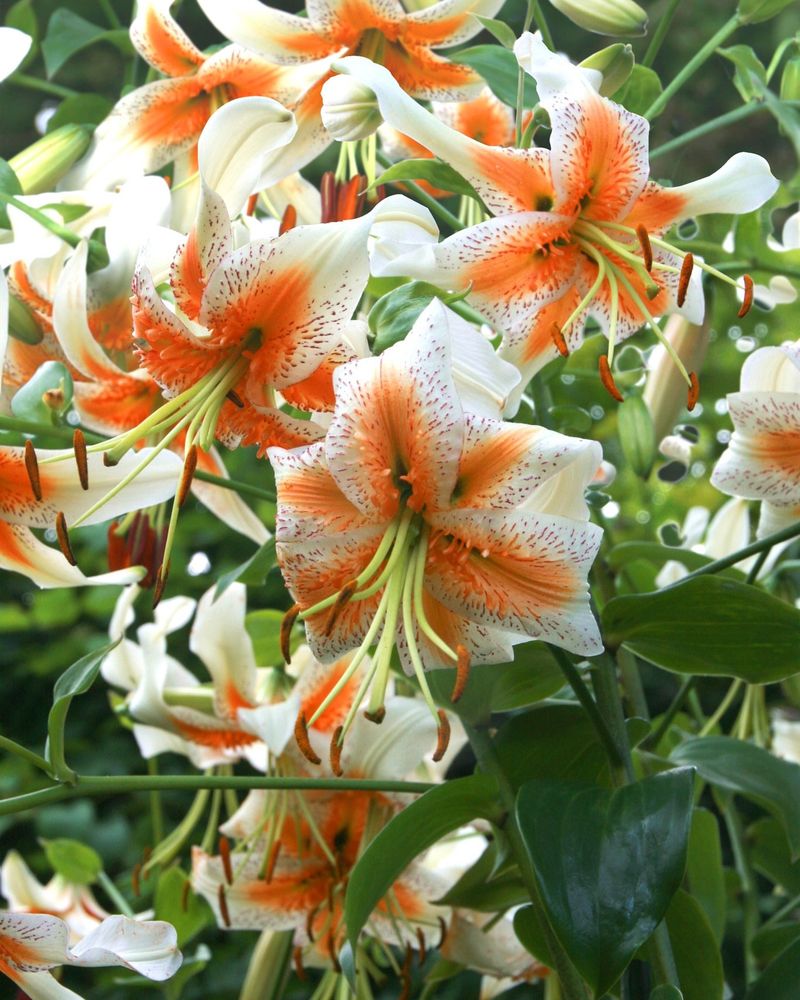
Combining the best traits of two excellent lily types, LA hybrids represent breeding success that California gardeners can truly appreciate.
These crosses between longiflorum and Asiatic lilies inherit heat tolerance from their Asiatic parent while gaining larger flowers and stronger stems from their longiflorum heritage.
The result is a lily that performs exceptionally well in California’s demanding Mediterranean climate, handling temperature swings and dry conditions with impressive resilience.
Strong stems mean LA hybrids typically stand upright without staking, even when producing their generously sized blooms that can span five to seven inches across.
This structural strength is particularly valuable in garden borders and cutting gardens where you want flowers to maintain their appearance without requiring extensive support systems.
Their upward-facing or outward-facing flowers create bold color statements that are visible from considerable distances, making them excellent choices for planting along pathways or near outdoor living spaces.
Bright colors dominate the LA hybrid palette, with vivid oranges, hot pinks, sunny yellows, and pure whites that practically glow in California sunshine.
These saturated hues hold up remarkably well even in intense light and heat, maintaining their vibrancy throughout the blooming period.
Performance advantages in California’s climate extend to their blooming season, which typically falls between early and midsummer, filling the gap between spring bulbs and late-summer perennials.
Their reliable nature and spectacular flowers make LA hybrids increasingly popular among California gardeners seeking maximum impact with minimal fuss.
9. OT Hybrid Lilies (Oriental × Trumpet Hybrids)
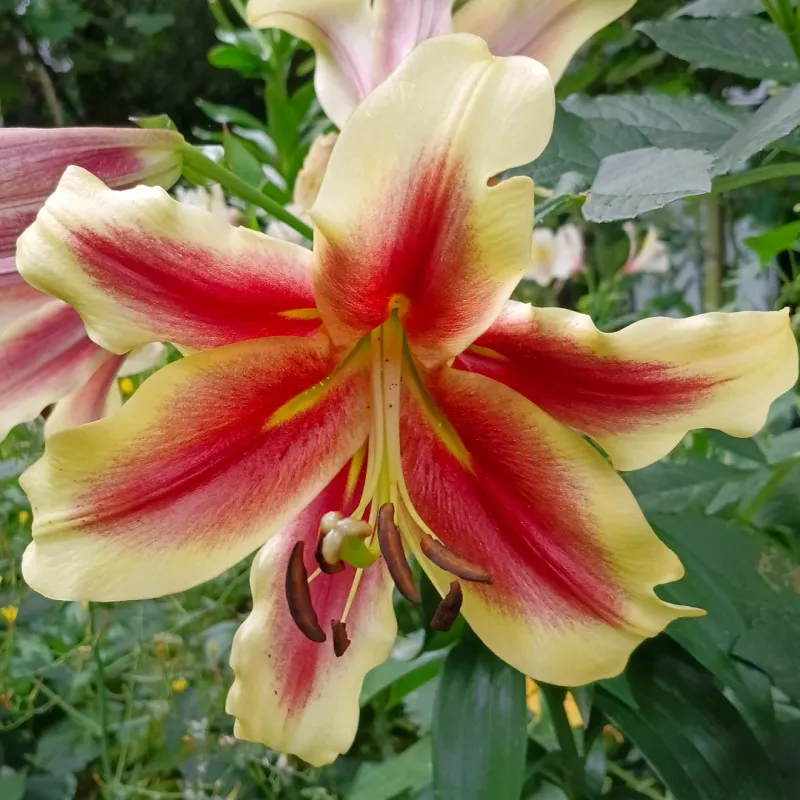
Sometimes called Orienpet lilies, these magnificent hybrids combine Oriental lily fragrance with trumpet lily height and vigor, creating showstoppers that command attention in any garden setting.
Their massive blooms can reach eight to ten inches across, with petals that often display stunning color transitions and exotic patterns inherited from their diverse parentage.
Fragrance varies by cultivar but generally tends toward the sweet, intoxicating scent characteristic of Oriental lilies, filling evening gardens with perfume that draws people outdoors.
Tall growth is a defining characteristic, with many OT hybrids easily reaching five to seven feet in height when grown in optimal conditions with rich soil and adequate nutrition.
This impressive stature makes them natural choices for the back of mixed borders where their towering presence creates vertical interest and backdrop for shorter plants in front.
They also work beautifully as specimen plantings where their architectural form can be fully appreciated from multiple angles.
Planting location tips include choosing spots protected from strong winds that might topple these tall stems, and ensuring they receive full sun exposure for at least six hours daily to fuel their vigorous growth.
Long-term bulb performance is excellent in California when given proper care, with bulbs increasing in size each year and producing more flowering stems as they mature.
Dividing clumps every four to five years maintains vigor and provides opportunities to expand plantings or share these spectacular lilies with friends who will surely admire them in your garden.